
Reviewed · NYC WALKING TOURS
Self-Guided Tour of the Museum at Eldridge Street
The Museum at Eldridge Street brings you into one of New York’s most striking immigrant-era buildings: an 1887 synagogue built by Eastern European Jewish immigrants on the Lower East Side. I especially like the combination of Moorish Revival architecture and 60 historic stained glass windows, followed by a modern window created by Kiki Smith and Deborah Gans. It gives the visit a useful link between old New York and the city today.
I also like the freedom of a self-guided visit. You can take your time with the details instead of keeping pace with a group. The main drawback is simple: if you want a lively guide to explain the building as you go, this may feel too quiet. One visitor specifically wished for more guided interpretation, so bring your curiosity and plan to read and look closely.
Key points to know before you go
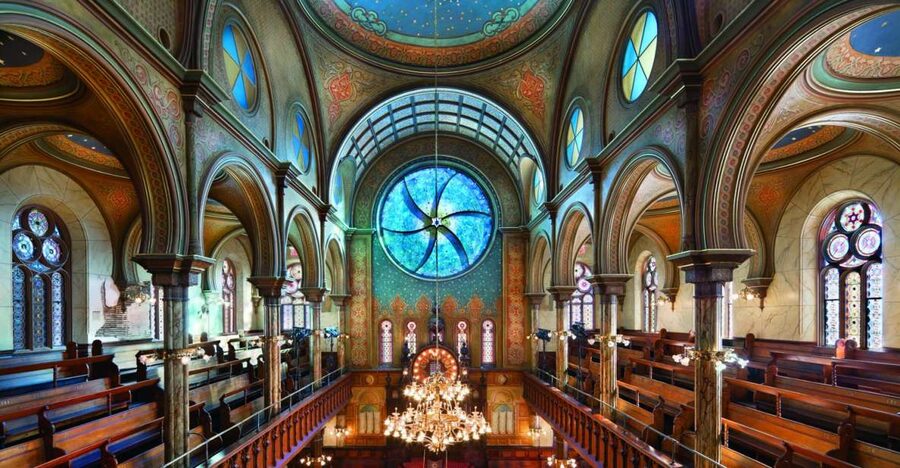
- The synagogue dates from 1887: This was the first grand synagogue purpose-built in the United States by Eastern European Jewish immigrants.
- Sixty historic stained glass windows: Look up as well as around you. The windows are one of the building’s major visual rewards.
- A restored National Historic Landmark: The synagogue nearly disappeared through neglect before a 20-year, $20 million restoration returned it to public use.
- A one-hour self-guided format: You explore at your own pace, with materials available in English, Spanish, and Chinese.
- Modern art shares the space with old architecture: A contemporary window by Kiki Smith and Deborah Gans gives the visit a present-day voice.
- Good value at $7: The modest admission buys access to the synagogue, the permanent collection, and the temporary exhibit.
Entering an 1887 synagogue on the Lower East Side
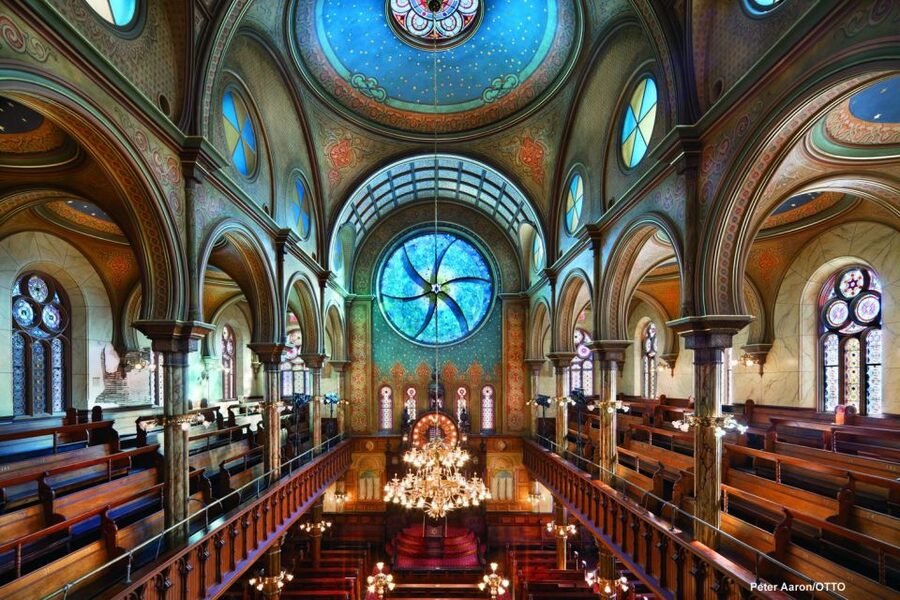
The first thing to understand is the building itself. The Museum at Eldridge Street is not a separate gallery with a few old objects placed inside. It occupies the historic Eldridge Street Synagogue, a grand house of worship built in 1887 by Jewish immigrants from Eastern Europe.
That fact gives the visit its focus. You are not only looking at architecture. You are looking at a statement made by newcomers who wanted a permanent place in their new country. The synagogue served as a house of worship, but it also helped create community and showed that Lower East Side residents expected to put down roots.
At the turn of the 20th century, New York’s Lower East Side was crowded with immigrant families, packed streets, and tenement buildings. The synagogue’s scale would have made an impression in that setting. Its size and decoration expressed ambition at a time when many Jewish immigrants were building new lives under difficult conditions.
You enter at the Main Entrance, located at the bottom of the left-hand downward staircase. That detail matters because the building has multiple levels and the entrance is not simply a street-level museum door that announces itself from every angle. Look for the staircase and allow yourself a moment to get oriented before starting.
More NYC Walking Tours:
- SoHo, Little Italy, and Chinatown Walking Tour in New York
★ 5.0 · 3,153 reviews - Secrets of Grand Central Station Walking Tour New York City
★ 5.0 · 1,796 reviews - Greenwich Village Walking and Food Tasting Tour
★ 5.0 · 1,572 reviews
Moorish Revival details worth looking up for
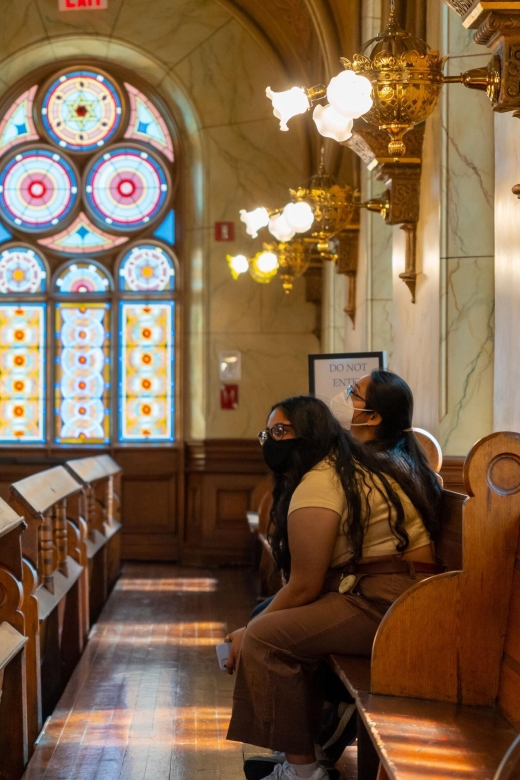
The architecture is the main reason to visit. The synagogue was designed in the Moorish Revival style, an approach that used forms and decoration associated with Islamic architecture. Here, that style helped create a grand and distinctive interior for a new immigrant congregation.
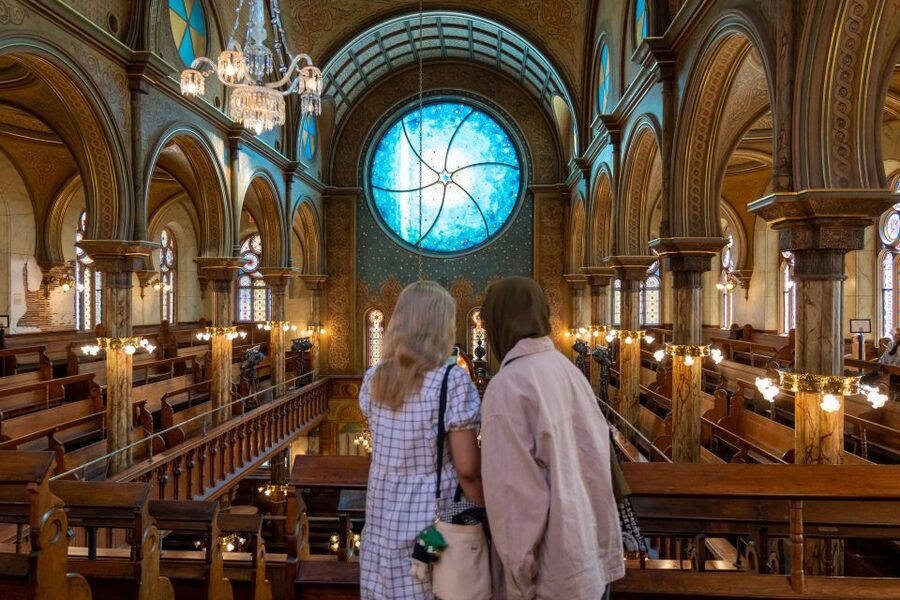
You will want to look up. The 60 historic stained glass windows draw the eye, but the building rewards a slower scan of its walls, arches, and decorative features. I would not rush through the main room just to reach the museum displays. The room itself is the largest object on view.
The architecture also helps explain the building’s original purpose. A synagogue could be practical and symbolic at the same time. It needed to hold worshippers, but it also communicated that the congregation had resources, confidence, and a long-term place in New York.
A self-guided visit works well here because you can pause whenever a detail catches your attention. You can move from a broad view of the interior to a close look at the windows, then step back and consider how the whole design worked together. The tradeoff is that no guide is guaranteed to point out the details you might otherwise miss.
The stained glass windows and the power of the interior
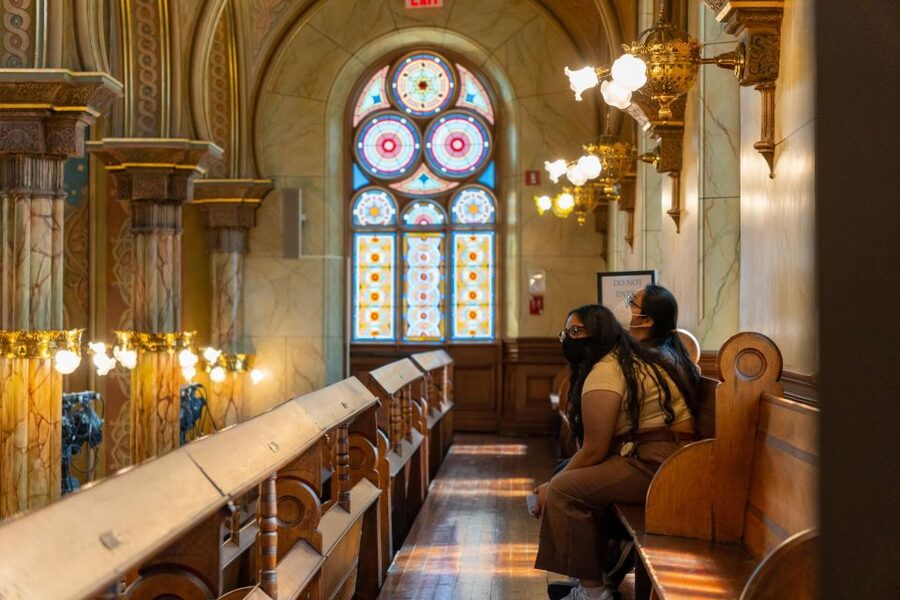
The 60 historic stained glass windows are among the clearest visual highlights. They add color and pattern to the interior, but their importance is more than decoration. They belong to the original character of a synagogue built during a major period of immigration to the United States.
I recommend giving the windows time rather than treating them as a quick photo stop. Notice how they change the feeling of the room and how the light works with the architectural style. The building’s beauty is not separate from its story. The decoration reflects the congregation’s desire to create a dignified and lasting place of worship.
Photography is welcome for personal, noncommercial use, so you can take pictures without needing to leave your camera at home. Flash photography is not allowed, and professional cameras are prohibited. This is worth knowing before you arrive, especially if you had planned a serious photography session rather than casual vacation pictures.
Food and drinks are not allowed inside, apart from water. Backpacks and strollers are searched and checked in on arrival. You will have a better visit if you arrive with only what you need and do not expect to carry a large bag through the galleries.
Jewish immigrant life and the Lower East Side story
The museum’s interpretation focuses on Jewish immigrant life, traditions, and customs, along with the broader story of immigration around the turn of the 20th century. The building gives those subjects a physical setting that makes them easier to understand.
Eastern European Jewish immigrants were part of a much larger movement across the Atlantic. During the great age of immigration, about one third of Europe’s Jewish population crossed to the United States. The Eldridge Street Synagogue belongs to that period, but it also gives the story a local address and a human scale.
The synagogue’s purpose was not limited to religious services. It was a place where people could gather, build connections, and maintain customs while adapting to life in New York. The museum asks you to see the building as part of a neighborhood community, not simply as a beautiful old structure.
Because the visit is self-guided, the pace depends on you. If you already know something about New York immigration, you may spend more time on the architecture and preservation work. If this subject is new to you, read the interpretive material carefully. The one-hour estimate is enough for a focused visit, but it may feel short if you want to study every display in detail.
More Self-Guided Tours in New York City:
- Skyline Night Bus Audio Narrated Tour Experience
★ 4.5 · 138 reviews - Cathedral of St. John the Divine: Self-Guided Tour
★ 4.5 · 13 reviews - Brooklyn Bridge Self-guided Bike Tour App – Audio + Written
★ 3.0 · 3 reviews
How the synagogue nearly disappeared
The building’s survival is a major part of the visit. Immigration quotas introduced in the 1920s changed the flow of newcomers, and the synagogue later suffered from neglect. A structure built to serve a growing immigrant community was no longer supported in the same way.
Without restoration, the building might have been lost. Instead, a 20-year, $20 million restoration project returned the synagogue to glory and public use. That long effort gives the visit an added layer: you are seeing not just the original building, but the result of a sustained attempt to preserve it.
I find this especially useful for understanding historic preservation. Saving an old structure is not only about repairing walls and windows. It also means deciding which stories to keep visible and how to make the site useful to people today.
The restoration story also helps explain why the museum feels like both a historic place and an operating public institution. The building is being cared for, interpreted, and used rather than left as a frozen relic.
Modern art inside an old sacred space
The museum does not stop in the 19th century. A modern window by artists Kiki Smith and Deborah Gans adds a contemporary element to the historic interior.
This is a smart part of the experience because it shows that preservation does not have to mean keeping every later idea out. The contemporary work creates a conversation between the synagogue’s original design and the present day. You can compare the modern window with the historic stained glass and think about how artists use light, color, and place in different eras.
The temporary exhibit and permanent collection are included with admission. Their exact content can change, so I would treat them as an added reason to check the museum rather than the sole basis for your visit. The lasting draw is the synagogue itself, while the exhibits give you more ways to understand the people and choices connected to it.
What one hour feels like
A one-hour visit is realistic if you want a clear look at the building, the windows, the museum interpretation, and the current exhibit. It is long enough to avoid a rushed glance, but short enough to fit into a Lower East Side walking day.
A sensible order is to begin with the main interior, take in the overall architecture, and then work through the interpretive material. After that, return to the stained glass and modern window with more context in mind. The building will make more sense once you understand why it was built and what happened to it later.
The self-guided format gives you control. You can linger over a window, move quickly through familiar material, or pause to consider the restoration story. That flexibility is a real advantage for independent visitors, families with different interests, and anyone fitting the museum between meals or nearby sights.
Still, do not expect a guided tour experience. An English-speaking host or greeter is listed, but the visit itself is self-guided. Materials are available in English, Spanish, and Chinese, while the host or greeter is English-speaking. If personal explanation is important to you, ask questions at the entrance, but plan on doing most of the interpretation yourself.
Is the $7 admission a good deal?
At $7 per person, this is an easy museum expense to justify. You receive admission to the historic synagogue, the permanent collection, and the temporary exhibit. That is good value even if you spend only the suggested hour inside.
The price is especially fair because the building itself is the main attraction. You are paying to enter a restored National Historic Landmark with unusual architecture, historic windows, and a direct connection to New York’s immigrant past. It is not a long attraction, but it offers more substance than its short duration suggests.
The value depends on what you want. If you prefer a large museum with many rooms and hours of displays, this will feel modest. If you appreciate architecture, immigration history, Jewish heritage, and preservation, the low admission price makes it a strong addition to a Lower East Side itinerary.
The museum also offers free cancellation up to 24 hours before the visit and a reserve-now, pay-later option. Those policies are useful if your New York schedule is still changing, though the main decision is whether the subject suits your interests.
Accessibility and practical arrival advice
The museum is wheelchair accessible, with an elevator reaching all four floors. That makes the building easier to visit than its historic design might suggest. You should still enter through the designated Main Entrance at the bottom of the left-hand downward staircase.
Allow time for bag checks. Food, drinks other than water, strollers, and backpacks are searched and checked in on arrival. Bikes and scooters are not allowed, so do not plan to bring either into the museum.
Flash photography and professional cameras are not permitted. Personal, noncommercial photography is welcome, making a small camera or phone suitable for ordinary pictures.
The experience lasts about one hour, and starting times depend on availability. Since the visit is self-guided, you do not need to coordinate with a walking group once inside. That makes it easy to fit around other Lower East Side plans.
Who will appreciate this museum most
I would recommend the Museum at Eldridge Street to anyone interested in New York immigration, Jewish history, historic buildings, or architectural details. It also suits visitors who prefer a quiet museum where they can set their own pace.
Families may find the building’s visual details more immediately engaging than a text-heavy museum, though younger children may not spend a full hour reading every panel. Architecture fans should make time for the windows and the Moorish Revival design.
This is also a good choice for independent visitors who dislike being rushed. You can look closely, step back, and decide what deserves your attention. The main question is whether you are comfortable without a guide leading the story.
Should you book the Museum at Eldridge Street?
Book it if you want an affordable, focused look at a remarkable Lower East Side synagogue and the immigrant community that built it. The 1887 architecture, 60 stained glass windows, restoration story, and modern work by Kiki Smith and Deborah Gans give the visit several layers.
Skip it if you want a long guided tour or a museum packed with large collections. The experience is brief and self-guided, and one visitor found it would have been better with more explanation from a guide.
For $7, though, the risk is small. Pair it with a day exploring the Lower East Side, arrive ready to read and look upward, and give the interior enough time to work its effect. It is a compact visit with a clear sense of place and a useful story about how immigrant New York built, lost, and saved one of its important landmarks.
FAQ
How long does the self-guided tour take?
The visit lasts about one hour. You explore the museum and synagogue at your own pace.
What is included with admission?
Admission includes the Museum at Eldridge Street and Eldridge Street Synagogue, the permanent collection, and the temporary exhibit.
How much does admission cost?
Admission costs $7 per person.
Is the visit guided?
The experience is self-guided. An English-speaking host or greeter is available, but the tour does not provide a guided format.
Which languages are available for the self-guided tour?
Self-guided materials are available in English, Spanish, and Chinese. The listed host or greeter language is English.
Is the museum wheelchair accessible?
Yes. The museum is fully accessible, and an elevator reaches all four floors.
Can I take photographs?
Personal, noncommercial photography is welcome. Flash photography and professional cameras are not allowed.
Where is the entrance?
The Main Entrance is at the bottom of the left-hand downward staircase.
More Museums in New York City
- NYC: Empire State Building Tickets – Observatory & Museum
★ 4.7 · 25,757 reviews - New York City: American Museum of Natural History Ticket
★ 4.5 · 15,447 reviews - NYC: Museum of Modern Art (MoMA) Entry Ticket
★ 4.6 · 12,540 reviews - 9/11 Memorial, Ground Zero Tour with Optional 9/11 Museum Ticket
★ 5.0 · 6,381 reviews
Recently added in New York City
- New York City: The Banksy Museum Entry Ticket★ 4.6 · 51 reviews
- Official Pedicab Tours in Central Park★ 4.9 · 11 reviews
- Statue of Liberty & Ellis Island – Guided Tour 8ppl Max★ 4.9 · 6 reviews
- The Beatles in NYC Private Walking Tour★ 5.0 · 4 reviews
- NYC: Soho, Little Italy and Chinatown Guided Walking Tour★ 5.0 · 4 reviews
- Soul of Harlem: Strivers Row, Apollo Theatre, Gospel History★ 4.6 · 87 reviews
- Statue of Liberty & Ellis Island by Ferry with Private Guide★ 4.9 · 6 reviews
- Central Park: Short Horse Carriage Ride (Up to 4 Adults)★ 4.5 · 82 reviews
NYC Walking Tours, compared.
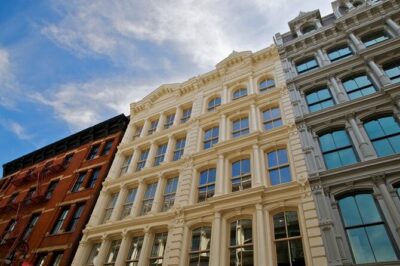
SoHo, Little Italy, and Chinatown Walking Tour in New York
Read our review →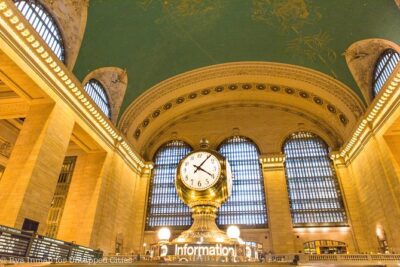
Secrets of Grand Central Station Walking Tour New York City
Read our review →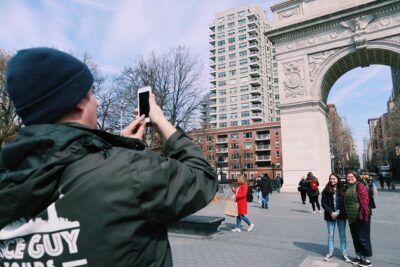
Greenwich Village Walking and Food Tasting Tour
Read our review →
Artistic, Alternative Greenwich Village Walking Tour
Read our review →


NYC Greenwich Village Italian Food Guided Walking Tour
Read our review →Browse the lists this tour appears in