
Reviewed · HARLEM GOSPEL TOURS
Soul of Harlem: Strivers Row, Apollo Theatre, Gospel History
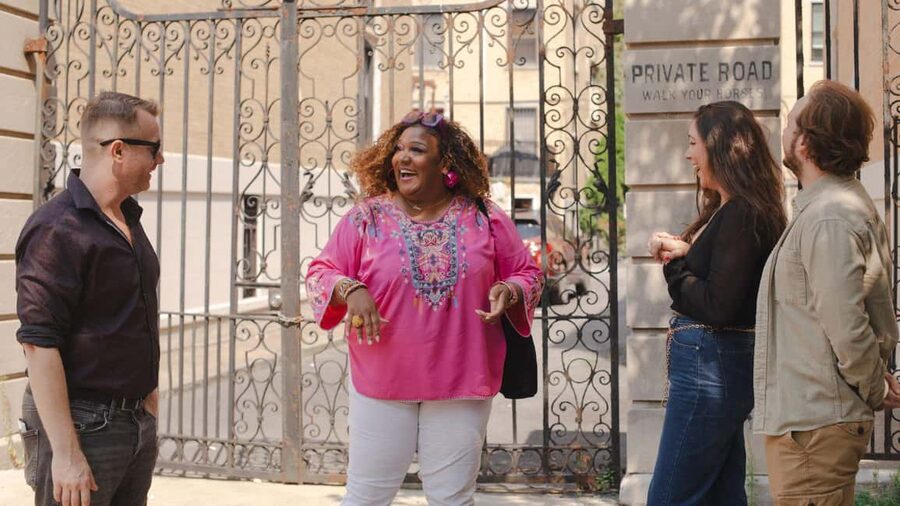
Harlem’s past comes at you quickly on this compact walking tour: Ella Fitzgerald, Duke Ellington, the Apollo Theatre, Strivers’ Row, and gospel music all fit into two hours of neighborhood streets and stories. You’ll also hear the wonderfully odd tale of Fidel Castro being turned out of a midtown hotel after keeping chickens in his room.
I like the focused route and the way it links music, worship, politics, architecture, and daily life instead of treating Harlem as a single theme. I also like the local feel supplied by guides such as Lady Altovise and Ron, who bring personal connections and useful food tips. The main limitation is simple: you see the Apollo from outside, so anyone hoping to step inside should adjust expectations.
Key points at a glance

- A tight two-hour route: Cover several major Harlem sights without giving up a full day.
- Music at the center: Follow stories tied to Ella Fitzgerald, Duke Ellington, the Apollo Theatre, and Bill’s Place.
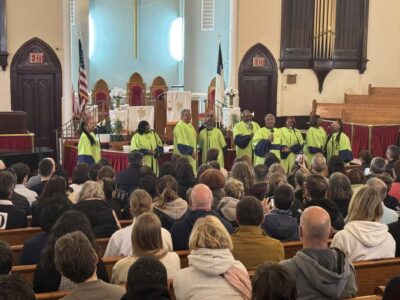
- Sunday gospel option: Add skip-line access to a gospel experience at a local church on Sundays only.
- Local voices matter: Guides including Altovise and Ron bring stories, community connections, and answers to questions.
- Architecture and scholarship: See Strivers’ Row and the Schomburg Center for Research in Black Culture.
- Good value at $49: The price makes sense if you want a guided introduction rather than a quick photo stop.
Why Harlem deserves more than a quick uptown photo stop
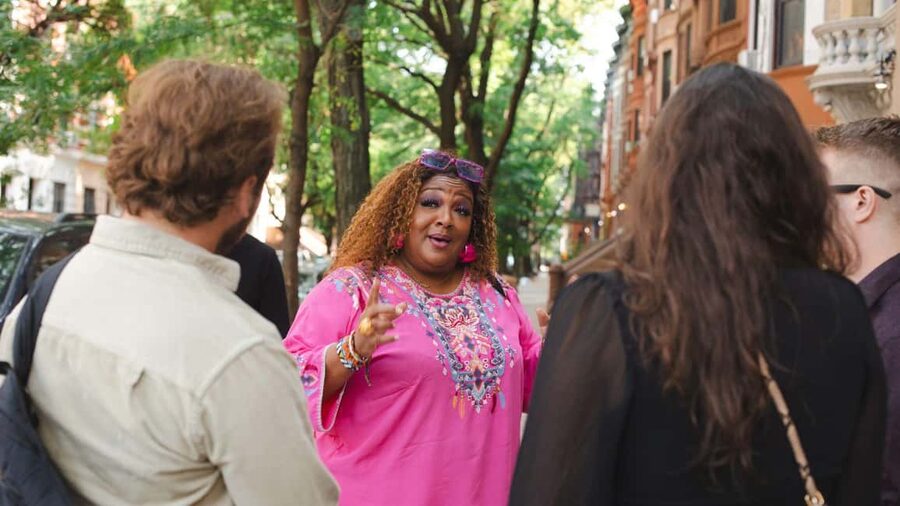
Harlem’s story has changed many times over roughly four centuries. Different ethnic groups, economic forces, religious communities, artists, and political movements have all left their mark here. That makes the neighborhood especially rewarding with a guide, since the meaning of a building or street is often not obvious from the sidewalk.
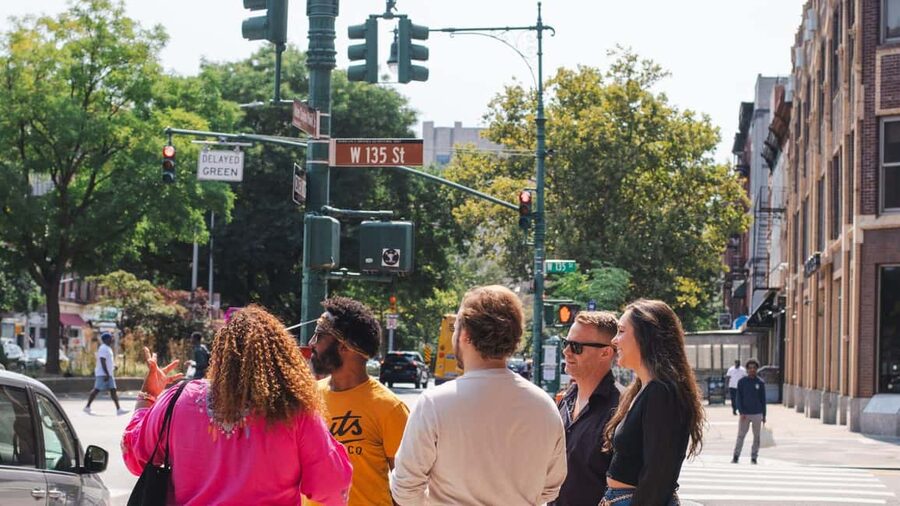
This tour keeps the geography manageable. You are not sent racing across upper Manhattan. Instead, the route concentrates on a walkable part of Harlem and uses its landmarks to explain how music, faith, housing, and Black cultural life developed side by side.
I especially like that the tour does not reduce Harlem to the Apollo Theatre alone. The theatre is important, but the surrounding streets help explain why it became important. The route also gives you a chance to see places connected with research, worship, housing, and local entertainment.
The two-hour length works well for fitting Harlem into a larger New York day. You can pair it with lunch afterward, and one guide, Courtney, was particularly good at offering ideas about where to eat. You should still expect a steady walking pace and plan sensible shoes.
More Harlem Gospel Tours:
- NYC: Harlem Hallelujah! Gospel Wednesday Concert
★ 4.7 · 1,638 reviews - New York City: Harlem Gospel Live Music Concert
★ 4.7 · 1,479 reviews - Harlem Sunday Morning Gospel Tour
★ 4.0 · 995 reviews
Starting at Malcolm X Boulevard or the Apollo Theatre
There are two possible starting points, and the exact meeting place depends on the option you book. One listed starting location is 515 Malcolm X Boulevard, while the other is the Apollo Theatre.
Check your confirmation carefully before setting out. This is a walking tour, so arriving at the wrong point can cost you part of a short experience. The tour finishes at either Memorial Baptist Church or the Apollo Theatre, again depending on the option selected.
The route is wheelchair accessible, which is useful for a neighborhood walking experience. Still, the supplied information does not give details about the exact street conditions or restroom access, so you may want to ask the operator if those points matter to you.
Guiding quality appears to be a major part of the experience. Altovise is described as funny, warm, energetic, and closely connected with the community. Ron is praised for using plenty of supporting material and keeping the walk lively. One guide even called local contacts by name and seemed to know people along the route, giving the experience a more personal tone than a scripted sightseeing circuit.
Abyssinian Baptist Church and the role of faith
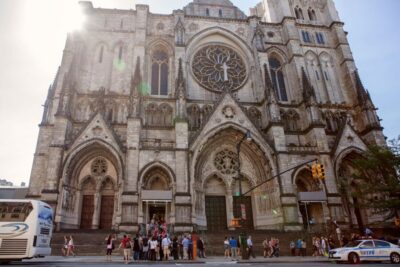
Abyssinian Baptist Church is one of the main stops, with time for a visit and photographs. It gives the tour a chance to talk about Harlem’s religious life, not just its entertainers and famous buildings.
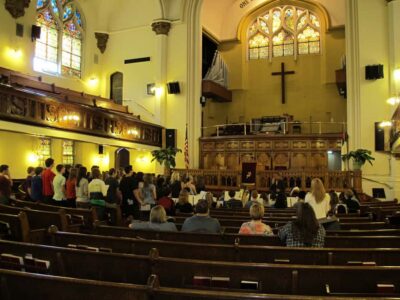
Churches matter here because they have long been more than places for Sunday worship. They are tied to community life, public speaking, social networks, and the long story of Black New York. The tour’s stop helps you see that faith belongs in the same conversation as music and politics.
Do not assume this portion is a full church service. The standard itinerary lists a visit and photo stop. The separate gospel experience is offered on Sundays only and takes place at a local church, with skip-line access included in the Sunday option.
That distinction is important when you book. If gospel music is the reason you are coming, choose a Sunday departure that specifically includes it. On other days, you will receive the Harlem walking tour without that added church experience.
The Schomburg Center and Harlem’s intellectual life
The Schomburg Center for Research in Black Culture adds an important layer to the walk. It shifts the focus from famous performers to the preservation and study of Black culture, history, and writing.
You will have a photo stop and visit here. The value is less about spending a long time inside and more about understanding why this institution belongs on a Harlem route. Harlem’s cultural story was not created only on stages. It was also recorded, collected, studied, and protected.
This stop is particularly useful if you want more than celebrity anecdotes. The guide can connect the center to the wider cultural life of the neighborhood and explain why Harlem became such an important place for Black arts and scholarship.
The short tour format means you should not expect an extended museum visit. Think of the Schomburg Center as a meaningful stop within a larger walk, not as a substitute for a separate research-center visit.
More Harlem Tours:
- NYC Highlights Tour: Bronx, Brooklyn, Harlem, Queens & Coney
★ 4.5 · 2,846 reviews - NYC: Contrasts Tour of Harlem, The Bronx, Queens & Brooklyn
★ 4.5 · 2,167 reviews - 4-hour Harlem Gospel Tour in New York City
★ 4.0 · 935 reviews - Harlem: Central Harlem Sunday Gospel with Locals
★ 3.9 · 499 reviews
Bill’s Place and the music that changed American culture
Bill’s Place is another photo stop, and it gives the guide a doorway into Harlem’s music scene. The route connects the neighborhood to Ella Fitzgerald, Duke Ellington, and other artists who helped place American music before a worldwide audience.
The music stories are likely to be one of the tour’s strongest draws. You are not just hearing names from a textbook. You are walking the streets associated with the clubs, performers, and audiences that shaped jazz and the Harlem Renaissance.
The route also includes the kind of unusual historical detail that makes a short tour memorable. You may hear how Fidel Castro ended up sleeping in Harlem after being removed from a midtown hotel because of chickens in his room. It is a strange episode, but it shows how Harlem has intersected with international politics as well as American music.
I appreciate this mix of major history and odd human detail. The famous names give the walk structure, while the less expected stories keep it from feeling like a list of dates.
Strivers’ Row and the built character of Harlem
Strivers’ Row is one of the tour’s key photo stops. Its row houses offer a chance to discuss Harlem through architecture and housing, not only through performers and churches.
The name itself points to aspiration and status. You can use the stop to think about who lived in Harlem, who was able to buy or rent desirable homes, and how the neighborhood’s social makeup changed over time. The buildings also provide a visual pause from the tour’s heavier subjects.
Because the visit is listed as a photo stop, the emphasis is on seeing the exterior and hearing the story. If you are an architecture specialist hoping for an extended interior tour, this will feel brief. For most visitors, though, the stop fits the two-hour format well.
The route’s mix of ordinary streets and well-known landmarks is one of its strengths. Harlem does not reveal itself through one grand monument. Its character comes from the relationship between homes, churches, cultural institutions, and performance spaces.
The Apollo Theatre, with realistic expectations
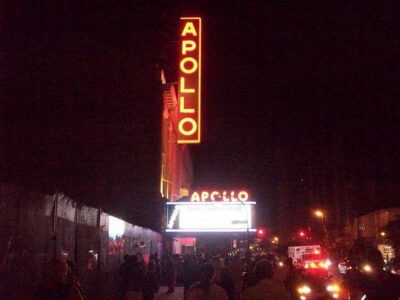
The Apollo Theatre is the obvious headline stop. It is tied to the careers of major musicians and to Harlem’s place in American entertainment. Seeing the theatre in person gives the stories a clear physical anchor.
At the same time, the standard experience appears to focus on the exterior and a photo stop. One person specifically wished for a chance to peek inside, even with renovation work taking place. That is a fair concern, especially if you have paid for a theatre tour elsewhere and expect backstage access.
I would book this experience for the Apollo’s history and setting, not for guaranteed interior entry. The guide can explain why the theatre matters, but you should not count on sitting in the auditorium or seeing backstage areas.
The Apollo is also one of the possible start and finish points. That makes it convenient if you are building a day around the theatre, though you should confirm which direction your selected option follows.
The Sunday gospel addition
On Sundays, the experience includes skip-line access to a gospel experience at a local church. This is the most distinctive add-on and may be the deciding factor for many people.
Gospel is not simply background entertainment. In Harlem, church music is tied to worship, community, and the development of American musical traditions. Hearing it in a local church gives the tour a different feel from looking at a plaque or taking an exterior photograph.
The Sunday detail needs careful attention. This benefit is not listed for every departure, and the church is described generally as a local church rather than by a guaranteed name in the tour information. Confirm that your chosen booking includes the Sunday option before you rely on it.
The experience may also make Sunday timing more structured than a normal walking tour. Keep the rest of your day flexible enough to attend the church portion without rushing away.
What the guides add to the walk
The guide can make or break a short neighborhood tour. Here, the strongest pattern is a guide who tells stories with energy while making room for questions.
Altovise receives especially warm attention for her humor, enthusiasm, and connection with the community. She is also described as someone who answers questions carefully and points people toward extra resources. Ron is praised for bringing documentation and making landmark information lively rather than dry.
You may not receive one particular guide, so I would not book solely on the promise of Altovise or Ron. Still, the company’s guiding approach seems clear: personal storytelling, local perspective, and a willingness to involve the whole group.
That matters in Harlem because a basic list of dates will not explain the neighborhood well. You want someone who can connect a theatre to music, a church to community life, and a row of houses to changing social conditions.
Is $49 a fair price?
At $49 per person, this is a reasonable price for a two-hour guided walk in New York, especially if you value interpretation rather than just taking photos. The route includes several notable stops, a live English-speaking guide, and the Sunday gospel addition when applicable.
The value is strongest for first-time visitors to Harlem or anyone who wants an organized introduction. You are paying for the guide’s stories, route planning, and ability to connect separate places into one explanation.
The value is weaker if you already know Harlem well or only want interior access to the Apollo Theatre. The tour is not presented as a long museum visit, a food tour, or a private walk. It is a compact neighborhood introduction.
Free cancellation up to 24 hours ahead and the option to reserve now and pay later make the booking less rigid. Those are useful protections when New York plans shift, though you should still check the exact meeting point and Sunday details before booking.
Who should book this Harlem walk?
I would recommend it to you if you want:
- A first look at Harlem with historical context
- Stories about music, religion, culture, and politics in one route
- A short activity that fits into a busy New York schedule
- A local guide who can answer questions and suggest places to eat
- A Sunday gospel experience at a local church
- A wheelchair-accessible walking option
I would be more cautious if you want a long indoor visit, a detailed museum tour, or guaranteed access inside the Apollo Theatre. The tour’s strength is the guided walk and the stories that connect the stops.
It also suits curious visitors who want Harlem presented as a lived-in neighborhood rather than a collection of famous names. The best moments are likely to come from the links between places: music and worship, housing and ambition, scholarship and cultural memory.
Should you book it?
Book this tour if you want a lively, focused introduction to Harlem and you value a guide who can add local detail to the streets. At $49, it offers a fair amount in two hours, especially on Sunday when the gospel experience is included.
Choose another activity if your main goal is to enter the Apollo Theatre or spend substantial time inside cultural institutions. For everyone else, this is a practical way to give Harlem a proper place in your New York plans, with enough history to make the neighborhood feel meaningful rather than merely scenic.
FAQ
How long does the Harlem walking tour last?
The guided tour lasts two hours.
How much does the experience cost?
The listed price is $49 per person.
What language is the tour conducted in?
The live tour guide speaks English, and English is the listed tour language.
Where does the tour start?
There are two possible starting locations: 515 Malcolm X Boulevard or the Apollo Theatre. Your exact meeting point depends on the option booked.
Where does the tour finish?
The listed drop-off locations are Memorial Baptist Church and the Apollo Theatre. The exact finish depends on the option selected.
Is gospel included on every tour?
No. Skip-line access to a gospel experience at a local church is available on Sundays only.
Is the tour wheelchair accessible?
Yes, the activity is listed as wheelchair accessible.
Can I cancel the booking?
Yes. You can cancel up to 24 hours in advance for a full refund. A reserve-now, pay-later option is also available.
More Historical Tours in New York City
- New York City: American Museum of Natural History Ticket
★ 4.5 · 15,447 reviews - NYC: Starship Landmark 90 Minute Sightseeing Cruise
★ 4.6 · 3,666 reviews - Starship Landmark 90 Minute Sightseeing Cruise
★ 4.5 · 2,073 reviews - American Museum of Natural History Admission Ticket
★ 4.0 · 1,931 reviews
Recently added in New York City
- New York City: The Banksy Museum Entry Ticket★ 4.6 · 51 reviews
- Official Pedicab Tours in Central Park★ 4.9 · 11 reviews
- Statue of Liberty & Ellis Island – Guided Tour 8ppl Max★ 4.9 · 6 reviews
- The Beatles in NYC Private Walking Tour★ 5.0 · 4 reviews
- NYC: Soho, Little Italy and Chinatown Guided Walking Tour★ 5.0 · 4 reviews
- Statue of Liberty & Ellis Island by Ferry with Private Guide★ 4.9 · 6 reviews
- Self-Guided Tour of the Museum at Eldridge Street★ 4.3 · 13 reviews
- Central Park: Short Horse Carriage Ride (Up to 4 Adults)★ 4.5 · 82 reviews
Harlem Gospel Tours, compared.

West Harlem: Gospel Church Service and Sunday Walking Tour
Read our review →
New York City Harlem Highlights w/ Gospel Concert & Transfer
Read our review →Browse the lists this tour appears in