Reviewed · TOURS
AIANY Climate Change Tour in New York
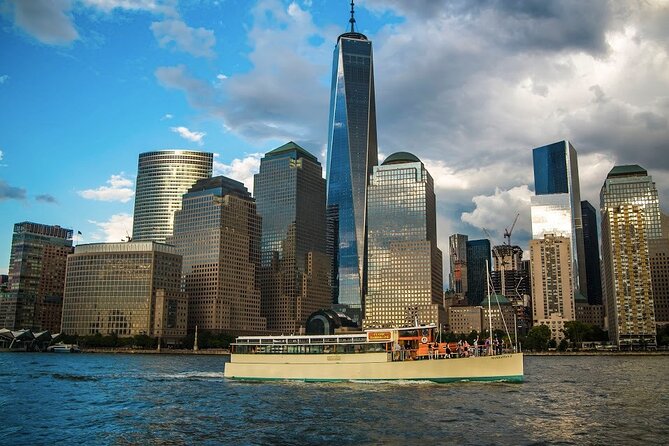
New York’s waterfront becomes the classroom on this nearly three-hour cruise around Manhattan. From Chelsea Piers, an American Institute of Architects New York guide connects the city’s green buildings, flood defenses, parks, and energy projects to the larger problem of climate change. You are not simply sightseeing. You are learning why the shoreline looks the way it does, and how it may change.
I like the tour’s small-boat feel and serious narration, especially when Doug leads the trip. I also like the unusual route: you may pass the Statue of Liberty, Ellis Island, the United Nations, Roosevelt Island, Inwood, and East River Park in one outing. The main drawback is clear: this is a talk-heavy cruise, not a casual harbor ride, and the full Manhattan circuit is not guaranteed if the Spuyten Duyvil railroad bridge or waterways are closed.
Key points to know before booking
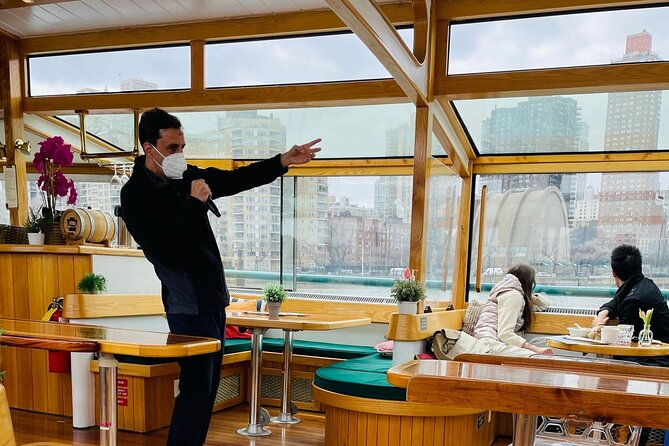
- A climate lesson with a citywide view: The guide explains flood walls, post-Superstorm Sandy defenses, renewable energy sites, recycling facilities, and sustainable parks as you pass them.
- Doug is a memorable guide when scheduled: His architectural training and focus on climate change give the narration an insider’s angle, with time for questions.
- The route covers nearly every side of Manhattan: You pass the harbor, Hudson River, East River, northern Manhattan, and the tip of Inwood.
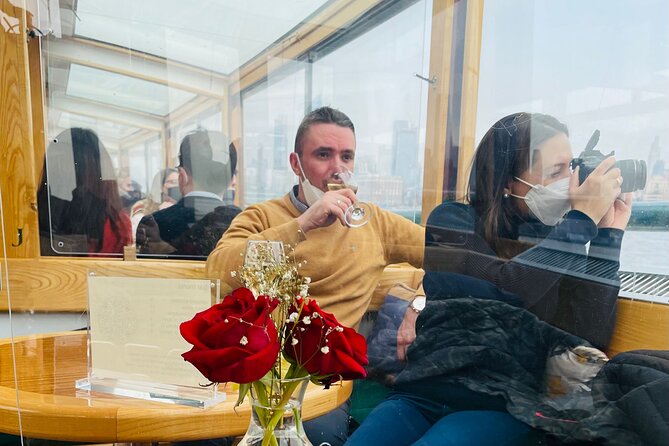
- Comfort matters on a three-hour cruise: Assigned tables, private or communal seating, and one complimentary drink make this more relaxed than a standard sightseeing boat.
- The tour is not designed for young children: It is intended for those at least 12 years old and requires conversation to stay quiet enough for everyone to hear.
- The full circuit has one important uncertainty: If the Spuyten Duyvil bridge cannot open, the boat will retrace part of the route instead of completing the circumnavigation.
Why this cruise is different from a standard Manhattan tour
Most boat trips around Manhattan focus on famous buildings and postcard views. This one uses the waterfront to explain a problem that is harder to see: how a coastal city prepares for stronger storms, rising water, and changing weather.
That gives the tour a useful purpose. A flood wall may look like a plain barrier from the water, but the guide explains what it protects and why some defenses are built into parks, roads, and public spaces rather than placed in one obvious line. A green building becomes more than a modern facade. You learn how architecture and city planning can reduce energy use or respond to heat and flooding.
The narration is nearly continuous, so you should book this only if you want an information-heavy experience. The operator asks passengers to keep conversation at a reasonable level. That may sound strict, but it matters on a small boat where one loud table can make it hard for others to follow the guide.
This is also an architecture tour. Climate change is the main theme, but the discussion reaches into design, public space, transportation, engineering, and New York’s growth. Doug, one of the named guides associated with the cruise, is particularly good for people who want more than a list of building names. His explanations connect what you see to how the city works.
More New York City Tours:
- NYC: SUMMIT One Vanderbilt Tickets
★ 4.7 · 51,195 reviews - NYC: Empire State Building Tickets – Observatory & Museum
★ 4.7 · 25,757 reviews - New York City: Statue of Liberty & Ellis Island with Ferry
★ 4.6 · 18,683 reviews
Boarding at Chelsea Piers and settling in
The cruise begins at Classic Harbor Line’s Pier 62 at Chelsea Piers, at 62 Chelsea Piers in Manhattan. The location is convenient for anyone already visiting the Hudson River waterfront, though you should allow time to find the correct pier within the larger Chelsea Piers complex.
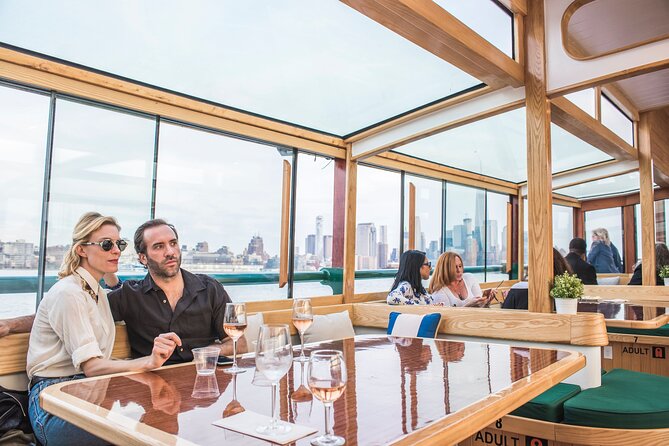
The boat has assigned tables rather than open seating. At checkout, you can choose a private section or communal section. That is a practical detail for a long narrated cruise. A private section may suit couples or small parties who want their own space, while communal seating can feel more social and may work well for solo passengers.
One complimentary beverage is included. Food is not included, but snacks and other food selections are available for purchase. If you bring your own food, keep it to a light snack, since this is not set up as a full picnic outing.
The boat is described as comfortable and elegant, with a maximum capacity of 80 people. Some departures may feel more intimate than that limit. The atmosphere is more refined than a basic ferry ride, but the price reflects that setting.
From Chelsea Piers to the Statue of Liberty
The early part of the trip introduces the Hudson River waterfront and the climate projects that frame the tour. You cruise past green buildings, sustainable parks, renewable energy sites, recycling plants, and flood defenses built or planned after Superstorm Sandy.
These sights are useful because they show climate planning in several forms. A park can provide public space while also helping manage stormwater. A flood wall can protect infrastructure and neighborhoods. A recycling facility connects daily city life to energy use and waste management. A future offshore wind turbine assembly pier points to the scale of the changes New York hopes to make in its energy system.
The guide’s narration gives these places context. Without explanation, many of them would pass as ordinary industrial or waterfront structures. You might recognize the Statue of Liberty, but you may not immediately understand why a particular shoreline has been reinforced or why a park has been designed in a certain way.
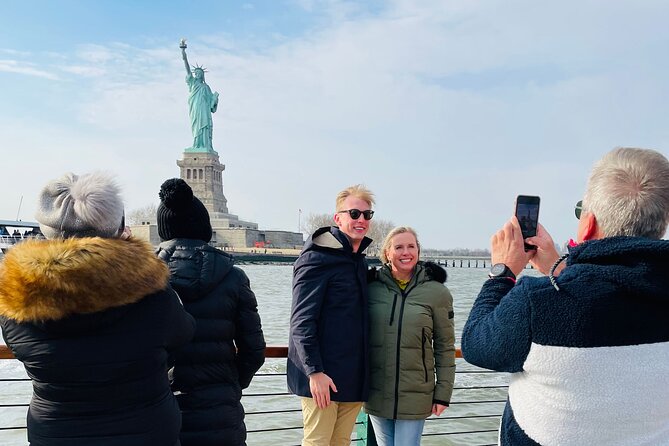
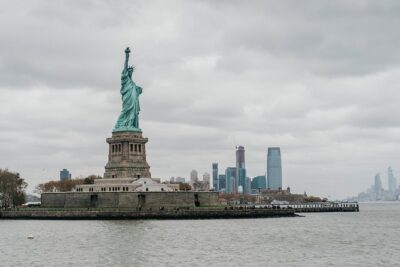
As the boat reaches New York Harbor, the Statue of Liberty becomes one of the strongest visual moments. The water gives you a broad angle that is different from a land visit, and you can continue listening while the boat moves instead of waiting in line for a ferry.
You should not book this as a dedicated Statue of Liberty tour. The monument is part of a larger route, and the focus stays on architecture, climate, and the waterfront. Still, the harbor views add welcome variety to what could otherwise be a very technical subject.
Ellis Island and the working harbor
The cruise continues past Ellis Island. From the water, the island helps place New York’s immigration story within the larger harbor system, but the tour does not function as an Ellis Island visit. You will not be disembarking for museum time.
This part of the trip also reinforces the main theme. New York’s harbor is both a historic gateway and a vulnerable edge. The same water that helped the city grow can also threaten low-lying areas during major storms. The guide’s job is to help you see that tension in the shoreline, the parks, and the protective structures.
The boat’s smaller scale helps here. You can take in the view from a table rather than standing in a crowded ferry crowd, and the staff can respond to questions during the trip. That quieter setting is one of the cruise’s better features.
A completely different way to spend a day in New York City:
- New York City: American Museum of Natural History Ticket
★ 4.5 · 15,447 reviews - Statue of Liberty and Ellis Island Tour: All Options
★ 5.0 · 13,571 reviews - New York in One Day Guided Sightseeing Tour
★ 5.0 · 13,166 reviews - NYC: Museum of Modern Art (MoMA) Entry Ticket
★ 4.6 · 12,540 reviews
The Hudson River’s flood defenses and sustainable parks
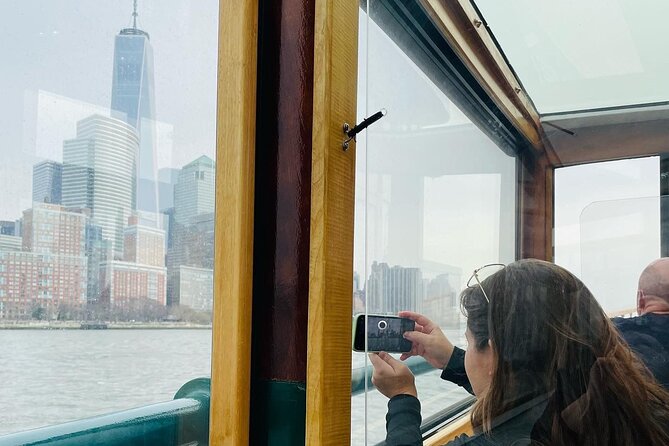
After passing the harbor, the tour works its way around Manhattan’s western edge. The guide points out flood walls, resiliency measures, sustainable parks, green buildings, and energy-related projects along the shore.
The word resiliency can sound vague, but on this cruise it has a practical meaning. It refers to measures that help the city continue functioning after flooding or severe weather. You may see defenses built into the waterfront rather than presented as separate engineering projects. The guide explains how these choices affect access to parks, views, buildings, and public space.
This is where the tour offers its best value for curious visitors. You are not only looking at New York from the water. You are being taught how to read the city’s edges. I especially like that the cruise includes both finished projects and sites planned for future development. That lets you compare what New York has already built with what it hopes to add.
There is a possible tradeoff. If your main goal is to hear about every famous building along the river, this may disappoint. The tour does not promise a constant stream of architectural highlights. Its attention is selective and tied to climate change, sustainability, and waterfront planning.
Passing Riverside Park and heading north
The boat cruises by Riverside Park in the Hudson River. The park adds a softer, more open stretch to the trip after the denser sections of lower Manhattan and the harbor.
Listen for the way the guide explains public parks as part of climate planning. Parks are not only places for walking and recreation. Their design can affect drainage, shoreline protection, and how people use the waterfront. The cruise gives you a chance to see those connections from an angle that is difficult to get on foot.
As the boat continues north, the views shift again. Manhattan’s long shape becomes easier to understand from the water. You see how neighborhoods relate to the river and how different sections of the shoreline serve different purposes.
The trip then passes the neighborhood of Inwood. This northern section is important because it takes the cruise beyond the usual downtown sightseeing zone. You get a broader sense of Manhattan as an island with varied waterfront conditions, not just a cluster of skyscrapers around the southern tip.
Inwood, the Spuyten Duyvil bridge, and the route’s one uncertainty
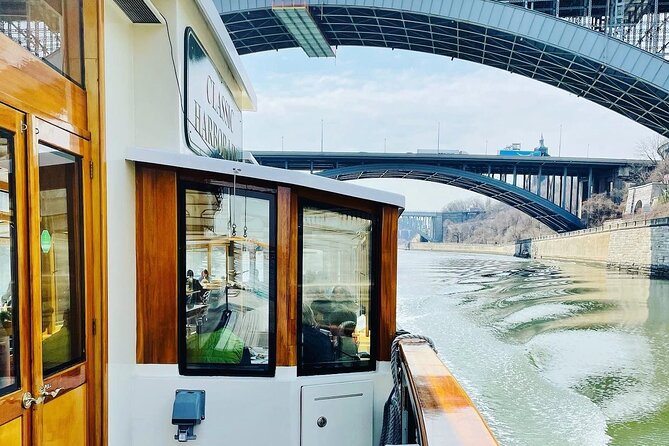
The full circumnavigation depends on passing through the Spuyten Duyvil area. The railroad bridge must open for the boat to continue, and its condition is not always known until the cruise is underway. River closures can also affect the route.
The operator does not guarantee a complete circuit. If the bridge cannot open, the boat will double back along part of the route and continue explaining the waterfront sites. There are no refunds simply because the full circumnavigation cannot be completed.
This is the most important practical limitation to understand before booking. If you need the satisfaction of sailing around the entire island, accept that there is a small operational risk. If you mainly want the architectural and climate narration, a changed route can still provide much of the promised content.
The boat then reaches the East River side of Manhattan. The change in waterway gives the cruise a fresh set of views and shows how different parts of the city face different planning pressures.
The United Nations, East River Park, and Roosevelt Island
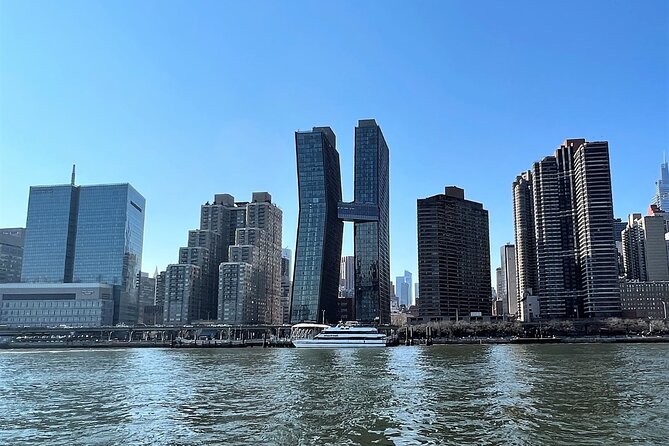
Passing the United Nations building gives the guide another major point of reference along the East River. The building is instantly recognizable, but the surrounding waterfront is just as useful for understanding the city’s relationship with the river.
The cruise also passes East River Park. The guide points out relevant details along the way, helping you connect a public park to larger questions about flooding, shoreline protection, and neighborhood planning. This is a strong section for anyone interested in how climate work affects ordinary city spaces rather than only major infrastructure.
Roosevelt Island appears farther along the route. From the boat, you see the island as part of the East River system and as a distinct piece of the city’s built environment. The changing views help prevent the narration from becoming a long lecture in one setting.
The route’s variety is one of its real strengths. In one trip, you move from harbor monuments to industrial facilities, from parks to residential edges, and from major institutions to future energy sites. The subject remains consistent, but the scenery keeps changing.
What the three-hour format feels like
The published duration is about 2 hours and 45 minutes. That is a substantial part of your day, so plan around it rather than trying to squeeze it between several tightly scheduled attractions.
I would place this tour early in a New York visit if you want to understand the city’s layout and waterfront before exploring more neighborhoods. It can also work late in a trip, when you are ready for a slower activity and want to connect places you have already seen from land.
The length is justified by the route. You cover the harbor, Hudson River, East River, northern Manhattan, and multiple climate-related sites. Still, the heavy narration requires attention. This is not the ideal choice if you want to nap, chat freely, or treat the boat as a floating restaurant.
Food is available for purchase, and you can bring a light snack. The complimentary beverage is a nice touch, but you should not expect it to cover all your food and drink needs during nearly three hours.
Is $113.23 a fair price?
At $113.23 per person, this is not a budget sightseeing cruise. You are paying for the boat, assigned table seating, one complimentary beverage, the broad route, and a specialist-led discussion rather than only transportation and views.
The value depends on what you want from a New York boat trip. If you are looking for the cheapest way to see the Statue of Liberty, another harbor option may make more sense. If you want a relaxed ride with a few announcements, this cruise may feel expensive and overly serious.
I think the price is easier to justify if you care about architecture, urban planning, environmental policy, or the future of coastal cities. The nearly three-hour route gives you far more than a short harbor loop, and a guide such as Doug adds professional context that you would not get from a basic audio recording.
The strong overall rating of 4.8 from 12 ratings and a 92 percent recommendation rate point to a generally successful experience, though the sample is small. The most consistent strengths are the guide’s clear explanations, the comfortable boat, the friendly crew, and the chance to see New York from a different angle.
Who should book this cruise?
You are a good match if you:
- Want a detailed explanation instead of a quiet sightseeing ride
- Care about climate change, architecture, or New York planning
- Prefer a smaller, more comfortable boat to a crowded ferry
- Have nearly three hours available
- Are visiting New York for the first time and want a broad orientation
- Live in the city and want to see familiar places from the water
- Are at least 12 years old and can listen quietly during the narration
I would skip it if your priority is a fast tour of famous landmarks, a lively party atmosphere, or a child-focused activity. The commentary is the main event, and the crew needs the cabin quiet enough for everyone to hear.
Service animals are permitted, but emotional support animals and pets are not. Accessibility varies by boat, so contact the operator before booking if you need boarding assistance or have specific access questions. The boat is near public transportation, and most people can participate.
Booking advice and cancellation rules
The experience is offered in English and uses a mobile ticket. It is often booked about 74 days ahead, so popular dates may require planning.
You can cancel up to 24 hours before the start time for a full refund. Changes made inside that 24-hour window are not accepted, and late cancellations are not refunded. The cruise requires suitable weather and a minimum number of participants. If the operator cancels for either reason, you can choose another date or experience, or receive a full refund.
Should you book the AIANY Climate Change Tour?
Book it if you want New York explained, not simply displayed. The best parts are the architect-led narration, the comfortable table seating, the wide-ranging route, and the practical look at flood protection, parks, renewable energy, and waterfront planning.
Do not book it expecting a standard landmark cruise. The Statue of Liberty, Ellis Island, the United Nations, Roosevelt Island, Riverside Park, Inwood, and East River Park are all part of the scenery, but the guide’s attention is guided by climate and design rather than a checklist of famous buildings.
For an informed adult, an architecture fan, or a repeat visitor who wants a fresh view of the city, the $113.23 price can be worthwhile. Just allow the full three hours, keep conversation low, and accept that the complete Manhattan circuit can be altered by bridge or river closures.
FAQ
Where does the AIANY Climate Change Tour begin and end?
The cruise begins at Classic Harbor Line, Pier 62, Chelsea Piers, New York, NY 10011. It ends back at the same meeting point.
How long does the cruise last?
The cruise lasts approximately 2 hours and 45 minutes.
What sights will I see?
You may pass the Statue of Liberty, Ellis Island, the United Nations building, Roosevelt Island, East River Park, Inwood, Riverside Park, green buildings, sustainable parks, flood defenses, recycling plants, renewable energy sites, and the future home of an offshore wind turbine assembly pier.
Is a full circumnavigation of Manhattan guaranteed?
No. The Spuyten Duyvil railroad bridge must open, and river closures can also affect the route. If the full circuit cannot be completed, the boat will double back and continue with additional waterfront commentary. There are no refunds for this route change.
Is food included?
One complimentary beverage is included. Food can be purchased onboard. You may bring a light snack, but food is not included in the ticket price.
Can children and pets join the cruise?
Children under 12 are not permitted because this is a heavily narrated experience. Service animals are allowed, but emotional support animals and pets are not.
Recently added in New York City
- NYC: Midtown Hands-On Bagel Baking Class★ 5.0 · 12 reviews
- Personalize Sightseeing Tour★ 5.0 · 92 reviews
- Central Park Pedicab Tour with Guide★ 5.0 · 63 reviews
- Central Park Pedicab Guided Tour★ 5.0 · 17 reviews
- Photographer, Professional Photo shoot – New York★ 5.0 · 16 reviews
- Official Central Park Pedicab Tours★ 5.0 · 35 reviews
- Official Central Park Pedicab Ride ( UP TO 3 PERSONS )★ 5.0 · 4 reviews
- JFK or LGA package only (Round trip transfer plus VIP Contrasts)★ 5.0 · 3 reviews
Tours, compared.
Statue of Liberty and Ellis Island Tour: All Options
Read our review →


9/11 Memorial, Ground Zero Tour with Optional 9/11 Museum Ticket
Read our review →
Hop-on Hop-off Sightseeing Tour by Open-top Bus
Read our review →