
Reviewed · NYC WALKING TOURS
Recreate the Most Requested Walking Tour of 1840s New York
New York’s past is written into its streets, but you need someone to read it aloud. This small-group walk follows the city from the elegant world of Colonnade Row to the crowded Five Points district, using buildings, street angles, old geography, and family names to explain how Manhattan changed.
I like the tiny group size, capped at seven, because it should be easier to ask questions and keep pace with guide Robert, also called Rob. I also like the focus on architecture as evidence: you are not simply pointed toward famous sights, you are shown how buildings were altered and what their scale says about the people who once lived and worked there.
The main thing to consider is the tour’s emphasis. It includes Five Points, but it is not mainly a gangs-of-New-York tour. Expect more architectural and social history than dramatic stories about crime. The walk also covers some distance, so comfortable shoes and a moderate level of fitness matter.
Key points at a glance
- Start among former elite homes: Begin near the ruins of Colonnade Row, once linked to New York’s upper class and an early pleasure garden.
- Read NoHo and SoHo as historical clues: Buildings, storefronts, materials, and street patterns reveal several layers of the city’s past.
- See Louis Sullivan’s only New York building: The Bayard-Condict Building offers a short but worthwhile lesson in early skyscraper design.
- Follow Manhattan’s old geography: Houston Street, Broadway, Foley Square, and the former lake shore help explain why the city grew as it did.
- Finish at Five Points: End near Columbus Park, where elite residential New York gives way to the former site of one of the city’s most notorious slums.
- Ask plenty of questions: Robert’s patient, detailed approach suits people who want more than a quick list of dates and famous names.
From Colonnade Row to the city of the 1840s
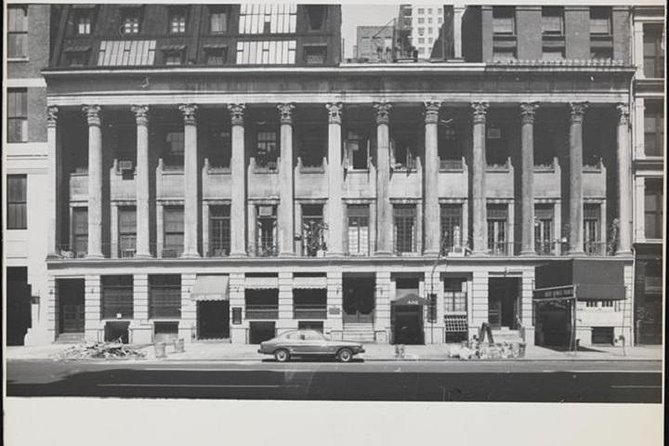
The tour begins outside The Public Theater at 425 Lafayette Street, near the remains of Colonnade Row. In the early 1830s, this was a prestigious residential address for some of the country’s wealthy families. The Astors, Roosevelts, and Delanos are part of the social world connected to this opening chapter.
What makes the start useful is its setting. The site once occupied higher ground near a pleasure garden, back when the built-up city lay much farther downtown. That simple fact gives you a clearer sense of Manhattan’s growth. Streets that now feel thoroughly urban once marked the edge of fashionable life.
You spend about 15 minutes here, laying out the forces that shaped the neighborhood. The stop is not about entering a preserved mansion. It is about learning to picture what is gone, and seeing how a small surviving fragment can point to a much larger story.
This is a good opening for anyone who likes context before detail. You begin with class, geography, and urban expansion, then carry those ideas into the streets.
More NYC Walking Tours:
- SoHo, Little Italy, and Chinatown Walking Tour in New York
★ 5.0 · 3,153 reviews - Secrets of Grand Central Station Walking Tour New York City
★ 5.0 · 1,796 reviews - Greenwich Village Walking and Food Tasting Tour
★ 5.0 · 1,572 reviews
Broadway turns into an open-air history lesson
From Colonnade Row, the walk heads down Broadway through NoHo and toward SoHo. Here, the guide asks you to look closely at the buildings rather than treat them as background scenery.
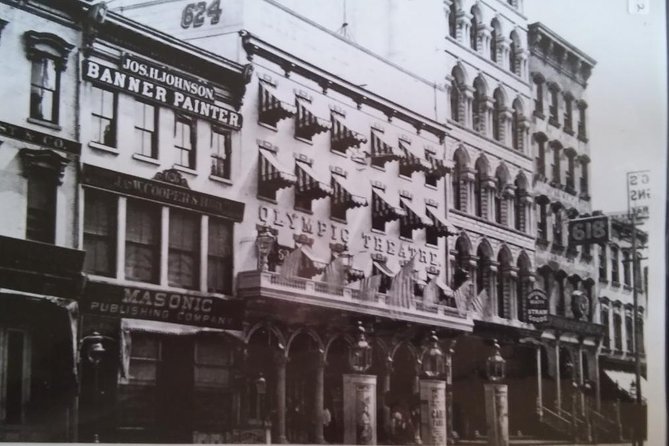
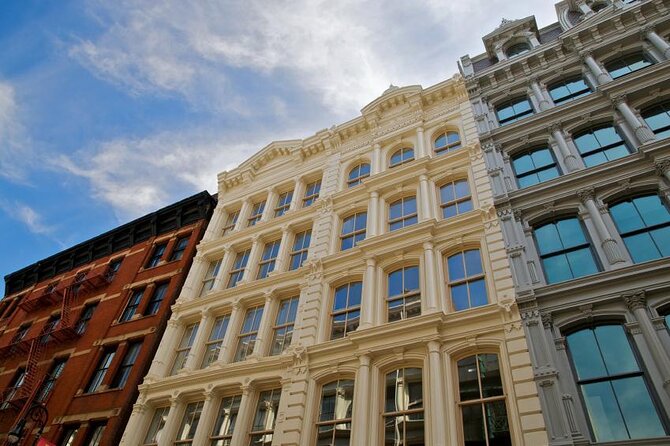
You will notice different building sizes, styles, and materials, along with signs of later reuse. The neighborhood has been home to different trades, residents, shops, artists, and galleries over time. The present-day storefronts are only one layer.
The route helps answer questions that are easy to miss on your own. What did this part of Broadway look like before fashionable shopping? Who used these sidewalks before galleries and boutiques arrived? Which buildings changed purpose, and which details still hint at their first use?
Images from earlier periods are used to compare the present streetscape with older versions of Broadway. That visual approach should appeal to you if you enjoy understanding why a building looks the way it does, not just taking a picture of it.
The tour also explains the name SoHo. It has only been used for this area since the 1950s, so the walk asks what people called the neighborhood in earlier periods. That is a small detail, but it helps you avoid treating modern neighborhood names as timeless facts.
Bayard-Condict Building and the rise of the skyscraper
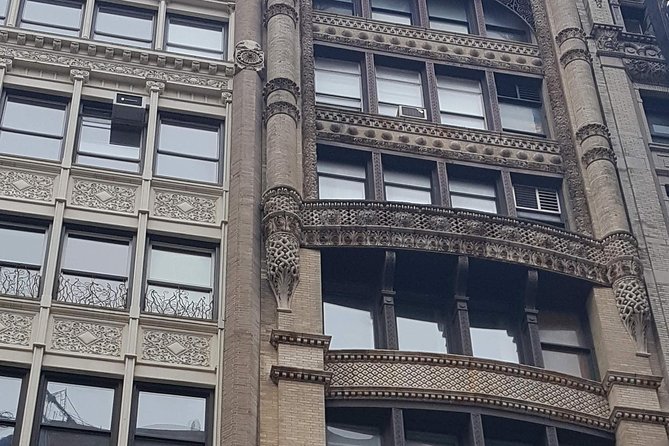
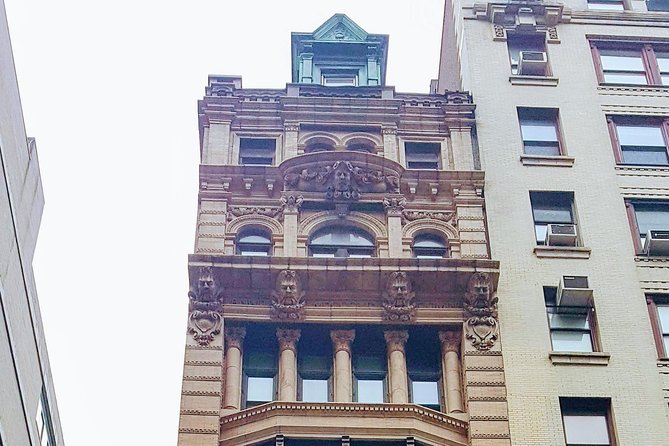
The stop at the Bayard-Condict Building is brief, about five minutes, but it gives the tour an architectural anchor. Designed by Louis Sullivan, it is his only building in New York City.
Here, you learn how the building fits into the development of the skyscraper style. The point is not simply that the building is old or attractive. It is that the design reflects a period when architects were working out how tall commercial structures should look and function.
If you are interested in architecture, this may be one of the most useful stops. If your main goal is a long, dramatic account of Five Points, the short stop also signals what kind of tour this is. The buildings often carry as much weight as the famous names.
Houston Street reveals an older Manhattan
At Houston Street and Broadway, the guide uses the street itself to explain ancient geography and the beginning of Manhattan’s grid. The pavement does not look like a museum object, but its angle and position help show where the planned street system began.
This part of the walk also recalls an early site of St. Thomas Episcopal Church and an upper-class residential neighborhood. That contrast matters. Present-day Houston Street is a busy urban corridor, yet the same area once served a very different population and purpose.
I like this kind of interpretation because it turns ordinary movement through the city into a historical exercise. You are not asked to admire a single monument. You are asked to notice alignment, street width, and location, then connect them to older patterns.
The walk continues through SoHo and down Broadway, with explanations and historical images that break apart the modern streetscape. Brick and mortar become evidence. A row of buildings can reveal changing commerce, social class, and urban planning.
A completely different way to spend a day in New York City:
- NYC: SUMMIT One Vanderbilt Tickets
★ 4.7 · 51,195 reviews - NYC: Empire State Building Tickets – Observatory & Museum
★ 4.7 · 25,757 reviews - New York City: Statue of Liberty & Ellis Island with Ferry
★ 4.6 · 18,683 reviews - New York City: American Museum of Natural History Ticket
★ 4.5 · 15,447 reviews
Broadway to Canal Street, with people behind the storefronts
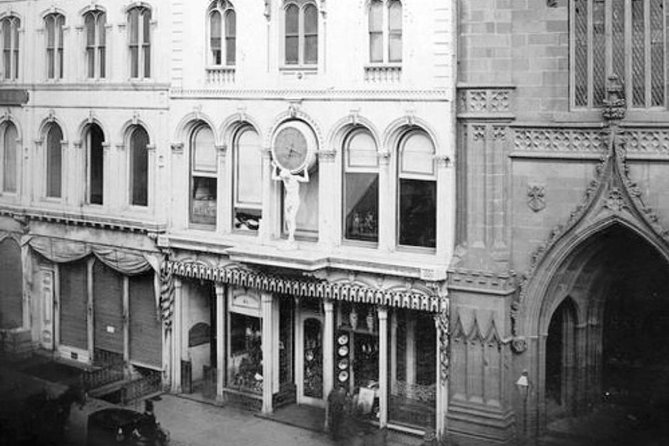
The stretch toward Canal Street focuses on social and retail history. This is where the walk moves beyond architecture alone and brings in the people who shaped the district.
You hear about businesses, residents, and characters from earlier periods. The goal is not to produce a single neat story of progress. New York changed because different groups used the same streets in different ways, often leaving behind buildings that were later adapted again.
That repeated reuse is one of the strongest ideas in the tour. A structure that now houses a shop or gallery may have served an entirely different role in the past. You begin to see the city as a place of constant adjustment, not a collection of fixed historic scenes.
The pace is described as steady rather than fast, with opportunities to stop and listen. That matters because the route covers some distance. You will spend time standing on sidewalks while Rob explains details, so supportive shoes and reasonable walking stamina will make the afternoon easier.
Foley Square and the buried shoreline
At Foley Square, the tour takes a darker turn. Today’s Civic Center occupies what was once a lake. Its former shore was close to the African Burial Ground during much of the British colonial period.
The lake was later filled, and development followed its old shoreline. The Five Points grew nearby and became one of the most notorious slum districts in New York City history.
This stop is valuable because it explains how geography and social conditions met. The area did not simply become notorious by accident. Land, water, filling projects, population growth, and housing pressure all helped shape what came next.
You spend about five minutes here, but the material reaches far beyond the stop itself. It gives you a better way to understand the route’s final section and the sharp social contrast built into the tour.
Columbus Park and the former Five Points
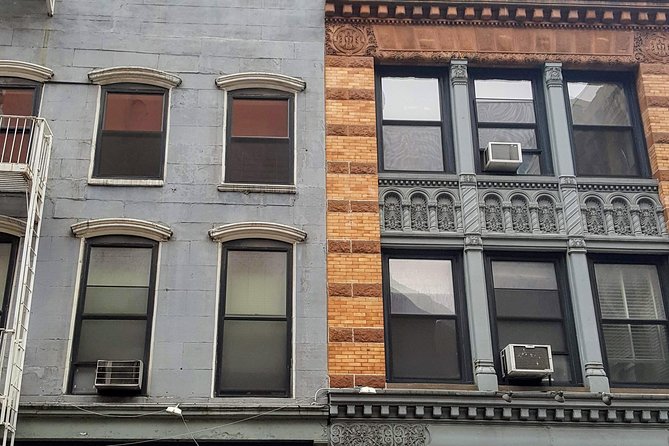
The walk ends in the area of Columbus Park, near the former Five Points site at 500 Pearl Street, on the border of the Court District and Chinatown. The listed endpoint is 169 Worth Street, so check the exact meeting instructions for the day’s final position.
The ending is intentionally different from the beginning. You start near the world of elite residences and pleasure gardens, then finish among places connected with severe overcrowding and poverty. The route also touches on Irish communities, Five Points, and the tenements of Mulberry Bend.
This is not a preserved neighborhood in the usual sense. Much of the physical setting has changed, which makes the guide’s explanation especially important. You need the maps, old images, and careful description to understand what stood here before later streets and buildings replaced it.
The tour does not appear to promise a long, sensational account of gangs. If that is your main interest, you may want something more narrowly focused. If you want to understand how class, migration, housing, and urban change shaped Lower Manhattan, this ending gives the route purpose.
What Rob adds to the experience
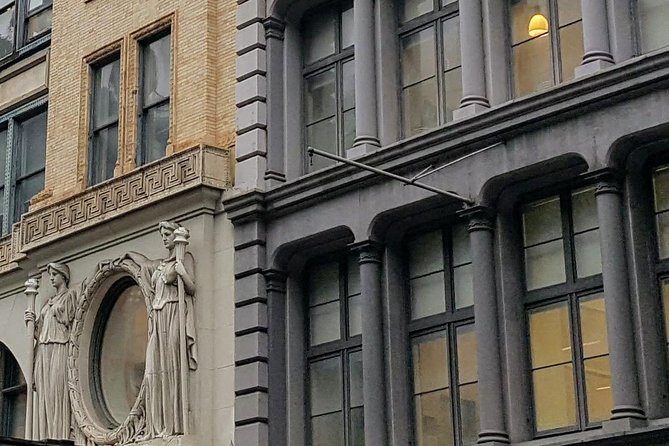
The guide is identified as Robert, or Rob. His approach centers on detailed research, architecture, and patient answers. That combination suits you if you like to stop and ask why a building matters, how a street changed, or what a neighborhood was called before its current name became common.
The strongest praise focuses on his ability to connect facts with what is directly in front of you. Rather than reciting a detached timeline, he ties New York’s past to building design, street patterns, and the daily movement of people.
That can change how you walk through the city afterward. A plain facade may prompt you to ask what it replaced. A street angle may suggest older geography. A modern shop may sit inside a building with several earlier lives.
The small group helps here. With a maximum of seven people, the experience should feel more like a guided conversation than a large procession. It is also easier to hear explanations on busy streets and to ask about details that catch your eye.
Price, length, and practical value
At $59 per person, the tour sits in a reasonable range for a two to three hour guided walk, especially with a maximum group size of seven. You are paying for interpretation rather than admission tickets. The sites are viewed from public streets, and there are no major entry fees included because the value comes from the guide’s research and explanation.
I would consider it a good buy if you have already seen the obvious Lower Manhattan sights and want a more focused way to understand the city. It is less useful if you want a short sightseeing loop with many major attractions or indoor stops.
The tour is offered in English and uses a mobile ticket. It is near public transportation, and service animals are allowed. You should have a moderate level of physical fitness because the route covers several neighborhoods on foot.
The experience is usually booked about 26 days ahead, so planning early is sensible if your schedule is tight. Free cancellation is available up to 24 hours before the start time. Bad weather or failure to reach the minimum number of participants can lead to a new date or a full refund.
Who should book this Lower Manhattan walk?
I would choose this tour if you enjoy architectural details, old maps, social history, and the small clues that explain how a city grew. It is particularly well suited to repeat visitors who have already seen the standard downtown sights and want a fresh way to read familiar streets.
It also works for people who want a slower, thoughtful walk. The route is not described as fast-paced, and there are chances to stop while Rob explains what you are seeing.
Families with young children may find the material too detailed, especially because the tour depends on listening and comparing past and present. History fans, architecture students, urban explorers, and anyone curious about New York before its modern neighborhood names should get more from it.
You should also book with the right expectations. This is not a pure Five Points crime tour, not a museum visit, and not a quick parade of famous landmarks. It is an outdoor lesson in how wealth, commerce, immigration, architecture, and geography shaped Lower Manhattan.
Should you book it?
Book this walk if you want to understand why NoHo, SoHo, Broadway, Foley Square, and the former Five Points area look and feel the way they do. The small group, detailed guidance from Rob, and attention to overlooked architecture give you a useful way to see New York beyond its postcard sights.
Skip it if you need indoor attractions, a very short route, or a dramatic gangs-and-crime story. For curious walkers who like buildings to explain the people and events behind them, $59 is a fair price for two to three hours of careful, street-level history.
FAQ
Where does the tour begin?
The tour begins at The Public Theater, 425 Lafayette Street, New York, NY 10003.
Where does the tour end?
The listed endpoint is 169 Worth Street, New York, NY 10013. The final portion visits the Columbus Park and former Five Points area near 500 Pearl Street.
How long does the walking tour last?
The experience lasts approximately two to three hours.
How much does the tour cost?
The price is $59 per person.
What language is the tour offered in?
The tour is offered in English.
How many people can join the tour?
The maximum group size is seven travelers.
Who guides the tour?
The guide is Robert, also referred to as Rob.
What areas does the tour visit?
The route includes the area around The Public Theater and Colonnade Row, NoHo, SoHo, Broadway, the Bayard-Condict Building, Houston Street, Canal Street, Foley Square, Columbus Park, and the former Five Points area.
Does the tour require much walking?
Yes. You should have a moderate level of physical fitness for the walking route.
Can I cancel for a full refund?
You can cancel at least 24 hours before the experience begins for a full refund. Cancellations or changes made less than 24 hours before the start time are not accepted for a refund.
Recently added in New York City
- NYC: Midtown Hands-On Bagel Baking Class★ 5.0 · 12 reviews
- Personalize Sightseeing Tour★ 5.0 · 92 reviews
- Central Park Pedicab Tour with Guide★ 5.0 · 63 reviews
- Central Park Pedicab Guided Tour★ 5.0 · 17 reviews
- Photographer, Professional Photo shoot – New York★ 5.0 · 16 reviews
- Official Central Park Pedicab Tours★ 5.0 · 35 reviews
- Official Central Park Pedicab Ride ( UP TO 3 PERSONS )★ 5.0 · 4 reviews
- JFK or LGA package only (Round trip transfer plus VIP Contrasts)★ 5.0 · 3 reviews
NYC Walking Tours, compared.
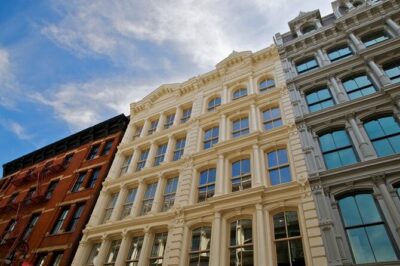
SoHo, Little Italy, and Chinatown Walking Tour in New York
Read our review →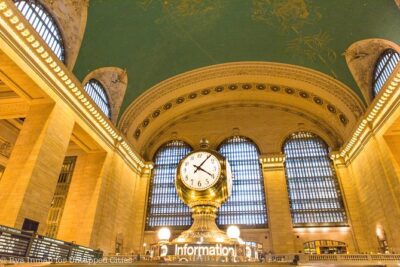
Secrets of Grand Central Station Walking Tour New York City
Read our review →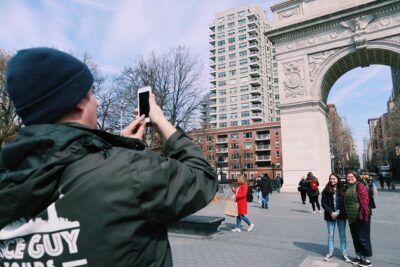
Greenwich Village Walking and Food Tasting Tour
Read our review →
Artistic, Alternative Greenwich Village Walking Tour
Read our review →

NYC Greenwich Village Italian Food Guided Walking Tour
Read our review →Browse the lists this tour appears in