
Reviewed · HARLEM TOURS
Central Harlem African-American Culture Walking Tour
Harlem’s story is written across its streets, churches, theaters, apartment blocks, murals, and storefronts. This two-hour walk follows that story from the northern end of the historic district toward the Apollo Theater, connecting the Harlem Renaissance and civil rights era with the neighborhood you see today. The guide is a Harlem resident, which gives the tour a local voice rather than a detached textbook feel.
I like two things right away: the small maximum of 15 people, and the route itself. You move through several parts of Harlem instead of parking at one landmark, from Strivers Row and Harlem Hospital murals to Little Senegal and the 125th Street shopping corridor. The main drawback is timing. The material can be hard to fit into two hours, and the walk has occasionally run long, so I would not schedule a tight activity immediately afterward.
Key points at a glance
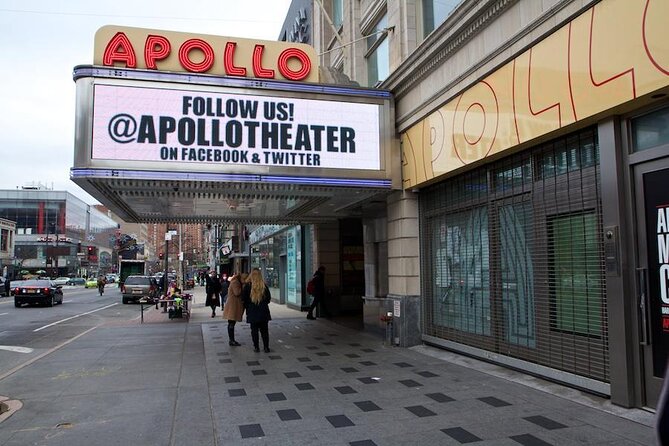
- A walk from 145th Street to 125th Street: You finish at the Apollo Theater after seeing several distinct parts of Central Harlem.
- Guides with strong local ties: Guides may include George, William, Jo, or Dr. Keith Taylor, a Harlem native whose family connection to the area adds personal context.
- Small groups of up to 15: This makes it easier to hear the guide and ask questions on busy city streets.
- History beyond famous names: The route covers the Harlem Renaissance, civil rights, migration, architecture, music, education, and neighborhood change.
- A useful first visit to Harlem: You get orientation, local context, and suggestions for food or further exploring.
- Not a music performance tour: You learn about jazz, gospel, and other musical forms, but you do not attend a church service or live music event.
Why this walk gives Harlem a proper introduction
Many first-time visitors know Harlem through a few familiar names: the Apollo Theater, jazz clubs, gospel choirs, and perhaps the Harlem Renaissance. Those subjects matter, but they can make the neighborhood seem like a museum of the past. This tour is better understood as a moving lesson in how Harlem developed, changed, and continues to function as a living New York community.
The route runs from 145th Street down toward 125th Street. That matters because you are not simply taken from one famous building to another. You see residential streets, public art, historic institutions, commercial blocks, and areas shaped by different waves of migration. The walk puts the celebrated landmarks into a broader setting.
The guide leads the group through stories of African-American culture and the people who shaped it, while also discussing the multiple ethnic communities that have made Harlem home. That wider view is important. Harlem is not a single story, and the route includes Little Senegal as part of the neighborhood’s present-day identity.
I especially value the personal angle offered by guides such as George, William, Jo, and Dr. Keith Taylor. The guide assigned to your date may differ, but the strongest tours appear to benefit from guides who connect national events to ordinary streets and personal memories. Dr. Taylor is a Harlem native, and his family ties to the area give his explanations an especially grounded feel.
More Harlem Tours:
- NYC Highlights Tour: Bronx, Brooklyn, Harlem, Queens & Coney
★ 4.5 · 2,846 reviews - NYC: Contrasts Tour of Harlem, The Bronx, Queens & Brooklyn
★ 4.5 · 2,167 reviews - NYC: Harlem Hallelujah! Gospel Wednesday Concert
★ 4.7 · 1,638 reviews
Starting at 145th Street
The listed meeting point is 700 St Nicholas Avenue, with a 10:00 a.m. start. The end point is the Apollo Theater at 233 West 125th Street. The start is near public transportation, but I would still arrive early. You want time to find the group, use a restroom, and settle in before the walk begins.
The northern starting point lets the guide introduce Harlem gradually. Instead of opening with only the best-known theater, you begin in the wider neighborhood and work toward 125th Street. That approach helps you notice how the area changes as you walk.
The tour is conducted in English and uses a mobile ticket. Since it is an outdoor walking experience, wear comfortable shoes and clothing suited to the weather. The route can be moderately difficult for people with limited mobility, and you should expect a steady amount of walking rather than a short stroll between nearby buildings.
One practical concern is punctuality. A start delayed while waiting for late arrivals can affect the rest of the route, especially when the material is already full. I would treat 10:00 a.m. as a firm start time and arrive before it.
Harlem Renaissance, civil rights, and the neighborhood today
The Harlem Renaissance is one of the main subjects, but the tour does not stop with writers, artists, and musicians of the early twentieth century. You also hear about the civil rights era and more recent changes in the neighborhood.
That time span is one of the tour’s strongest features. You can see how Harlem became a major center of Black political thought, art, music, business, and community life, then connect that past to current developments. The result is more useful than a list of dates because the guide explains how different periods overlap.
The tour also places African-American history within the story of New York migration and urban growth. Harlem’s cultural identity was shaped by people arriving from different parts of the United States and from other countries. The visit to the African Market in Little Senegal adds a present-day layer to that discussion.
This is the kind of context I would want before exploring independently. Once you understand the main forces that shaped the neighborhood, a storefront, apartment row, mural, or public institution becomes easier to read. You are not just looking at an old building. You are seeing part of a larger community story.
Strivers Row and Harlem’s architecture
Architecture is a major reason to choose this tour. Harlem has handsome row houses, apartment buildings, institutional structures, and streets that many visitors miss when they stay only around 125th Street.
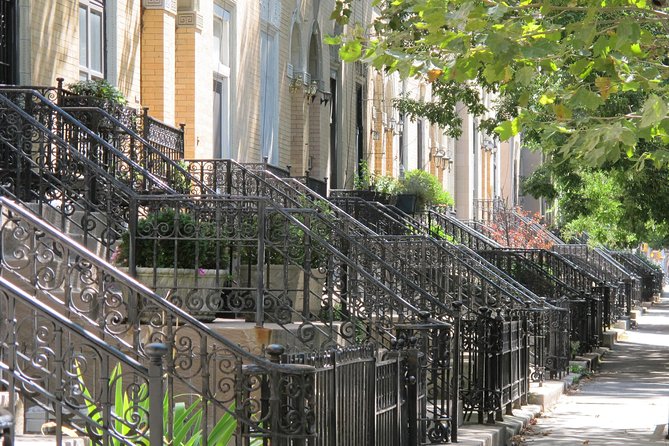
Strivers Row is one of the key stops. Its well-known homes help explain the ambitions of Harlem’s Black professional class and the importance of housing, status, and community in the neighborhood’s development. The buildings are not just attractive backdrops for photographs. They show how Harlem’s residents created spaces that reflected success, aspiration, and social life.
The route also includes Harlem School of the Arts and other notable buildings. The guide may point out details you would probably pass without noticing, then connect the design to education, culture, and public life. If you enjoy architecture, this tour gives you a useful reason to look upward and beyond the obvious landmarks.
The neighborhood’s architecture can also complicate the usual picture of Harlem. Alongside busy commercial streets, you see quieter blocks and carefully designed homes. One of the pleasures of the walk is this contrast between the familiar image of Harlem and the more residential, elegant sections farther north.
More NYC Walking Tours:
- SoHo, Little Italy, and Chinatown Walking Tour in New York
★ 5.0 · 3,153 reviews - Secrets of Grand Central Station Walking Tour New York City
★ 5.0 · 1,796 reviews - Greenwich Village Walking and Food Tasting Tour
★ 5.0 · 1,572 reviews - Artistic, Alternative Greenwich Village Walking Tour
★ 5.0 · 971 reviews
Harlem Hospital murals and the Schomburg Center
The Harlem Hospital murals are another important part of the route. Public murals can be easy to overlook when you are walking through a city, but here they help show how art, medicine, community identity, and Black representation meet in a public institution.
The Schomburg Center for Research in Black Culture gives the tour a strong connection to scholarship and preservation. Its role fits the larger theme of the walk: Harlem’s story is not only performed on stages or told in famous biographies. It is also collected, studied, protected, and passed to future generations.
You should not expect an extended indoor museum visit. This is an outdoor walking tour, and the route focuses on seeing and understanding places from the street. Still, the Schomburg Center adds weight to the experience because it points to the work required to preserve African-American history.
The guide’s explanation is especially important here. A building can mean little if you only hear its name. With context, it becomes part of the neighborhood’s intellectual and cultural center.
Little Senegal and the 125th Street corridor
The stop in the African Market in Little Senegal broadens the tour beyond the Harlem of the early twentieth century. It shows that the neighborhood continues to change and that African identity in Harlem is not limited to the African-American experience.
The market also gives the route a more everyday quality. You are seeing a working commercial area, not just an officially preserved site. That makes the tour feel connected to present-day Harlem rather than locked in a historical period.
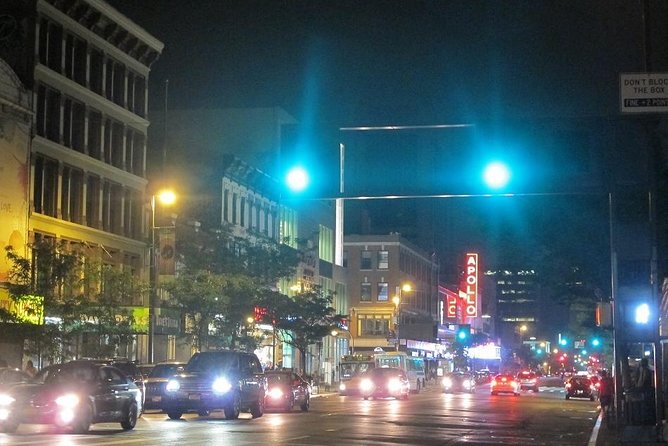
Later, the walk reaches the 125th Street shopping corridor. This is one of the most useful parts of the route for first-time visitors because it helps you get your bearings. You see where the neighborhood’s commercial energy gathers and finish near one of its best-known cultural addresses.
The corridor can be busy, and the city setting may make it harder to hear at times. That is another reason the 15-person limit matters. A smaller group is easier to keep together and easier for the guide to address at street corners.
The Apollo Theater, Hotel Theresa, and Speaker’s Corner
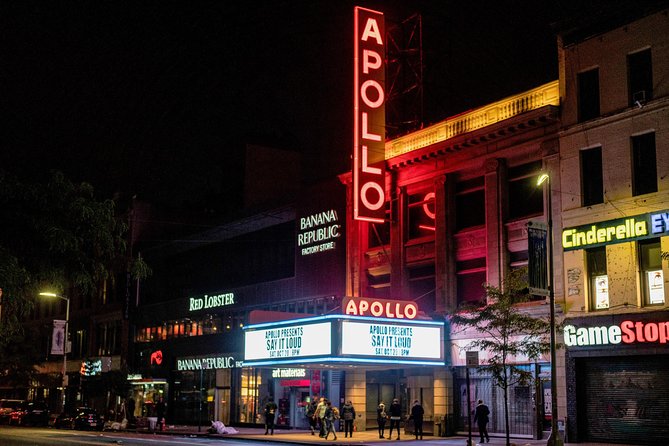
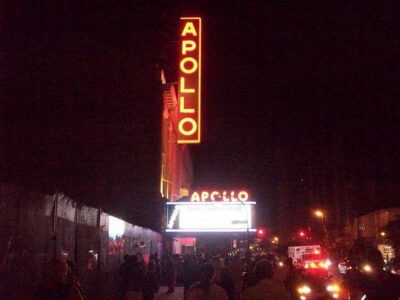
The Apollo Theater is both the meeting area for the end of the tour and one of its central subjects. You learn about the theater’s place in Harlem’s musical and cultural life, including its connection to jazz, gospel, and other forms of Black performance.
The Apollo is an especially fitting endpoint. After walking through residential blocks, cultural institutions, markets, and murals, you arrive at a building that represents Harlem’s public face to the world. The route gives that landmark more meaning than a quick photograph would.
The tour also covers Hotel Theresa and Speaker’s Corner. These sites help connect Harlem’s cultural life with politics, public speech, business, and the wider civil rights movement. Together, they show that the neighborhood’s importance was never limited to entertainment.
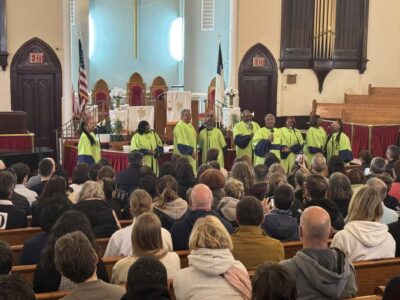
There is an important limit here: this is not an Apollo Theater performance or backstage visit, and it does not include church attendance or live music. You learn about Harlem’s musical traditions, but you should book a separate music or gospel experience if hearing a performance is your main goal.
Guides, group size, and the pace of the walk
The guide can make a large difference. George is repeatedly described as engaging and good at explaining the neighborhood through local context. William is noted for his passion for Harlem and its people. Dr. Keith Taylor is a Harlem native whose personal connection and wide knowledge of the area have made a strong impression. Jo is also described as an informative local guide.
That does not guarantee the same style on every departure. One poor experience described a slow pace, little explanation, and weak command of details. I would treat that as a warning to keep expectations realistic: the quality of a walking tour depends heavily on the individual guide and the day’s conditions.
At its best, the guide welcomes questions, adds humor, and makes the group feel comfortable. Some guides have also helped people with practical advice, such as finding their way back to a hotel or choosing places to eat. That is a small but useful benefit of booking with someone who knows the area.
The maximum group size is 15. That is small enough for conversation, though street noise and the size of the group can still affect how easily you hear. The walk suits adults, older children, students, and anyone interested in history or architecture. One guide specifically noted that very young children may struggle to stay interested during a talk-heavy route.
Is $30 a fair price?
At $30 per person, the tour is reasonably priced for a two-hour guided walk in Manhattan. You are paying for a licensed guide, local interpretation, and a route that covers several parts of Harlem without requiring you to organize the transport and research yourself.
The value is strongest if you are new to Harlem or want a clear historical foundation before exploring on your own. A guide can connect Strivers Row, the Schomburg Center, the Apollo Theater, and the 125th Street corridor in a way that separate visits may not.
The value is weaker if you want a long museum visit, a music performance, or a highly relaxed pace. The tour covers a lot of ground, and the information can feel compressed. Some people may prefer a shorter list of stops with more time at each one.
I also would not plan another time-sensitive tour directly afterward. The advertised duration is about two hours, but the route has the potential to run longer when the guide is covering a large amount of material or the group starts late. Leave a generous buffer for your next plan.
Weather, cancellations, and practical planning
The experience requires good weather, so poor conditions can lead to a new date or a full refund. A minimum number of participants is also required, and if the tour is canceled for that reason, you are offered another date or experience, or a full refund.
You can cancel for a full refund up to 24 hours before the start time. Changes or cancellations made less than 24 hours before the tour are not accepted for a refund. The cutoff uses local New York time.
The walk is near public transportation, but the exact trip to the meeting point depends on where you are staying. Since the tour finishes at the Apollo Theater, you can use the end of the walk as a starting point for more time on 125th Street.
Who should book this Harlem walk?
I would choose this tour if you want an introduction to Harlem that joins history, architecture, culture, and current neighborhood life. It is also a good fit if you want to support a local community organization and prefer a guide who can explain the area from personal experience.
The tour suits solo visitors, couples, families with older children, and small groups of friends. It is especially useful for students or anyone who wants a clear introduction to African-American history beyond the material commonly taught in school.
I would think twice if you have limited walking ability, dislike outdoor talks, or need the tour to finish at an exact time. I would also choose another experience if your main goal is gospel, jazz, or a performance inside the Apollo Theater.
Should you book it?
Yes, if you want a thoughtful first look at Harlem and can allow some flexibility in your schedule. The combination of local guides, a 15-person maximum, Strivers Row, the Schomburg Center, Little Senegal, Harlem Hospital murals, and the Apollo Theater gives you much more than a single-landmark visit.
Book it for the stories and connections, not for a show. Arrive early, wear good shoes, leave extra time afterward, and come ready to ask questions. With a strong guide such as George, William, Jo, or Dr. Keith Taylor, the walk can give you the context needed to explore Harlem with sharper eyes.
FAQ
Where does the Harlem walking tour start?
The tour starts at 700 St Nicholas Avenue, New York, NY 10031, at 10:00 a.m.
Where does the tour end?
The walk ends at the Apollo Theater, 233 West 125th Street, 3rd Floor, New York, NY 10027.
How long is the tour?
The advertised duration is approximately two hours. You should allow extra time because the walk may run longer.
How many people can join the tour?
The group is limited to a maximum of 15 participants.
What language is the tour offered in?
The tour is offered in English.
Does the tour include live music or a church visit?
No. The tour discusses jazz, gospel, and other musical forms, but it does not include a church visit or live music.
What should I wear?
Wear comfortable clothing and suitable walking shoes. The tour is outdoors and requires a moderate level of physical fitness.
Can I cancel for a refund?
Yes. You can cancel at least 24 hours before the start time for a full refund. Cancellations or changes made less than 24 hours before the start time are not refunded.
Recently added in New York City
- NYC: Midtown Hands-On Bagel Baking Class★ 5.0 · 12 reviews
- Personalize Sightseeing Tour★ 5.0 · 92 reviews
- Central Park Pedicab Tour with Guide★ 5.0 · 63 reviews
- Central Park Pedicab Guided Tour★ 5.0 · 17 reviews
- Photographer, Professional Photo shoot – New York★ 5.0 · 16 reviews
- Official Central Park Pedicab Ride ( UP TO 3 PERSONS )★ 5.0 · 4 reviews
- JFK or LGA package only (Round trip transfer plus VIP Contrasts)★ 5.0 · 3 reviews
- Official Central Park Pedicab Tours★ 5.0 · 35 reviews
Harlem Tours, compared.

NYC Highlights Tour: Bronx, Brooklyn, Harlem, Queens & Coney
Read our review →
Contrasts Tour of Harlem, The Bronx, Queens & Brooklyn
Read our review →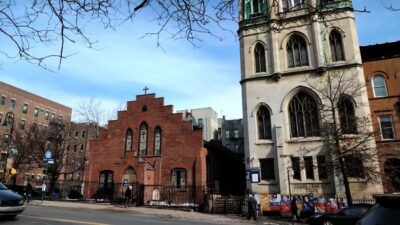
Browse the lists this tour appears in