
Reviewed · NYC WALKING TOURS
Hell Gate Walking Tour
Hell Gate is where New York gets strange. Between Manhattan, Queens, and the East River islands, violent currents once formed a huge whirlpool that wrecked boats and gave the water its grim name. This small-group walk with Krombie turns that overlooked corner of the city into a storybook of bridges, prisons, islands, and odd plots.
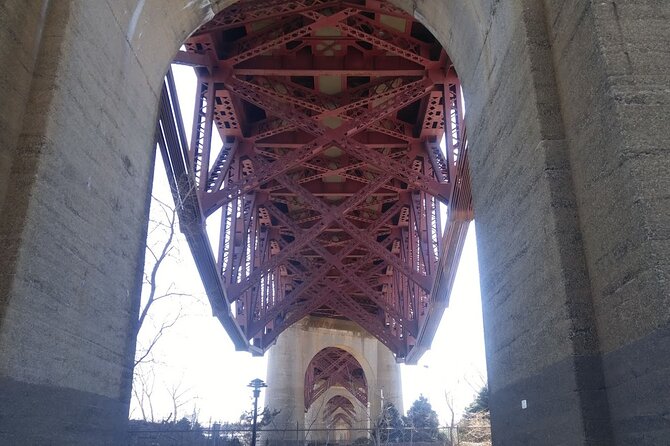
I like the chance to see Randalls and Wards Islands from several strong viewpoints, especially the Hell Gate Bridge and the distant Brother Islands. I also like the guide’s story-first approach, which brings in river pirates, Typhoid Mary, psychiatric patients, and a foiled Nazi plan to destroy the bridge.
The main drawback is the setting itself: this is a long outdoor walk on an island with limited visitor services. You need moderate fitness, good shoes, and a weather forecast that cooperates. Coffee and tea are not included, and poor weather can cancel the tour.
Key points to know before you book
- Hell Gate is the subject, not just the backdrop: Learn why the water was feared and how engineers tamed it.
- Krombie leads with vivid storytelling: Expect unusual New York tales rather than a standard bridge tour.
- The views keep changing: You’ll see Mill Rock, Roosevelt Island, Astoria Park, Rikers Island, the Brother Islands, and several bridges.
- The group is capped at 15 people: That keeps the pace relaxed and gives you room to ask questions.
- The walk ends near the M35 bus: You can ride toward 125th Street and connect with the 4, 5, or 6 subway lines.
- The $34 price is fair for a specialist tour: You are paying for research, guiding, and access to a part of New York most visitors skip.
Why Hell Gate makes a surprisingly good New York tour
Most first visits to New York stay on Manhattan. That is understandable, but it leaves out a large part of the city’s story. Randalls and Wards Islands sit between Harlem and Astoria, surrounded by major bridges and strong tidal currents. They are close to the city center, yet they can feel far removed from the usual sightseeing circuit.
This tour uses that distance well. Instead of marching from famous building to famous building, you spend time looking outward. The city appears across the water in pieces: Astoria Park, Roosevelt Island, Manhattan’s upper reaches, bridge structures, power plants, prison facilities, and small islands with unsettling names.
The subject also has a useful physical connection. When you hear about Hell Gate’s dangerous currents, you are standing beside the water where the story happened. When you hear about the Hell Gate Bridge, you can look directly at its unusual steel structure. That makes the history easier to picture than a talk delivered indoors.
Krombie’s strength is storytelling. The material ranges from engineering and transportation to crime, public health, institutional history, and wartime sabotage. The tone can turn dark, but it is also humorous and lively. If you enjoy urban history that includes strange people and uncomfortable episodes, this is a good match.
More NYC Walking Tours:
- SoHo, Little Italy, and Chinatown Walking Tour in New York
★ 5.0 · 3,153 reviews - Secrets of Grand Central Station Walking Tour New York City
★ 5.0 · 1,796 reviews - Greenwich Village Walking and Food Tasting Tour
★ 5.0 · 1,572 reviews
Wards Island Park: the first view of Hell Gate
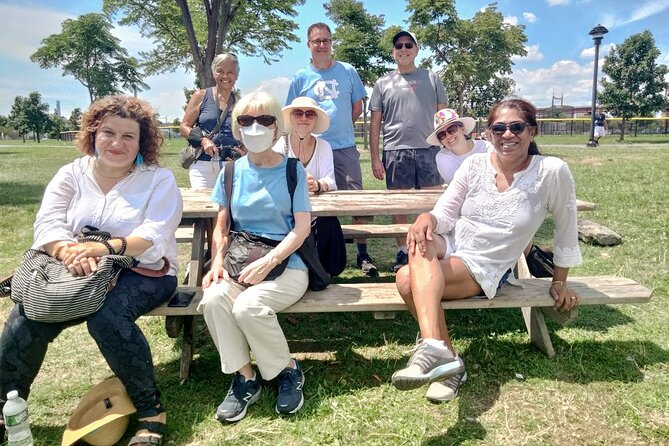
The walk begins at Randall’s Island Athletic Field, near East River Lane, and moves toward Wards Island Park. The first stop lasts about 15 minutes and gives you a look at Hell Gate, Mill Rock, and Roosevelt Island.
This is the point where the name Hell Gate starts to make sense. The waterway is not just a scenic channel. Tides and currents meet here in complicated ways, creating the kind of conditions that once threatened sailing vessels. The tour explains the old whirlpool and the damage it could cause, giving you a practical reason for the area’s fearful reputation.
Mill Rock is an especially useful landmark because it helps you understand the shape of the water. Roosevelt Island gives the view a human scale, while the surrounding channels show how tightly packed New York’s waterways are. You are not looking at an isolated stretch of river. You are looking at a crucial passage between larger parts of the city.
I would not expect a long stop here. Fifteen minutes is enough to get oriented, hear the opening story, and take photos. Bring your phone or camera, but do not spend the whole time looking through it. The guide’s explanation is the point.
Randalls and Wards Islands: bridges, parks, and changing shorelines
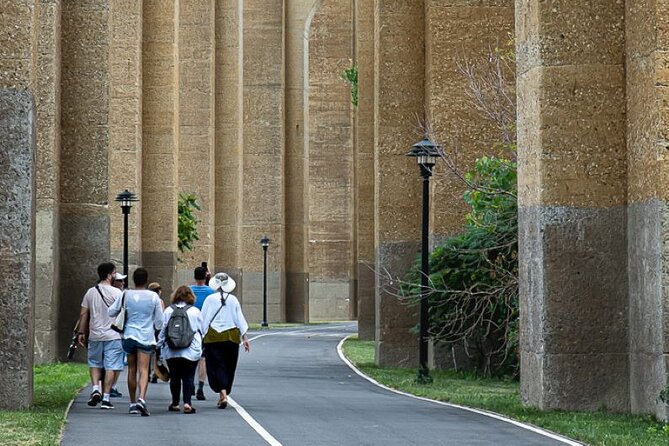
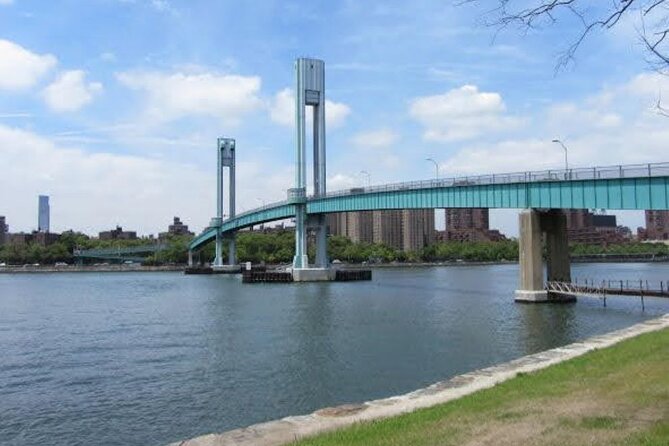
The next stop lasts about 20 minutes and offers views toward Astoria Park and the Triborough Bridge. You also get more context about Wards Island and the way the two islands have been used and reshaped.
New York’s bridges can look familiar from a distance, but they tell different stories when you study them from below or across the water. Here, the structures are part of a larger network linking Manhattan, Queens, and the Bronx. The tour helps you read that network instead of treating each bridge as a separate photo opportunity.
This part also helps explain why the islands can feel confusing. Randalls and Wards are closely connected, and the shoreline has changed over time. Straits were covered, land was joined, and bridges and roads altered the way people moved through the area. The result is a place where old geography is still visible if someone points it out.
The park setting is pleasant, but it is not a polished tourist district. That is part of the appeal and part of the tradeoff. You will not find a row of cafés or shops at every turn. You are getting open space and unusual views rather than convenience.
The Hell Gate Bridge and the plot to blow it up
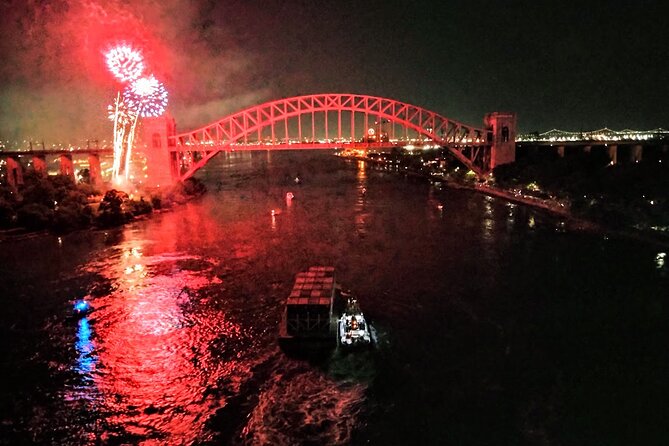
At the Wards Island end of the Hell Gate Bridge, the tour turns to engineering and wartime intrigue. This stop lasts about 15 minutes, but the bridge itself gives the subject plenty of weight.
The bridge is an iconic piece of infrastructure, and the guide explains what makes its design unusual. You do not need an engineering background to enjoy this section. The value comes from seeing how a bridge was built to cross difficult water and carry a major rail route through a challenging part of New York.
Then comes one of the tour’s most startling stories: a plot to blow up the Hell Gate Bridge. The story is tied to Nazi sabotage plans during World War II, adding a sharp wartime edge to what might otherwise be a lesson in bridge construction.
This is a good example of why the tour works. The bridge is not treated as a static object. It becomes part of a chain of stories about technology, war, security, and New York’s importance as a transportation hub. You can look at the steelwork while imagining the danger posed by an attack on such a vital crossing.
If bridges are your main interest, this may be your favorite stop. If you prefer social history, the bridge section is shorter than the later discussion of the islands and their institutions.
A completely different way to spend a day in New York City:
- NYC: SUMMIT One Vanderbilt Tickets
★ 4.7 · 51,195 reviews - NYC: Empire State Building Tickets – Observatory & Museum
★ 4.7 · 25,757 reviews - New York City: Statue of Liberty & Ellis Island with Ferry
★ 4.6 · 18,683 reviews - New York City: American Museum of Natural History Ticket
★ 4.5 · 15,447 reviews
Randall’s Island Park and Sunken Meadow: the broadest set of views
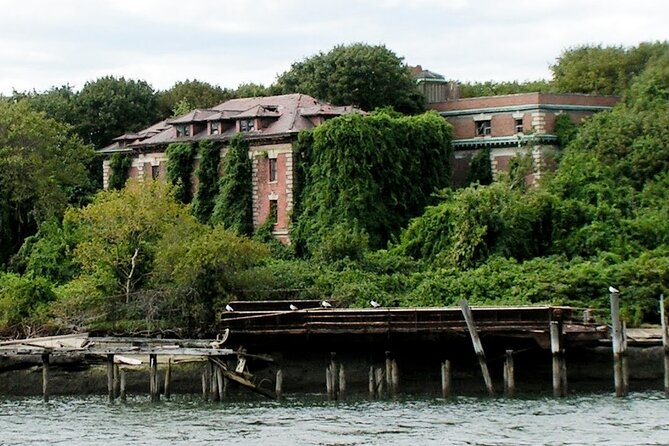
The longest stop takes about 35 minutes in Randall’s Island Park. Here, the guide covers several subjects at once: the former Little Hell Gate, the truss bridge over the covered strait, film locations, the northern part of Hell Gate, nearby former islands, and the East River power plants.
Little Hell Gate is a key piece of the island story. The strait once separated Randalls and Wards Islands, and its later covering changed the shape of the area. Seeing the truss bridge over the covered section gives you a clue to what was there before. This is the sort of detail you could easily pass without noticing on your own.
The tour also points out classic film locations. The exact productions are not specified in the tour information, so you should think of this as an extra layer rather than the main theme. It adds a pop-culture connection to an otherwise industrial and historical setting.
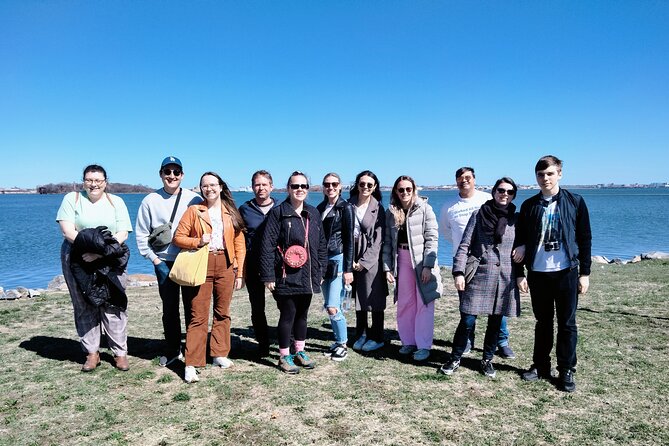
At Sunken Meadow, the view opens toward the northern part of Hell Gate. You can see the islands once associated with Astoria and the power plants along the East River. The scene is not conventionally pretty, but it is a clear picture of how New York works: water, electricity, transport, recreation, and heavy infrastructure all packed into one urban region.
From here, you can also look toward Rikers Island, North and South Brother Islands, and what is described as the world’s largest prison barge. These sights give the final section a darker mood. Stories about prisoners, psychiatric patients, and Typhoid Mary connect the waterways to public health, confinement, and the city’s habit of sending difficult problems out toward its edges.
The subject matter can be grim, but the guide’s energy keeps it from becoming a bleak lecture. Krombie is described as an animated storyteller who uses humor as well as careful research. That balance matters on a tour that deals with illness, incarceration, and institutional life.
What the guide adds to the walk
The route alone would not be enough. You could walk around the islands, look at the bridges, and take photos without learning why the place matters. The guide supplies the connections.
Expect stories about:
- The dangerous whirlpool once associated with Hell Gate
- The engineering of the Hell Gate Bridge
- A Nazi plot to destroy the bridge
- River pirates
- Typhoid Mary
- Psychiatric patients and the former uses of the islands
- Rikers Island prisoners
- Urban myths that have a basis in real events
- Film locations around Randall’s Island
That range is unusually broad. You might begin with tidal currents, move into bridge construction, and end with public health or prison history. The subjects are linked by place, not by a single neat theme.
This is also why the guide’s research matters. A basic walking route can tell you where you are. A well-prepared guide can explain why a waterway gained a frightening name, how its islands were altered, and why the city placed certain institutions in this particular zone.
Krombie’s storytelling is the center of the experience. The tour information gives the guide’s name as Krombie, while one description spells it slightly differently. Either way, book this for a personal, spoken presentation rather than a self-guided map.
The pace, group size, and physical demands
The activity lasts about two and a half hours and is limited to 15 people. That is a useful size for this kind of walk. A group of 15 can hear a story without the guide needing to shout constantly, and you have a reasonable chance to ask questions.
The listed stops add up to about 85 minutes, so the rest of the time is walking between points and listening on the move. Do not treat this as three short scenic stops with long breaks. You will be outdoors for most of the experience.
A moderate fitness level is required. The tour information does not give a total mileage figure or a detailed accessibility assessment, so I would ask the provider directly if you have concerns about walking distance, surfaces, or rest needs. Service animals are allowed.
Wear comfortable walking shoes. Carry water, especially in warm weather, and check the forecast before setting out. One tour was described as taking place on one of the hottest days of the year, which is a useful warning. Open island paths can feel more exposed than Manhattan streets.
There is no coffee or tea included. More important, do not count on the tour area for easy refreshments. Plan ahead so you can focus on the walk rather than searching for a drink.
Getting there and finding your way back
The starting point is Randall’s Island Athletic Field at East River Lane, with map coordinates provided as 40.8348166, -73.9352736. The listed ending point is Randall’s Island Field at 4141 Randalls Island Road.
The practical detail that matters most is the finish. The tour ends at Sunken Meadow, near the M35 bus stop. The M35 takes you to 125th Street and Lexington Avenue, where you can transfer to the 4, 5, or 6 subway trains.
Your guide can also walk you to the island’s pedestrian exits. This is helpful because Randall’s Island is not laid out like a simple Manhattan neighborhood, and the best exit depends on where you need to go next.
Give yourself extra time before the start to reach the meeting point. The tour is near public transportation, but it is not positioned beside a major subway entrance. Use the supplied map pin and confirm the exact meeting instructions after booking.
Is $34 a good value?
At $34 per person, this is not the cheapest way to spend two and a half hours in New York. It is a fair price if you want a specialist guide and a focused subject that would be difficult to reconstruct on your own.
You are paying for more than a walk around a park. The value comes from the research and the connections between places that otherwise look unrelated. The bridge, the islands, the power plants, the prison facilities, and the old channels form a single story once the guide explains them.
The small group also helps. With a maximum of 15 people, the experience should feel more like a guided conversation than a large procession. That matters when the main attraction is spoken history rather than a major monument.
I would not choose this tour if you want famous Manhattan sights, a relaxed café stop, or a short photo walk. I would choose it if you have already seen the standard city sights, enjoy unusual local stories, or want a different weekend outing.
Who should book the Hell Gate Walking Tour?
This suits you if you like urban history, bridges, public infrastructure, unusual crime stories, and places that show how a city developed. It also works well for New Yorkers who want to see an area they may have passed without visiting.
The tour is a good date idea if both of you enjoy history and a little mystery. It is also suitable for visitors who have a spare half-day and want something outside the usual route.
Families with older children may enjoy the bridge plot, river pirates, and island stories, but the darker subjects may not suit young children. The tour information does not specify a minimum age, so check with the provider if that matters for your group.
You should skip it if standing and walking outdoors for about two and a half hours would be difficult, or if your New York plans depend on indoor attractions during uncertain weather.
Should you book it?
Book this tour if you want New York at its strangest and most overlooked. The strongest reasons are the changing water views, the Hell Gate Bridge, and Krombie’s wide range of stories, from whirlpools and engineering to Typhoid Mary, prisoners, and wartime sabotage.
The main caution is simple: this is an outdoor island walk, not a polished sightseeing circuit. Bring water, wear good shoes, allow time to reach the meeting point, and plan your return from the M35 stop.
For $34, you get a focused look at a part of New York that most standard tours ignore. If authentic local history matters more to you than famous landmarks, this is a smart choice.
FAQ
How long does the Hell Gate Walking Tour last?
The tour lasts approximately two hours and 30 minutes.
How much does the tour cost?
The price is $34 per person.
Where does the tour begin?
The tour begins at Randall’s Island Athletic Field, near East River Lane in New York, New York.
Where does the tour end?
It ends at Sunken Meadow on Randall’s Island, near the M35 bus stop. The guide can also walk you to various pedestrian exits from the island.
What public transportation is available after the tour?
The M35 bus runs from near the end point to 125th Street and Lexington Avenue. From there, you can transfer to the 4, 5, or 6 subway trains.
How large is the tour group?
The tour has a maximum of 15 people.
What happens if bad weather cancels the tour?
Because the experience requires good weather, you will be offered another date or a full refund if it is canceled due to poor weather. You can also cancel up to 24 hours before the start time for a full refund.
Recently added in New York City
- Home Alone 2 and Elf Locations Tour in Central Park★ 4.5 · 21 reviews
- Iconic Foods of the Lower East Side and Little Italy Walking Tour★ 5.0 · 14 reviews
- Highlights of the Met Museum Tour★ 5.0 · 52 reviews
- NYC Private Classic Car Experience – Downtown★ 4.5 · 41 reviews
- Chelsea Galleries and High Line; Art, Architecture and History★ 5.0 · 14 reviews
- Highline and Chelsea Markets Tour★ 5.0 · 6 reviews
- High Line & Hudson Yards Small Group Walking Tour★ 5.0 · 13 reviews
- Hidden NYC Foodie Tour★ 5.0 · 71 reviews
NYC Walking Tours, compared.

SoHo, Little Italy, and Chinatown Walking Tour in New York
Read our review →
Secrets of Grand Central Station Walking Tour New York City
Read our review →
Greenwich Village Walking and Food Tasting Tour
Read our review →
Artistic, Alternative Greenwich Village Walking Tour
Read our review →


NYC Greenwich Village Italian Food Guided Walking Tour
Read our review →Browse the lists this tour appears in