
Reviewed · NYC WALKING TOURS
Walking Tour of 1970’s Music Venues of the East Village
New York’s East Village once ran on cheap apartments, loud guitars, and the simple rule that you had to show up in person to buy a concert ticket. This two-hour walk brings that 1970s music scene back through the former sites of Fillmore East, CBGB’s, Mercer Arts Center, and The Bottom Line.
I like the small cap of 12 people, which should make it easier to hear the stories and ask questions. I also like the mix of famous clubs and lesser-known rooms such as Club 82, On the Rocks, and Great Gildersleeves. The main drawback is that most venues are gone, so this is a history walk through city streets rather than a tour of preserved interiors.
Key points at a glance
- The former Fillmore East: Revisit the East Village theater where The Who and Pink Floyd played major New York shows.
- CBGB’s and Patti Smith: See the site tied to the rise of downtown punk and the 1976 era of Horses.
- A small group of 12: The limited size keeps the walk personal and makes conversation with Ann McDermott more practical.
- The Bottom Line finale: Finish near the former club where Bruce Springsteen made a major impact in 1975.
- A wider music story: The route includes disco, glam rock, punk, and smaller clubs that helped artists build an audience.
- A simple two-hour plan: Meet at 11 a.m. at 105 2nd Avenue and finish near Washington Square Park and the R/W trains.
Why this East Village walk matters
The East Village is easy to visit without a plan. You can stroll its avenues, stop for food, and enjoy the old tenement blocks. What you cannot easily see on your own is the vanished network of rooms that made New York a music capital in the 1970s.
That is the value of this experience. It connects ordinary-looking addresses with the nights that changed careers. The point is not simply that a club once occupied a particular building. It is that these rooms gave new bands a place to test songs, find an audience, and make enough noise to attract the wider music world.
I like tours that use a neighborhood as a living map. Here, the streets provide the setting while the guide supplies the missing layer. You will not be handed a museum display or led through a restored venue. Instead, you will stand outside former clubs and picture the crowds, posters, musicians, and ticket lines that once filled the block.
The tour is offered in English and runs for about two hours. At $50 per person, the price makes the most sense if you care about music history and want more than a quick list of famous names. You are paying for the guide’s research, storytelling, and ability to connect several different music movements in a compact part of Manhattan.
More East Village Tours:
- East Village Rock and Roll Tour *Rock Junket Tours
★ 5.0 · 170 reviews - East Village Haunted Manhattan tour
★ 5.0 · 81 reviews - NYC East Village Polish Food Tour
★ 5.0 · 34 reviews
Starting at 105 2nd Avenue
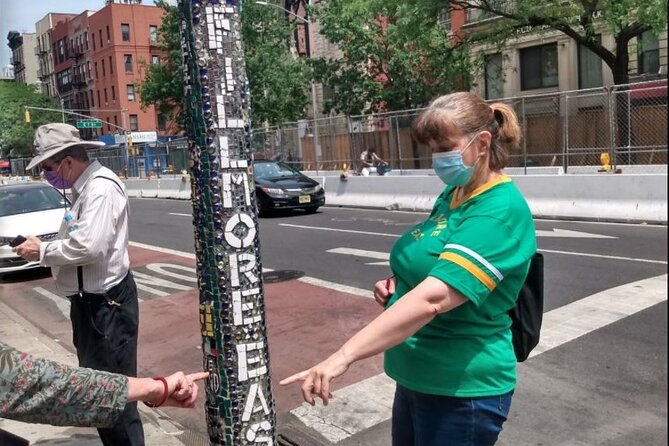
The walk begins at 11 a.m. at 105 2nd Avenue. Plan to arrive early enough to find the exact meeting point without rushing. The start is in the East Village, a useful location if you are already exploring downtown Manhattan.
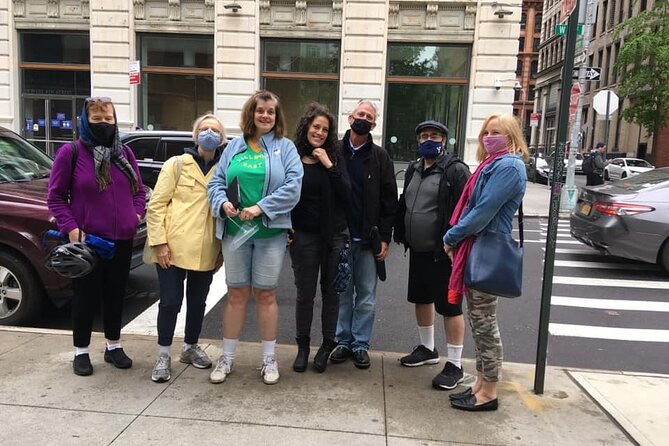
The group size is limited to 12 people. That matters on a city walk. A large group can turn a sidewalk stop into a listening exercise, with people at the back missing the best part. A group this size should feel more like a guided conversation, especially when the guide is explaining how several clubs fit into the same local scene.
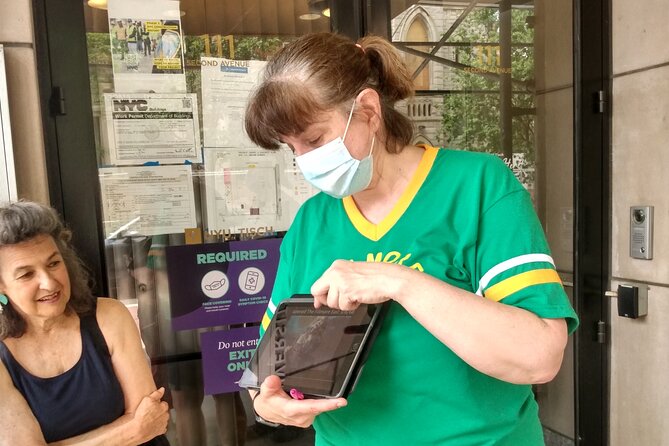
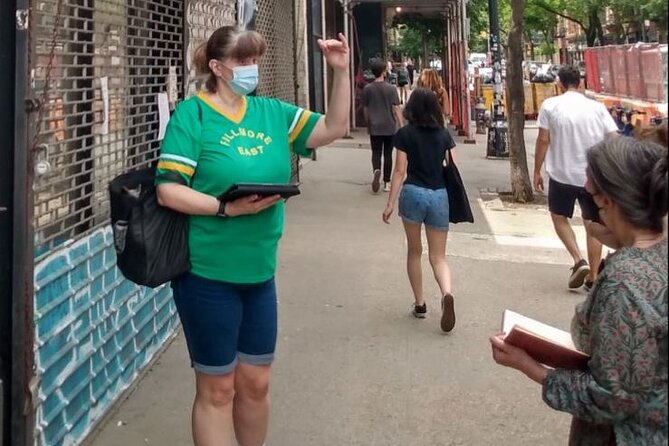
Ann McDermott leads the experience. The supplied details do not promise live music, access to former clubs, or indoor exhibits, so you should arrive expecting a walking history lesson rather than a concert-themed attraction. Wear comfortable shoes and be ready to spend the full two hours outside, since the experience requires good weather.
The Fillmore East and the lost theater circuit
One of the most important stops is the former Fillmore East. In the late 1960s and early 1970s, the venue was known for major rock performances, and the walk uses it to recall shows by The Who and Pink Floyd.
That setting gives the tour a useful starting point. The Fillmore East was part of an era when a theater could help turn a band into a major act. Before online clips and instant recordings, seeing a group in person was the real test. A packed room, a strong opening act, and word spreading through the city could change a career.
The building itself is no longer operating as the legendary concert hall, so you need to bring some imagination. That may disappoint anyone hoping for original backstage rooms or concert memorabilia. For me, though, the vanished venue is part of the lesson. New York’s music past is often hidden behind ordinary facades, and the guide’s explanation gives those places a second life.
This stop also helps place the East Village in the wider story of rock music. The route is not limited to one band or one style. The Fillmore East section points to the large-scale rock shows of the period, while later stops turn toward punk, glam rock, smaller clubs, and disco.
CBGB’s and the rise of downtown punk
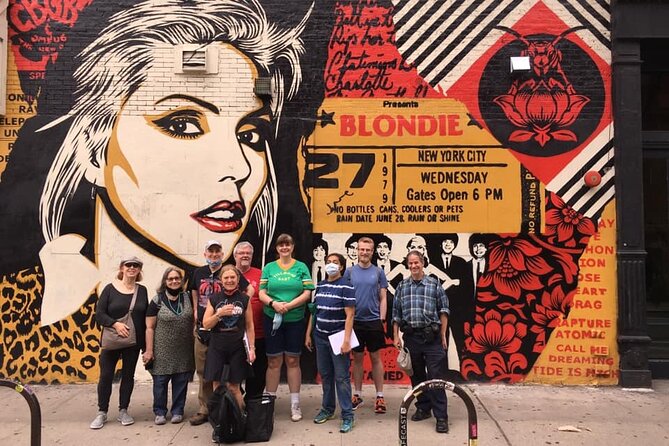
The former CBGB’s is likely to be the stop many people recognize first. The club became closely linked with the New York punk scene, and the tour uses it to recall Patti Smith and the period after the release of Horses in 1975.
That story is valuable because CBGB’s was not simply a famous name stamped onto a tourist map. It represented a different route into music. Artists did not need polished arena productions or established record-company machinery to begin building a following. A small room, a regular audience, and a willingness to take risks could be enough to get noticed.
The route also gives you a chance to think about how quickly a neighborhood’s cultural identity can change. The CBGB’s remembered by music fans is gone, and the current street scene does not recreate the 1970s. You should expect a contrast between the present-day East Village and the rougher, more experimental world being described.
I like that the tour does not treat CBGB’s as the only important address. The club is famous, but famous venues are often the final result of a much larger local network. The less familiar stops help explain how artists developed before anyone outside downtown New York knew their names.
More NYC Walking Tours:
- SoHo, Little Italy, and Chinatown Walking Tour in New York
★ 5.0 · 3,153 reviews - Secrets of Grand Central Station Walking Tour New York City
★ 5.0 · 1,796 reviews - Greenwich Village Walking and Food Tasting Tour
★ 5.0 · 1,572 reviews - Artistic, Alternative Greenwich Village Walking Tour
★ 5.0 · 971 reviews
Club 82, On the Rocks, and Great Gildersleeves
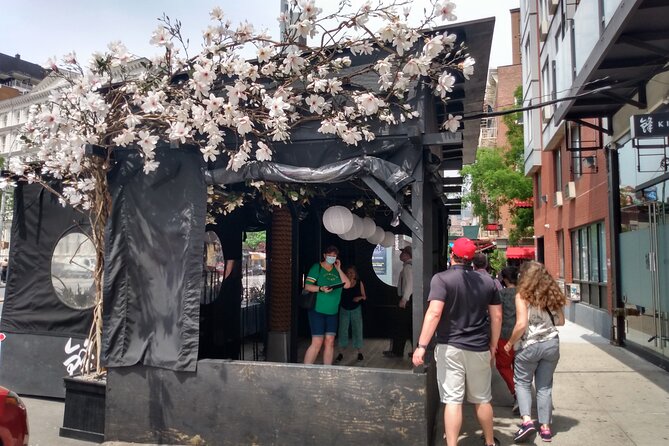
The tour visits Club 82, On the Rocks, and Great Gildersleeves, three lesser-known sites that played a role in the East Village music scene. These stops should appeal to anyone who prefers the side roads of music history to the standard greatest-hits tour.
You may not recognize the names, and that is precisely why they matter. A music scene depends on more than its most famous club. Smaller rooms give performers a place to experiment, find a loyal audience, and learn how to control a stage. Some artists become famous later, but the early work often happens in places that disappear from public memory.
This part of the walk also gives Ann McDermott room to show how different kinds of entertainment shared the same neighborhood. The route includes rock and punk landmarks, but it does not pretend that the East Village belonged to one sound. The period included several overlapping scenes, and these smaller venues help show that variety.
There is a practical limitation. Since the venues are no longer presented as active music attractions, the experience depends heavily on the quality of the explanation. If you want a tour built around interiors, displays, or live performances, this will feel too abstract. If you enjoy connecting a street corner with an overlooked story, these may be the most rewarding stops.
Mercer Arts Center and the New York Dolls
The former Mercer Arts Center adds another important thread. The tour recalls the New York Dolls, a band whose glam-rock look and rough-edged performances helped shape the downtown scene.
This stop gives the route a different tone from the Fillmore East and CBGB’s. The Fillmore suggests established rock acts in a major concert setting. CBGB’s points toward punk. Mercer Arts Center helps bridge the gap, showing how theatrical style, attitude, and downtown experimentation fed into the next wave of New York music.
I appreciate that the walk includes artists who did not fit neatly into one category. The New York Dolls were part of a scene that valued character as much as technical polish. Their story helps explain why the East Village mattered as a place where performers could be strange, bold, and unfinished in public.
Again, you will be standing at or near a former site rather than entering a preserved club. The reward is context. Ann can connect the band, the venue, and the wider downtown culture, giving you a clearer idea of how New York’s different music circles overlapped.
The disco stop at Infinity
Rock and punk are not the whole story. The walk also visits the site of Infinity, a dance club associated with disco and destroyed by fire in 1979.
This is a smart addition because it prevents the tour from turning the 1970s into one long guitar riff. New York nightlife included dance music, club culture, and audiences who came out for a completely different kind of evening. The stop lets you see the East Village as a place where several scenes operated at once.
The fire also points to the fragile nature of nightlife history. Clubs can be lost through fire, redevelopment, changing tastes, or simple neglect. Once the room is gone, the memories may be all that remain. That makes the guide’s role especially important, since the physical evidence is limited.
If your interests are strictly punk or classic rock, this may be a short side note rather than a highlight. I still think it improves the tour. It shows that the neighborhood’s music past was broader than the best-known club names.
Finishing at The Bottom Line
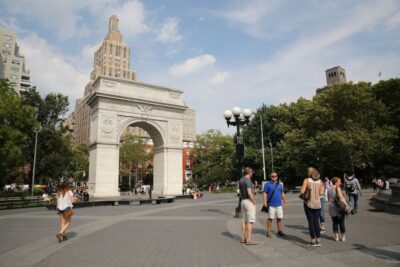
The walk ends at 15 East 4th Street, in front of what used to be The Bottom Line. The location is down the block from the R/W subway trains and near Washington Square Park, making the finish convenient for continuing your day.
The Bottom Line is tied to one of the tour’s strongest stories: Bruce Springsteen in 1975, when performances connected with the release of Born to Run helped confirm his arrival as a major music figure. You do not need to have attended that show to understand why the venue matters. The story captures the power of a small, respected room to put an artist in front of the right audience at the right moment.
Ending here gives the walk a clear shape. You begin with the larger concert world of the Fillmore East, move through small and experimental clubs, touch on disco, and finish with a venue known for influential performances. The final stop also leaves you in a useful part of Manhattan rather than far from public transportation.
Because the former Bottom Line is not presented as an operating venue, the stop is about memory and location. Take a moment to look around and consider how much music history can sit behind a place that now appears ordinary. That shift between the past and the present is one of the tour’s central ideas.
What $50 gets you
At $50, this is not a bargain subway ride with a few facts added. It is a specialist walking tour with a small-group limit and a focused subject. The price is reasonable for you if the East Village’s music story is a main reason you are visiting New York.
The value comes from the connections. You could locate some former venues yourself, but you would have trouble understanding which places supported emerging artists, which rooms hosted major names, and how rock, punk, glam, and disco fit together. A guide can turn scattered addresses into a readable story.
The two-hour length is also practical. It is long enough to cover several sites without taking over your whole day. Since the route ends near Washington Square Park and the R/W trains, you can pair it with other downtown plans.
I would be more cautious if you are not interested in music history, dislike outdoor walking, or expect active clubs and indoor exhibits. The tour’s appeal is specific. It offers stories and place-based context, not a general East Village sightseeing route.
Weather, booking, and one important caution
The experience requires good weather, so keep the cancellation terms in mind when planning a tight New York schedule. You can cancel for a full refund up to 24 hours before the start time. If bad weather or an insufficient number of bookings cancels the walk, you will be offered another date or a full refund.
Most people can take part, and service animals are allowed. The route is near public transportation, but the supplied details do not state a total distance or specific accessibility features, so contact the provider if that is important for you.
There is also one operational warning worth knowing. One booking resulted in a guide no-show after an email was missed. Ann McDermott later offered a free replacement tour and reimbursement of travel expenses, but the response came too late for the original booking. This appears to have been an isolated communication failure, yet I would still confirm the meeting details and watch for the booking confirmation, which is scheduled within 48 hours and depends on availability.
Who should book this walk
I would recommend it most strongly to:
- Fans of Bruce Springsteen, Patti Smith, The Who, Pink Floyd, or the New York Dolls
- Visitors curious about punk’s New York beginnings
- Repeat New York visitors who want a neighborhood tour with a clear theme
- People who enjoy stories about lost clubs and vanished city spaces
- Anyone who prefers a small group to a large, rushed sightseeing walk
I would choose another activity if you want to enter active music venues, hear live performances, or see a large collection of artifacts. The tour is also less useful if you have no interest in 1970s music or if poor weather would make two hours outdoors unpleasant.
Should you book the East Village music venues walk?
Book it if you want to understand how a handful of downtown rooms helped shape rock, punk, glam, and disco. The best parts are the small group, the unusual club names, and the way the route connects famous moments to less celebrated places.
Go in with the right expectation: you are walking through the sites of lost venues, not touring preserved interiors. Confirm your booking, arrive at 105 2nd Avenue before 11 a.m., and allow the stories to do the work. For a music fan, $50 buys a focused look at a New York that can no longer be visited in quite the same way.
FAQ
How long is the Walking Tour of 1970s Music Venues of the East Village?
The tour lasts approximately two hours.
Where does the tour begin?
It begins at 105 2nd Avenue, New York, NY 10003.
Where does the tour end?
It ends at 15 East 4th Street, in front of the former Bottom Line. The location is near the R/W trains and Washington Square Park.
What time does the tour start?
The scheduled start time is 11 a.m.
What language is the tour offered in?
The tour is offered in English.
How many people can join the tour?
The tour has a maximum of 12 participants.
Recently added in New York City
- NYC: Midtown Hands-On Bagel Baking Class★ 5.0 · 12 reviews
- Personalize Sightseeing Tour★ 5.0 · 92 reviews
- Central Park Pedicab Tour with Guide★ 5.0 · 63 reviews
- Central Park Pedicab Guided Tour★ 5.0 · 17 reviews
- Photographer, Professional Photo shoot – New York★ 5.0 · 16 reviews
- Official Central Park Pedicab Ride ( UP TO 3 PERSONS )★ 5.0 · 4 reviews
- JFK or LGA package only (Round trip transfer plus VIP Contrasts)★ 5.0 · 3 reviews
- Official Central Park Pedicab Tours★ 5.0 · 35 reviews
NYC Walking Tours, compared.
SoHo, Little Italy, and Chinatown Walking Tour in New York
Read our review →
Secrets of Grand Central Station Walking Tour New York City
Read our review →
Greenwich Village Walking and Food Tasting Tour
Read our review →
Artistic, Alternative Greenwich Village Walking Tour
Read our review →
NYC Greenwich Village Italian Food Guided Walking Tour
Read our review →Browse the lists this tour appears in