
Reviewed · SOHO TOURS
New York Soho and the Village Art and Architecture Tour
New York’s best architecture is often overhead, behind a plain facade, or tucked into a block you might cross without a glance. This two-hour walk connects SoHo, the Lower East Side, Greenwich Village, and NYU through buildings that range from a 19th-century bank to sharp modern residences. I like the mix of old and new, and I like that guide Ivan can shape the discussion around your questions. The personal headset is another smart touch, especially on busy streets.
The tour also reaches places you could easily pass by alone, including the Little Singer Building, Silver Towers, Bobst Library, and the Scholastic Building. The small group, capped at 15, makes conversation easier, while the $49 price keeps this a reasonable introduction to New York architecture. The main drawback is its short length: you will see many sites, but some stops last only five minutes.
Key points to know before you book
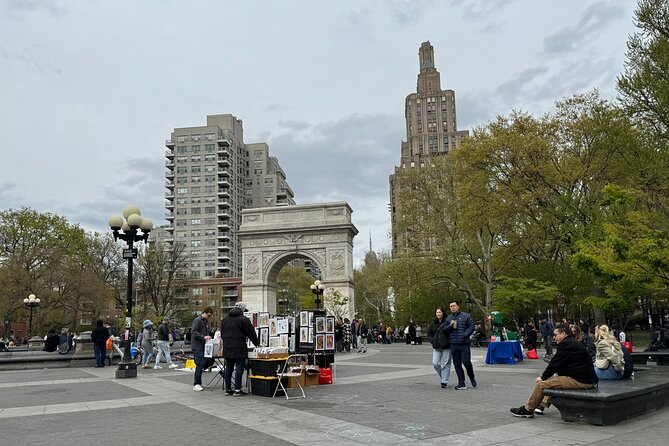
- A compact route through several downtown neighborhoods: The walk begins at Cooper Square and ends beneath the Washington Square Arch.
- Historic and modern architecture in one outing: You’ll see the former Bowery Savings Bank, 40 Bond Street, the New Museum, Silver Towers, and more.
- Ivan is a strong guide for architecture-minded visitors: He explains design, building history, and city planning in clear terms, with room for questions.
- Small groups make the headsets useful: With no more than 15 people, you can follow the guide without crowding around him.
- The tour includes an indoor stop: You enter Bobst Library, rather than viewing every building only from the sidewalk.
- Plan around the 5:30 pm start and weather: The experience requires good weather and ends about two hours later in Washington Square Park.
Why this downtown walk is worth your time
Many New York architecture walks focus on one style or one district. This one moves across several parts of lower Manhattan, so you get a quick lesson in how the city changes from block to block.
You begin near Cooper Square and finish at Washington Square Park. Along the way, the route covers the East Village area, the Lower East Side, SoHo, the Village, and parts of the NYU campus. That range matters because the buildings are not presented as isolated objects. You see how residences, schools, banks, public spaces, art institutions, and hotels occupy the same tight urban setting.
I especially like the way the tour pairs grand older buildings with recent projects. One moment you are looking at a former bank designed by McKim, Mead & White. Soon after, you are considering a contemporary residence by Herzog and de Meuron or the angular New Museum by SANAA.
The guide does more than point at facades. Ivan’s approach, based on the available comments about the experience, includes architectural design, building history, and urban planning. He also adjusts the talk to the interests of the group. That is useful if you already know New York’s basic sights but want a better eye for what you are seeing.
More SoHo Tours:
- SoHo, Little Italy, and Chinatown Walking Tour in New York
★ 5.0 · 3,153 reviews - NYC: SoHo, Little Italy, and Chinatown Guided Tour
★ 4.7 · 614 reviews - SoHo, Little Italy, and Chinatown 2-Hour Guided Walk
★ 4.6 · 566 reviews
Cooper Square begins the story
The meeting point is Cooper Square in Manhattan, with a 5:30 pm start. The first listed stop is the Cooper Union Foundation Building, where you spend about 10 minutes.
This is a good opening because Cooper Union connects education, architecture, and the growth of the surrounding downtown area. The building gives the guide a place to establish the kind of questions you will use throughout the walk: What was this structure built to do? How has the neighborhood changed around it? Which details are structural, and which are decorative?
Admission is free, and the tour includes all listed fees and taxes. You should still arrive ready to walk, since the two-hour duration includes movement between sites as well as time spent listening.
Modern design at 40 Bond Street and the New Museum
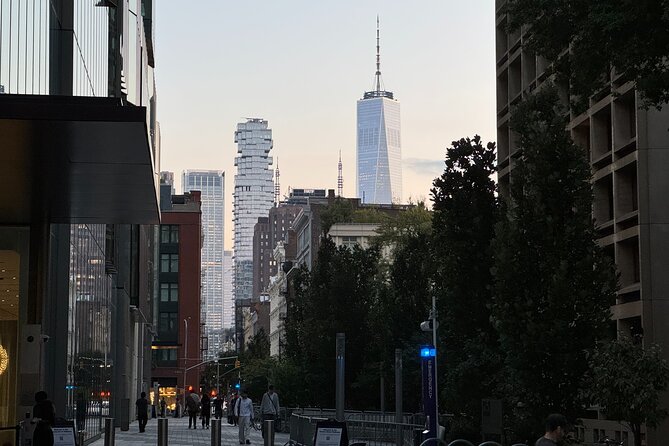
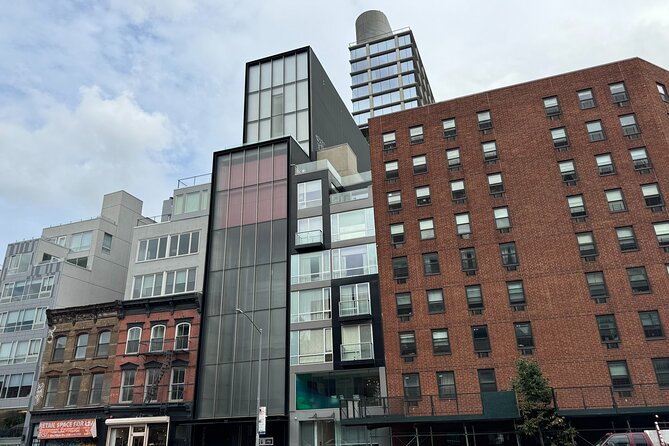
The next stops move quickly. At 40 Bond Street, you spend about five minutes looking at the residences by Herzog and de Meuron. This is a sharp change from the older buildings near Cooper Square.
A five-minute stop will not give you a full architectural lecture, but it can help you understand how a contemporary residential building responds to an older downtown setting. The guide can direct your attention to the building’s design rather than leaving you to form a quick opinion from the sidewalk.
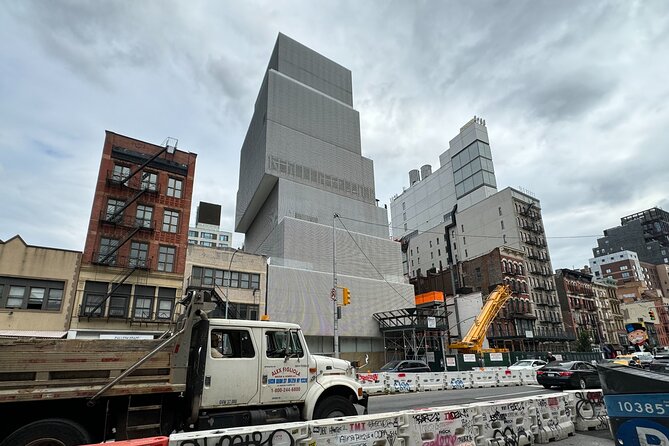
The New Museum of Contemporary Art by SANAA is another short stop. Its stacked, offset volumes make it easy to recognize, but recognition is not the same as understanding. This is where a guide adds value. You can ask about the building’s shape, its place in the neighborhood, and the relationship between an art museum and the street around it.
The stop is brief, so take notes mentally or with your phone if you want to remember the details. The route is designed to give you a broad view, not an extended museum visit.
A hotel, a bank, and downtown reinvention
The Public Hotel follows, with about five minutes devoted to the building. The hotel provides another example of modern design in a neighborhood packed with older structures and changing uses.
Then the tour reaches Capitale, the former Bowery Savings Bank, designed by McKim, Mead & White in 1895. This is likely to feel very different from the newer projects you have just seen. The name is also a reminder that many downtown buildings have changed roles over time.
The bank’s presence gives the guide a chance to explain how commercial buildings once expressed civic confidence and financial power. You are not simply ticking off another landmark. You are seeing how a former bank fits into a district now known for restaurants, nightlife, shops, residences, and creative businesses.
Capitale is another five-minute stop, so the walk favors sharp observations over a slow inspection. If you enjoy architectural details and want long periods at each site, this pace may feel fast. If you want an efficient overview, it works well.
More NYC Skyline and Architecture Tours:
- Statue of Liberty & NYC Skyline Cruise – Freedom Liberty Tour
★ 4.0 · 1,499 reviews - Manhattan Architecture Yacht Cruise
★ 5.0 · 1,395 reviews - NYC: Dyker Heights Christmas Lights & Skyline View Bus Tour
★ 4.7 · 1,192 reviews - From Manhattan: Dyker Heights Lights & Skyline Tour
★ 4.6 · 1,005 reviews
Smaller buildings with big stories
The route also includes the Little Singer Building, the Scholastic Building by Aldo Rossi, and New York’s old cathedral. The precise timing for these stops is not specified, so think of them as part of the wider route rather than separate long visits.
The Little Singer Building is the sort of place you could miss while hurrying through lower Manhattan. The point of including it is the same reason the tour visits less obvious sites elsewhere: the city rewards anyone who looks above street level and pays attention to older commercial buildings.
The Scholastic Building adds an Aldo Rossi design to the route. It gives you another modern example, but not one that looks like 40 Bond Street or the New Museum. Seeing several architects in a short walk helps you compare different ideas about scale, materials, and how a new building should meet an established street.
The stop at New York’s old cathedral adds a religious and historic note to a route otherwise weighted toward commercial, residential, and institutional architecture. Since the supplied details do not specify an interior visit or a name, you should treat this as a viewing stop rather than expect a formal cathedral tour.
NYU and Washington Square
The walk then reaches the NYU main campus, including newer additions and residences along Houston Street and around Washington Square. This section shifts the focus from individual buildings to a larger institution spread through a neighborhood.
That is one of the more useful parts of the experience for anyone interested in city planning. NYU is not presented as a single enclosed campus. Its buildings share streets and public spaces with the surrounding city. The guide can help you see how newer residences and campus buildings fit into the Village rather than treating the university as a separate world.
The route does not promise a full campus tour, and the listed stop is about five minutes. Still, this short look may change how you read the blocks around Washington Square. What can seem like a random mix of apartments, academic buildings, and public spaces begins to make more sense when you consider how institutions grow within a dense neighborhood.
Silver Towers and public art
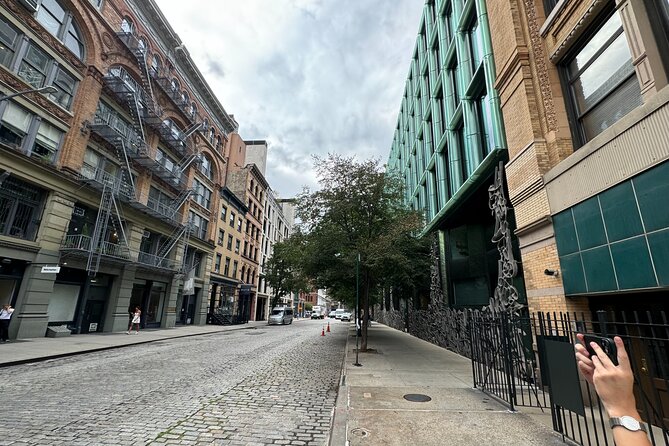
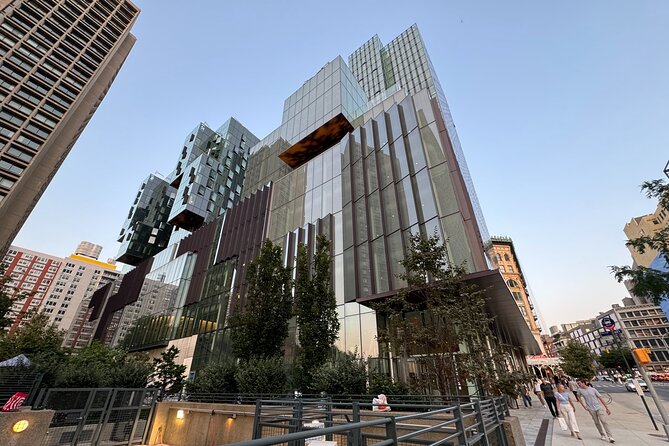
At Silver Towers, the tour spends about 10 minutes discussing the buildings, public spaces, and art around them. This is one of the longer stops, and it gives the guide more room to connect architecture with the way people use open space.
Silver Towers is especially useful for you if your interests go beyond facades. The walk looks at the relationship between buildings and the public areas around them. That means the discussion can include scale, placement, movement through the site, and the role of art in a residential setting.
The stop also balances the more polished commercial and cultural buildings earlier in the route. You get a view of architecture as part of daily urban life, not only as something to admire from a distance.
Inside Bobst Library
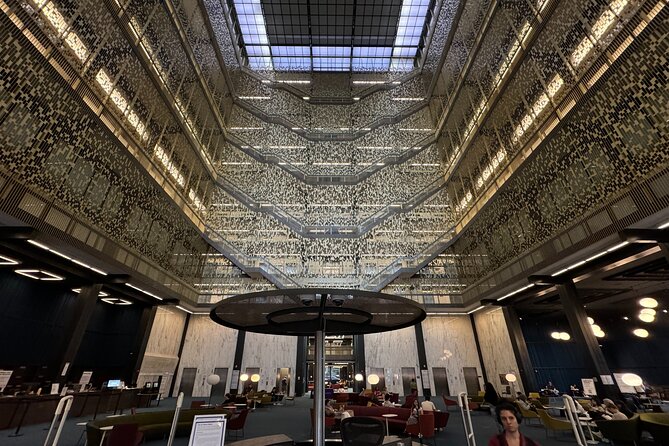
The itinerary includes entry into Bobst Library, with about five minutes inside. This is a welcome change from a sidewalk-only route.
An indoor stop helps break up the walk and gives you a chance to see how a major academic building handles circulation and shared space. Because the visit is short, do not expect a full library tour or extended time to explore on your own.
Still, even a brief visit adds variety. The route moves from public streets to a university interior, then continues toward Washington Square Park. It also shows that the tour is not limited to famous exterior views.
Finishing beneath the Washington Square Arch
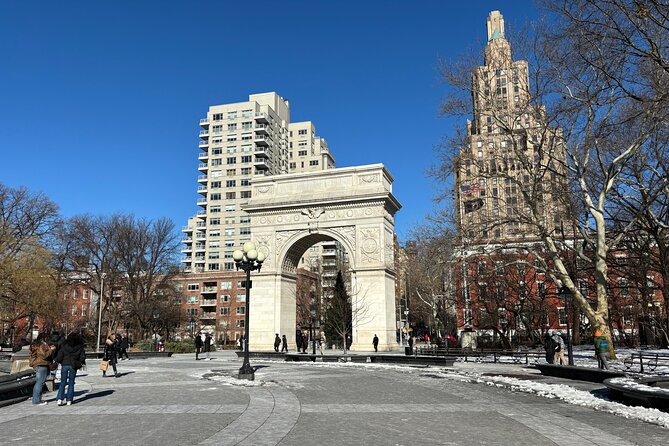
The final stop is Washington Square Park, where the walk ends beneath the Arch. You spend about 10 minutes in the park.
This is a fitting finish because the park brings together many of the tour’s themes: architecture, public space, university life, movement through the city, and the changing character of the Village. It is also a clear ending point, which makes planning your evening easier.
The end point is Washington Square North, New York, NY 10012. From there, you can continue around the Village or make your way to public transportation. The tour does not include a meal, museum admission, or a separate return transfer, so plan your next activity accordingly.
The guide, group size, and headsets
The experience has a maximum of 15 people. That is small enough for a more personal discussion without making the price feel like a private tour.
Ivan is the named guide in the available feedback, and the strongest praise centers on his ability to explain architectural design, building history, and urban planning without making the walk dull. He also tailors the discussion to the group’s interests, which is valuable on a subject that can become technical.
Each person receives a professional individual headset. This matters in New York, where traffic, construction, and street noise can swallow a normal speaking voice. You can listen while walking instead of clustering around the guide at every stop.
The headsets do not make the route physically easier. You will still be outside for about two hours, and the tour requires good weather. Wear sensible walking shoes and bring anything you normally need for an evening city walk.
What $49 gets you
At $49 per person, this tour offers a fair deal if you want an introduction to downtown architecture without committing half a day. The price includes the guide, individual headset, and all fees and taxes. The stops themselves list free admission, and Bobst Library entry is included as part of the route.
The real value is the interpretation. You can walk past 40 Bond Street, the New Museum, Silver Towers, or the old Bowery Savings Bank on your own. You may notice that the buildings look unusual or important, but you will miss the connections between design, neighborhood change, and public space.
The tradeoff is time. A two-hour tour covering this many sites must keep moving. Several stops last only five minutes, so this is not the right choice if you want to sketch, photograph every detail, or spend long periods inside buildings.
Tips are not included. You should also remember that the experience can be canceled if the minimum number of participants is not met or if the weather is poor. In either case, you are offered another date or experience, or a full refund.
Who should book this walk?
I would choose this tour if you enjoy cities but want help reading them. It suits architecture students, design fans, returning visitors, and New York residents who want to see familiar streets differently.
It also works well for a short stay because the walk lasts about two hours and starts at 5:30 pm. You can fit it around other plans without giving up a full morning or afternoon.
You may want a different experience if you prefer long museum visits, interiors, or a slow photography walk. The route offers a broad selection of sites, but the pace means you will not study every building in detail.
Most people can participate, and service animals are allowed. The route is near public transportation. Since the walk takes place outdoors and weather can cancel it, check the forecast before setting out.
FAQ
How long does the tour last?
The tour lasts approximately two hours, including travel time between stops.
What time does the tour begin?
The tour starts at 5:30 pm.
Where does the tour begin?
The meeting point is Cooper Square, New York, NY 10003.
Where does the tour end?
The tour ends at Washington Square Park, beneath the Washington Square Arch.
What is the maximum group size?
The tour has a maximum of 15 participants.
Is a guide included?
Yes. An in-person guide is included.
Are headsets provided?
Yes. Each participant receives a professional individual headset.
Are admission fees included?
All fees and taxes are included. The listed stops have free admission, and the route includes entry into Bobst Library.
Are tips included?
No. Tips are not included in the price.
Can I cancel for a full refund?
Yes. You can cancel at least 24 hours before the start time for a full refund. Cancellations or changes made less than 24 hours before the start time are not refunded or accepted.
What happens if the weather is poor?
The experience requires good weather. If it is canceled because of poor weather, you are offered a different date or a full refund.
Should you book the SoHo and Village Art and Architecture Tour?
Book it if you want a clear, compact way to understand downtown New York through its buildings and public spaces. The strongest reasons are the varied route, the small group, the personal headsets, and Ivan’s ability to connect design with city planning.
Skip it if you want a relaxed tour with long visits at each site. At $49, the value is strongest for curious walkers who enjoy learning as they move. You will see a lot in two hours, and the city may look different the next time you pass these blocks.
Recently added in New York City
- Squid Game: The Experience New York City★ 4.0 · 9 reviews
- New York: Private Professional Photoshoot at Central Park★ 5.0 · 9 reviews
- Professional Photoshoot at Brooklyn Bridge in New York★ 5.0 · 5 reviews
- New York Queens Indoor Skydiving Experience With 2 Flights★ 5.0 · 4 reviews
- New York 4-Day Tour to Niagara Falls & Washington★ 4.0 · 13 reviews
- New York: Times Square Professional Photoshoot★ 4.5 · 17 reviews
- New York Princess Cruises★ 3.0 · 4 reviews
- New York Midtown Scavenger Hunt Adventure★ 3.5 · 9 reviews
SoHo Tours, compared.
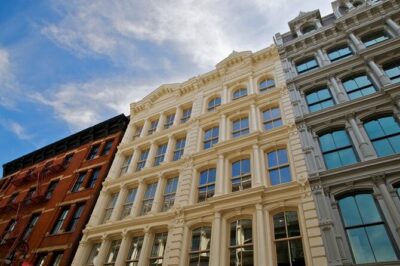
SoHo, Little Italy, and Chinatown Walking Tour in New York
Read our review →

SoHo, Little Italy, and Chinatown 2-Hour Guided Walk
Read our review →
SoHo, Little Italy, and Chinatown NYC Guided Walking Tour
Read our review →
3 Neighborhoods Tour: Soho, Chinatown & Little Italy
Read our review →
3 New York Neighborhoods Semi-Private Tour : SoHo, Chinatown and Little Italy
Read our review →
Greenwich Village Soho Little Italy/Paris Chinatown Walking Tour
Read our review →
Browse the lists this tour appears in