
Reviewed · GREENWICH VILLAGE TOURS
New York City Greenwich Village 3 Hour Private Walking Tour
Greenwich Village packs Native American settlement, artists, musicians, comedians, university expansion, and LGBTQ history into a few walkable Manhattan blocks. This private three-hour tour gives you a guide to connect those pieces instead of simply pointing at famous buildings.
I like the personal format, with your group alone and room to ask questions. I also like the focus on lesser-known stories around Washington Square, along with stops tied to Bob Dylan, Jimi Hendrix, Joan Rivers, Robin Williams, and the Village’s street performers. The main consideration is that the route description gives mixed information about the ending, so confirm whether your walk finishes at Stonewall Inn or returns to the Washington Square meeting point.
Key points to know before you book
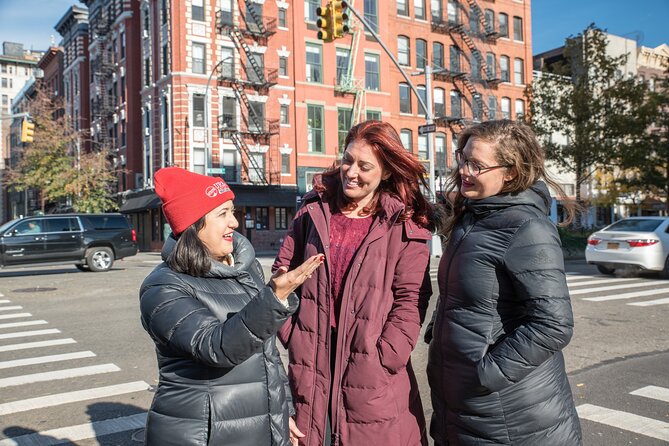
- Private format for up to 12 people: You get one guide for your own group, which works well for families, friends, and small company outings.
- Washington Square begins the story: Look beyond the Memorial Arch to the park’s earlier Native American settlement and its later identity as Little Africa.
- Music and comedy landmarks add pop-culture appeal: The route passes a famous comedy club and a historic music club linked to major performers.
- Stonewall gives the walk a serious finish: The tour explains the riots and their role in the fight for LGBTQ rights.
- Jessie Fahey may lead your walk: Past guests particularly valued Jessie’s warmth, wit, energy, and broad command of Village history.
- $320 is a group price: The cost works out to about $26.67 per person for 12 people, but $160 each for two.
Why Greenwich Village works so well on foot
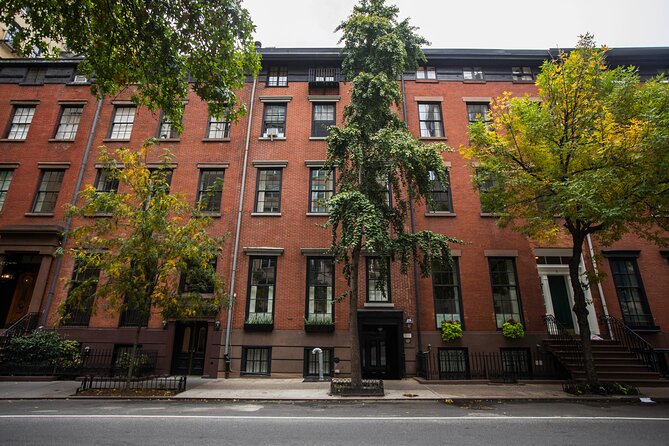
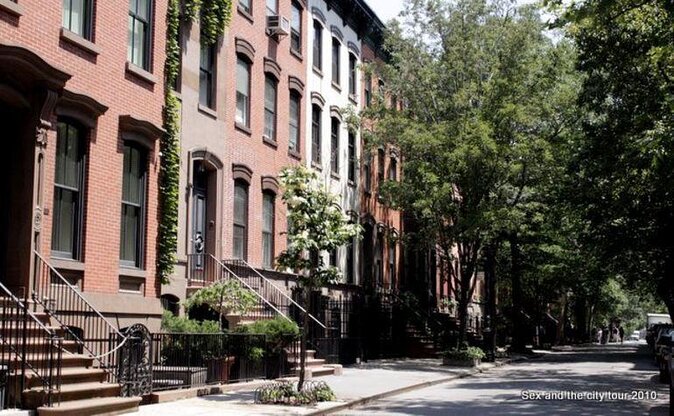
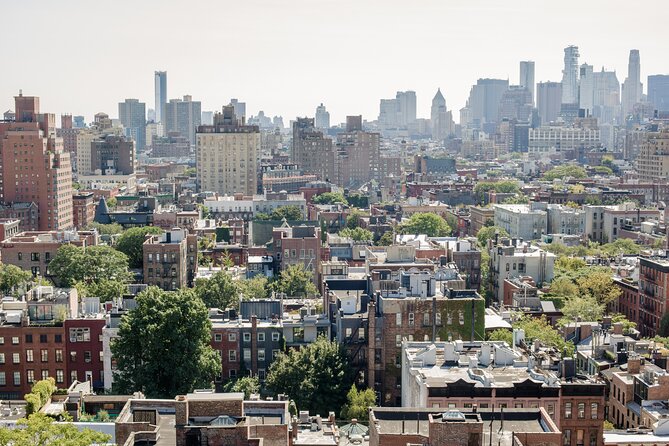
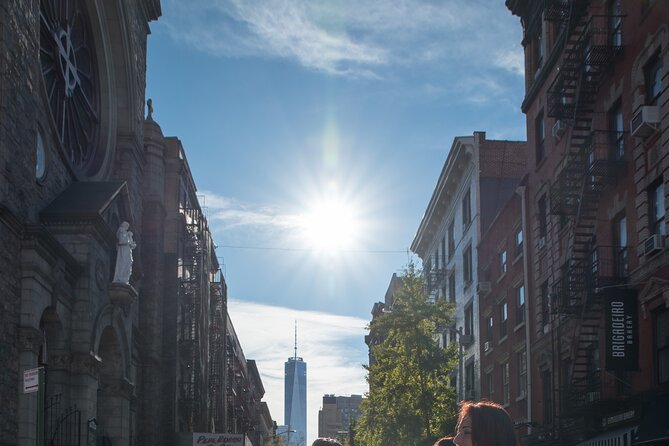
Greenwich Village is one of Manhattan’s best neighborhoods for walking because its streets feel less rigid than the city grid nearby. Tree-lined blocks, brick townhouses, small parks, cafés, bars, and old cultural venues create a setting where the past is still mixed into daily life.
That setting matters. A guide can show you how the Village became a gathering place for painters, writers, musicians, comedians, buskers, and social movements. You are not only looking at buildings. You are following the people and ideas that made this corner of Manhattan important.
The tour also deals with change. Greenwich Village is no frozen period piece. Years of gentrification and the growing presence of New York University have altered the neighborhood, while local groups continue to protect its older character. I appreciate that the route includes this tension instead of presenting the Village as a perfect old-time quarter.
The walk is listed at about three hours. That is enough time for a connected story, but not so long that the neighborhood becomes tiring for most people. You should still wear comfortable shoes. This is a walking tour, not a ride between stops.
More Greenwich Village Tours:
- NYC: Greenwich Village Food Tour with 6 Locals Favorites Dishes
★ 5.0 · 1,812 reviews - Greenwich Village Walking and Food Tasting Tour
★ 5.0 · 1,572 reviews - Artistic, Alternative Greenwich Village Walking Tour
★ 5.0 · 971 reviews
Washington Square starts with more than an arch
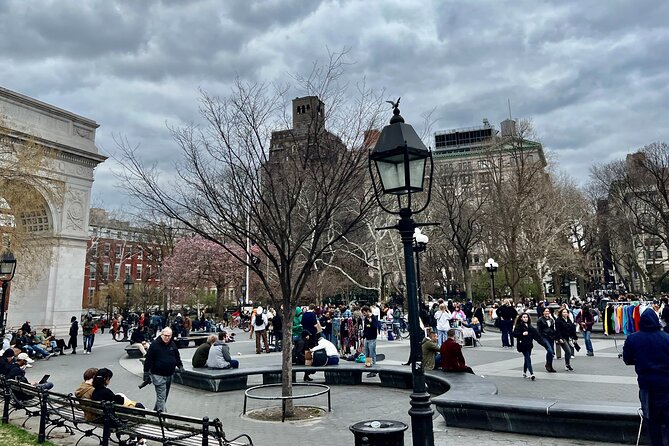
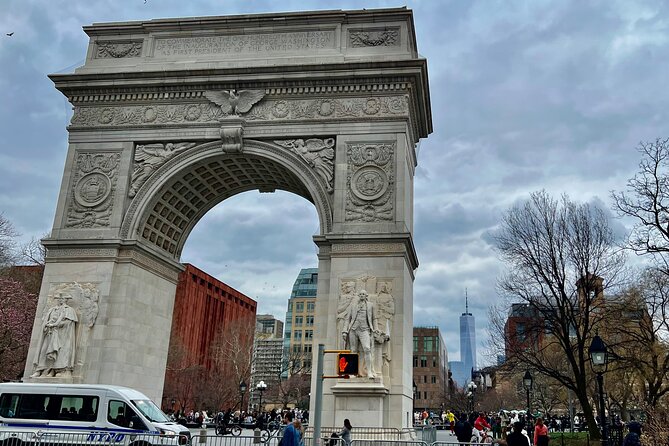
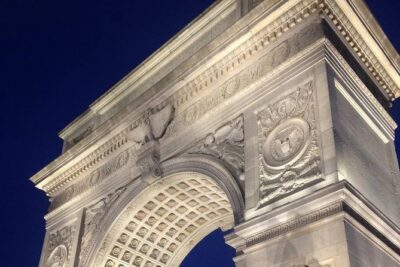
The meeting point is 29 Washington Square West, beside Washington Square. The park is famous for its large Memorial Arch, but the tour uses it as a starting point for a much older and broader story.
You will hear about the area’s Native American settlement and its later designation as Little Africa. Those details help you see the park as more than a postcard backdrop. Its present-day lawns and paths cover layers of local history that are easy to miss when you are focused on the arch or watching people cross the square.
Street performance is another part of the opening. You might catch a busker playing in or near the park. The guide may point out that today’s performer could be worth remembering, and you may want to leave a few dollars or follow the musician online. That small possibility gives the stop a direct link to Greenwich Village’s long tradition of launching creative careers.
I like this beginning because it gets you oriented without wasting time on a generic introduction. You start with a major public space, then move quickly into the people, communities, and art that shaped the neighborhood.
Following writers, artists, and counterculture
From Washington Square, the walk heads into Greenwich Village’s side streets and townhouse blocks. The guide explains why the neighborhood became associated with counterculture and why it attracted people who wanted to work outside the usual rules.
The names attached to the Village are familiar: Bob Dylan, Andy Warhol, and Edgar Allan Poe are part of the area’s wider story. The tour also gives space to less famous residents and performers. That balance matters. A good neighborhood walk should not be only a parade of celebrities. It should show the working artists, local characters, and ordinary streets that allowed famous careers to develop.
You will hear about painters, writers, musicians, and street performers, with the guide connecting their lives to particular parts of the neighborhood. The supplied route does not promise interior access to homes, studios, or venues, so expect to view landmarks and streets from the outside while the storytelling supplies the context.
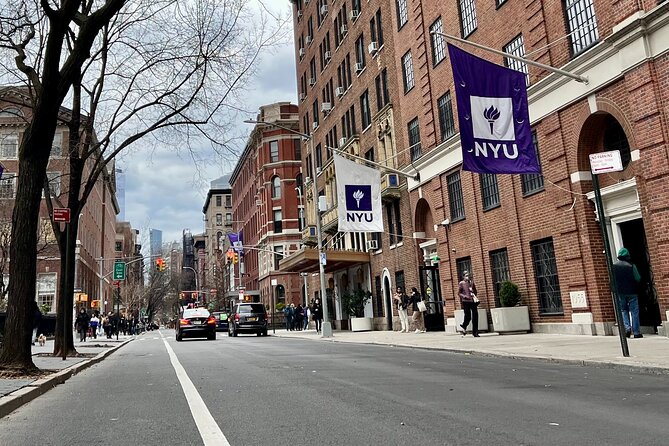
New York University is part of this section too. The university sits close to Washington Square and has played a major role in the area’s modern identity. The tour looks at how its growth has affected Greenwich Village and why preserving the neighborhood’s character can be difficult.
This is where a private walk has a clear advantage. If you want more detail about a musician, a building, the university, or the changes you see around you, you can ask. Jessie Fahey, one guide associated with the tour, is described as witty, energetic, and able to handle a wide range of questions. That kind of flexibility is more useful than a memorized script.
The comedy stop and the Village’s comic legacy
The route passes a legendary Manhattan comedy club where performers such as Jon Stewart, Robin Williams, and Patton Oswalt got early breaks. The club is not presented as a full performance experience, so you should think of this as a landmark stop rather than a ticketed show.
Still, it adds an important piece to the Village story. Greenwich Village is often reduced to folk music and literary bohemia, but comedy has also been central to its public identity. A quick stop outside a club can help you understand how a small venue became part of a much larger American entertainment story.
This stop may be especially useful if your group includes people who are less interested in architecture or political history. The familiar names give the tour an easy entry point, while the guide can place them within the broader history of performers starting out in New York.
More NYC Walking Tours:
- SoHo, Little Italy, and Chinatown Walking Tour in New York
★ 5.0 · 3,153 reviews - Secrets of Grand Central Station Walking Tour New York City
★ 5.0 · 1,796 reviews - Central Park Guided Walking Tour
★ 5.0 · 774 reviews - New York City: Private Walking Tour with a Local
★ 4.6 · 771 reviews
Music at a club linked to Dylan and Hendrix
Another stop focuses on a historic Greenwich Village music club associated with early performances by Bob Dylan, Jimi Hendrix, Joan Rivers, and other artists. Again, the key value is the story rather than admission to a performance.
The club represents the Village as a place where new acts could find an audience before becoming nationally known. It also shows how music and comedy overlapped in a neighborhood where clubs, bars, cafés, and small stages helped artists build careers.
If you are a serious music fan, you may want to ask the guide which performers are connected to the venue and how the club fits into the Village’s wider music culture. The tour is private, so you have a better chance to shape that conversation than you would on a large group walk.
The stop also gives the route a useful rhythm. Washington Square supplies the old civic and social setting. The residential streets show the neighborhood’s daily character. The comedy and music venues then bring its performance culture into sharper focus.
Stonewall and the fight for LGBTQ rights
The tour is designed to finish at the Stonewall Inn, one of Greenwich Village’s most important landmarks. Here the tone changes. The guide explains the events leading to the riots and their effect on the gay liberation movement and the wider fight for LGBTQ rights.
This is not just another famous address. Stonewall gives the entire walk a clear civic purpose. The route begins with public space, art, and counterculture, then ends with a movement that changed how LGBTQ rights were organized and understood in the United States.
You will hear the story from outside the landmark unless your guide gives different instructions. The experience information encourages you to stop in afterward for a drink and support the bar as a safe place for the LGBTQ community. Food and drinks are not included, so that visit would be your own expense.
I like the choice of ending here because it links Greenwich Village’s creative freedom to its political history. The neighborhood’s importance is not only about famous residents or nightlife. It is also about people using public spaces and local venues to demand recognition and rights.
One practical issue deserves attention. The route summary says the walk wraps up at Stonewall Inn, while the meeting information says the activity ends back at the starting point. Since those instructions conflict, confirm the actual endpoint before booking or on the day of the tour. That matters if you have a restaurant reservation, theater ticket, or tight subway connection.
Food and drink advice after the walk
Food and drinks are not included, but food and drink recommendations are part of the guide’s role. That is useful in Greenwich Village, where you may want to continue exploring after the formal walk ends.
A guide can point you toward places that fit your interests, from a casual stop to a bar connected with the neighborhood’s social life. One version of the experience has also included a bar-crawl style outing with happy-hour drinks, but the tour details here do not promise that format or include beverages. Treat any post-tour stop as optional and separate from the $320 booking price.
The Stonewall Inn is an obvious place to consider after the tour if you want to support its role as a safe place for the LGBTQ community. The same advice applies here: drinks are not part of the tour, and you should plan to pay separately.
What the $320 group price really means
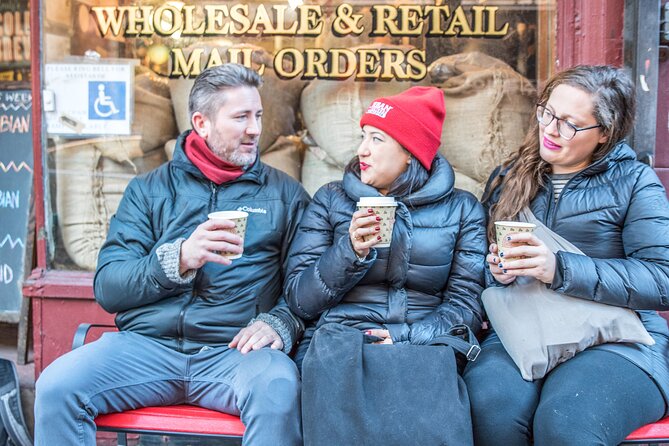
The price is $320 per group of up to 12 people, not $320 per person. For a full group, that is about $26.67 per person for three hours. For six people, it is about $53.33 each. For two people, the cost rises to $160 per person.
That makes the tour most attractive for a family, group of friends, or private organization that can share the cost. A couple should compare the price with a larger group walk before booking, unless the private format and customized conversation are especially important.
The price includes a local English-speaking guide. It does not include food, drinks, souvenirs, or a tip for the guide. Since the strongest part of this tour is the guide’s storytelling and ability to answer questions, the value depends heavily on what you want from a private walk.
For a group with mixed interests, the price can make sense. One person can ask about music, another about architecture, another about LGBTQ history, and another about restaurants. The guide can adjust the emphasis instead of moving a fixed crowd through a script.
Who will get the most from this walk
I would choose this tour if you want a human-scale introduction to Greenwich Village rather than a broad Manhattan overview. It suits first-time visitors who want context, but it can also work for locals. Jessie Fahey’s past tours have helped people who had lived near Manhattan for decades notice new details in a familiar neighborhood.
It is also a good fit for:
- Small groups who want a private guide
- Music and comedy fans
- People interested in counterculture and social movements
- Visitors who like historic neighborhoods more than major museums
- Families or company groups that want an outing with room for questions
- Repeat New York visitors looking for a focused neighborhood experience
You may want something else if you prefer a fast list of top sights, a ticketed attraction, or a food tour with tastings included. You should also be comfortable walking for roughly three hours and spending time outdoors.
Most people can participate, service animals are allowed, and the meeting point is near public transportation. Confirmation is provided when you book. The activity is scheduled to begin at 11:00 a.m., and free cancellation is available until 24 hours before the start time. Cancellations or changes made less than 24 hours ahead are not refunded or accepted.
Should you book the Greenwich Village walk?
Book it if you want the Village explained through its people, performance venues, political movements, and ongoing changes. The private setup is the main advantage, and Jessie Fahey appears to be a particularly strong guide choice if you can request her.
I would be most enthusiastic about this for a group of six to 12 people, where the cost becomes reasonable and everyone can take part in the conversation. Couples should think harder about the price, but may still find it worthwhile if they care about music, comedy, LGBTQ history, or getting tailored food and drink advice.
Confirm the endpoint before you go, bring comfortable shoes, and budget separately for a tip and any food or drinks. If you want a thoughtful look at why Greenwich Village matters, not just a stroll past attractive streets, this tour is a sound pick.
FAQ
Where does the Greenwich Village walking tour start?
The tour starts at 29 Washington Square West, New York, NY 10011.
What time does the tour begin?
The scheduled start time is 11:00 a.m.
How long is the walking tour?
The experience lasts approximately three hours.
How many people can join the private tour?
The price covers one private group of up to 12 people.
What is included in the price?
A local English-speaking guide is included.
Are food and drinks included?
No. Food, drinks, souvenirs, tips, and guide gratuities are not included.
Does the tour visit Stonewall Inn?
Stonewall Inn is listed as a major ending landmark, where the guide explains the riots and their effect on the LGBTQ rights movement. The meeting information also says the activity ends back at the starting point, so confirm the exact endpoint.
Can I cancel for a full refund?
Yes. You can cancel at least 24 hours before the experience start time for a full refund. Cancellations or changes made less than 24 hours before the start time are not accepted or refunded.
More 3-Hour Experiences in New York City
- NYC at Night: 3-Hour Luxury Bus Tour of Top Highlights
★ 4.5 · 448 reviews - 3 Hour Luxury Bus Tour of NYC Night Highlights
★ 4.5 · 204 reviews - 3 Hour Midtown Manhattan Architectural Tour
★ 5.0 · 81 reviews - 3-Hour Private NYC TV and Movie Tour
★ 4.5 · 53 reviews
Recently added in New York City
- Squid Game: The Experience New York City★ 4.0 · 9 reviews
- New York: Private Professional Photoshoot at Central Park★ 5.0 · 9 reviews
- Professional Photoshoot at Brooklyn Bridge in New York★ 5.0 · 5 reviews
- New York Queens Indoor Skydiving Experience With 2 Flights★ 5.0 · 4 reviews
- New York 4-Day Tour to Niagara Falls & Washington★ 4.0 · 13 reviews
- New York: Times Square Professional Photoshoot★ 4.5 · 17 reviews
- New York Princess Cruises★ 3.0 · 4 reviews
- New York Midtown Scavenger Hunt Adventure★ 3.5 · 9 reviews
Greenwich Village Tours, compared.

Greenwich Village Food Tour with 6 Locals Favorites Dishes
Read our review →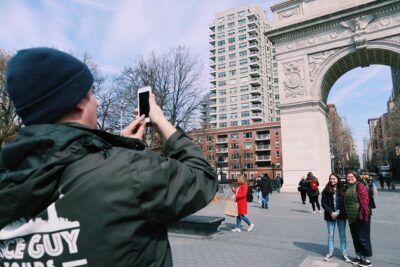
Greenwich Village Walking and Food Tasting Tour
Read our review →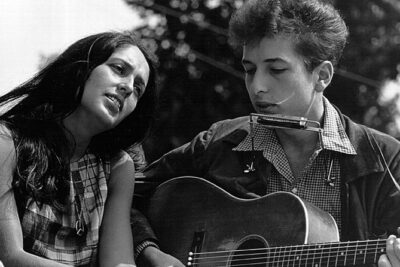
Artistic, Alternative Greenwich Village Walking Tour
Read our review →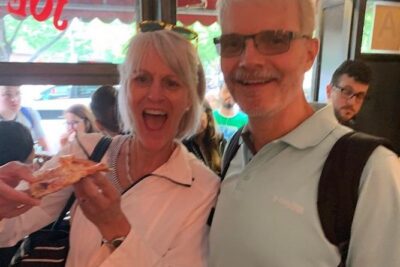
NYC Greenwich Village Italian Food Guided Walking Tour
Read our review →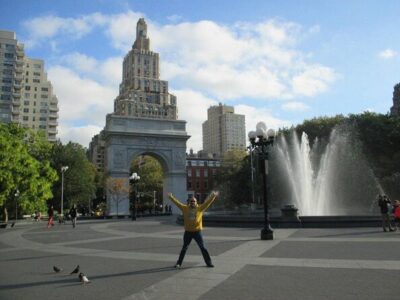

High Line Park and Greenwich Village Food Tour
Read our review →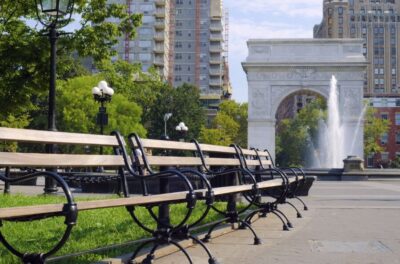
Browse the lists this tour appears in