
Reviewed · HISTORICAL TOURS
Slavery and African American History Private Tour in NYC
New York’s colonial past looks different when you learn who built its roads, docks, churches, and defenses. This walking tour connects slavery to familiar Lower Manhattan sights, including Wall Street, City Hall, St. Paul’s Chapel, Trinity Church, Pearl Street, and Fraunces Tavern.
I like the choice between a focused two-hour walk and a longer version with the African Burial Ground National Monument. I also like the private format: your group can ask questions, and guides such as Ronald and Joseph are praised for explaining difficult material in a clear, engaging way. The main drawback is simple: this is a serious walking tour, and the route may not suit anyone who dislikes walking for several hours.
Key points to know before booking
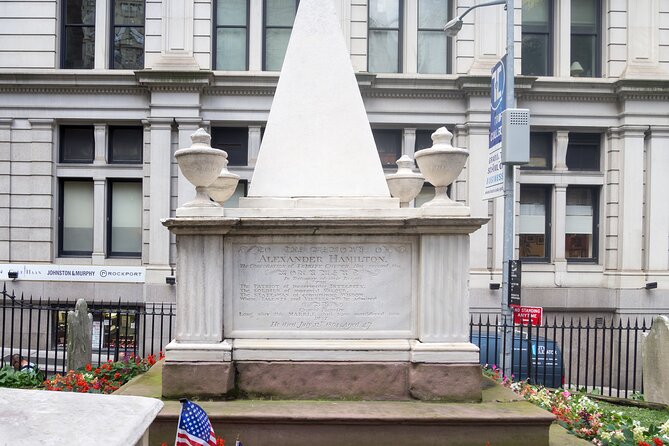
- Slavery is tied to famous Lower Manhattan landmarks, including Wall Street, Trinity Church, City Hall, and the former slave market.
- The three-hour option adds the African Burial Ground Visitor Center, with a film, images, artifacts, and exhibits.
- The private format keeps the discussion flexible, with only your group taking part.
- Guides Ronald and Joseph receive special praise for clear storytelling and strong command of the subject.
- Expect plenty of walking, with stops outdoors and historical explanations along the way.
- Book early if your dates are fixed, since this experience is often reserved about 47 days ahead.
Seeing New York through its enslaved labor
Many visitors meet New York through skyscrapers, finance, and Revolutionary-era stories. This tour asks you to look again at the same streets and buildings through the lives of enslaved Africans and African Americans.
During the colonial period, enslaved Africans made up as much as 20 percent of New York’s population. They performed much of the heavy labor that helped build the city’s early infrastructure. That fact gives the tour its force: you are not visiting an isolated memorial or a single museum. You are walking through the places where this history happened.
I like that the tour deals with both labor and resistance. You hear about the daily lives of enslaved people, the work they were forced to perform, and acts of rebellion. The route also addresses the way slavery shaped the city itself, rather than treating African American history as a side note.
The subject is difficult, but the tour is designed as a lesson in place. You can look at a street name, church, dock, or civic building and understand that its story includes people whose names were often left out of the usual account.
More Historical Tours in New York City:
- New York City: American Museum of Natural History Ticket
★ 4.5 · 15,447 reviews - NYC: Starship Landmark 90 Minute Sightseeing Cruise
★ 4.6 · 3,666 reviews - Starship Landmark 90 Minute Sightseeing Cruise
★ 4.5 · 2,073 reviews
Starting at the Benjamin Franklin statue
The meeting point is the Benjamin Franklin Statue opposite Pace University at One Pace Plaza. The opening stop lasts about 10 minutes and is free of charge.
This is a practical place to begin because it puts you near several Lower Manhattan sites. You will want to arrive ready to walk, since the tour moves through the historic core rather than remaining in one building.
The statue also offers an early reminder that American history contains competing stories. Benjamin Franklin is linked with the founding era and civic life, while the tour shifts attention toward the enslaved people whose labor supported that society.
Your guide sets the tone here and explains how the walk will connect major landmarks with less familiar events. Guides Ronald and Joseph are particularly worth noting. Ronald is praised for breaking complex material into clear explanations, while Joseph is praised for combining strong historical knowledge with a lively delivery.
African Burial Ground: the most important optional stop
The three-hour version includes the African Burial Ground National Monument and Visitor Center. This is the strongest reason to choose the longer route.
Between the 1690s and 1794, about 15,000 Africans were buried at this site. The burial ground was later covered over, and its importance was not fully recognized for many years. Today, the monument and visitor center help restore that missing part of New York’s story.
Inside, you can see a film, images, artifacts, and related exhibits about enslaved African Americans, including both men and women. The material also follows their forced journey from Africa to North America.
The outdoor monument gives the place a quiet, reflective focus. The visitor center then provides objects and visual material that make the history easier to grasp. I would choose this version if you want more than a fast overview. The extra hour gives the subject room to breathe and makes the tour feel less like a sequence of street stops.
You should allow time for a mandatory security check before entering the visitor center. That can add a little delay, so do not plan a tight appointment immediately afterward.
The two-hour option does not include free admission to the African Burial Ground Visitor Center. If you choose the shorter tour, confirm the admission arrangements before booking, since the monument is one of the main differences between the two options.
City Hall, St. Paul’s Chapel, and Trinity Church
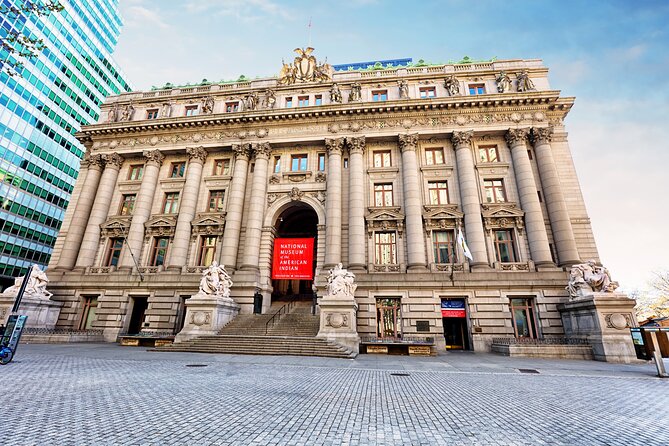
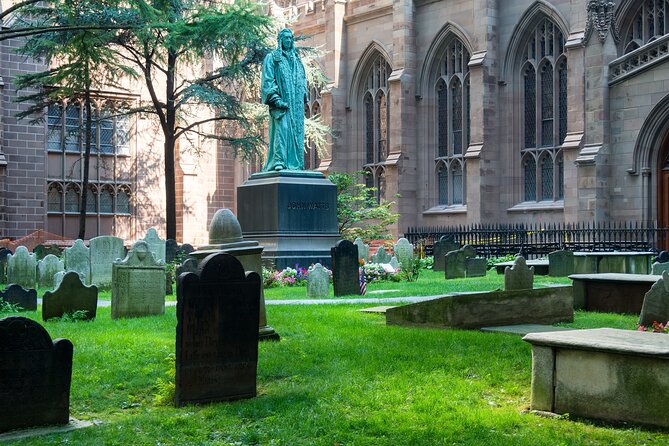
After the opening, the route passes several well-known buildings in and around Lower Manhattan. City Hall, St. Paul’s Chapel, and Trinity Church are not just scenic stops. Each helps explain how the young city grew and who supplied the labor.
Your guide discusses how enslaved Africans helped build roads, docks, churches, and other structures. You are not simply looking at old stonework. You are learning to ask who cut the materials, moved them, raised the walls, and maintained the city.
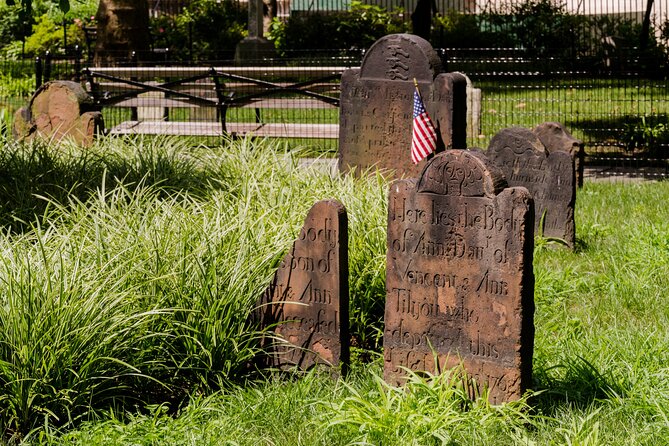
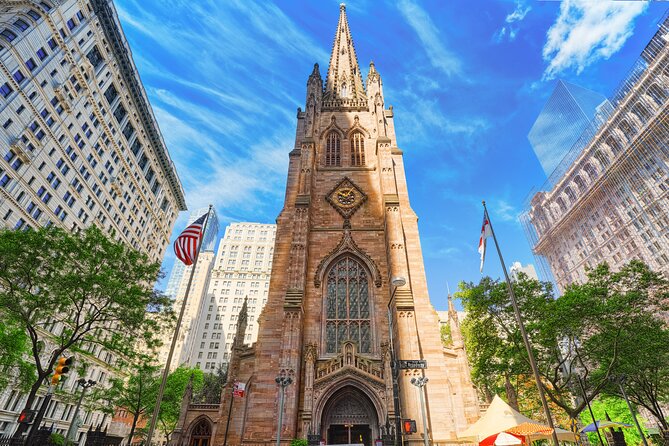
Trinity Church was originally built with the labor of enslaved people. That detail can change the way you read the building. Its religious and architectural story is only part of the picture.
St. Paul’s Chapel adds another layer to the walk, since it is part of the city’s early civic and religious center. City Hall then brings the subject into public life and government. The tour’s value here comes from the connections between places, rather than from spending a long time inside any one attraction.
Because these are outdoor stops, your experience depends partly on your guide’s storytelling. Ronald’s strength, according to the feedback provided, is making a large amount of information understandable. That matters on a route with many locations and dates.
More New York City Tours:
- NYC: SUMMIT One Vanderbilt Tickets
★ 4.7 · 51,195 reviews - NYC: Empire State Building Tickets – Observatory & Museum
★ 4.7 · 25,757 reviews - New York City: Statue of Liberty & Ellis Island with Ferry
★ 4.6 · 18,683 reviews - Statue of Liberty and Ellis Island Tour: All Options
★ 5.0 · 13,571 reviews
Wall Street and the former slave market
Wall Street carries a name tied to a defensive wall built during the colonial period. The wall was constructed with enslaved labor, and the tour explains that link while showing how the street fits into the city’s early development.
For many people, Wall Street means stock exchanges and modern finance. Here, it becomes a place to think about colonial power, labor, trade, and control. The shift in viewpoint is one of the tour’s most useful features.
The walk also points out the building that housed the former slave market. This brings the subject out of the realm of general labor and into the business of buying and selling human beings in New York.
That stop may be especially important for anyone who assumes slavery was mainly a Southern institution. New York’s role was different from that of plantation regions, but slavery was still part of the city’s economy and public life. The tour gives you a way to see that connection on the ground.
Do not expect a large reconstructed market or a theatrical presentation. The experience is a guided walk through present-day streets, with the guide supplying the historical context. You get a thoughtful interpretation of ordinary urban spaces rather than a fully staged attraction.
Pearl Street and the walk toward Fraunces Tavern
The route continues past Pearl Street and ends outside historic Fraunces Tavern. This final stretch links the colonial city with the period of the American Revolution.
Fraunces Tavern was once headquarters for George Washington, one of the Founding Fathers. Ending here creates a useful contrast. The tour begins by looking at public memory through Franklin and closes near a site associated with Washington, while keeping enslaved people and African American contributions in the frame.
That contrast is not a reason to treat the final stop as a grand finale. It is better understood as a reminder that famous national stories often leave out the labor and lives that made them possible.
The supplied meeting details say the activity ends back at the meeting point, while the route description places the finish outside Fraunces Tavern. I would check the day-before email for the precise end point. In either case, you remain in Lower Manhattan, close to public transportation.
Two hours or three hours?

The shorter option makes sense if you want a compact introduction to New York’s connection with slavery. You will still cover major sites and hear about daily life, resistance, slave-built infrastructure, Wall Street’s name, and the former slave market.
The three-hour option is the better choice for most history-minded visitors. The African Burial Ground Visitor Center adds physical evidence and exhibits to the outdoor route. It also gives you more time to understand the people behind the broader historical claims.
I would choose two hours if your schedule is tight or if your group has limited stamina. I would choose three hours if this is the main historical experience you have planned in Lower Manhattan.
The tour is offered in English. It is private, so only your group participates, and the guide can spend more time on questions than a large public walking tour usually allows.
Walking, group size, and practical comfort
This is an active city walk. One review describes plenty of walking and says it may not suit people who prefer a limited amount of time on their feet. That is useful advice, even though most travelers can participate.
Wear comfortable shoes and allow enough time for the route. You will be outdoors for much of the experience, moving between streets, monuments, churches, and historic locations.
The operator aims for one licensed guide per 25 people. Groups of 26 to 50 receive two guides so everyone can hear and ask questions. Since this is sold as a private activity, your own group may be smaller, but the group-size rule is worth knowing if you are organizing a larger party.
The meeting point is near public transportation, which makes it easy to reach from other parts of Manhattan. Check your email the day before for important instructions and any final meeting details.
Is the $192.90 price good value?
At $192.90 per person, this is not a budget walking tour. The price needs to be judged against the private format, guide service, and length of the experience.
For one or two people, the cost may feel high compared with a standard group tour. For a family, school group, or larger private party, group discounts could make the price more reasonable. You are paying for a special itinerary focused on slavery and African American history, rather than a broad Lower Manhattan highlights walk.
The three-hour option gives the strongest value because admission to the African Burial Ground Visitor Center is included. The exhibits, film, images, and artifacts add something you cannot get from street commentary alone.
I would not book this solely for sightseeing photos. The value is in the guide’s interpretation and the chance to ask questions. Ronald’s clear explanations and Joseph’s engaging delivery are good signs for anyone who wants serious content presented in a direct way.
The overall rating is 4.3 from three reviews, with praise focused on the guides’ ability to explain the subject and on the African Burial Ground monument. That is a small sample, so I would use it as a helpful signal, not a guarantee of the exact guide or experience you will receive.
Who should book this New York history tour?
I recommend it to visitors who want to understand how slavery shaped New York, not just see old buildings. It suits adults, families with older children, students, and anyone who prefers a focused history walk to a general sightseeing loop.
It is also a good choice if you have already seen the usual Lower Manhattan landmarks and want a different way to read them. You will recognize the streets, but the meaning will change.
I would think twice if your group wants a light, entertaining tour, dislikes difficult subjects, or cannot comfortably walk for two to three hours. The tour deals with enslavement, forced labor, rebellion, and the sale of human beings. Its purpose is education, not easy amusement.
If you can spare the time, choose the longer version. The African Burial Ground National Monument is the clearest physical connection to the people at the center of the story, and the visitor center gives the outdoor walk more weight.
Should you book it?
Book this tour if you want a serious, place-based account of African American history in New York and value a private guide who can answer questions. The route makes familiar streets more meaningful, and the three-hour option offers the fullest experience.
Choose the two-hour version for a shorter introduction. Choose three hours for the African Burial Ground exhibits and a more complete picture. Just plan for substantial walking, confirm the final meeting details in the day-before email, and cancel at least 24 hours ahead if your plans change. Within that framework, this is a worthwhile way to see Lower Manhattan with more honesty and context.
FAQ
How long does the tour last?
You can choose a tour lasting about two hours or a longer option lasting about three hours.
Where does the tour begin?
The meeting point is in front of the Benjamin Franklin Statue opposite Pace University at One Pace Plaza, New York, NY 10038.
Where does the tour end?
The route description places the end outside historic Fraunces Tavern. The meeting information also says the activity ends back at the meeting point, so check the day-before email for the exact end instructions.
Is the African Burial Ground National Monument included?
Admission to the African Burial Ground National Monument Visitor Center is included with the three-hour option. It is not included in the two-hour option.
What can I see at the African Burial Ground Visitor Center?
The visitor center includes a film, images, artifacts, and related exhibits about enslaved African Americans and their journey from Africa to North America.
Is this a private tour?
Yes. Only your group participates in the activity.
What is the cancellation policy?
You can receive a full refund if you cancel at least 24 hours before the experience begins. Cancellations or changes made within 24 hours are not accepted or refunded.
Recently added in New York City
- NYC: St. Patrick’s Cathedral Official Self-Guided Audio Tour★ 3.5 · 45 reviews
- St Patrick’s Cathedral Official Behind the Scenes VIP Tour★ 4.5 · 28 reviews
- Soul of Harlem: Striver’s Row, Apollo Theatre & Gospel Heritage★ 5.0 · 75 reviews
- Soho, Little Italy, Chinatown Private Tour★ 5.0 · 6 reviews
- 2-Hour Spanish Nightlife Guided Walking Tour of Greenwich Village★ 5.0 · 11 reviews
- Soho, Little Italy, Chinatown★ 5.0 · 15 reviews
- SoHo, Little Italy and Chinatown – Food and Culture Tour★ 5.0 · 6 reviews
- Snack Attack NYC: Text Message-Guided Private Food Walking Tour★ 3.5 · 3 reviews
Historical Tours, compared.

Starship Landmark 90 Minute Sightseeing Cruise
Read our review →
Starship Landmark 90 Minute Sightseeing Cruise
Read our review →
American Museum of Natural History Admission Ticket
Read our review →
Top Rated Brooklyn Half-Day Food, History & Culture Tour via bus
Read our review →

The Original Greenwich Village Food & Cultural Tour Since 1999
Read our review →
The Speakeasy Adventure: A Tipsy Trip Through History
Read our review →Browse the lists this tour appears in