
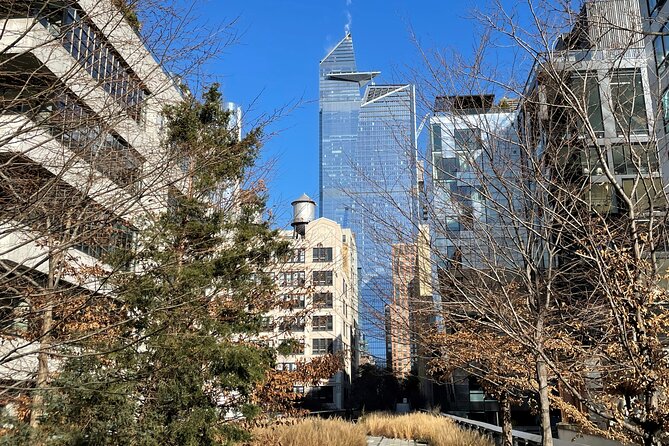
Reviewed · NYC OBSERVATION DECK TICKETS
The Story of the High Line Elevated Park and Hudson Yards
The High Line is more than a pleasant path above Manhattan. It is a story about freight trains, neighborhood change, public art, bold architecture, and a near-demolition that could have erased one of New York’s most distinctive places. Kitt Garrett’s virtual talk follows that story block by block, from Gansevoort Street through Chelsea to Hudson Yards.
I like the clear historical timeline, which explains why the rail line was built, why it was raised above street level, and how it was saved. I also like the downloadable PDF, since you can watch first and then use the addresses, map, architects, and notes during a self-guided walk.
The main drawback is simple: this is a video experience, not a live walk with a guide beside you. One technical problem was reported with the video link, although the issue was resolved with a replacement link and a refund. Check your connection before settling in, and download the PDF before your visit.
Key details before you book
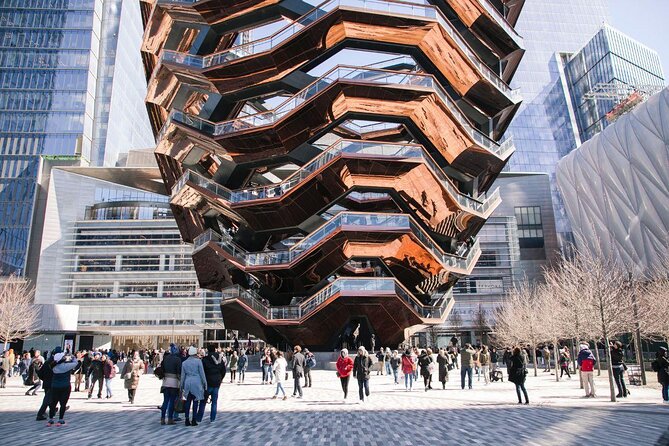
- Follow the High Line from Gansevoort Street to Hudson Yards: The route traces the park’s full story across the Meatpacking District, Chelsea, and the new Hudson Yards neighborhood.
- Learn why Manhattan needed raised freight tracks: The talk connects the rail line to goods arriving in the city and the dangers of street-level trains.
- Meet the people behind the park: Kitt Garrett introduces the artists, architects, and advocates who helped shape the High Line you see today.
- See the park block by block: The virtual format lets you pause and study buildings, views, public art, and changing city plans.
- Use the PDF as a walking companion: Addresses, a map, and architectural information help turn the talk into an in-person visit.
- Pay one group price: The $25 cost covers a private group of up to 15 people, making it especially reasonable for families or a small group.
Why the High Line story matters
A walk on the High Line can feel effortless. You stroll above the streets, pause for a view, take a picture, and continue toward the next section of planting or art. Without context, though, it is easy to miss why this narrow strip of land became such a major New York project.
Kitt Garrett begins farther back, with the movement of goods into Manhattan. The rail line served as a working connection for freight, helping supplies reach businesses and residents. Street-level rail traffic created serious problems, so the tracks were eventually moved above the road.
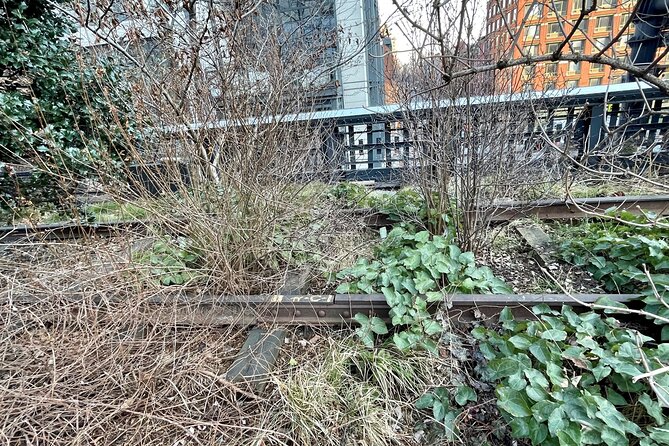
That basic change explains the shape of the park. The High Line is not a purpose-built garden. It is a long industrial structure reused for public life. You are looking at an old transportation system that gained a second purpose after trains stopped running.
The talk also explains what happened after abandonment. The line faced the possibility of demolition, and its rescue required people willing to see value in an unused industrial structure. That part of the story gives the park more weight than its flowers, benches, and skyline views alone.
I find this especially useful if you have already walked the High Line and felt that you were seeing only the surface. The video gives you a way to read the structure, the streets below, and the surrounding buildings as parts of one long city story.
More High Line and Chelsea Tours:
- High Line and Chelsea Small Group Tour
★ 5.0 · 1,238 reviews - Chelsea Market and High Line Guided Food Tour
★ 5.0 · 827 reviews - Manhattan Adventure Sightseeing Boat Tour – from Chelsea Piers
★ 5.0 · 688 reviews
Starting at Gansevoort Street and the Meatpacking District
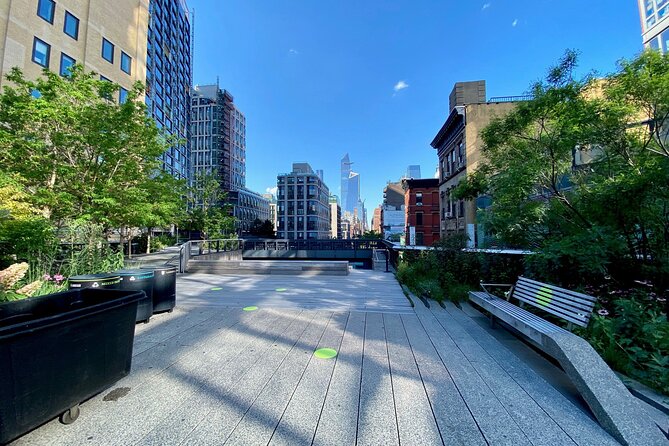
The route begins at Gansevoort Street, in the Meatpacking District. This is a strong starting point because the neighborhood’s former working identity helps explain the High Line’s original role.
The discussion connects the rail line with the businesses that once operated in this part of Manhattan. You get a sense of why goods needed a dedicated route and why the old industrial district was tied so closely to transportation.
The neighborhood later changed sharply. The Meatpacking District became known for restaurants, shops, galleries, and nightlife, while the High Line became one of the area’s main public attractions. Garrett uses that change to show how transportation infrastructure can shape neighborhood identity long after its original job has ended.
This section should appeal to you if you enjoy urban history rather than only famous monuments. It is not just a story about a park. It is about how an entire district changed when its old economic purpose faded and a new public use took hold.
The virtual format has one advantage here. You can pause to inspect the route and connect the historical explanation with the buildings and streets shown on screen. A live walk moves at the pace of the group. A video lets you stop when an architectural or historical detail needs more attention.
The engineering behind the raised railway
The High Line’s physical design is part of the story, and the talk gives attention to engineering as well as art. The line was raised roughly 30 feet above the streets, creating a separate route for freight while reducing conflicts with street traffic.
That height matters when you visit. You are not simply walking on a former rail corridor. You are seeing Manhattan from a different level, with streets below and buildings close enough to study from a new angle.
Garrett also places the rail line within the wider story of New York trade and city growth. The result is a more useful explanation than a simple list of dates. You learn why the line existed, what problem it addressed, and how its structure later offered possibilities that a normal street-level space would not have provided.
The inclusion of engineering is one of the strongest reasons to choose this experience. Many city tours focus on personalities and dramatic events. Here, the physical system itself gets attention. That makes the High Line easier to understand for anyone interested in construction, transport, or the practical workings of a growing city.
From abandoned tracks to a public park
The next chapter follows the line after trains stopped using it. Abandonment could have meant removal, but the structure was rescued and given a new public purpose.
You will hear about the people who helped make that shift possible, along with the artists and architects involved in the park’s later development. This is not presented as a sudden makeover. The appeal lies in seeing how an old industrial structure became a place for walking, art, planting, and city views.
The park’s success also created new pressure. More than 8 million people visit each year, and the surrounding districts have continued to change. That scale helps explain why the High Line is now part of a much larger conversation about public space and development in New York.
I like that the experience does not treat the park as a finished object. Garrett discusses continuing development and the way new buildings alter what you see from the path. Visit at different times and you can notice changes in the skyline, construction, and the relationship between the park and its neighbors.
More NYC Observation Deck Tickets:
- NYC: Empire State Building Tickets – Observatory & Museum
★ 4.7 · 25,757 reviews - NYC: One World Observatory Skip-the-Line Ticket
★ 4.7 · 12,329 reviews - NYC Empire State Building Observation Deck Ticket
★ 4.5 · 6,916 reviews - All-Access 9/11: Ground Zero Tour, Memorial and Museum, One World Observatory
★ 5.0 · 4,886 reviews
A block-by-block look at art and architecture
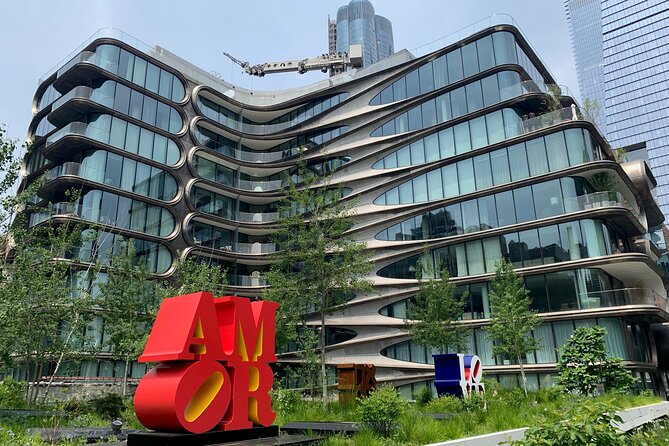
The virtual tour moves through the High Line section by section rather than treating it as one long viewpoint. That makes the PDF particularly useful. You can match addresses to the route, identify architects, and note buildings that deserve a closer look when you visit.
The talk includes public art and the design choices that shaped the park. You will also get stories about the buildings around it, from older industrial structures to newer projects that frame the views.
Architecture fans will get the most from this part, but you do not need technical training. The point is to help you notice details that are easy to pass while walking. A building may look like a backdrop until you know why it is there, who designed it, or how it relates to the old rail line.
Garrett also includes smaller New York stories along the way. Topics mentioned in the experience include the Titanic and the rivalry between Oreo and Hydrox. These details may seem separate from the High Line at first, but they add the sort of local texture that keeps a city talk from becoming a dry planning lecture.
The best approach is to keep the PDF open while watching. Note the locations that interest you, then use the document as a checklist during your own walk. Bring a phone or tablet with enough battery, since the value of the material comes from linking the video to the physical route.
Chelsea, changing views, and Hudson Yards
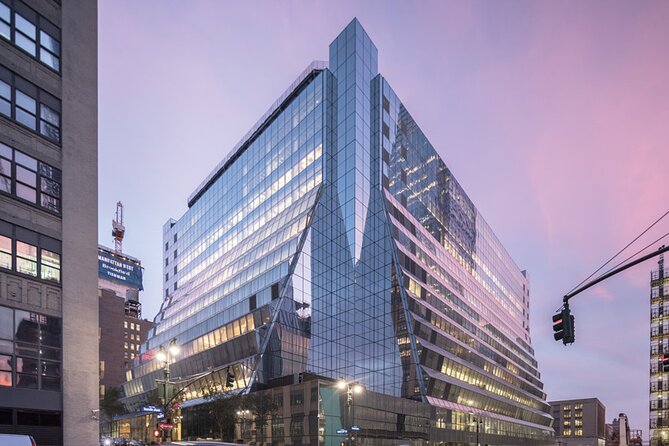
As the route continues through Chelsea, the focus shifts from the line’s working past to the changing city around it. Chelsea is central to the High Line experience because the park offers unusual views into streets, buildings, galleries, and new construction.
The virtual tour helps you understand how the High Line affected the neighborhood and how the neighborhood, in turn, changed the experience of walking on the park. The skyline is not static. New buildings can change sightlines, shadows, and the feel of each section.
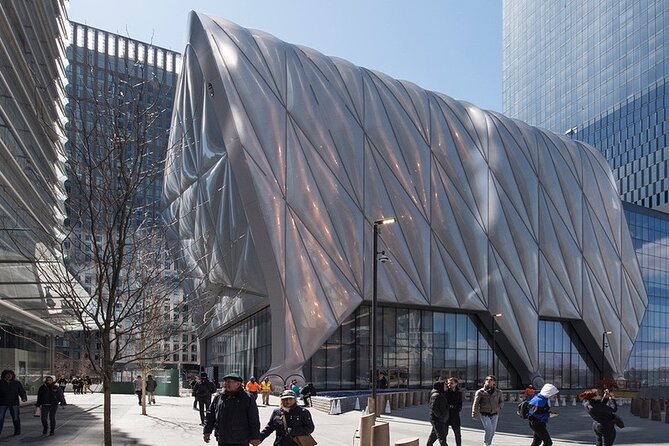
The route ends in Hudson Yards at 20 Hudson Yards. This is a useful contrast with the older industrial sections. The tour describes Hudson Yards as the largest private construction project in United States history, placing the High Line beside one of New York’s most ambitious modern developments.
At the end point, you will find shops, restaurants, and restrooms. That makes the physical walk easy to finish, especially if you are visiting with children or want a meal after the route. The contrast is also the point: one end of the experience begins with working rail freight, while the other reaches a newly built district shaped by large-scale private development.
The route information lists the meeting point at Gansevoort Street and the end at 20 Hudson Yards. Since the main product is a video talk, treat those locations as the beginning and end of your later self-guided walk rather than as a conventional live-tour gathering.
What the $25 group price really buys
The price is $25 per group for up to 15 people. That is a good value if you watch with family, friends, or a small private group. Split among several people, the cost is modest for nearly two hours of instruction plus a PDF that can support a later visit.
The value depends on how you use it. If you only want a quick introduction before taking a few photos, this may be more material than you need. If you want to understand the rail line, neighborhood changes, design, and Hudson Yards, the length gives Garrett room to connect the pieces.
A private group format also suits households with different ages or interests. Someone may focus on engineering, another person on architecture, and someone else on the park’s art and local stories. You can pause, replay, or discuss sections without keeping up with strangers.
The main limitation is that the $25 does not buy a live guide walking beside you. The experience is designed around a video and a self-guided follow-up. That is a strength for flexibility, but a weakness if you prefer spontaneous questions or personal conversation during the walk.
Who will get the most from this experience
I would choose this for a first-time High Line visit if you want more than a scenic stroll. It is also useful if you have walked the park before but never understood the old rail system or the surrounding architecture.
History fans should enjoy the movement from trade and freight to abandonment and preservation. People interested in city planning will appreciate the connection between the High Line, the Meatpacking District, Chelsea, and Hudson Yards.
Architecture enthusiasts get addresses, building information, and a clearer way to read the skyline. Families may like the mix of concrete facts and unusual stories, including the Titanic and Oreo references, though younger children may not stay focused for the entire 1 hour and 48 minutes.
This is less suitable if you want a spontaneous outdoor activity or a guide-led walk in real time. It is also a poor fit if you need a flexible cancellation option. The booking is non-refundable and cannot be changed for any reason.
Practical tips for using the video and PDF
Watch the talk before visiting the High Line if possible. You will recognize more of the buildings and understand why the route begins where it does.
Download the PDF to your device before heading out. It includes the map, addresses, and architect information, so you can use it when you are standing on the path rather than relying on memory.
Keep the route from Gansevoort Street to Hudson Yards in mind. Finishing at 20 Hudson Yards gives you access to shops, restaurants, and restrooms, which is handy after a long walk.
The listed hours for the experience run from midnight to 11:30 p.m. daily during the stated operating period. The activity itself is delivered by mobile ticket, and confirmation is sent at booking.
Most people can participate, the activity is near public transportation, and service animals are allowed. Since it is a private activity, only your group takes part.
Should you book The Story of the High Line?
Book it if you want the High Line to make sense, not just look attractive. Kitt Garrett’s talk ties together freight rail, engineering, preservation, public art, architecture, neighborhood change, and Hudson Yards in one route.
The strongest reason to choose it is the combination of the long video and the practical PDF. You can learn at home, then walk the High Line with a better eye for its structure and surroundings.
Skip it if you want a live guide, a short introduction, or a booking that can be changed later. For a private group of up to 15, though, $25 is a sensible price for a detailed urban-history lesson and a useful self-guided walking aid.
FAQ
How long does the experience last?
The virtual talk and tour lasts approximately 1 hour and 48 minutes.
How much does the experience cost?
The price is $25 per group, with up to 15 people included.
Is this a private activity?
Yes. Only your group participates in the activity.
Who leads the experience?
The experience is presented by Kitt Garrett of Kitt Garrett New York Sites & Insights.
Is the experience virtual or in person?
It is a virtual video talk and tour. It also includes a PDF for exploring the High Line on your own.
Where does the route begin?
The route begins at Gansevoort Street in New York City.
Where does the route end?
The route ends at 20 Hudson Yards, where you can find shops, restaurants, and restrooms.
What does the PDF include?
The PDF supports a self-guided visit with a map, addresses, and information about architects and locations along the route.
Can I cancel or change the booking?
No. The experience is non-refundable and cannot be changed for any reason.
Recently added in New York City
- New York City Superheroes Tour Marvel and DC Comics Origins★ 4.5 · 27 reviews
- Sweets and Slices Greenwich Village Walking Food Tour★ 5.0 · 23 reviews
- Tour Contrastes de Nueva York★ 4.5 · 48 reviews
- Sunday Walking Tour and Gospel in West Harlem★ 4.0 · 14 reviews
- Harlem Sunday Gospel Experience★ 4.0 · 46 reviews
- Spanish Superhero Tour in New York★ 5.0 · 3 reviews
- Street Art & Graffiti Tour in NYC Private Tour★ 5.0 · 7 reviews
- New York: Harlem tour and Gospel service★ 4.5 · 30 reviews
NYC Observation Deck Tickets, compared.
Empire State Building Tickets – Observatory & Museum
Read our review →
NYC Empire State Building Observation Deck Ticket
Read our review →
All-Access 9/11: Ground Zero Tour, Memorial and Museum, One World Observatory
Read our review →
Top of the Rock Observation Deck New York City Ticket
Read our review →
New York City One World Observatory Admission Ticket
Read our review →
NYC Edge Observation Deck at Hudson Yards Admission Ticket
Read our review →
9/11 Memorial Tour and Optional Observatory Ticket
Read our review →Browse the lists this tour appears in