
Reviewed · NYC WALKING TOURS
New York City: Roosevelt Island Walking Tour with Tram Ride
Roosevelt Island gives you a rare New York experience: a quiet residential community in the East River, reached by a 10-minute tram ride with broad views of Manhattan, the Queensboro Bridge, and the water. The island’s calm streets hide a hard past of prisons, hospitals, and neglected patients.
I like the local perspective from Hiram, a Roosevelt Island resident, and the way the tour connects old New York institutions with today’s planned community and Cornell Technion campus. The main drawback is timing: the advertised duration is 2.5 hours, while the route details describe about three hours of guided walking, and weekday rush hours or busy weekends can limit the tram views.
Key points to know before booking
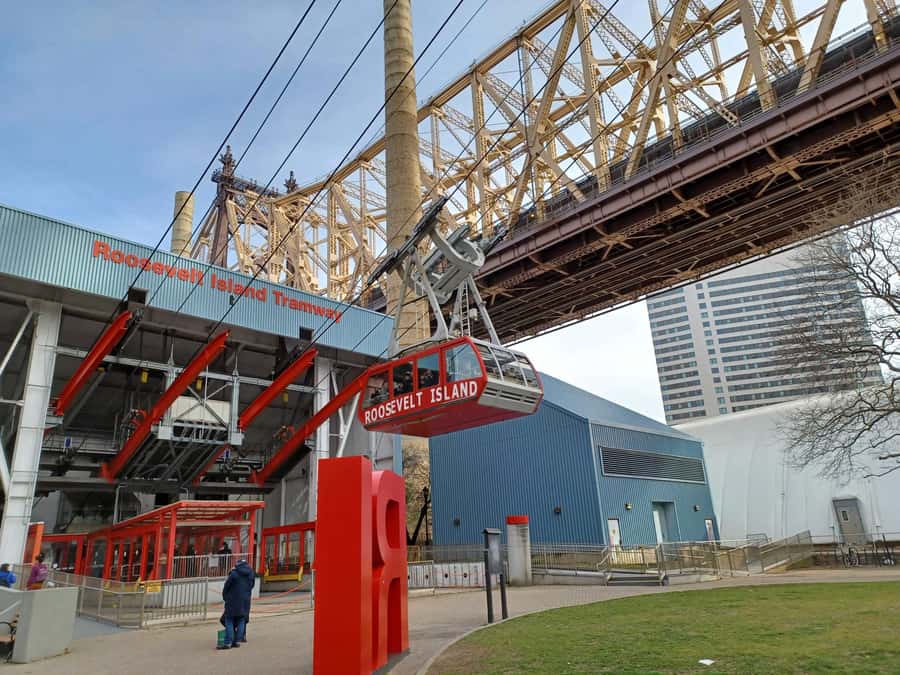
- Ride the crimson Roosevelt Island Tram: Cross the East River above the water for a fresh view of Manhattan’s East Side and the Ed Koch Queensboro Bridge.
- Hear the island’s darker history: Learn about Blackwell’s Penitentiary, the Smallpox Hospital, and the New York City Lunatic Asylum.
- Visit Four Freedoms State Park: See Franklin D. Roosevelt’s memorial, a facial sculpture, and wide skyline views near the island’s southern tip.
- Meet Roosevelt Island’s present-day community: Understand how a planned mixed-income residential district was developed from 1969 to 1973.
- Connect history with new technology: Visit Cornell Technion and hear about its flood-resistant buildings, energy-saving design, and high-tech start-up mission.
- Expect a walking-focused outing: Comfortable shoes are essential, and the experience is not suitable for children under 13 or people with mobility impairments.
Why Roosevelt Island feels unlike the rest of New York
Most first-time visits to New York stay on Manhattan. This tour asks you to step just beyond it, without giving up the skyline.
Roosevelt Island runs through the East River between Manhattan and Queens. It is close to the city’s busiest streets, yet much of the island feels slower and more residential. Parks, apartment buildings, historic ruins, and broad river views replace the usual canyon of traffic and towers.
That contrast is the real appeal. You are not simply checking off another overlook. You are learning how New York used a small island for institutions that the city preferred to keep out of sight, then later rebuilt it as a planned residential community.
The tour is led in English by Hiram, who lives on Roosevelt Island and has spent his life in New York City. That local connection matters here. Roosevelt Island’s story is complicated, and a guide who knows the place can help you connect the old buildings, new apartments, memorial parks, and research campus.
More NYC Walking Tours:
- SoHo, Little Italy, and Chinatown Walking Tour in New York
★ 5.0 · 3,153 reviews - Secrets of Grand Central Station Walking Tour New York City
★ 5.0 · 1,796 reviews - Greenwich Village Walking and Food Tasting Tour
★ 5.0 · 1,572 reviews
Starting at the Roosevelt Island Tram Plaza
The meeting point is on the upper level of the Roosevelt Island Tramway Plaza near the MetroCard Vendor Machine area at East 59th Street and Second Avenue.
You should arrive with comfortable shoes and allow enough time to find the upper-level meeting point. The tour begins with the tram crossing, and the ride itself takes about 10 minutes. The tram fare is not included in the tour price, so plan to pay that separately.
The tram is not just transportation. It is the first commuter tram in the United States, and its high route gives you a different view of New York than you get from a subway platform, ferry deck, or street corner.
As the car moves over the East River, you can look toward Manhattan’s East Side, the Ed Koch Queensboro Bridge, Roosevelt Island, and the water below. The ride is short, so keep your camera ready. The view can be restricted during weekday commuter rush hours and busy weekend periods, when the car may be crowded.
That limitation is worth taking seriously. If your main reason for booking is a quiet, open tram view, crowded conditions may disappoint. The ride remains a useful start to the tour, but the island’s history and parks are the main event.
Walking through an island built for isolation
Once you reach Roosevelt Island, the guide leads you through a community shaped by several very different chapters of New York history.
The island was once home to institutions that served, and often confined, people who had little power. These included Blackwell’s Penitentiary, facilities for people with smallpox, and the New York City Lunatic Asylum.
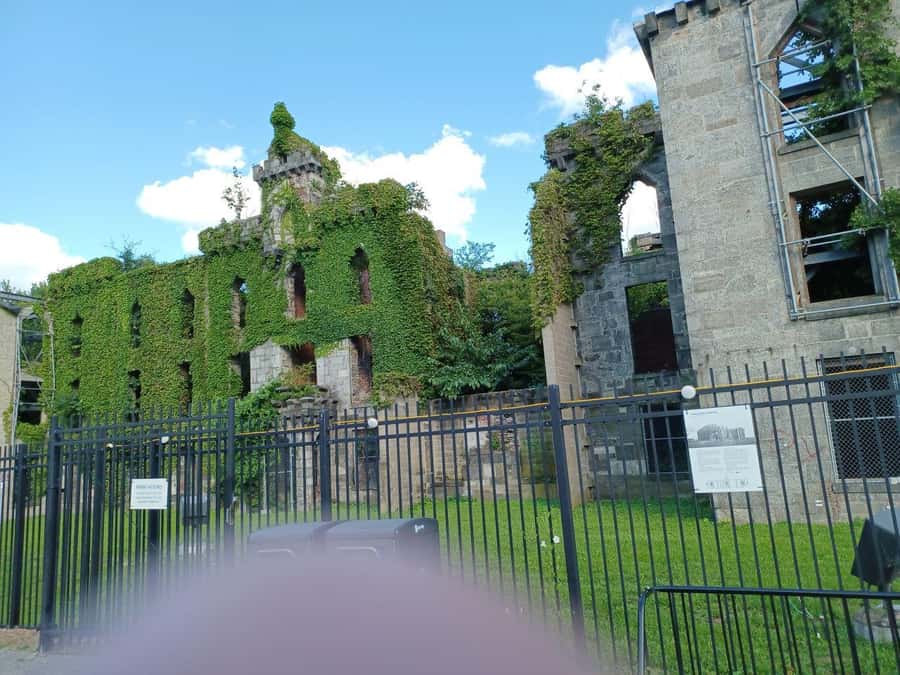
The penitentiary was used to incarcerate the city’s criminal population. The Smallpox Hospital isolated patients who carried a feared and dangerous disease. You will hear about the neglect that affected inmates and patients, including the tragic failure of administrators to protect their health and safety.
This part of the tour is not a light sightseeing stop, but it gives the island a needed human dimension. The quiet parks and orderly apartment blocks make more sense once you know that the same ground was once used for confinement and medical isolation.
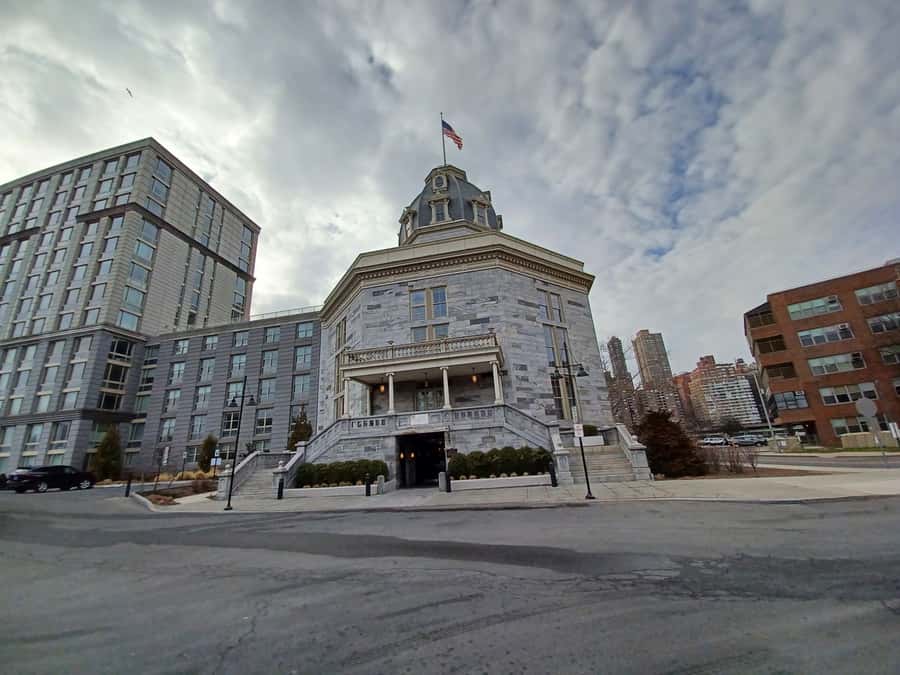
You will also see the former location of the New York City Lunatic Asylum, now associated with the Octagon Condominium Apartments. The site introduces one of the most memorable stories on the route: the work of journalist and activist Nellie Bly.
Nellie Bly and the Girl Puzzle Monument
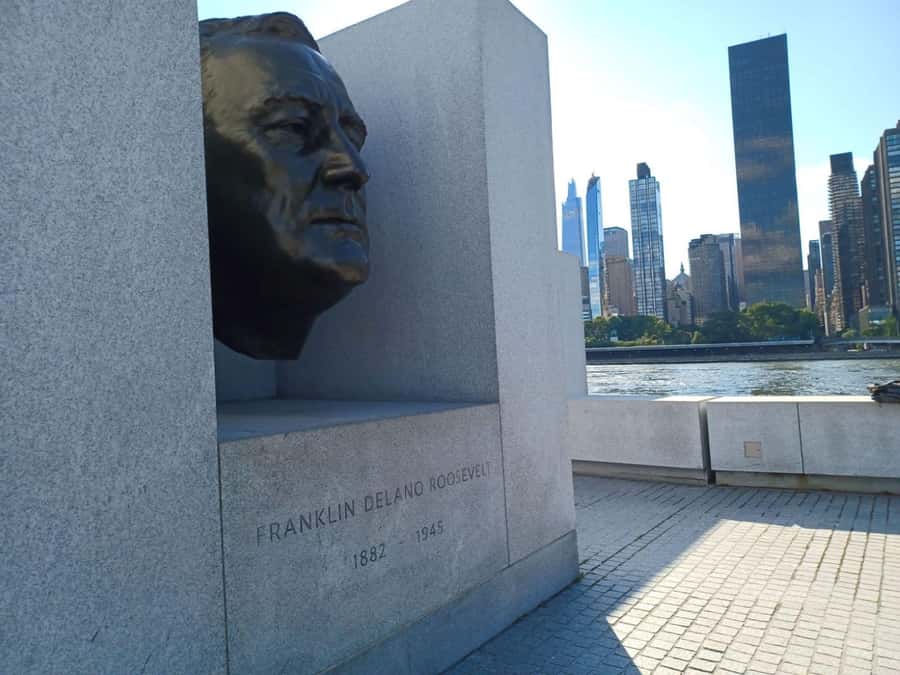
In the late 19th century, Nellie Bly investigated conditions inside the Lunatic Asylum. Her reporting exposed the mistreatment of female patients by the institution’s staff and helped bring attention to their rights.
The tour continues to The Girl Puzzle Monument Honoring Nellie Bly. Five sculptures of women’s faces form a puzzle-like memorial to Bly’s achievements and her advocacy for asylum patients.
This is one of the island’s more unusual public artworks. It links a local place to a larger story about journalism, women’s rights, and the power of investigation. You get more from the monument when you know the story behind it, and the guide’s explanation gives the sculpture a clear purpose rather than leaving it as an unexplained object along the path.
For me, this stop helps balance the island’s institutional history. You are not only hearing about the people who controlled these facilities. You are also hearing about someone who challenged that system and made the treatment of female patients impossible to ignore.
A completely different way to spend a day in New York City:
- NYC: SUMMIT One Vanderbilt Tickets
★ 4.7 · 51,195 reviews - NYC: Empire State Building Tickets – Observatory & Museum
★ 4.7 · 25,757 reviews - New York City: Statue of Liberty & Ellis Island with Ferry
★ 4.6 · 18,683 reviews - New York City: American Museum of Natural History Ticket
★ 4.5 · 15,447 reviews
Four Freedoms State Park at the island’s southern tip
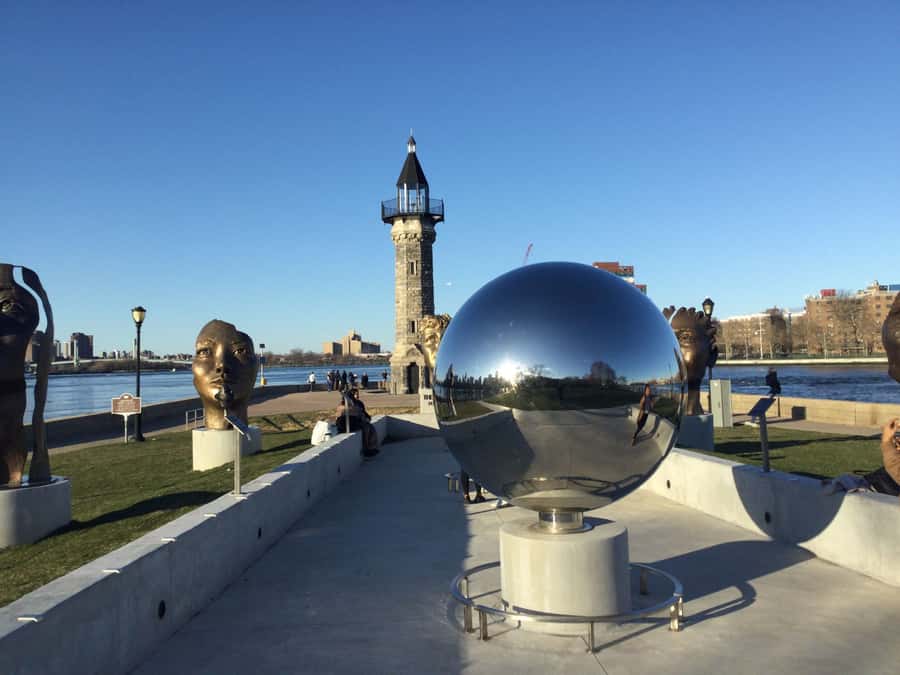
The route continues toward Franklin D. Roosevelt Four Freedoms State Park near the southern end of Roosevelt Island.
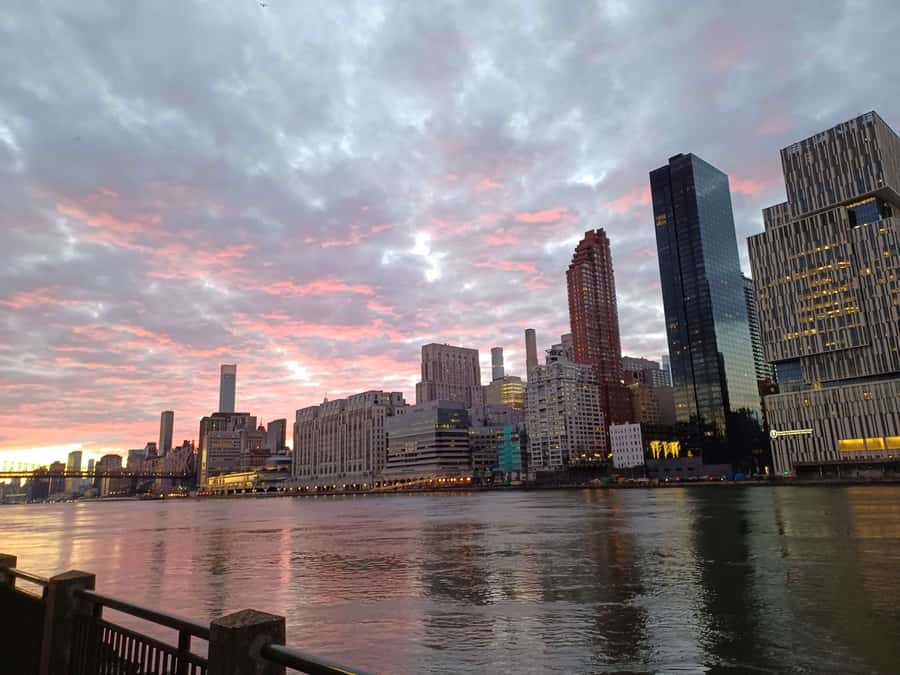
The park honors Roosevelt’s 1941 Four Freedoms Speech. Its position at the tip gives you wide views back toward the Manhattan skyline, with the East River framing the scene. The setting is open and deliberate, a sharp change from the enclosed institutions that shaped the island’s earlier years.
You will see an impressive facial sculpture of FDR. The monument gives the stop a strong visual focus, while the river and skyline provide the setting.
This is a good point in the walk to pause and take in the scale of New York. From street level in Manhattan, you often look up at the city. From Roosevelt Island, you look across at it. That change in angle helps you understand the East River as part of the city’s structure rather than just a gap between neighborhoods.
The park also adds political history to the tour. Roosevelt Island is not presented only as a former institutional site. It becomes a place connected to a major statement about freedom and human rights.
Cornell Technion and the island’s future
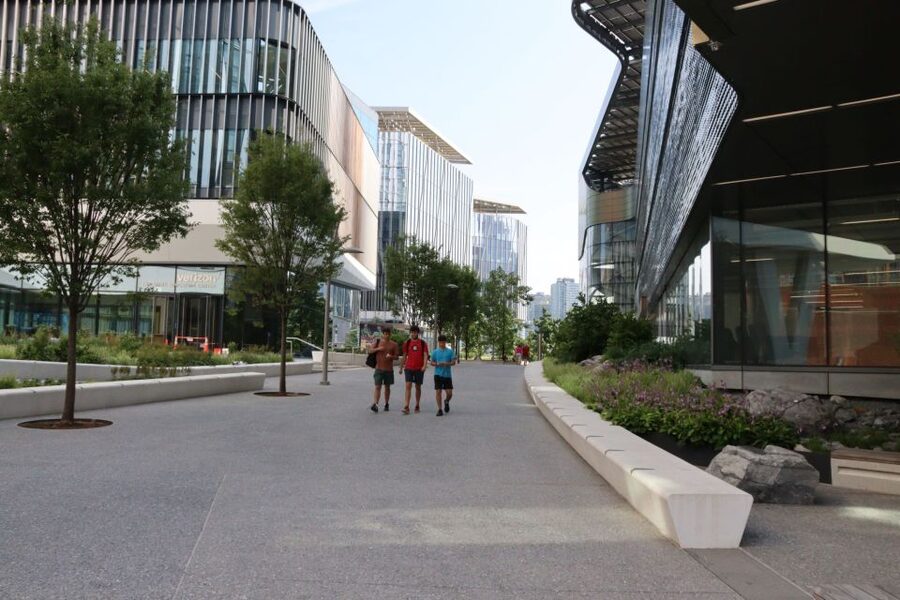
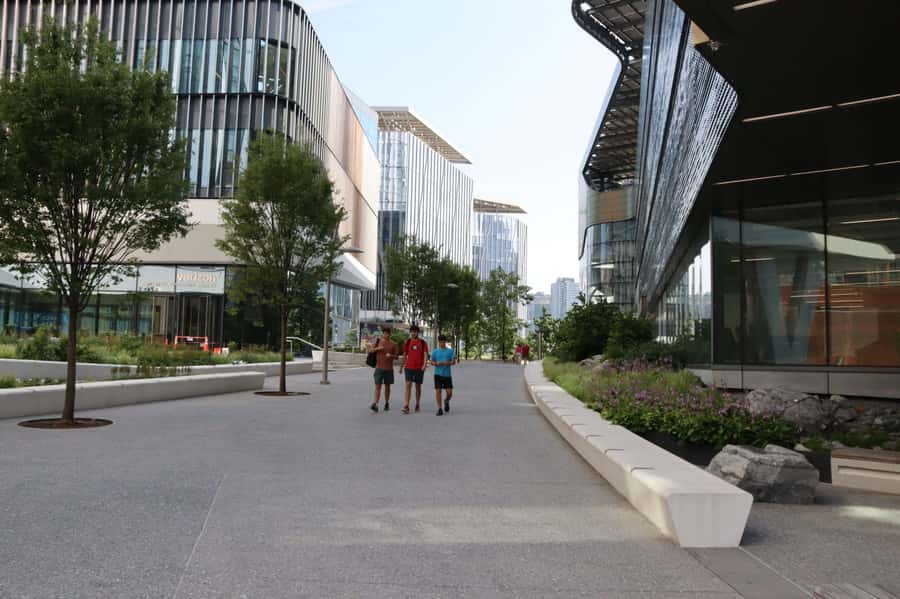
After the memorial park, the tour turns toward Cornell Technion, a center for research, creative work, and computer engineering programs.
The campus gives you a look at the island’s newer identity. Its buildings use flood-resistant features and energy conservation ideas, reflecting the challenges of building beside the East River. You will also hear about the school’s mission to help develop high-tech start-up companies.
This stop is useful because it prevents the tour from becoming a walk through old ruins. Roosevelt Island is not frozen in the past. It is also part of New York’s effort to develop new research and technology spaces.
The contrast is striking: one part of the island recalls prisons and hospitals, while another supports computer engineering and start-up companies. The tour makes that change part of the central story. New York has repeatedly assigned new roles to this small piece of land.
Understanding the planned New Town community
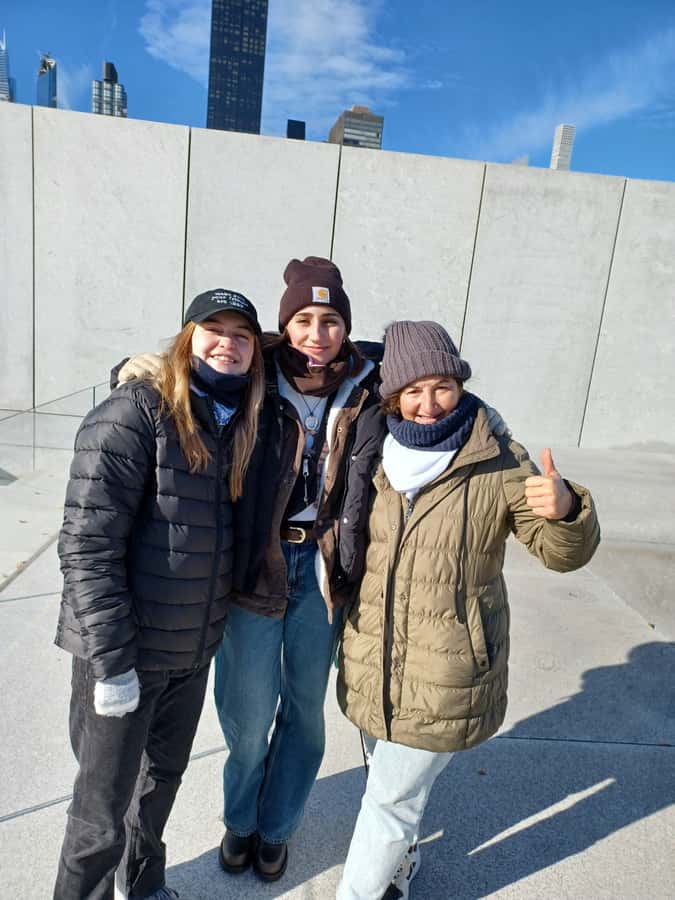
A major part of the walk explains how Roosevelt Island was planned and developed between 1969 and 1973.
The goal was a residential community with low-to-moderate income housing alongside luxury rental and condominium apartments. Residents live side by side in a mix of housing types, rather than in a neighborhood built around a single income group.
That plan makes Roosevelt Island different from many parts of New York. You are seeing a community designed as a whole, with housing, open space, transportation, historic sites, and newer institutions sharing a narrow island.
The tour helps you read the apartment buildings as part of a social experiment, not simply as city housing. It also shows how the island’s quiet streets and park areas were tied to a broader plan for urban living.
This section may appeal most if you like architecture, city planning, or the way public policy shapes ordinary neighborhoods. If you want only famous landmarks and quick photo stops, the discussion may feel slower. The value comes from understanding how the place works.
Blackwell family farmhouse and lighthouse
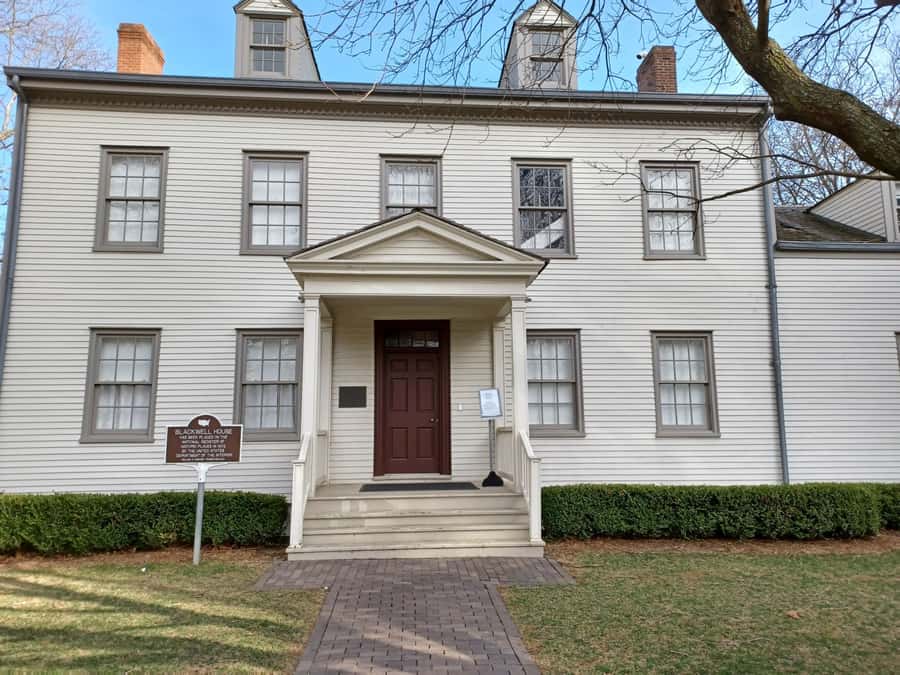
The walk includes the Blackwell family’s colonial-era farmhouse, another reminder that the island’s story reaches further back than its hospitals and apartment blocks.
The route ends at the 50-foot-high Blackwell Island Lighthouse, built in 1872 to help guide ships through the East River. It is both a New York City landmark and a National Landmark.
The lighthouse gives the tour a fitting final stop. Roosevelt Island’s history has often been tied to movement and control: prisoners were held here, patients were isolated here, residents were planned into new housing, and ships passed along the surrounding river. The lighthouse connects the island to that working waterway.
The stop also gives you a clear endpoint after a walk that covers several different eras. You have seen memorials, research buildings, housing, historic sites, and river views without leaving a relatively small area.
The route information identifies the finish at the Roosevelt Island Tramway island station. Booking details also describe the activity as ending back at the meeting point, so it is sensible to confirm the exact finish instructions when you reserve.
What the $25 price delivers
At $25 per person, this is a reasonably priced guided outing if you want context rather than independent sightseeing. The price covers the walking tour and a licensed guide, but not the tram fare.
The value comes from the amount of ground covered in one visit. You get transportation across the river, a guided look at the island’s institutional past, the Four Freedoms memorial, Cornell Technion, the New Town housing plan, the Nellie Bly monument, the farmhouse, and the lighthouse.
You can visit Roosevelt Island on your own for less, but you would need to research the history in advance and piece the route together yourself. The tour is most useful if you want the stories explained as you move through the setting.
The price is less compelling if you are only seeking skyline photos. In that case, the tram and Four Freedoms State Park may be enough on their own. You are paying for the guide’s interpretation, especially the links between the island’s past and present.
Free cancellation is available up to 24 hours before the activity for a full refund, and you can reserve now and pay later. Those terms help if your New York schedule is still changing.
Timing, walking, and who should book
The experience is listed as 2.5 hours, while the detailed route describes about three hours of guided touring on Roosevelt Island. Allow at least that general amount of time, and do not schedule a tight appointment immediately afterward.
This is a walking tour, not a hop-on, hop-off outing. Bring an umbrella because the route is outdoors, and wear shoes that can handle several hours on foot. The activity is not suitable for children under 13 or people with mobility impairments.
The tour suits you best if you:
- Enjoy local history and city planning
- Prefer small-group experiences
- Want a quieter break from Manhattan’s busiest streets
- Like seeing how memorials, housing, transport, and technology fit together
- Appreciate a guide who can share personal observations about the neighborhood
It may not suit you if you need a fully accessible route, dislike outdoor walking, or want a short sightseeing ride with little explanation. Crowding can also reduce the tram views, especially during weekday rush hours and busy weekends.
Should you book the Roosevelt Island tour?
Book it if you want a side of New York that most standard sightseeing routes skip. The mix is unusually strong: a tram above the East River, difficult institutional history, Nellie Bly’s activism, a presidential memorial, a technology campus, planned housing, and a 19th-century lighthouse.
I would choose this tour for a repeat visit to New York, a history-minded first visit, or a day when you want to trade Midtown noise for river views and a residential setting. Hiram’s connection to Roosevelt Island adds a personal angle, and his enthusiasm and detailed explanations are central to the experience.
Skip it if you want only major Manhattan landmarks, need step-free access, or have a firm schedule that cannot absorb a possible three-hour walk. Also keep your expectations realistic about the tram: the ride is brief, and crowded cars can limit the views.
For $25 plus the tram fare, this is a strong-value way to understand one of New York’s most unusual communities.
FAQ
How long does the Roosevelt Island walking tour last?
The experience is advertised as 2.5 hours. The detailed route describes about three hours of guided touring on Roosevelt Island, so allow extra time.
Where does the tour begin?
Meet your guide on the upper level of the Roosevelt Island Tramway Plaza near the MetroCard Vendor Machine area at East 59th Street and Second Avenue.
Is the Roosevelt Island Tram ride included in the price?
No. The walking tour and licensed guide are included, but the cost of the tram ride is separate.
What language is the tour offered in?
The tour is conducted in English.
Is the tour suitable for children?
It is not suitable for children under 13 years old.
Is the activity suitable for people with mobility impairments?
No. The activity is listed as not suitable for people with mobility impairments.
What should I bring?
Bring comfortable shoes for the walking route and an umbrella for changing weather.
Recently added in New York City
- Niagara Falls, Toronto and 1000 Islands, 3 Day Tour from NYC★ 4.5 · 114 reviews
- Central Park Private Pedicab Tour (2hrs)★ 5.0 · 37 reviews
- 3-Day Immersive Photography Workshop in New York City★ 5.0 · 5 reviews
- Central Park Pedicab Guided Tours – 1, 1.5 & 2Hrs★ 5.0 · 24 reviews
- Guided tour of the MET in Spanish (Metropolitan Museum of Art)★ 5.0 · 6 reviews
- 2-Hour Small Group Central Park Bike Tour★ 4.0 · 22 reviews
- 2-Day Niagara Falls Experience from NYC★ 4.5 · 5 reviews
- New York Day Sail to the Statue of Liberty on Schooner America★ 5.0 · 66 reviews
NYC Walking Tours, compared.

SoHo, Little Italy, and Chinatown Walking Tour in New York
Read our review →
Secrets of Grand Central Station Walking Tour New York City
Read our review →
Greenwich Village Walking and Food Tasting Tour
Read our review →
Artistic, Alternative Greenwich Village Walking Tour
Read our review →


NYC Greenwich Village Italian Food Guided Walking Tour
Read our review →Browse the lists this tour appears in