
Reviewed · NYC WALKING TOURS
NYC: The Story of Alexander Hamilton Private Walking Tour
Alexander Hamilton’s New York story works best when you can put your feet on the same streets where the action happened. This private walking tour links Trinity Church, Wall Street, the New York Stock Exchange, and Stone Street, turning a familiar musical into a street-level lesson in early America. The gravesite visit and the views of the two skyscrapers tied to Hamilton and Burr are the real anchors.
I like the way the tour connects Hamilton’s personal story to New York’s financial beginnings, rather than treating him as only a musical character. I also like the reports of lively guides such as Jessie, Sam, Mickey Pantano, and Evan, who use questions, humor, and real locations instead of giving a dry list of dates. The main consideration is simple: this is a walking tour in the Financial District, so comfortable shoes and sensible clothing matter, especially in hot weather.
Key points to know before you book
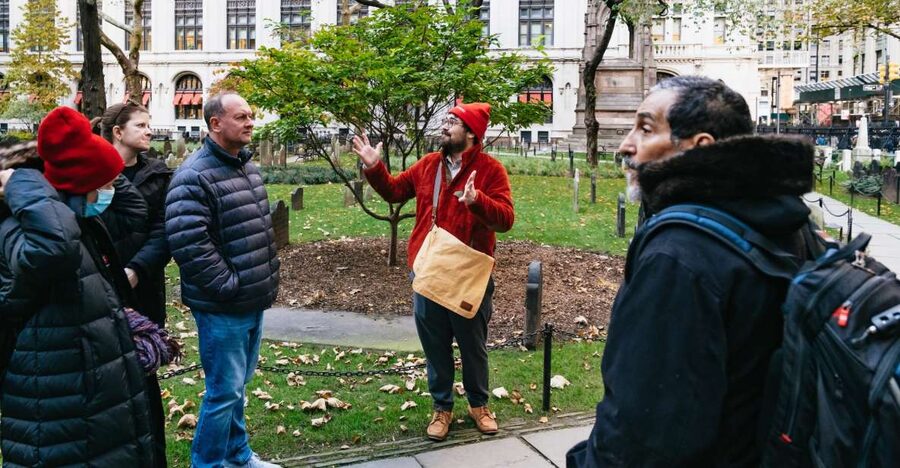
- Trinity Church gives the tour an emotional beginning and end: You visit the historic church and Hamilton’s gravesite in its cemetery.
- Wall Street becomes part of Hamilton’s story: The route explains how his work as the nation’s first Secretary of the Treasury connects to New York’s financial world.
- The tour uses real places to fill in the musical’s gaps: You see locations connected to Hamilton, Burr, Washington, and early New York.
- Stone Street adds atmosphere: New York’s first paved street leads to one of the city’s oldest bars, where Hamilton and George Washington once drank.
- It suits families and musical fans: Children are welcome, and the storytelling is designed to be interactive rather than a formal lecture.
- The tour earns strong marks for its guides: Jessie, Sam, Mickey Pantano, Alex, John, and Evan are praised for humor, patience, warmth, and clear explanations.
Why Hamilton makes sense as a New York walking tour
The musical moves at a sprint. Names, political arguments, duels, and financial decisions arrive in quick succession. On foot, you get time to stop and ask what actually happened, where it happened, and why New York mattered so much to Hamilton’s rise.
That is the main value of this experience. You are not simply following a celebrity from one photo stop to another. You are looking at the early American city through Hamilton’s work, ambitions, friendships, and feuds. The route also shows how much of his story is tied to places still in daily use.
I find that approach more useful than a tour focused only on musical trivia. You can enjoy the songs and still learn how Hamilton became one of the most influential minds of his day. If you already know the show well, the walk helps separate stage shorthand from the larger story. If you know little about Hamilton, it gives you the basic framework before you visit a performance or read more.
The private format is another advantage. The supplied details do not specify the exact group size or tour length, so you should confirm those points before booking. Still, a private tour generally gives your guide room to adjust the pace and explain the parts that interest your group most. That matters for families, first-time visitors, and anyone who wants to ask questions without holding up a large crowd.
More NYC Walking Tours:
- SoHo, Little Italy, and Chinatown Walking Tour in New York
★ 5.0 · 3,153 reviews - Secrets of Grand Central Station Walking Tour New York City
★ 5.0 · 1,796 reviews - Greenwich Village Walking and Food Tasting Tour
★ 5.0 · 1,572 reviews
Trinity Church: starting with Hamilton’s final resting place
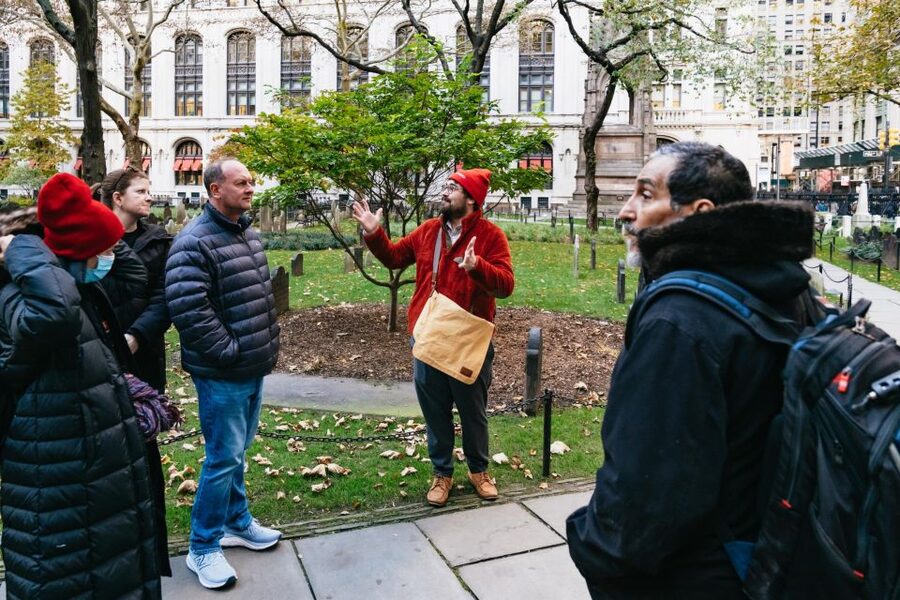
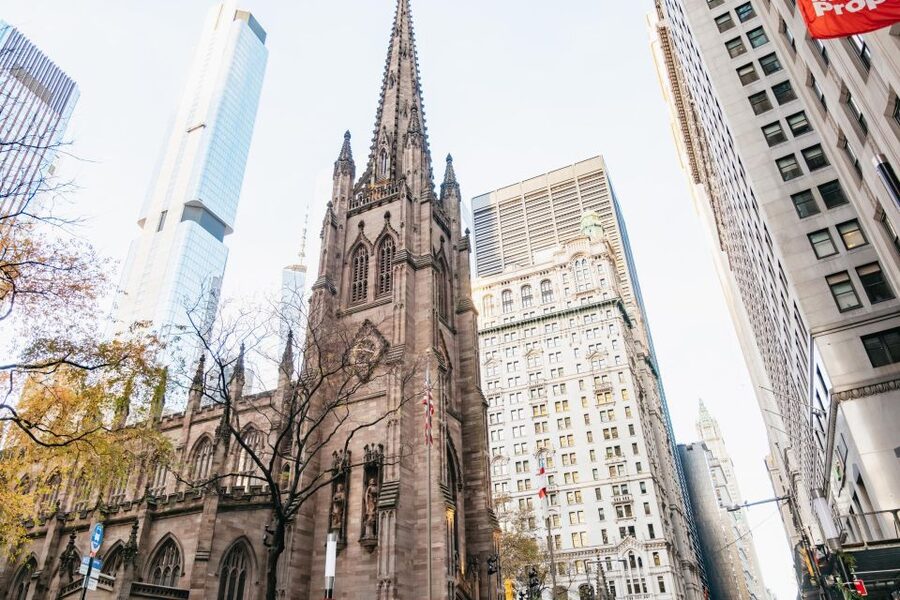
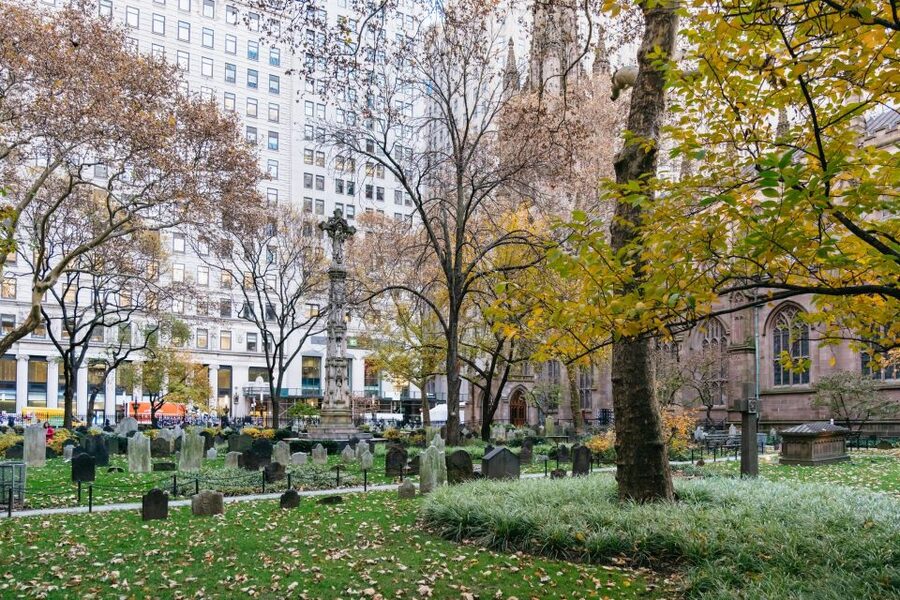
The tour begins at Trinity Church, one of Lower Manhattan’s most important historic landmarks. You visit the church as part of the experience, then spend time in Trinity Church Cemetery and Mausoleum, where Hamilton was buried.
Starting here gives the story a clear shape. You begin with the end of Hamilton’s life, then move back to his arrival in America and his climb into public life. It is a quiet way to frame a man remembered for political arguments, financial plans, and a fatal feud.
Hamilton’s gravesite is the most direct personal connection on the route. You can pay your respects, see where his story is remembered, and then consider how much of New York’s later development was linked to ideas he helped put forward. The cemetery also gives you a break from the traffic and tall buildings of the Financial District.
I would not expect a long interior church tour based on the information provided. Trinity Church is included, and the guide leads the visit, but the emphasis is Hamilton and the surrounding neighborhood. If you want an exhaustive architectural tour, this experience may feel too focused. For a Hamilton-centered walk, though, the church is an effective opening stop.
The cemetery visit also brings a useful human scale to the tour. Hamilton can seem larger than life in the musical. A gravesite reminds you that this was a real person whose choices had personal costs, not just a clever political figure in a fast-moving plot.
From Hamilton’s arrival to his place in early America
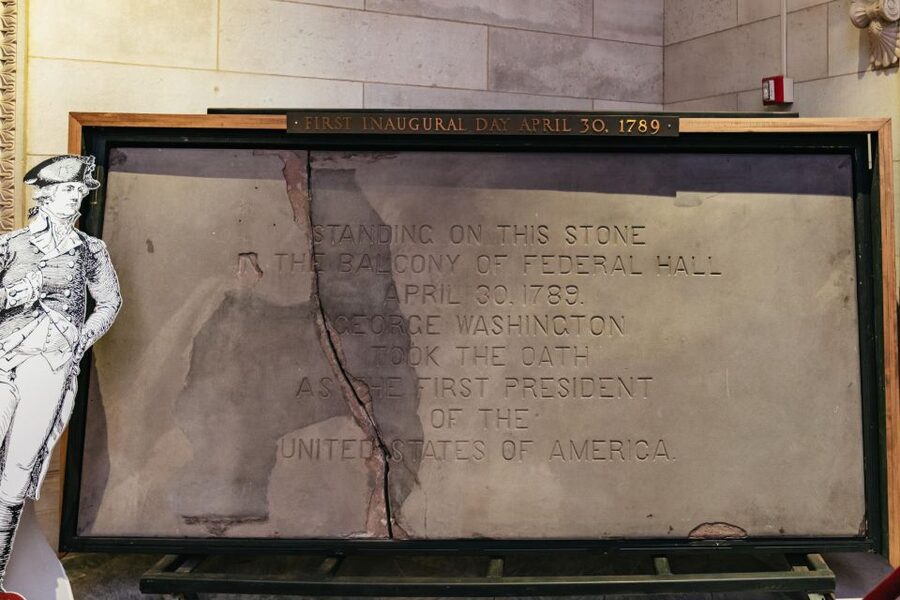
After the church and cemetery, the guide explains how Hamilton arrived in America and quickly became a major force in public life. The exact details covered can vary by guide, but the central theme is his rapid rise and the way his ideas helped shape the new country.
This part is especially useful if you have seen the musical but want more context. The show gives you memorable characters and songs. A guide can slow the story down and explain how Hamilton’s political work connects with the city under your feet.
I like the tour’s use of physical places for this reason. You are not sitting in a classroom looking at a timeline. You are moving through New York’s oldest neighborhood while the guide connects streets, institutions, and people. Several guides are praised for keeping the group involved, and that interactive approach should help the information stick.
The guide names noted in the feedback include Jessie, Sam, Mickey Pantano, Alex, John, and Evan. You cannot choose a particular guide unless the booking process allows it, but the comments give you a sense of the style to expect: warm, funny, patient, and willing to explain details that pass quickly in the musical.
Families should find this section manageable because the experience is specifically described as child-friendly. Children who enjoy the show may connect the characters with actual locations. Younger children may still find parts of the political story demanding, so a little preparation with a few songs or a simple Hamilton biography could help.
Wall Street and Hamilton’s financial ideas
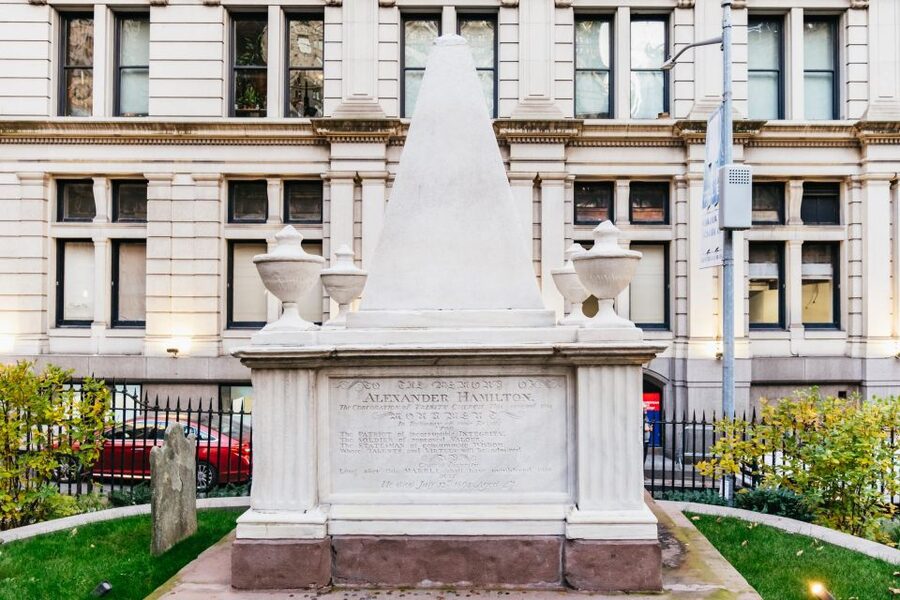
The route then reaches the Federal Reserve Bank of New York and the New York Stock Exchange. These stops shift the story from Hamilton the person to Hamilton the nation-builder.
The tour links Hamilton’s role as America’s first Secretary of the Treasury with the development of New York’s financial world and the origins of the New York Stock Exchange. This is one of the strongest reasons to take the walk even if you are not a dedicated musical fan. You begin to see Wall Street as part of a much older story, not simply a modern district filled with office towers.
The Federal Reserve Bank stop provides a useful modern reference point. The New York Stock Exchange does the same. You see institutions associated with money and national finance, then hear how Hamilton’s work helped shape the early financial direction of the country.
There is an important practical distinction here. You are walking past and learning about these places, not taking a financial tour or visiting trading floors. The itinerary lists guided walking stops, and no special access inside the Federal Reserve Bank or Stock Exchange is promised. Think of this section as an outdoor history lesson with strong surroundings.
I also like the way this part broadens the usual Hamilton story. It is easy to focus on the duel with Burr or the songs about political rivals. The Financial District shows Hamilton as a working government official with ideas about how a new nation should handle money and institutions.
The area itself can be crowded and noisy, and the pavement is not always the easiest walking surface. That does not ruin the experience, but you will get more from the guide if you wear supportive shoes and keep your attention on the group. Comfortable clothes are specifically recommended, and that advice is worth taking seriously in New York heat.
A completely different way to spend a day in New York City:
- NYC: SUMMIT One Vanderbilt Tickets
★ 4.7 · 51,195 reviews - NYC: Empire State Building Tickets – Observatory & Museum
★ 4.7 · 25,757 reviews - New York City: Statue of Liberty & Ellis Island with Ferry
★ 4.6 · 18,683 reviews - New York City: American Museum of Natural History Ticket
★ 4.5 · 15,447 reviews
The skyscrapers linked to Hamilton and Burr
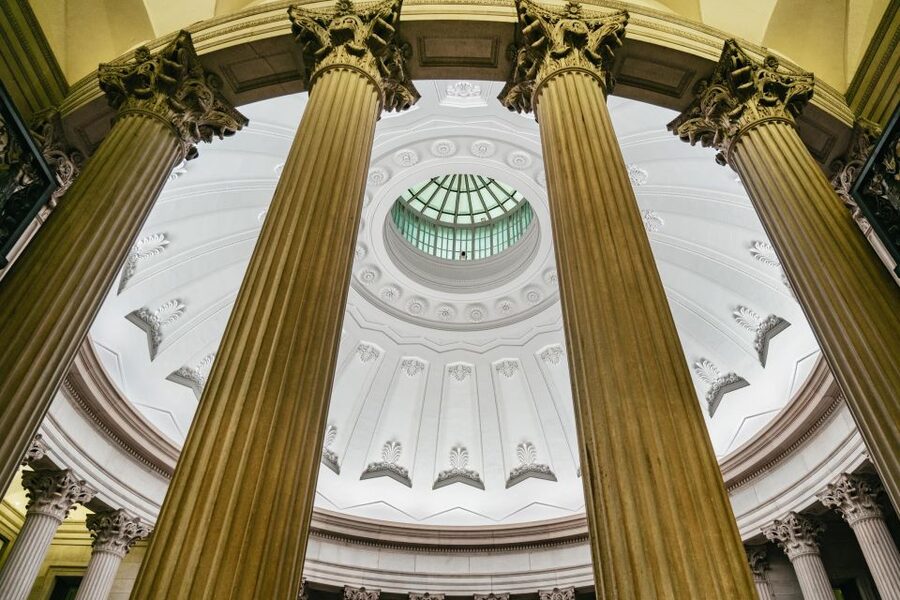
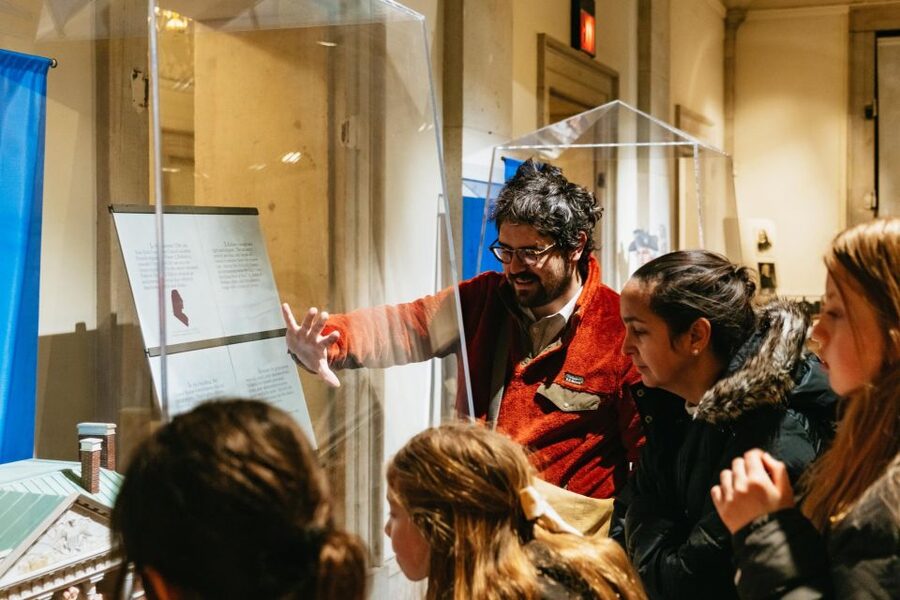
One of the most memorable visual moments comes when the guide points out two Wall Street skyscrapers that symbolize the feud between Hamilton and Aaron Burr. The buildings give the rivalry a modern shape, even though the conflict began in the early United States.
This is a clever stop because it shows how old stories keep finding new forms in New York. You are looking at contemporary towers, but the guide brings the focus back to political rivalry, pride, and the relationship between two men whose names remain tied together.
The stop is also good for musical fans. The Hamilton and Burr conflict is central to the show, but on a stage it can remain abstract. Seeing the city’s own symbols connected to the feud gives the story a physical anchor.
I would keep your expectations realistic. The supplied details do not promise entry to either skyscraper, a special viewpoint, or an elaborate photo session. The value is in the guide’s explanation and the way the buildings fit into the walking route. If you enjoy taking photos, this should provide a useful pause, but it is not a separate observation-deck visit.
Stone Street and the last chapter of the walk
The final part takes you along Stone Street Historic District, described as New York City’s first paved street. Its older appearance gives the tour a welcome change after the larger streets and towers around Wall Street.
Stone Street is the kind of place where the city’s past feels easier to picture. The route ends at one of the oldest bars in town, where Hamilton used to drink with George Washington, the nation’s first president. Food and drinks are not included, so plan to pay separately if you decide to stop there.
The bar connection adds a relaxed ending to a tour that includes graves, government, finance, and political conflict. It also makes Hamilton feel less like a statue and more like a person who met friends, argued, and shared a drink in the city.
One particularly interesting detail from the walk is the mention of an unearthed tavern discovered recently. The guide can use details like this to show that Lower Manhattan’s past is not only preserved in grand monuments. It can also appear below modern streets and around old commercial spaces.
Stone Street may be the favorite stop for families and musical fans because it has atmosphere without needing a long explanation. You can picture the before of New York more easily here. At the same time, the area’s restaurants and bars can make it lively, so your guide may need to compete with street noise.
How the guiding style shapes the experience
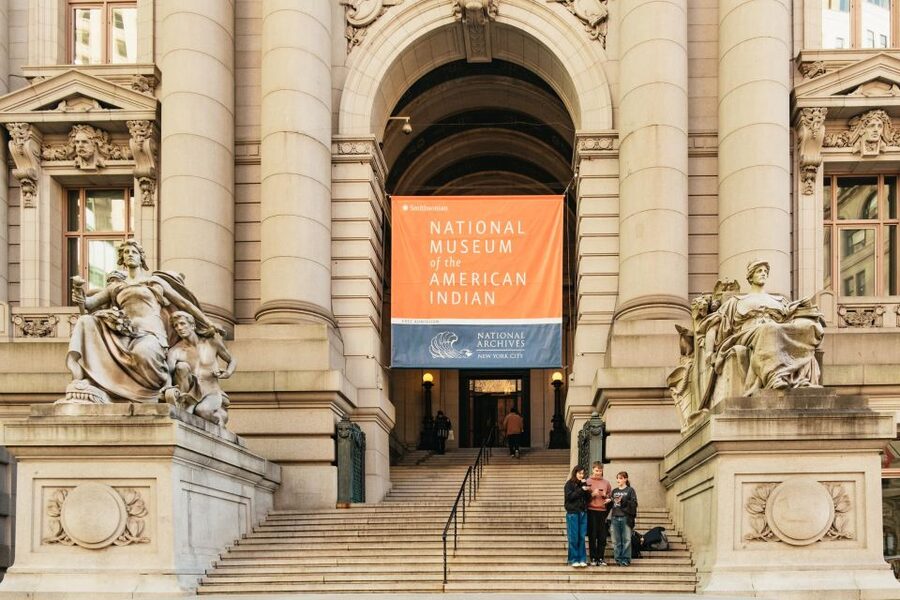
The guide makes or breaks a history walk. Here, the strongest pattern is an interactive style rather than a lecture. Jessie is praised for being fun and well informed, Sam for warmth and engagement, and Mickey Pantano for explaining details that move quickly in the musical.
Evan is also noted for keeping the group involved and filling in important historical gaps. Alex is praised for sharing lesser-known facts about the neighborhood, while John is described as friendly and well prepared. These are different guides, so the exact personality will depend on the date and assignment.
I would book this for the storytelling, not for a fixed script. The best guides use the locations to answer the group’s questions and place Hamilton in the wider story of New York. That makes the walk useful for people who have already seen the musical and for people meeting the story for the first time.
A private format should make it easier to pause, ask about a lyric, or compare the real story with the stage version. The supplied information does not promise musical performances or karaoke. One playful suggestion was Hamilton karaoke, but you should not expect that to be part of the tour.
Value, flexibility, and who should take it
A price is not provided, so I cannot judge the exact cost in dollars. For value, compare the fee with what you would pay for a private guide and several hours of independent research. The tour combines Trinity Church, Hamilton’s gravesite, the Financial District, Wall Street, the Stock Exchange, and Stone Street in one planned route.
That can be good value if you want a clear story without spending time piecing together locations yourself. It is less useful if you only want a quick photo at Trinity Church or a general introduction to Lower Manhattan. The tour is focused, and its focus is Hamilton’s connection to the city.
I would recommend it most to:
- Hamilton musical fans who want the real places behind the show
- History lovers interested in the early United States and its financial institutions
- Families with children who learn better through stories and physical locations
- First-time visitors who want to combine Lower Manhattan sightseeing with a guided walk
- Repeat New York visitors looking for a fresh reason to explore the Financial District
You may want to skip it if walking in heat is difficult, if you prefer indoor attractions, or if your main goal is a detailed visit inside the New York Stock Exchange or Federal Reserve Bank. Those are viewing and explanation stops, not promised interior tours.
The experience is carbon neutral and operated by a B Corp-certified company focused on social and environmental effects. That will not change the route, but it may matter to you when choosing between similar city tours.
Free cancellation is available up to 24 hours before the tour for a full refund, and you can reserve now and pay later. Those terms are useful if your New York schedule is still shifting. Check the final booking details for the meeting time, duration, and exact private-group arrangements, since those details are not supplied here.
Should you book the Hamilton walking tour?

Book it if you want the musical to become a real New York story. The strongest parts are the gravesite at Trinity Church, the Financial District connections, the Hamilton and Burr skyscraper stop, and the atmospheric finish on Stone Street.
I especially like that the walk does not stop at famous names. It links Hamilton’s life with the city’s early institutions, then gives you a quieter street and an old tavern connection at the end. That range makes it more useful than a simple fan pilgrimage.
The main tradeoff is the walking and the outdoor setting. You need comfortable shoes, comfortable clothes, and a tolerance for heat, traffic, and busy streets. If that sounds fine, this is a well-focused choice for Hamilton fans, families, and anyone who wants history told at street level.
FAQ
Where does the tour begin?
The tour begins at Trinity Church in New York City.
Does the tour visit Hamilton’s grave?
Yes. The route includes Trinity Church Cemetery and Mausoleum, where you can visit Hamilton’s gravesite.
Which New York landmarks are included?
The route includes Trinity Church, Trinity Church Cemetery and Mausoleum, the Federal Reserve Bank of New York, the New York Stock Exchange, and Stone Street Historic District.
Is the New York Stock Exchange visit an indoor tour?
The supplied details describe a guided walking stop at the New York Stock Exchange. They do not promise interior access.
Are food and drinks included?
No. Food and drinks are not included. The route ends near one of New York’s oldest bars, where Hamilton and George Washington were said to drink, but any purchase is separate.
Is the tour suitable for children?
Yes. The tour is described as child-friendly.
What should I bring?
Bring comfortable shoes and comfortable clothes. This is a walking tour, and some of the route takes place outdoors.
Can I cancel the booking?
Yes. You can cancel up to 24 hours in advance for a full refund. You can also reserve now and pay later.
Recently added in New York City
- Niagara Falls, Toronto and 1000 Islands, 3 Day Tour from NYC★ 4.5 · 114 reviews
- Central Park Private Pedicab Tour (2hrs)★ 5.0 · 37 reviews
- 3-Day Immersive Photography Workshop in New York City★ 5.0 · 5 reviews
- Guided tour of the MET in Spanish (Metropolitan Museum of Art)★ 5.0 · 6 reviews
- 2-Hour Small Group Central Park Bike Tour★ 4.0 · 22 reviews
- Central Park Pedicab Guided Tours – 1, 1.5 & 2Hrs★ 5.0 · 24 reviews
- 2-Day Niagara Falls Experience from NYC★ 4.5 · 5 reviews
- New York Day Sail to the Statue of Liberty on Schooner America★ 5.0 · 66 reviews
NYC Walking Tours, compared.

SoHo, Little Italy, and Chinatown Walking Tour in New York
Read our review →
Secrets of Grand Central Station Walking Tour New York City
Read our review →
Greenwich Village Walking and Food Tasting Tour
Read our review →
Artistic, Alternative Greenwich Village Walking Tour
Read our review →


NYC Greenwich Village Italian Food Guided Walking Tour
Read our review →Browse the lists this tour appears in