
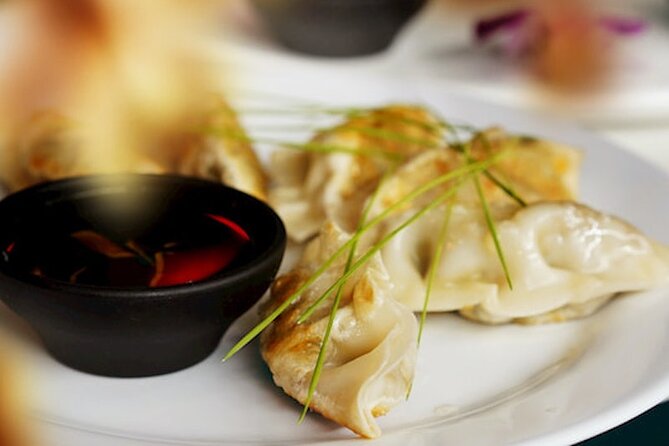
Reviewed · NEW YORK CITY
Homemade Dumplings 101 in NYC
The best part of this three-hour NYC cooking class is that you do more than watch a chef work. You shape several kinds of dumplings, cook them in different ways, and then sit down to eat what you made. Chef Danny and his staff keep the class moving while helping each person take part.
I like the mix of hands-on practice and a proper meal, plus the chance to learn techniques you can repeat at home. I also like that the class covers dim sum dumplings, potstickers, and jiaozi instead of focusing on just one folded parcel. The main drawback is the non-refundable booking policy, so you need to be sure about your date.
Key points at a glance
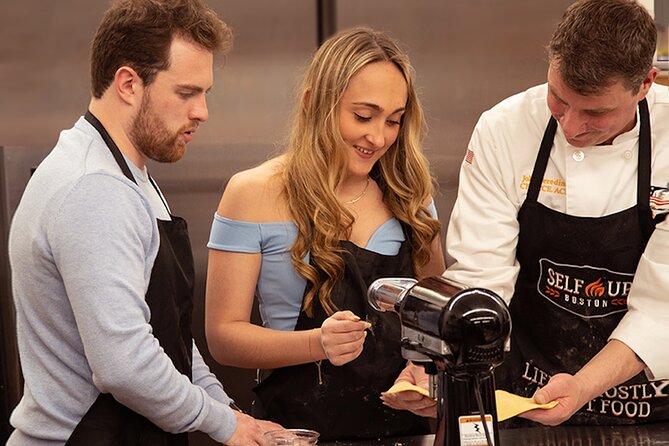
- Three dumpling styles in one class: Practice dim sum dumplings, potstickers, and jiaozi.
- Cooking, not just watching: Use traditional Chinese ingredients, utensils, and methods under chef guidance.
- Snacks and a sit-down lunch: Light food and drinks keep the three-hour session from feeling like a long demonstration.
- Chef Danny and his staff: Expect active help throughout the preparation and cooking.
- Midtown meeting point: Start at 325 W 37th St, near public transportation, at 1:00 pm.
- Small enough to participate: The class accepts a maximum of 20 people, though that can still feel like a full group.
Folding three kinds of dumplings in Midtown
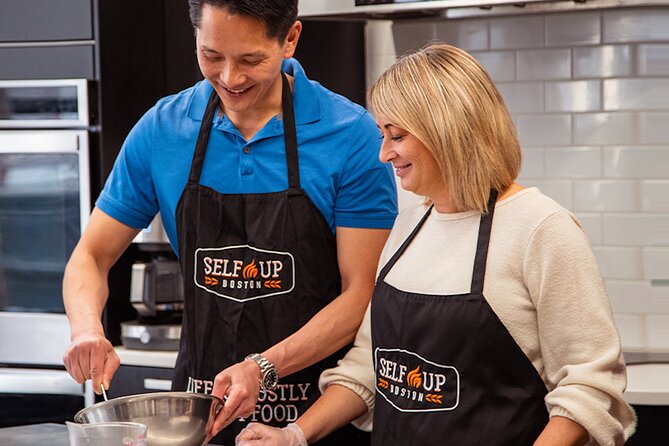
This class is built around a useful idea: learn a food that you can make again after your trip. Dumplings reward practice, and the lesson gives you several chances to handle dough, filling, folding, and cooking rather than stopping after one example.
You begin at 325 W 37th St, New York, at 1:00 pm. The location is in Midtown Manhattan and near public transportation, which helps if you are fitting the class between sightseeing stops. Allow time to reach the address without rushing. The experience ends back at the same meeting point.
The class focuses on Asian dumplings and dim sum, with traditional Chinese ingredients, techniques, and cooking utensils. That matters because the texture of a dumpling depends on more than the filling. Folding, sealing, steaming, and frying all change the final result.
You should expect the session to feel practical rather than formal. The chef is available while you work, so you can ask for help with the folds and cooking steps as they come up. Chef Danny is named as the lead in the class feedback, along with his staff, who were described as engaging and entertaining while still keeping the instruction useful.
More New York City Tours:
- NYC: SUMMIT One Vanderbilt Tickets
★ 4.7 · 51,195 reviews - NYC: Empire State Building Tickets – Observatory & Museum
★ 4.7 · 25,757 reviews - New York City: Statue of Liberty & Ellis Island with Ferry
★ 4.6 · 18,683 reviews
Dim sum dumplings: soft, savory, and delicate
The first main preparation is a dim sum dumpling filled with pork and vegetables. These are designed to be steamed for a soft texture or fried for a crisp, browned finish.
That two-way cooking method gives the lesson some value. You are not simply learning a shape. You are seeing how the same kind of dumpling changes when exposed to steam or hot oil. Steaming keeps the wrapper tender, while frying adds a firmer exterior and more color.
The dim sum portion should suit you if you like delicate dumplings and want to understand how they are handled without tearing. The wrapper and filling need to work together, and a chef can correct small mistakes before they become a problem in the pan or steamer.
Light snacks are served during the experience. They help break up the preparation, though you should not treat them as the main meal. The substantial food comes later, when the dumplings are cooked and served at lunch.
Potstickers with a crisp bottom
Potstickers bring a different lesson. The filling may include pork, chicken, shrimp, and mushrooms, and the key technique is frying them so the bottoms turn golden while the dumpling remains tender.
This is one of the most useful sections for a home cook. Potstickers are easy to recognize but less easy to cook well. Too much heat can burn the base before the filling is ready. Too little can leave you without the crisp texture that makes the dish special.
Because the class includes several possible fillings, the session also gives you a sense of how dumplings can be adapted. Pork, chicken, shrimp, and mushrooms do not all have the same texture, so the filling becomes part of the lesson rather than a fixed recipe with no room for change.
You will get the most from this section if you pay attention to the chef’s timing instructions and use the cooking utensils as shown. The advertised focus is on authentic tools and methods, which makes this more useful than a casual folding party.
Jiaozi and the good-luck tradition
Jiaozi are connected with Chinese New Year and are traditionally associated with good luck. In this class, they are filled with chicken and vegetables.
The cultural detail is brief but worthwhile. Food traditions often make more sense when you understand when and why a dish is served. Here, jiaozi are not only another dumpling shape. They carry a festive meaning that gives the cooking a little more context.
The practical benefit is variety. By the time you reach jiaozi, you have already worked with other dumpling types and cooking methods. You can compare the folds, fillings, and finished textures instead of treating every dumpling as the same project.
Do not expect a full cultural lecture. The focus is cooking, with the tradition used as context. That is a good balance for someone who wants to make food with their hands and still learn something about its place in Chinese celebrations.
A completely different way to spend a day in New York City:
- New York City: American Museum of Natural History Ticket
★ 4.5 · 15,447 reviews - Statue of Liberty and Ellis Island Tour: All Options
★ 5.0 · 13,571 reviews - New York in One Day Guided Sightseeing Tour
★ 5.0 · 13,166 reviews - NYC: Museum of Modern Art (MoMA) Entry Ticket
★ 4.6 · 12,540 reviews
A class where everyone gets a turn
A cooking lesson can disappoint if one person handles the food while everyone else watches. The strongest feature here is the promise that each participant takes part in the full dim sum process.
The maximum group size is 20 people. That is not an intimate private lesson, but it is also not a huge auditorium-style demonstration. Your experience will depend partly on where you are working and how actively you ask for help.
The chef and staff are available throughout, which is important for beginners. Dumpling making involves small physical details that are hard to understand from a distance. A quick correction to the fold or seal can save a batch from opening during cooking.
The class also has a social side. You spend time with other people while making and eating the food, and the experience includes a couple of drinks. If you prefer quiet, one-to-one instruction, a group of up to 20 may feel lively. If you enjoy meeting people over a shared meal, the format works in its favor.
The sit-down lunch is part of the value
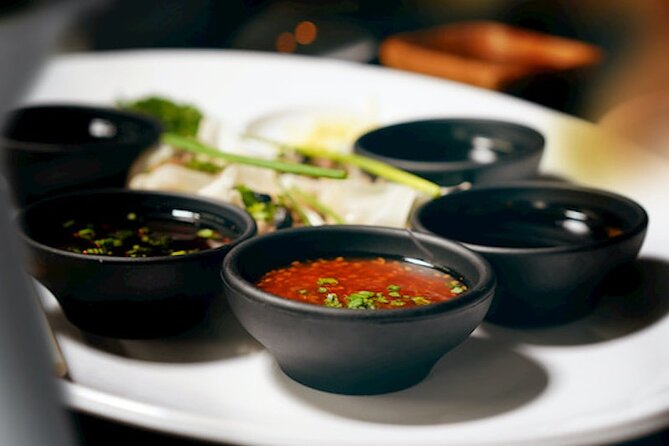
After the cooking is finished, you sit down for lunch featuring the food prepared during the class. This is more satisfying than leaving with a few samples or a single plate assembled by the chef.
At $120 per person, the lunch matters when judging the price. You are paying for roughly three hours of instruction, access to the ingredients and cooking utensils used in the lesson, snacks, drinks, chef assistance, and a meal. The price is not simply the cost of dumplings. It covers a guided activity and time set aside for eating together.
Still, value depends on your goal. If you mainly want an inexpensive lunch, this is not the right choice. New York has cheaper ways to eat dumplings. If you want instruction, a social activity, and the chance to build a repeatable cooking skill, the price is more reasonable.
The lunch also gives the session a natural finish. You can taste the difference between steamed and fried preparations and see how your work turned out. The food is not an afterthought. It is the reward and the practical test of what you learned.
What the three-hour schedule feels like
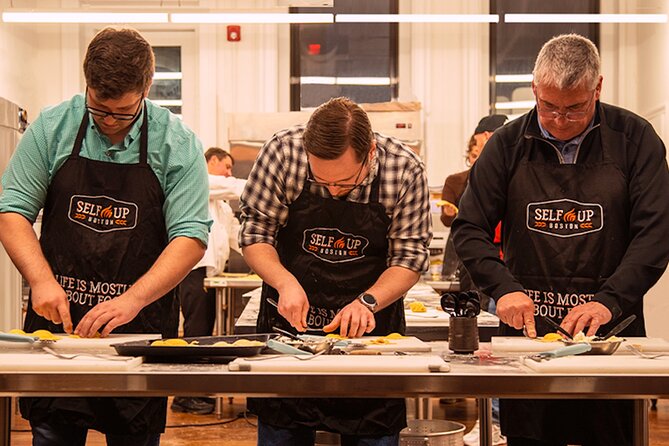
A three-hour class is long enough to cover several dumpling styles without forcing the experience into a rushed one-hour format. It is also short enough to fit into a day of sightseeing, provided you plan around the fixed 1:00 pm start.
The session likely moves through an easy rhythm:
- Introduction to the ingredients, utensils, and techniques
- Guided preparation of the fillings and wrappers
- Folding and shaping different dumplings
- Cooking the dumplings by steaming and frying
- Light snacks and drinks during the work
- Sit-down lunch after the cooking
The exact order may vary, but the important point is that the experience combines instruction, practice, and eating. You are not asked to wait until the end to find out if the food worked.
You should arrive ready to stand and work with your hands for much of the class. The supplied details do not specify seating arrangements, kitchen layout, or dietary substitutions, so ask Selfup about special food needs before booking rather than assuming the fillings can be changed.
Who will enjoy this class most
This experience is a good match for first-time dumpling makers, couples, friends, families, and solo visitors who like social activities. You do not need to arrive with professional cooking skills. The chef’s presence is especially helpful if you are unsure how to fold or seal the dough.
It also suits people who have already eaten dim sum and want to understand the work behind the plate. The class covers enough styles to keep the activity interesting for someone who has made one kind of dumpling before.
You may want to skip it if you dislike group cooking, have a very tight schedule, or are looking only for a meal. The class is built around participation. Watching from the side would miss the main reason to pay for it.
The activity is offered in English. Service animals are allowed, and the meeting point is near public transportation. Those are useful practical points, but the published information does not provide more detail about general accessibility, so ask before booking if you need specific accommodations.
Booking ahead and cancellation concerns
This class is booked an average of 32 days in advance, so last-minute availability may be limited. Plan ahead if your New York dates are fixed, especially if you want the 1:00 pm start.
The experience is non-refundable and cannot be changed for any reason. If you cancel or request an amendment, you do not receive your money back. That is the clearest weakness in the booking terms, and it makes travel insurance or a firm itinerary more useful.
The activity also requires good weather and a minimum number of participants. If poor weather causes a cancellation, you are offered another date or a full refund. If the minimum number is not met, you are offered another date or experience, or a full refund.
The weather condition may seem unusual for an indoor cooking class, but it is part of the stated policy. Read those terms before paying the $120.
Should you book Homemade Dumplings 101 in NYC?
Book this class if you want a hands-on food activity rather than another restaurant meal. The strongest reasons are the three dumpling styles, the chance to practice both steaming and frying, and the sit-down lunch at the end.
I would be most likely to recommend it to someone who enjoys learning by doing. Chef Danny and his staff are praised for making the class entertaining and educational, and the format gives you a real chance to take part in the complete preparation.
Think twice if the non-refundable policy makes you uneasy, if you need a highly private lesson, or if you have strict dietary requirements that have not been confirmed. For everyone else, the combination of instruction, snacks, drinks, and a shared meal makes this a useful and enjoyable three-hour stop in Midtown.
FAQ
How long does Homemade Dumplings 101 in NYC last?
The class lasts approximately three hours.
What time does the class begin?
The start time is 1:00 pm.
Where does the experience begin?
It begins at 325 W 37th St #12f, New York, NY 10018, USA.
Where does the class end?
The experience ends back at the meeting point.
What kinds of dumplings will I learn to make?
You will learn to make dim sum dumplings, potstickers, and jiaozi dumplings.
Is lunch included?
Yes. The experience includes light snacks during the class and a sit-down lunch after the cooking is finished.
How many people can join the class?
The maximum group size is 20 people.
Recently added in New York City
- Private Art and Crime Tour at the Metropolitan Museum of Art★ 4.5 · 3 reviews
- Asia in Queens: Exploring NYC’s Largest Chinatown★ 5.0 · 106 reviews
- Art-full Discovery Walk of Tribeca & SoHo (& Nolita)★ 5.0 · 3 reviews
- NY Tours Central Park★ 5.0 · 5 reviews
- American Dream Black Light Indoor Mini Golf Ticket★ 3.0 · 12 reviews
- American Specialties Gourmet Tour in Greenwich Village★ 5.0 · 45 reviews
- 3 Hour Midtown Manhattan Architectural Tour★ 5.0 · 81 reviews
- American Dream TiLT Interactive Museum Ticket★ 4.5 · 7 reviews