

Reviewed · MUSEUMS
NYC: Whitney Museum Ticket
The Whitney Museum combines serious American art with one of New York’s most enjoyable museum buildings. You can move from Jackson Pollock and Georgia O’Keeffe to Andy Warhol, then step outside onto four levels of terraces for views over the High Line, lower Manhattan, and the Hudson area. The architecture is part of the visit, not just a container for the paintings.
I especially like the freedom to set your own pace and the mix of permanent and changing exhibitions. The mobile guide is available in English and Spanish, and the museum’s collection reaches from early twentieth-century American work to living artists today. The main caution is price: at $30 per person, this is not a bargain ticket, and a crowded Sunday can make the galleries harder to enjoy.
Key points
- Four outdoor terrace levels: Pause between galleries for open-air views of New York and the High Line.
- A major American collection: See work connected with Pollock, O’Keeffe, Warhol, Edward Hopper, and many other artists.
- Permanent and temporary exhibitions: Your ticket covers both, with about 15 exhibitions presented each year.
- Self-guided visit: Use the downloadable audio guide in English or Spanish, or explore without a fixed route.
- Plan for at least two hours: The building and collection deserve more than a quick walk-through.
- Bring headphones and ID: The mobile guide uses free museum Wi-Fi, and large bags and luggage are not allowed.
Starting at 99 Gansevoort Street

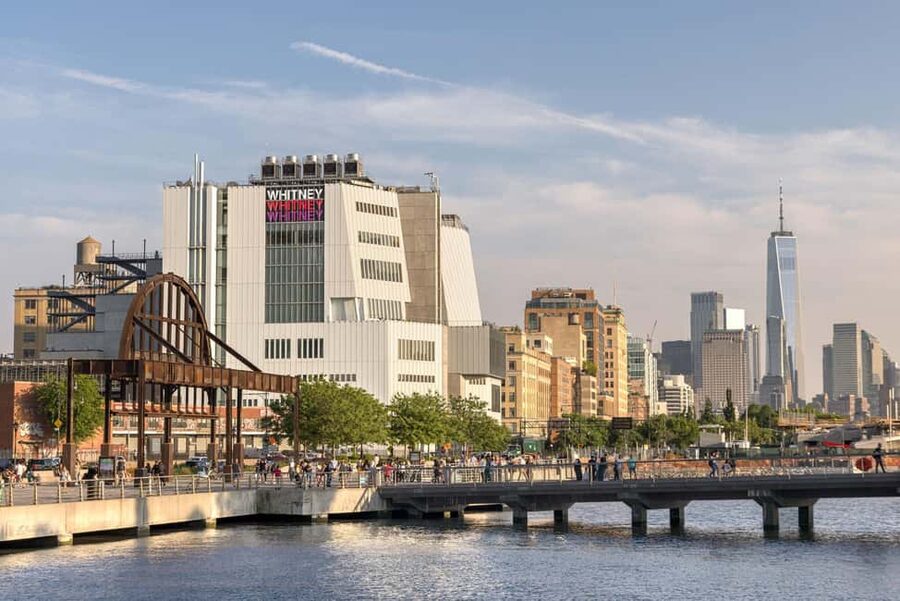
The Whitney sits at 99 Gansevoort Street in the Meatpacking District, in a Renzo Piano designed building made for looking, moving, and stopping. You redeem your ticket at the admissions counter, then begin a visit that feels more open than the usual museum layout.
The location gives you an easy pairing with the High Line, though your museum ticket covers the Whitney only. If you are building a day in this part of Manhattan, you can combine the museum with a walk through the Meatpacking District and the elevated park nearby. The museum itself is large enough to fill a good part of the day.
The building is one of the strongest reasons to come even when a particular exhibition does not match your taste. Broad windows and outdoor terraces keep the city in view. Instead of spending every minute facing a wall, you get regular chances to look out at streets, rooftops, bridges, and the lower Manhattan skyline.
More Museums in New York City:
- NYC: Empire State Building Tickets – Observatory & Museum
★ 4.7 · 25,757 reviews - New York City: American Museum of Natural History Ticket
★ 4.5 · 15,447 reviews - NYC: Museum of Modern Art (MoMA) Entry Ticket
★ 4.6 · 12,540 reviews
Why the Renzo Piano building matters
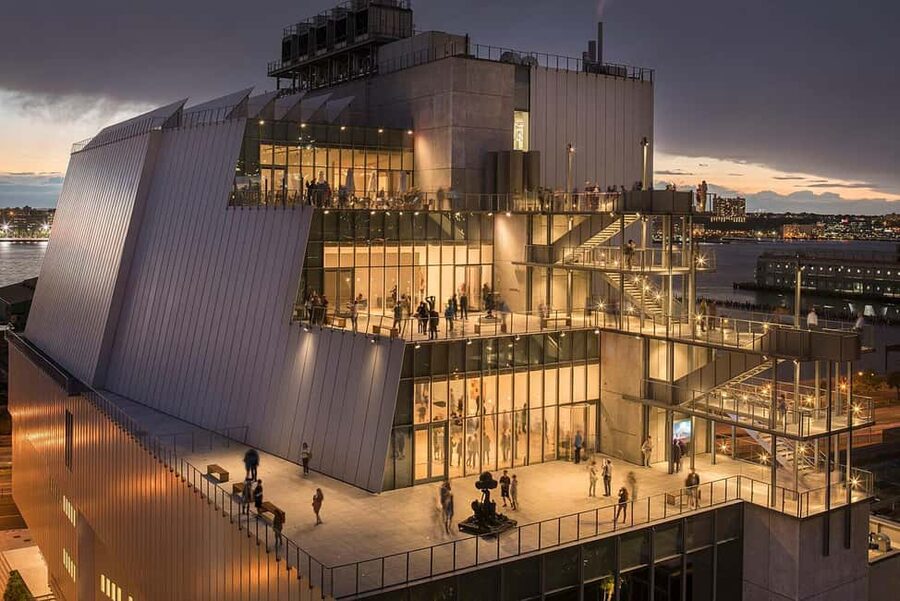
The Whitney’s architecture changes how you experience the art. The galleries provide room for large works and group exhibitions, while the terraces give you a clean break from the indoor displays. I like this rhythm: art, city view, art again.
You can reach outdoor balcony areas across four stories. These terraces are not an extra attraction tacked onto the visit. They help you understand the museum’s relationship with New York. The High Line is visible from the building, and the views toward lower Manhattan give the visit a strong sense of place.
The views are especially useful if you need a pause after concentrating on abstract or experimental work. Sit or stand outside for a few minutes, then return to the galleries with fresh eyes. If photography is part of your museum day, the terraces also give you some of the most memorable images of the experience.
There is a practical downside. Outdoor areas are weather dependent, and busy periods can make the galleries and balconies feel crowded. A Sunday around noon, for example, may not offer the calmest conditions for studying artwork. If you want a quieter visit, check the available starting times and avoid the busiest part of the day when possible.
A broad look at American art
The Whitney focuses on American art from the twentieth century to the present. Its permanent collection includes more than 21,000 paintings, sculptures, drawings, prints, photographs, films, videos, and new media by more than 3,000 artists.
That range matters. You are not being asked to understand one narrow movement or one famous name. You may encounter Pop Art, Minimalism, Abstract Expressionism, Modernism, photography, film, and newer forms of work in the same museum visit.
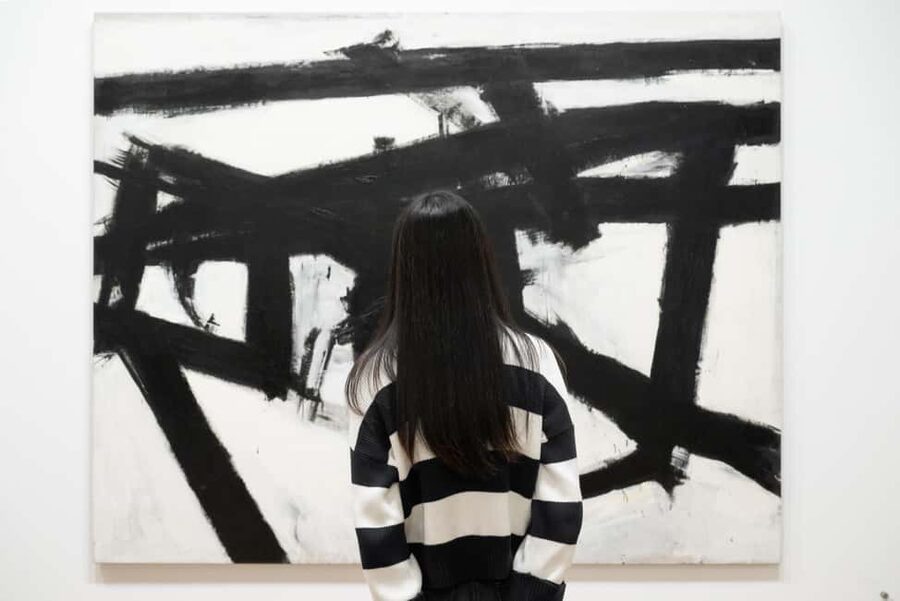
For you, the value is variety. If you enjoy Pollock, you can look closely at the physical energy of his painting. If Georgia O’Keeffe is your reason for coming, you may find a different kind of intensity in her shapes and colors. Andy Warhol offers yet another route into American culture, with art tied to celebrity, consumer goods, and mass production.
The collection also includes work by living artists. That gives the Whitney a different feel from a museum focused only on the past. The museum is interested in how American art continues to change, and temporary exhibitions often place older work beside newer ideas.
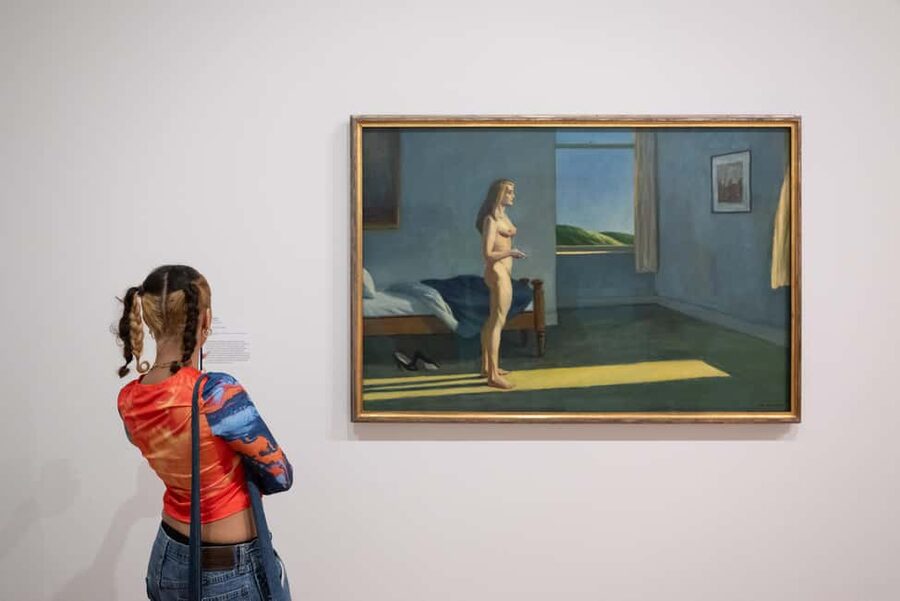
Do not assume every major artist will have a large display during your visit. The collection is extensive, but only part of it can be shown at one time. If Edward Hopper is your main reason for buying a ticket, check the current exhibitions before you go. One exhibition may include several less familiar Hopper paintings and sketches, while another visit might show only a small selection.
Permanent galleries and temporary exhibitions
Your ticket includes the permanent collection and the temporary exhibitions scheduled for your date. This is important because the temporary shows may become the main event of your visit.
The Whitney presents around 15 exhibitions each year. These include solo-artist displays, group shows, historical surveys, and full-career retrospectives. The result is a museum that can feel quite different from one visit to the next.
A temporary exhibition can give you a close look at one artist’s working methods. A broad group show can be more demanding, but it may help you see connections between artists and movements. Historical surveys offer useful context for the permanent galleries, especially if you are not already familiar with American art after 1900.
Past exhibitions have included a Henry Taylor show and a large Edward Hopper presentation. A Hopper exhibition included paintings that are not often shown, along with information about how he developed finished works from groups of sketches. That kind of display is valuable because it moves beyond famous images and lets you see the decisions behind the final piece.
The tradeoff is that the museum’s quality depends partly on what is on view when you visit. If the current temporary show is not for you, the permanent collection and building still give you plenty to see. But I would check the exhibition schedule before booking, especially if you have a particular artist in mind.
More New York City Tours:
- NYC: SUMMIT One Vanderbilt Tickets
★ 4.7 · 51,195 reviews - New York City: Statue of Liberty & Ellis Island with Ferry
★ 4.6 · 18,683 reviews - Statue of Liberty and Ellis Island Tour: All Options
★ 5.0 · 13,571 reviews - New York in One Day Guided Sightseeing Tour
★ 5.0 · 13,166 reviews
How to use the audio guide
The ticket includes a downloadable mobile guide in English and Spanish. You connect to the museum’s free Wi-Fi, then use the guide, map, and other digital content on your phone.
Bring headphones. The museum specifically lists them as something to carry, and using your own pair is more comfortable than holding a phone to your ear throughout a large visit. The guide lets you add structure to a self-guided day without joining a fixed group.
I like this setup for two reasons. You can choose which works deserve more time, and you can skip commentary when you want to look quietly. If you already know a lot about modern American art, you can use the guide selectively. If the subject is new to you, it can give the galleries a clearer path.
Do not expect the visit to feel like a traditional guided tour. No guide names are provided for this ticket, and the experience is built around independent exploration and digital information. A docent-led event may be available separately at the museum, but it is not part of the ticket described here.
The museum’s digital content also includes a map. That sounds minor, but it helps in a building spread over several floors, especially when you want to find the terraces or return to a gallery that caught your attention.
How long to spend inside

Plan on at least two hours. That gives you time for a representative look at the galleries, a temporary exhibition, and a few terrace stops without racing.
If you like to read labels, listen to the audio guide, or study drawings and photographs, allow longer. The collection includes many formats, and a large temporary exhibition can easily extend your visit. You may also want time to revisit one or two works after seeing the city from outside.
The ticket is valid for one entry on the date you reserve. It is not a hop-on, hop-off museum pass, so plan your timing before you enter. Check the museum’s closing time before buying, since a late arrival can make the $30 price feel poor if you have only a short window.
A useful approach is to begin with the temporary exhibition, then see selected permanent galleries. After that, use the terraces as a break. This keeps you from spending all your energy indoors and makes the building part of the route.
The terraces and city views
The four stories of outdoor balcony terraces are a major part of the Whitney experience. From them, you can look across the High Line and toward lower Manhattan while taking in the museum’s unusual shape from within.
These are not distant viewing platforms where the city becomes a postcard. You are close to the streets, buildings, and movement of the Meatpacking District. The views give you a strong connection between the artwork inside and the city outside.
I would make at least one terrace stop even if you are visiting mainly for a specific artist. The pause helps break up the museum’s visual intensity, and the changing angles make the building feel different from floor to floor.
The terraces also make the Whitney a good choice for companions with different interests. One person can spend longer with a painting while another takes a short break outside. Just remember that the museum’s overall experience is still art focused. If you want only skyline views, there are cheaper ways to see New York.
Crowds, comfort, and practical limits
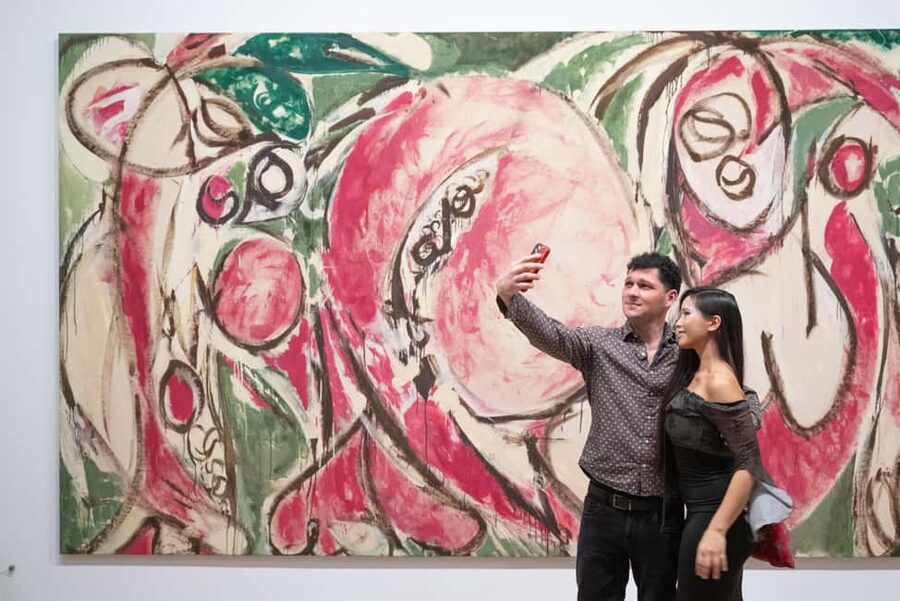
The Whitney can become crowded, particularly around Sunday midday. Crowds matter here because many works need space and quiet to appreciate. A packed room can turn a thoughtful visit into a quick shuffle from one piece to the next.
The museum currently has no coat-check facility. Leave luggage and large bags behind, since they are not allowed. This is worth planning around if you are changing hotels or carrying shopping bags through the neighborhood.
Food and drinks are not allowed inside. You can plan a meal outside the museum, but do not count on bringing snacks into the galleries. The museum’s Wi-Fi is available throughout the building, which makes the mobile guide and map easier to use.
Printed explanations may not always be easy to read. If you have trouble with small labels, the audio guide and digital content can help, though a larger text option is not specified. Older visitors or anyone who prefers detailed wall text should allow extra time and use the guide where possible.
The ticket information asks you to bring a passport or ID card. Keep that with you when you go to the admissions counter.
Is $30 a fair price?
At $30 per person, this ticket makes sense if you plan to spend several hours inside and will use both the collection and the temporary exhibitions. You are paying for a major museum, a substantial collection, changing displays, the building, the terraces, and a mobile guide.
The value is weaker if you plan a very short stop or have come for one artist who may not be on display in depth. This is not a quick monument visit. The museum rewards time, curiosity, and a willingness to look at several forms of American art.
The ticket’s flexible cancellation terms add practical value. You can cancel up to 24 hours in advance for a full refund, and you can reserve now and pay later. Those options help if your New York plans are still shifting, though the ticket itself remains valid for one entry on the specified date.
Older prices found in past experiences may differ from the current $30 rate. Judge the ticket by the exhibitions scheduled for your date, not by an earlier admission charge.
Who should book the Whitney?
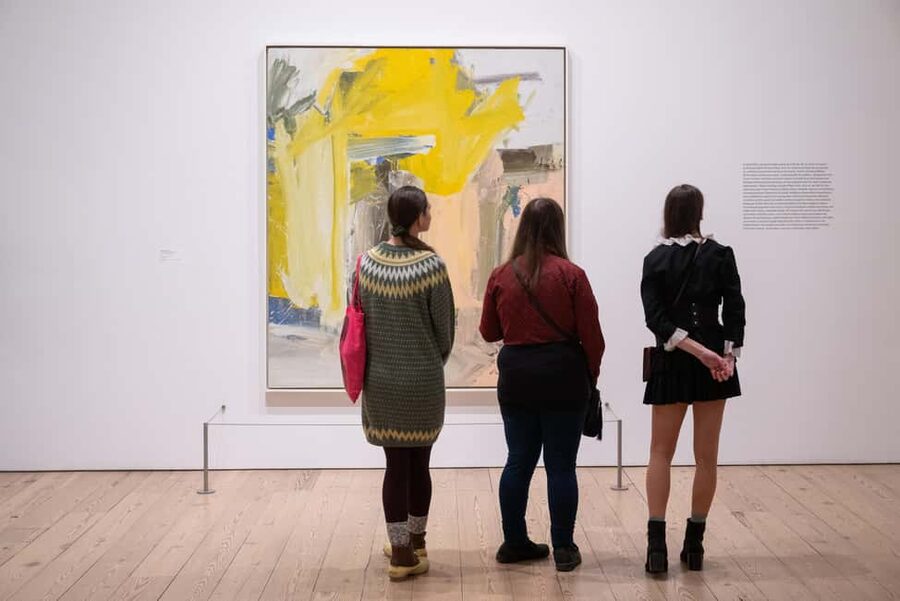
I would choose this experience if you like modern or contemporary art, want to see American artists in a broad setting, or enjoy museums where the building is part of the attraction. It also suits independent visitors who prefer to stop, listen, skip, and return without keeping up with a group.
It is a particularly good pick for anyone combining culture with the Meatpacking District and High Line. The terraces give you a city break that many traditional museums lack.
I would hesitate if your visit depends entirely on Edward Hopper, a single temporary exhibition, or a quiet gallery experience at midday. Check the current exhibition schedule and choose your time carefully. If the shows appeal to you, the combination of art, architecture, and open-air views makes the $30 easier to justify.
FAQ
Where do I redeem the Whitney Museum ticket?
Redeem your voucher at the Admissions Counter of The Whitney, located at 99 Gansevoort Street, New York, NY 10014.
How long is the ticket valid?
The ticket is valid for one entry on the specified date reserved. The activity is listed as valid for one day.
What does the ticket include?
It includes entry to the Whitney Museum of American Art, access to the permanent and temporary exhibitions, a downloadable audio guide, and on-site Wi-Fi.
Is the audio guide available in Spanish?
Yes. The audio guide is available in English and Spanish.
Do I need to bring headphones?
Yes. Headphones are listed as something to bring for using the mobile guide.
Can I bring food, drinks, luggage, or large bags?
Food and drinks are not allowed. Luggage and large bags are also not allowed, and there are currently no coat-check facilities.
Can I cancel the booking?
Yes. You can cancel up to 24 hours in advance for a full refund. You can also reserve now and pay later.
Recently added in New York City
- #1 Six Hour Bus Tour and Boat Ride By The Statue of Liberty★ 4.7 · 6 reviews
- Harlem: Mount Morris Gospel Tour with Brunch★ 4.5 · 111 reviews
- NYC: Greenwich Village Comedy Club Stand Up Comedy Show★ 3.6 · 38 reviews
- Stand Up Comedy LIVE in Times Square At Broadway Comedy Club★ 3.5 · 56 reviews
- New York Harbor Brunch Cruise★ 4.5 · 106 reviews
- NYC Combo: Statue of Liberty Cruise, St Patrick’s Cathedral & Moma entrance★ 4.0 · 8 reviews
- New York City Superheroes Private Walking Tour★ 5.0 · 103 reviews
- Stand Up Comedy Show + Mini Golf Ticket!★ 5.0 · 64 reviews
Museums, compared.
Empire State Building Tickets – Observatory & Museum
Read our review →

9/11 Memorial, Ground Zero Tour with Optional 9/11 Museum Ticket
Read our review →

All-Access 9/11: Ground Zero Tour, Memorial and Museum, One World Observatory
Read our review →

Browse the lists this tour appears in