
Reviewed · METROPOLITAN MUSEUM TOURS
Private Art and Crime Tour at the Metropolitan Museum of Art
The most unusual thing about this Met tour is its focus on art that may not be what it seems. Instead of simply moving from one famous gallery to the next, you examine questionable objects, famous artists whose work is often forged, and the difficult question of who has the right to own a work of art.
I like the way the tour connects art history with detective work, and I like that it includes stories about stolen and looted objects returning to museums or their rightful owners. The private format also gives your group room to ask questions. The main drawback is that the experience depends heavily on clear delivery. One participant found the guide hard to hear at times, and a strong accent made some explanations difficult to catch.
Key things to know before booking
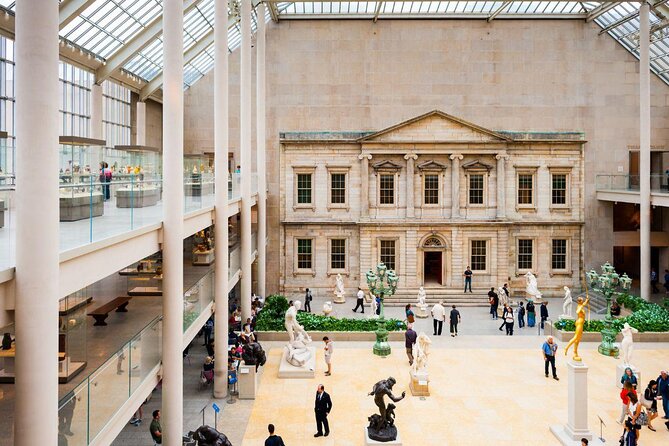
- Questionable Met holdings: Examine works that some experts believe may not be authentic.
- Famous artists under scrutiny: Learn why Rembrandt and Vincent van Gogh are among the artists most often targeted by forgers.
- A private two-and-a-half-hour visit: Your group participates alone, with an art historian guide.
- Crime, ownership, and ethics: The tour covers theft, looting, museum acquisitions, and repatriation.
- A strong fit for curious adults: Older high school students and adults with an interest in art history should get the most from it.
- Listen carefully: The quality of the experience rests on the guide’s ability to speak clearly in busy museum spaces.
The Met with a crime file in hand
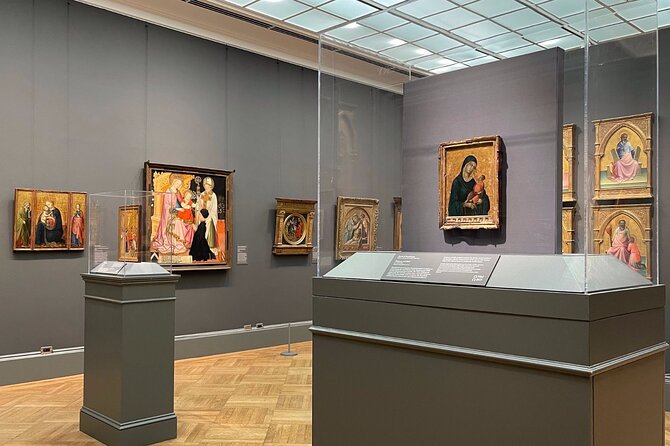
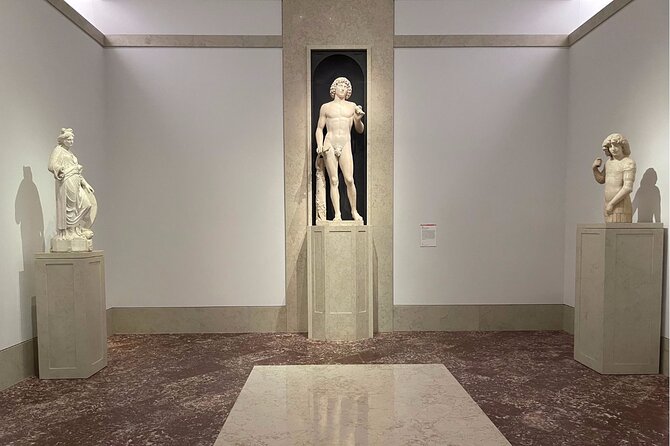
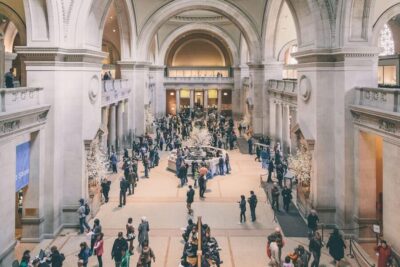
The Metropolitan Museum of Art can feel overwhelming. Its collection covers thousands of years and many parts of the world, so an ordinary visit often becomes a march toward the works you already know. This tour gives you a sharper question to carry through the galleries: How do we know this object is genuine, and how did it get here?
That question changes the mood of the visit. A painting is no longer only a beautiful surface. It may also be evidence in a long-running argument involving dealers, collectors, museums, scientists, governments, and families who lost works during war or political upheaval.
Your guide leads the discussion around the Met’s questionable holdings. These are objects in the collection that some experts believe could be inauthentic. The point is not simply to announce that something is fake. You look at why experts raise doubts, what signs can cause concern, and how museums try to handle uncertainty.
This is a good approach for the Met because it avoids the usual greatest-hits tour. You still encounter major artists and important works, but the focus is on the questions behind the labels. I like that balance. You get art appreciation, but also a look at the systems that shape a museum collection.
More Metropolitan Museum Tours:
- Metropolitan Museum Guided Group Tour
★ 5.0 · 1,013 reviews - “The Met” Metropolitan Museum of Art Exclusive Guided Tour
★ 5.0 · 863 reviews - NYC: Express Highlights Tour of the MET Museum
★ 4.4 · 795 reviews
Why forged Rembrandt and van Gogh matter
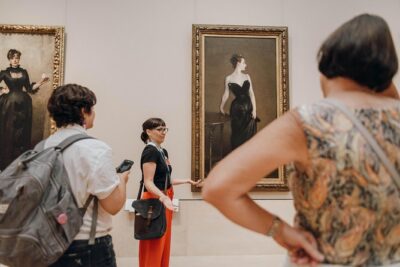
Rembrandt and Vincent van Gogh are central to the experience because both artists attract forgers and disputed attributions. Their names carry enormous weight in the art market, which makes them tempting targets for anyone trying to pass off a false work as an original.
The tour also looks at authentic works by these artists. That comparison matters. You are not only hearing about fraud in the abstract. You are considering genuine paintings by artists whose styles, signatures, techniques, and reputations have been copied many times.
The guide explains the methods used to decide if a work is authentic or forged. The supplied information does not promise a technical laboratory demonstration, so you should not expect to conduct tests yourself. Instead, you hear about the types of investigation that can separate an original from a later imitation.
That may include questions about materials, condition, provenance, and artistic technique, though the exact examples depend on the guide and the works selected during the visit. The value is in learning to look with more care. A painting can appear convincing at first glance and still raise serious questions when its history or physical evidence is examined.
I especially like this part for anyone who has ever wondered how museums can be sure about what they display. Art authentication is rarely a single magic test. It is a process of weighing evidence, comparing records, and accepting that some cases remain unsettled.
Questionable objects and museum responsibility
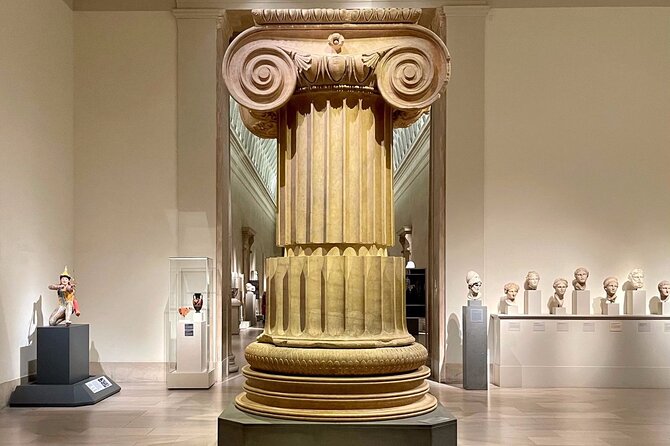
The tour’s treatment of questionable holdings gives you a more honest picture of museums. Institutions do not possess perfect knowledge, and objects can enter collections under mistaken assumptions or incomplete information.
You hear how fake objects previously entered the Met. That subject has practical value because it shows how a museum can be misled, even when it has trained staff and established procedures. It also raises a broader issue: museums are not only places that preserve art. They are institutions responsible for researching, labeling, and sometimes reassessing what they own.
The discussion may be especially useful if you usually think of a museum label as the final word. Here, the label becomes the beginning of a conversation. An attribution can change. An object’s origin can be challenged. A work once accepted as genuine can later require a new description.
For me, this is where the tour becomes more than a collection of scandalous stories. Art crime is not only about villains forging paintings. It is also about the limits of evidence and the duty to correct the public record when new information appears.
Because the tour is private, you can ask how uncertain objects are handled, what happens when experts disagree, and how museums explain changes to their visitors. The supplied information does not guarantee that every question will be covered in detail, but the private arrangement gives your group a better chance to guide the conversation.
Stolen and looted art, and the road home
Another major part of the visit concerns stolen or looted works that were returned to the museum or to their rightful owners. These stories add a legal and moral side to the art world.
Looted art can involve objects taken during conflict or under coercive conditions. Stolen art may disappear into private collections, pass through dealers, or surface years later in a museum or auction setting. The return of an object can be complicated, especially when ownership records are incomplete or different parties make competing claims.
You hear examples of how such works made their way back. The focus is not just on the moment of return. It also includes the process of tracing an object, identifying the proper claimant, and deciding what a museum should do when its ownership is challenged.
I find this part valuable because it gives context to repatriation, a word often used without much explanation. The tour presents it as a real process involving evidence and responsibility, not simply a slogan about sending everything back to its place of origin.
At the same time, you should expect a discussion-led experience rather than a theatrical crime show. The subject is serious. The strongest moments are likely to come from the guide’s explanations and the specific objects chosen, not from dramatic staging.
More Museums in New York City:
- NYC: Empire State Building Tickets – Observatory & Museum
★ 4.7 · 25,757 reviews - New York City: American Museum of Natural History Ticket
★ 4.5 · 15,447 reviews - NYC: Museum of Modern Art (MoMA) Entry Ticket
★ 4.6 · 12,540 reviews - 9/11 Memorial, Ground Zero Tour with Optional 9/11 Museum Ticket
★ 5.0 · 6,381 reviews
A private guide makes the pace more flexible
This is a private activity, so only your group takes part. That matters at the Met, where a large public tour can be hard to hear and difficult to steer toward your interests.
A private guide can spend more time on authentication if that is what your group wants. If your interest leans toward stolen works, museum ethics, or a particular artist, you can ask follow-up questions rather than waiting for a large group to move on.
The listed duration is about two hours and thirty minutes. The detailed stop description gives two hours at the museum, so the safest expectation is a focused visit of roughly two to two and a half hours. You should not treat it as a full tour of the Met. The museum is far too large for that.
The guide is an art historian, and Olga is specifically named in the experience information. One participant found her very well informed and appreciated the recommendations she gave for other art events in New York. That extra local guidance could be useful if you are building an art-focused day around the museum.
Still, the listening issue deserves attention. One participant had trouble hearing the guide at times, and the accent made it harder to absorb some explanations. This is not a reason to reject the tour, but it is a practical concern. Stay close, ask the guide to repeat important points, and do not hesitate to request a quieter position when possible.
Who will get the most from this Met visit?
I would choose this tour for an adult who already likes museums but wants a stronger theme than a standard highlights walk. It should also suit an older high school student who is interested in art history, mystery, law, or the ethics of collecting.
You will get more from it if you enjoy questions without simple answers. The tour does not appear designed for someone who only wants famous paintings and quick facts. It asks you to think about evidence, ownership, and uncertainty.
It may be less suitable for a young child or anyone who prefers a relaxed, purely visual museum visit. The material involves forgery, theft, looting, and repatriation, so the subject has a serious side. The description does not set an age minimum, but the strongest fit is clearly adults and older students.
The English-language format is straightforward. If you need a tour in another language, this experience is not presented as an option for that.
What the price represents
No tour price is supplied here, so I cannot judge the exact dollar value. I can explain what you are paying for: a private visit, an art historian guide, entrance fees, and a focused subject that would be difficult to recreate on your own.
The value is strongest if you would otherwise wander through the Met without a clear plan. A general museum visit can be rewarding, but you may spend much of your time finding galleries and reading labels. This experience gives you a framework and a specialist to connect the pieces.
It is also useful for repeat visitors. If you have already seen the famous rooms, a story about disputed objects, stolen art, and authentication can make the museum feel new again.
On the other hand, the tour is not the best value if you want broad coverage of the entire museum. You are buying depth on one theme, not a survey of every major collection. Gratuities are not included, and hotel pickup and drop-off are not included, so you need to make your own way to the meeting point.
Meeting point and timing at 1000 Fifth Avenue
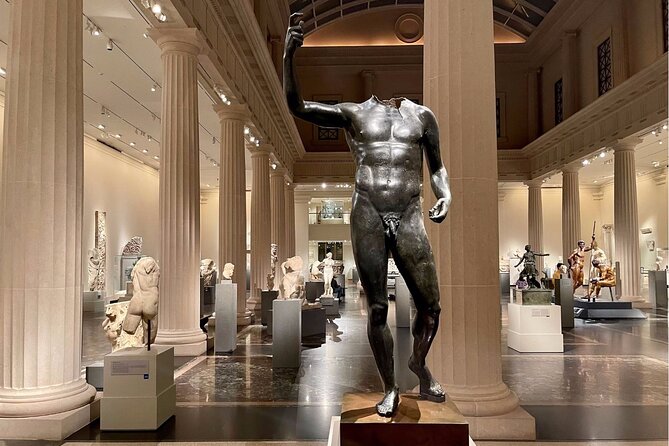
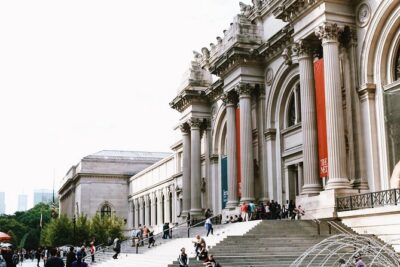
The tour begins and ends at the Metropolitan Museum of Art, 1000 5th Avenue, New York, NY 10028. It is near public transportation, which makes the meeting point practical for most visitors staying in New York.
Because there is no hotel pickup, plan your route before the start time. The activity ends back at the same meeting point, so you can continue inside the museum afterward if you have the time and energy, although the tour itself does not promise additional guided access.
Entrance fees are included in the tour. The stop information lists admission as free, so you should not expect a separate admission purchase during the visit. The important point is that the listed tour includes the entrance arrangements rather than leaving you to sort them out separately.
Confirmation is provided at booking. Free cancellation is available if you cancel at least 24 hours before the local start time. Cancellations made inside that window are not refunded, and changes made less than 24 hours before the start are not accepted.
The best questions to ask your guide
A private tour works best when you arrive with a few questions of your own. You might ask how experts distinguish a clever copy from an original, why a museum accepted a questionable object, or what happens after new evidence challenges an attribution.
You can also ask about the difference between stolen and looted art, how a rightful owner is identified, and why a museum might return one object but retain another. The guide may not have time for every issue, but these questions fit the subject and can make the discussion more personal.
If you have a favorite artist, mention that early. The tour specifically includes Rembrandt and van Gogh, but the exact works discussed may vary. A private setting gives you a better chance to connect the broad topic to an artist or period that interests you.
Should you book this private art crime tour?
Book it if you want the Met to feel like a place of investigation as well as beauty. The tour offers a rare combination of questionable objects, authentic works by often-forged artists, museum mistakes, stolen art, and repatriation.
I would especially recommend it for adults, art-history enthusiasts, and older high school students. Olga’s art background and extra New York recommendations add appeal, while the private format makes it easier to ask questions and set the pace.
Think twice if you need a perfectly easy-to-hear presentation or want a broad tour of the museum. The reported sound problem is worth taking seriously, and the exact price is not provided here. For the right audience, though, this is a focused and unusual way to see the Met, with ideas that stay with you after you leave the galleries.
FAQ
Where does the tour begin?
The tour begins at the Metropolitan Museum of Art, 1000 5th Avenue, New York, NY 10028, USA.
Where does the tour end?
The activity ends back at the Metropolitan Museum of Art meeting point.
How long does the experience last?
The tour lasts approximately two hours and thirty minutes. The museum portion is listed as two hours.
Is this a private tour?
Yes. Only your group participates in the activity.
What language is the tour offered in?
The tour is offered in English.
Is a guide included?
Yes. A professional art historian guide is included. Olga is named as one guide associated with the experience.
Are entrance fees included?
Yes. Entrance fees are included in the tour price.
Is hotel pickup or drop-off provided?
No. Hotel pickup and drop-off are not included. You must reach the Metropolitan Museum of Art meeting point on your own.
Can I cancel for a full refund?
Yes, if you cancel at least 24 hours before the experience start time. Cancellations made less than 24 hours in advance are not refunded, and changes inside that period are not accepted.
Recently added in New York City
- Asia in Queens: Exploring NYC’s Largest Chinatown★ 5.0 · 106 reviews
- NY Tours Central Park★ 5.0 · 5 reviews
- Art-full Discovery Walk of Tribeca & SoHo (& Nolita)★ 5.0 · 3 reviews
- Homemade Dumplings 101 in NYC★ 5.0 · 16 reviews
- American Dream Black Light Indoor Mini Golf Ticket★ 3.0 · 12 reviews
- American Specialties Gourmet Tour in Greenwich Village★ 5.0 · 45 reviews
- 3 Hour Midtown Manhattan Architectural Tour★ 5.0 · 81 reviews
- American Dream TiLT Interactive Museum Ticket★ 4.5 · 7 reviews
Metropolitan Museum Tours, compared.
“The Met” Metropolitan Museum of Art Exclusive Guided Tour
Read our review →
“The Met” Metropolitan Museum of Art Tour Semi-Private 8ppl Max
Read our review →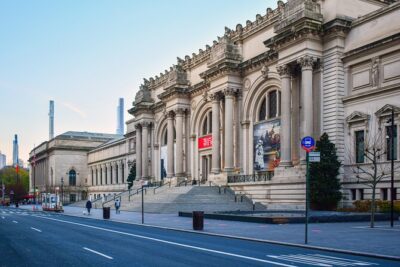
Browse the lists this tour appears in