
Reviewed · NYC WALKING TOURS
Broadway Musical Theater Walking Tour
Broadway’s best stories often happen outside the theater doors. This walking tour takes you through the Drama Book Shop, Sardi’s, Shubert Alley, Times Square, and the Gershwin Theatre lobby, with a guide such as Michael, or Mike, supplying the backstage tales and Broadway lore.
I like the personal angle and the chance to see places you might pass without noticing. I also like the focus on theater history, from opening-night parties at Sardi’s to Disney Theatrical and its resident ghost, Olive Thomas. The main drawback is that the tour does not take you inside Broadway theaters, and some outings have lasted closer to three hours than the advertised two.
Key points at a glance
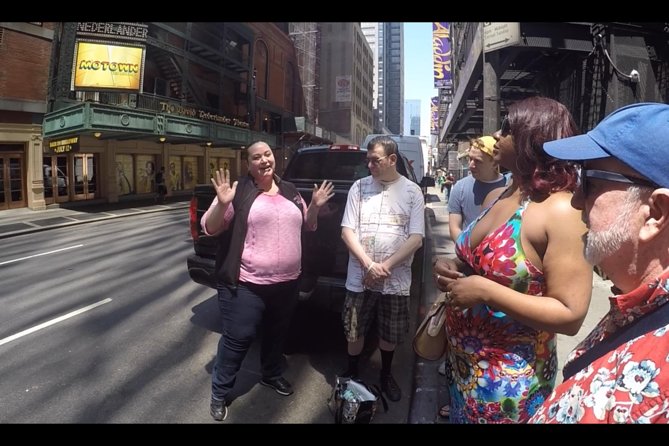
- The Drama Book Shop opens the tour: You go inside this theater-focused bookstore for a short visit, not just a sidewalk explanation.
- Mike brings the stories to life: Michael is praised for his energy, clear knowledge of Broadway plays, actors, writers, and theater history.
- Sardi’s adds old Broadway glamour: You learn about opening-night gatherings and the famous portraits lining the walls.
- Shubert Alley and Times Square connect the past and present: The walk covers Broadway founders, Mr. Broadway, and the origin of Times Square’s name.
- The Gershwin Theatre lobby is the final major stop: You can see the lobby of the theater where Wicked is currently playing, though the tour does not include a performance or backstage access.
- Plan for a small group, but not a private tour: The maximum is 25 people, with a listed price of $50 per person.
Why this Broadway walk is worth your time
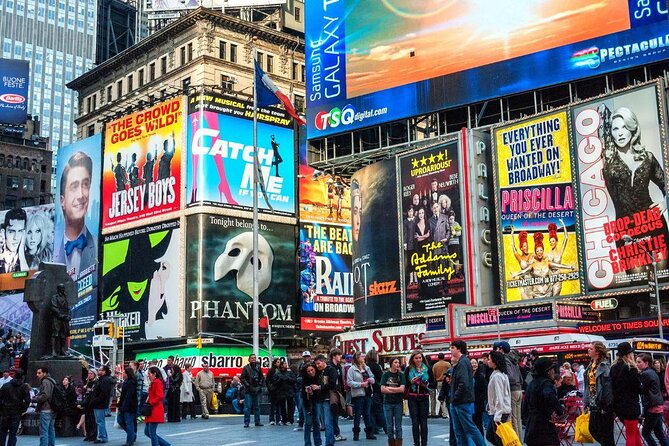
This is not a ticket to a musical. It is a guided walk through the streets and public spaces that shaped New York theater.
That difference matters. If you want a show, you will need to buy a separate ticket. If you want context before seeing a musical, or if you enjoy theater but cannot fit a performance into your budget, this tour gives you a useful two-hour look at Broadway for $50.
I like the way the experience links familiar names to physical places. Sardi’s is not simply a restaurant on a busy street. It becomes part of the story of opening nights, celebrated performers, and the portraits displayed on its walls. Shubert Alley is not just a passage between theaters. It becomes a place tied to the founders of the Shubert organization and the growth of Broadway.
The walk also lets you cover more ground than you would on your own. You could find the Drama Book Shop, Sardi’s, and the Gershwin Theatre yourself, but you would not automatically know which stories belong to each place. A good guide supplies the connections, names, and legends that turn a city walk into a theater lesson.
The strongest guide feedback centers on Michael, also called Mike. He is described as energetic, fun, and able to keep the group engaged. He has a wide command of plays, actors, playwrights, theaters, and old Broadway stories. Jared is also mentioned in connection with one outing, though the available information does not make clear whether he led the entire walk or assisted with it.
More Broadway Show Tickets:
- NYC: Aladdin the Musical on Broadway
★ 4.8 · 1,800 reviews - NYC: The Lion King on Broadway
1,609 reviews - NYC: MJ the Musical on Broadway
1,510 reviews
Starting inside the Drama Book Shop
The Drama Book Shop is an excellent first stop because it sets the tone right away. You go inside for about 15 minutes, making this more than a photo stop outside a famous theater address.
The shop’s purpose is closely tied to the stage. For a theater fan, that makes the setting useful and fitting. You begin surrounded by the world of scripts, plays, and performance rather than starting with a generic Times Square introduction.
From there, the guide covers Broadway history, legends, and lore. The exact stories can depend on the guide and the questions asked, but the focus is clear: this is a talk-heavy walk for people who want background, not a quick circuit of photo points.
You should listen closely here. The tour’s value comes from the guide’s storytelling, and much of what you learn cannot be gathered simply by looking at a building. If you already know Broadway well, you may still pick up lesser-known details, especially if you have not studied the theater’s earlier decades.
Disney Theatrical and the ghost of Olive Thomas
One especially unusual part of the walk concerns Disney Theatrical and Olive Thomas, a resident ghost associated with the theater world.
This gives you a sense of the tour’s range. It is not limited to dates, theater names, and famous productions. The guide also includes the legends that have gathered around Broadway buildings and performers. Olive Thomas adds a touch of the supernatural without changing the tour into a ghost walk.
For me, these details are often what make a theater tour memorable. A list of opening dates can fade quickly. A story about a performer whose presence is still linked to a building gives the place a human edge.
The guide also explains the larger history of Broadway, including the people and forces that helped shape the district. You are not just walking toward the next stop. You are learning how theater, restaurants, streets, and commercial development became tied together in this part of Manhattan.
Sardi’s and the faces of opening night
The stop at Sardi’s lasts about 15 minutes and focuses on the restaurant’s role in Broadway life.
You learn about opening-night parties and the artists displayed on the walls. Those portraits give the stop its visual anchor. Even if you do not dine at Sardi’s, the building connects you with the social side of the theater world, where performers, writers, producers, and theater people gathered after shows.
This is a good example of why a guide helps. A restaurant can look like one more busy Midtown address when you pass it on your own. With the right explanation, the walls become a record of Broadway personalities and the restaurant becomes part of the theater story.
Do not expect a meal or a long indoor visit. The listed stop is short, and the tour’s purpose is explanation rather than dining. If you want to eat at Sardi’s, treat that as a separate plan and allow time beyond the walking tour.
More NYC Walking Tours:
- SoHo, Little Italy, and Chinatown Walking Tour in New York
★ 5.0 · 3,153 reviews - Secrets of Grand Central Station Walking Tour New York City
★ 5.0 · 1,796 reviews - Greenwich Village Walking and Food Tasting Tour
★ 5.0 · 1,572 reviews - Artistic, Alternative Greenwich Village Walking Tour
★ 5.0 · 971 reviews
Mr. Broadway and the name Times Square
The walk then turns to the story of Mr. Broadway and the origin of the name Times Square.
These subjects help explain how the area became known as the center of American commercial theater. The tour is not only about productions and performers. It also looks at the names, public figures, and city changes that shaped the streets around the theaters.
Times Square can be overwhelming. Bright signs, traffic, crowds, and tall buildings tend to compete for your attention. A guide gives you a reason to stop and look past the modern advertising. You may begin to notice how the district’s current identity sits on top of an older theater center.
That is one of the practical strengths of exploring on foot. You feel the scale of the area and see how close the different sites are to one another. The walk gives you a better sense of place than a theater lecture in a room, while the guide keeps the busy streets from becoming a blur.
Shubert Alley and the founders of Broadway
Shubert Alley is another key stop. Here, the guide tells stories about the founders and the role of the Shubert name in Broadway.
This part should appeal most to anyone interested in how the theater district developed as an industry. You hear about the people behind the theaters, not only the stars who performed in them. That broader view helps explain why Broadway has such a strong concentration of venues and why certain names appear again and again in theater history.
The alley also provides a change from the wide, noisy spaces of Times Square. It is a useful place to pause while the guide explains the setting. The tour remains outdoors for much of its route, so shaded or air-conditioned stops matter, especially in warm weather.
One person who took a longer version of the tour found the pacing slow for the amount covered. That is worth keeping in mind. If you prefer a brisk walk with short explanations, you may find the storytelling too extended. If you enjoy detailed accounts and plenty of time for questions, the slower pace may suit you.
The George M. Cohan statue and Broadway’s public memory
The itinerary also includes the George M. Cohan statue, a natural stop for a tour focused on Broadway’s public figures.
The statue gives the guide a place to discuss Cohan and the idea of Mr. Broadway. It also shows how the theater district remembers its past in public spaces, not only in playbills or theater interiors.
You will not get a full biography of every performer connected to Broadway in two hours. The goal is to build a chain of stories, moving from important people to important places. The best way to enjoy this section is to follow the connections rather than expect an exhaustive survey.
The tour’s guide is central here. Mike is described as able to discuss theaters, plays, actors, and playwrights in detail, with enough energy to hold the group’s attention. That matters in an outdoor setting, where noise and movement can easily pull you away from the talk.
The Gershwin Theatre lobby and Wicked
The final major stop is the Gershwin Theatre, including its lobby, where Wicked is currently playing.
For many Broadway fans, this is the high point. You get to see the public interior of a major theater and connect the building with one of Broadway’s best-known modern musicals. It offers a taste of the theater environment even if you are not attending a show that day.
Be clear about what this means. The tour does not take you backstage, and it does not include admission to a performance. The theater visit is to the lobby, not the auditorium or working backstage areas.
That limitation is not a surprise if you book with the right expectations. A theater’s backstage spaces are restricted, and a public walking tour cannot promise the same access as a production-specific visit. Still, some people may feel $50 is high if they expected to enter multiple theaters or see behind the scenes.
For me, the lobby works best as the final piece of the walk. You have already heard about Broadway’s past, and now you finish in a working theater connected to a current production. It gives the tour a link between old Broadway stories and the shows people line up to see today.
Guide quality and group size
The guide can make or break this experience. Most of the available feedback points to Mike as a major strength. He is described as enthusiastic, engaging, and full of Broadway information. One person called him a walking encyclopedia of theater material, including productions, actors, playwrights, and buildings.
That style will suit you if you enjoy a lively storyteller who keeps talking and adds side details. It may be less appealing if you want a quiet walk or a tightly timed architectural tour.
The maximum group size is 25 people. That is not private, but it is small enough for a guide to address the group on city streets and at the stops. You should still stay near the guide, especially around Times Square, where street noise can make it harder to hear.
The tour is offered in English. Children must be accompanied by an adult, so families can attend, but the subject matter and long stretches of standing may appeal more to older children and adults who already like theater.
Is $50 a fair price?
At $50 per person, this is not the cheapest way to see Times Square. You can walk through the district for free. You can also visit many Broadway addresses from the outside without a guide.
The price makes more sense if you value interpretation. You are paying for the guide’s research, storytelling, and ability to connect places that otherwise seem unrelated. The Drama Book Shop visit, Sardi’s stories, Shubert Alley, the George M. Cohan statue, and the Gershwin Theatre lobby create a focused route rather than a random Midtown walk.
The value is also better for theater fans who will not attend a musical. You get two hours of Broadway context without the much higher cost of a show ticket. If you are already seeing Wicked or another production, the tour can give you background before or after the performance.
I would hesitate if your main goal is theater access. You will not enter several auditoriums, go backstage, meet performers, or watch a rehearsal. In that case, the price may feel high for an outdoor history walk with one lobby visit.
Timing, comfort, and the two-hour question
The listed start time is 11:00 a.m., and the stated duration is about two hours. That makes it easy to fit before a matinee, though you should leave a buffer because the walking time and group pace can vary.
There is one timing wrinkle. One experience was described as a three-hour tour, while the advertised duration is approximately two hours. That may reflect a longer version, extra questions, or a different pace. If you have a theater ticket, restaurant reservation, or timed attraction afterward, confirm the expected ending time before you go.
You should wear comfortable shoes. The route is on foot, and the tour depends on moving between Midtown sites. In warm weather, the air-conditioned stops are welcome, but you should still prepare for outdoor heat and city traffic.
The experience requires good weather. If poor weather causes cancellation, you are offered another date or a full refund. You can cancel for a full refund up to 24 hours before the 11:00 a.m. start time. Changes or cancellations inside that window are not accepted, and the amount paid is not refunded.
Who should book this Broadway tour?
I would choose this walk if you love musicals, enjoy old theater stories, or want more context before seeing a Broadway show. It is also a good fit if you are curious about the people behind the theaters, not only the productions on stage.
It suits first-time Broadway visitors who want their Times Square walk to have a clear purpose. It can also work for longtime theater fans because Mike’s material goes beyond the most basic facts.
I would skip it if you want backstage access, theater interiors, or a fast photo tour. I would also think twice if you dislike long explanations or need a precise end time.
Final verdict
Book this tour if the stories matter as much to you as the sights. The strongest reason to go is the guide, especially if Mike leads your outing. His energy and command of Broadway subjects can turn familiar streets into a better understood theater district.
The main caution is simple: this is a walking history lesson, not a backstage tour. At $50, it offers fair value for serious theater fans who want context, stories, and a look inside the Gershwin Theatre lobby. Set aside closer to three hours if your schedule is tight, wear good shoes, and arrive ready to listen.
FAQ
Where does the Broadway Musical Theater Walking Tour start?
The tour starts at the listed meeting point at 11:00 a.m. The available information does not specify a street address.
How long does the tour last?
The stated duration is approximately two hours. One outing was described as lasting three hours, so you should allow extra time if you have plans afterward.
What places are included?
The route includes the Drama Book Shop, Sardi’s, Times Square, Shubert Alley, the George M. Cohan statue, the Broadway Souvenir Store area, and the Gershwin Theatre lobby.
Does the tour include entry into Broadway theaters?
It does not include backstage access or entry into theater auditoriums. The tour does include a visit to the Gershwin Theatre lobby, where Wicked is currently playing.
Is the tour offered in English?
Yes. The experience is offered in English.
What is the maximum group size?
The tour can have a maximum of 25 travelers.
Can I cancel for a full refund?
Yes. You can cancel at least 24 hours before the start time for a full refund. Cancellations or changes made less than 24 hours before the experience are not refunded.
Recently added in New York City
- Hudson River Park Bicycle Rental★ 4.5 · 3 reviews
- Brooklyn Bridge Sunset Walking Tour★ 5.0 · 15 reviews
- Broadway the Tour- NYC Guided Immersive Historic Walking Tour★ 5.0 · 13 reviews
- Brooklyn Bridge, DUMBO, and Skyline Guided Walking Tour★ 4.5 · 30 reviews
- Brooklyn Bridge Bike Tour★ 5.0 · 121 reviews
- Small-Group Broadway Theater District and Times Square Walking Tour★ 5.0 · 20 reviews
- Broadway: A Self-Guided Audio Tour of the World’s Iconic Theatre District★ 4.5 · 3 reviews
- Broadway Prohibition Pub Crawl★ 3.0 · 3 reviews
NYC Walking Tours, compared.
SoHo, Little Italy, and Chinatown Walking Tour in New York
Read our review →
Secrets of Grand Central Station Walking Tour New York City
Read our review →
Greenwich Village Walking and Food Tasting Tour
Read our review →
Artistic, Alternative Greenwich Village Walking Tour
Read our review →

NYC Greenwich Village Italian Food Guided Walking Tour
Read our review →Browse the lists this tour appears in