
Reviewed · BROOKLYN BRIDGE AND DUMBO TOURS
Brooklyn Bridge, DUMBO, and Skyline Guided Walking Tour
The best part of this tour is the route itself: you begin among Lower Manhattan’s civic buildings, cross the Brooklyn Bridge on foot, then finish in DUMBO with the Manhattan skyline behind you. It packs several classic New York views into two hours without asking you to plan the route yourself.
I like the small maximum group of 15, which gives the guide a fair chance to answer questions and manage photo stops. I also like the practical ending at Time Out Market, where you can eat, rest, and continue exploring Brooklyn instead of having to find your way back immediately.
The main caution is that the Brooklyn Bridge is an active public crossing, not a private attraction. Closures, protests, road restrictions, and bad weather can affect the route. One tour was redirected to the Manhattan Bridge during a permitted protest, and that substitute did not provide the same quiet, iconic experience.
Key points to know before booking
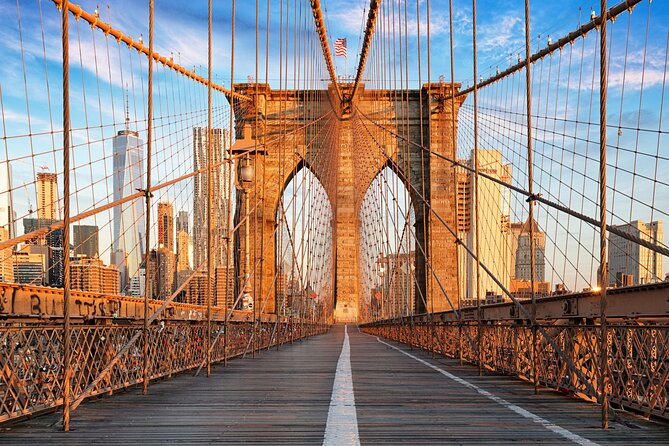
- The walk crosses the Brooklyn Bridge: You get the famous wooden pedestrian boardwalk, East River views, and photo stops when conditions allow.
- The tour begins at Warren Street and Broadway: You meet in Lower Manhattan’s Civic Center, not at the bridge itself.
- DUMBO is more than a photo stop: The route includes the Manhattan Bridge view, Jane’s Carousel, Fulton Ferry Landing, and time to hear about the neighborhood.
- Guide quality matters here: Dave is specifically praised for answering questions, finding photo spots, and handling crowds.
- The group can include up to 15 people: That is small enough for personal attention, though not the same as a private walk.
- The finish is useful: Time Out Market gives you food choices and several ways to continue, including ferry, subway, or walking back toward Manhattan.
Why this two-hour route works so well in New York
New York sightseeing often involves zigzagging between subway stations, viewpoints, and neighborhoods. This walk solves that problem with a simple eastward line: Civic Center, Brooklyn Bridge, DUMBO, and the Brooklyn waterfront.
At $36 per person, the value comes less from admission tickets and more from the guide’s route planning, local explanations, and timing. The bridge and neighborhood are free to enter on your own, so you are paying for company and context. That makes the tour most worthwhile if you want help finding the best viewpoints, understanding what you are seeing, and avoiding a loose wander through a crowded area.
The two-hour length also fits neatly into a busy New York day. You can schedule it in the morning, stop for lunch at Time Out Market, and continue around Brooklyn. Or you can use it as a bridge between Lower Manhattan sightseeing and an afternoon in DUMBO.
You should expect a real city walk, not a leisurely stroll with long pauses. The total route includes streets, bridge access, cobblestones, and waterfront paths. Wear shoes you can walk in, and leave room in your schedule for crowd slowdowns.
More Brooklyn Bridge and DUMBO Tours:
- Brooklyn Bridge & DUMBO Neighborhood Tour – from Manhattan to Brooklyn
★ 5.0 · 826 reviews - Walking tour in Manhattan Brooklyn Bridge and Waterfront
★ 5.0 · 222 reviews - NYC: Brooklyn Bridge and Dumbo Guided Walking Tour
★ 4.5 · 186 reviews
Starting among City Hall and New York’s Civic Center
The meeting point is at Warren Street and Broadway. From there, the walk begins in the Civic Center, an area many visitors pass without studying. That is a shame, since it gives you a useful introduction to how New York runs.
You see City Hall, completed in 1812 and still used as the city’s main municipal building. The Manhattan Municipal Building adds a grand architectural counterpoint. Your guide connects these buildings to city planning, government, legal institutions, and New York’s long effort to manage a rapidly growing city.
This first stop lasts about 10 minutes. That is enough time to get your bearings and hear the setting explained without turning the tour into a lecture on municipal architecture. I like this opening because it begins with the city’s structure and power before moving toward the bridge and waterfront.
The starting area is also practical for visitors staying in Lower Manhattan. You do not need to spend part of the tour reaching Brooklyn first. The walk itself becomes the transport.
Crossing the Brooklyn Bridge on the wooden boardwalk
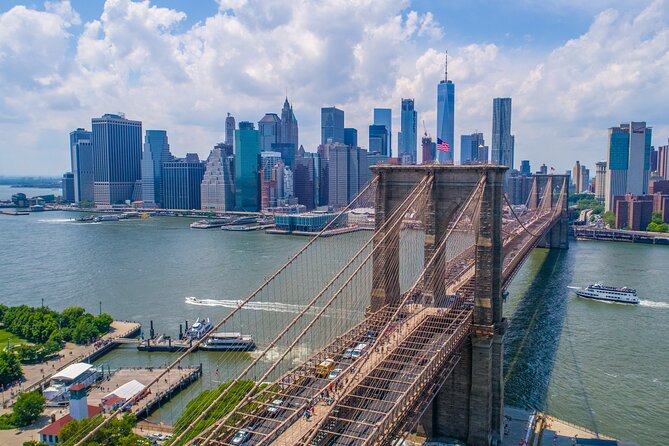
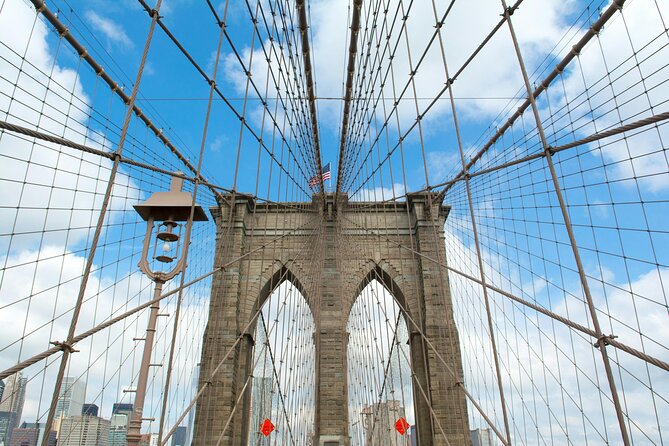
The bridge crossing is the heart of the experience. You walk toward Brooklyn on the pedestrian boardwalk, above the traffic and surrounded by views of Manhattan, the East River, the Statue of Liberty, and the Brooklyn shore.
The planned crossing takes about 25 minutes, with several stops for pictures. That timing is fairly brisk once you account for the group gathering, foot traffic, and photo pauses. You will want to keep moving while still watching for people coming in the opposite direction.
This is where a guide can earn the fee. The bridge is easy to find, but the best views change as you move across it. A guide can help you pause in sensible places instead of blocking the walkway or stopping at the first crowded opening. Dave receives particular praise for finding strong photo locations and steering the group through busy conditions.
The bridge is also the least predictable part of the tour. It remains open to ordinary pedestrians most of the time, but special events and permitted protests can change access. In one case, the route was shifted to the Manhattan Bridge. That bridge does get you to Brooklyn, but trains pass nearby, making conversation difficult and changing the feel of the walk entirely.
I would not book this tour if crossing the Brooklyn Bridge is your one nonnegotiable New York activity and you have no flexibility. Check the operator’s current communication before leaving for the meeting point, and keep the cancellation terms in mind.
DUMBO, where the bridge walk turns into a neighborhood visit
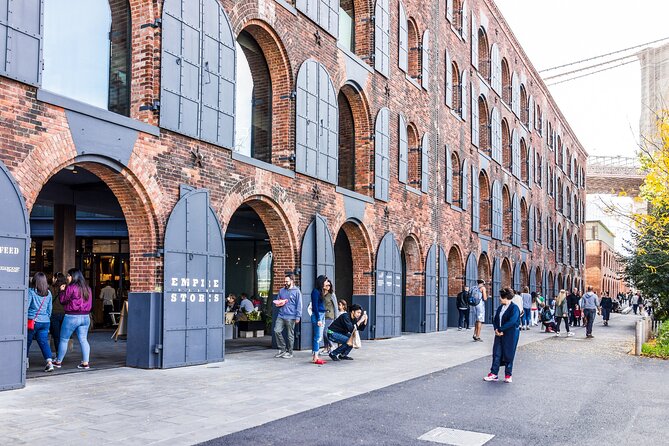
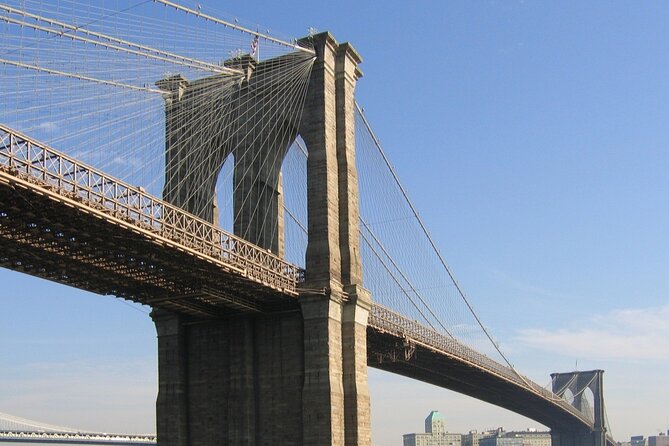
DUMBO means Down Under the Manhattan Bridge Overpass. Once an industrial district, it now combines old brick warehouses with galleries, offices, restaurants, tech companies, and heavily photographed streets.
The tour gives you about 10 minutes to hear the area explained and get recommendations for what to do afterward. That is not enough for a full neighborhood visit, but it is enough to understand why DUMBO feels different from the Civic Center and the bridge approach.
I like this part because the guide can add value beyond a list of landmarks. You hear about the area’s change from working waterfront to creative and commercial district, along with suggestions for eating and shopping. You also get references to filming locations, which can make the streets feel more familiar if you have seen DUMBO on screen.
Still, do not mistake the tour for a long DUMBO exploration. The group is moving toward specific viewpoints and the waterfront. If you want time inside galleries, stores, or restaurants, plan to stay after the official finish.
More NYC Skyline and Architecture Tours:
- Statue of Liberty & NYC Skyline Cruise – Freedom Liberty Tour
★ 4.0 · 1,499 reviews - Manhattan Architecture Yacht Cruise
★ 5.0 · 1,395 reviews - NYC: Dyker Heights Christmas Lights & Skyline View Bus Tour
★ 4.7 · 1,192 reviews - From Manhattan: Dyker Heights Lights & Skyline Tour
★ 4.6 · 1,005 reviews
The famous Manhattan Bridge photograph
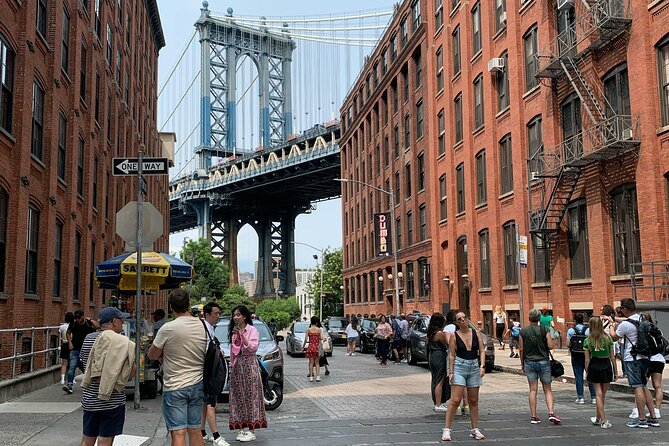
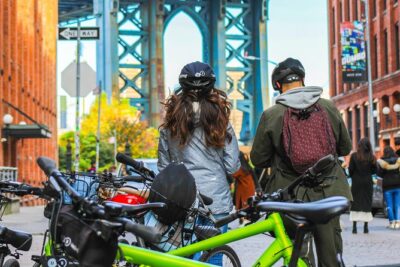
The Manhattan Bridge view is one of the most recognizable urban photographs in New York. From the street, the bridge is framed between brick warehouse buildings, with the Empire State Building visible through the central opening.
The stop lasts about 15 minutes, giving you time to line up the view and take pictures. Your guide also compares the Manhattan Bridge with the Brooklyn Bridge, helping you understand why the two structures are often confused by first-time visitors.
This is a good example of why the tour is more useful than simply following a map. You can find the location yourself, but the guide brings you there as part of a logical route and explains the difference between the two bridges. You are not spending your limited sightseeing time searching for the famous angle.
Expect other people with cameras. The area is popular, and the best position may require patience. Your guide can help the group take turns, but no walking tour can make a well-known photo spot private.
Jane’s Carousel and the Brooklyn waterfront
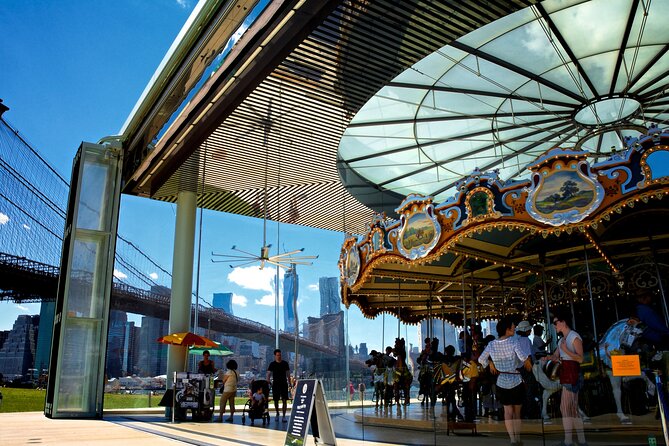
After the bridge view, the route reaches the waterfront and Jane’s Carousel. The restored 1922 merry-go-round sits inside a modern glass pavilion, making an unusual contrast with the old bridge structures and warehouse buildings nearby.
The carousel is a quick sightseeing stop rather than a full ride experience. Its value is visual: old-fashioned horses, glass architecture, bridges, boats, and the Manhattan skyline all meet in one compact setting.
This is also where the tour slows into a more scenic waterfront walk. You can look back toward Manhattan and see the bridges from below and across the river. The combination of old civic buildings, industrial remnants, modern offices, and public spaces gives the route a sense of New York’s many layers without requiring a museum visit.
If you are using a phone for photos, this portion is worth keeping in mind for wider skyline pictures. The Manhattan Bridge photo is tightly framed and architectural. The waterfront offers a broader view.
Fulton Ferry Landing and the old crossing to Manhattan
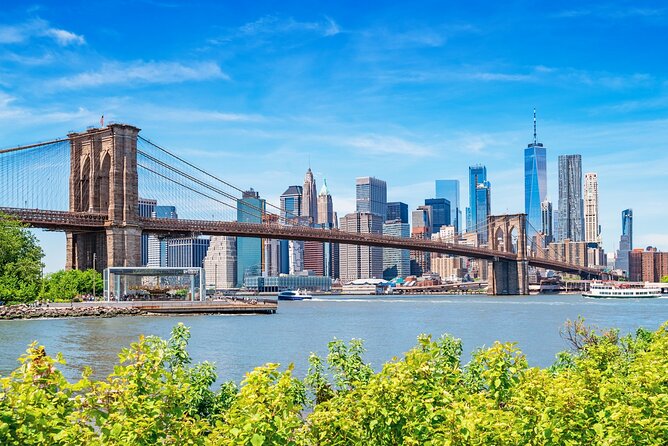
Fulton Ferry Landing adds historical context to the waterfront. Before the bridges, ferries were the main link between Brooklyn and Manhattan, and this area served as a major transport point for commuters and immigrants.
The stop takes about 10 minutes. Your guide explains how the ferry connected the two sides before the bridge era, while you watch boats move along the East River and look across to Manhattan.
I find this a useful pause because it puts the Brooklyn Bridge in perspective. You are not only crossing a famous structure for the view. You are following an old transportation corridor that once depended on boats and later shifted to bridges and modern transit.
The landing also provides one of the route’s strongest skyline views. If the bridge crossing is crowded, this waterfront stop can feel more open. Conditions still matter, though. Wind, rain, and cold can make the riverfront less comfortable than the streets.
Ending at Time Out Market New York
The tour ends at Time Out Market, at 55 Water Street. This is a practical finish, especially if your walk has worked up an appetite.
The market brings several food choices under one roof, including pizza, international dishes, and desserts. The guide offers suggestions for what to try and explains how to continue from DUMBO by ferry, subway, or on foot.
That final advice is one of the tour’s better details. You are not simply dropped at a landmark with no idea what comes next. You can eat there, explore more of DUMBO, or use the waterfront as the next part of your day.
The market is also a sensible meeting point for different travel styles. One person can grab lunch while another looks around. Families and mixed-age groups may appreciate the choice. If you prefer a quiet restaurant, however, this food-hall setting may feel active and crowded.
The official tour time at the final stop is about 10 minutes, but you can remain in the area after the guide leaves. That flexibility makes the ending more useful than a random street corner.
Guide style and group size
The experience is offered in English, with a maximum of 15 people. That size is small enough to make questions possible, but you should not expect a private tour or constant one-on-one attention.
Dave is the guide most clearly associated with the strongest feedback. He is praised for answering questions, choosing good photo spots, and managing the crowd around the bridge and DUMBO. Those skills matter more here than a long historical speech. You need someone who can keep the group together while still allowing time for pictures.
Another account identifies the guide as Davis, so guide assignments may vary. I would treat Dave’s strengths as a useful indication of the tour style, not a guarantee that he will lead every departure.
The best fit is a visitor who likes a clear route but still wants room to ask questions. If you prefer to walk entirely at your own pace, stopping whenever you like, you may find a self-guided route more flexible.
What $36 buys you, and what it does not
The $36 price is reasonable for a two-hour guided walk in New York, provided the main route operates as planned. You receive an English-speaking local guide, group direction, photo stops, bridge context, DUMBO recommendations, and help deciding what to do afterward.
You do not receive hotel pickup, food, carousel admission, or a private group. The attractions along the route are mainly public spaces, so the fee is not paying for entrance tickets. It pays for the organization and local explanation.
I would compare the price with your priorities. If you already know the bridge route and have researched the photo spots, you can do much of this independently for free. If you have limited time, dislike navigating busy streets, or want the bridge and DUMBO connected into one efficient walk, $36 can be a fair trade.
The average booking lead time is 44 days, which suggests that planning ahead is sensible, particularly for popular dates. Confirmation is provided at booking, and the activity is near public transportation.
Weather, cancellations, and the bridge closure risk
The experience requires good weather. If poor conditions cancel it, you are offered another date or a full refund. You can also cancel for a full refund up to 24 hours before the start time. Within 24 hours, cancellations and changes are not accepted for a refund.
The more difficult risk is an unexpected closure or route change. One cancellation was linked to United Nations road closures, while another walk could not use the Brooklyn Bridge because of a permitted protest. In that second case, the guide adapted by using the Manhattan Bridge, but the substitute had frequent train noise and did not match the promised bridge experience.
This does not make the tour a poor choice, but it does mean you should keep perspective. New York bridges are public infrastructure, and events can disrupt access with little warning. If the bridge crossing is canceled, ask promptly about the available refund or rescheduling options rather than assuming the replacement route will feel equivalent.
Who should book this walking tour?
I would recommend it for a first visit to New York, a short stay, or a day when you want several major sights connected without spending time on route planning. It is especially useful for photographers, couples, families with older children, and anyone who wants practical suggestions for continuing around DUMBO.
It also suits people who enjoy learning small pieces of city history while walking. The Civic Center, bridge, ferry landing, and industrial streets each tell a different part of New York’s story.
I would be more cautious if you have limited mobility, strongly dislike crowds, or need guaranteed access to the Brooklyn Bridge. The tour is described as suitable for most participants and service animals are allowed, but it remains an active urban walk with uneven city conditions and bridge foot traffic.
Should you book it?
Book this tour if you want an efficient, guided route from Manhattan to Brooklyn, with the Brooklyn Bridge as the main event and DUMBO as the rewarding finish. The guide’s photo help, small-group format, and useful ending at Time Out Market add real value to a route you could technically walk alone.
Skip it if you are comfortable planning the route yourself, want long unstructured time for photography, or cannot accept the possibility of a bridge closure and alternate crossing. For everyone else, $36 is a sensible price for two focused hours, provided you treat the Brooklyn Bridge crossing as likely but not absolutely guaranteed.
FAQ
Where does the tour begin?
It begins at Warren Street and Broadway in New York City’s Civic Center area.
Where does the tour end?
The tour ends at Time Out Market New York, 55 Water Street, Brooklyn.
How long does the walking tour last?
The tour lasts approximately two hours.
Is the tour offered in English?
Yes. The experience is offered in English.
How many people can join the tour?
The maximum group size is 15 travelers.
What does the tour include?
It includes an expert local guide, a scenic walk across the Brooklyn Bridge when access is available, planned photo opportunities, and tips for exploring on your own afterward.
Is hotel pickup included?
No. Hotel pickup and drop-off are not included.
What happens if bad weather cancels the tour?
If poor weather causes cancellation, you are offered a different date or a full refund. You can also cancel at least 24 hours before the start time for a full refund.
More NYC Walking Tours
- SoHo, Little Italy, and Chinatown Walking Tour in New York
★ 5.0 · 3,153 reviews - Secrets of Grand Central Station Walking Tour New York City
★ 5.0 · 1,796 reviews - Greenwich Village Walking and Food Tasting Tour
★ 5.0 · 1,572 reviews - Artistic, Alternative Greenwich Village Walking Tour
★ 5.0 · 971 reviews
Recently added in New York City
- Hudson River Park Bicycle Rental★ 4.5 · 3 reviews
- Brooklyn Bridge Sunset Walking Tour★ 5.0 · 15 reviews
- Broadway the Tour- NYC Guided Immersive Historic Walking Tour★ 5.0 · 13 reviews
- Brooklyn Bridge Bike Tour★ 5.0 · 121 reviews
- Small-Group Broadway Theater District and Times Square Walking Tour★ 5.0 · 20 reviews
- Broadway: A Self-Guided Audio Tour of the World’s Iconic Theatre District★ 4.5 · 3 reviews
- Broadway Musical Theater Walking Tour★ 4.5 · 9 reviews
- Broadway Prohibition Pub Crawl★ 3.0 · 3 reviews
Brooklyn Bridge and DUMBO Tours, compared.
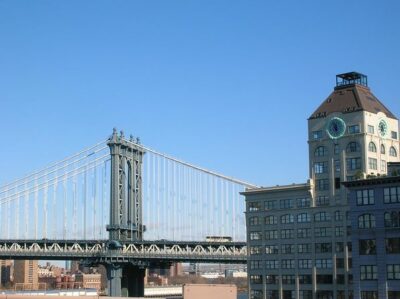
Brooklyn Bridge & DUMBO Neighborhood Tour – from Manhattan to Brooklyn
Read our review →
Brooklyn Bridge & DUMBO Food Tour: Local Eats & Landmarks
Read our review →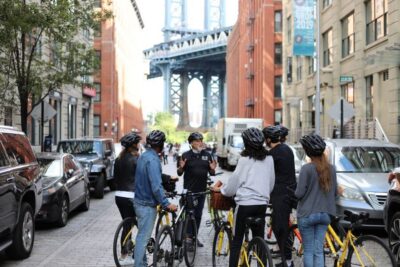
Walking tour in Manhattan Brooklyn Bridge and Waterfront
Read our review →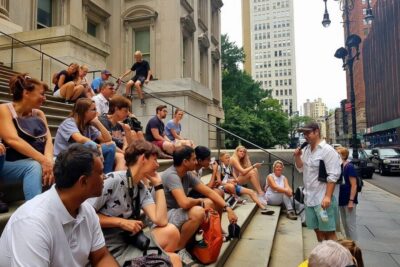
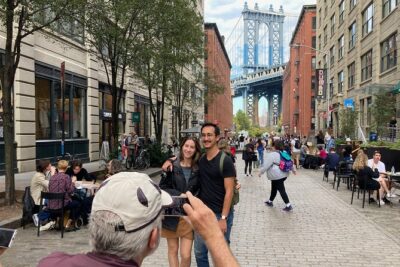
Brooklyn Bridge and Dumbo District Walking Tour
Read our review →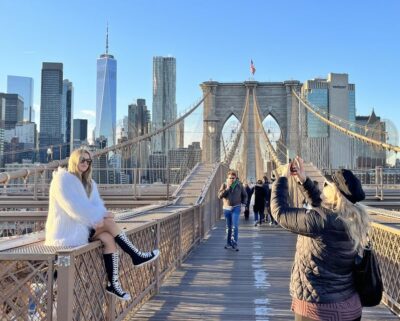
Brooklyn Bridge and Waterfront 2-hour Guided Bike Tour
Read our review →
Browse the lists this tour appears in