
Reviewed · GREENWICH VILLAGE TOURS
Greenwich Village Historic Walking Tour
Greenwich Village makes a fine classroom because nearly every block carries a story. This two to three hour walking tour moves from Washington Square Park to Stonewall, Jefferson Market, old theaters, artists’ homes, and places tied to labor and civil rights. Guide Andrew Kirschner uses historical photos to show how the streets looked before today’s cafes and apartment buildings took over.
I like two things here. First, the tour links famous names to real places, from Edward Hopper and Emma Lazarus to Thomas Paine and the people who resisted police raids at Stonewall. Second, the small maximum of 20 people leaves room for questions, and Andrew has tailored tours to guests’ interests when groups were especially small.
The main consideration is pace. You cover a lot of ground on foot, and several stops last only five or ten minutes. The $39 price is fair for a focused neighborhood tour, but the optional pizza segment costs another $19, and that fee does not include the food or drinks.
Key points at a glance
- Washington Square Park sets the story in motion: You begin with the park’s past as a potter’s field, parade ground, and meeting place for protest and art.
- Stonewall receives proper context: The stop covers police raids, resistance, and the people who helped push LGBTQ+ rights into public view.
- Historical photos make the walk sharper: Andrew Kirschner brings images of buildings and residents, helping you compare past and present.
- Jefferson Market packs several stories into one stop: Its former courthouse and jail connect crime, women’s rights, and New York’s legal past.
- The tour reaches beyond celebrity names: You hear about labor reform, racial integration, social justice, theater, music, and American democracy.
- The pizza add-on is separate: For $19 more, you visit three pizzerias, but you buy your own slices and drinks.
Washington Square Park and the Village’s first chapters
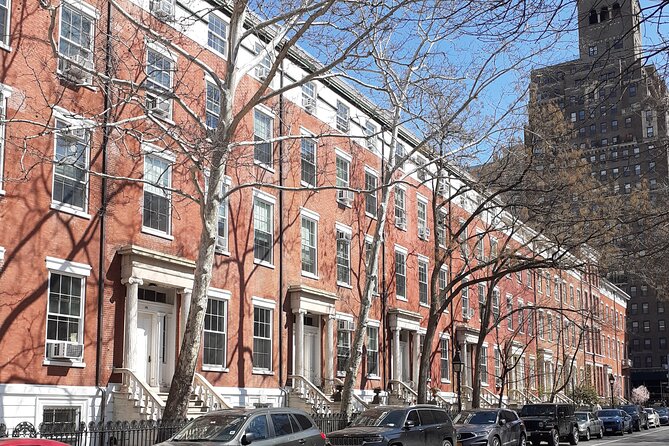
Meet at Washington Square Park at 10:00 a.m. The park is more than a convenient starting point. It gives Andrew a way to explain how Greenwich Village changed over several centuries.
You begin with stories from the 1600s, when the land served as a potter’s field. Later, it became a parade ground, then a gathering place for artists, activists, and people who challenged the usual rules. That shift helps you see the Village as a place shaped by public life, not only by pretty townhouses and cafe tables.
The park also works well as a visual introduction. Historical photos show how the setting and surrounding streets have changed. I find this useful because the Village can seem timeless at first glance, yet its identity has been rebuilt again and again.
The opening portion is listed at about ten minutes, though the total tour runs roughly two to three hours. Expect the exact timing to depend on questions, group size, and how much attention the guide gives to the many surprise stops along the route.
More Greenwich Village Tours:
- NYC: Greenwich Village Food Tour with 6 Locals Favorites Dishes
★ 5.0 · 1,812 reviews - Greenwich Village Walking and Food Tasting Tour
★ 5.0 · 1,572 reviews - Artistic, Alternative Greenwich Village Walking Tour
★ 5.0 · 971 reviews
Edward Hopper, Emma Lazarus, and the people behind the streets
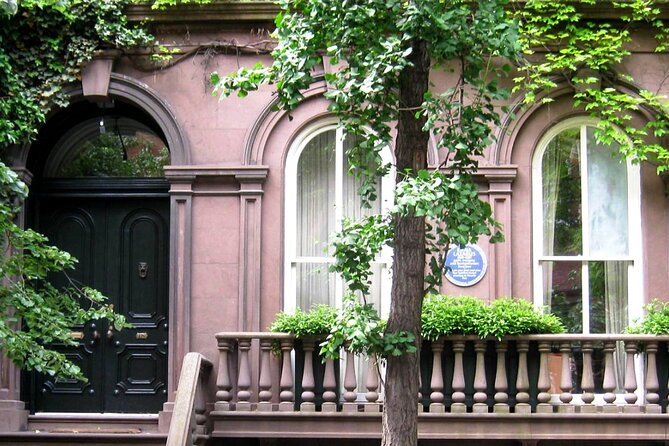
One short stop near Washington Square focuses on the former home of Edward Hopper. You learn how Greenwich Village affected his artistic outlook and how the neighborhood’s unusual character fed his stark, thoughtful images.
This is a brief visit, so do not expect a full art lecture. Its value comes from putting a major American artist into a physical setting. You are not simply hearing Hopper’s name in a museum. You are looking at the kind of neighborhood that helped shape his eye.
The Emma Lazarus House stop adds a different kind of connection. Lazarus was a poet associated with compassion, immigration, and the Statue of Liberty. The tour uses her ties to the statue to connect a Greenwich Village address with a national symbol.
Taken together, these stops show the range of the walk. You move from visual art to poetry and public ideals without leaving the neighborhood.
Jefferson Market Library and the city’s justice stories
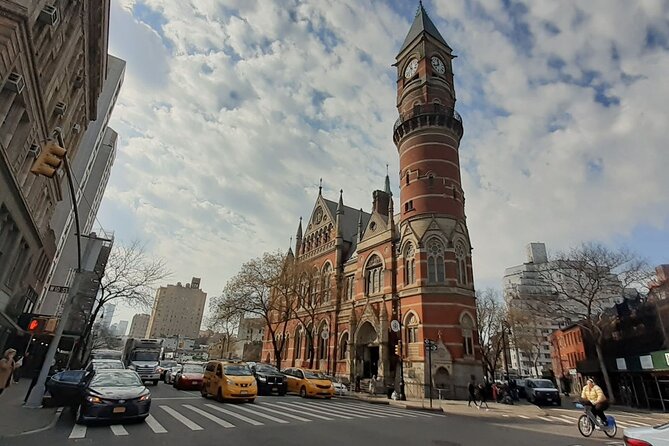
Jefferson Market Library is one of the strongest stops on the route. The dramatic Victorian Gothic building once served as a courthouse and included a working jail from the 1870s.
Andrew explains its connection to women’s court proceedings, notorious criminals, and legal battles tied to justice and women’s rights. The building’s appearance matters, but its past matters more. It once handled difficult, often uncomfortable parts of city life behind its striking facade.
You spend about 15 minutes here, longer than at several other stops. That extra time makes sense. Jefferson Market brings together architecture, crime, law, gender, and reform in one place.
I would pay close attention here if you like urban history with a human edge. The tour does not treat the Village as only a literary or artistic quarter. It also shows the institutions that dealt with poverty, crime, punishment, and changing ideas about fairness.
Stonewall Inn and the fight for LGBTQ+ rights
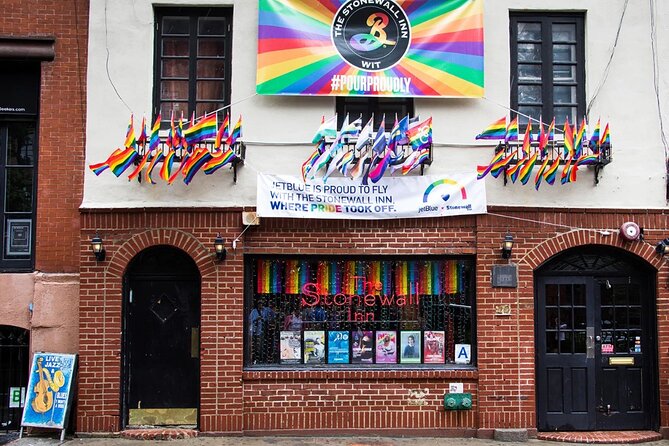
The Stonewall Inn is the emotional center of the route for many people. You stand outside the landmark and travel back to the summer of 1969, when police raids and long-running pressure helped trigger the Stonewall Uprising.
The stop covers the tensions that came before the uprising and the acts of resistance that followed. It also gives attention to the people who refused to accept routine harassment and helped begin a wider movement for LGBTQ+ rights and visibility.
The stop lasts about ten minutes. That is enough for a clear introduction, but not enough for every part of the story. If Stonewall is your main reason for booking, you should think of this tour as a wider Greenwich Village walk with an important Stonewall segment, not as a full standalone study of the uprising.
Still, the setting gives the story weight. You are not hearing about a distant event in a lecture hall. You are standing outside the place where a major change in public life is tied to a particular address.
More NYC Walking Tours:
- SoHo, Little Italy, and Chinatown Walking Tour in New York
★ 5.0 · 3,153 reviews - Secrets of Grand Central Station Walking Tour New York City
★ 5.0 · 1,796 reviews - Central Park Guided Walking Tour
★ 5.0 · 774 reviews - New York City: Private Walking Tour with a Local
★ 4.6 · 771 reviews
Cherry Lane Theatre and the Village as a creative workshop
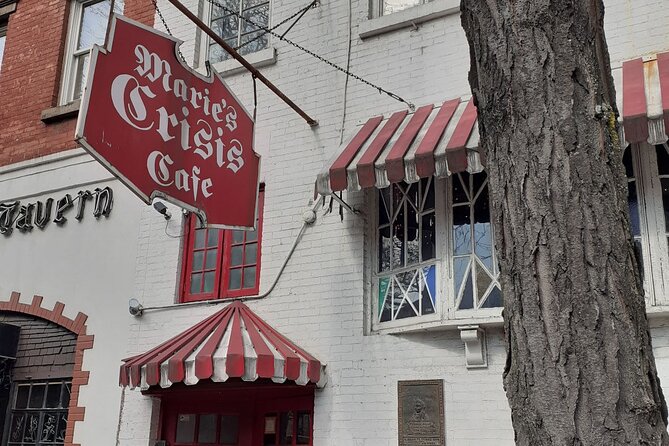
Cherry Lane Theatre adds another layer. It is described as New York City’s oldest continuously operating off-Broadway theater, and the tour explains how this small venue supported bold work and helped launch notable actors, writers, and musicians.
The stop is about ten minutes. You hear about early performances by people who later became famous, but the larger point is the role of small theaters in a city’s culture. Greenwich Village gave artists places to try unusual work before it reached a wider audience.
This is one reason I like the tour’s balance. It does not treat culture as a list of famous residents. It looks at the rooms and institutions that allowed new ideas to grow.
Theater fans will get the most from this stop, but you do not need a special interest in stage history to appreciate it. The story helps explain why the Village became associated with experimentation rather than polished, predictable entertainment.
Northern Dispensary and the fight over equal care
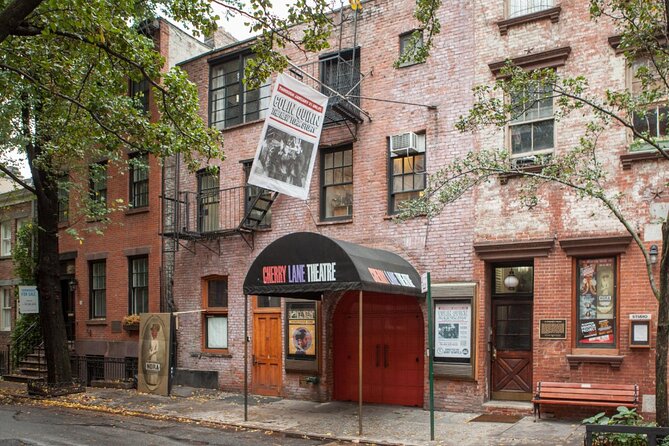
At the Northern Dispensary, you hear about a medical center founded in 1827 and the court case connected with a social justice movement. The stop is short, about five minutes, yet it gives the tour another useful turn.
Instead of focusing on one artist or performer, this part deals with access, medicine, and the law. It shows how a neighborhood’s past includes arguments over who receives care and who gets treated fairly.
The supplied information does not spell out every detail of the court case, so you should expect a concise introduction rather than a long legal lesson. Even so, the stop helps connect Greenwich Village to broader struggles over social justice.
Marie’s Crisis Cafe and the memory of Thomas Paine
Marie’s Crisis Cafe is a particularly curious stop. Today, it is known as a Greenwich Village piano bar, but the site also connects to Thomas Paine, the author of Common Sense and an important voice in the founding of American democracy.
That contrast makes the address memorable. A place associated with show tunes and communal singing also recalls a political writer whose words helped shape ideas about independence and government.
You spend about five minutes here, and the visit is outside rather than a scheduled indoor experience. The tour does not promise a performance or food stop at the bar. Instead, it uses the address to connect revolutionary-era politics with the Village’s later musical life.
For me, this is the sort of small surprise that makes a walking tour worthwhile. You notice how one city block can carry several very different versions of New York.
Society Cafe and New York’s integrated nightlife
The Society Cafe stop looks at the site of what is described as New York’s first racially integrated nightclub. You hear about performers and trailblazers who helped make the venue a national historic landmark.
Again, the stop is brief, about five minutes. Its strength is not a long visit inside the building. The value comes from seeing how music and nightlife could challenge racial barriers and create shared public spaces.
This section works well alongside Stonewall and the Northern Dispensary. The tour keeps returning to questions of who is welcomed, who is excluded, and who pushes institutions to change.
The Triangle Shirtwaist Factory fire and lasting reform
The walk ends near Washington Square Park at the site associated with the Triangle Shirtwaist Factory fire. The 1911 disaster killed 146 people, and the tour explains how the courage and activism of the women affected helped lead to labor reforms and supported the women’s suffrage movement.
This is a sobering final stop. It gives the tour a clear reminder that reform often follows terrible loss, and that ordinary people can force changes in workplace safety and public policy.
Ending here also broadens the meaning of Greenwich Village. The neighborhood is not only about artists, musicians, bohemians, and nightlife. It is also tied to the labor movement and the long struggle for women’s rights.
The provided route describes this as the final major stop, while also noting that several locations are kept as surprises. That means you should expect the walk to include more than the ten named places above.
What Andrew Kirschner adds to the experience
The guide matters on a history walk, and Andrew Kirschner is central to this one. He brings historical photos of the neighborhood and its notable residents, which gives you something concrete to look at while standing in the present-day streets.
His approach also allows room for personal interests. On very small departures, the route has been adjusted toward music, politics, art, or other subjects that mattered to the group. One especially small group even had time for a cappuccino at Cafe Reggio, an example of how a slower morning can create a more personal outing.
I would not assume every departure will include a cafe stop or extra time. The group can reach up to 20 people, and a full departure naturally has a different rhythm from a private-feeling walk. Still, the guide’s interest in shaping the conversation is a real advantage.
The strongest praise has focused on Andrew’s enthusiasm, warmth, historical detail, and willingness to spend extra time when the schedule allows. That is important because some stops are short. A guide who can connect them into one clear story makes the route feel less like a checklist.
Price, timing, and the pizza option
The standard tour costs $39 per person. For a two to three hour guided walk through central Greenwich Village, I consider that a reasonable price, especially since the route covers art, theater, civil rights, law, labor, and American political history rather than one narrow subject.
The tour starts at 10:00 a.m. at Washington Square Park and ends back at the meeting point. It is offered in English, uses a mobile ticket, and is near public transportation.
The optional pizza experience costs another $19 and adds about one hour after the walking tour. You visit three New York pizzerias, but the $19 covers admission only. You pay separately for slices and drinks, so budget for those extras.
I see the pizza option as a social extension rather than a reason to book the history walk. Choose it if you want to keep talking over food and compare several pizza stops. Skip it if you want the historical tour alone or need to protect your budget.
The group maximum of 20 keeps the experience more manageable than a large bus-style outing. Most people can participate, and service animals are allowed. Because this is a walking tour, you should be comfortable spending several hours on city streets.
Who should book this Greenwich Village walk?
I would recommend it to first-time New York visitors who want more than a quick photo at Washington Square Park. It is also a good fit for repeat visitors who have seen the major sights and want to understand how the Village’s artists, activists, performers, and reformers shaped one another.
You will get the most from it if you enjoy stories with a social or political edge. The route covers criminal trials, assassinations, police raids, artistic work, racial integration, workplace tragedy, and women’s rights. It is not a light stroll built only around celebrity homes.
Families with older children and teenagers may find the range of subjects useful, though the serious material about crime, oppression, and the factory fire deserves a thoughtful audience. Theater fans, music lovers, art followers, and people interested in LGBTQ+ history will all find clear points of connection.
The walk depends on good weather. If poor weather cancels it, you are offered another date or a full refund. You can also cancel for a full refund up to 24 hours before the start time. A minimum number of participants is required, and a cancellation for that reason comes with the choice of another date, another experience, or a full refund.
Should you book it?
Book this tour if you want Greenwich Village explained through people and movements, not just photographed from the sidewalk. The best reasons to go are the range of subjects, the historical photos, and Andrew Kirschner’s personal approach, especially if you can join a small group.
Think twice if you dislike walking, want a single-topic Stonewall tour, or expect the pizza fee to cover your meal. The named stops are short, and the route gives you an introduction to many stories rather than a full lecture on any one of them.
For most visitors, $39 buys a useful and engaging morning in one of New York’s most layered neighborhoods. Add the pizza portion only if the extra hour and separate food bill fit your plans.
FAQ
Where does the Greenwich Village Historic Walking Tour start?
The tour starts at Washington Square Park in New York City.
What time does the tour begin?
The stated start time is 10:00 a.m.
How long does the walking tour last?
The standard walking tour lasts approximately two to three hours.
Where does the tour finish?
The activity ends back at the meeting point at Washington Square Park.
What language is the tour offered in?
The tour is offered in English.
Is the pizza included in the ticket price?
No. The optional pizza portion costs $19 per person, and that fee does not include food or drinks. The pizza portion adds about one hour after the walking tour.
Can I cancel for a refund?
Yes. You can cancel at least 24 hours before the experience start time for a full refund. Cancellations or changes made less than 24 hours before the start time are not accepted for a refund.
More Historical Tours in New York City
- New York City: American Museum of Natural History Ticket
★ 4.5 · 15,447 reviews - NYC: Starship Landmark 90 Minute Sightseeing Cruise
★ 4.6 · 3,666 reviews - Starship Landmark 90 Minute Sightseeing Cruise
★ 4.5 · 2,073 reviews - American Museum of Natural History Admission Ticket
★ 4.0 · 1,931 reviews
Recently added in New York City
- New York City’s Best Smash Burger tour – You be the judge!★ 5.0 · 3 reviews
- Greenwich Village Walking Tour★ 5.0 · 4 reviews
- Gritty NYC True Crime Tour with a Lawyer★ 4.5 · 13 reviews
- West Village History & Walking Food Tour★ 4.5 · 10 reviews
- Greenwich Village Soho Little Italy/Paris Chinatown Walking Tour★ 5.0 · 9 reviews
- Greenwich Village Literary Pub Crawl★ 5.0 · 48 reviews
- Greenwich Village Private Walking Tour★ 5.0 · 3 reviews
- Greenwich Village Rock and Roll Tour *Rock Junket Tours★ 5.0 · 9 reviews
Greenwich Village Tours, compared.

Greenwich Village Food Tour with 6 Locals Favorites Dishes
Read our review →
Greenwich Village Walking and Food Tasting Tour
Read our review →
Artistic, Alternative Greenwich Village Walking Tour
Read our review →
NYC Greenwich Village Italian Food Guided Walking Tour
Read our review →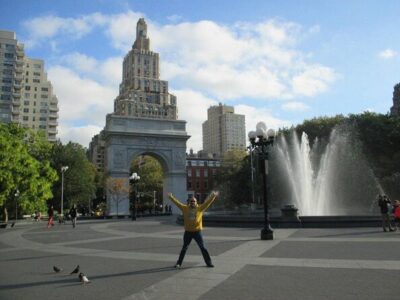

High Line Park and Greenwich Village Food Tour
Read our review →
Browse the lists this tour appears in