
Reviewed · LITTLE ITALY AND CHINATOWN TOURS
Greenwich Village Soho Little Italy/Paris Chinatown Walking Tour
New York’s downtown neighborhoods reveal their character one street at a time, and this walk links six of the city’s most compelling districts in a single outing. You begin beneath the Washington Square Arch and finish at Apotheke Chinatown, moving from bohemian Greenwich Village through Stonewall, SoHo, Little Italy, and Chinatown. I especially like the focus on music and counterculture in the Village and the serious treatment of LGBTQ+ history at Stonewall.
I also like that the tour gives you useful bearings for later meals and shopping, not just a string of photo stops. The main caution is pace: six stops in roughly 2 to 3 hours means each neighborhood gets about half an hour, and the group may include as many as 25 people. This is best for a first orientation, not a slow, detailed exploration of every district.
Key points to know before you book
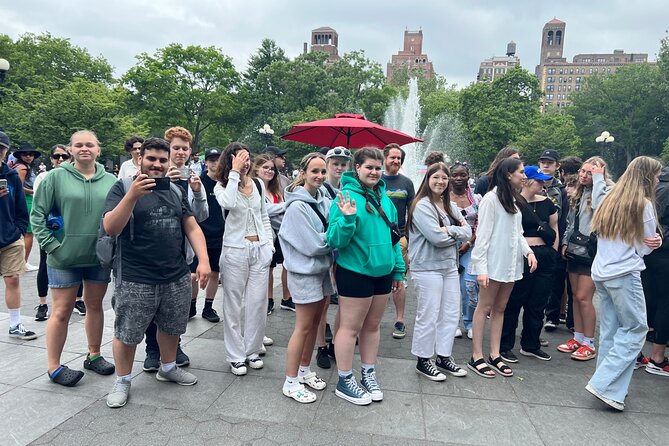
- Washington Square Park begins the story: Learn how artists, musicians, and Beat culture shaped Greenwich Village.
- Stonewall receives real historical attention: The guide covers the events before, during, and after the uprising, plus the rise of Pride.
- SoHo is about architecture as much as shopping: Look up at the cast-iron buildings before browsing the luxury boutiques.
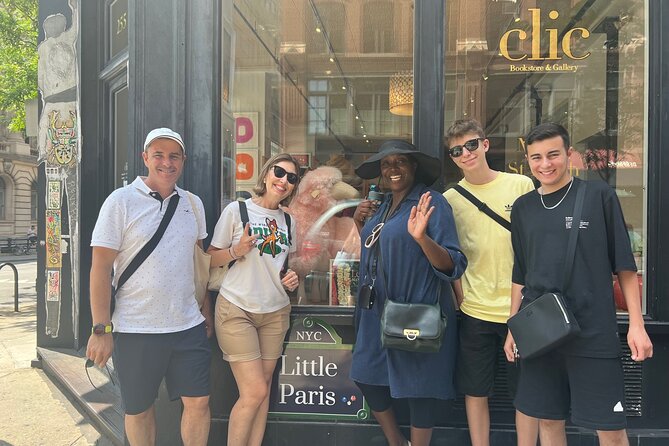
- Little Paris adds a newer layer: The sign points to a developing French identity between SoHo and Little Italy.
- Chinatown is the strong finish: The route ends on Doyers Street, in the heart of one of Manhattan’s most distinctive districts.
- The price buys orientation and context: At $56, the value is strongest if you want a smart introduction to several neighborhoods in one morning or afternoon.
From Washington Square Arch into Greenwich Village
The meeting point is Washington Square Arch on Washington Square North. It is a useful place to begin because the park is more than a pleasant patch of green. It has long been tied to Greenwich Village’s artistic and political life, and the opening half hour sets up the themes that carry through the rest of the walk.
Your guide explains the Village as a place with several past lives. The focus includes Bohemia, Beat culture, artists, and legendary places associated with live music. That gives you a better way to read the streets afterward. Instead of seeing only cafés, apartment buildings, and park paths, you begin to notice why this corner of Manhattan attracted people who wanted to work outside the city’s usual rules.
I like this opening because it starts with culture rather than famous landmarks. The tour is not built around checking off major attractions. It is about how neighborhoods form, change, and take on new meaning.
The Washington Square Park portion is described as an audio tour, while a guide leads the overall experience. Since the tour includes a speaker, you should be able to follow the commentary in a busy city setting. Still, keep your expectations practical: this is a public park and a group walk, so the sound and stopping points can depend on conditions around you.
More SoHo Tours:
- SoHo, Little Italy, and Chinatown Walking Tour in New York
★ 5.0 · 3,153 reviews - NYC: SoHo, Little Italy, and Chinatown Guided Tour
★ 4.7 · 614 reviews - SoHo, Little Italy, and Chinatown 2-Hour Guided Walk
★ 4.6 · 566 reviews
Stonewall and the long road to Pride
The stop at the Stonewall Inn gives the walk its most important social and political subject. Your guide covers New York’s LGBTQ+ community before the uprising, what happened during the Stonewall Uprising, the immediate aftermath, and the growth of Pride.
That sequence matters. Stonewall is often reduced to a single famous night, but the value here is in placing the uprising within the life of the community that existed before it. You get a clearer sense of why the event mattered and how its influence continued afterward.
The tour’s approach also includes a critical look at colonialism and capitalism in New York’s past. That perspective was a major strength for the guide Kaissa, whose presentation was described as both warm and attentive to individual needs. You should expect more than dates and landmark labels. The history is framed through questions of power, identity, and who gets to claim space in the city.
Allow about 30 minutes for this stop. That is enough for a useful introduction, but not a full museum-style lesson on LGBTQ+ history. If Stonewall is your main reason for booking, you may want to return later and spend more time in the area at your own pace.
SoHo’s cast-iron streets and expensive storefronts
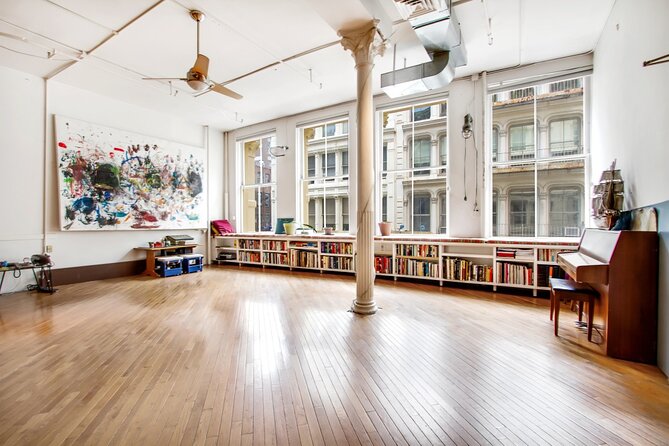
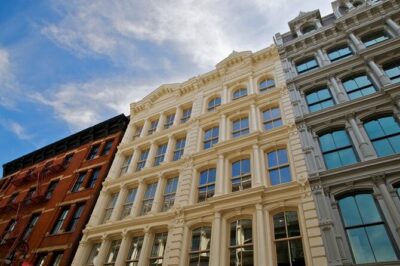
From Greenwich Village, the route moves toward SoHo, where the focus shifts from social history to architecture and urban change. SoHo is famous for its cast-iron buildings, and the tour encourages you to look closely at the facades that now hold luxury boutiques.
This is one of those places where a guide adds real value. On your own, it is easy to see SoHo as a shopping district and miss the details above street level. Cast iron allowed builders to create elaborate fronts with repeated columns, arches, and decorative patterns. The buildings give the area a distinctive look, even as the shops below signal its high-end present.
The contrast is part of the point. SoHo is not presented as a frozen historic quarter. It is a neighborhood where older buildings now serve new commercial uses. A good guide helps you understand that change without pretending the district has stayed the same.
The trade-off is that the SoHo stop may feel short if architecture is your main interest. With about 30 minutes here, you will get an introduction and some strong street views, but not a detailed architectural survey. I would treat this section as a visual lesson and save a separate visit for shopping or a slower look at individual buildings.
A brief look at Little Paris
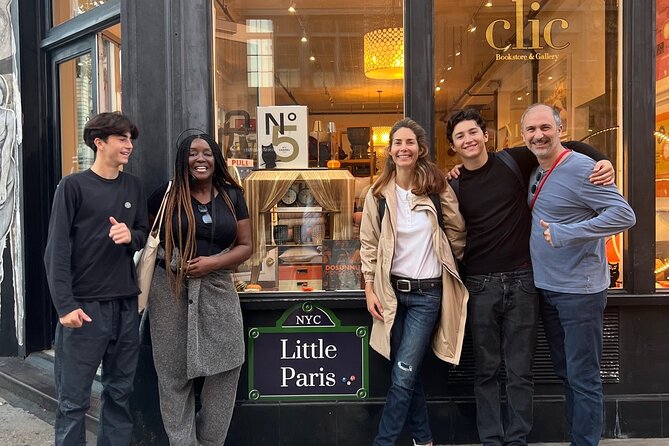
The Little Paris sign marks a developing French identity between SoHo and Little Italy. This stop is shorter in historical depth than Washington Square Park or Stonewall, but it adds an important idea: New York neighborhoods are always being renamed, reshaped, and marketed.
Your guide explains the story behind this proposed French enclave. The wording matters because it is described as soon to be officialized, not as a fully established district with firm boundaries. You are seeing a neighborhood identity in progress.
That makes the stop useful for understanding how Manhattan changes. A sign, a cluster of businesses, and a shared cultural idea can begin to create a new label. At the same time, you should not expect a large or clearly separate French quarter comparable in scale to Chinatown or even the older idea of Little Italy.
This is a quick stop, best enjoyed as a conversation about place and identity. It also breaks up the walk between SoHo and Little Italy and gives you a chance to see how one district can overlap with another.
More Little Italy and Chinatown Tours:
- NYC: Chinatown & Little Italy Food Tour with 7 Flavorful Tastings
★ 5.0 · 2,733 reviews - Original NYC Guided Food Tour of Chinatown and Little Italy
★ 5.0 · 2,194 reviews - NYC: Chinatown and Little Italy Food Tour
★ 4.7 · 703 reviews - SoHo, Little Italy, and Chinatown NYC Guided Walking Tour
★ 5.0 · 443 reviews
What remains of Little Italy
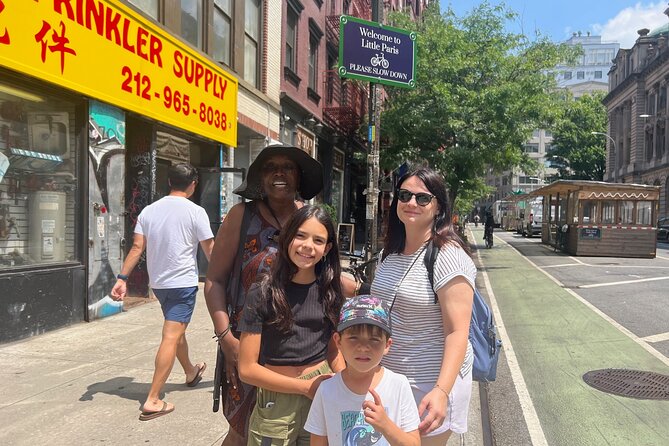
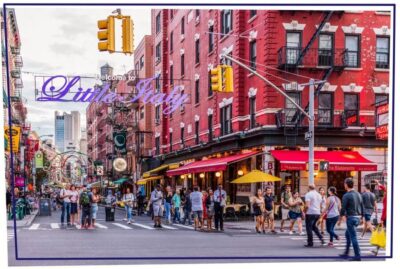
Little Italy offers another lesson in change. The tour looks at what remains of the neighborhood’s Italian atmosphere and discusses the period when organized crime held major power there.
The phrase what remains is important. You should expect an area where the old identity survives in pockets rather than a large, untouched Italian district. The tour helps explain why the neighborhood feels smaller than its reputation suggests and how surrounding districts have changed its boundaries and character.
The mafia history adds a darker layer to the stop. It keeps the presentation from turning Little Italy into a simple parade of restaurant signs and old-world clichés. You hear about the power structures that shaped the area, alongside the public image it later developed.
The half-hour format works well for a broad overview. You will get context that helps you interpret the streets, but you should not expect a full account of Italian immigration, organized crime, and urban redevelopment in one short stop. If food is a priority, the guide can also help you gather ideas for later eating, though the tour price does not include meals.
Chinatown, a strong finish on Doyers Street
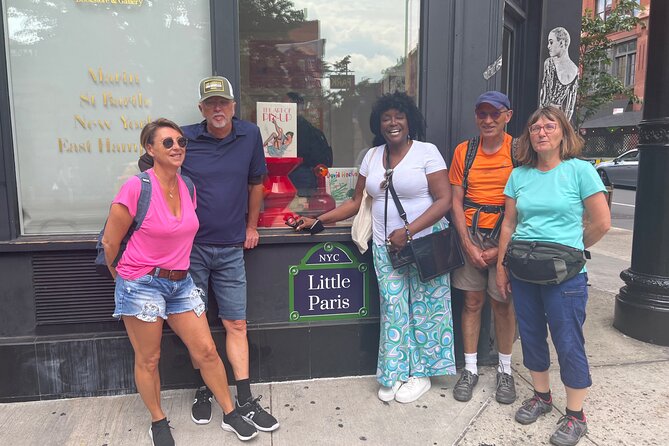
The route ends at Apotheke, 9 Doyers Street, in the heart of Chinatown. This gives the final section a clear sense of arrival. After the quieter streets and historic buildings of the earlier stops, Chinatown brings a different rhythm and a strong sensory shift.
The tour presents Chinatown as a city within the city and compares the feeling to a return trip to Shanghai. The aim is to show how distinct the neighborhood can feel from the surrounding parts of lower Manhattan. Your guide points out the atmosphere as you cross through the district, awakening your attention to the sights, sounds, and general street life around you.
The comparison to Shanghai is broad rather than a promise of a specific cultural program. No food tasting or restaurant reservation is included, so plan to explore independently after the tour if you want to eat. The ending is well chosen for that purpose because you finish in a neighborhood with plenty to see and ideas to follow up.
Doyers Street also gives you an easy mental marker for the rest of your New York visit. If you are new to lower Manhattan, knowing where Chinatown begins and how it connects to Little Italy and SoHo can save time later.
What $56 gets you
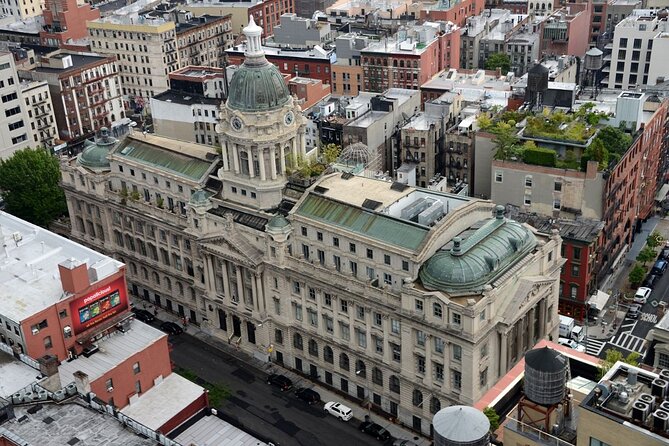
The cost is $56 per person. For that price, you are paying mainly for a guide’s interpretation, route planning, and ability to connect neighborhoods that can otherwise feel like separate outings.
I think the value is solid if you want a quick introduction to downtown Manhattan. Six stops cover architecture, music, LGBTQ+ rights, immigration, organized crime, and neighborhood change. You also finish with practical ideas for shopping and eating, which can make the rest of your stay easier.
The value is less convincing if you already know these areas well or want long stops inside museums, historic buildings, or shops. Admission to the stops is free, and the included item is a speaker rather than a meal, attraction ticket, or tasting. Tips are not included, so allow for that additional cost if you choose to tip the guide.
The group can reach 25 people. That is not enormous for New York, but it is large enough to affect how easily everyone hears and gathers at each stop. The speaker should help, though you may prefer to stay near the guide when the group moves through crowded streets.
Timing, walking, and who will enjoy it most
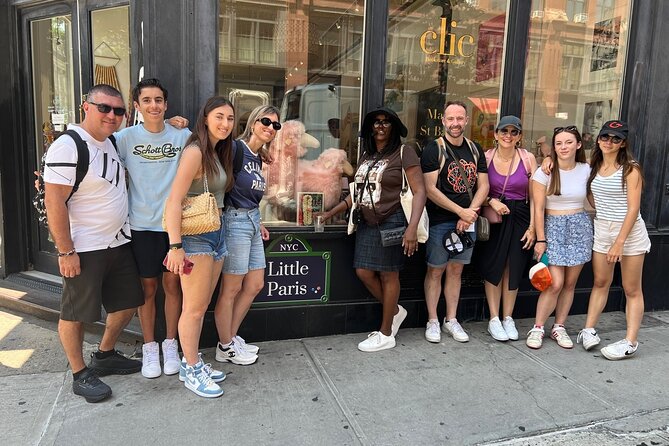
The experience lasts about 2 to 3 hours. Each of the six listed stops is allocated roughly 30 minutes, though the walking between them takes part of the overall time. You should be ready for a steady urban walk rather than a series of parked sightseeing stops.
A moderate level of physical fitness is recommended. The route uses city streets and public spaces, and you will be on your feet for most of the experience. Public transportation is nearby, making it practical to reach Washington Square Park and continue elsewhere after finishing in Chinatown.
The tour is offered in English and uses a mobile ticket. Confirmation is sent within 48 hours of booking, subject to availability. Service animals are allowed.
This walk suits you best if:
- You are visiting New York for the first time and want to understand downtown neighborhoods quickly.
- You have been to the city before but have mostly stayed around the usual major attractions.
- You enjoy social history, architecture, and neighborhood change more than formal museum visits.
- You want a guide to point out places for later shopping and meals.
- You can keep a steady pace and do not need long breaks at every stop.
It may not suit you if you want a food tour, a private experience, or a deep architectural study of SoHo. The route is broad by design, and its strength is connection rather than exhaustive detail.
A useful start to a longer New York day
I would schedule this walk early in your New York visit. The route gives you a working map of lower Manhattan, and the guide’s suggestions can help shape later afternoons and evenings.
Afterward, you can remain in Chinatown, return to Little Italy, browse SoHo, or continue exploring Greenwich Village. Because the tour finishes at Apotheke on Doyers Street rather than returning to the start, you are already positioned to continue in a new direction.
The route also works well for repeat visitors. One of the strongest reasons to book it is that it moves beyond the most familiar New York sights. A fourth visit to the city can still feel fresh when you use a guided walk to examine places you have previously passed without context.
Should you book this walking tour?
Book it if you want a compact, thoughtful introduction to six downtown neighborhoods and you value a guide’s interpretation more than attraction tickets. The strongest sections are Washington Square Park, Stonewall, and Chinatown, with SoHo adding excellent architectural contrast.
Think twice if you prefer a relaxed pace or want to spend a full hour in each neighborhood. At $56, the tour makes the most sense as a first-day orientation or a way to see a different side of New York on a return visit.
Free cancellation is available if you cancel at least 24 hours before the start time. Changes or cancellations made inside that window are not accepted for a refund. With that condition in mind, this is a practical pick for curious walkers who want history, city context, and a useful route through lower Manhattan.
FAQ
How long does the Greenwich Village, SoHo, Little Italy, and Chinatown tour last?
The tour lasts approximately 2 to 3 hours.
Where does the tour begin?
It begins at Washington Square Arch on Washington Square North, New York, NY 10012.
Where does the tour end?
The tour ends at Apotheke, 9 Doyers Street, New York, NY 10013, in the heart of Chinatown.
What language is the tour offered in?
The tour is offered in English.
How much does the tour cost?
The listed price is $56 per person.
Is food included in the tour?
No food or drinks are listed as included. Tips are also not included.
How large can the group be?
The tour can have a maximum of 25 people.
Can I cancel for a full refund?
Yes. You can cancel for a full refund up to 24 hours before the experience start time. Cancellations or changes made less than 24 hours before the start time are not accepted for a refund.
More NYC Walking Tours
- Secrets of Grand Central Station Walking Tour New York City
★ 5.0 · 1,796 reviews - Central Park Guided Walking Tour
★ 5.0 · 774 reviews - New York City: Private Walking Tour with a Local
★ 4.6 · 771 reviews - NYC Lower East Side Walking and Food Tour
★ 5.0 · 646 reviews
More Greenwich Village Tours
- NYC: Greenwich Village Food Tour with 6 Locals Favorites Dishes
★ 5.0 · 1,812 reviews - Greenwich Village Walking and Food Tasting Tour
★ 5.0 · 1,572 reviews - Artistic, Alternative Greenwich Village Walking Tour
★ 5.0 · 971 reviews - NYC Greenwich Village Italian Food Guided Walking Tour
★ 5.0 · 627 reviews
Recently added in New York City
- New York City’s Best Smash Burger tour – You be the judge!★ 5.0 · 3 reviews
- Greenwich Village Walking Tour★ 5.0 · 4 reviews
- Gritty NYC True Crime Tour with a Lawyer★ 4.5 · 13 reviews
- West Village History & Walking Food Tour★ 4.5 · 10 reviews
- Greenwich Village Literary Pub Crawl★ 5.0 · 48 reviews
- Greenwich Village Private Walking Tour★ 5.0 · 3 reviews
- Greenwich Village Rock and Roll Tour *Rock Junket Tours★ 5.0 · 9 reviews
- Two-Hour NYC LGBTQ+ History Walking Tour★ 5.0 · 35 reviews
Little Italy and Chinatown Tours, compared.
SoHo, Little Italy, and Chinatown Walking Tour in New York
Read our review →
Chinatown & Little Italy Food Tour with 7 Flavorful Tastings
Read our review →
Original NYC Guided Food Tour of Chinatown and Little Italy
Read our review →

SoHo, Little Italy, and Chinatown 2-Hour Guided Walk
Read our review →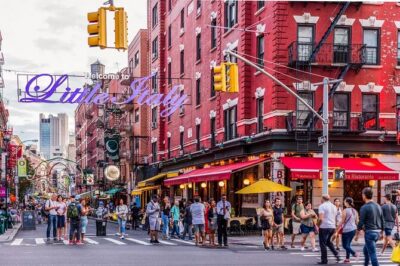
SoHo, Little Italy, and Chinatown NYC Guided Walking Tour
Read our review →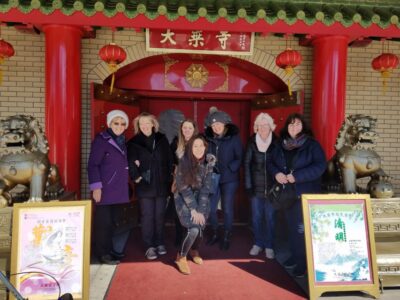
3 Neighborhoods Tour: Soho, Chinatown & Little Italy
Read our review →Browse the lists this tour appears in