
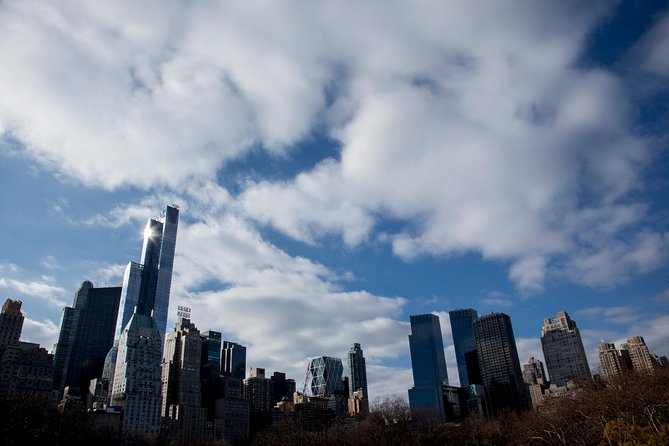
Reviewed · NYC PHOTOGRAPHY TOURS AND PHOTO SHOOTS
New York Icon Photography Tour led by a Local Photographer
New York City Photo Safari turns a sightseeing walk into a practical photography class. With a local professional at your side, you’ll work on framing, angles, reflections, and camera settings while photographing Rockefeller Center, Fifth Avenue, Central Park, and other famous spots. The guide teaches you how to see the city differently, not just where to point your camera.
I like the small maximum group of eight, which gives you a fair chance to ask questions and get hands-on help. I also like the flexible morning or afternoon schedule, plus the fact that subway fare is included. The main consideration is pace: 21 listed photo locations in about two and a half hours means you should expect quick stops and exterior views, not long visits inside every attraction.
Key points to know
- Practical coaching: Work on composition, framing, reflections, angles, and camera technique with a working local photographer.
- A compact Midtown and Central Park route: Photograph Rockefeller Center, Radio City Music Hall, Fifth Avenue shops, Central Park, and the skyline.
- Small-group attention: The tour accepts no more than eight people, with the possibility of a more personal session.
- Useful for many skill levels: Guides such as Zim and Rob have helped both beginners and more experienced photographers.
- Subway fare included: You do not need to pay separately for the subway used during the tour.
- A walking-heavy experience: You should have moderate physical fitness and be ready to move between many stops.
A photography lesson disguised as a New York walk
The best reason to book this experience is that it gives you a skill you can keep using after the tour ends. A guide may show you how to frame a building, find a stronger angle, or use a reflection. You then try it yourself, with immediate help if the result needs work.
That approach is more useful than simply being led to a famous viewpoint. New York is full of familiar subjects, but familiar subjects can produce dull photographs. Rockefeller Center, Central Park, and the Manhattan skyline have been photographed millions of times. Your guide’s job is to help you find a fresh way to photograph them.
The teaching appears suited to mixed ability levels. Zim has been praised for working patiently with beginners while still challenging people to improve. She has also helped participants understand their cameras in a more systematic way and offered advice about Lightroom. Rob has guided small groups through framing and reflective images, with an emphasis on skills you can use later in your trip.
The tour is offered in English. You can choose a morning or afternoon departure, and the group limit is eight people. That is a useful size for a class: large enough to have some company, but small enough that the guide can look at your work and answer individual questions.
More NYC Photography Tours and Photo Shoots:
- NYC Professional Photoshoot and Walking Tour with Private Guide
★ 5.0 · 608 reviews - Photo sessions in New York with a French-speaking photographer
★ 5.0 · 60 reviews - Brooklyn Bridge Dumbo Walking Tour with Photography Experience
★ 5.0 · 12 reviews
Starting at 180 Madison Avenue
The experience begins at 180 Madison Avenue, New York, and ends back at the same meeting point. The supplied route includes many stops, but the timing matters. Two hours and 30 minutes is not enough for a full visit to every attraction listed, so think of this as a moving photography workshop rather than a conventional sightseeing tour.
The exact mix of stops and the time spent at each can depend on the group, the guide, and the available light. You should arrive ready to walk, photograph quickly, and keep your equipment accessible. Subway fare is included, which helps the group move around without adding a small but annoying cost during the session.
The tour calls for a moderate level of physical fitness. That does not mean a strenuous hike, but you will be on your feet and moving through busy parts of Midtown and Central Park. Wear comfortable shoes and bring only the camera gear you can carry easily.
Rockefeller Center, Radio City, and St. Patrick’s Cathedral
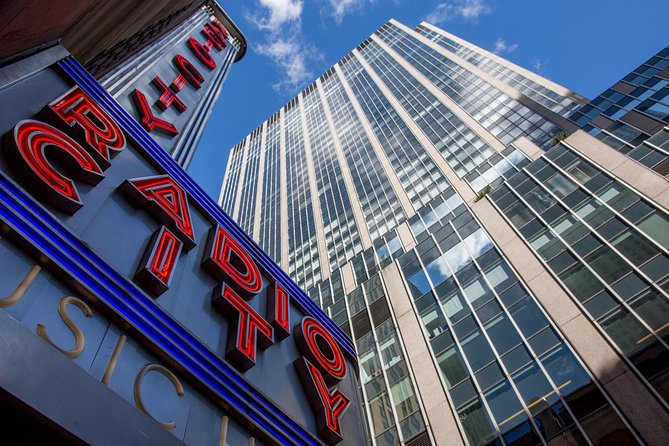
Rockefeller Center is an excellent opening subject because it gives you several types of photographs in one area: tall architecture, strong lines, public spaces, decorative details, and people moving through the frame. A professional photographer can help you decide whether to emphasize the height of the buildings or the smaller details at street level.
Radio City Music Hall adds another recognizable facade and a chance to work with bold shapes and signage. St. Patrick’s Cathedral provides a contrast in texture and style, with stonework and vertical lines beside the polished commercial architecture of Midtown.
These early stops are useful for warming up. You can get comfortable with your camera before the route reaches Central Park. If you use a phone, the guide can still help with composition and viewpoint. If you carry a dedicated camera, you may get more technical advice about settings, focus, and handling.
ATLAS, Saks, LEGO, and Apple Fifth Avenue
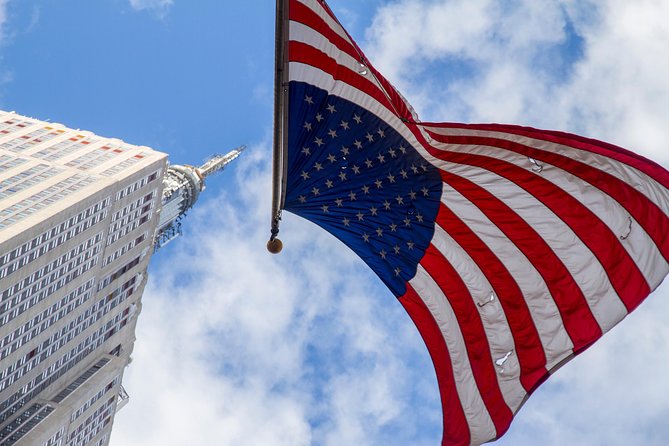
The route then moves through a highly photographed stretch of Fifth Avenue. ATLAS, Saks Fifth Avenue, the LEGO Store, and Apple Fifth Avenue give you very different subjects within a short area.
ATLAS is known for its large-scale architectural sculpture, making it a good subject for symmetry and detail. Saks offers an ornate facade and strong repetition, while the LEGO Store adds color and playful visual elements. Apple Fifth Avenue is a cleaner, more modern subject, with glass, reflections, and geometric lines.
This section shows why a local photographer can add value. You are not simply checking off famous addresses. You are practicing how to look at different surfaces and structures. A glass facade can create a reflection. A shopfront can provide color. A monumental building can become more interesting when you change your angle or include people for scale.
The pace may feel brisk here, especially if you stop often to adjust your composition. That is part of the tradeoff. You get variety, but you should not expect a slow architectural photography session at every location.
A completely different way to spend a day in New York City:
- NYC: SUMMIT One Vanderbilt Tickets
★ 4.7 · 51,195 reviews - NYC: Empire State Building Tickets – Observatory & Museum
★ 4.7 · 25,757 reviews - New York City: Statue of Liberty & Ellis Island with Ferry
★ 4.6 · 18,683 reviews - New York City: American Museum of Natural History Ticket
★ 4.5 · 15,447 reviews
Pulitzer Fountain, The Plaza, and Grand Army Plaza
Pulitzer Fountain and The Plaza bring you to the southern edge of Central Park. The fountain can give you a foreground subject, while The Plaza offers a grand hotel facade and a clear sense of New York glamour.
Grand Army Plaza is especially useful for wide views and layered compositions. You can work with the plaza, nearby buildings, traffic, and public movement in one frame. Your guide may encourage you to simplify the scene, use leading lines, or wait for a person to enter the right spot.
The itinerary names The Pierre, a Taj Hotel, New York, along this stretch as well. This adds another classic hotel facade and a chance to compare architectural styles. Since the tour does not list hotel entry as an inclusion, plan on photographing the exterior unless your guide says otherwise.
These stops also show the difference between a sightseeing tour and a photo class. The goal is not merely to point out The Plaza or The Pierre. It is to turn each building into a lesson about scale, balance, and perspective.
Trump Tower and Fifth Avenue details
Trump Tower provides another recognizable Midtown subject, while the surrounding Fifth Avenue streets offer reflections, storefronts, and tall-building views. The route places you among some of Manhattan’s most polished commercial streets, where small details can be more rewarding than a standard postcard view.
You may work on photographing glass, metal, signs, and repeating patterns. The city often looks best when you stop trying to capture everything in one frame. A guide can help you crop the scene in-camera, shift your position, or wait for a cleaner arrangement.
This is also a good point to remember that the tour is not designed as a political or historical visit to any one property. The itinerary presents Trump Tower as a photo stop within a wider Midtown route. The value here comes from the building’s shape, location, and place in the streetscape.
Central Park Zoo, the pond, and Gapstow Bridge
The Central Park portion gives the session a welcome change of mood. The Central Park Zoo, the pond listed as Gar Pond, and Gapstow Bridge provide water, trees, stone, and reflections after the hard surfaces of Midtown.
Gapstow Bridge is one of the route’s strongest photo subjects. From the bridge and its surroundings, you can work with reflections, pathways, natural shapes, and views toward the surrounding buildings. The park also gives you more room to practice composition without relying only on storefronts and skyscrapers.
The Central Park Zoo is included as a location, but zoo admission is not listed. Treat it as a nearby subject or exterior stop rather than assuming an included zoo visit. The same practical rule applies to other named attractions: unless entry is specifically included, the experience is best understood as an outdoor photo route.
This section may appeal most to people who want more than architecture. You can practice balancing natural elements with the Manhattan skyline and learn how the same city looks different when photographed through trees, water, and open space.
Top of the Rock and skyline views
Top of the Rock is one of the most important names on the route, but the supplied inclusions list does not include an observation-deck admission ticket. You should confirm the exact arrangement before booking if reaching the observation deck is essential to you.
If the tour includes access as part of the day’s plan, the view would offer a major chance to work on skyline composition and layers of buildings. If it is only a nearby photo reference, you still have a strong Midtown subject, but the experience would be different. Do not assume the $125 price includes every attraction named in the route.
The Manhattan skyline appears elsewhere in the itinerary too, so the session is not dependent on one viewpoint. Your guide can help you decide how much of the frame to include, how to avoid a flat-looking skyline, and how to use foreground shapes to give the image depth.
MoMA, Bergdorf Goodman, and Tiffany & Co.
The final section returns to Fifth Avenue and Midtown architecture. The Museum of Modern Art, Bergdorf Goodman, and Tiffany & Co. offer three distinct visual styles.
MoMA gives you a modern cultural building and a chance to photograph clean architectural forms. Bergdorf Goodman brings ornate retail design, while Tiffany & Co. offers another elegant Fifth Avenue facade. Together, these locations make a fitting close to a route built around contrast.
Museum admission is not included in the stated tour inclusions. The same goes for shopping inside the stores. You are paying for the photography instruction, local guiding, and transportation support, not a collection of entry tickets or a shopping excursion.
What $125 buys you
At $125 per person, this is not the cheapest way to see Midtown. You are paying more than you would for a self-guided walk, but the comparison is not quite fair. A self-guided route gives you locations. This experience adds a professional photographer who can help you make better images at those locations.
The value is strongest if you care about photography and want feedback in real time. It is also useful if you are visiting New York alone and want a structured way to explore without hiring a private guide. The maximum of eight people keeps the cost below many private sessions while still allowing some individual attention.
The value is weaker if you only want a broad introduction to New York sights, dislike stopping to adjust photographs, or expect admission to Top of the Rock, the zoo, MoMA, or other attractions. Those are not listed as included costs.
The included subway fare is a small but useful benefit. Local taxes are included too. Hotel pickup and drop-off are not included, so you need to reach 180 Madison Avenue on your own.
Who should book this photo safari?
I would recommend this tour to beginners who want clear instruction without signing up for a long technical course. It also suits experienced camera users who want a local eye on composition and a fresh way to photograph familiar subjects.
Solo visitors can benefit from the compact group format, and couples can turn it into a shared activity. One particularly appealing detail is the way the session can become part sightseeing, part lesson, and part source of local food suggestions. Zim, for example, has been praised for giving restaurant recommendations along with photography help.
Families can join, but children must be accompanied by an adult. Service animals are allowed. Since the tour is in English, you should be comfortable receiving instructions and asking questions in English.
The format will not suit everyone. If you want a slow walk through one neighborhood, this route covers too much ground. If you want a private itinerary built around a specific camera system, lens, or night photography style, the supplied details do not promise that level of customization.
Free cancellation is available if you cancel at least 24 hours before the start time. Changes or cancellations made within 24 hours are not accepted for a refund.
Should you book the New York Icon Photography Tour?
Book it if you want to return from New York with better photographs and better habits, not just a list of famous places. The strongest part is the coaching from local working photographers such as Zim and Rob, especially their help with angles, framing, reflections, and camera technique.
Skip it if your main goal is entering attractions or spending long stretches at one viewpoint. For the right person, $125 buys a useful skill-building session, a compact Midtown and Central Park route, and the chance to see familiar New York sights with a more careful eye.
FAQ
How long is the New York Icon Photography Tour?
The tour lasts approximately 2 hours and 30 minutes.
How much does the tour cost?
The listed price is $125 per person.
Where does the tour start?
The meeting point is 180 Madison Avenue, New York, NY 10016.
Where does the tour finish?
The activity ends back at the meeting point.
How many people can join the tour?
The tour has a maximum group size of eight travelers.
Is the tour offered in English?
Yes. The tour is offered in English.
Is subway fare included?
Yes. Subway fare and local taxes are included.
Is hotel pickup and drop-off included?
No. Hotel pickup and drop-off are not included.
Can children join the tour?
Yes, but children must be accompanied by an adult.
What happens if I need to cancel?
You can receive a full refund if you cancel at least 24 hours before the experience start time. Cancellations or changes made less than 24 hours before the start time are not accepted for a refund.
Recently added in New York City
- #1 Six Hour Bus Tour and Boat Ride By The Statue of Liberty★ 4.7 · 6 reviews
- Harlem: Mount Morris Gospel Tour with Brunch★ 4.5 · 111 reviews
- NYC: Greenwich Village Comedy Club Stand Up Comedy Show★ 3.6 · 38 reviews
- Stand Up Comedy LIVE in Times Square At Broadway Comedy Club★ 3.5 · 56 reviews
- New York Harbor Brunch Cruise★ 4.5 · 106 reviews
- NYC Combo: Statue of Liberty Cruise, St Patrick’s Cathedral & Moma entrance★ 4.0 · 8 reviews
- New York City Superheroes Private Walking Tour★ 5.0 · 103 reviews
- Stand Up Comedy Show + Mini Golf Ticket!★ 5.0 · 64 reviews
NYC Photography Tours and Photo Shoots, compared.
NYC Professional Photoshoot and Walking Tour with Private Guide
Read our review →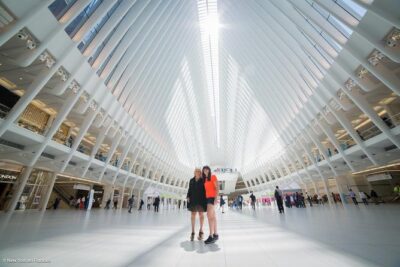
Photo sessions in New York with a French-speaking photographer
Read our review →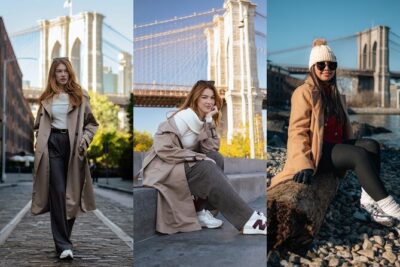
Brooklyn Bridge Dumbo Walking Tour with Photography Experience
Read our review →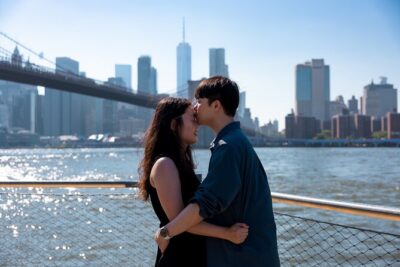
Browse the lists this tour appears in