
Reviewed · METROPOLITAN MUSEUM TOURS
Metropolitan Museum Guided Group Tour
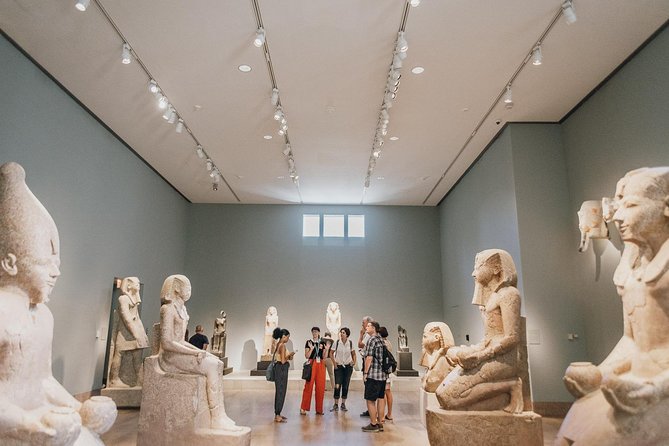
The Metropolitan Museum of Art is less a museum visit than a small expedition through 6,000 years of human creativity. This 2 or 3-hour guided tour gives you a clear route through the enormous collection, from Egyptian stonework to European paintings, without leaving you stranded in a maze of galleries.
I like the way the tour uses a local guide to turn famous objects into stories, and I like the small-group format, capped at 18 people. Guides such as Katie, Rob, Stephan, and Jett have earned praise for their humor, art knowledge, and ability to adjust the pace to the group.
The trade-off is simple: you will see the Met’s major sights, not every room that catches your eye. The pace can feel brisk, especially on the 2-hour version, and you should plan extra time if you want to return to favorite galleries afterward.
Key points to know before booking
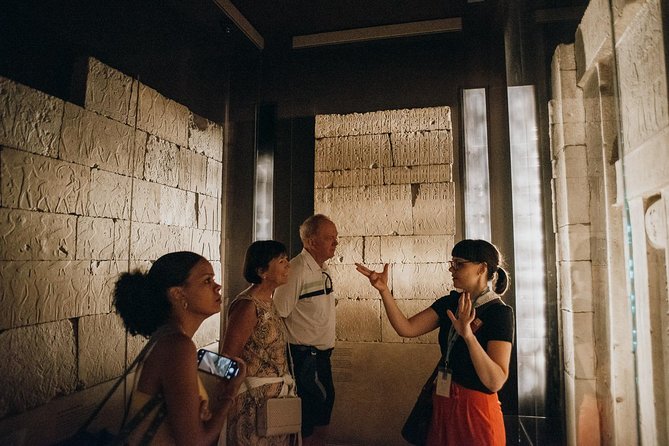
- The Temple of Dendur anchors the route: This impressive Egyptian temple, built around 15 BC, gives the tour an immediate sense of scale.
- You see art across several departments: Expect ancient Egypt, Greek and Roman sculpture, Tudor armor, medieval objects, and major European paintings.
- The 3-hour option is the better value for first visits: You get more time for stories, questions, and additional galleries.
- A guide helps with the Met’s sheer size: The collection contains more than 2 million objects, so a planned route saves time and mental energy.
- The experience is walking intensive: You need to keep a moderate pace, though guides may adjust for the needs of the group.
- You can stay after the tour: The guided portion ends back at the meeting point, but you can continue exploring the museum on your own.
Why a guide helps inside the Met
The Met covers more than 6,000 years of art and artifacts. Its collection is so large that even a full day can feel like a quick introduction. Without a plan, you may spend too much time finding your way between departments and too little time looking closely at the art.
This tour solves that problem with a route through well-known works and a few less obvious stops. You are not simply taken from room to room. The guide explains why a piece matters, how it fits into its period, and what details are easy to miss when you are viewing it alone.
That context makes a major difference. A suit of armor is impressive on its own, but a story about its owner, use, or design gives you a reason to look longer. A famous painting becomes easier to appreciate when you understand the scandal surrounding it or the artist’s choices.
The tour is conducted in English and includes admission. A skip-the-line ticket is also included, though you still need to pass through museum security. That check can take up to 15 minutes, so arriving early is important.
More Metropolitan Museum Tours:
- “The Met” Metropolitan Museum of Art Exclusive Guided Tour
★ 5.0 · 863 reviews - NYC: Express Highlights Tour of the MET Museum
★ 4.4 · 795 reviews - NYC: Metropolitan Museum of Art Highlights Tour
★ 4.4 · 625 reviews
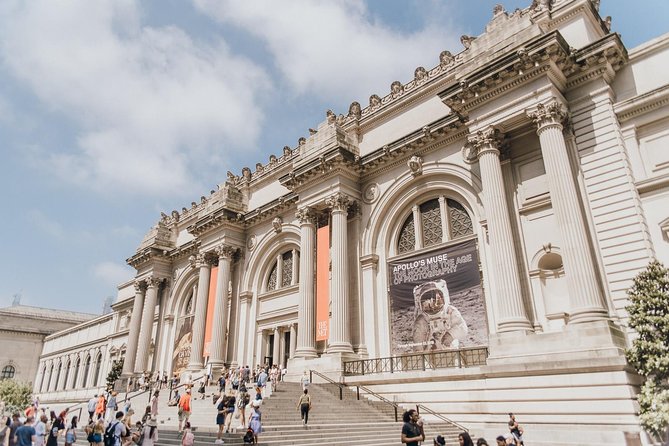
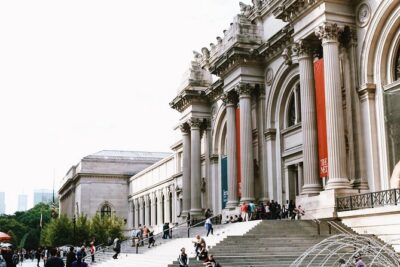
Starting on the Met’s famous steps
The meeting point is the Metropolitan Museum of Art at 1000 Fifth Avenue. You meet in the lobby, with the tour beginning 15 minutes before the scheduled start time. Do not cut this close. Late arrivals and no-shows are not eligible for a refund.
After the group gathers, your guide leads you into the museum’s main collection. The group can include as many as 18 people. That is small enough to hear the guide and ask questions, though it is not a private tour.
The Met’s scale becomes clear almost at once. Long corridors, grand staircases, and galleries branching in several directions can make even a confident museum visitor lose track of the route. A guide gives you a fixed path and keeps the visit moving.
There is a bag check available. If you have a bag to leave, allow extra time before the tour begins. Non-flash photography is allowed in the museum, but selfie sticks are prohibited. Photography rules can vary by gallery, so follow the guide’s instructions.
The Temple of Dendur and ancient Egypt

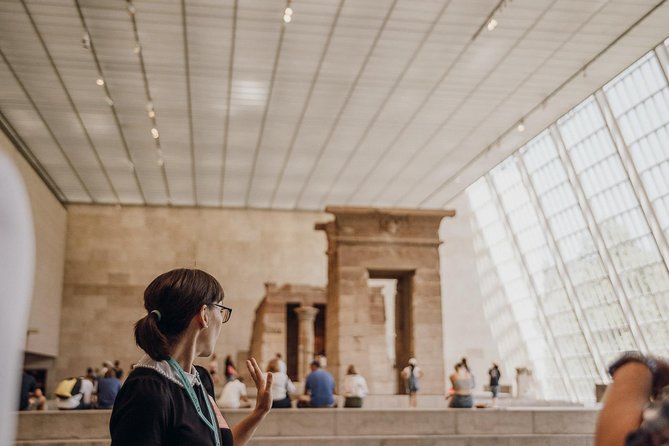
One of the major early stops is the Temple of Dendur, an Egyptian temple dating to 15 BC. Its stone columns and reliefs make a strong first impression, but the value of seeing it with a guide goes beyond its size.
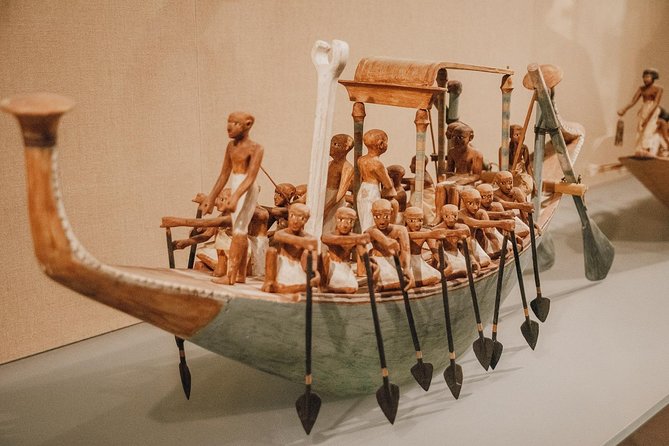
You will learn how the temple fits into ancient Egyptian religious life and why this particular structure is in New York. The surrounding Egyptian galleries include models of tombs and objects that help place the temple in a wider setting.
This is also a good example of why a guided route works at the Met. You could walk through the Egyptian rooms and notice the largest objects first. A guide can point out symbols, rituals, and details that might otherwise fade into the background.
The drawback is that a group cannot linger everywhere. If Egyptian art is your main reason for visiting, the tour may give you an introduction rather than enough time for close study. Use the tour to identify the rooms you want to revisit after it ends.
Greek and Roman sculpture in context

The itinerary moves across time and geography to the Greek and Roman galleries. Here you encounter statues, ancient frescoes, and busts of emperors. The rooms offer a chance to compare idealized Greek forms with later Roman portraiture.
A good guide helps you read sculpture rather than simply admire polished marble. You may hear how artists represented the body, how Roman portraits conveyed status, or how later cultures borrowed from Greek models.
The pace matters here. The Met contains far more ancient sculpture than any short tour can cover. On the 2-hour version, you should expect a selection of major pieces and a quick sense of the department. On the 3-hour option, there is more room for comparisons and questions.
If you are new to classical art, this section can be especially useful. The guide gives you a basic framework for recognizing the difference between periods and styles. If you already know the collection well, the experience will depend more on the guide’s stories and your group’s interests.
More Museums in New York City:
- NYC: Empire State Building Tickets – Observatory & Museum
★ 4.7 · 25,757 reviews - New York City: American Museum of Natural History Ticket
★ 4.5 · 15,447 reviews - NYC: Museum of Modern Art (MoMA) Entry Ticket
★ 4.6 · 12,540 reviews - 9/11 Memorial, Ground Zero Tour with Optional 9/11 Museum Ticket
★ 5.0 · 6,381 reviews
Henry VIII’s armor and Tudor England

The tour then shifts from the ancient Mediterranean to Tudor-era England. Henry VIII’s armor is one of the stops that makes the visit feel varied rather than limited to paintings.
Armor is practical, decorative, and political at the same time. It shows how clothing and protection could also signal rank and power. Your guide can connect the object to the world of royal ceremony and warfare, giving you a useful break from galleries of statues and paintings.
This change of subject is one of the route’s strengths. The Met can sometimes feel like a sequence of separate museums under one roof. Moving from Egypt to Rome to Tudor England helps you grasp the museum’s range.
You should not expect a full study of British decorative arts in this time frame. The stop is part of a highlights route. If this object catches your attention, note its location and return later.
The Antioch Chalice and stories of the Holy Grail
The Antioch Chalice adds a more mysterious note to the tour. It is connected to legends that identify it as the Holy Grail. A guide can separate the object itself from the stories attached to it, showing how artifacts gain meaning through faith, scholarship, and popular imagination.
This is the sort of stop that benefits from conversation. The object invites questions about authenticity, belief, and the way museums present uncertain histories. Your guide’s explanation gives you a starting point without requiring you to already know the debate.
As with other stops, the exact galleries and objects can change. Museum displays may close or works may be absent without notice. If that happens, the guide may alter the route.
Madame X and the Met’s famous paintings
John Singer Sargent’s Madame X is one of the tour’s key painting stops. The portrait is famous not only for its style but also for the scandal surrounding its original presentation.
The story helps you look at the painting with fresh eyes. A guide can explain how the pose, dress, and presentation affected the reaction to the work, then place Sargent within the art world of his time.
This is where storytelling often makes the strongest difference. You can read a label on your own, but a good explanation connects the painting to social expectations, artistic ambition, and public opinion.
The tour also includes other major paintings and selected objects. The exact choice depends on the guide, the group, and gallery conditions. That flexibility is useful because guides can respond to the group’s interests, but it also means no short tour can promise every famous work on your personal list.
Choosing between two and three hours
The tour is offered in 2-hour and 3-hour versions. Both are designed as introductions to the Met, but they suit different schedules.
The 2-hour option works well if you have a packed New York itinerary or want a quick orientation before exploring alone. It covers major areas efficiently and gives you a practical sense of where to return. Several visitors have found the pace fast, especially when they wanted more time with individual paintings.
The 3-hour tour costs the same listed price of $65 per person according to the supplied tour details, and it is the stronger choice if this is your first visit. The extra hour gives the guide more time to explain works, answer questions, and move through additional departments without quite as much pressure.
Neither option replaces a full museum day. The Met is simply too large. The real value is that you leave with a mental map and a short list of works you want to see again.
I would choose the 3-hour version for a first visit, especially if you are traveling with family or anyone who may feel lost in a huge museum. Choose 2 hours if you mainly want the highlights and plan to spend the rest of the day elsewhere.
What the guides add to the experience
The guide is the most important variable in a museum tour. The strongest guides on this experience bring art and history together through stories, comparisons, humor, and clear explanations.
Katie has been praised for storytelling, warmth, and humor. Rob is known for anecdotes and for keeping a useful pace. Stephan has been singled out for strong art knowledge and enthusiasm for the museum, while Jett has been noted for adapting quickly to the interests of the group.
You may not receive one of these specific guides, and every guide has a different style. Still, the repeated strength of the experience is the human explanation. The best guides do not simply recite dates. They help you understand why a work was made, what to look for, and how it relates to other objects nearby.
The group format can also work in your favor. Questions from other people may introduce subjects you would not have considered. On the other hand, a larger group can make it harder to spend extra time at a single object.
Pace, access, and practical comfort
This is a walking tour inside a very large building. You should be able to walk at a moderate pace without difficulty. One group found the pace comfortable, while another wanted a chance to sit and rest during the faster sections.
The route may also change to accommodate wheelchair access or gallery closures. That flexibility is helpful, but it means the exact sequence is not fixed. If you have mobility needs, service animals are allowed, and the tour operator states that most people can participate. You should still be prepared for a substantial amount of walking.
Security can take up to 15 minutes. Arrive early, avoid unnecessary bags, and allow time for the bag check if needed. You do not get hotel pickup or drop-off, so you are responsible for reaching the museum and leaving afterward.
The tour ends back at the meeting point. That makes it easy to continue exploring independently, revisit a favorite gallery, or take a break before seeing more of the collection.
Is $65 a fair price?
At $65 per person, the cost is reasonable if you value a planned route and expert interpretation. Your ticket includes museum admission, a local English-speaking guide, a guided walking tour, and skip-the-line entry. The price is less compelling if you already know the Met well or prefer to wander alone.
Think of the fee as paying for time saved and decisions removed. You do not need to build your own route through millions of objects, and you get explanations that can make familiar masterpieces more rewarding.
The value improves with the 3-hour option, especially for first-time visitors. A short tour followed by independent exploration gives you both structure and freedom. You can see the major works with the guide, then slow down in the rooms that interest you most.
The tour has received a 4.8 rating from 1,013 reviews, with 95 percent recommending it. That strong record reflects the experience’s main strength, but it does not erase the occasional organizational problem. One complaint involved waiting for late group members, and another described the tour as less impressive than a previous Met experience.
Who should book this tour?
I would recommend it to first-time Met visitors, families, solo visitors who want context, and anyone who feels uneasy about navigating a huge museum. It is also useful if you have only a few hours in New York and want a meaningful introduction rather than a random walk through the galleries.
Families can do well on this tour if children can manage the walking and listen for stretches. One reported family experience included children aged 8 and 10, with the guide keeping them engaged. The storytelling approach is more suitable for young visitors than a dry lecture.
You may want to skip it if you have already studied the Met’s main collection, dislike group schedules, or want to spend 20 minutes with one painting. In that case, admission and a self-guided plan may give you more freedom.
Cancellation is free up to 24 hours before the start time. Cancellations made within 24 hours are not refunded, and late arrivals cannot be accommodated with a refund.
Should you book the Metropolitan Museum guided tour?
Book it if the size of the Met feels daunting or if you want a smart starting point. The tour gives you the museum’s major themes, several famous objects, and enough background to make the collection easier to approach.
Choose the 3-hour version when possible. You will still need more time for the museum itself, but the extra hour makes the route less rushed and gives the guide more room to answer questions.
The best plan is to treat the tour as your introduction, not your entire Met visit. Let the guide show you the structure of the collection, then stay afterward and follow your own interests. At $65, that combination offers a practical way to turn an overwhelming museum into a place you can actually enjoy.
FAQ
Where does the Metropolitan Museum guided tour meet?
The tour meets in the lobby of the Metropolitan Museum of Art at 1000 Fifth Avenue, New York, NY 10028.
How long does the tour last?
You can choose between a 2-hour and a 3-hour tour. The supplied itinerary lists the experience as approximately 3 hours.
What language is the tour offered in?
The tour is offered in English with a local English-speaking guide.
Is museum admission included?
Yes. Admission to the Metropolitan Museum of Art is included, along with a skip-the-line ticket.
Can I explore the museum after the tour?
Yes. The guided portion ends back at the meeting point, and you can continue exploring the museum afterward.
What does the tour cost?
The listed price is $65 per person.
Is hotel pickup included?
No. Hotel pickup and drop-off are not included. You meet at the museum.
How large is the group?
The tour can include a maximum of 18 travelers.
Can I take photographs inside the Met?
Non-flash photography is allowed, but selfie sticks are prohibited. Photography rules may vary by gallery, and the provided information also states that cameras cannot be used inside the museum, so follow the museum and guide instructions on the day.
What happens if I arrive late?
The meeting time is 15 minutes before the tour begins. No refund is available for late arrivals or no-shows.
Can I cancel for a full refund?
Yes. You can cancel at least 24 hours before the experience start time for a full refund. Cancellations made less than 24 hours before the start time are not refunded.
Recently added in New York City
- #1 Six Hour Bus Tour and Boat Ride By The Statue of Liberty★ 4.7 · 6 reviews
- Harlem: Mount Morris Gospel Tour with Brunch★ 4.5 · 111 reviews
- NYC: Greenwich Village Comedy Club Stand Up Comedy Show★ 3.6 · 38 reviews
- Stand Up Comedy LIVE in Times Square At Broadway Comedy Club★ 3.5 · 56 reviews
- New York Harbor Brunch Cruise★ 4.5 · 106 reviews
- NYC Combo: Statue of Liberty Cruise, St Patrick’s Cathedral & Moma entrance★ 4.0 · 8 reviews
- New York City Superheroes Private Walking Tour★ 5.0 · 103 reviews
- Stand Up Comedy Show + Mini Golf Ticket!★ 5.0 · 64 reviews
Metropolitan Museum Tours, compared.
“The Met” Metropolitan Museum of Art Exclusive Guided Tour
Read our review →


“The Met” Metropolitan Museum of Art Tour Semi-Private 8ppl Max
Read our review →

The Met Museum Guided Tour with Skip-the-Line Entry
Read our review →Browse the lists this tour appears in