
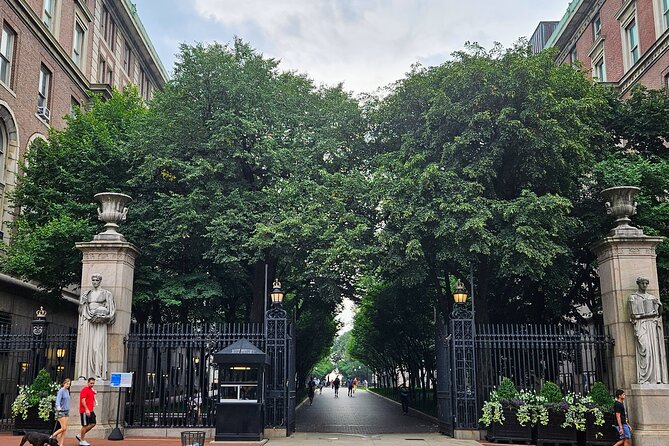
Reviewed · NYC WALKING TOURS
Oppenheimer in New York: Upper West Side Walking Tour
Robert Oppenheimer’s New York story begins long before Los Alamos and the atomic bomb. This walk places you in the Upper West Side streets where his family lived, where his education took shape, and where the people and ideas around him helped form the man he became.
I like the tour for two clear reasons. First, it connects private homes and ordinary streets to major events in science and world politics. Second, it treats Oppenheimer as a person shaped by family, education, friendship, art, religion, and politics, not simply as the scientist behind the Manhattan Project. The main consideration is that most stops are exterior locations, so the value comes from the guide’s storytelling rather than entering famous buildings.
The walk is led by K. Krombie, whose presentation is described as clear, witty, and packed with connections. You get a small-group format, an English-speaking guide, and about two and a half hours on foot. Wear comfortable shoes, arrive ready to listen, and expect a serious subject handled with energy and curiosity.
Key points at a glance
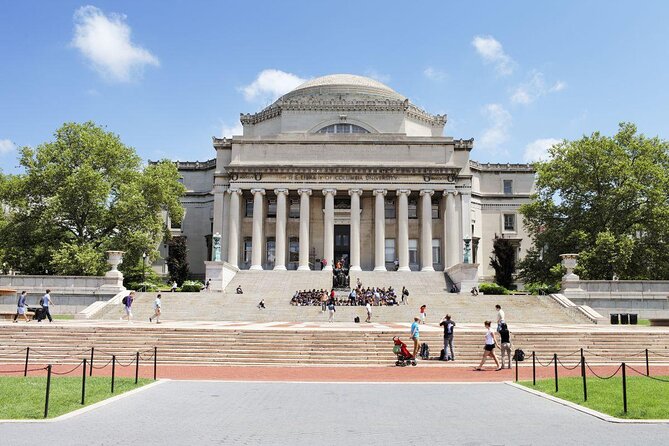
- Oppenheimer’s New York begins with his family: See the former home of his mother, Ella, and the site of his birth.
- The route stays tightly focused: The nine stops run through the Upper West Side and Riverside Drive, with little wasted walking.
- Education gets its proper place: Learn about the Ethical Culture School and Edwin R. A. Seligman’s role in that world.
- The story reaches beyond science: Politics, philosophy, Jewish immigrant life, art, religion, and the New Deal all enter the discussion.
- The ending broadens the moral question: The Shinran Statue provides a setting for considering the atomic bomb’s human consequences.
- Small-group scale helps: The experience is advertised for a small group capped at 13, while the booking information gives a maximum of 15.
Why Oppenheimer’s Upper West Side matters
The best idea behind this tour is simple: a person’s life does not begin with his most famous achievement. Oppenheimer’s later work cannot be understood fully without looking at his childhood, his parents, his school, his friendships, and the city around him.
That makes the Upper West Side a useful setting. The walk does not take you to a laboratory or a museum display. Instead, you see apartment buildings, streets, religious sites, and public monuments. These places help turn biography into something physical. You can stand where Oppenheimer was born, walk near his childhood home, and picture the neighborhood that shaped his early life.
The tour also places him in a wider circle. You hear about fellow scientists, intellectuals, artists, political thinkers, wealthy New Yorkers, and immigrants building new lives in the city. The result is not a narrow science lecture. It is a portrait of a young man developing inside a complicated city and a changing world.
Krombie’s approach is especially useful here. Her presentation links small personal details to larger movements in thought and politics. You are not asked to memorize a long list of names. Instead, you are shown how people, places, and ideas crossed paths.
More Upper West Side Tours:
- Private Food Tour in the Upper West Side | Tasty Tours NYC
★ 5.0 · 88 reviews - Upper West Side: Your Guide to Understanding NYC
★ 5.0 · 7 reviews - New York Upper West Side Art and Architecture Tour
★ 5.0 · 4 reviews
Starting at 94 Corner Cafe on Broadway
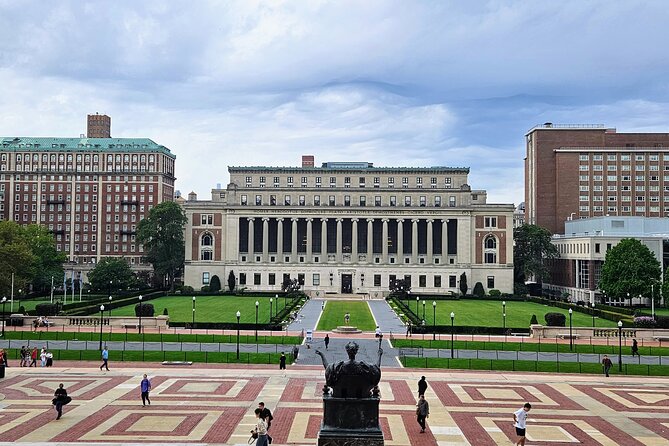
The meeting point is 94 Corner Cafe at 2518 Broadway, New York, NY 10025. The tour begins at 1:00 p.m., and the route ends near Columbia University at 116th Street and Broadway, by Columbia University Plaza.
This start and finish make practical sense. You begin in the Upper West Side and finish farther north, rather than walking in a large loop. You can use public transportation to reach the starting point and continue your plans around Columbia after the tour.
The route lasts about two hours and thirty minutes. That is long enough for real context, but short enough to fit into an afternoon. The walk includes nine stops, and the distances between them are described as modest. You should still expect to be on your feet for most of the afternoon. The booking information calls for a moderate level of physical fitness.
The group size matters. With a small group, it is easier to hear the guide near a curb or apartment entrance, and easier to ask a question without holding up a large crowd. The supplied details give two different group limits, a featured cap of 13 and a general maximum of 15. Either way, this is not a giant bus-style outing.
Family beginnings at the first two stops
The first stop looks at the premarital home of Ella Oppenheimer, Robert’s mother. This is a smart opening because it shifts attention away from the famous son and toward his family background. You hear about immigrant ancestry and the family’s place in New York before Oppenheimer was born.
The stop is brief, about 10 minutes, and there is no admission charge. Do not expect to enter the home. The point is the address and the story attached to it.
The second stop is the site of Oppenheimer’s birth. Here the discussion turns to his parents and their life in New York. Again, the building itself is only part of the experience. The guide supplies the meaning, showing how family circumstances and the city’s social world shaped his first years.
These first stops give the walk a human scale. Before the tour reaches science, war, or the atomic bomb, you get a sense of family roots. That order helps the later material make more sense.
Education, status, and the world around him
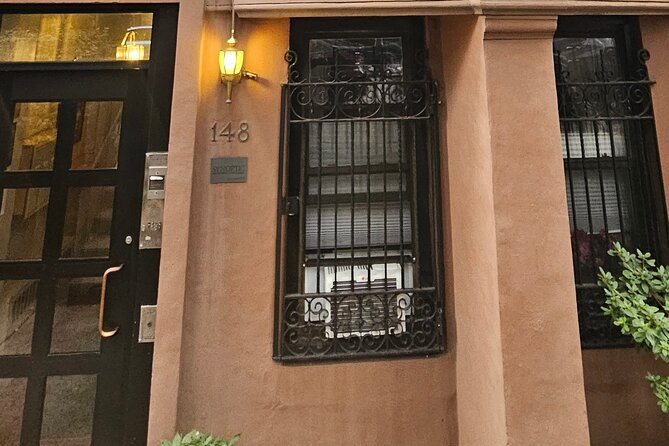
The third stop visits the former home of Edwin R. A. Seligman. The subject here is Oppenheimer’s education at the Ethical Culture School.
This section is important because schooling is treated as more than a line on a biography. The tour uses the school to discuss the values and intellectual habits that influenced Oppenheimer as a young person. The school’s connection to a prominent New Yorker also helps you see the Upper West Side as a place where education, wealth, reform, and ideas met.
The stop lasts around 15 minutes, making it one of the longer early sections. That extra time suggests the guide has room to explain the setting rather than simply point out a building and move on.
The fourth stop brings you to the Clarendon, once the home of William Randolph Hearst. Hearst was a major presence in Oppenheimer’s childhood neighborhood, and the discussion connects him with world leaders and the international events that would later intersect with Oppenheimer’s life.
This is one of the tour’s more unexpected turns. Hearst was not part of Oppenheimer’s scientific career, yet his presence helps show the scale of the neighborhood. A local street could contain wealthy families, influential publishers, immigrant households, reform-minded educators, and future scientific leaders close to one another.
The stop lasts about 10 minutes. It works best as a piece of social context rather than as a stand-alone attraction.
More NYC Walking Tours:
- SoHo, Little Italy, and Chinatown Walking Tour in New York
★ 5.0 · 3,153 reviews - Secrets of Grand Central Station Walking Tour New York City
★ 5.0 · 1,796 reviews - Greenwich Village Walking and Food Tasting Tour
★ 5.0 · 1,572 reviews - Artistic, Alternative Greenwich Village Walking Tour
★ 5.0 · 971 reviews
Oppenheimer’s childhood home on Riverside Drive
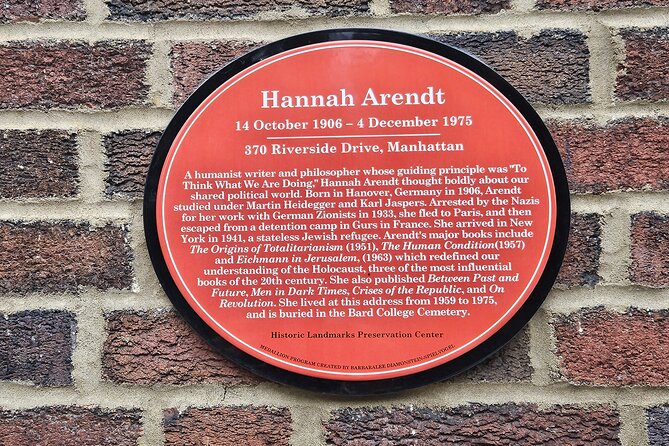
The fifth stop visits Oppenheimer’s childhood home on Riverside Drive. Here the focus moves from ancestry and education to childhood and adolescence.
This is likely one of the most meaningful addresses on the route. You are no longer looking only at the circumstances of his birth or the people around his school. You are standing near the place associated with his formative years, when his interests, character, and sense of the world were developing.
The discussion lasts about 15 minutes. That allows the guide to place Oppenheimer’s youth into the setting of Riverside Drive, rather than rushing through a quick address check.
The stop also shows why a walking tour can add something that a film or book cannot. You get a sense of distance between home, school, public monuments, and the wider neighborhood. You see how Oppenheimer’s early life was tied to a particular part of Manhattan.
Riverside Drive and the Soldiers’ and Sailors’ Monument
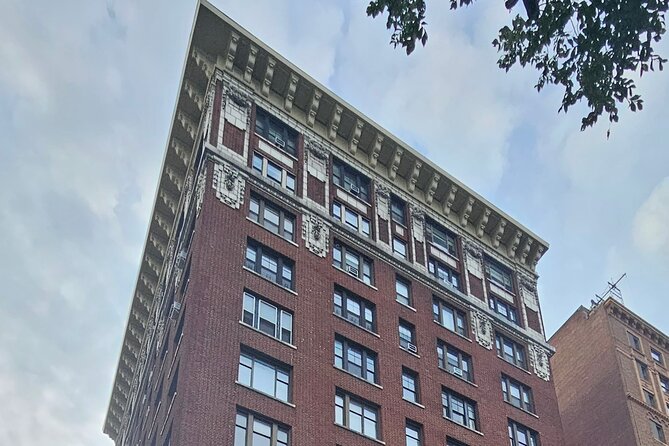
At the Soldiers’ and Sailors’ Monument, the tour broadens again. The subject is the history of Riverside Drive during Oppenheimer’s formative years.
This stop is less about one person’s home and more about the public world around him. The monument provides a place to discuss how the avenue developed and how its social meaning changed during the period of Oppenheimer’s youth.
The stop takes about 15 minutes, so expect more than a brief photo pause. The guide uses the setting to connect neighborhood development with the forces shaping New York society.
For you, this is a useful midpoint. By now, the tour has moved from family history to school, wealth, public space, and childhood. The story is getting larger without leaving the same stretch of Manhattan.
The Master Apartments and political ideas
The seventh stop visits the Master Apartments on Riverside Drive. The discussion turns to Franklin D. Roosevelt’s New Deal and the ideologies that prospered during that era.
This is where the tour moves most clearly from biography into political and intellectual history. Oppenheimer did not develop in a vacuum. The economic crisis, public programs, debates over government, and competing political beliefs all formed part of the world he encountered as a young man.
The Master Apartments are a useful setting for that discussion because the building lets the guide talk about the city’s changing social ideals through a specific place. You get a stronger sense of how public policy and private lives met in New York.
The stop is about 10 minutes. That may sound short for such a broad topic, but it keeps the walk moving. The guide’s job is to give you a clear framework, not deliver a full course on twentieth-century politics.
The Shinran Statue and the cost of the atomic bomb
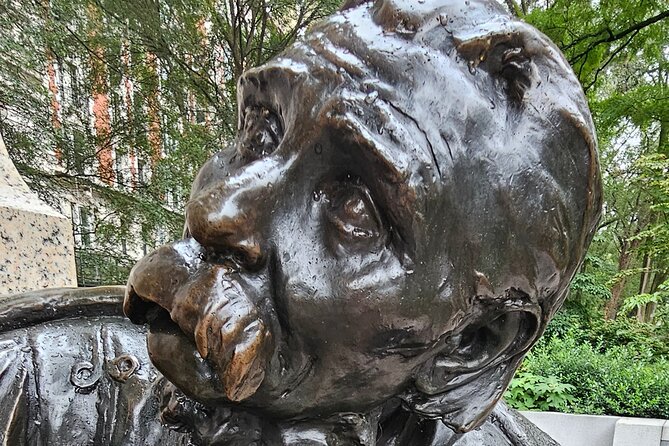
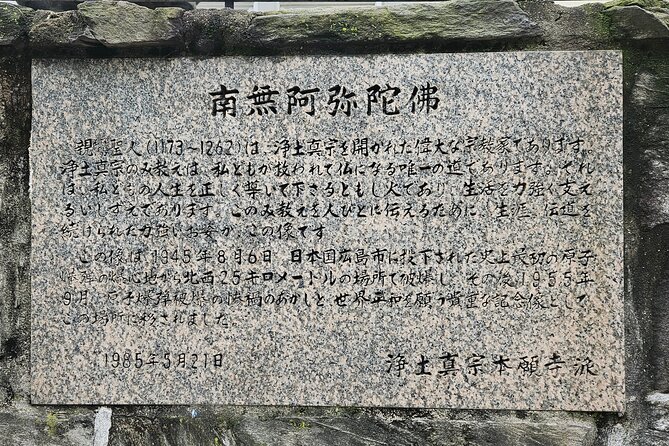
At the New York Buddhist Church, the group looks at the Shinran Statue. This stop considers the cause and effect of the atomic bomb.
It is a thoughtful choice for the latter part of the walk. By this point, you have followed Oppenheimer from family origins through childhood, schooling, friendships, and intellectual influences. The statue gives the discussion a place to face the human and moral consequences of the weapon connected to his name.
The stop lasts around 15 minutes. That makes it one of the longer sections, and rightly so. The atomic bomb is not treated as a technical endpoint. The guide uses the setting to ask what scientific achievement means when its results cause mass destruction.
This part may be the most reflective section of the afternoon. If you want a tour focused only on buildings and dates, it may feel more philosophical than expected. If you want help thinking about Oppenheimer’s legacy, it adds weight to the experience.
Isidor Rabi and the final Riverside Drive stop
The last stop visits the former home of Isidor Rabi, a major twentieth-century physicist, Nobel Prize winner, and close friend of Oppenheimer.
Rabi gives the story a personal and scientific link. He represents the world of modern physics, but also the friendships and professional relationships that shaped Oppenheimer’s life. The stop helps bring the narrative back from the global consequences of the atomic bomb to the people who knew Oppenheimer directly.
At about 10 minutes, this is a compact ending. The tour then finishes near Columbia University Plaza, close to 116th Street and Broadway. That location gives you an easy place to continue exploring, find food, or connect with public transportation.
The final address also fits the tour’s larger purpose. The walk begins with family and ends with a friend, while the route between them covers education, social class, public history, politics, religion, and science.
What the price includes in practical terms
At $42 per person, this is priced as a focused neighborhood walking tour rather than a major attraction visit. There are no paid admissions in the itinerary, so you are paying mainly for the guide’s preparation, interpretation, and time.
That distinction matters. If you prefer tours built around entering grand buildings or seeing rare objects, this may not feel like the best use of your budget. The physical sights are mostly exterior locations, and several stops are ordinary residential or public places.
I think the price makes sense if you value a strong narrative. The tour covers nine stops in two and a half hours and brings together material from family history, education, Manhattan architecture, New York politics, physics, religion, and wartime history. You are paying for the connections between those subjects.
The small group adds value, too. A group of roughly 13 to 15 people is easier to manage on city sidewalks than a large crowd. It also gives you a better chance to hear Krombie’s explanations and ask questions.
Who will get the most from this walk
I would recommend this tour most strongly if you have an interest in Oppenheimer, twentieth-century science, or the moral questions surrounding the Manhattan Project. You do not need to be a physicist. The route focuses on people and ideas, not equations.
It also suits anyone who enjoys New York neighborhood history. One especially appealing feature is the way the tour reveals details that can be easy to miss, even if you have spent years on the Upper West Side. The story reaches beyond the usual landmarks.
The walk should work well for:
- People who have seen a film or read about Oppenheimer and want the New York setting
- History-minded visitors who prefer streets and addresses to museum displays
- Residents of Manhattan looking for a fresh way to understand the Upper West Side
- Couples or friends who enjoy a thoughtful afternoon activity
- Anyone interested in how politics, education, religion, and science shape a person
It may be less suitable if you want a light, fast sightseeing stroll. The subject includes war, ideology, scientific responsibility, and the atomic bomb. The tone is lively, but the material is serious.
Practical details before you book
The tour is offered in English and uses a mobile ticket. Confirmation arrives when you book. Service animals are allowed, and the starting point is near public transportation.
Wear shoes suitable for two and a half hours of city walking. The supplied information calls for moderate physical fitness, and you should plan on standing during the stops. Since many locations are residential or public spaces, the guide’s explanation will matter more than the chance to enter a building.
The tour has free cancellation up to 24 hours before the start time for a full refund. Cancellations or changes made less than 24 hours before the 1:00 p.m. start are not accepted for a refund.
The experience is often booked around 10 days ahead. If your schedule is fixed, booking early is sensible, especially because the group is kept small.
Should you book the Oppenheimer Upper West Side tour?
Book it if you want context rather than spectacle. The tour does not promise a museum collection, private access, or dramatic special effects. It gives you a carefully connected walk through the streets tied to Oppenheimer’s family, education, childhood, friends, and moral legacy.
I would especially choose it after seeing a screen portrayal of Oppenheimer, since the walk can turn a dramatic story into a real New York map. I would also choose it if you already know the Upper West Side and want to see familiar streets through a different lens.
Skip it if you dislike outdoor walking tours or want a simple list of famous sights. But if you enjoy a smart guide, a compact route, and big questions attached to real places, the $42 price is fair. Krombie’s clear and humorous style, along with the small group and tightly linked stops, gives this afternoon real substance.
FAQ
How long is the Oppenheimer in New York walking tour?
The tour lasts approximately 2 hours and 30 minutes.
Where does the tour start?
It starts at 94 Corner Cafe, 2518 Broadway, New York, NY 10025.
Where does the tour end?
The tour ends at Columbia University Plaza, near 116th Street and Broadway.
What time does the tour begin?
The stated start time is 1:00 p.m.
Is the tour offered in English?
Yes. The tour is offered in English.
How many people can join the tour?
The experience is described as a small-group tour capped at 13 people. The additional booking information lists a maximum of 15 participants.
Recently added in New York City
- #1 Six Hour Bus Tour and Boat Ride By The Statue of Liberty★ 4.7 · 6 reviews
- Woodbury Common Premium Outlets Shopping Tour from Midtown★ 4.5 · 92 reviews
- Harlem: Mount Morris Gospel Tour with Brunch★ 4.5 · 111 reviews
- NYC: Greenwich Village Comedy Club Stand Up Comedy Show★ 3.6 · 38 reviews
- Stand Up Comedy LIVE in Times Square At Broadway Comedy Club★ 3.5 · 56 reviews
- New York Harbor Brunch Cruise★ 4.5 · 106 reviews
- NYC Combo: Statue of Liberty Cruise, St Patrick’s Cathedral & Moma entrance★ 4.0 · 8 reviews
- New York City Superheroes Private Walking Tour★ 5.0 · 103 reviews
NYC Walking Tours, compared.
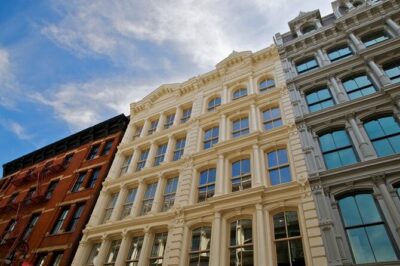
SoHo, Little Italy, and Chinatown Walking Tour in New York
Read our review →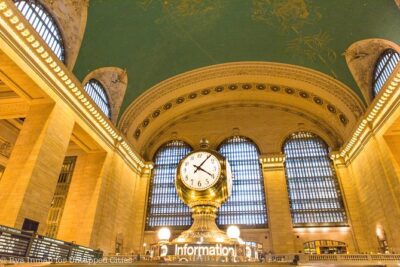
Secrets of Grand Central Station Walking Tour New York City
Read our review →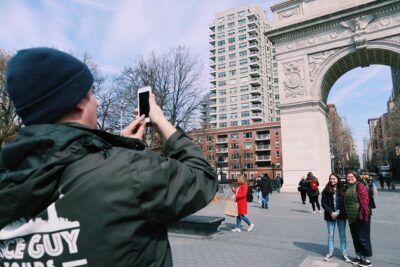
Greenwich Village Walking and Food Tasting Tour
Read our review →
Artistic, Alternative Greenwich Village Walking Tour
Read our review →
NYC Greenwich Village Italian Food Guided Walking Tour
Read our review →Browse the lists this tour appears in