
Reviewed · NYC WALKING TOURS
Pride Tours NYC’s LGBTQ Historical Walking Tour
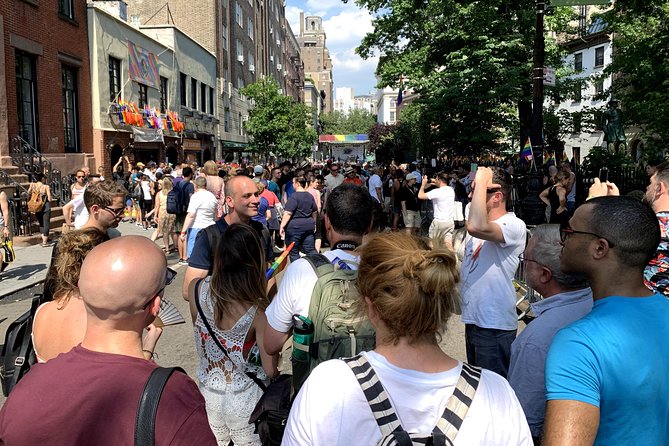
The most powerful part of this tour is how much LGBTQ history is packed into a few blocks of Greenwich Village. You move from Christopher Park to the Stonewall Inn, then follow the people, places, and small acts of protest that helped shape the modern Pride movement.
I like the small maximum of 15 people, which leaves room for questions, and I like the clear focus on real sites rather than a general neighborhood stroll. The tour is also a good value at $30, though the guide covers a lot in 75 minutes, so a fast delivery or strong English skills may be a consideration for some.
Key points
- Stonewall told on the actual Christopher Street sites: Hear the story of the June 28, 1969 uprising at Christopher Park and the Stonewall Inn.
- A compact Greenwich Village route: The stops sit within a small area, making this manageable even on a warm day.
- More than Stonewall: The tour includes the Oscar Wilde Memorial Bookshop site, the first Pride March location, Julius’ Sip-In, and the Gay Liberation Monument.
- Small-group format: A maximum of 15 people helps keep the walk personal and makes questions easier.
- Strong guide energy: Joe is often singled out for his passion, clear storytelling, and helpful local suggestions.
- Easy to fit into a New York day: Choose a morning or afternoon departure, then pair the tour with lunch or dinner in the Village.
Why this short Greenwich Village walk matters
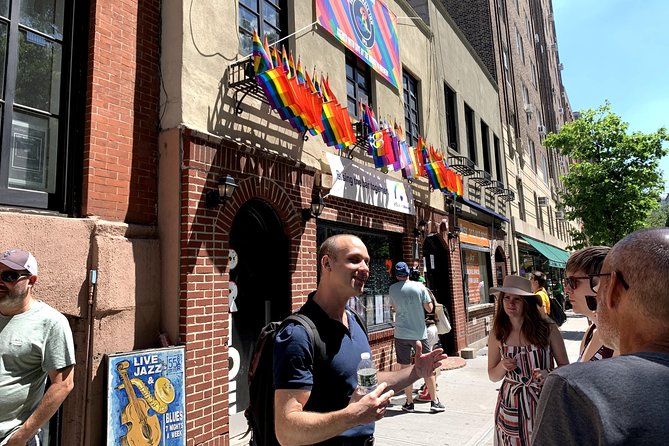
New York’s LGBTQ history can be easy to miss if you simply wander around the Village. A bar may look like an ordinary neighborhood business. A street sign may seem like a quirky detail. A small park may appear to be just another patch of green in Manhattan.
This tour gives those places meaning. It connects them to protest, organizing, publishing, nightlife, public space, and the long movement for LGBTQ rights. You are not only hearing about Stonewall. You are learning how Stonewall fit into events that came before and after it.
The route lasts about 1 hour and 15 minutes, and most of the walking stays within a few blocks. That is useful in New York, where a tour can easily become tiring simply because of the distance and crowds. Here, the compact route lets the guide spend more time explaining the sites instead of marching you from one far-flung address to another.
The tradeoff is pace. There is a lot to cover, and the tour does not linger for long at each stop. One account describes the guide moving too quickly and not always checking in with the group. If you prefer a slow, reflective walk with long pauses, this may feel brisk. If you want a focused introduction before exploring on your own, the pace makes sense.
More NYC Walking Tours:
- SoHo, Little Italy, and Chinatown Walking Tour in New York
★ 5.0 · 3,153 reviews - Secrets of Grand Central Station Walking Tour New York City
★ 5.0 · 1,796 reviews - Greenwich Village Walking and Food Tasting Tour
★ 5.0 · 1,572 reviews
Christopher Park sets the stage
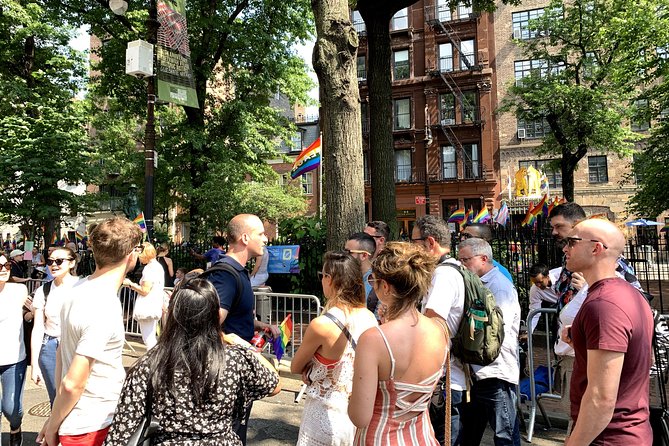
The meeting point is Christopher Park, at 38 to 64 Christopher Street. This is a fitting place to begin because the tour first lays out the broader story of LGBTQ life in the United States and New York City.
Before Stonewall, the guide explains the social and political setting that shaped the people who gathered in Greenwich Village. That background matters. Without it, the Stonewall Uprising can sound like one sudden night that changed everything. The fuller picture shows a long buildup of pressure, organizing, discrimination, and resistance.
Christopher Park also gives the group a practical starting point. Admission is free, and you do not need to enter a museum or indoor attraction. Since the entire activity takes place outside, check the forecast before you book. The operator requires good weather and offers another date or a full refund if poor weather forces cancellation.
The Stonewall Inn and the night that changed the movement
The next stop is the Stonewall Inn, where the guide recounts the early morning hours of June 28, 1969, and the days that followed. This is the emotional center of the walk.
The value here is location. You are hearing about the uprising directly outside the place tied to it, rather than receiving the story in a distant classroom or through a general city tour. The guide also places the events within Greenwich Village, helping you understand the setting and the neighborhood around it.
The stop lasts about 12 minutes, long enough for a focused account but not a full seminar. Expect a clear overview rather than every detail of the uprising. The tour is best approached as a historical introduction that gives you a framework for further reading, visiting the nearby museum, or simply looking at the neighborhood with new awareness.
Oscar Wilde Memorial Bookshop and Craig Rodwell
At Greenwich Letterpress, the guide discusses the original site of the Oscar Wilde Memorial Bookshop. The shop’s founder, Craig Rodwell, receives special attention, along with the groups and activities that connected the post-Stonewall period to the modern Pride movement.
This is one of the tour’s most useful stops because it shifts the story away from a single bar and toward organizing and communication. Bookshops could provide information, meeting space, and a sense of community at a time when many LGBTQ voices were shut out of mainstream institutions.
The stop lasts about seven minutes. That is enough to explain the shop’s role, though anyone especially interested in publishing or movement organizing may want to ask follow-up questions. The small group format helps here. You are encouraged to ask questions, and the tour is designed for conversation rather than a silent march behind a flag.
More LGBTQ-Friendly in New York City:
- Two-Hour NYC LGBTQ+ History Walking Tour
★ 5.0 · 35 reviews - NYC Greenwich Village LGBTQ+ History And Food Tour
★ 5.0 · 17 reviews - Before Stonewall Secret Gay History of New York City
★ 5.0 · 4 reviews - Greenwich Village LGBTQ+ Pride Walking Tour
★ 5.0 · 3 reviews
Gay Street and the stories behind ordinary signs
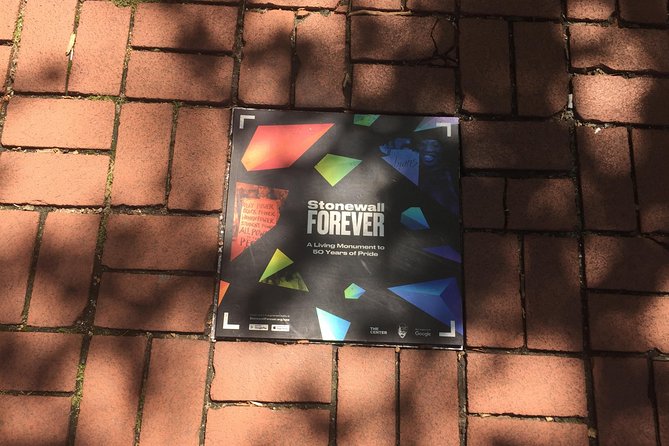
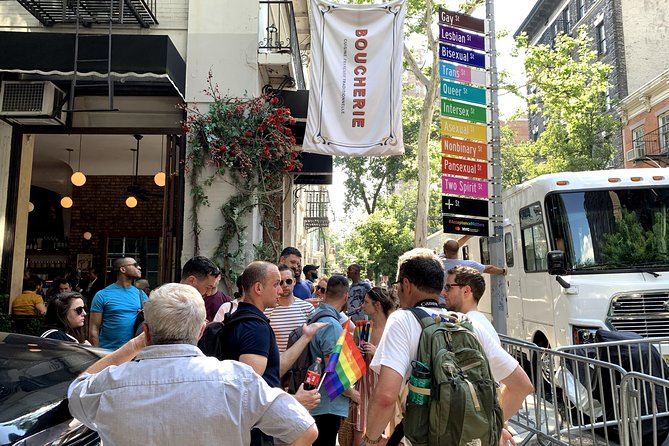
The Gay Street stop lasts about seven minutes and focuses on the history of the street sign. It may sound like a small detail, but that is part of the pleasure of this route.
New York often hides important stories in plain sight. A sign can become a prompt to ask who lived here, who organized nearby, and how later generations understood the neighborhood. The guide uses this stop to show that LGBTQ history is not confined to famous landmarks.
This is also a reminder that the tour is not a parade of grand monuments. Some stops are simple street corners or exterior locations. If you want frequent indoor access, elaborate displays, or exhibits with objects behind glass, choose a museum instead. If you enjoy seeing how history fits into an active city neighborhood, the street-level format works well.
The first Pride March at the Axis Theatre Company site
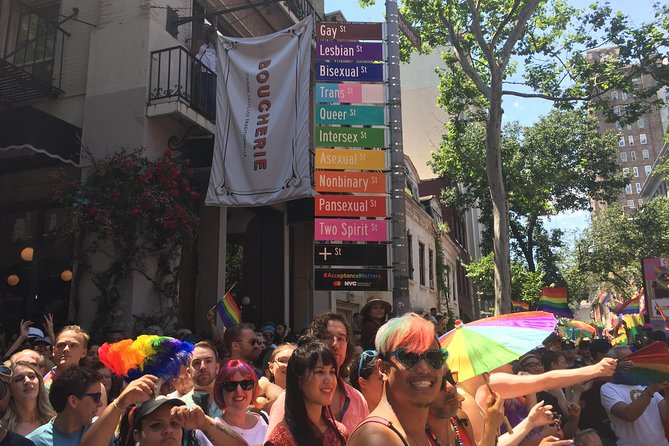
At the Axis Theatre Company site, the guide explains the first Pride March and the development of Pride marches over time. The history of the Rainbow Flag is also covered here.
This stop adds a forward-looking element to the tour. Stonewall was not the endpoint. The story continued through public demonstrations, changing political goals, symbols, and the growing visibility of LGBTQ communities.
The guide connects the first march to the way Pride is understood today. That connection is important because it keeps the tour from treating Pride as only a party or annual event. You get a sense of the effort behind the public celebrations and the political purpose that shaped them.
The stop lasts around 12 minutes, tied with the Stonewall stops for the longest portions of the walk. You can expect this to be one of the more detailed sections. The guide’s presentation style matters here. Joe is praised for bringing energy and passion to the material, and several descriptions of the tour point to his ability to connect individual people with the wider movement.
Julius’ and the first Sip-In
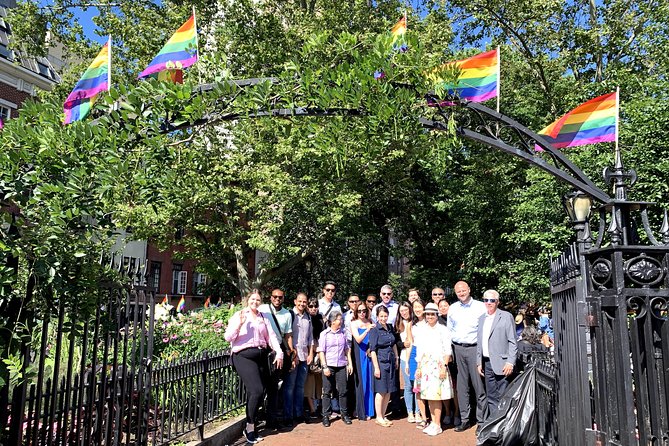
At Julius’ bar, the guide tells the story of the first Sip-In. This stop broadens the tour beyond Stonewall by showing another form of protest and another setting where LGBTQ rights were contested.
A bar is a useful place to discuss the Sip-In because the action centered on access to public accommodations and the right to gather openly. The stop shows that progress did not come from one kind of protest. It came through many efforts, including organized challenges to unfair treatment.
Julius’ is also a reminder that the Village remains a lived-in neighborhood, not a preserved historical park. You may see a working bar and ordinary city activity around you while hearing about an event that helped shape civil rights history.
Marie’s Crisis Café and the movement’s changing public face
At Marie’s Crisis Café, the guide explains the café’s history and discusses how the LGBTQ movement changed as it entered the mainstream.
This is a valuable contrast with the earlier stops. The tour begins with pressure and protest, then moves through organizing and public demonstrations, and finally considers what happens when a movement becomes more widely recognized. Mainstream attention can bring visibility and acceptance, but it can also change how a movement presents itself and what parts of its earlier struggles remain visible.
The stop lasts about seven minutes. It is another exterior, neighborhood-based point, so the experience depends on listening and imagining the history attached to the place. The route does not promise entry to each location, and the listed stops are best understood as storytelling points around the Village.
The Gay Liberation Monument closes the loop
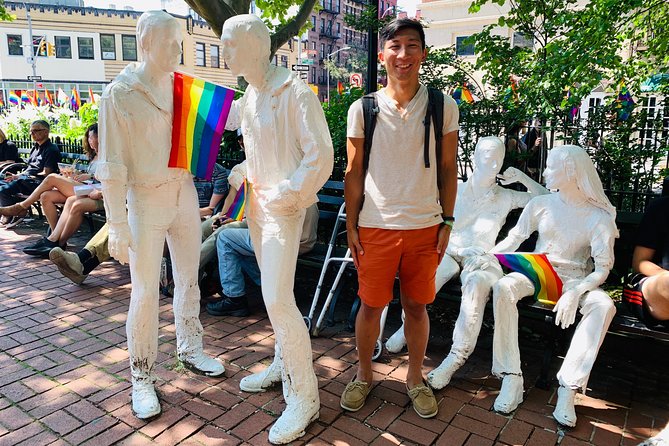
The final stop is the Gay Liberation Monument, where the guide discusses LGBTQ rights and politics in the United States since Stonewall. The monument’s own history is also covered.
Ending here gives the tour a useful sense of perspective. You have moved from the setting before Stonewall to the uprising, from organizing and early Pride events to later political change. The monument provides a physical place to consider what has changed and what remains contested.
This section lasts about 12 minutes, giving the guide room to connect the individual sites. It is also a good moment to ask questions about the timeline, the local neighborhood, or the way the movement developed after 1969.
The tour then returns to the meeting point. That makes the walk easy to combine with plans in Greenwich Village. You can schedule lunch or dinner nearby, continue to other Village sights, or use the subway and nearby public transportation to reach the next part of your day.
What $30 gets you
At $30 per person, this is reasonably priced for a guided New York walking tour. You are paying for a small-group experience, a planned route, and a guide who supplies context that would be hard to gather by simply visiting the locations yourself.
The route does not include admission tickets because the stops are public sites or exterior locations. That keeps the price down, but it also means the value rests almost entirely on the guide’s storytelling. A strong guide makes the walk worthwhile. A rushed or less personable guide could make the same streets feel less rewarding.
The maximum group size of 15 is important. It is not a private tour, but it is small enough to keep the group together in Greenwich Village and allow questions. Several descriptions of the experience praise the guides for being friendly, enthusiastic, and willing to offer extra help or neighborhood suggestions.
You can choose a morning or afternoon departure. I would place it around a meal, since the tour ends where it begins and the Village offers plenty of options nearby. The experience is short enough to fit into a larger New York itinerary, but allow extra time if you want to pause for photos, continue exploring, or discuss the sites with your group afterward.
Who will enjoy this tour most
This walk suits LGBTQ visitors, allies, history fans, and anyone who wants to understand why Greenwich Village matters to New York’s social history. You do not need previous knowledge of the movement. The opening section provides the basic setting, and the stops build the story in a clear order.
It is also a good choice if you have walked through the Village before and felt that you were missing something. The route reveals the stories behind familiar streets, bars, signs, and parks.
The tour is not ideal if you want a long, slow walk or a full-day history program. It is a compact introduction. The material is delivered in English, and one account points out that non-native speakers may find it easy to lose track if the guide speaks quickly. If your English is limited, consider that carefully before booking.
Most people can participate, and service animals are allowed. The activity takes place outdoors and requires suitable weather. Comfortable shoes and a way to manage sun or rain are sensible choices, though the supplied information does not list specific equipment requirements.
Should you book Pride Tours NYC?
I would book this tour if you want a focused, affordable introduction to LGBTQ history in New York and prefer real neighborhood sites over a museum-only experience. The strongest reasons are the compact route, the small group, and the way the guide links Stonewall to the earlier and later work of the movement.
Joe receives especially strong praise for his energy, detail, and ability to make the history feel connected to the people involved. Guide quality can vary on any walking tour, and the fast pace may not suit everyone. Still, the 4.9 rating from 89 reviews and 98 percent recommendation rate point to a consistently well-received experience.
Book it as a beginning, not the final word on LGBTQ history in New York. You will leave with a better map of the Village and a stronger sense of why these locations matter. At $30, that is a fair return for 75 minutes.
FAQ
Where does the LGBTQ Historical Walking Tour begin?
The tour begins at Christopher Park, located at 38 to 64 Christopher Street, New York, NY 10014.
Where does the tour end?
The activity ends back at the meeting point in Christopher Park.
How long does the tour last?
The walking tour lasts approximately 1 hour and 15 minutes.
How much does the tour cost?
The price is $30 per person.
How many people can join the tour?
The tour has a maximum group size of 15 people.
Is the tour offered in English?
Yes. The tour is offered in English.
What happens if the weather is poor?
The experience requires good weather. If it is canceled because of poor weather, you will be offered a different date or a full refund. You can also cancel for a full refund if you cancel at least 24 hours before the start time.
More Historical Tours in New York City
- New York City: American Museum of Natural History Ticket
★ 4.5 · 15,447 reviews - NYC: Starship Landmark 90 Minute Sightseeing Cruise
★ 4.6 · 3,666 reviews - Starship Landmark 90 Minute Sightseeing Cruise
★ 4.5 · 2,073 reviews - American Museum of Natural History Admission Ticket
★ 4.0 · 1,931 reviews
Recently added in New York City
- Private Guided Tour Metropolitan Museum of Art – Highlights and Hidden Treasures★ 5.0 · 61 reviews
- Private Ground Zero Tour with Optional One World Observatory Upgrade★ 5.0 · 13 reviews
- Private Full Day Washington DC Tour from New York City★ 5.0 · 3 reviews
- Private Greenwich Village Tour★ 5.0 · 23 reviews
- 2.5 Hour Private Gossip Girl Sites Tour★ 4.0 · 7 reviews
- Private Driving Highlights Tour of New York (Full Day)★ 4.5 · 5 reviews
- Statue of Liberty and Ellis Island Tour in Spanish★ 3.0 · 8 reviews
- Private Downtown All Access One World Observatory 9/11 Memorial Statue of Liberty and Ellis Island★ 5.0 · 30 reviews
NYC Walking Tours, compared.
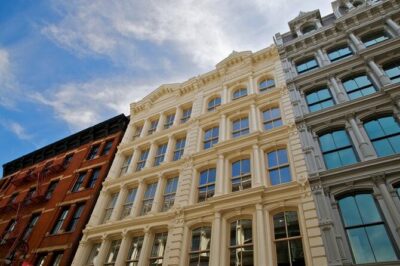
SoHo, Little Italy, and Chinatown Walking Tour in New York
Read our review →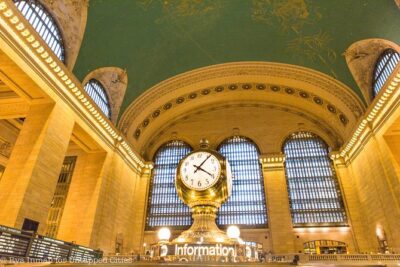
Secrets of Grand Central Station Walking Tour New York City
Read our review →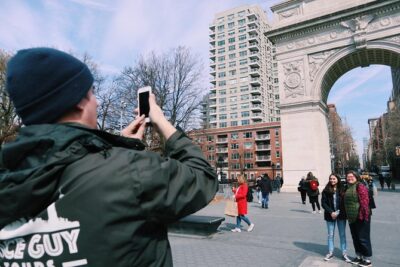
Greenwich Village Walking and Food Tasting Tour
Read our review →
Artistic, Alternative Greenwich Village Walking Tour
Read our review →
NYC Greenwich Village Italian Food Guided Walking Tour
Read our review →Browse the lists this tour appears in