
Reviewed · LOWER MANHATTAN TOURS
Death in New York: Extended Daylight Tour (Lower Manhattan)
Lower Manhattan is packed with stories about the dead, and this walking tour brings them into focus. Led by author K. Krombie, it connects old cemeteries, churchyards, funeral businesses, prisons, burial monuments, and modern memorials across five compact neighborhoods.
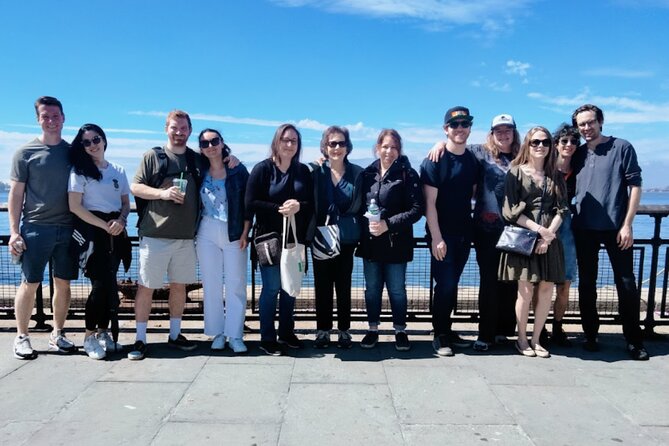
I like the unusual subject and the small maximum of 15 people, which should make it easier to hear the guide and ask questions. I also like that you see the city at street level, moving from the Statue of Liberty viewpoint to Chinatown rather than spending the whole morning inside a museum.
The main drawback is the theme. This is not a general New York sightseeing walk, so you should expect a serious look at death, burial customs, undertakers, executions, and memorials. The nearly three-hour route may also feel long if you prefer a shorter introduction to Lower Manhattan.
Key points to know
- A rare focus on death and burial: The walk examines cemeteries, funeral customs, undertakers, executions, and memorials.
- Five Lower Manhattan areas: You pass through Battery Park, the Financial District, Civic Center, Chinatown, and Two Bridges.
- Author-led storytelling: K. Krombie leads the tour and adds a wide range of city facts along the way.
- Mostly outdoor sightseeing: The route uses city streets and public landmarks, with no admission ticket listed for the stops.
- Small group size: The tour accepts no more than 15 people, a useful limit for a story-heavy walk.
- Useful timing: It starts at 11 a.m. at Whitehall Terminal and ends at Chatham Square after about 2 hours and 45 minutes.
Why this Lower Manhattan tour feels different

Most first visits to New York focus on skyscrapers, famous avenues, food, and Broadway. This walk takes a different route through the city. Death is the organizing theme, but the subject opens doors into New York’s social history, religious life, public health, immigration, crime, and changing use of land.
You begin at South Ferry and finish in Chinatown. In between, K. Krombie points out places that are easy to pass without a second glance. A church becomes part of a story about burial. A street corner recalls an old cemetery. A courthouse or prison connects to the city’s justice system.
I like this format because it gives you a reason to pay attention to ordinary blocks. New York can feel overwhelming when you see it only as a wall of buildings. A focused walking theme helps you notice small details and understand how the city grew.
The tour is offered in English and uses a mobile ticket. It is not built around entering a series of attractions, so much of its value comes from the guide’s narration and the places viewed along the way. If you prefer a tour with interiors, reserved entrances, or formal exhibits, this may not be the right choice.
More Lower Manhattan Tours:
- Guided Bike Tour of Lower Manhattan and Brooklyn Bridge
★ 4.5 · 113 reviews - Wall Street, Financial District Walking Tour Lower Manhattan, NYC
★ 5.0 · 108 reviews - Lower Manhattan Secrets And History Walking Tour
★ 5.0 · 96 reviews
Starting at Battery Park and the Statue of Liberty view
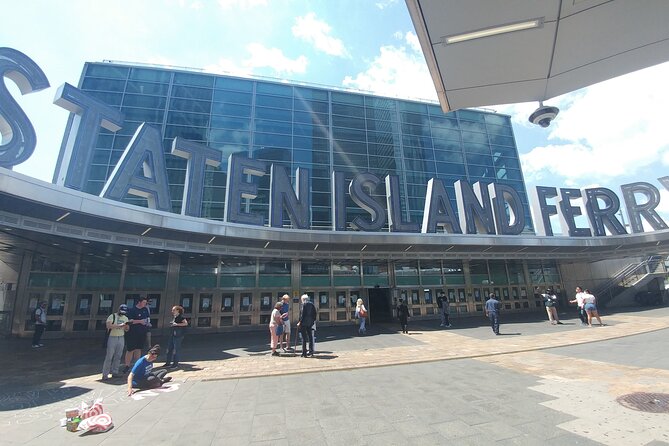
The meeting point is Whitehall Terminal, at 4 Whitehall Street, near South Ferry and Whitehall Street Station. The tour begins at 11 a.m., then moves into Battery Park for a view of the Statue of Liberty.
That opening matters. The Statue of Liberty is usually treated as a symbol of arrival and hope, while this tour asks you to think about what happens after people arrive, build lives, die, and are remembered. The view gives you a strong sense of New York’s harbor setting before the route turns toward older city streets.
You do not need an admission ticket for this stop. The tour remains outdoors, and the first section takes about 30 minutes. Since the experience begins at a major transit point, you can reach the start without adding a separate attraction visit to your morning plan.
Battery Park also sets up the contrast that runs through the walk. New York’s most familiar public symbols sit close to places shaped by illness, loss, religion, and burial. I find that contrast more useful than another quick photo stop because it changes how you read the rest of Lower Manhattan.
The Financial District’s churches, memorials, and former cemetery
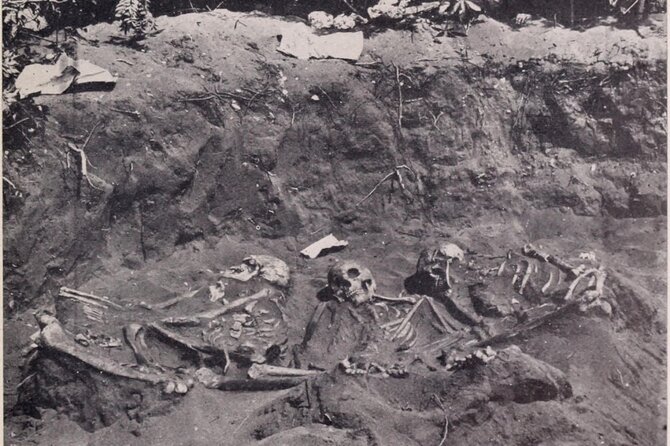
The second section moves into the Financial District and includes several very different sites:
- The Shrine of St. Elizabeth Ann Bayley Seton at 7 State Street
- The Wireless Operators Memorial
- The National Museum of the American Indian
- The corner of Broadway and Morris Street, identified as the site of the old city cemetery
- Trinity Church
- St. Paul’s Chapel
- The 9/11 Memorial North Pool
- St. Peter’s Roman Catholic Church
This is the densest part of the tour in terms of subject matter. You move from religious institutions to a communications memorial, a museum building, a former cemetery site, and a modern memorial connected to one of New York’s most painful events.
The old city cemetery site is especially useful for understanding how much Lower Manhattan has changed. A present-day street corner may conceal an earlier use of the land. Krombie’s role here is to connect what you see now with what once occupied the block.
Trinity Church and St. Paul’s Chapel add a religious and architectural layer. St. Peter’s Roman Catholic Church gives the route another faith tradition and another place to consider how New York’s communities cared for their dead. These stops help keep the tour from becoming a simple list of grim events.
The Wireless Operators Memorial broadens the theme again. It reminds you that memorials can honor people connected to work, technology, and public service, not only those buried in a particular churchyard.
The 9/11 Memorial North Pool brings the subject into the present. It is a solemn stop, and the tour’s focus on death makes it part of a longer story about how New York marks loss. You should expect a respectful tone here rather than a casual sightseeing pause.
This portion lasts about 30 minutes according to the scheduled route. The stops are close enough to form a walking sequence, but you should still expect the tour to keep moving. If you want time to study the museum, enter a church, or spend a long period at the memorial, plan to return on your own.
Civic Center and the African Burial Ground
The route then reaches Civic Center, with stops at City Hall Park, Surrogate’s Courthouse, the corner of Elk Street and Chambers Street, the African Burial Ground National Monument, the David N. Dinkins Manhattan Municipal Building at 1 Center Street, and the Metropolitan Correctional Center at 150 Park Row.
This section shifts from religious remembrance to civic power, law, and the city’s treatment of the dead. City Hall Park places the discussion beside the machinery of local government. Surrogate’s Courthouse is a natural fit for a tour that examines death, estates, and the legal systems that follow a person’s passing.
The African Burial Ground National Monument is one of the most important stops on the route. It brings the experiences of African people in New York into the story of the city’s past and gives the tour a place of remembrance with national importance.
You should give this stop the attention it deserves. It is not just another point on a walking route. Its presence helps correct the usual Lower Manhattan story, which often centers on commerce, finance, and European settlement while giving too little space to the people whose labor and lives also shaped the city.
The Municipal Building and Metropolitan Correctional Center add another contrast. One represents city administration, while the other is connected to confinement and the justice system. Together with the courthouse and burial ground, these stops show how the city manages public life, crime, punishment, death, and memory.
The Civic Center portion is scheduled for about 30 minutes. The value here is not a single dramatic sight. It is the way several institutions sit near one another and allow Krombie to trace the links between government, law, burial, and public remembrance.
More New York City Tours:
- NYC: SUMMIT One Vanderbilt Tickets
★ 4.7 · 51,195 reviews - NYC: Empire State Building Tickets – Observatory & Museum
★ 4.7 · 25,757 reviews - New York City: Statue of Liberty & Ellis Island with Ferry
★ 4.6 · 18,683 reviews - New York City: American Museum of Natural History Ticket
★ 4.5 · 15,447 reviews
Chinatown’s Funeral Row on Mulberry Street
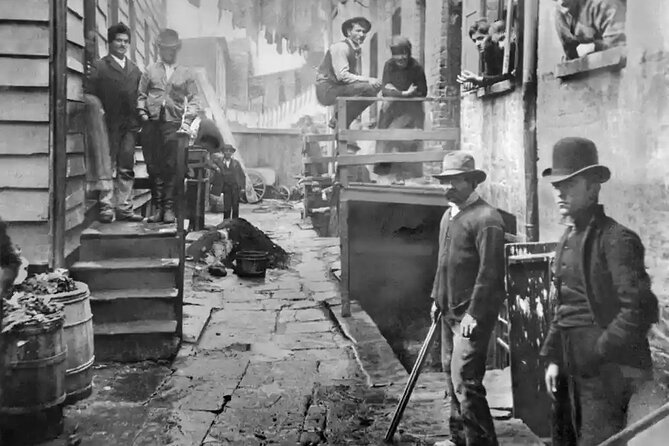
From Civic Center, the walk heads into Chinatown and stops at Funeral Row on Mulberry Street. This is one of the most distinctive parts of the experience because it brings the subject out of historic landmarks and into a living city district.
Funeral businesses reveal how death is handled as part of everyday community life. The stop gives you a chance to think about undertakers, funeral customs, and the services families need after a death. It also adds a cultural dimension to a route that has already included churches, public memorials, and burial grounds.
I like the change of setting here. You are no longer looking only at monuments or historic sites. You are seeing how the business of mourning fits into an active neighborhood. That makes the topic feel less distant and more connected to ordinary life.
The Chinatown section is scheduled for about 30 minutes. The tour does not list an admission ticket for Funeral Row, so the experience remains a street-level observation and storytelling stop. You should approach it with respect, since funeral businesses serve families during difficult moments.
Chatham Square and the Two Bridges finish
The final section takes you to Chatham Square in the Two Bridges area. This is both the last stop and the tour’s end point, so you do not return to Whitehall Terminal.
That one-way design is helpful if you plan the rest of your day in or near Chinatown. It also means you should not leave a car, bag, or other item at the starting point. You begin near South Ferry and finish at Chatham Square, a practical arrangement for continuing into Chinatown.
Chatham Square provides a fitting close because the route has moved steadily away from the harbor and through the older civic and commercial core. By this point, the city’s layers should feel less random. Churches, cemeteries, courts, memorials, prisons, and funeral businesses become part of one connected account.
The Two Bridges section is scheduled for about 30 minutes. Since the full experience lasts approximately 2 hours and 45 minutes, the tour is long enough to build a real theme without taking your entire day.
How K. Krombie shapes the experience
K. Krombie is presented as an author and guide, and that combination suits this subject. The tour depends on stories, context, and connections that are easy to miss if you simply walk from landmark to landmark.
The strongest reason to choose this experience is the guide-led interpretation. The route itself is interesting, but a map can show you churches and memorials without explaining why they matter together. Krombie’s role is to make the pattern clear and add city facts beyond the core route.
The group limit of 15 is another practical plus. A small party is better for a walking tour where you need to hear names, dates, and short explanations at busy city corners. It also gives you a better chance to ask a question without turning the walk into a private tour.
The tone appears to include humor alongside serious material. That can help keep nearly three hours from feeling heavy, but the theme remains death-focused. You should choose it because you are curious about the subject, not simply because you want a general tour with a spooky title.
Price, pace, and practical value at $44
At $44 per person, this is priced as a focused city walking experience rather than a major attraction package. You are not paying for museum admission or special access. You are paying for a nearly three-hour route, a small group, and Krombie’s explanation of places that are often overlooked.
I consider that fair value if you want a strong theme and a guide who adds context. The tour covers five areas and a long list of public sites, including the African Burial Ground National Monument, Trinity Church, St. Paul’s Chapel, the 9/11 Memorial North Pool, and Funeral Row.
The value is weaker if you measure tours by the number of interior visits or included tickets. The listed stops have free admission, and the experience is primarily outdoors. In that case, the guide’s storytelling is the main product.
The tour is booked, on average, five days ahead. That is not a strict booking requirement, but it is a useful planning clue. If you want a particular date, booking several days early is sensible.
The mobile ticket makes the start simple, and the route is near public transportation. Service animals are allowed, and most people can participate. Since the experience is a walking tour lasting nearly three hours, you should still consider your own comfort with sustained walking and city streets before booking.
Free cancellation is available until 24 hours before the 11 a.m. start time. If you cancel later than that, the paid amount is not refunded, and changes made inside that 24-hour window are not accepted.
Who should book this New York walking tour?
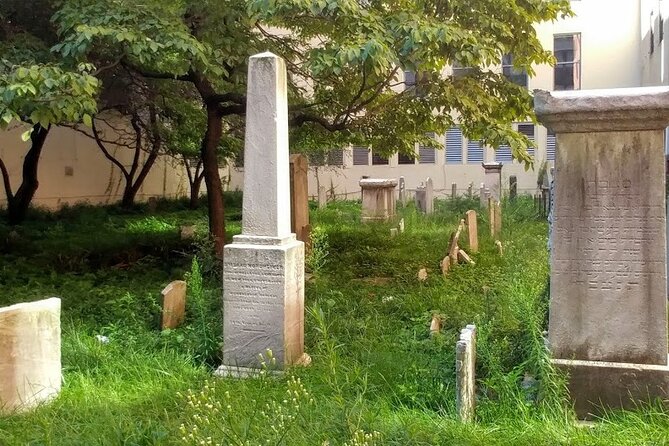
I would choose this tour if you have already seen the major postcard sights and want a more unusual way to understand Lower Manhattan. It is also a good fit if you enjoy cemeteries, urban history, religious buildings, memorials, public institutions, and the stories behind ordinary street corners.
The tour suits solo visitors especially well. A small group and a clear meeting point make it easy to join without arranging a private guide. It also works for people who want a structured morning before spending the afternoon in Chinatown or the Financial District.
History-minded families may enjoy it, though the subject matter is serious. For younger children, the focus on death, executions, prisons, and funeral practices may not be a good match. Since the tour is in English, you should be comfortable following spoken explanations throughout the walk.
I would skip it if your priority is the Statue of Liberty, shopping, food, or a broad introduction to New York. You will see the Statue of Liberty from Battery Park, but the tour does not replace a dedicated harbor cruise or island visit. You will also pass major landmarks without having a long stop at each one.
Should you book Death in New York?
Book it if you want an intimate, story-driven walk that reveals a less familiar side of Lower Manhattan. The best reasons are the unusual subject, K. Krombie’s author-led approach, the maximum group size of 15, and the route’s mix of old burial sites, churches, civic buildings, memorials, Chinatown funeral businesses, and a former city cemetery.
Skip it if you want a light sightseeing tour or lots of indoor attractions. For the right audience, $44 buys a well-focused way to read the city streets, not just photograph them. Plan to arrive at Whitehall Terminal for 11 a.m., wear whatever you normally use for a long city walk, and leave your afternoon open near Chatham Square.
FAQ
Where does the tour begin?
The tour begins at Whitehall Terminal, 4 Whitehall Street, near South Ferry and Whitehall Street Station in New York City.
What time does the tour start?
The scheduled start time is 11 a.m.
Where does the tour end?
The tour ends at Chatham Square in Chinatown, New York.
How long does the tour last?
The experience lasts approximately 2 hours and 45 minutes.
What language is the tour offered in?
The tour is offered in English.
How many people can join the tour?
The maximum group size is 15 people.
Can I cancel for a full refund?
Yes. You can cancel at least 24 hours before the experience start time for a full refund. Cancellations or changes made less than 24 hours before the start time are not accepted for a refund.
Recently added in New York City
- Brooklyn: 3-Hour Williamsburg Bites Food Tour★ 4.5 · 58 reviews
- World Trade Center, 911 and Ground Zero Walking Tour★ 5.0 · 4 reviews
- Your NYC Story in Photos: Custom 2-Hour Tour & Photo Shoot★ 4.9 · 60 reviews
- Welcome to New York: A Tour of Taylor Swift Hotspots★ 5.0 · 11 reviews
- Wall Street: The birth place of NYC in French/English tour★ 5.0 · 6 reviews
- Washington from New York in Spanish★ 5.0 · 4 reviews
- NYC: Empire State Building Sunrise Experience Ticket★ 4.6 · 55 reviews
- New York City: Walk This Way Harlem Hip Hop Walking Tour★ 4.8 · 42 reviews
Lower Manhattan Tours, compared.

Guided Bike Tour of Lower Manhattan and Brooklyn Bridge
Read our review →
Wall Street, Financial District Walking Tour Lower Manhattan, NYC
Read our review →
Lower Manhattan Secrets And History Walking Tour
Read our review →
Lower Manhattan Tour: The Remnants of Dutch New Amsterdam!
Read our review →

Lower Manhattan Tour: Wall Street & 9/11 Memorial
Read our review →
Central Park and Lower Manhattan Electric Bike Rentals
Read our review →
Lower Manhattan: From Financial Power to Enduring Hope
Read our review →Browse the lists this tour appears in