
Reviewed · LOWER EAST SIDE TOURS
Tenement History and Immigrant Life in the Lower East Side
The Lower East Side is best understood from the sidewalk, where old tenement facades, synagogues, bathhouses, markets, and Chinese storefronts sit close together. This tour follows that immigrant story from the former Five Points neighborhood to the Lower East Side, explaining how housing laws and new arrivals changed New York.
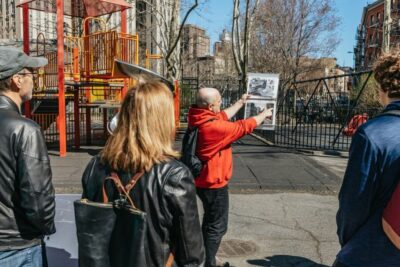
I like the very small group size, capped at five, and the way guide Rob Arnell uses photographs and maps to make vanished streets and crowded homes easier to picture. I also like the rooftop finish at Hotel Indigo, which lets you look down on the blocks and spot the different generations of tenement buildings.
The main consideration is the walking. You cover a lot of ground over two to three hours, often stopping on city sidewalks rather than inside formal attractions. This is a history walk, not a ticketed tour of the Tenement Museum, and that distinction matters when you plan your day.
Key points about the Lower East Side walk
- Five Points comes first: Begin near Foley Square, where the former Five Points and Mulberry Bend neighborhoods introduce the city’s early tenement story.
- Immigrant communities come into focus: Follow Jewish, Italian, and Chinese threads through buildings, streets, religious sites, newspapers, shops, and public facilities.
- Rob Arnell brings visual aids: Photographs and maps help you compare the neighborhood as it looked in the past with what remains today.
- The route covers real neighborhood ground: Expect Chinatown, East Broadway, Eldridge Street, Allen Street, Delancey Street, and the Lower East Side.
- The group is unusually small: A maximum of five people allows the pace and discussion to adjust to your interests.
- The rooftop view gives useful perspective: End at Hotel Indigo with a bird’s-eye look at tenement types and Midtown.
Why this tour works better than a quick Lower East Side stroll
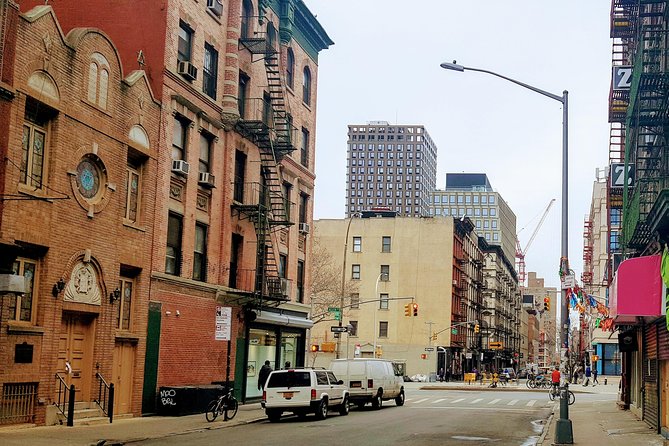
The Lower East Side can seem like a jumble of old apartment blocks, restaurants, religious buildings, and busy streets. On your own, you may notice the architecture without understanding why it looks that way. This walk gives you a timeline.
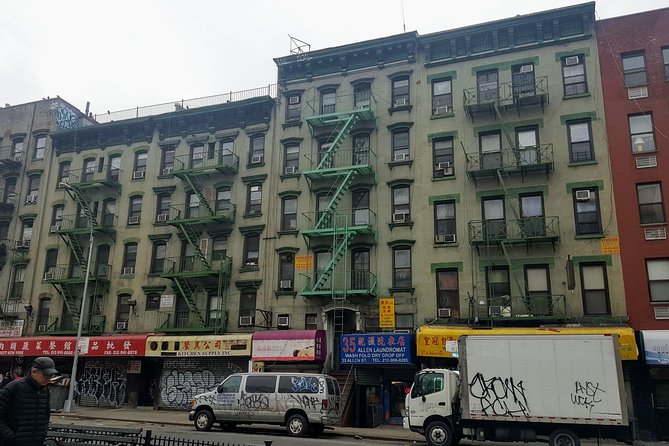
You begin with the working-class housing built for large numbers of newcomers in the mid-19th and early 20th centuries. The focus is not simply on hardship. You also learn that not every tenement was part of a slum, and that apartment buildings changed over time as city laws addressed light, air, sanitation, and safety.
That distinction is important. It keeps the story from becoming a simple tale of miserable housing and heroic reform. You get a clearer idea of how families found a foothold, how landlords responded to changing rules, and how the neighborhood shifted as one immigrant group followed another.
The tour also links several parts of New York that many visitors treat as separate. Five Points, Chinatown, the Jewish Lower East Side, civic buildings, discount shopping, public baths, and the Tenement Museum area all become pieces of one urban story.
More Lower East Side Tours:
- Lower East Side Food Tour: Taste NYC’s American Dream
★ 5.0 · 1,031 reviews - NYC Lower East Side Walking and Food Tour
★ 5.0 · 646 reviews - NYC: Taste the American Dream a Lower East Side Food Tour
★ 4.8 · 307 reviews
Starting at Foley Square and the old Five Points
The meeting point is near Foley Square, at Lafayette Street, Worth Street, and Centre Street. This is a practical starting place because you are close to the former Five Points neighborhood and Mulberry Bend, areas long associated with New York’s roughest urban conditions.
The first stop lasts about 15 minutes and has no admission charge. You will hear why the tenement became such an important type of housing for working-class immigrants and why this part of lower Manhattan matters to the city’s development.
Do not expect to see a preserved Five Points street scene. The value here is historical orientation. The streetscape has changed, and the guide uses explanation and visual material to help you understand what once occupied the area.
From there, the route moves toward Columbus Park. This section helps connect the old neighborhood to the work of Jacob Riis, whose photographs and writing brought crowded housing conditions to public attention. The stop is brief, about five minutes, but it adds a useful visual and social frame before the walk turns toward Chinatown and the Lower East Side.
Columbus Park and the city Jacob Riis documented
Columbus Park sits between Chinatown and the Court District, on ground once associated with dense immigrant communities. The park itself is not a long sightseeing stop. Its importance comes from what the guide explains about the people who lived here and the way reformers presented their lives to the wider public.
Jacob Riis and How the Other Half Lives are central to this part of the story. The tour uses images connected to that work to show crowded interiors, street life, and the conditions that pushed New York toward housing reform.
I find this kind of stop useful because it moves the discussion beyond dates and building styles. You are reminded that tenement history is also family history, labor history, and public health history. The photographs help you picture rooms and streets that are no longer visible.
Reading the tenements along the Lower East Side
The heart of the tour is the walk through the Lower East Side, where blocks of tenement buildings make the subject tangible. You will look at different building types from different periods and track how their design changed as city rules developed.
This is where the guide’s photographs and maps matter most. Rob Arnell is known for arriving prepared with visual material, and you can use those images to compare old views with the buildings and streets in front of you.
The discussion is not limited to famous landmarks. A doorway, rear courtyard, fire escape, window arrangement, or narrow lot can help explain how housing was built and modified. You begin to see why some buildings feel cramped, why others have more light, and how regulations gradually altered the form of the neighborhood.
The route also shows how the area continued to evolve. The same buildings that once housed Jewish or Italian families may now sit amid Chinese businesses, newer apartments, restaurants, churches, and hotels. That change is not treated as a footnote. It is part of the central story.
Plan on walking at a moderate pace with frequent stops. Several people who have taken the tour appreciated that the guide adjusted his speed and allowed time for questions. You should still wear comfortable walking shoes and carry water. A snack is sensible, particularly if you choose the longer afternoon option or tend to tire on city walks.
More Historical Tours in New York City:
- New York City: American Museum of Natural History Ticket
★ 4.5 · 15,447 reviews - NYC: Starship Landmark 90 Minute Sightseeing Cruise
★ 4.6 · 3,666 reviews - Starship Landmark 90 Minute Sightseeing Cruise
★ 4.5 · 2,073 reviews - American Museum of Natural History Admission Ticket
★ 4.0 · 1,931 reviews
East Broadway and Chinatown’s layered streetscape
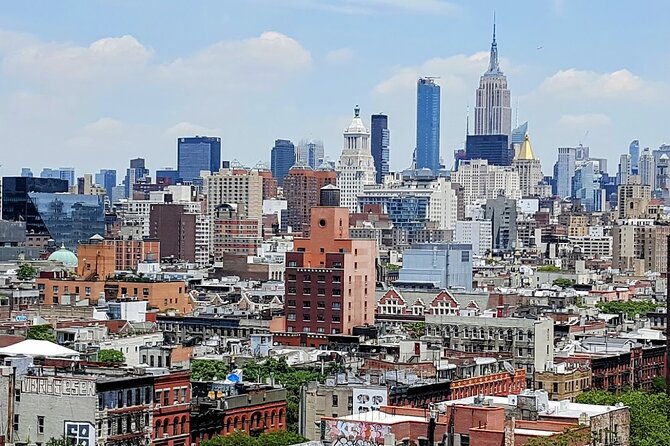
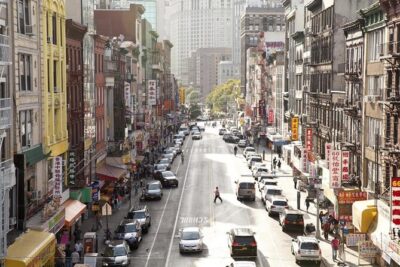
The route includes East Broadway, one of the more useful places to see how the Lower East Side and Chinatown meet. You get views toward the Municipal Building and Woolworth Building, along with street scenes and older structures that are easy to pass without a second glance.
This part of the walk adds architectural variety. The subject is still immigrant life, but the setting is not frozen in one period. Chinese businesses and community life occupy streets that also carry traces of earlier Jewish and Italian settlement.
That mixture is one reason I would not pair this tour only with a conventional downtown landmarks walk. The big civic buildings provide scale, but the lesson is found at street level. You are looking at how ordinary homes, shops, religious buildings, and public facilities shaped New York just as much as City Hall or the Woolworth Building.
The Chinatown portion may also appeal to you if you are interested in food and daily commerce. The focus remains historical, but the route can include details such as local markets and places to eat. One particularly useful possibility is a dumpling recommendation at the end of the Chinatown section, though the tour should not be booked as a food tour.
Eldridge Street Synagogue and the Jewish Lower East Side
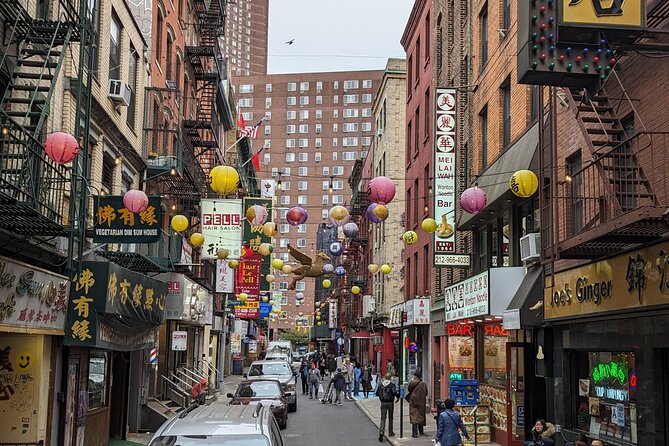
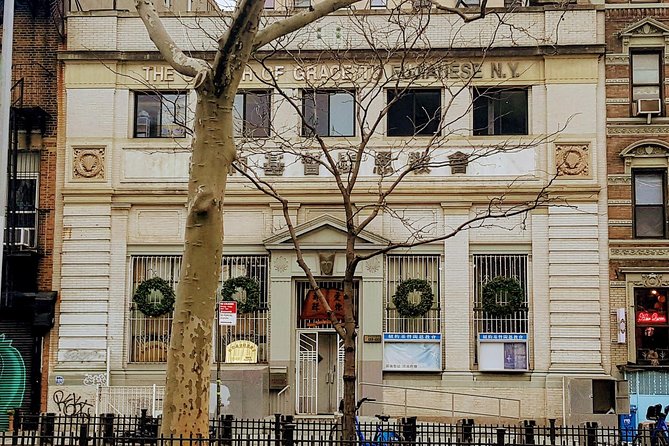
Eldridge Street Synagogue is one of the route’s most striking buildings. From here, the tour begins a fuller discussion of Jewish life in the Lower East Side and the different ways immigrant communities built institutions, businesses, and social networks.
The building gives the subject a strong physical anchor. Instead of discussing an immigrant group only in general terms, you are standing before a place created for worship and community life. The conversation also places Jewish arrival within the longer sequence of immigration that shaped lower Manhattan.
This is an important balance. The tour does not treat the Lower East Side as exclusively Jewish, Italian, or Chinese. It shows how communities arrived at different times, established themselves, moved elsewhere, and left behind buildings and traditions that still shape the district.
If your main goal is to tour the interior of Eldridge Street Synagogue, confirm what is included before booking. The experience described here uses the building as an exterior stop and as a starting point for historical discussion. It is not presented as a separate synagogue admission tour.
Parks, newspapers, bathhouses, and everyday immigrant life
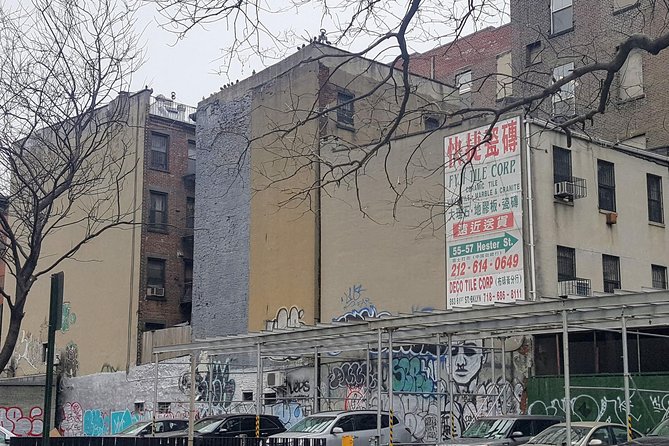
The route includes one of the neighborhood’s early parks, where opening day was so crowded that people had to stand. Here, images from Jacob Riis’s work help bring the old community into view again.
A park may sound less important than a synagogue or grand building, but public space tells you how dense the neighborhood was. When private rooms were small and families shared limited facilities, parks offered somewhere to gather, play, and see other people.
You also pass a newspaper that served as an institution for the Jewish community. Newspapers helped newcomers navigate work, politics, culture, and city life. A stop like this is useful because it shows that immigrant communities were not defined only by poverty. They built networks that informed and supported their neighbors.
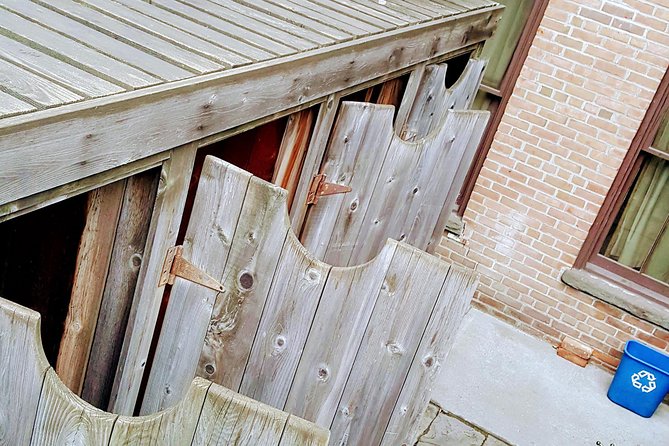
Another stop is the rear of the Tenement Museum, where recreated features such as outhouses and clotheslines suggest the physical demands of tenement life. This is a key point for avoiding confusion: you pass the back of the museum, but this tour does not include admission or a museum apartment visit.
The walk continues to Delancey Street, once known for discount clothing outlets. That detail adds a commercial side to the story. Immigrant neighborhoods were places to live, but also places to buy clothes, find work, run shops, publish newspapers, worship, and build a customer base.
Finally, you see the former Allen Street bathhouse. It operated from 1905 to 1975 and was one of roughly a dozen public bathhouses in the area. The building lasted the longest and was later converted into a church.
The bathhouse is a particularly clear example of city life before private indoor bathrooms became common. It also shows how a building can change use while retaining a connection to neighborhood needs.
The Hotel Indigo rooftop finish
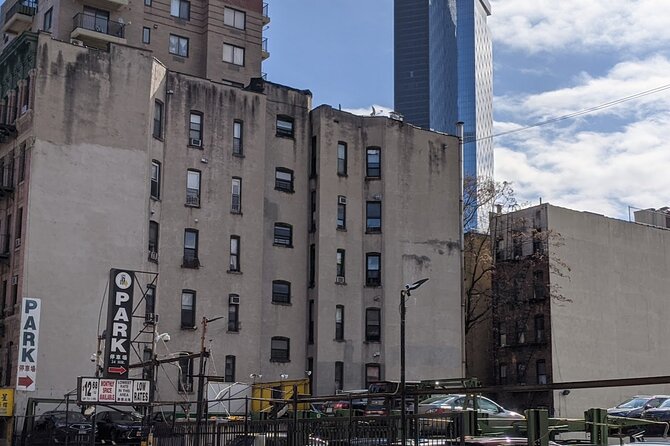
The tour ends at Hotel Indigo Lower East Side New York, at 171 Ludlow Street. From an upper-floor lobby area and rooftop setting, you get a view back over the streets you walked.
This is more than a pleasant finale. From above, you can compare the different tenement forms and see how tightly the neighborhood developed. The view also reaches toward Midtown, giving you a chance to connect the local story to the wider city.
The rooftop stop lasts about 10 minutes and has no separate admission charge. The visit may be brief, so treat it as a final orientation rather than a long observation deck experience. Still, it is a smart ending. After spending hours looking closely at facades and street corners, you get the wider pattern.
Guide style, group size, and pace
The experience is led by a local professional guide, with Rob Arnell identified as the guide associated with the tour. His approach is strongly centered on explanation, questions, photographs, and maps.
The maximum group size is five. That is a major advantage in a neighborhood where sidewalks can be crowded and many stops require everyone to gather close. A tiny group also makes it easier to ask about a family connection, a particular building, or a part of New York history that interests you.
The guide can adjust the pace and shape the discussion around the group. That does not mean the tour becomes completely private or custom-built, but you have more room for conversation than on a large bus or standard group walk.
The walk is offered in English, with morning and afternoon departure choices. It lasts about two to three hours, depending on the pace and discussion. You should allow enough time afterward to eat, visit another Lower East Side site, or continue exploring Chinatown.
Price, value, and who should book
At $59 per person, this is not the cheapest way to see the Lower East Side. The value depends on how much explanation you want. If you only want a neighborhood stroll and a few photographs, you can walk these streets without paying.
I think the price is fair for a group capped at five, especially if you care about immigration, housing, architecture, and city development. The guide’s visual aids and the rooftop perspective add structure that is difficult to reproduce on your own.
You should book this if you want:
- A focused look at Jewish, Italian, and Chinese connections to the Lower East Side
- A guide who can answer detailed questions and adjust the pace
- Historical context for ordinary buildings rather than only famous sights
- A small group instead of a large scheduled walk
- A walking experience that complements Ellis Island or the Tenement Museum
You may want something else if you prefer indoor attractions, dislike extended walking, or mainly want to visit the Tenement Museum itself. The two experiences can work well together, but they are separate.
The tour requires moderate physical fitness, and comfortable shoes are essential. Service animals are allowed, and the route is near public transportation. Confirmation arrives when you book. Cancellation is free up to 24 hours before the start time, while poor weather or failure to reach the minimum group size can lead to a new date or a full refund.
Should you book the Lower East Side tenement tour?
I would book this tour if the human story behind New York’s buildings interests you. Its best feature is the connection between places that can otherwise seem unrelated: Five Points, Columbus Park, Chinatown, Eldridge Street, public baths, discount shops, and tenement blocks.
The strongest reason to choose it is the guide-led interpretation. Rob Arnell’s use of photos, maps, and detailed explanations gives the walk a classroom quality without taking you out of the neighborhood. The small group makes that approach more personal.
Just be clear about what you are buying. This is not a Tenement Museum admission ticket, not a food tour, and not a short highlights walk. It is a serious, sidewalk-based history lesson with plenty of walking and a useful rooftop view at the end.
FAQ
How long does the tour last?
The tour takes approximately two to three hours.
What is the price?
The cost is $59 per person.
Where does the tour begin?
It begins at Foley Square near Lafayette Street, Worth Street, and Centre Street in New York City.
Where does the tour end?
It ends at Hotel Indigo Lower East Side New York by IHG, at 171 Ludlow Street.
Is the Tenement Museum included?
No. The tour passes the back of the Tenement Museum but is not affiliated with it and does not include museum admission.
What language is the tour offered in?
The tour is offered in English.
How many people can join the tour?
The maximum group size is five travelers.
What should I bring?
Wear comfortable walking shoes, and consider bringing water and a snack. A moderate level of physical fitness is recommended.
Can I cancel for a refund?
You can cancel at least 24 hours before the start time for a full refund. Cancellations or changes made less than 24 hours ahead are not accepted for a refund.
Recently added in New York City
- The Great Gatsby on Broadway Ticket★ 5.0 · 117 reviews
- Turkish Coffee Fortune Reading★ 5.0 · 15 reviews
- The Heart & Soul Of Greenwich Village Food & Culture Tour★ 5.0 · 58 reviews
- Edge Observation Deck Times Square & Hudson Yard Tour★ 3.5 · 14 reviews
- Edge Observation 911 Memorial Museum or Statue of Liberty Cruise★ 3.0 · 7 reviews
- Edge Observation Deck & Optional Statue of Liberty 60 min Sightseeing Cruise★ 3.0 · 29 reviews
- The Edge Observation Deck and 3hr Manhattan Walking Tour★ 4.0 · 9 reviews
- The Empire Helicopter Tour of New York★ 4.5 · 49 reviews
Lower East Side Tours, compared.
Lower East Side Food Tour: Taste NYC’s American Dream
Read our review →
Taste the American Dream a Lower East Side Food Tour
Read our review →


Lower East Side, Chinatown and Little Italy Food Tour
Read our review →
Devour New York Lower East Side Guided Food Tour
Read our review →
Browse the lists this tour appears in