
Reviewed · NYC FOOD TOURS
Lower East Side Food Tour: Taste NYC’s American Dream
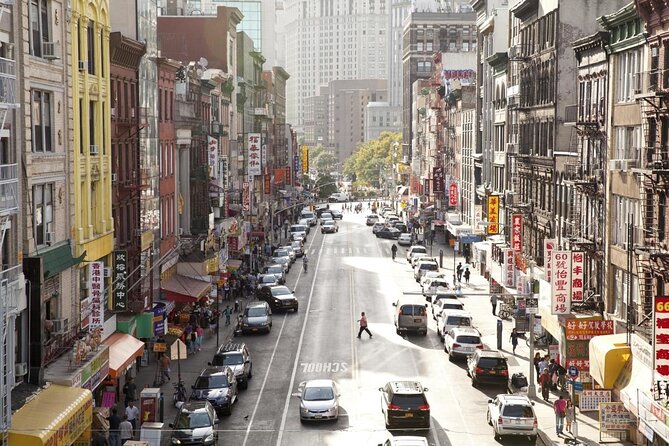
New York’s Lower East Side makes a fine classroom, but this tour gives you a fork and a knish while the lesson unfolds. Over about three hours, you trace African, Irish, Chinese, Italian, Jewish, German, and Latin American influence through Chinatown, Little Italy, Nolita, and the Lower East Side.
I like the small group, capped at 14, because guides can answer questions and keep the walking pace comfortable. I also like the food choices: dumplings, pizza, knish, and empanada samples connect neatly to the people and neighborhoods being discussed. The main consideration is that this is more of a history walk with food than a restaurant crawl, and most tastings happen outdoors or at brief stops.
Key points at a glance
- Four culturally connected tastings: Expect samples such as Chinese dumplings, Italian food, knish, and empanada.
- A serious look at New York’s past: The route covers the African Burial Ground, Five Points, immigrant churches, tenements, and changing neighborhoods.
- Small groups matter: With no more than 14 people, it is easier to hear the guide and ask questions.
- About one mile of relaxed walking: Regular stops make the pace manageable, though you will be outside for most of three hours.
- Strong guides shape the day: Past guides including Astrid, Erik, Tavia, Jesse, Ace, and Cullen have been praised for clear stories and personal attention.
- Good for families: Children under four join free, and the food usually works well for older children.
Why this is a history walk with food
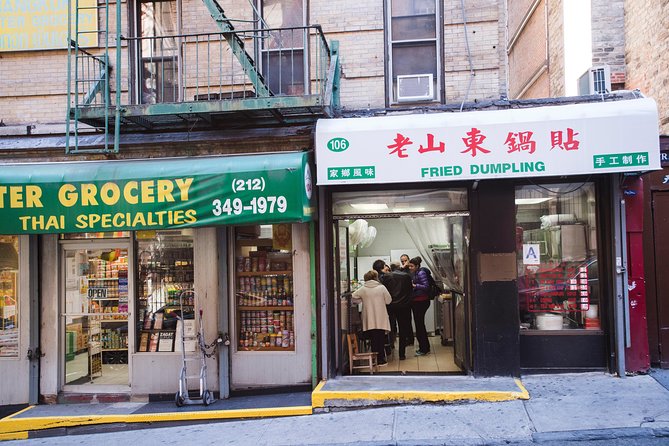
The title may lead you to picture a three-hour eating session. That is not quite the shape of this experience. You receive four historic food samples, but the walking and storytelling take center stage.
That balance is useful if you want to understand why Lower Manhattan tastes the way it does. A dumpling is not just a snack here. It opens a discussion about Chinese immigration and Chinatown. Pizza helps introduce Italian immigration and Mulberry Street. A knish points toward Jewish food traditions and the old Lower East Side, while an empanada connects with Latin American communities and later changes in the neighborhood.
You will not sit down for a full meal. Drinks and extra food cost more, so eat a light breakfast rather than arriving hungry enough for lunch. One past participant felt the tasting intervals were too close together, while another thought the portions were plentiful. The sensible expectation is a series of modest samples, not four restaurant meals.
The price is $54.14 per person. I consider that fair for a three-hour guided walk with four tastings, provided you value context as much as food. A self-guided stroll costs less, of course, but it will not give you the same explanation of the African Burial Ground, Five Points, immigrant churches, or the neighborhood’s changing streets.
More Lower East Side Tours:
- NYC Lower East Side Walking and Food Tour
★ 5.0 · 646 reviews - NYC: Taste the American Dream a Lower East Side Food Tour
★ 4.8 · 307 reviews - Lower East Side Eats Food Tour
★ 5.0 · 100 reviews
Starting at the African Burial Ground
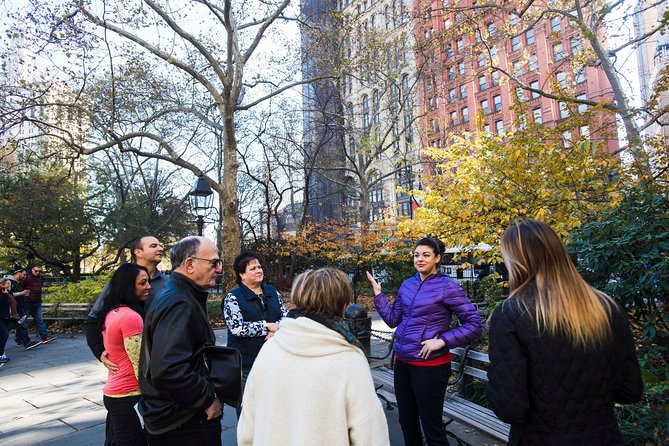
The tour begins at 290 Broadway, near the African Burial Ground National Monument. This is an important opening because it places New York’s story well before the familiar tales of Ellis Island, tenements, and immigrant restaurants.
You learn how the burial ground was discovered and why the memorial’s design matters. The discussion also covers Africans in early New York, including people who were enslaved and those who were free. The stop itself is brief, about five minutes, but its purpose is large: it reminds you that New York’s population story includes forced migration as well as voluntary immigration.
Do not expect a long museum visit here. The stop is outside and admission is free. Still, it gives the rest of the walk a stronger foundation than a tour that begins only with food.
The Supreme Court and an old New York setting
Next comes the New York City Supreme Court. The building may look familiar from television, but the surrounding story is more revealing than its screen appearances.
Your guide explains that this area was once a poor Irish community and, earlier still, the site of a polluted pond. That layering is typical of Lower Manhattan. Streets that now carry official buildings, offices, and restaurants have been reshaped many times.
The stop lasts about five minutes. It is not a courthouse tour, and you should not expect to go inside. Think of it as a quick lesson in how geography, poverty, immigration, and city planning overlap.
Columbus Park and the Five Points
At Columbus Park, the walk reaches the edge of Chinatown and the former Five Points neighborhood. This was once one of New York’s most notorious districts, and the guide uses old photographs to show how different it looked.
The discussion focuses on Irish immigration and the hard conditions faced by new arrivals. This is one of the better moments for families with older children because photographs make the vanished streets easier to picture. The stop is short, around five minutes, but it helps you see that present-day streets can hide an entirely different city underneath.
Columbus Park also gives you a small change of pace before the food stops begin. You walk through a public space rather than from shop to shop, and that keeps the experience from feeling like a series of unrelated bites.
More NYC Food Tours:
- NYC Bus Tour of Brooklyn, Bronx, Queens: Art, Food & Sports
★ 5.0 · 3,805 reviews - NYC: Chinatown & Little Italy Food Tour with 7 Flavorful Tastings
★ 5.0 · 2,733 reviews - Original NYC Guided Food Tour of Chinatown and Little Italy
★ 5.0 · 2,194 reviews - NYC: Greenwich Village Food Tour with 6 Locals Favorites Dishes
★ 5.0 · 1,812 reviews
Chinatown, dumplings, and practical neighborhood advice
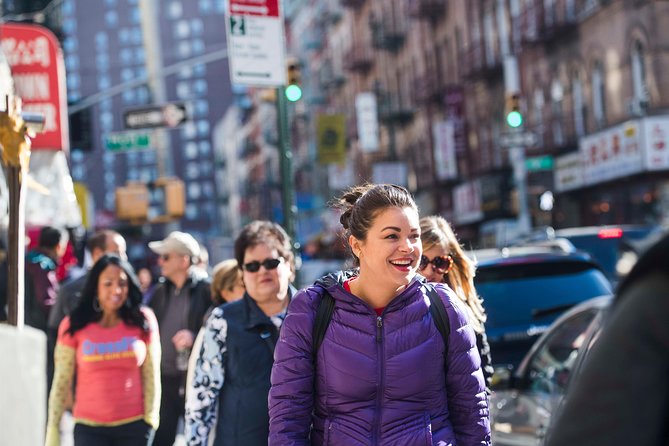
Chinatown receives more time than the early history stops, about 20 minutes. You walk through part of the neighborhood, discuss Chinese immigration, and visit a dumpling shop described as a local favorite.
This is one of the tour’s most eagerly anticipated food stops, and the dumplings have been a favorite for many people. The portion is a sample, not a full order, but it gives you a clear taste of the neighborhood’s food culture without requiring a long sit-down meal.
The guide also offers suggestions for other places to visit in Chinatown. That advice can be especially useful if you are new to the area and want to return later for a longer meal or more exploring. Chinatown can feel confusing at first, so a few location tips are practical, not decorative.
The route is not designed around long restaurant visits. You may eat standing up or pause only briefly. If you prefer a food tour with extended tastings and table service, this format may feel too quick.
Little Italy, Mulberry Street, and Italian food
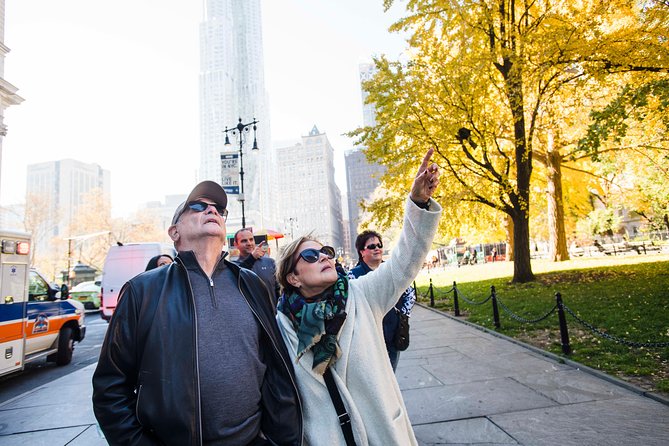
From Chinatown, you head toward Little Italy and walk around Mulberry Street. Here, the guide explains Italian immigration, points out street art, and shares stories about organized crime and the neighborhood’s changing identity.
The food stop takes about 20 minutes and includes a tasting from an old Italian food shop. Pizza is one of the samples associated with this part of the route, and it makes a direct link between an everyday New York food and the Italian communities that helped shape the city.
Little Italy today is smaller and more commercial than the large immigrant quarter many people imagine. That is part of the point. The tour does not freeze the neighborhood in the past. It shows you how a place can retain food traditions and visual traces while changing around them.
The street art adds another layer. You get a look at contemporary New York beside older churches, food shops, and immigration stories. The contrast is one of the reasons this route feels more substantial than a simple trip between famous restaurants.
Nolita and the changing edge of Little Italy
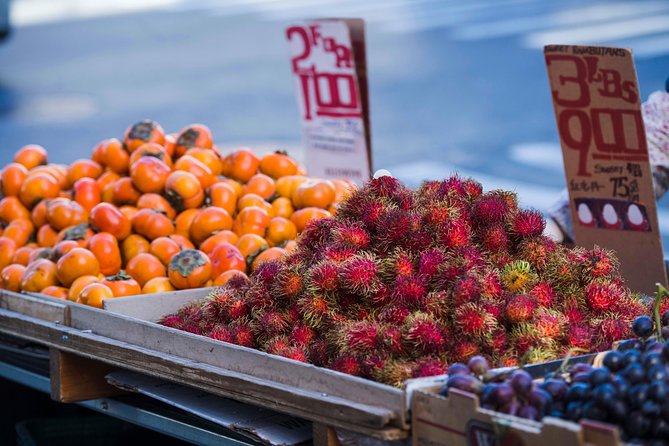
The walk continues through Nolita, now known for trendy bars and restaurants. This area was once part of Little Italy, and your guide explains how its character shifted over time.
You spend about 15 minutes here, looking at street art and discussing neighborhood change. The tour uses Nolita to introduce gentrification without treating it as an abstract idea. You can see the change in the kinds of businesses, buildings, and public art along the route.
This portion may interest you most if you like cities as living places rather than museum pieces. It also creates a useful pause between the older immigrant story and the later Lower East Side stops.
St. Patrick’s Old Cathedral and immigrant faith
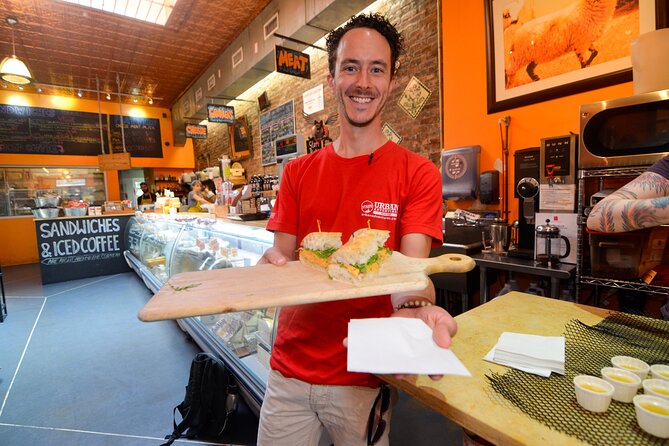
As you walk through Nolita, you pass the Basilica of St. Patrick’s Old Cathedral. The church offers a chance to discuss the difficulties Catholic immigrants faced when they first arrived in the United States.
The visit is brief, around five minutes, and the tour does not promise a detailed interior visit. Its value lies in showing how religion, community support, and immigration were linked. Churches were not only places of worship. For new arrivals, they could also be places of belonging and practical help.
This is another stop where the guide’s storytelling matters more than the amount of time spent. Guides such as Astrid, Tavia, Erik, and Jesse have been praised for making historical facts easy to follow, including for teenagers and preteens.
Sara D. Roosevelt Park and Latin American New York
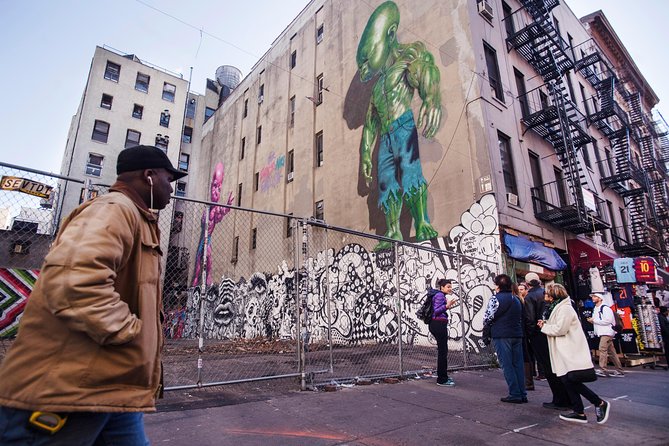
The route then reaches the northern end of Sara D. Roosevelt Park, named for Franklin Delano Roosevelt’s mother. You take a short walk through the park and stop at the M’Finda Kalunga Garden.
Here, the discussion turns toward Latin American immigration and the way the neighborhood has changed across decades. The garden gives the stop a community focus. Instead of seeing the Lower East Side only through old tenements and famous food businesses, you get a sense of how residents shape public spaces today.
This section lasts about 10 minutes. It is not a major sightseeing stop, but it helps connect the tour’s earlier immigration stories with more recent arrivals and local neighborhood life.
The Lower East Side: tenements, gardens, and food
The final main section returns to the Lower East Side. You see streets once marked by crowded tenements and poverty, along with signs of gentrification, street art, and community gardens.
The guide discusses Jewish, German, and Latin American immigration before leading you to a traditional food sample. The knish is one of the foods associated with this part of the route, and it gives you a direct taste of the Jewish food culture that shaped the neighborhood.
This is where the tour’s main idea comes together. Lower Manhattan is not a collection of sealed ethnic districts. People, foods, buildings, and businesses moved, mixed, and changed. Chinatown, Little Italy, Nolita, and the Lower East Side overlap in ways that a map does not always make clear.
The Lower East Side Museum is nearby at the end, and the guide can offer advice about tickets and the gift shop. The museum is not presented as a full included visit, so plan a separate visit if you want to explore it properly.
What the small group changes
The maximum group size is 14. That is small enough for a guide to hear questions and keep an eye on the pace, but it is not a private tour by default. Private options may also be available.
The strongest part of the guiding is the personal delivery. Astrid has been singled out for humor and for explaining the material well to young people. Tavia has been praised for using photographs and for being attentive. Erik has been noted for tying food choices to neighborhood stories, while Cullen has been described as especially considerate of the group’s needs.
Guide quality can vary from one departure to another, but the format gives a good guide room to work. You are not listening to a speech from the back of a large crowd. You can ask about the subway, food shops, buildings, or anything else connected to the route.
Walking, weather, children, and dietary needs
The route covers about 1.6 kilometers, or one mile, at a relaxed pace with regular stops. That is not a strenuous distance, and the experience is listed as suitable for all ages and fitness levels. Still, you are outside for at least three hours, so comfortable shoes and season-appropriate clothing matter.
The tour runs in rain, snow, or sunshine. In rare unsafe conditions, it may be postponed or canceled. Bring a coat, hat, umbrella, or sun protection based on the forecast. There are not constant indoor breaks.
Families are well served by the food. Younger children can usually manage dumplings, pizza, empanadas, and similar samples, and children under four join free. A reduced price applies from ages four through 11. The steady pace and short stops also help keep the day from becoming too demanding.
Dietary restrictions need careful attention. The tour cannot accommodate vegans or people with gluten allergies or intolerances because the food shops may not be able to adjust their dishes. Other specific requests should be provided at least 24 hours before the start.
Is $54.14 good value?
For four samples and three hours of guiding, $54.14 is reasonable if you want a cultural walking tour that happens to taste good. The price also includes the benefit of a small group and local food knowledge, not just the cost of the bites.
It is less compelling if your main goal is quantity. You do not receive drinks or additional food, and some stops are quick. You may want another meal afterward, especially if you skip breakfast.
I would compare it with the cost of a guided New York history walk plus four separate snacks. The real value is the connection between the food and the places. The dumpling, pizza, knish, and empanada are useful because they give the stories a physical, memorable shape.
Who should book this Lower East Side walk?
Book it if you want to understand how immigration shaped New York and you enjoy eating small portions along the way. It is a particularly good first-day activity because the guide can point you toward other places to eat and explore during your stay.
Families, couples, solo visitors, and friends can all fit the format. The small group works well for solo visitors who want conversation without committing to a private tour. It also suits anyone who prefers a calm walking pace and frequent stops.
Choose something else if you want a food-first tour with many tastings, drinks, or long restaurant visits. This is a walking history tour with four food stops, not an afternoon of extended dining.
Free cancellation is available until 24 hours before the start time. After that point, the fare is not refunded, so check your plans before booking.
FAQ
How long does the Lower East Side Food Tour last?
The tour lasts about three hours and includes approximately one mile of walking at a relaxed pace with regular stops.
Where does the tour begin?
The tour begins at 290 Broadway, New York, NY 10007.
Where does the tour end?
It ends in the heart of the Lower East Side, near the Lower East Side Museum area, at New York, NY 10002.
How many food tastings are included?
Four historic dish samples at four food stops are included. Examples include dumplings, pizza, knish, and empanada.
Are drinks or extra food included?
No. Drinks and additional food are not included in the tour price.
Can children join the tour?
Yes. Children under four can join free, and a reduced child price applies to children aged four through 11.
Can the tour accommodate vegan or gluten-free diets?
No. The tour cannot accommodate vegan diets or gluten allergies and intolerances. Other specific dietary requests should be provided at least 24 hours before the tour.
What happens if it rains or snows?
The tour runs in rain, shine, or snow. If weather creates a safety risk, it may be postponed or canceled.
How far in advance can I cancel?
You can cancel at least 24 hours before the start time for a full refund. Cancellations made within 24 hours are not refunded.
Recently added in New York City
- Squid Game: The Experience New York City★ 4.0 · 9 reviews
- New York: Private Professional Photoshoot at Central Park★ 5.0 · 9 reviews
- New York Queens Indoor Skydiving Experience With 2 Flights★ 5.0 · 4 reviews
- Professional Photoshoot at Brooklyn Bridge in New York★ 5.0 · 5 reviews
- New York 4-Day Tour to Niagara Falls & Washington★ 4.0 · 13 reviews
- New York: Times Square Professional Photoshoot★ 4.5 · 17 reviews
- New York Princess Cruises★ 3.0 · 4 reviews
- New York Midtown Scavenger Hunt Adventure★ 3.5 · 9 reviews
NYC Food Tours, compared.
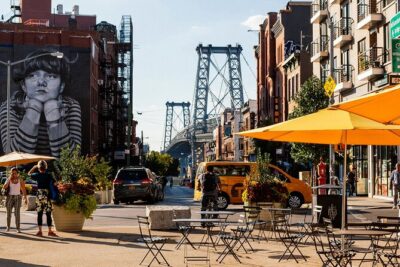
NYC Bus Tour of Brooklyn, Bronx, Queens: Art, Food & Sports
Read our review →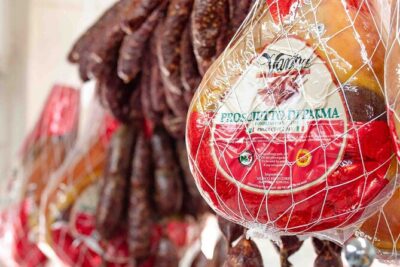
Chinatown & Little Italy Food Tour with 7 Flavorful Tastings
Read our review →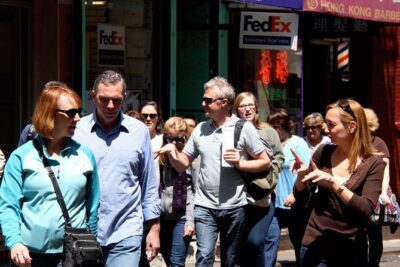
Original NYC Guided Food Tour of Chinatown and Little Italy
Read our review →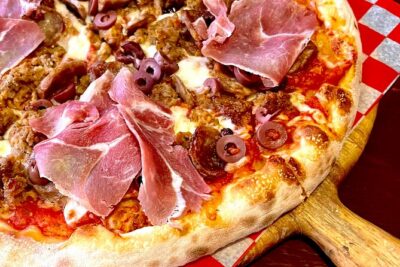
Greenwich Village Food Tour with 6 Locals Favorites Dishes
Read our review →
Greenwich Village Walking and Food Tasting Tour
Read our review →
New York City Mafia and Local Food Tour led by NYPD Guides
Read our review →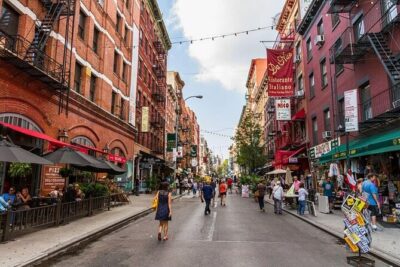
True Crime NYC: Mafia Walk w/Ret. NYPD Detective and Local Food
Read our review →
Browse the lists this tour appears in