
Reviewed · METROPOLITAN MUSEUM TOURS
New York City: The Bible at the Metropolitan Museum of Art
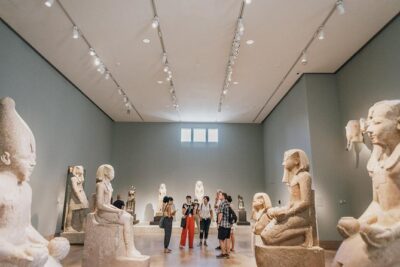
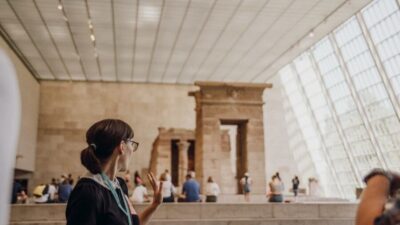
The most interesting part of this Met tour is the way it connects objects across several departments. You move from ancient Egypt and the Exodus to Greek and Roman works, then on to paintings shaped by Biblical stories. The museum becomes a visual guide to a book many people know mainly through words.
I like the tour’s broad reach, and I like the way guide Mel Lehman explains links that are easy to miss on your own. His brochure pairs museum objects with Bible passages, which gives you something useful to follow after the tour. The main caution is time: two hours can introduce the subject, but it cannot cover the Met in full.
Key points
- Follow the Bible through several museum departments: The route includes Egyptian, Greek, and Roman collections, along with later Biblical art.
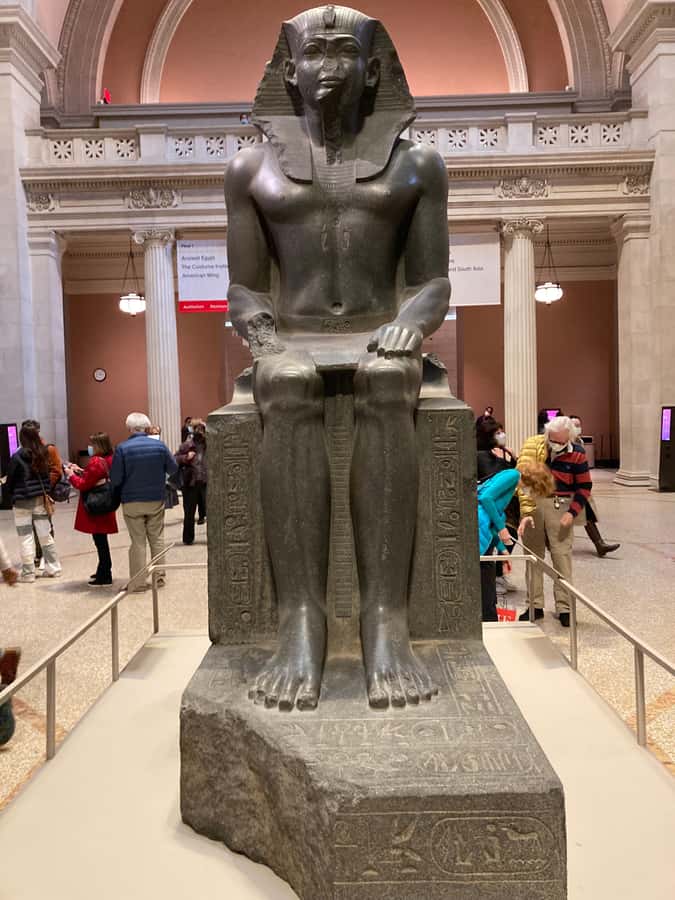
- Meet at a clear landmark: The group gathers beside the statue of a pharaoh in the Met’s Great Hall.
- Hear context beyond object labels: Mel Lehman connects individual works with Biblical passages and historical settings.
- Stay at the Met afterward: Your admission remains valid for the rest of the day after the guided visit.
- Expect a non-sectarian approach: The tour is designed for people of faith and people with no religious belief.
- Plan for walking and looking: Comfortable shoes and a water bottle matter, since the museum has no water fountains.
Beginning at the pharaoh statue in the Great Hall
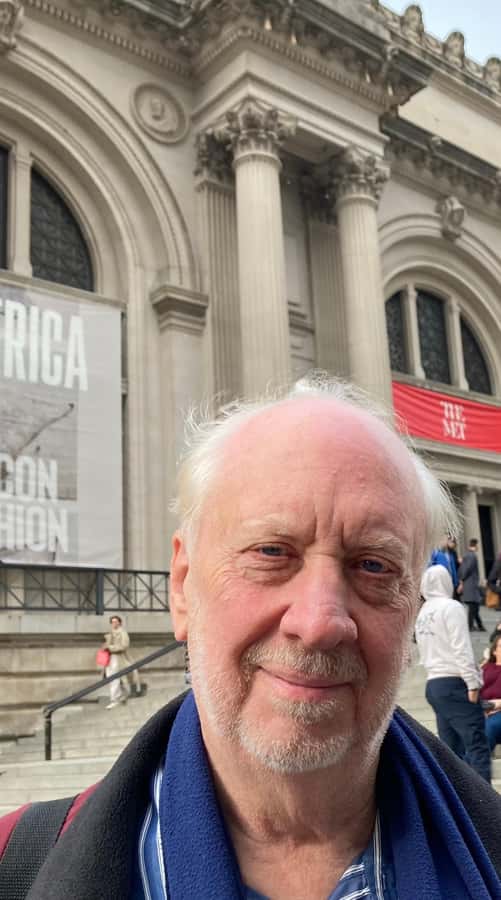
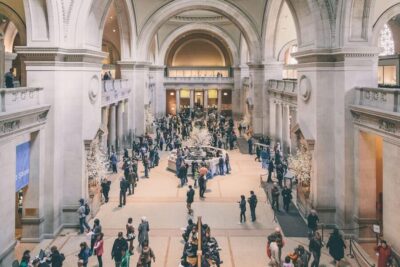
Your meeting point is easy to identify: the statue of a pharaoh in the Metropolitan Museum of Art’s Great Hall. That matters in a museum the size of the Met, where a vague meeting place can cost you precious minutes.
The tour lasts two hours and is conducted in English. You will be walking through major collection areas, so wear shoes you can manage comfortably for a sustained museum visit. The route is wheelchair accessible, but you should still expect a steady series of galleries and stops.
The tour includes admission and lets you remain in the museum after the guided portion ends. I consider that an important part of the value. Two hours gives you a focused introduction, then you can use the rest of your day to revisit a favorite gallery or see other parts of the Met at your own pace.
More Metropolitan Museum Tours:
- Metropolitan Museum Guided Group Tour
★ 5.0 · 1,013 reviews - “The Met” Metropolitan Museum of Art Exclusive Guided Tour
★ 5.0 · 863 reviews - NYC: Express Highlights Tour of the MET Museum
★ 4.4 · 795 reviews
Why ancient Egypt gives the tour its starting point
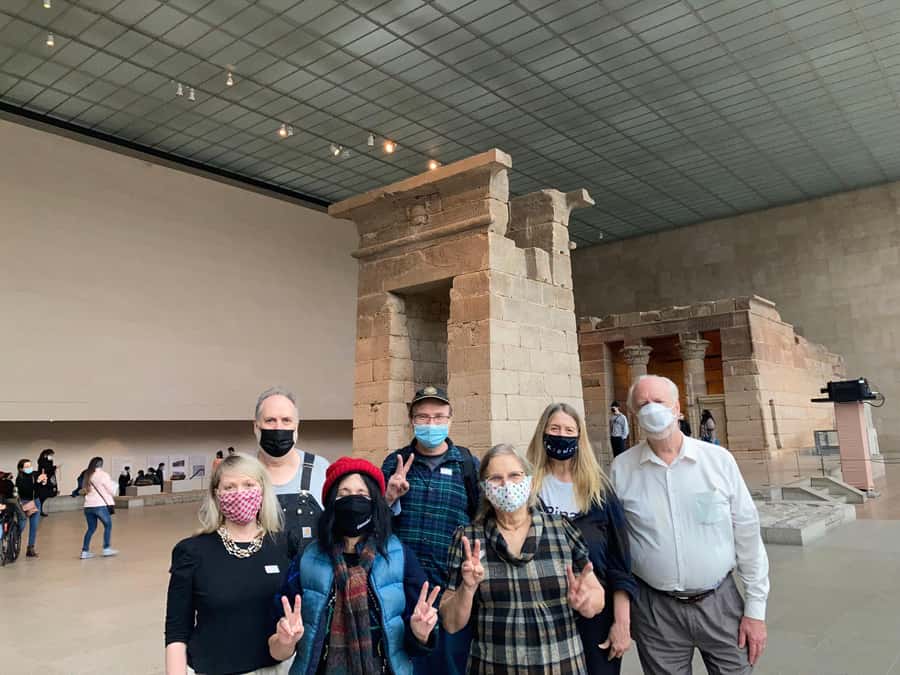
Egypt is central to the tour because the Exodus is one of the Bible’s key stories. The Egyptian galleries provide a physical setting for thinking about the people, power, beliefs, and daily life connected with that part of the Biblical world.
You should not expect the tour to present every object as direct proof of a specific Biblical event. Its value is in showing you the ancient cultures and visual evidence that help explain the world in which Biblical stories took shape.
I like this approach because it makes the Bible part of a wider human story. The objects are not only religious illustrations. They also reflect how ancient people represented rulers, gods, families, work, death, and the order of society.
The guide’s role is especially useful here. Museum labels usually give you the object’s name, date, and place of origin. A guided visit can add the connection between those facts and the Biblical passages being discussed.
Finding Biblical connections in Greek and Roman collections
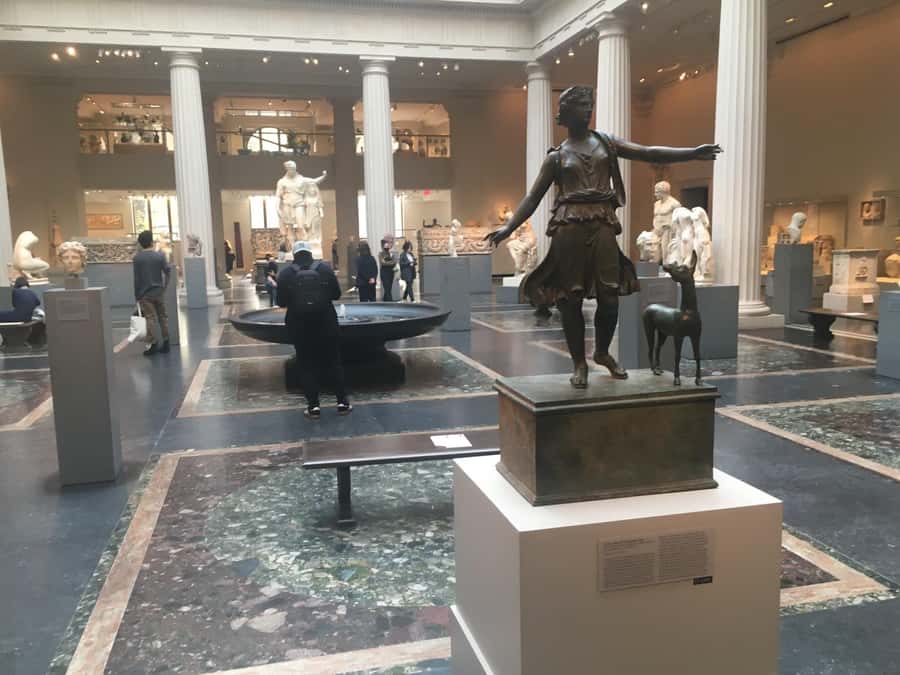
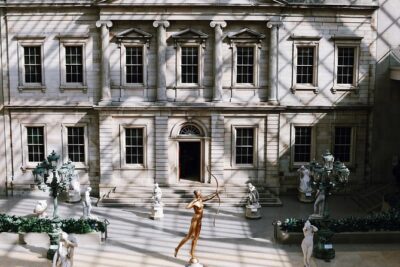
The tour then moves to ancient Greece and Rome, two cultures with important links to the Bible. These galleries help you see how the Biblical world interacted with larger Mediterranean civilizations.
Greek and Roman art can also make the later parts of the Bible easier to place. Instead of treating Biblical events as isolated stories, you see them alongside the artistic and political traditions of the ancient Mediterranean.
This section may appeal most to you if you enjoy connections across subjects. The tour is not limited to paintings labeled as Christian. It asks you to consider how archaeology, sculpture, architecture, and historical setting can illuminate Biblical themes.
The drawback is that this kind of route requires concentration. You are not simply moving from one famous masterpiece to the next. You are listening for links between periods, cultures, and texts. If you prefer a quick list of highlights, the interpretive style may feel slower.
Paintings shaped by Biblical stories
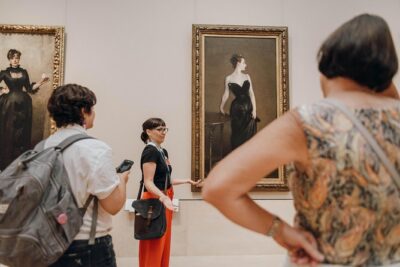
The experience also includes art by major painters inspired by the Bible. These works show how Biblical stories continued to influence artists long after the ancient periods covered in the Egyptian, Greek, and Roman sections.
This part gives the tour a wider time span. You begin with archaeological objects from the ancient world, then see how later artists interpreted Biblical figures and events through their own styles and cultures.
I find that shift useful because it shows that the Bible has not been one fixed visual subject. Artists have returned to its stories for centuries, making choices about emotion, character, drama, faith, and human suffering.
You may also find that the paintings change the way you think about the earlier objects. A later artwork can give a familiar story a new mood, while an ancient artifact can remove some of the assumptions created by modern religious art.
The tour is not limited to one denomination or one interpretation. Its stated aim is non-sectarian, so you can take part as a person of faith or with no religious belief. That makes the experience suitable for a mixed group, a family with different viewpoints, or anyone interested in the Bible as part of world culture.
More Museums in New York City:
- NYC: Empire State Building Tickets – Observatory & Museum
★ 4.7 · 25,757 reviews - New York City: American Museum of Natural History Ticket
★ 4.5 · 15,447 reviews - NYC: Museum of Modern Art (MoMA) Entry Ticket
★ 4.6 · 12,540 reviews - 9/11 Memorial, Ground Zero Tour with Optional 9/11 Museum Ticket
★ 5.0 · 6,381 reviews
What makes Mel Lehman’s guiding style useful
Mel Lehman is the guide named for this experience, and the strongest praise centers on his teaching, warmth, humor, and flexibility. Those traits matter in a museum tour because the best explanation is often the one that adjusts to the group’s questions and pace.
You can expect more than a walk past objects with dates and titles. Mel relates works in the Met to Bible passages and provides information that may not appear on the gallery signs. A printed brochure listing artifacts and corresponding passages adds a practical reference point.
That brochure is one of the more useful details of the tour. You can use it to remember which objects were discussed, compare the museum pieces with the cited passages, and continue thinking about the connections after leaving the group.
The guide also allows breaks as needed and can adjust the pace. That is helpful in a large museum, especially if you want time to look closely rather than hurry from room to room. Still, flexibility does not create extra hours. You will need to accept that some galleries and objects receive only a short look.
Two hours at the Met, followed by your own museum time
Two hours is a reasonable length for a focused subject tour. It is long enough to build a clear thread through several departments without asking you to spend an entire day listening to a guide.
At the same time, the Met is enormous. You should not book this expecting a full survey of the museum or every Biblical object in its collection. Think of the tour as a guided framework, not a complete museum visit.
The included ticket remains valid for the rest of the day. I would plan to use that extra time rather than rush away when the tour ends. You could return to an Egyptian gallery, spend longer with a painting, or explore an unrelated section that catches your eye.
Because meals, drinks, transportation, and personal expenses are not included, you should plan those separately. The museum visit itself is the focus, and the $60 price pays for the guided experience and admission rather than a full-day package with extras.
Is the $60 price good value?
At $60 per person, the value depends on how much help you want interpreting the Met. If you already know the museum well and enjoy reading labels on your own, the price may feel high for a two-hour visit.
If the museum feels overwhelming, the cost is easier to justify. You receive a planned route, an English-speaking guide, a Bible-focused theme, a passage list, and admission that lets you continue exploring afterward.
I especially like that the tour gives you a subject rather than trying to cover everything. A focused theme can make a large museum more manageable. You are not spending your first hour simply deciding which corridor to enter.
The value is also stronger for people who want historical and artistic context, not only religious instruction. The tour treats the Bible as an important part of education and culture while remaining open to people of faith and people with no faith.
You should also factor in your schedule. The tour lasts two hours, but you will get the most from the ticket if you have extra time to remain at the Met. If you are rushing to another appointment, you may not make full use of what you paid for.
Practical planning for the museum visit
Bring comfortable walking shoes. The tour takes place inside a large museum, and the advice to dress for walking is practical rather than decorative.
Bring water if you want it. There are no water fountains, and drinks are not included. A small bottle can make the visit more comfortable, especially if you plan to stay for the rest of the day.
A camera is allowed, but flash photography is not. Photography without flash is permitted, so you can record selected objects and paintings while following the museum’s stated rule.
Transportation to and from the museum is not included. You need to make your own way to the Met and arrive at the Great Hall meeting point beside the pharaoh statue.
The activity offers free cancellation up to 24 hours before the start time, and you can reserve now and pay later. Those terms help if your New York plans are still shifting, but you should check the available start times before building the rest of your day around it.
Who will get the most from this tour?
I would recommend this experience to you if you are curious about the Bible’s place in art, archaeology, and Western culture. It suits people who want a guided explanation rather than a quiet solo visit with a museum map.
It should also work well for a mixed-faith group. The non-sectarian format does not require you to share a religious outlook, and the subject can be approached through history, literature, art, and personal belief.
Families and small groups may appreciate the ability to ask questions and take breaks. The flexible pace is helpful when everyone does not want to look at each object for the same amount of time.
The tour may be less suitable if you want an exhaustive survey of the Met, a rapid highlights tour, or a visit centered only on one department. It covers several periods and types of art, so its strength is connection rather than depth at every stop.
People with a strong personal interest in the Bible may find the museum setting adds fresh weight to familiar passages. You see objects from the world connected to those stories, then follow their influence into later art.
Should you book The Bible at the Met?
Book it if you want a focused, thoughtful way to approach the Met and you value a guide who can connect objects with Bible passages. Mel Lehman’s warm, flexible teaching style and the take-home artifact list add real usefulness to the two-hour visit.
Think twice if you want to cover the museum independently or have only a short window in New York. The $60 price makes the most sense when you use the included admission for more exploring after the tour.
For a visitor interested in ancient Egypt, Greece, Rome, and later Biblical art, this is a practical way to give your Met visit a clear purpose. Go with comfortable shoes, bring water, and leave enough time to continue looking after the guided portion ends.
FAQ
How long does The Bible at the Met tour last?
The guided tour lasts two hours. Your ticket is also valid for the remaining part of the day after the tour.
Where does the tour meet?
Meet at the statue of a pharaoh in the Great Hall at the entrance to the Metropolitan Museum of Art.
What languages are available?
The tour is conducted in English with a live guide.
Is the tour suitable for people who are not religious?
Yes. The tour is non-sectarian and is described as appropriate for people of faith and people with no faith.
Does the tour include museum admission?
Yes. It includes a guided tour of the Metropolitan Museum of Art and a ticket that remains valid for the rest of the day.
Can I take photographs?
Photography without flash is allowed. Flash photography is not allowed.
Is the tour wheelchair accessible?
Yes. The activity is wheelchair accessible.
Recently added in New York City
- New York City: Tour of the ‘Most Dangerous’ Neighborhoods★ 4.8 · 30 reviews
- New York City: Guided Brooklyn Craft Brewery Tour★ 4.8 · 18 reviews
- NYC: Thanksgiving Gourmet Lunch or Dinner Harbor Cruise★ 5.0 · 13 reviews
- New York City: Top-Rated Central Park Pedicab Tour★ 4.5 · 4 reviews
- New York City: Statue of Liberty & Battery Park Guided Tour★ 4.5 · 53 reviews
- NYC: Sunset Cruise on a Small Yacht with a Drink★ 4.8 · 85 reviews
- New York City: Statue of Liberty & Ellis Island Guided Tour★ 4.7 · 38 reviews
- New York City: Solo or Couples Photoshoot in Times Square!★ 5.0 · 13 reviews
Metropolitan Museum Tours, compared.
“The Met” Metropolitan Museum of Art Exclusive Guided Tour
Read our review →
“The Met” Metropolitan Museum of Art Tour Semi-Private 8ppl Max
Read our review →
Browse the lists this tour appears in