
Reviewed · AUDIO TOURS
A Gilded Age Audio Guide: New York’s Millionaire Row
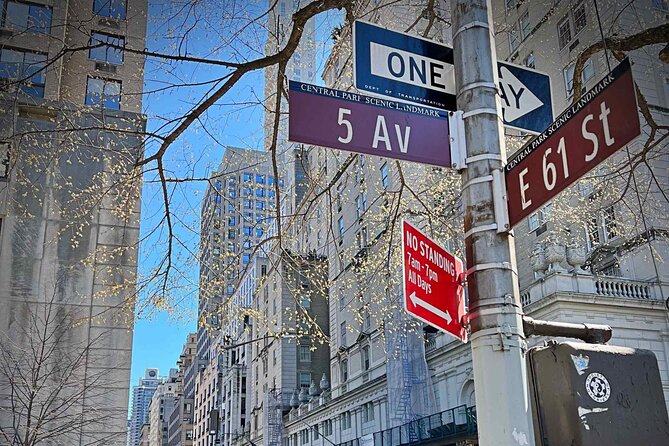
Fifth Avenue’s Millionaire Row is best understood on foot, where private clubs, grand mansions, and old-money institutions still line the route. This GPS audio tour leads you from East 60th Street to The Metropolitan Museum of Art, with stories timed to your position.
I like the freedom to start when you wish and stop for photos, coffee, phone calls, or a museum visit. I also like the clear directions, including warnings when you stray from the route and reminders about restroom stops. The main drawback is that you need your own smartphone and headphones, and the tour cannot be refunded or changed after booking.
Key points to know before you go
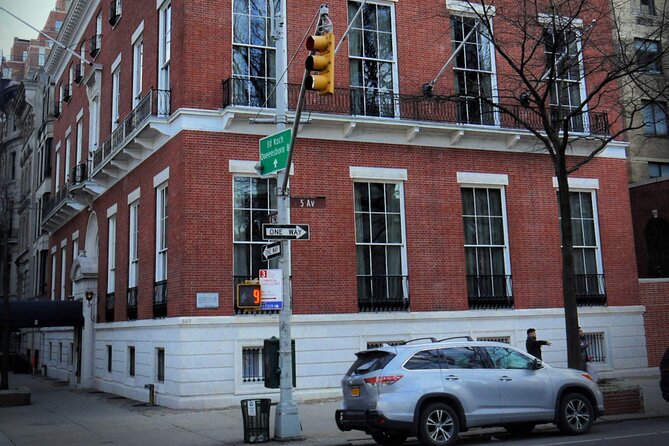
- The route connects 15 major sights: You pass the Metropolitan Club, Knickerbocker Club, Frick Collection, Madison Avenue, and several former mansion sites.
- GPS controls the narration: The app cues the next story as you reach the right place and warns you if you walk off course.
- The walk ends at The Met: This gives you a natural way to continue with art after the Gilded Age stories.
- You set the pace: The tour takes about 80 to 100 minutes, but you can pause, rewind, and resume whenever you like.
- The price is $14.99 per person: For a private, self-guided walk with lifetime access, that is a fair price if you value flexibility.
- Bring your own gear: A smartphone and headphones are not included, and the tour is offered in English only.
Walking into New York’s old-money world
The tour begins outside the Metropolitan Club on East 60th Street. JP Morgan founded this private club, and its location makes a sharp opening statement: you are starting among the institutions built for New York’s wealthiest families during the Gilded Age.
You do not simply hear a list of rich names. The route uses buildings and streets to explain how social power worked. Clubs gave certain men a place to meet. Mansions displayed family wealth. Fifth Avenue became a public showplace for private fortunes.
That setting makes this more than an audio history lesson. You are looking at the same addresses that helped define New York society, even as modern shops, traffic, and office buildings carry on around them.
The opening location is also practical. East 60th Street is near public transportation, and the tour has no fixed departure time. You can begin during the stated booking period at any time of day, since the experience operates around the clock.
More Gilded Age Mansion Tours:
- Gilded Age Mansions Tour in New York
★ 5.0 · 980 reviews - NYC: Gilded Age Mansions Guided Tour
★ 4.8 · 374 reviews - Fifth Avenue Gilded Age Mansions Walking Tour
★ 5.0 · 280 reviews
Fifth Avenue, mansions, and modern luxury
From the Metropolitan Club, the route follows Fifth Avenue, once the city’s most prized residential address. You pass grand buildings and high-end shops, a useful reminder that the avenue still trades on prestige, even though many of its original private homes have disappeared or changed use.
This is one of the tour’s strongest ideas: New York’s old wealth is not locked in a museum district. It is mixed into a working city. You may be looking at a former mansion one moment and a luxury storefront the next.
The audio guide helps you read the street instead of merely walking along it. It points out where to look, tells you when to cross, and explains the people connected with the buildings. That guidance matters on Fifth Avenue, where it is easy to keep moving and miss details above street level.
The route passes the Knickerbocker Club, a private social club associated with New York’s elite. You cannot treat the club like a normal sightseeing stop, but its presence helps explain the closed social networks of the period. The building is part of the story precisely because access was limited.
Central Park and The Arsenal

Central Park enters the tour as both a view and a piece of social history. For residents of Millionaire Row, the park offered open space beside some of the most expensive homes in the city. It also gave the avenue a grand public edge.
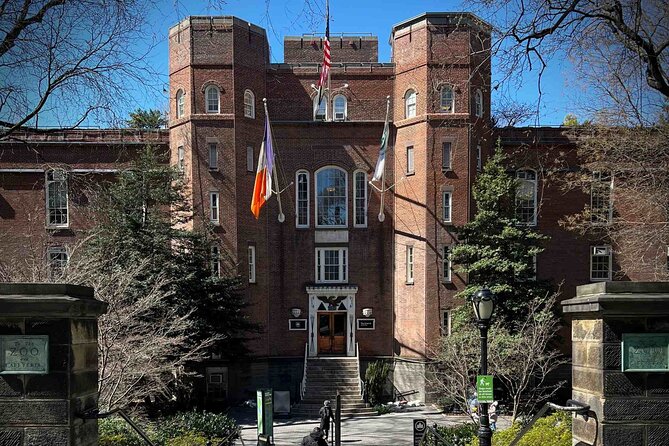
The route takes you toward The Arsenal, a historic building that once served as a military arsenal and now houses the Central Park Conservancy. This stop breaks up the run of private clubs and mansions with a building tied to the city’s public institutions.
I like this change of focus. The tour is not only about wealthy families collecting houses. It also shows how the surrounding city provided parks, civic buildings, and shared spaces that shaped the area.
You may find the park a good place to pause the narration. Since playback is controlled through the app, you can take a break without losing your place. The experience is designed for exactly this kind of flexible stop and start.
Beekman Mansion and the Vanderbilt connection
The route continues past Beekman Mansion, another example of the large homes once built for prominent New York families. These addresses help you picture the scale of private life during the period, when a family residence could occupy a major stretch of the avenue and signal social rank before anyone stepped inside.
The Emily Thorn Vanderbilt Sloane White Mansion adds another layer to the story. Its name connects the route to the Vanderbilt family, one of the clearest examples of how railroad wealth turned into social power and architectural display.
You should not expect to enter every building on the walk. This is an exterior route, and some properties are private or used for other purposes. The value comes from seeing the addresses in sequence and hearing why each one mattered.
That sequence is important. One mansion might seem impressive on its own, but several in a row show how concentrated wealth once was along Fifth Avenue. The audio format lets you keep moving while supplying the family connections and social background that a quick glance cannot provide.
More Audio Tours in New York City:
- Skyline Night Bus Audio Narrated Tour Experience
★ 4.5 · 138 reviews - Guided Tour (with Audio) Hamilton Musical in Lower Manhattan NYC
★ 5.0 · 11 reviews - New York City’s Financial District: A Self-Guided Audio Tour
★ 4.5 · 8 reviews - New York’s Iconic Central Park: A Self-Guided Audio Tour
★ 4.0 · 4 reviews
The Frick Collection and Henry Clay Frick
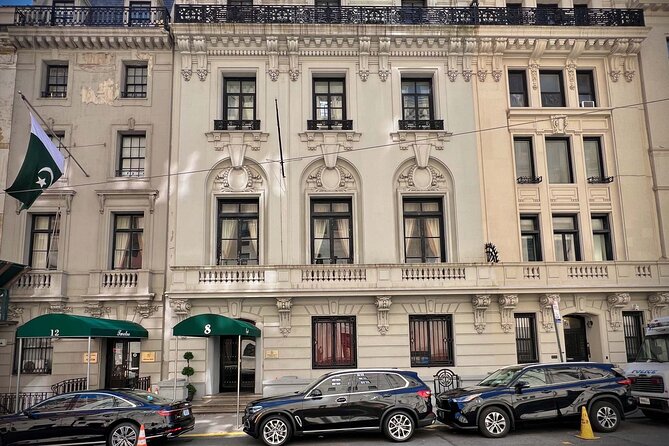
The Frick Collection is one of the route’s most rewarding stops. The museum occupies the former residence of industrialist Henry Clay Frick and is known for European art.
Even if you do not enter the museum during this walk, the exterior connects collecting, industry, and domestic life. Frick’s fortune paid for both a grand home and a major art collection, a pattern repeated by several wealthy New Yorkers of the era.
The stop also gives you a useful choice. You can finish the walk first and return to the museum later, or pause the tour and make a visit part of your day. The audio guide remains available after booking, so there is no need to force the entire experience into one uninterrupted stretch.
The tour’s flexibility works especially well here. Museums can take far longer than planned, and you may want more time at The Frick Collection than at any single street stop. Pause the audio and pick up the route afterward.
Richard Morris Hunt and the architects of power
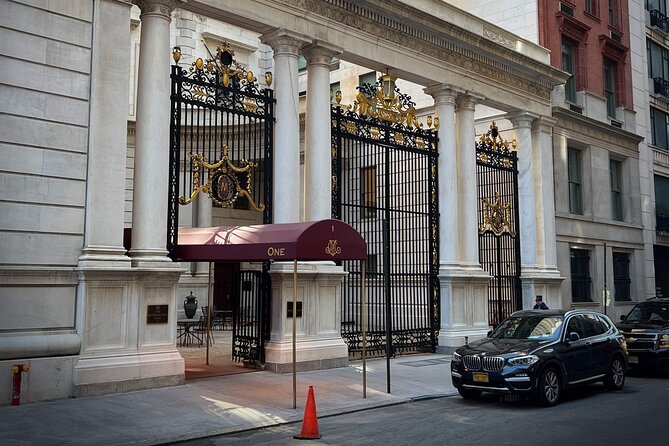
The Richard Morris Hunt Memorial honors the architect who helped shape New York’s grandest buildings. His presence on the route reminds you that Millionaire Row was not created by industrial fortunes alone. Architects translated that money into facades, entrances, stairways, and rooms meant to impress.
This is a valuable stop for anyone interested in architecture. The audio tour does not treat the buildings as anonymous expensive houses. It connects the design work to the people who commissioned it and to the social world the buildings served.
The broader lesson is clear: Gilded Age architecture was a form of public communication. A mansion told passersby that its owner had money, taste, connections, and a place near the top of New York society.
The Herbert N Strauss House and Edward S Harkness House
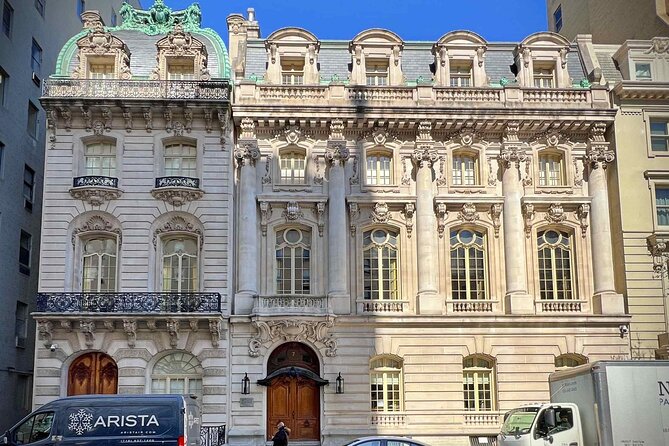
The Herbert N Strauss House and Edward S Harkness House continue the architectural portion of the walk. Both properties show how the Upper East Side became associated with grand private residences and prominent families.
These stops may appeal most to people who enjoy looking closely at building exteriors. The guide directs your attention to the relevant places and supplies context as you walk, so you are less likely to treat them as just more handsome facades.
At the same time, you should keep your expectations in check. This is not a formal architecture lecture, and the tour does not provide interior access. The experience works best if you enjoy street-level context, family stories, and the contrast between old residences and present-day New York.
The GPS design also keeps the walking portion active. Instead of standing in one spot waiting for a guide to finish a long explanation, you can listen while moving between sites. That cuts down on idle time and lets you control how long you spend looking at each building.
Madison Avenue and the changing address
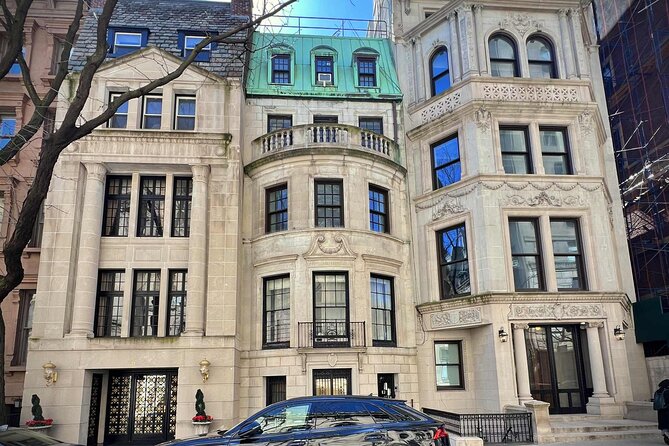
The route turns toward Madison Avenue, known for upscale shops, luxury boutiques, and polished storefronts. Here, the tour brings the story into the present. Wealth still gathers along these streets, but its expression has changed from private mansions to retail, branding, and commercial prestige.
This section helps you see that New York’s old-money district did not simply vanish. Parts of it changed function. The social clubs, residences, and shops now sit within a city where the public can walk through the same area, even when certain interiors remain private.
Madison Avenue also gives the walk a little variety. The route is not one long procession of similar houses. You move through streets with different moods and uses, which makes the 80 to 100 minute duration feel manageable.
For the best experience, keep your phone charged and use headphones that allow you to hear traffic around you. The tour requires attention to both the audio and your surroundings, especially while crossing streets.
Stuyvesant Fish and the James B Duke House
The story of Stuyvesant Fish brings the social and political side of the Gilded Age into view. He was a notable figure in New York’s social and political circles, and his inclusion shows that the tour is not limited to industrialists and mansion owners.
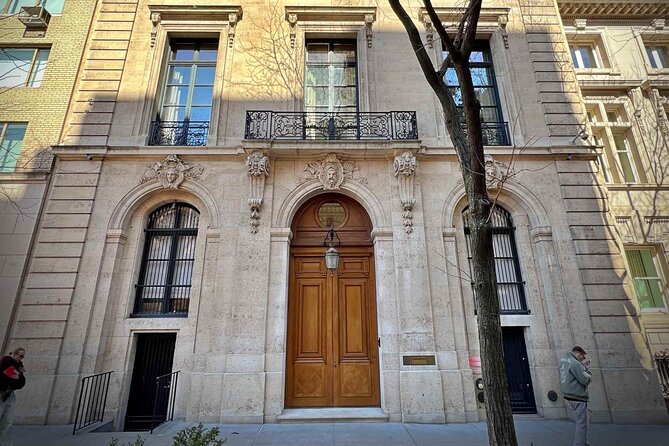
The James B Duke House provides another major architectural stop. Duke made his fortune in tobacco and became known as a philanthropist. His former home displays the Beaux-Arts style associated with large, formal residences built to announce status.
Together, these stops show two sides of the era. One concerns the people who shaped elite society and public life. The other concerns the buildings that made their success visible.
You may find the final stretch especially satisfying because it moves from individual homes toward a major public institution. The route ends at The Metropolitan Museum of Art, which provides a fitting destination for a tour about wealth, collecting, architecture, and social power.
Ending at The Metropolitan Museum of Art
The Met is not merely a convenient endpoint. It ties together several themes from the walk. Wealthy New Yorkers helped shape the city through donations, collecting, philanthropy, and institutional support, and The Met became one of the world’s great museums.
The tour itself does not include museum admission. That is important when planning your day. You finish at 1000 Fifth Avenue, and you can decide if you want to enter, rest nearby, or continue elsewhere.
Ending at The Met is also practical. You do not have to retrace your steps to return to the starting point. The walk moves in one direction, and the museum gives you a clear finish.
If you enjoy art, I would leave extra time after the audio portion. If you are mainly interested in architecture and social history, you can simply treat The Met as the final setting and stop there.
How the GPS audio format works
The app supplies directions to East 60th Street, and the tour begins when you reach the correct starting point. As you move, GPS detects your location and plays the related information automatically.
This is the feature that makes the tour more useful than a basic downloadable recording. It can tell you to cross the street, look left or right, or return to the route if you walk away from it. You can also pause, rewind, resume, or answer a phone call without losing control of the experience.
You receive lifetime access, including use before and after the booked date. The tour also includes offline access to the audio, map, and location data, which is helpful if your connection becomes unreliable.
You need to provide the smartphone and headphones yourself. The tour is in English, and it is a private activity for your own group, with no live guide or set departure time.
Is $14.99 a fair price?
At $14.99 per person, I consider this good value for a focused New York walk. A live private tour would normally require coordinating with a guide and a fixed time. Here, you get a roughly 80 to 100 minute route, automatic narration, offline material, and lifetime access.
The value is strongest for solo visitors, couples, and small groups who dislike rigid schedules. You are not paying for a quick loop around one building. You are getting a connected route through Fifth Avenue, the Upper East Side, Madison Avenue, and The Met.
It is less attractive if you want personal conversation, questions answered on the spot, or interior visits. A live guide can adapt to your interests. This audio tour cannot. Its strength is control, not interaction.
The tour has a five-star score from 13 ratings, with every rating recommending it. The most praised features are the clear script, entertaining narration, accurate GPS cues, off-route warnings, and freedom to pause. Those are useful strengths, especially in a city where a small wrong turn can disrupt a walking route.
Book carefully, though. The experience is non-refundable and cannot be changed for any reason after purchase.
Who should choose this walk?
I would choose this tour if you like history, architecture, old New York society, or self-guided sightseeing. It also suits solo visitors and introverts who want a well-planned route without joining a group.
It works well on a pleasant day when you can stop often and examine the buildings. You can also combine it with The Frick Collection, Central Park, or The Met, though museum entry is not included.
You might prefer a live guide if you want debate, questions, or a more personal story. You might also want another option if you do not use a smartphone, do not have headphones, or prefer narration in a language other than English.
Should you book A Gilded Age Audio Guide?
Book it if you want to understand what you are seeing along Fifth Avenue rather than simply walk past expensive buildings. The route gives you specific names, addresses, social connections, and architectural context, then finishes at one of New York’s great museums.
The best reason to book is the control. Start when you like, move at your own speed, stop for a restroom or photo, and restart without losing your place. For $14.99, that is a sensible trade for a well-planned private walk.
Skip it if you need a human guide or guaranteed indoor access. For everyone else, this is a practical way to meet New York’s Millionaire Row on your own terms.
FAQ
Where does the audio tour start?
It starts outside the Metropolitan Club on East 60th Street in New York City.
Where does the tour end?
The tour ends at The Metropolitan Museum of Art, located at 1000 Fifth Avenue, New York, NY 10028.
How long does the tour take?
The estimated duration is about 1 hour 20 minutes to 1 hour 40 minutes.
What does the tour cost?
The price is $14.99 per person.
Is a live guide included?
No. This is a self-guided GPS audio tour for your own group.
What language is available?
The tour is offered in English.
Do I need a smartphone and headphones?
Yes. You must provide your own smartphone and headphones.
Can I pause and resume the tour?
Yes. You can pause, rewind, and resume the audio while exploring at your own pace.
Is the tour available offline?
Yes. Offline access to the audio, maps, and geodata is included.
More Self-Guided Tours in New York City
- NYC: Metropolitan Museum of Art Guided or Self-Guided Tour
★ 4.0 · 56 reviews - NYC Central Park Self-Guided Walking Tour
★ 5.0 · 27 reviews - NYC Grand Central Terminal Self-Guided Walking Tour
★ 4.5 · 19 reviews - Self-Guided Tour of the Museum at Eldridge Street
★ 4.3 · 13 reviews
Recently added in New York City
- Private Tour: Niagara Falls Day Trip from New York City★ 4.0 · 4 reviews
- Private Tour of Historic Lower Manhattan and the Financial District NYC★ 5.0 · 6 reviews
- New York Private Food Tour with 6+ Tastings in Greenwich Village★ 5.0 · 107 reviews
- Brooklyn, Queens, and the Bronx Private Tour with a Driver-Guide★ 4.5 · 8 reviews
- Private Tour: Personal Travel Photographer Tour in New York★ 5.0 · 24 reviews
- Private Walking Tour: 5th Avenue and the Gilded Age Mansions★ 5.0 · 4 reviews
- Private Tour New York City in the Gilded Age: A History of High Society★ 5.0 · 125 reviews
- Private Tour Alexander Hamilton and the Founding Fathers New York City★ 5.0 · 23 reviews
Audio Tours, compared.

Skyline Night Bus Audio Narrated Tour Experience
Read our review →
Guided Tour (with Audio) Hamilton Musical in Lower Manhattan NYC
Read our review →
New York City’s Financial District: A Self-Guided Audio Tour
Read our review →
New York City’s High Line: A Self-Guided Audio Tour
Read our review →
New York’s Iconic Central Park: A Self-Guided Audio Tour
Read our review →
Brooklyn Bridge Self-guided Bike Tour App – Audio + Written
Read our review →

Broadway: A Self-Guided Audio Tour of the World’s Iconic Theatre District
Read our review →Browse the lists this tour appears in