
Reviewed · BROADWAY SHOW TICKETS
Broadway Theatre District Tour
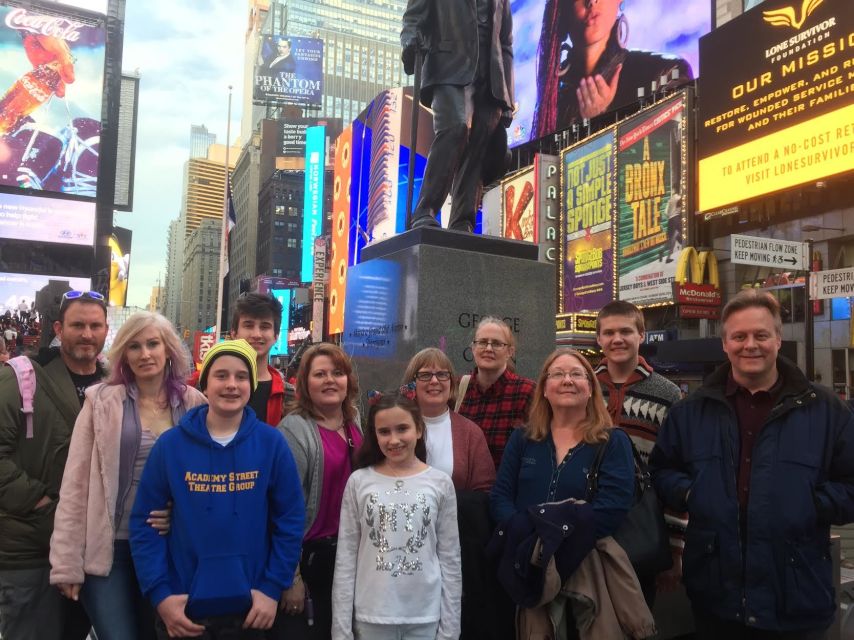
The best part of this tour is that Broadway becomes more than bright signs and famous show titles. In two hours, you walk from the Majestic Theatre to Duffy Square and beyond, learning how this compact district became the center of American musical theater. Guides from the entertainment world, including Patrick and Luke on different tours, add personal theater stories that you will not get from a sidewalk plaque.
I like the small group of up to 10, which makes it easier to hear the guide and ask questions. I also like the route’s variety: you see celebrated houses such as the Richard Rodgers, Shubert, and Gershwin theaters while also hearing about Sardi’s, the Marriott Marquis, Hell’s Kitchen, and Off-Broadway.
The main drawback is simple: this is a walking tour, not a backstage tour. Lobby and backstage entry are not guaranteed, so you should book it for the stories, buildings, and street-level theater atmosphere rather than for an inside look at a working show.
Key Points at a Glance
- Start at the Majestic Theatre: Begin outside the home of The Phantom of the Opera and hear about the theater’s famous productions.
- Walk Broadway’s greatest concentration of theaters: The route includes the Shubert, Booth, Jacobs, Music Box, Imperial, Richard Rodgers, Gershwin, and many more.
- Hear stories from entertainment professionals: Guides such as Patrick and Luke have shared personal experiences from the theater business.
- Understand Times Square’s transformation: Duffy Square provides the setting for the story of how this area became the crossroads of the world.
- See more than Broadway musicals: The tour includes Sardi’s, Hell’s Kitchen history, the Edison Hotel, and New World Stages.
- Plan for weather and walking: The tour runs in all weather conditions, lasts two hours, and requires comfortable shoes.
Why This Two-Hour Broadway Walk Works

Broadway is easy to visit badly. You can photograph a few marquees, dodge crowds around Times Square, and leave without understanding why so many theaters sit within a few blocks of one another.
This tour gives that short walk a clear story. You follow the theater district from one landmark to the next, while the guide explains the productions, theater owners, buildings, and neighborhood changes that shaped the area. It is less about entering a theater and more about learning how the district works from the sidewalk.
At $39 per person, the value depends on your interest in theater. If you already follow Broadway shows, the personal stories and theater-by-theater context can make the price worthwhile. If you only want photographs of Times Square, you can see many of the exteriors on your own for free.
The small group helps. With no more than 10 people, you are not likely to feel lost in a large crowd gathered around a guide. You can also ask about a particular theater, show, or performer when the subject comes up.
More Broadway Show Tickets:
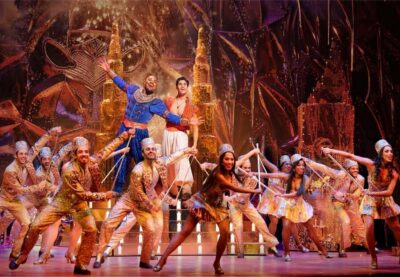
- NYC: Aladdin the Musical on Broadway
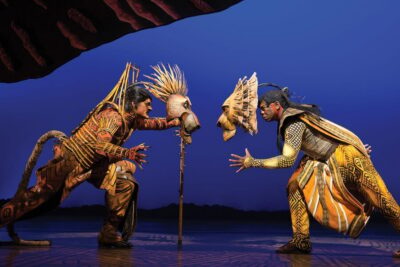
★ 4.8 · 1,800 reviews - NYC: The Lion King on Broadway
1,609 reviews - NYC: MJ the Musical on Broadway
1,510 reviews
Starting at the Majestic Theatre
The meeting point is the Majestic Theatre, one of Broadway’s most recognizable addresses. It is best known as the long-running home of The Phantom of the Opera, and the tour opens by discussing that mega-musical and other notable shows connected with the building.
This is a smart starting point because it immediately places you inside Broadway’s world of long runs, major productions, and theater traditions. You begin with one of the district’s best-known venues, then move into the surrounding streets rather than spending the full tour in one location.
The guide discusses the theater from outside, so do not expect a performance venue visit. The focus is the building, its productions, and the business behind Broadway. If you want to see a show afterward, check your theater ticket separately. The tour itself does not include admission to a production.
St. James, Broadhurst, and a Stop at Sardi’s
From the Majestic, you walk to the St. James and Broadhurst theaters. These stops help you see how closely packed Broadway’s main houses are. Several famous theaters are only a short walk apart, but each has its own identity and place in the district’s story.
The next stop is Sardi’s, the famous theater-district restaurant and watering hole. The guide talks about its role in Broadway life, giving you a break from a simple list of theater names. This is one of the route’s useful touches because it shows the theater district as a working social area, not just a row of show entrances.
The tour does not promise a meal or a reserved table at Sardi’s. Think of it as an exterior stop and a chance to hear about the restaurant’s importance. If you want to eat there, make separate plans.
Shubert Alley and 45th Street
You then enter Shubert Alley, a narrow passage with a major place in Broadway history. The guide explains the Shubert Theatre and the Shubert organization, one of the forces behind the development and operation of Broadway theaters.
This section is valuable if you want to understand the business side of theater. Broadway is not only actors and opening nights. Theater ownership, venue management, production costs, and long-term relationships between theaters and producing organizations all help explain why this district functions as it does.
From Shubert Alley, the route turns onto 45th Street. This is one of the most theater-packed parts of the walk. You see the Booth, Minskoff, Schoenfeld, Jacobs, Golden, Hirschfeld, Imperial, and Music Box theaters.
You will not go into every building, and the pace can feel brisk because there are so many stops. Still, the concentration is impressive. You get a practical sense of how little ground separates major Broadway houses, and you can match theater names with their actual locations.
More New York City Tours:
- NYC: SUMMIT One Vanderbilt Tickets
★ 4.7 · 51,195 reviews - NYC: Empire State Building Tickets – Observatory & Museum
★ 4.7 · 25,757 reviews - New York City: Statue of Liberty & Ellis Island with Ferry
★ 4.6 · 18,683 reviews - New York City: American Museum of Natural History Ticket
★ 4.5 · 15,447 reviews
The Marriott Marquis and the Marquis Theatre
The route continues to the Marriott Marquis Hotel and the Marquis Theatre. Here, the guide discusses the hotel’s history and what occupied the site before the current complex was built.
This is a useful change of pace. The theater district has not remained frozen in its old form, and the Marriott Marquis shows how large modern development changed Times Square. You see how hotels, theaters, commercial buildings, and public spaces share the same tight area.
The Marquis Theatre is part of the hotel complex, giving the stop an unusual connection between Broadway and large-scale hospitality. You may find this section especially useful if you are interested in how New York has rebuilt and reused central areas over time.
Hamilton, Lunt-Fontanne, and Broadway’s Big Names
After leaving the Marriott Marquis, you visit the Richard Rodgers Theatre, currently home to Hamilton. The guide then discusses the Lunt-Fontanne Theatre.
The Richard Rodgers stop gives the tour a strong connection to present-day Broadway. Hamilton is one of the major productions associated with the modern theater district, and hearing about its venue places the show within a much older network of theaters.
The Lunt-Fontanne adds another theater name to the route, but the larger value is the comparison. You are not seeing only the theaters attached to one current hit. You are building a mental map of venues with different owners, productions, and histories.
For serious theater fans, this repeated connection between buildings and shows is the heart of the tour. For casual visitors, it may be harder to retain every theater name. I suggest taking a few notes in your phone if you want to remember the route.
Duffy Square and the Making of Times Square
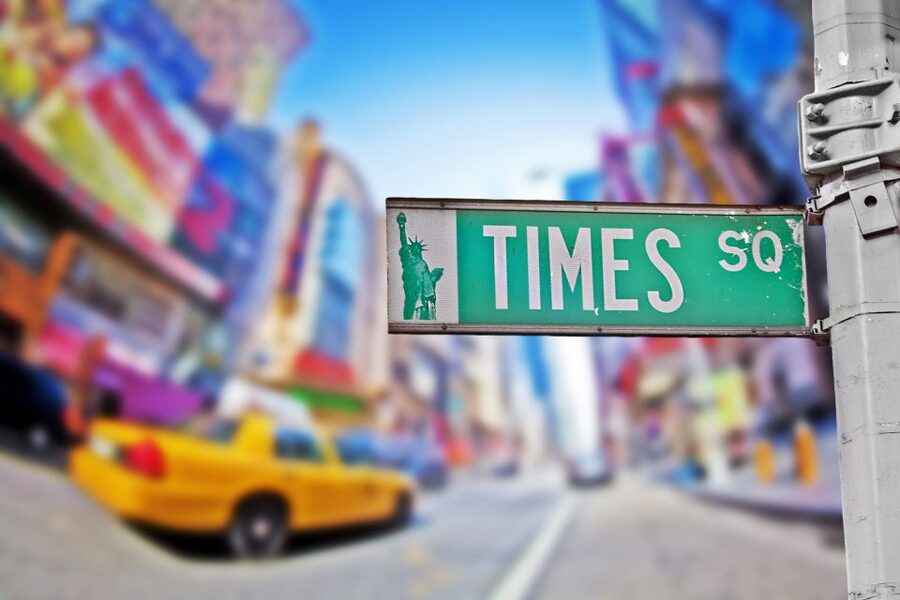
Duffy Square is the geographic and storytelling center of the tour. The guide explains how this area became known as the crossroads of the world and how Times Square developed into the famous public space you see today.
This part helps connect Broadway to the wider identity of New York. Times Square is often treated as a giant photo stop, but its current appearance grew from transportation links, entertainment businesses, hotels, theaters, and changing patterns of city life.
The square can be crowded, noisy, and difficult for a group to navigate. That is part of the setting, but it can also make listening harder than at quieter points on the route. Stay close to the guide and expect a public urban space rather than a calm lecture room.
The Palace, Edison Hotel, and Hell’s Kitchen
After Duffy Square, the group sees the Palace Theatre and heads north. The route includes the Edison Hotel and the Barrymore Theatre before moving into a discussion of Hell’s Kitchen.
The Palace gives you another major theater exterior, while the Edison Hotel adds a different kind of New York landmark. Together, these stops widen the tour beyond musical theater and show business. You begin to see how hotels and neighborhood streets supported the people and businesses connected with Broadway.
The Hell’s Kitchen discussion adds local context. It shows that the theater district sits beside neighborhoods with their own pasts and identities. You are not simply moving through a self-contained entertainment zone. You are walking through a part of Manhattan shaped by nearby communities, hotels, theaters, and changing development.
The northern section also means more walking. The full route covers a decent amount of ground, so comfortable shoes are essential. In warm weather, bring water or another cold drink. In rain or cold, dress for an outdoor walk because the tour operates in all weather conditions unless conditions force a cancellation.
Walter Kerr, Eugene O’Neill, and Chicago
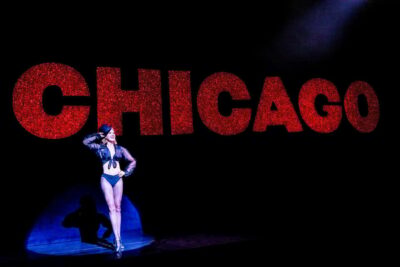
The route continues past the Walter Kerr Theatre, the Eugene O’Neill Theatre, and the Ambassador Theatre. The Ambassador is associated with Chicago, giving the tour another chance to connect a famous show with its home venue.
You may not remember every stop by name, but the sequence makes Broadway’s scale clear. A handful of blocks hold a remarkable number of working theaters, each with a separate entrance, sign, ownership story, and production history.
The guide’s approach matters here. The most praised guides have been actors or people active in entertainment. Patrick, described as an actor, has been singled out for stories about current and former shows, theaters, and the theater business. Luke has also been praised for personal insight and for keeping the tour engaging in rainy weather.
Those details suggest the experience is strongest when you enjoy stories about how productions work, not only facts about architecture. If your main interest is acting, musicals, and Broadway careers, you are likely to get more from the commentary than someone who wants a purely historical city walk.
New World Stages and the Off-Broadway Story
New World Stages provides the tour’s look at Off-Broadway theater. This is important because Broadway is only one part of New York’s theater system.
The guide explains Off-Broadway at this stop, helping you understand that smaller venues and productions operate alongside the large Broadway houses. The distinction gives the tour more range. You hear about the major venues linked with Hamilton, Chicago, Wicked, and Phantom, but also about a different level of theater production.
The stop is especially useful if you are considering seeing a show during your New York visit but do not want to limit yourself to the biggest productions. The tour does not provide tickets or promise a performance at New World Stages, so treat this as an introduction to the venue and the Off-Broadway idea.
Ending at Wicked’s Gershwin Theatre
The tour ends in front of Circle in the Square and the Gershwin Theatre, home of Wicked. Ending here gives the route a familiar Broadway finish, with one of the district’s best-known current musicals serving as the final reference point.
Circle in the Square also adds another theater to your list before the walk concludes. By this point, you have seen theaters tied to long-running productions, major recent hits, famous restaurants, hotels, Off-Broadway venues, and neighborhood history.
The ending location is useful if you have tickets for a show nearby, though you should allow time between the tour and any performance. The tour lasts two hours, and the exact starting time depends on availability.
Guides, Group Size, and the Feel of the Walk
The tour is conducted in English and uses a live guide. Guides are involved in the entertainment industry, and the strongest feature of the experience is the personal angle they can bring to theater stories.
Patrick and Luke are names associated with past tours, but you should not assume that either one will lead your departure. The guide assigned to your date may differ. The format promises an entertainment-industry guide rather than a specific person.
A maximum of 10 participants is a good fit for this route. You get the feel of a small walking group without the formality of a private tour. It also makes questions more practical, especially if you want to ask about a particular production or theater.
The tour requires a fair amount of walking. Pets, weapons, sharp objects, oversized luggage, and large bags are not allowed. A face mask or protective covering is listed among the items to bring, so check the current instructions when you book.
What the $39 Price Really Buys
At $39, you are paying for two hours of guided context rather than admission to a theater. There is no included show, meal, or guaranteed backstage access.
I see the strongest value in the guide’s interpretation. You can photograph theater exteriors yourself, but it takes time and planning to connect the buildings, organizations, productions, Times Square, and Hell’s Kitchen into one clear story. The tour does that work for you.
The price is fair for a small group and an entertainment-focused guide, especially if you are visiting Broadway for the first time. It is less appealing if you have already taken a similar theater walk or only want to see the bright center of Times Square.
Free cancellation is available up to 24 hours before departure, and you can reserve now without paying immediately. If bad weather cancels the tour, you can receive an alternative date or a full refund. No office confirmation is required, though calling the supplier at 718-806-1706 if you cannot attend is a considerate step.
Who Should Book This Broadway Tour?
I would choose this tour for a first-time New York visitor who wants Broadway explained, not just photographed. It also suits musical theater fans who enjoy hearing how shows, theaters, and entertainment businesses fit together.
Families with older children may like the concentration of famous names, but the walking and street noise may be tiring for very young children. Fans of Hamilton, Wicked, Chicago, or The Phantom of the Opera will recognize several major stops, though the tour does not include entry to those shows.
You should skip it if you need indoor shelter, guaranteed theater access, or a slow pace. You should also think twice if the forecast is poor and you dislike walking in rain or cold. The tour can operate in bad weather, and shelter is not the main point.
Should You Book It?
Book it if you want a compact, story-led introduction to Broadway and like the idea of learning from someone connected to the entertainment business. The Majestic to Gershwin route covers a lot of ground, and the small group keeps the experience personal.
Do not book it expecting backstage secrets to mean backstage entry. The best payoff comes from the guide’s stories, the theater-by-theater route, and the explanation of how Times Square became what it is. Wear good shoes, bring water in warm weather, and arrive ready to spend two hours outside.
FAQ
Where does the Broadway Theatre District Tour begin?
The tour begins in front of the Majestic Theatre, the home of The Phantom of the Opera.
Where does the tour end?
The tour ends in front of Circle in the Square and the Gershwin Theatre, home of Wicked.
How long is the tour?
The walking tour lasts two hours.
Is the tour conducted in English?
Yes. It includes a live English-speaking guide.
Is backstage or lobby access included?
Backstage and lobby access are not guaranteed.
What should I bring?
Bring comfortable shoes and a face mask or protective covering. In warm weather, bringing water or another cold beverage is recommended.
Recently added in New York City
- NYC: Midtown Hands-On Bagel Baking Class★ 5.0 · 12 reviews
- Personalize Sightseeing Tour★ 5.0 · 92 reviews
- Central Park Pedicab Guided Tour★ 5.0 · 17 reviews
- Photographer, Professional Photo shoot – New York★ 5.0 · 16 reviews
- Central Park Pedicab Tour with Guide★ 5.0 · 63 reviews
- Official Central Park Pedicab Ride ( UP TO 3 PERSONS )★ 5.0 · 4 reviews
- JFK or LGA package only (Round trip transfer plus VIP Contrasts)★ 5.0 · 3 reviews
- Official Central Park Pedicab Tours★ 5.0 · 35 reviews
Broadway Show Tickets, compared.

Broadway and Times Square Insider Tour with Theater Professional
Read our review →

Broadway Comedy Club All Star Stand-Up Comedy Live
Read our review →Browse the lists this tour appears in