
Reviewed · NYC WALKING TOURS
Central Park Guided Walking Tour in French
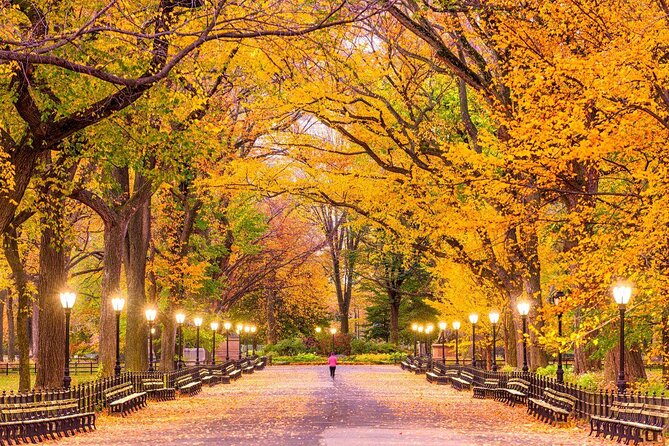
Central Park is much more than a large patch of trees between Fifth Avenue and Central Park West. This three-and-a-half-hour French walking tour shows how the park was planned, changed, and woven into daily New York life, from Sheep Meadow and Bethesda Fountain to lesser-known corners you might miss alone.
I like the small maximum group of 12, which should make it easier to hear the guide and ask questions. I also like the range of the route: famous sights, film locations, design details, and practical stories about New York all share the afternoon.
The main consideration is simple: this is a long outdoor walk, and the tour needs good weather. You should bring water, wear comfortable shoes, and expect conditions to shape the experience, especially in winter or during a hot summer day.
Key points to know before booking
- French-language guiding: The tour is led by a professional French guide, with guides such as Aymeric, Audrey, Guillaume, Fred, Betty, and Cyrielle named in the supplied experience details.
- A full Central Park circuit: The route includes Sheep Meadow, Bethesda Fountain, The Lake, Belvedere Castle, the Jacqueline Kennedy Reservoir, and quieter corners.
- Small-group format: The maximum is 12 people, a useful size for a walking tour built around questions and stories.
- Stories beyond the postcard views: Expect film references, local anecdotes, park history, and explanations of the park’s role in crowded New York.
- About 3 hours 30 minutes: This is not a quick photo stop. You will spend much of the outing on foot.
- One-way route: You meet near the Solomon R. Guggenheim Museum and finish at Grand Army Plaza, which can help you link the tour to other plans.
Why a guided walk helps in Central Park
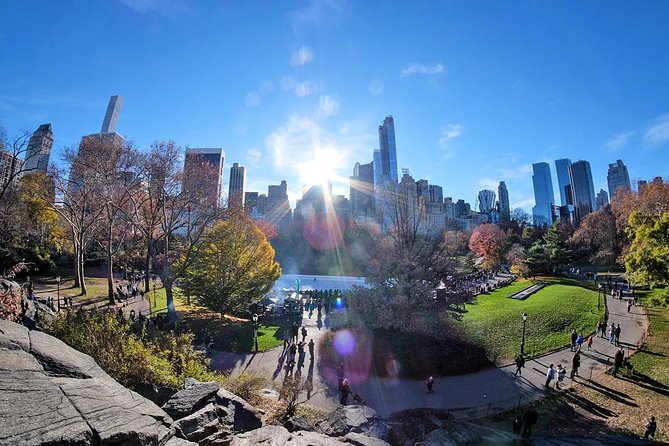
Central Park looks easy to explore. Pick a path, follow the crowds, and stop when something catches your eye. That works for a pleasant stroll, but it also means you can miss the reasons the park looks the way it does.
A guide gives the scenery a frame. Instead of seeing only lawns, bridges, water, and rock, you learn how the park became a planned answer to the pressures of a growing city. The tour also explains why Central Park matters to New Yorkers today, not just why it appears in so many photographs and films.
That mix is the strongest reason to book this experience. You are not simply being taken from one famous viewpoint to the next. You are given a way to read the park. The same path can mean something different once you understand its design, changing seasons, public use, and place in New York culture.
French-speaking guides who have lived in New York for years can also explain the city in a way that feels approachable. The guide team named in the experience details includes Aymeric, Audrey, Guillaume, Fred, Betty, and Cyrielle. Your assigned guide may differ, but the descriptions point to a guiding style that is personal, conversational, and full of stories.
More Central Park Tours:
- Central Park Pedicab Guided Tours
★ 5.0 · 7,108 reviews - Private Central Park Pedicab Tour
★ 5.0 · 6,981 reviews - NYC: Central Park Bike Rentals
★ 4.2 · 2,528 reviews
Starting near the Guggenheim Museum
The meeting point is outside the Solomon R. Guggenheim Museum at 1071 Fifth Avenue. This places you along Central Park’s eastern edge, in one of the city’s most recognizable cultural districts.
The location is practical if you are already visiting Museum Mile or the Upper East Side. It also gives the outing a clear starting point: you enter the park from the side of Fifth Avenue and work across its paths toward Grand Army Plaza.
You should allow enough time to find the meeting point. The Guggenheim is easy to identify, but Fifth Avenue can be busy, and a museum entrance is not always the same thing as a tour meeting area. Your confirmation should provide the exact instructions, so check them before leaving your hotel.
The tour is offered with a mobile ticket. Keep your phone charged and make sure you can display the booking details without relying on a weak connection. The experience information does not include snacks, so eat beforehand or carry something small if you need food during a three-and-a-half-hour outing.
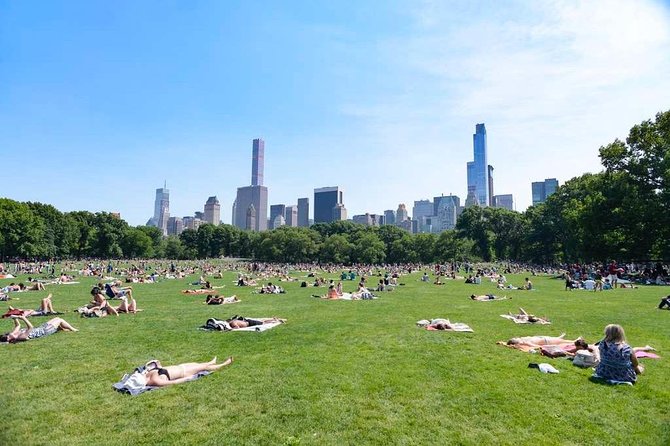
Sheep Meadow and Central Park’s open side
Sheep Meadow is one of the park’s broadest and most familiar open spaces. It gives you a useful visual break from the surrounding trees and paths, with room to appreciate the scale of the park inside Manhattan.
This is the kind of stop that benefits from a guide’s explanation. On your own, you may simply admire the lawn and take photographs. With context, you can better understand the contrast between open recreation space and the dense city beyond the park’s boundaries.
The setting also helps show why Central Park is so important. New York is famous for crowded streets and tall buildings, yet this large public space offers a place to pause. The guide connects that function to the park’s role in a heavily built-up city.
Expect the park to look different depending on the season. Spring brings flowers, summer brings fresh green growth, autumn adds ochre and red tones, and winter can cover the paths and lawns in snow. The route may feel more open in one season and more atmospheric in another.
Bethesda Fountain and The Lake
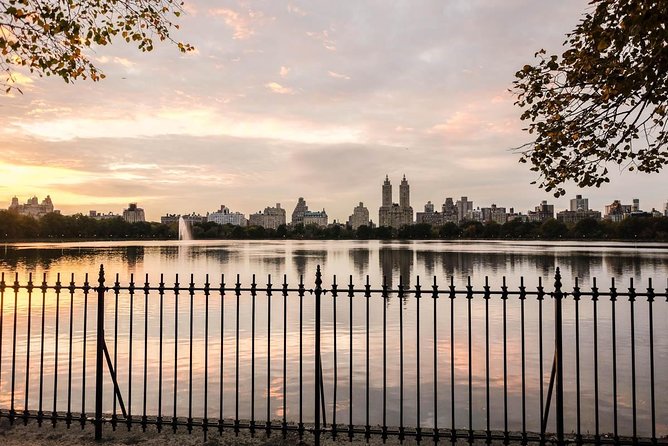
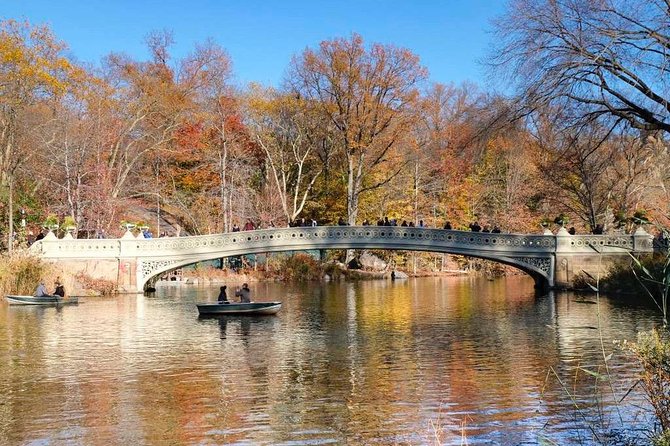
Bethesda Fountain is one of the tour’s main visual stops. Its position beside The Lake makes this part of the park especially rewarding for photography, and the water gives the surrounding paths a calmer feel than the avenues nearby.
The fountain is also a good place for stories. The tour description promises anecdotes connected with the park, along with film references and cultural details. That matters because Central Park is often used as a backdrop, but a guide can help you recognize how the setting functions in those scenes.
The Lake adds another layer to the stop. You get water views, walking paths, bridges, and changing angles across the park rather than one fixed monument. I would plan to pause here instead of rushing through for a single picture.
The practical drawback is that famous locations can be busy. A small group helps, but you should not expect a private, empty park. The guide’s value is less about getting a clear view every second and more about helping you notice the details around the main attraction.
More NYC Walking Tours:
- SoHo, Little Italy, and Chinatown Walking Tour in New York
★ 5.0 · 3,153 reviews - Secrets of Grand Central Station Walking Tour New York City
★ 5.0 · 1,796 reviews - Greenwich Village Walking and Food Tasting Tour
★ 5.0 · 1,572 reviews - Artistic, Alternative Greenwich Village Walking Tour
★ 5.0 · 971 reviews
Belvedere Castle and the park’s theatrical side
Belvedere Castle is one of Central Park’s most unusual landmarks. It gives the park a storybook quality and breaks up the long stretches of lawn and woodland.
The route includes the castle as part of a wider look at Central Park’s design. This is important because the park was not meant to feel like a plain rectangle of grass. Its paths, water, rock, trees, and built features create changing scenes as you walk.
Belvedere Castle is also a strong stop for anyone who enjoys photographs. The elevated setting can offer attractive views, though the exact experience depends on weather and access on the day. Your guide can point out how this feature fits into the park’s wider visual plan.
This section may require more walking and some uneven ground than a city sidewalk. The supplied information says most people can participate, but comfortable shoes remain a smart choice. If you have mobility concerns, ask the provider before booking so you know what the route involves.
The Jacqueline Kennedy Reservoir and the quieter north
The Jacqueline Kennedy Reservoir gives the tour a different mood from the southern lawns and landmark-heavy sections. Its open water and surrounding path provide a broader sense of distance, with the city still close by.
This part of the route is useful for understanding Central Park as a large, varied space. You are not confined to the places that appear on every New York postcard. The guide takes you toward areas you might not reach if you were exploring without a plan.
The reservoir also rewards patient sightseeing. The view can change with the season, light, and weather. Autumn colors, bare winter trees, or summer greenery each create a different setting, which is one reason the park can feel new on a return visit.
The tradeoff is time. Reaching several distant areas in one outing means you will spend a lot of the day walking. That is a strength if you want a thorough introduction, but it may not suit you if you prefer a short, relaxed visit with long breaks.
Film locations and small stories
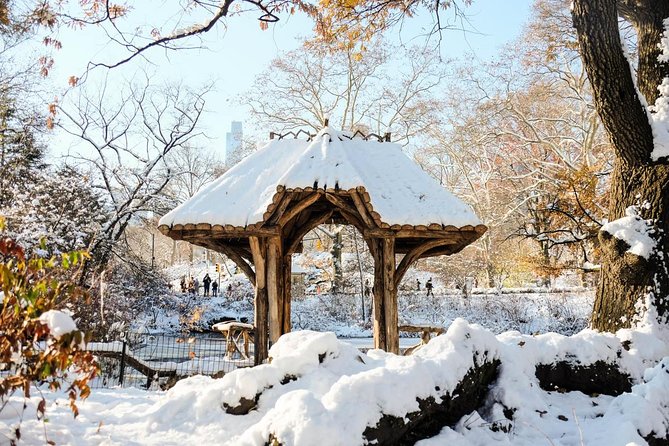
Central Park appears so often in cinema that it can be easy to see it as a collection of movie backdrops. The guide adds value by connecting places to film references without reducing the park to a screen set.
The supplied tour details also point to music, local anecdotes, and cultural references. That variety should help keep the walk moving. One story may concern a landmark, another the park’s changing role, and another a small detail you would otherwise pass without noticing.
This is where the French format can be especially useful. You can ask questions in your own language and follow explanations without having to translate city history as you walk. The result should feel less like a formal lecture and more like an informed conversation outdoors.
The guide personalities appear to be part of the appeal. Aymeric is described in the material as energetic and willing to spend extra time on an anecdote. Guillaume is presented as attentive and passionate, while Fred is noted for adapting to the group and sharing New York suggestions. These qualities cannot be guaranteed with a particular departure, but they indicate what to look for: a guide who responds to the people in front of him rather than reciting facts.
A small group, a long walk, and the practical details
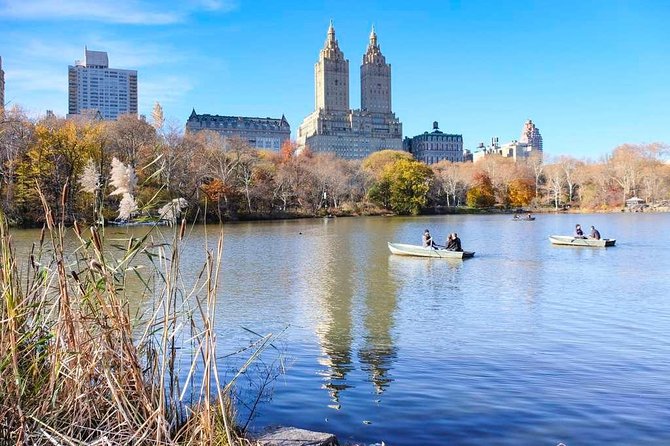
The group limit of 12 is one of the better features of this tour. Central Park is too large for a guide to keep everyone together comfortably in a very large crowd, especially when stopping near popular sights. Twelve people is still a group, but it should allow more natural conversation.
The duration is approximately 3 hours 30 minutes. One supplied account describes a walk lasting closer to 3 hours 50 minutes, so do not plan a tight appointment immediately afterward. Outdoor tours can run a little long when a group has questions or a guide finds a particularly good story.
Bring water, especially in summer. This advice appears directly in the experience material and makes sense for the length of the outing. Wear shoes that can handle a long walk, and dress for the season rather than for the temperature at your hotel.
The outing is listed as suitable for most people, with service animals allowed and public transportation nearby. It requires good weather, and a departure can be canceled if weather is poor or if the minimum number of participants is not reached. In either case, you are offered another date or experience, or a full refund.
The cancellation terms are straightforward. Cancel at least 24 hours before the start time for a full refund. Within 24 hours, you generally receive no refund, and changes are not accepted.
Is $56.89 a fair price?
At $56.89 per person, this is not the cheapest way to enter Central Park. You can walk through the park for free, follow a map, and stop at several famous places without paying for a guide.
The price makes more sense if you value interpretation. You are paying for about three and a half hours with a French-speaking professional, a planned route across major and less obvious parts of the park, and the chance to ask questions as you go. For a first visit, that can save time and prevent you from seeing only the southern edge.
The small group also improves the value. A 12-person limit is more personal than a large coach-style outing, and it suits a park where the best stops are often spread out rather than lined up in one compact plaza.
I would be less likely to recommend the price to someone who already knows Central Park well, speaks English comfortably, and enjoys navigating parks independently. For a French-speaking visitor who wants history, film references, and local context in one long walk, the cost is easier to justify.
Who should book this Central Park experience?
I would recommend it to first-time New York visitors who want Central Park explained rather than simply photographed. It also suits repeat visitors who feel they have seen the obvious sights but missed the park’s northern or quieter sections.
Families can benefit from the variety of stories and changing scenery. The supplied material includes positive comments about children enjoying related Central Park outings, including children aged 9 and 10. Still, the length means you should judge your family’s walking stamina honestly.
French-speaking couples, solo visitors, and small groups will likely get the most from the format. It is also a sensible activity early in a New York stay, since the guides may share useful city suggestions and help you understand where Central Park sits in relation to the rest of Manhattan.
You should think twice if you want a short visit, a slow picnic, or a bicycle outing. The experience described here is a walking tour, and its strength is coverage and explanation, not speed or free time.
Should you book it?
Book this tour if you want Central Park to make sense as a designed public space, not just a scenic break between museums and Fifth Avenue. The combination of French guiding, a small group, film connections, seasonal views, and a route from the Guggenheim to Grand Army Plaza gives you a substantial introduction.
Skip it if you prefer to explore alone, cannot comfortably walk for several hours, or need a fixed schedule that leaves no room for weather changes. For everyone else, bring water, wear good shoes, keep your afternoon open, and let the guide turn a familiar New York image into a much more layered place.
FAQ
What language is the tour conducted in?
The tour is conducted in French by a professional French-speaking guide.
How long does the Central Park walking tour last?
The tour lasts approximately 3 hours and 30 minutes.
What sights are included?
The route includes Sheep Meadow, Bethesda Fountain, The Lake, Belvedere Castle, the Jacqueline Kennedy Reservoir, and less familiar areas of Central Park.
Where does the tour start?
The meeting point is the Solomon R. Guggenheim Museum, 1071 Fifth Avenue, New York, NY 10128.
Where does the tour finish?
The tour ends at Grand Army Plaza, New York, NY 10019.
How many people can join the tour?
The experience has a maximum group size of 12 participants.
What happens if the weather is poor?
The tour requires good weather. If it is canceled because of poor weather, you are offered a different date or experience, or a full refund.
Recently added in New York City
- Guided Tour inside Central Park with Pedicab★ 5.0 · 3 reviews
- & Juliet on Broadway Ticket★ 4.5 · 49 reviews
- Stonewall and Gaslight: A Self-Guided Tour of Greenwich Village★ 5.0 · 4 reviews
- West Village’s Flappers, Freaks & Punks: A Self-Guided Audio Tour★ 5.0 · 4 reviews
- VIP Central Park Champagne Tour with Photos(50 min)~Skip the line★ 4.0 · 7 reviews
- World Trade Center Photo Tour★ 5.0 · 11 reviews
- 9/11 Memorial at World Trade Center and Financial District Walking Tour★ 5.0 · 39 reviews
- Women of Wall Street Walking Tour★ 5.0 · 8 reviews
NYC Walking Tours, compared.

SoHo, Little Italy, and Chinatown Walking Tour in New York
Read our review →
Secrets of Grand Central Station Walking Tour New York City
Read our review →
Greenwich Village Walking and Food Tasting Tour
Read our review →
Artistic, Alternative Greenwich Village Walking Tour
Read our review →

NYC Greenwich Village Italian Food Guided Walking Tour
Read our review →Browse the lists this tour appears in