
Reviewed · CENTRAL PARK TOURS
Central Park Tour with Complimentary Photo Album
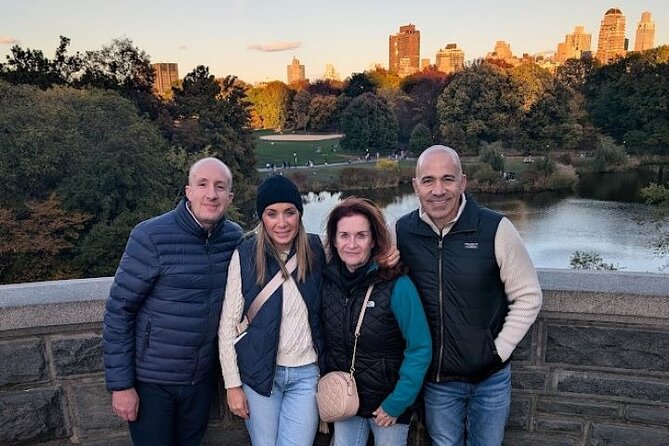
Central Park is much more than a big green rectangle between Manhattan’s towers. This walking tour crosses quiet woodland, formal promenades, bridges, ponds, lawns, and film-famous corners, ending at John Lennon’s Strawberry Fields. Patrick and Katy bring a local point of view, with Patrick adding personal stories from a lifetime in New York.
I like the route’s variety and the small group size, capped at 12 people. I also like the practical touch of group photos, plus the guides’ willingness to help with subway directions and the rest of your day. The main drawback is pace: 2.5 hours is not enough for a slow look at every stop listed, and you’ll need moderate fitness for the walking.
Key points to know before you book
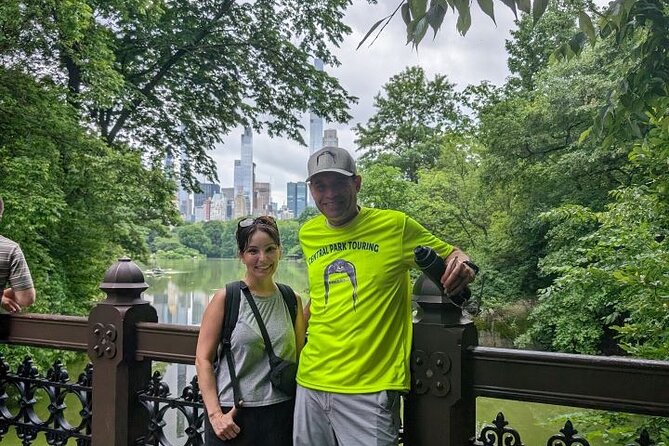
- The route covers the park’s greatest hits, from Gapstow Bridge and Bethesda Terrace to Bow Bridge, Belvedere Castle, and Strawberry Fields.
- The Pond and Hallett Nature Sanctuary offer a quieter start than the crowded avenues around the park.
- Patrick and Katy guide the walk, with history, personal stories, and help with practical New York questions.
- A maximum of 12 people keeps the group small enough for conversation and photos.
- The walk ends at the Imagine mosaic, a useful spot for continuing toward Central Park West, the Dakota, or the Upper West Side.
- The $45 price is reasonable if you want context and orientation rather than simply wandering from landmark to landmark.
Why this walk gives you a better feel for Central Park
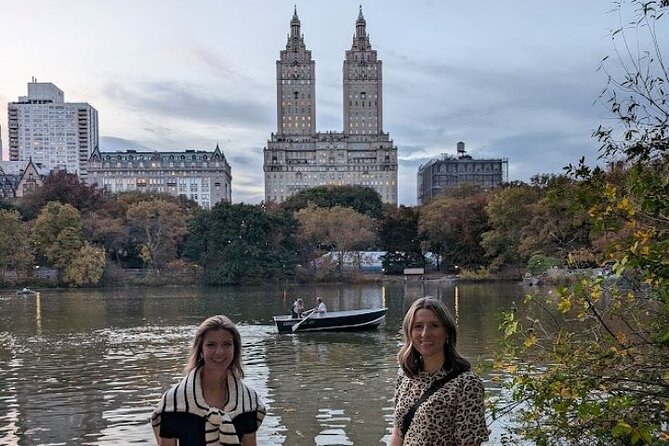
Central Park was designed to feel like an escape from Manhattan, but it is not one single kind of place. You can move from city views to wooded trails in a few minutes, then reach a grand terrace, a sports lawn, or a memorial tied to popular music.
That changing character is the real value of this tour. A map can show you where the famous places are, but it cannot easily explain why the Ramble feels wild, why Bethesda Terrace became a social center, or how the park’s design frames the surrounding buildings.
The guides are an important part of the experience. Patrick is a lifelong New Yorker who adds personal observations about Central Park and Central Park West. Katy has also led the route, pointing out details that are easy to miss. The strongest praise for the tour centers on the guides’ enthusiasm, storytelling, and ability to take people to corners they might not find alone.
You should expect a conversation rather than a silent march. Patrick has also helped people work out subway routes for their next stop, which is useful in a city where one wrong train can cost you half an hour.
More Central Park Tours:
- Central Park Pedicab Guided Tours
★ 5.0 · 7,108 reviews - Private Central Park Pedicab Tour
★ 5.0 · 6,981 reviews - NYC: Central Park Bike Rentals
★ 4.2 · 2,528 reviews
Starting near the José Julián Martí statue
The meeting point is on the south side of Central Park, at Sixth Avenue and in front of the José Julián Martí statue. This places you near the park’s southeastern corner and close to major Midtown subway connections.
The first stop is simply Central Park itself, but that opening orientation matters. The park covers a large area, and its paths can be confusing at first. A guide can help you understand the basic layout before the route moves through the quieter eastern side.
The tour is offered in English and uses mobile tickets. Confirmation arrives when you book. Since the walk requires good weather and a minimum number of participants, keep an eye on updates before setting out.
The Pond and Gapstow Bridge
The Pond is a calm opening scene, tucked into the southeastern corner of the park. Its water, rocky edges, and nearby city buildings make it one of the quickest places in New York to feel removed from traffic.
Gapstow Bridge is the star here. The stone bridge crosses the narrow end of the Pond and gives you a fine photo with water, trees, and Manhattan buildings in the same frame. The bridge is especially useful for understanding how Central Park mixes engineered views with natural forms.
The stop lasts about 15 minutes. You may see ducks and swans around the water, and the route information specifically allows time to feed them. Follow any posted park guidance about feeding wildlife, and do not count on spending a long, quiet hour here. This is an introduction to the park, not a full picnic stop.
Hallett Nature Sanctuary, a small patch of quiet
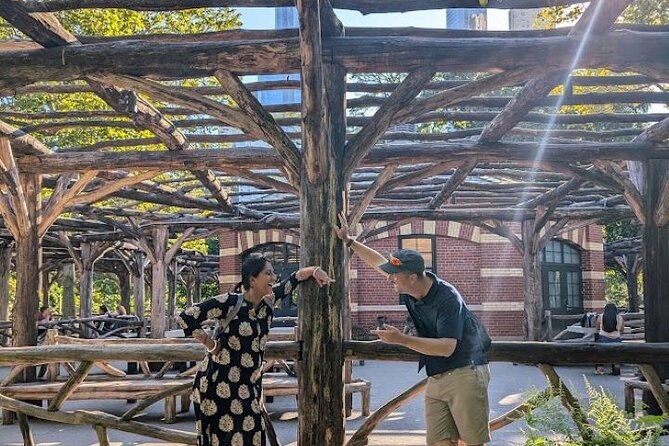
Hallett Nature Sanctuary is one of the park’s three woodland areas and the smallest of them. It sits on a rocky hill beside The Pond, close to busy Midtown streets but with a very different mood.
Rustic trails rise and fall through the sanctuary, leading to overlooks and sitting areas near the water. The area began as a feature called The Promontory in the original park plan. It was later fenced off as a bird sanctuary and renamed in 1986 for George Hervey Hallett Jr., an activist, nature enthusiast, and birder.
This is one of the route’s most useful stops because it shows you the park’s quieter side early in the walk. The paths are not described as difficult, but they do go up and down. Wear shoes you can walk in comfortably, especially if you want to enjoy the wooded sections rather than hurry through them.
More New York City Tours:
- NYC: SUMMIT One Vanderbilt Tickets
★ 4.7 · 51,195 reviews - NYC: Empire State Building Tickets – Observatory & Museum
★ 4.7 · 25,757 reviews - New York City: Statue of Liberty & Ellis Island with Ferry
★ 4.6 · 18,683 reviews - New York City: American Museum of Natural History Ticket
★ 4.5 · 15,447 reviews
Sights around the southern and central park
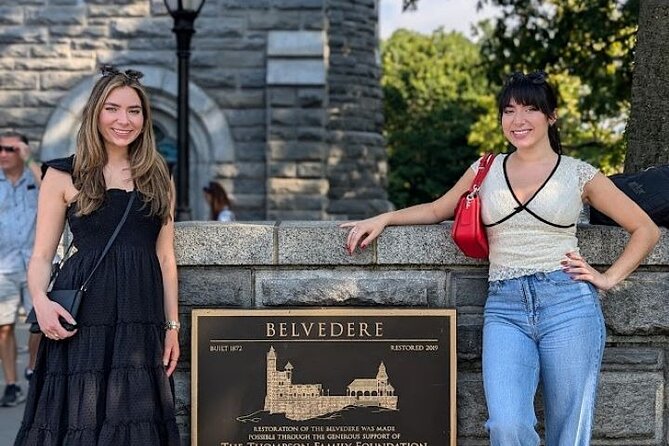
The route also includes several important Central Park landmarks, including Wollman Rink, the historic carousel, The Dairy, and Sheep Meadow. The exact amount of time at each is not given, so treat these as part of a broad park tour rather than guaranteed long visits.
Wollman Rink sits near 59th Street and Fifth or Sixth Avenue. In colder months, it is used for ice skating beneath the skyline. During warmer months, the space becomes a pickleball venue with 14 courts through a collaboration running to 2026. If you are hoping to skate or play, that is a separate activity, not the main purpose of this walk.
The Central Park Carousel has entertained people since 1871. The current carousel came to the park in 1950 after being found in an abandoned trolley terminal in Coney Island. Earlier versions were powered by animals or steam, with two destroyed by fire. It is a charming bit of park history, though the tour does not include a ride.
The Dairy is a Victorian cottage built between 1869 and 1871. It once served fresh milk and snacks to children, with families sitting beneath its open-air porch. It later became Central Park’s first visitor center and was restored in the early 1980s.
Sheep Meadow gives you one of the clearest views of nature against the Manhattan skyline. The 15-acre field was once imagined as a place where sheep could graze, but today it is used for relaxing, picnics, and taking in the towers around the park. These stops help show that Central Park is not only about monuments. It is also a place for ordinary city leisure.
The Mall and Literary Walk
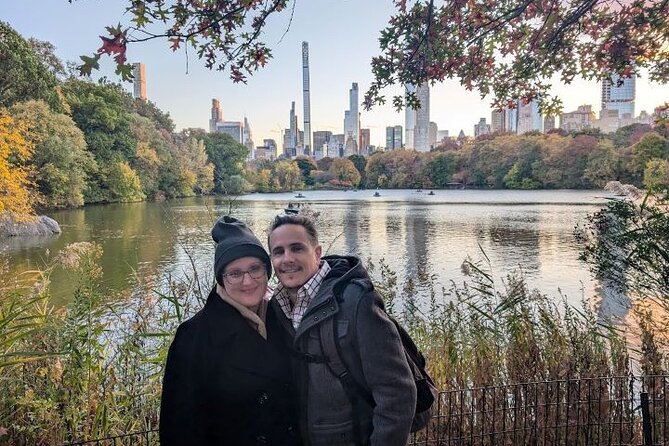
The Mall is one of Central Park’s most recognizable paths. Its long, straight line is framed by four rows of American elm trees, creating a strong perspective toward Bethesda Terrace.
The path is also known as the Walkway of American Elms. Artists, musicians, and performers often gather here, giving the promenade a social energy that differs from the silence of Hallett Nature Sanctuary.
This is a good place for photos, but it can also be one of the busier parts of the route. Stay close enough to hear the guide and allow room for pedestrians. The stop is scheduled for about 15 minutes, which gives you time to appreciate the trees and hear the basic story without turning the visit into a long rest break.
Bethesda Terrace and the Angel of the Waters
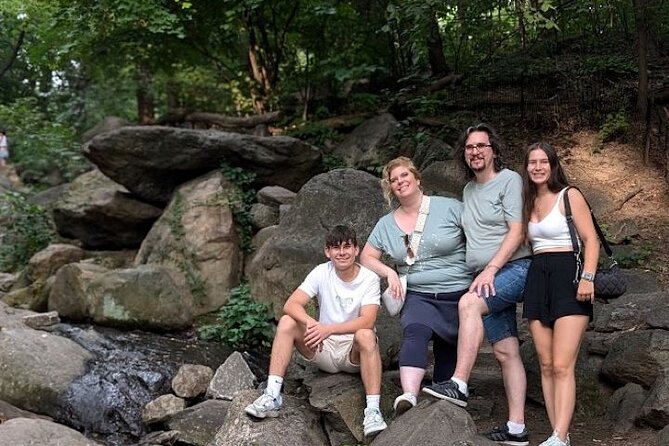
Bethesda Terrace is one of the park’s grandest designed spaces. Its two levels connect the Mall with the lake, and the terrace is decorated with carved details that reward a closer look.
At the center is Bethesda Fountain and the Angel of the Waters statue. The fountain’s position makes it a natural meeting point, and the terrace offers broad views toward the water and surrounding trees.
I especially like this stop for first-time visitors because it explains the park’s balance between formal design and open space. The route has already shown you woodland and pond edges. Here, you get architecture, sculpture, water, and a wide pedestrian setting all at once.
Plan to pause for photographs, but do not expect the place to be empty. Bethesda Terrace is one of the park’s most popular gathering areas. The guide’s help is useful here, since a good angle can make the difference between a quick snapshot and a strong photo.
Bow Bridge and the Ramble
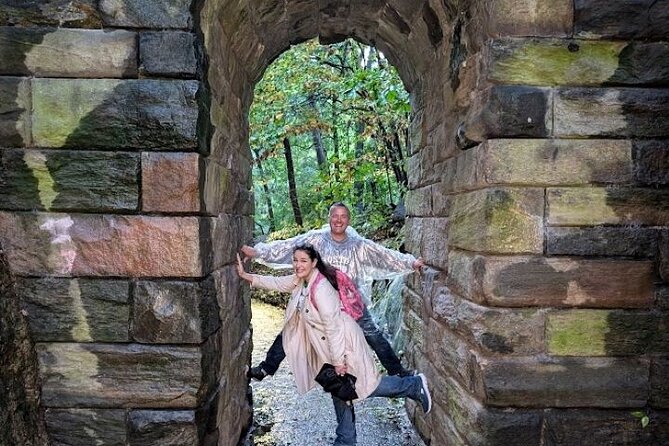
Bow Bridge is a cast-iron bridge with a graceful curved design. It is one of Central Park’s best-known photo locations, offering a view across the water toward trees and the city beyond.
The bridge is attractive at any time, but its popularity means you may need patience for a clear photograph. It is a short crossing, not a long attraction, yet it gives you one of the clearest examples of the park’s romantic design.
The Ramble provides a sharp change of mood. This 38-acre woodland area contains winding paths, thick plantings, and the Gill, a man-made stream. Frederick Law Olmsted described it as a wild garden, and it still feels less ordered than the terraces and promenades nearby.
The Ramble is known for bird-watching, with about 230 species recorded in the woods. You may spot birds, but sightings are never guaranteed, especially during a quick 20-minute visit. The point is to experience the paths and contrast them with the carefully framed spaces elsewhere in the park.
This section is another reason to wear sensible shoes. A route through winding woodland paths can feel more tiring than a flat sidewalk, even if the distance is not great.
Belvedere Castle and the Great Lawn
Belvedere Castle sits on Vista Rock and looks more like a storybook lookout than a serious defensive structure. From here, you can see toward the Great Lawn, Turtle Pond, and the Ramble.
The castle also serves as a nature observatory. The park uses it for information about wildlife and bird-watching, so this stop ties together the natural side of the tour with its scenic value.
Nearby, the Great Lawn occupies the center of Central Park. The wider area covers 55 acres, while the main oval lawn covers 12 acres and contains six softball fields. The space is used for picnics, sunbathing, sports, concerts, and large public events, including New York Philharmonic performances in the park.
The scale becomes clear from a high point such as Vista Rock. You can see how the park creates open space at the center of the city rather than simply filling the area with gardens and paths.
Shakespeare Garden and the Upper West Side connection
Shakespeare Garden is a four-acre planting area near the Delacorte Theater. Trees, flowers, shrubs, and herbs associated with William Shakespeare’s plays and poems fill the garden, with bronze plaques carrying plant-related lines from his work.
The garden began in 1912 as a place where public school children could study plants and nature. It became more closely linked with Shakespeare in 1916, during events marking the 300th anniversary of his death.
The route also identifies the American Museum of Natural History and the Central Park West Historic District. The museum sits across from the park and contains 20 connected buildings, permanent exhibition halls, a planetarium, and a library. The tour does not include museum admission, so consider this information for a later visit rather than expecting an indoor stop.
The Central Park West buildings add another layer to the walk. They date from the late 19th century through the early 1940s and include neo-Italian Renaissance and Art Deco styles. The Dakota, at West 72nd Street, is the best-known address in this section. John Lennon lived there and was killed outside the building in 1980.
Strawberry Fields and the Imagine mosaic
The final stop is Strawberry Fields, a 2.5-acre section dedicated to John Lennon. The area is designed for quiet reflection, and its center is the famous Imagine mosaic.
The tour ends directly outside the mosaic, near Central Park West and 72nd Street. That is a useful finish because you are already near the Dakota, the Upper West Side, and several subway options. The guide can also suggest where to go next.
Local musicians may be playing acoustic tributes in the area, although music is not guaranteed. Give yourself room for a respectful pause. Strawberry Fields is both a popular photo stop and a memorial, so the mood can change quickly from sightseeing to reflection.
What the $45 price gets you
At $45 per person, this is not the cheapest way to enter Central Park, since the park itself has no admission fee. You are paying for orientation, local storytelling, a planned route, group photos, and the convenience of seeing major sights without building the route yourself.
The value is strongest if you have limited time or want the park to make sense on your first New York visit. It is also useful if you have visited before but usually stay near the Mall, Bethesda Terrace, or the southern entrances.
A self-guided walk costs less, but it requires planning and navigation. You might miss Hallett Nature Sanctuary, the Ramble, or the less obvious details around The Dairy and Shakespeare Garden. A group discount may improve the price for larger parties.
The route is advertised at about 2.5 hours, with the listed stops ranging from 15 to 20 minutes in many places. That means the tour is a broad introduction, not a full study of every location. If you want long breaks, museum time, a carousel ride, or a detailed bird-watching session, plan those separately.
Who should book this Central Park walk
I would choose this tour for a first visit to New York, a return visit focused on the park, or a short city stay when you want one well-planned outdoor activity. It suits people who prefer walking and conversation over a carriage ride or a vehicle-based overview.
It also fits families and small groups who want photos without asking strangers at every landmark. Service animals are allowed, and the tour is near public transportation.
You should be comfortable walking for about 2.5 hours and handling some uneven or rising paths in the wooded areas. The tour is offered in English, and the maximum group size of 12 is small enough to ask questions.
Book only if you can accept weather uncertainty. Poor weather can lead to a new date or a full refund. You can cancel for a full refund up to 24 hours before the start time, but cancellations and changes inside that window are not refunded or accepted.
Should you book it?
Book this Central Park tour if you want a clear route, local stories, and a useful first look at the park’s many different moods. Patrick’s personal connection to New York and Katy’s eye for overlooked details add value beyond simply checking off famous sights.
Skip it if you prefer to wander alone, spend long periods at one landmark, or set your own pace. At $45, the tour earns its price through guidance and coverage, not admission tickets. For most first-time visitors, the combination of small-group walking, strong photo stops, and a finish at Strawberry Fields makes it a practical way to get oriented.
FAQ
How long does the Central Park tour last?
The tour lasts approximately 2 hours and 30 minutes.
How much does the tour cost?
The listed price is $45 per person. Group discounts are available.
Where does the tour start?
It starts at the José Julián Martí statue, near Sixth Avenue and Central Park South, in front of NYC Adventures Central Park Horse Carriage Rides.
Where does the tour end?
The tour ends at the Imagine mosaic in Strawberry Fields, near Central Park West and 72nd Street.
Is the tour offered in English?
Yes. English is the listed tour language.
How large is the group?
The tour has a maximum of 12 participants.
What fitness level is required?
A moderate level of physical fitness is recommended. The route includes walking through park paths and wooded areas, including paths in Hallett Nature Sanctuary and the Ramble.
Can I cancel for a refund?
Yes. You can cancel at least 24 hours before the start time for a full refund. Cancellations or changes made less than 24 hours before the start time are not refunded or accepted. If poor weather or an insufficient number of participants causes the tour to be canceled, you will be offered another date or a full refund.
Recently added in New York City
- Personalize Sightseeing Tour★ 5.0 · 92 reviews
- NYC: Midtown Hands-On Bagel Baking Class★ 5.0 · 12 reviews
- Central Park Pedicab Tour with Guide★ 5.0 · 63 reviews
- Central Park Pedicab Guided Tour★ 5.0 · 17 reviews
- Photographer, Professional Photo shoot – New York★ 5.0 · 16 reviews
- Official Central Park Pedicab Ride ( UP TO 3 PERSONS )★ 5.0 · 4 reviews
- JFK or LGA package only (Round trip transfer plus VIP Contrasts)★ 5.0 · 3 reviews
- Official Central Park Pedicab Tours★ 5.0 · 35 reviews
Central Park Tours, compared.
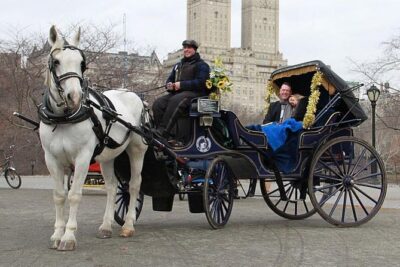
Official NYC Horse Carriage Rides in Central Park since 1979 ™
Read our review →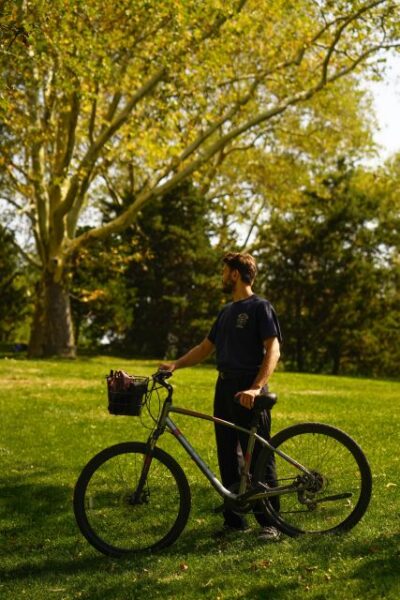
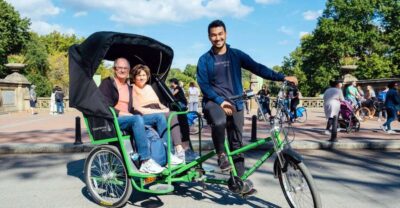

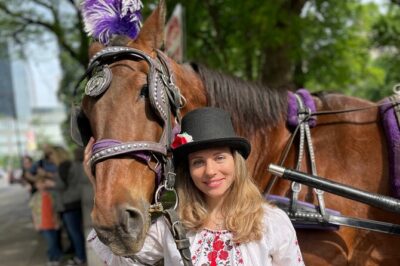
Carriage Ride in Central Park (VIP – PRIVATE) Since 1964™
Read our review →Browse the lists this tour appears in