
Reviewed · NYC PIZZA TOURS
East Village NYC Pizza Walking Tour
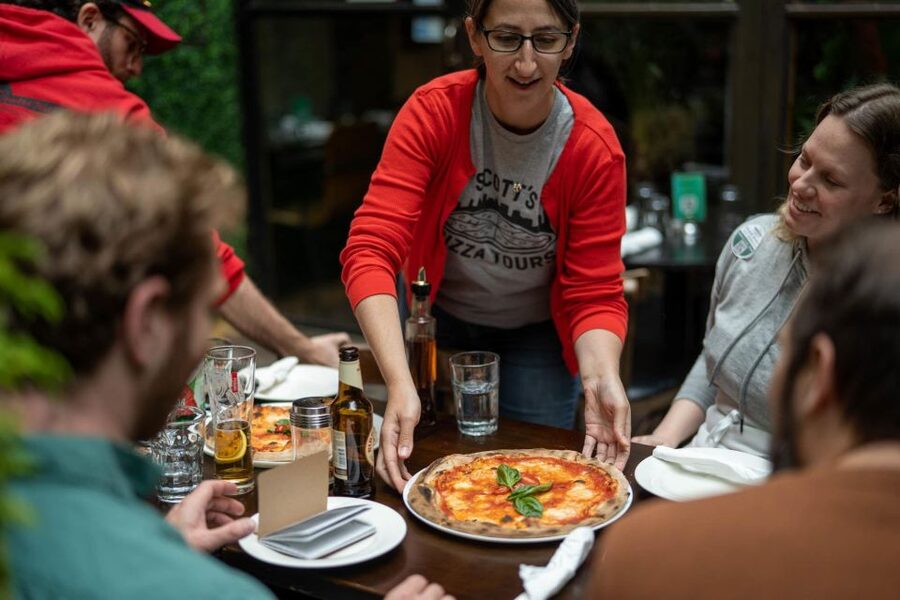
New York’s East Village pizza walk treats the neighborhood as a classroom, with three pizzerias showing how a simple Neapolitan food became an American staple. You taste one slice at each stop, watch different stages of pizza making, and connect the food to the immigrant families who shaped the Lower East Side.
I like the clear variety: the stops focus on different pizza styles and stages of development, not three nearly identical slices. I also like the guide-led history, especially when your pizza professional explains dough stretching, toppings, ovens, and the neighborhood itself. The main drawback is that drinks cost extra, and a two-and-a-half to three-hour walk may feel long if you want only a quick slice.
Key points at a glance
- Three pizzerias, three different approaches: Compare slices rather than judging one shop in isolation.
- A food lesson with a neighborhood setting: Walk through the East Village and Alphabet City while learning how immigrant communities shaped New York food.
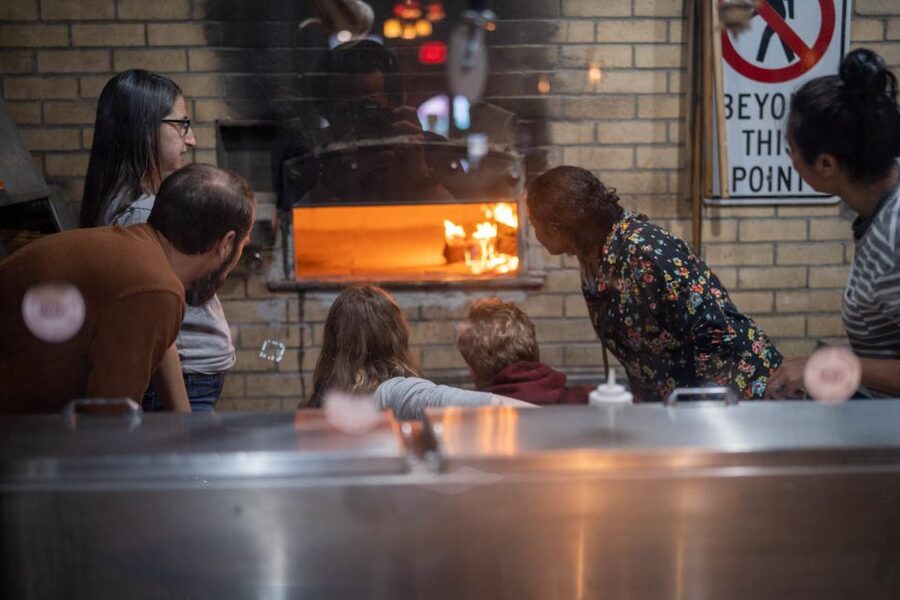
- Hands-on pizza details: Watch dough, toppings, and baking come together, then compare how different ovens affect the finished pie.
- Guides who know their subject: David, Amy, and Laura have led recent tours, with a licensed guide and serious pizza focus.
- A useful meeting point: Start at Gnocco Pizzeria, 337 E. 10th Street, a few blocks from the First Avenue L train stop.
- Good value for serious pizza fans: At $65, the price covers three tastings, guiding, local history, and a Pocket Pizza Journal, but not beverages.
Why this pizza walk is different from a simple slice crawl
A normal New York pizza hunt asks one question: which shop is best? This tour asks a better one: how did pizza change as it moved from Italian street food to a distinctly American favorite?
That shift gives the walk its shape. You are not simply taken from one popular counter to another. The three stops represent different points in pizza’s development, from humble Neapolitan origins to newer New York interpretations. You can watch the pie take form, see how each shop uses its oven, and taste the result while the details are still fresh.
I like this approach because pizza arguments often become too general. A thin, crisp slice, a soft Neapolitan-style pie, and a more creative modern version are not trying to do the same job. Comparing them side by side helps you understand what you actually enjoy: blistered crust, a foldable slice, a stronger tomato flavor, a lighter center, or something else.
The tour also gives the neighborhood a role. The Lower East Side was once home to German, Polish, Ukrainian, and Italian immigrant families, many living in tight quarters and working hard to establish themselves. Pizza belongs to that story, but it is only one part of it. As you walk, the guide connects food to the changing character of the streets around you.
More East Village Tours:
- East Village Rock and Roll Tour *Rock Junket Tours
★ 5.0 · 170 reviews - East Village Haunted Manhattan tour
★ 5.0 · 81 reviews - NYC East Village Polish Food Tour
★ 5.0 · 34 reviews
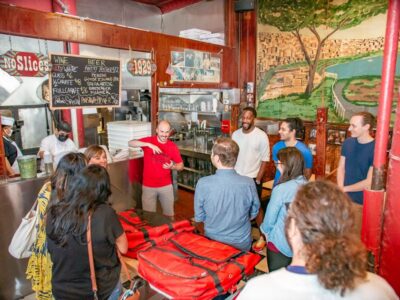
Meeting at Gnocco on East 10th Street
The tour begins at Gnocco Pizzeria, at 337 E. 10th Street. The meeting point is a few blocks from the First Avenue stop on the L line, making the subway a practical way to arrive.
If you get there early, you can go inside and buy a drink at the bar. That purchase is not included, so bring this detail into your budget. Since beverages are not part of the $65 price, you may want to drink some water before arriving, especially in warm weather.
The start is in the East Village, close to Alphabet City and the Lower East Side. You should wear shoes you can walk in and dress for the weather. The tour runs rain or shine, so a wet forecast does not automatically mean a cancellation. That is useful for planning, but it also means you should not treat this as an indoor food event.
The experience is listed as lasting 2.5 hours, while the description also refers to a three-hour walk. I would allow roughly three hours in your schedule, particularly if the group spends extra time with a pizza maker or if the pizzerias are busy.
Walking through the East Village and Alphabet City
The walking is not filler between food stops. It gives the pizza lesson a physical setting.
The guide introduces the Lower East Side as a place shaped by new arrivals. Germans, Poles, Ukrainians, and Italians all made homes here, often in difficult working-class conditions. The neighborhood was crowded, and many residents hoped to move out as soon as they could. Today, the same area is known for its restaurants, bars, small shops, and unusually high number of pizzerias.
That contrast makes the walk more useful than a stand-alone tasting. You see how a neighborhood once viewed as a temporary stop for immigrant families became one of New York’s most fashionable areas. The food tells part of that story. Recipes and techniques came from elsewhere, then changed in response to American ingredients, customers, ovens, and habits.
Your guide supplies the connecting thread. Guides have included David, Amy, and Laura. The feedback attached to the experience points to a consistent strength: David was patient with questions, while Amy and Laura brought humor and energy to the explanations. That matters because pizza can invite a lot of questions. Why does one crust stay soft? What makes another crisp? How does a pizzeria decide when a pie is ready? A guide who welcomes interruptions makes the walk more useful for curious eaters.
The exact route can vary, but the focus remains the East Village, Alphabet City, and the Lower East Side. Expect city sidewalks, restaurant interiors, and a fair amount of standing. This is not a sightseeing tour built around major landmarks, so choose it for local food and neighborhood context rather than for famous attractions.
Stop one: seeing pizza at its starting point
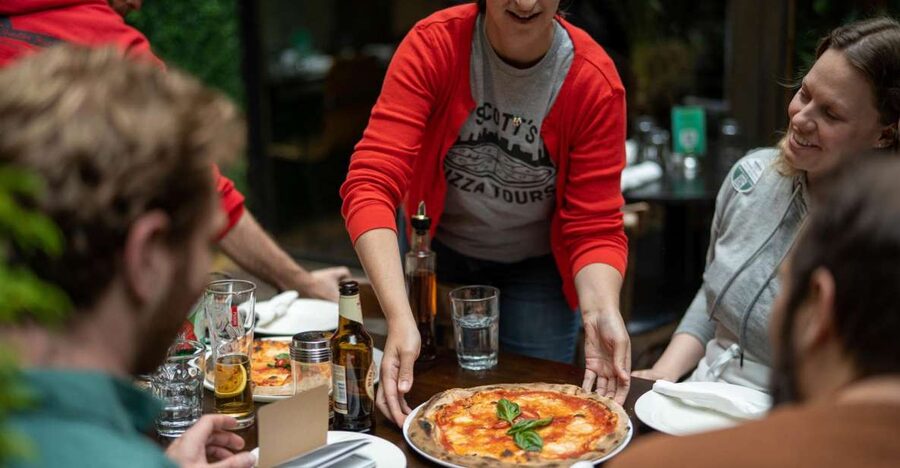
The first pizzeria introduces one stage in the development of the pie. The supplied details do not name each shop or assign a fixed order, so I would not promise a particular style at a particular stop. What you can expect is a deliberate comparison among three different kinds of pizza.
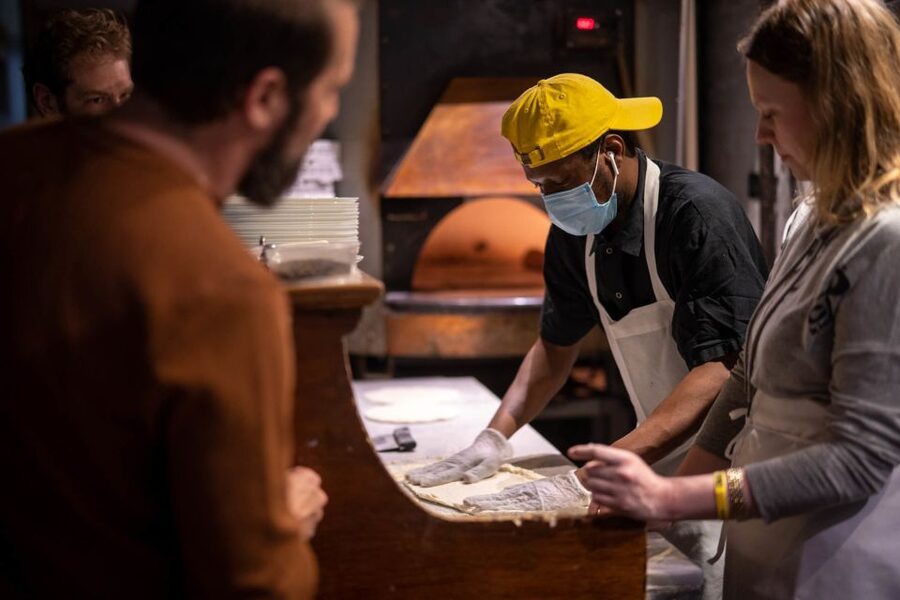
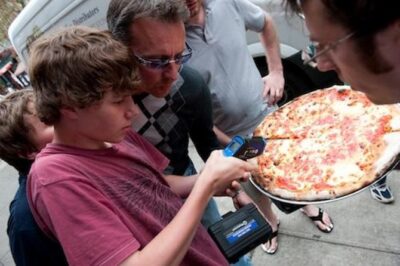
The early part of the story centers on Neapolitan pizza and its roots as modest street food. The guide explains old toppings, dough stretching, and the basic choices that affect texture. You may watch the pizzaiolo shape dough, add toppings, and prepare the pizza for the oven.
This is where the tour shifts from eating to observing. Pizza looks simple, but small choices matter. The amount of dough, the way it is stretched, the proportion of sauce and cheese, and the heat of the oven all change the finished slice. Seeing those steps before taking a bite gives you something specific to notice.
The portion is one of three pizza tastings rather than a full meal at each stop. That is helpful because you have enough food to compare without being asked to finish three heavy meals. Still, arrive hungry but not starving. A walking tour becomes less pleasant if you spend the first half thinking only about food.
More NYC Pizza Tours:
- A Slice of Brooklyn Pizza Tour
★ 5.0 · 306 reviews - Greenwich Village Pizza Walk
★ 5.0 · 158 reviews - NYC: Private Home Alone 2 Stretch Limousine Tour with Pizza
★ 4.6 · 98 reviews - Bagels Dumplings Pizza & Tacos: A Downtown Food Crawl
★ 5.0 · 63 reviews
Stop two: comparing ovens and baking methods
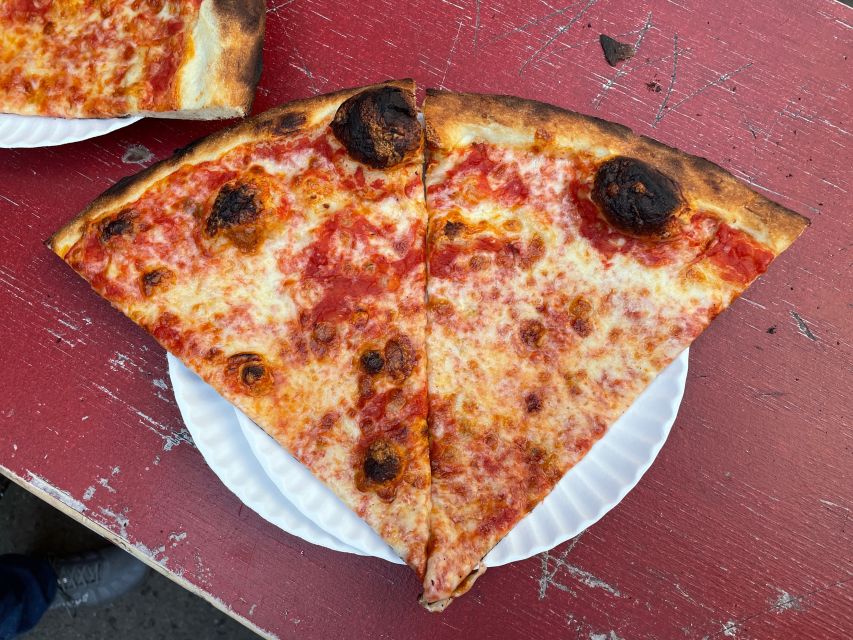
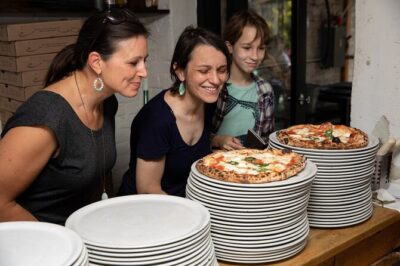
The second stop adds the oven lesson. You compare the baking patterns of three different pizza ovens during the tour, which is one of the more useful parts for anyone who normally sees only the final slice.
An oven affects more than temperature. It changes how quickly the crust cooks, how much color develops, and how the center and edge feel when you bite. One method may produce a softer middle, while another may give you a firmer base or a more pronounced baked flavor. The guide’s job is not simply to announce which oven is hottest. It is to show how equipment and technique work together.
You may also see a different point in the pie’s development here, such as the move from handmade Italian tradition toward the American styles that made New York pizza famous. The point is not that one approach wins. Each pizzeria is solving a slightly different problem and serving a different idea of what pizza should be.
This comparison is especially good for first-time visitors who have heard endless claims about the best New York slice. After the tour, you can make that judgment with more care. You will understand that a slice designed for a quick street meal has different goals from a pie built around careful dough fermentation or a more formal sit-down presentation.
Stop three: modern New York pizza and the finished pie
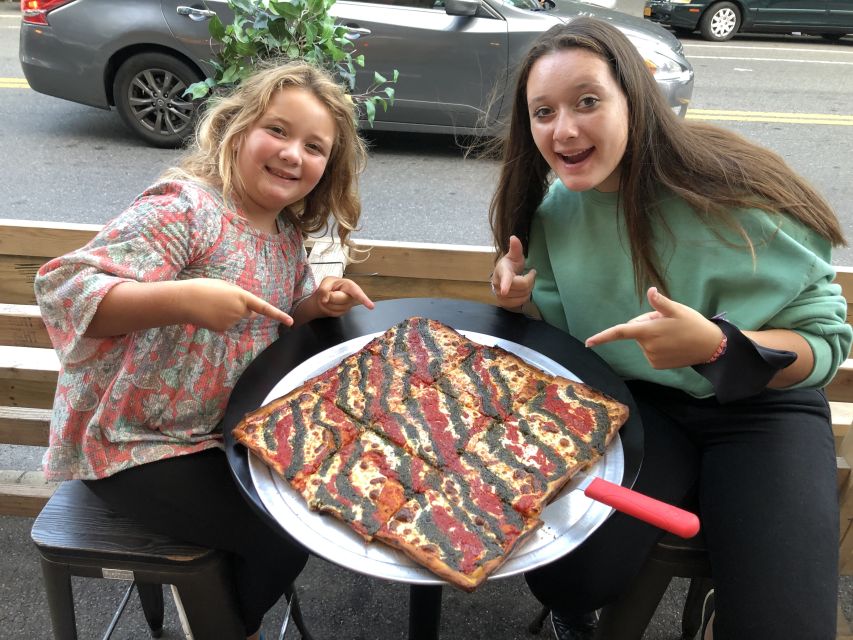
The final pizzeria completes the timeline with a more established or creative American expression of pizza. Again, the exact shop and order can change, but the tour promises three diverse pizzerias rather than three versions of one standard slice.
This stop is where you can think about pizza as a worldwide food. The original idea crossed borders, adapted to local tastes, and became a symbol of New York eating. The guide discusses how pizza grew from a simple food into something that can be casual, highly technical, traditional, or experimental.
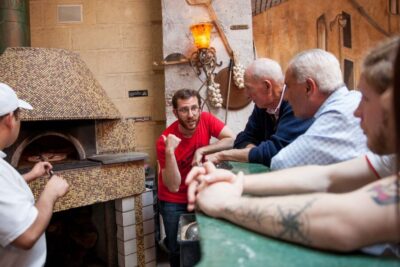
Meeting owners and pizzaioli is an important part of the experience when the shop’s schedule allows it. You get a closer look at the people making the food, not just the product placed in front of you. Their work also gives the guide’s explanations a practical edge. Dough techniques are easier to understand when you see them applied behind the counter.
Do not expect a private cooking class. The emphasis is on watching, tasting, and asking questions while the pizzeria continues serving its customers. That can mean a less controlled setting, but it also keeps the experience connected to real neighborhood businesses rather than turning it into a staged demonstration.
What the $65 price really covers
The price is $65 per person. For New York, that is not a small food purchase, but it is also not simply the cost of three slices.
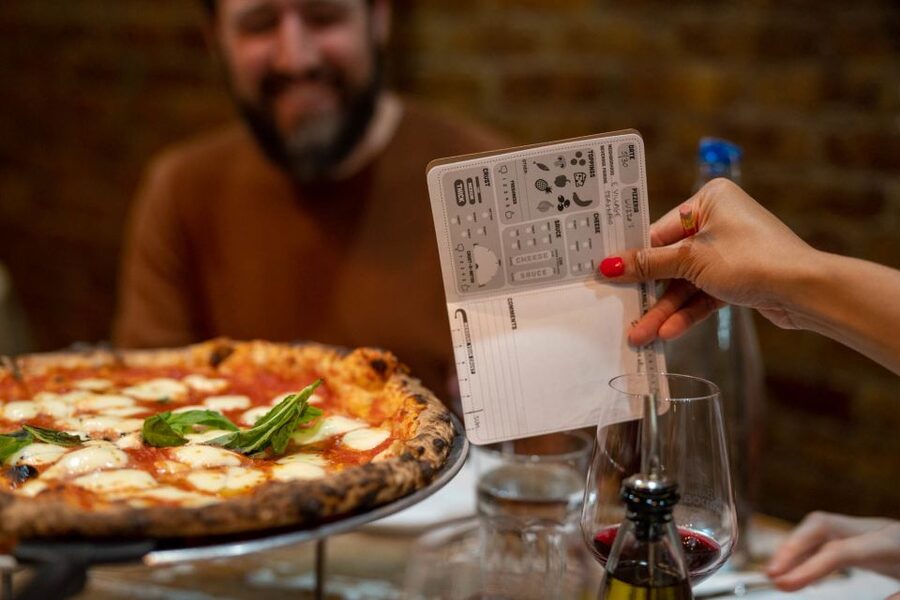
You are paying for a 2.5-hour guided walk, three pizza tastings, local history, pizza instruction, access to a guide focused on the subject, and a Pocket Pizza Journal. The value is strongest if you want context and comparison. If you only want to eat three slices as cheaply as possible, you can spend less by exploring on your own.
The guide is the main reason the price can make sense. A self-guided pizza crawl gives you freedom, but you must choose the shops, navigate between them, wait in line, and work out what makes each slice different. Here, the route and explanations are handled for you. You also get a framework for judging what you taste instead of relying on a quick first impression.
The price does not include beverages. That is a modest extra, but it is worth remembering when you plan your spending. The tour may be available in the afternoon or evening, so you could use it as a late lunch, early dinner, or an appetite-building stop before another meal. Since the tastings are spread across a walk, do not assume this is a full restaurant dinner.
Who will enjoy it most
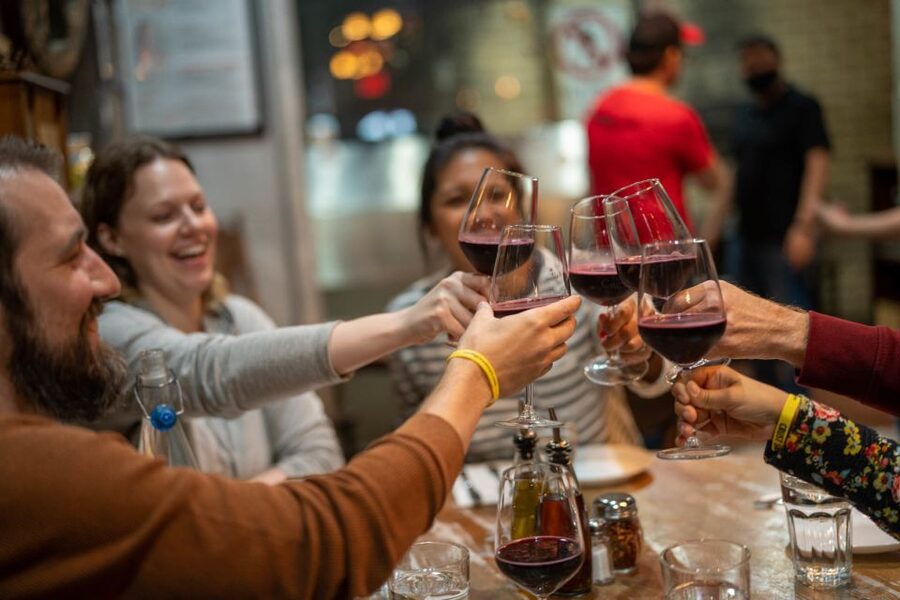
I would choose this tour for anyone who likes food with a story. It suits first-time New York visitors who want a neighborhood walk that feels less standard than a major landmark route, as well as returning visitors who have already seen the big sights.
It is particularly good for:
- Pizza enthusiasts who want to compare dough, toppings, ovens, and baking styles.
- Curious eaters who like asking how familiar foods developed.
- Couples and small groups looking for an easy shared activity with built-in conversation.
- Families with older children who can manage a few hours of walking and standing.
- Visitors interested in immigrant food traditions and the changing Lower East Side.
It may be less suitable if you want a quick meal, dislike walking in poor weather, or prefer to choose every restaurant yourself. The tour’s strength is its structure, so independent eaters may find the fixed route limiting.
The activity is listed as wheelchair accessible, but you should still consider the practical demands of city sidewalks, restaurant entrances, and time spent standing. The supplied information does not give details about step-free access at every stop, so ask the operator if you need specific access arrangements.
Practical planning for the walk
Wear comfortable shoes. That advice sounds basic, but it matters here because the experience combines neighborhood walking with several food stops. Dress for the forecast since the tour runs rain or shine.
The meeting point is easy to identify: Gnocco Pizzeria, 337 E. 10th Street, near First Avenue. Arriving early gives you the option to buy a drink inside, though it is not included. English is the tour language, and the experience is led by a live guide rather than an audio recording.
You can cancel up to 24 hours before the start for a full refund. The reserve-now, pay-later option also gives you some flexibility while you settle your New York plans. These details are useful in a city where weather and schedules can change quickly.
A rating of 4.6 from nine reviews is encouraging, though the sample is small. The strongest repeated qualities are the guides’ subject knowledge, patience, humor, and ability to make the history enjoyable. David is noted for taking time with questions, while Amy and Laura are described as lively and informative. Guide assignments can change, so treat those names as examples rather than a guarantee.
Should you book the East Village pizza walk?
Book it if you want more than a list of famous pizza shops. The three tastings, oven comparisons, neighborhood history, and chance to meet pizza makers give the experience real substance. I especially like that it avoids treating New York pizza as one fixed thing. You get to see how different techniques can all belong to the city’s food culture.
Skip it if your priority is the cheapest possible meal, a short activity, or a guaranteed private encounter with a particular owner. At $65, the tour earns its price through the guide and the explanation, not through the food alone.
For most visitors, I would schedule it early in a New York stay. You can use what you learn for the rest of your pizza eating, and the East Village setting gives you a useful introduction to a neighborhood worth exploring on its own. Just leave room in your plans, wear sensible shoes, and remember to budget for drinks.
FAQ
Where does the East Village NYC Pizza Walking Tour meet?
The tour meets at Gnocco Pizzeria, 337 E. 10th Street, New York, NY 10009. It is a few blocks from the First Avenue stop on the L subway line.
How long does the tour last?
The activity is listed as 2.5 hours, while the description also refers to a three-hour walk. Plan for roughly 2.5 to three hours.
How many pizzerias do you visit?
You visit three pizzerias and sample one pizza at each stop.
Are drinks included in the price?
No. Beverages are not included. If you arrive early, you can buy a drink at the bar at Gnocco Pizzeria.
What language is the tour offered in?
The live tour is offered in English.
What happens if it rains?
The tour runs rain or shine. Wear comfortable shoes and dress for the weather.
More NYC Walking Tours
- SoHo, Little Italy, and Chinatown Walking Tour in New York
★ 5.0 · 3,153 reviews - Secrets of Grand Central Station Walking Tour New York City
★ 5.0 · 1,796 reviews - Greenwich Village Walking and Food Tasting Tour
★ 5.0 · 1,572 reviews - Artistic, Alternative Greenwich Village Walking Tour
★ 5.0 · 971 reviews
Recently added in New York City
- NYC: Midtown Hands-On Bagel Baking Class★ 5.0 · 12 reviews
- Personalize Sightseeing Tour★ 5.0 · 92 reviews
- Central Park Pedicab Tour with Guide★ 5.0 · 63 reviews
- Central Park Pedicab Guided Tour★ 5.0 · 17 reviews
- Photographer, Professional Photo shoot – New York★ 5.0 · 16 reviews
- Official Central Park Pedicab Ride ( UP TO 3 PERSONS )★ 5.0 · 4 reviews
- JFK or LGA package only (Round trip transfer plus VIP Contrasts)★ 5.0 · 3 reviews
- Official Central Park Pedicab Tours★ 5.0 · 35 reviews
NYC Pizza Tours, compared.

Bagels Dumplings Pizza & Tacos: A Downtown Food Crawl
Read our review →
Browse the lists this tour appears in