Reviewed · TOURS
Financial Crisis Tour with a Finance Professional
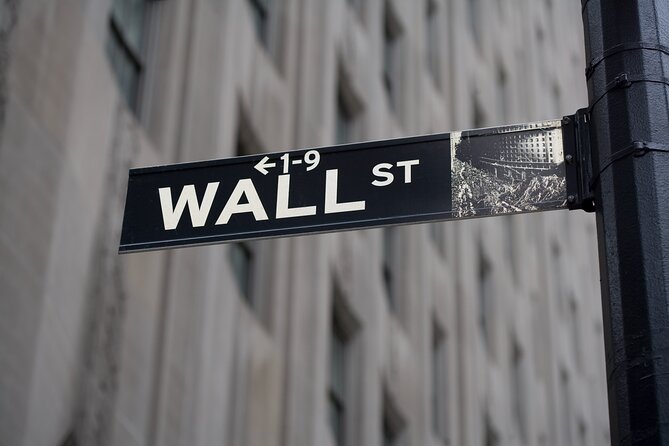
Wall Street is easier to understand when someone explains what happened behind its polished facades. This two-hour walk connects the 2008 financial crisis to the people and firms involved, with guides such as Emily, Ben, Jared, James, Jon, and Mike bringing front-line experience from banking and financial markets. I like the clear explanations of complex products, and I like that the tour also covers older New York history, from Federal Hall to Trinity Church and the beginnings of the stock and bond markets.
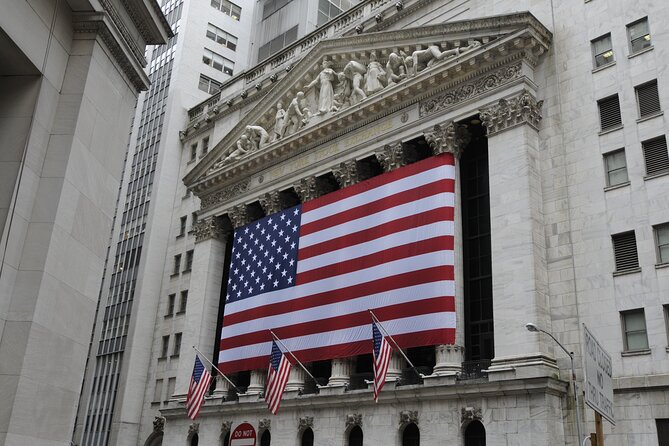
The main drawback is simple: you do not enter the New York Stock Exchange. It has been closed to visitors since 2001, despite the way some people may picture this tour. You also spend much of the time outdoors, so cold weather, wind, and comfortable shoes matter.
Key points before you book
- Former finance professionals lead the walk: Guides may include Emily, Ben, Jared, James, Jon, or Mike, depending on the departure.
- The 2008 crisis gets the starring role: You learn how banks failed, how traders profited, and how mortgage-related products helped spread the damage.
- The tour is more than a crash lecture: Federal Hall, the New York Stock Exchange, Trinity Church, the Charging Bull, and the Federal Reserve add history and context.
- The New York Stock Exchange is an exterior stop only: No public entry is included or available.
- Small groups keep questions practical: The maximum group size is 20 people.
- Plan for outdoor walking: The tour lasts about two hours and involves a moderate amount of walking through Lower Manhattan.
Why the 2008 crisis makes sense on foot
A financial crisis can feel like a pile of acronyms and gloomy headlines. On this walk, the subject gains a physical setting. You move through the narrow streets of the Financial District while the guide points out the firms, buildings, and institutions connected with the collapse.
That setting matters. The crisis was not an abstract event happening somewhere far away. It affected banks, traders, homeowners, workers, and governments, and the tour links those layers together. Guides explain how banks made money, how risk spread through the system, and why the collapse reached far beyond Wall Street.
You can expect explanations of products such as collateralized debt obligations, or CDOs, and credit default swaps, or CDSs. The useful part is not simply hearing the terms. A good guide translates them into plain language and shows how they fit into the larger story.
That is where the tour seems strongest. Emily is praised for explaining difficult financial ideas in a way that is easy to follow. Jon is noted for combining simplified explanations with enough detail to help people who already know the subject. Jared is described as engaging and personable, while James is repeatedly praised for making financial and historical material accessible to mixed-age groups.
The guide changes, so the exact style can vary. Still, the experience is built around a guide with financial industry experience rather than a standard sightseeing script.
More New York City Tours:
- NYC: SUMMIT One Vanderbilt Tickets
★ 4.7 · 51,195 reviews - NYC: Empire State Building Tickets – Observatory & Museum
★ 4.7 · 25,757 reviews - New York City: Statue of Liberty & Ellis Island with Ferry
★ 4.6 · 18,683 reviews
Starting at 22 Broad Street
The tour begins at 22 Broad Street, in the heart of the Financial District. This is a useful meeting point because you are immediately among the narrow streets and imposing buildings that define Lower Manhattan.
The first part focuses on Wall Street and the companies tied to the crisis. Lehman Brothers and Bear Stearns are central names in the story, and the guide explains how these firms moved from major players to symbols of failure. You also hear about the people who profited during the turmoil, as well as those who were caught unprepared when banks collapsed.
The experience is mostly outside, but there may be opportunities to step inside a few buildings during the walk. One practical detail comes up often in the advice for this tour: bathroom opportunities are limited, so plan ahead before meeting the group.
The walking is described as moderate, not strenuous. Still, downtown sidewalks can be crowded, and you will be stopping often while the guide talks. Wear shoes you can comfortably use for two hours and leave room in your schedule rather than trying to rush straight to another timed attraction.
Wall Street and the people behind the headlines
The Wall Street section takes about an hour and is the core of the experience. The guide places the 2008 collapse within the wider story of American finance, rather than treating it as a single bad week in 2008.
You may hear about earlier market crashes, the origins of the stock and bond markets, and the way financial institutions developed over time. One particularly useful feature is the connection between financial history and the buildings around you. A guide may explain not only what a building once housed, but also how it is used today.
This broader approach helped make the tour appealing to people with very different interests. A finance professional can ask sharper questions about markets and risk. Someone who mainly wants to understand New York can follow the story through buildings, institutions, and public events. Families with teenagers can use it as a practical lesson in economics and American history.
The guide may also connect the walk to The Big Short, the book and film that brought the mortgage crisis to a wide audience. The tour does not simply repeat the film. It gives you a chance to sort out what the movie showed, what it simplified, and how the financial instruments worked in real life.
I would not expect a full academic lecture. The format is a walking tour, so the information comes in sections, with stops, questions, and short explanations. One comment about the tour suggests that parts can feel rushed. If you want lengthy technical discussion at every stop, two hours will feel brief. If you want a strong introduction, the pace should be more useful.
The New York Stock Exchange, from the outside
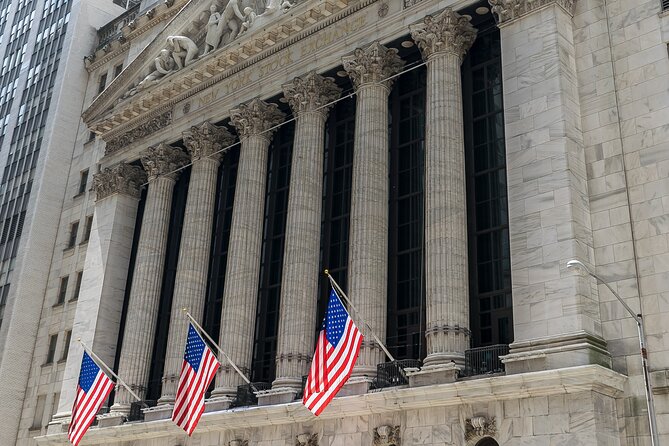
The New York Stock Exchange is one of the tour’s main landmarks, but you need to set your expectations correctly. There is no entrance to the exchange. It has been closed to visitors since 2001.
That limitation is important because the tour description can sound more behind-the-scenes than the actual access allows. You will see the exchange from outside and learn about its role, its history, and the market activity associated with it. You will not tour the trading floor or enter the building.
For many people, the exterior stop is still worthwhile. The exchange is a powerful symbol, and the surrounding streets help explain how concentrated financial activity became in this part of Manhattan. The guide can also use the location to connect older market traditions with modern electronic trading and the crisis of 2008.
If entering the exchange is your main reason for booking, do not book this experience. If you mainly want context, stories, and a walk around the district, the exterior visit can work well.
A completely different way to spend a day in New York City:
- New York City: American Museum of Natural History Ticket
★ 4.5 · 15,447 reviews - Statue of Liberty and Ellis Island Tour: All Options
★ 5.0 · 13,571 reviews - New York in One Day Guided Sightseeing Tour
★ 5.0 · 13,166 reviews - NYC: Museum of Modern Art (MoMA) Entry Ticket
★ 4.6 · 12,540 reviews
The Charging Bull and a quick photo stop
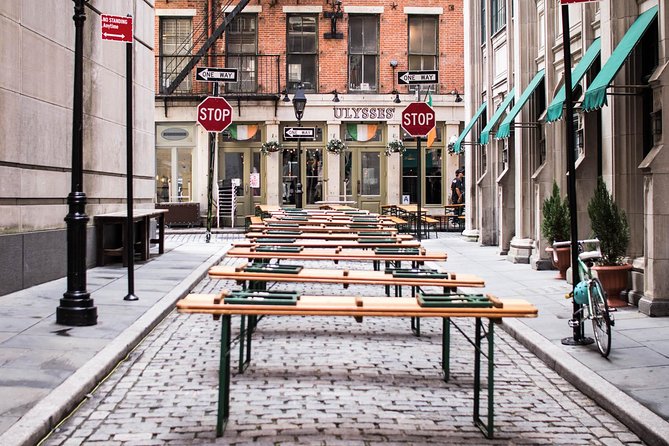
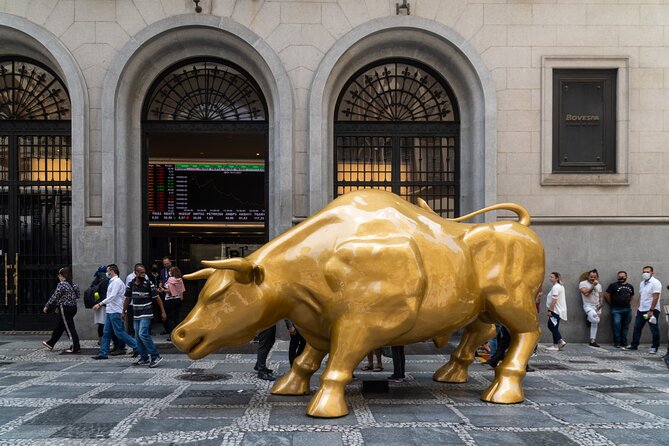
The walk continues to the Charging Bull, the familiar bronze statue near Wall Street. The stop lasts about 15 minutes and gives you time for a photo.
The bull is an easy symbol for the tour because it represents optimism and rising markets, while the financial crisis showed how quickly confidence can change. Your guide may use the statue as a lighter moment between heavier discussions of bank failures, mortgage debt, and lost savings.
This is not a long cultural stop, and the area can be busy. Treat it as a short photo opportunity rather than a quiet pause. If you want a picture, be ready when the group arrives so the tour can stay on schedule.
Federal Hall and the older story of finance
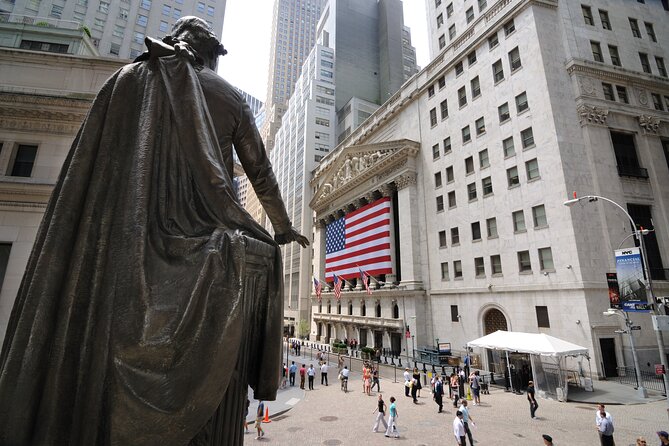
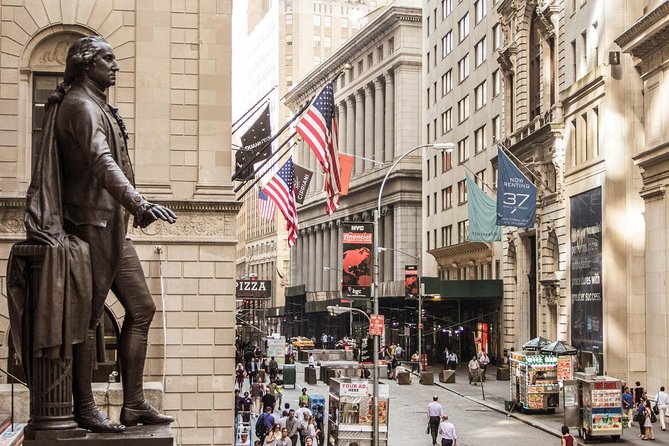
Federal Hall is scheduled for about 20 minutes and adds a major historical layer. This is the site where George Washington became president, linking the Financial District to the early government of the United States.
The stop helps prevent the tour from becoming only a lesson about the 2008 crash. Wall Street is not just a collection of banks and trading firms. It is also tied to the country’s founding, early public finance, and the creation of national institutions.
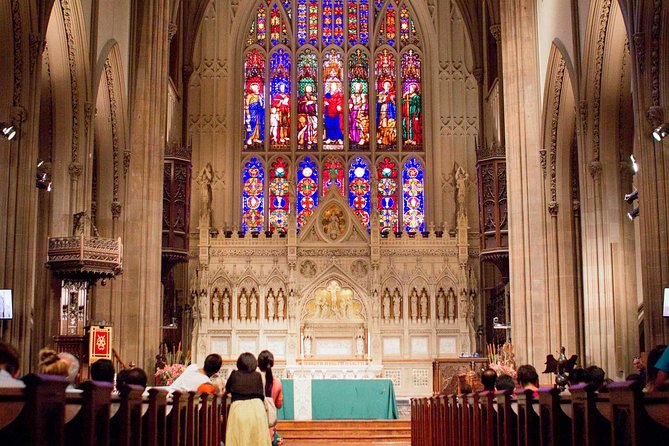
The tour may also touch on Trinity Church and other nearby landmarks. The strongest guides use these places to show how New York’s financial identity developed over centuries. Ben, in particular, is praised for covering building history, current use, real estate, and financial management in the same walk.
This is valuable if you are visiting New York for the first time. You get a first look at the Financial District while learning why the neighborhood matters. It also makes the tour a better fit for companions who are not especially interested in finance.
Ending near the Federal Reserve
The walk ends at 33 Liberty Street, near the Federal Reserve Bank. This is a convenient finish for continuing your Lower Manhattan sightseeing.
The ending also gives the crisis story a natural final point. The Federal Reserve plays a major role in the financial system, and its presence helps frame the difference between private banks, markets, and public institutions.
The tour’s ending is close to the 9/11 National Memorial Museum, roughly a few blocks away. If both subjects interest you, you can plan them on the same day. Keep in mind that the walking tour does not include admission to the museum, and you should allow separate time for it.
How good is the $59 value?
At $59 per person, this is not the cheapest way to see Wall Street. You can walk past the Charging Bull, Federal Hall, the exchange, and other landmarks without paying an admission fee.
You are paying for interpretation. The value comes from having someone explain what happened inside the institutions, how financial products worked, and why the crisis spread. A standard self-guided walk can show you the buildings. This tour aims to explain the decisions and failures connected with them.
I think the price makes the most sense for three kinds of people:
- You want a clear introduction to the 2008 crisis.
- You enjoy history but do not work in finance.
- You are visiting with a student, teenager, or companion who wants more than a photo stop.
The value is less convincing if you already know the crisis in detail or mainly want to enter the stock exchange. Since the tour is only about two hours, technically minded visitors may want more time for questions than the schedule allows.
The 95 percent recommendation rate and 4.7 rating from 154 ratings point to a generally strong experience, but the lower scores highlight an important concern. Expectations about access matter. The exchange is not open to the public, and a booking change or time change can create frustration if it is not explained clearly. Confirm your meeting time and understand the outdoor format before you go.
Weather, group size, and practical planning
The group can include up to 20 people. That is small enough for questions without promising a private tour. If only a few people book, the guide may be able to make the conversation more personal. One family described receiving a very personal experience when their group was the only one booked.
The tour is offered in English and uses a mobile ticket. Confirmation arrives when you book. Service animals are allowed, and the meeting point is near public transportation.
Winter deserves special attention. Downtown Manhattan can feel cold and windy between tall buildings, and one guide made a point of bringing the group inside at times to warm up. Still, dress for an outdoor walk rather than assuming you will spend much time indoors.
The activity is suitable for most people, with a moderate amount of walking. The route includes outdoor stops and a chance to enter a few buildings, but the New York Stock Exchange is not one of them.
Free cancellation is available if you cancel at least 24 hours before the start time. Cancellations or changes made inside that window are not refunded or accepted.
Who will enjoy this tour most?
I would choose this walk for a first visit to New York, especially if you want a useful orientation to Lower Manhattan. The mix of government, finance, architecture, and American history gives you more context than a simple landmark circuit.
It also works well for families. The subject can sound dry, but the guides use stories, humor, questions, and personal work experience to keep it moving. A guide successfully drew a teenager into the conversation through a reference to a Batman film shot in the district, a small detail that shows how the walk can connect with different interests.
Students can gain a practical view of subjects covered in American history or economics classes. Adults who work in banking may appreciate the technical side, while companions with no financial background can still follow the main story.
I would be cautious if you need guaranteed access to interiors, want a quiet museum-style experience, or dislike outdoor walking. I would also avoid booking it on a very cold day unless you are prepared with warm clothing.
Should you book the Financial Crisis Tour?
Book it if you want the story behind Wall Street, not just the photographs. The former finance professionals add value by explaining CDOs, CDSs, bank failures, and the 2008 collapse in ordinary language, while the route adds Federal Hall, the Charging Bull, the New York Stock Exchange exterior, and the Federal Reserve.
The tour is especially useful for first-time visitors, families, students, and anyone who has seen The Big Short but wants a clearer explanation of what really happened. Just remember the two limits: the tour is mostly outdoors, and the stock exchange is not open for visits.
At $59, you are paying for a guide’s interpretation rather than entry tickets. For that purpose, this is a solid, focused introduction to Lower Manhattan and the financial crisis.
FAQ
How long does the Financial Crisis Tour last?
The tour lasts approximately two hours.
Where does the tour begin?
The meeting point is 22 Broad Street, New York, NY 10005.
Where does the tour end?
The tour ends at 33 Liberty Street, near the Federal Reserve Bank.
Can I go inside the New York Stock Exchange?
No. The New York Stock Exchange has been closed to visitors since 2001, so the tour visits the exterior only.
What landmarks are included?
The walk includes Wall Street, the Charging Bull, Federal Hall, the New York Stock Exchange exterior, and the area near the Federal Reserve. It may also cover Trinity Church and other Financial District buildings.
Is the tour mostly indoors or outdoors?
It is mostly an outdoor walking tour, with a chance to visit inside a few buildings.
How large is the group?
The maximum group size is 20 people.
Is free cancellation available?
Yes. You can cancel for a full refund up to 24 hours before the experience start time. Cancellations or changes made less than 24 hours before the start time are not refunded or accepted.
Recently added in New York City
- NYC: Midtown Hands-On Bagel Baking Class★ 5.0 · 12 reviews
- Personalize Sightseeing Tour★ 5.0 · 92 reviews
- Central Park Pedicab Tour with Guide★ 5.0 · 63 reviews
- Central Park Pedicab Guided Tour★ 5.0 · 17 reviews
- Photographer, Professional Photo shoot – New York★ 5.0 · 16 reviews
- Official Central Park Pedicab Ride ( UP TO 3 PERSONS )★ 5.0 · 4 reviews
- JFK or LGA package only (Round trip transfer plus VIP Contrasts)★ 5.0 · 3 reviews
- Official Central Park Pedicab Tours★ 5.0 · 35 reviews
Tours, compared.
Statue of Liberty and Ellis Island Tour: All Options
Read our review →




9/11 Memorial, Ground Zero Tour with Optional 9/11 Museum Ticket
Read our review →
Hop-on Hop-off Sightseeing Tour by Open-top Bus
Read our review →