
Reviewed · 9/11 MEMORIAL AND GROUND ZERO TOURS
Ground Zero Museum Workshop Tour
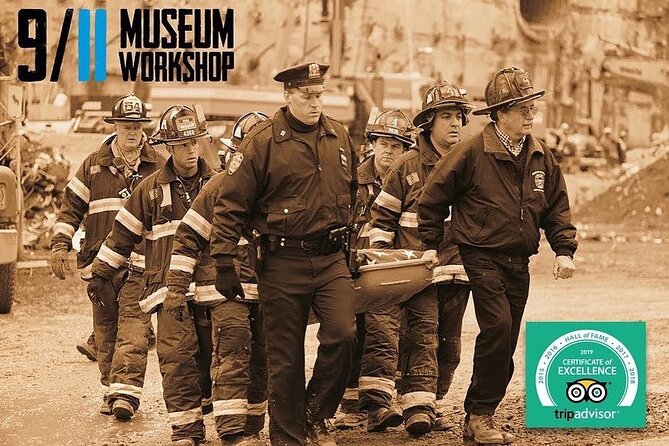
The most striking part of the Ground Zero Museum Workshop is its hands-on collection. You can pick up World Trade Center steel and window glass, something the official 9/11 Memorial Museum does not allow. Gary Marlon Suson’s photographs and audio stories focus on the nine-month recovery effort, especially the work of the FDNY and other first responders.
I like the personal scale and the chance to hear the story behind each object through the BOSE audio system. I also like that the presentation is non-graphic and suitable for children. The main drawback is important: this museum is in the Meatpacking District, not at Ground Zero, and it is not the official 9/11 Memorial Museum.
Key points to know
- The clock is real: A frozen clock stopped at 10:02 a.m., marking the South Tower collapse, is on display.
- You can touch selected artifacts: Visitors may hold and photograph World Trade Center steel and window glass.
- The museum is small: Expect an intimate second-floor room rather than a large national museum.
- Gary Marlon Suson took the photographs: He was the only all-access, sanctioned photographer at Ground Zero during the recovery period.
- The audio guide gives each object a story: BOSE headsets cover 100 images and artifacts in four languages.
- Plan your route carefully: The museum is about four E-train stops from the World Trade Center area, near Chelsea Market and the High Line.
What the Ground Zero Museum Workshop really is
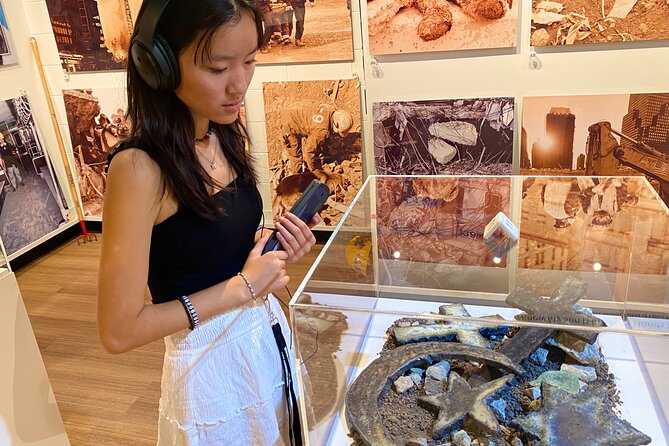
The name can cause confusion, so I’ll clear that up first. The Ground Zero Museum Workshop is not at Ground Zero and does not include entry to the 9/11 Memorial and Museum downtown. It is a separate experience at 420 West 14th Street in Manhattan’s Meatpacking District.
That distinction matters. If you want the memorial pools, the official 9/11 Memorial Museum, structural remains, large galleries, and a broad account of the attacks, this is not the ticket you need. If you want a smaller collection centered on recovery workers, FDNY personnel, personal photographs, and physical remnants, this workshop offers something different.
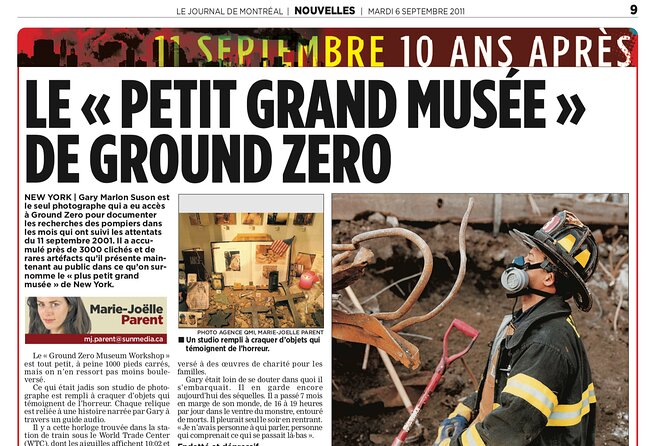
The museum was established in 2005 and focuses heavily on the nine months spent searching the rubble and recovering the missing. Its collection contains about 100 photographs, artifacts, video material, and audio stories. The tone is solemn but not graphic, making it a possible choice for families who want to discuss September 11 without exposing young children to disturbing images.
I would think of it as a focused documentary exhibit rather than a traditional museum. The room is compact, and the objects are packed closely together. That can feel underwhelming when you first arrive, especially if you expected a major downtown institution. Once you begin listening to the stories, though, the small scale becomes part of the experience.
More 9/11 Memorial and Ground Zero Tours in New York City:
- NYC: One World Observatory Skip-the-Line Ticket
★ 4.7 · 12,329 reviews - 9/11 Memorial, Ground Zero Tour with Optional 9/11 Museum Ticket
★ 5.0 · 6,381 reviews - 9/11 Memorial Museum Admission Ticket
★ 4.5 · 6,376 reviews
Entering the small West 14th Street museum
The museum is on the second floor, and the entrance is not designed like a large public attraction. A sandwich board may be the most useful outside marker, and the building can be hard to identify before opening time. Give yourself extra time to find 420 West 14th Street, particularly if you are arriving for a fixed tour.
The meeting point is also a practical advantage if you are already spending time in the Meatpacking District. Chelsea Market is nearby, as is the High Line, so you can pair the museum with lunch or a walk above the old elevated rail line. From the World Trade Center area, the E train takes about four stops, or roughly five minutes according to the tour information.
The tour lasts about 90 minutes, though your timing can vary. Some people finish in about an hour, while others spend close to two hours listening to every audio explanation. I would allow at least 90 minutes, and more if you like to pause over photographs and read carefully.
Groups are limited to a maximum of 15 people in the current information, with some descriptions also referring to a limit of 25. Either way, this is far smaller than the official downtown museum. The limited group size helps keep the room quiet and gives you a better chance to hear the audio and ask questions.
Gary Marlon Suson’s photographs and recovery stories
The heart of the visit is Gary Marlon Suson’s collection. He was the only all-access, sanctioned photographer at Ground Zero during the recovery period, and his work records the site from a perspective that goes beyond the familiar television images of the towers collapsing.
The photographs focus on the people who worked through the rubble, especially members of the FDNY. Several images show honor guards and the daily work of recovery. The point is not spectacle. It is remembrance, duty, exhaustion, and the careful search for people who had not yet been found.
Suson’s large photographs and three-dimensional installations are designed to put you visually inside the recovery site. The effect is more intimate than standing in a broad gallery filled with hundreds of objects. You look closely, listen to the story attached to each image, and begin to understand how much labor took place after the television cameras moved on.
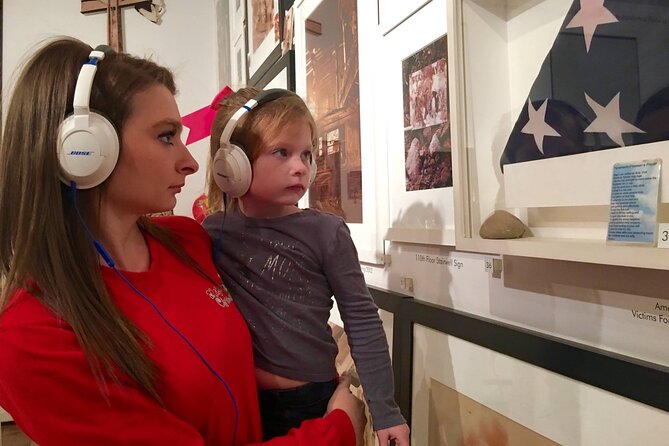
A BOSE audio tour supplies the detail. You can listen to the stories behind 100 photographs and artifacts, and the audio is offered in four languages. Spanish, French, and Italian are specifically identified in the information, along with English. The system is useful for families because children can listen at their own pace rather than follow a long spoken lecture.
The experience also includes a powerful 15-minute video. It helps establish the setting before you examine the collection more closely. For some people, the video will be the most direct part of the visit. For others, the individual objects and the stories attached to them will have the greater effect.
The clock, Bible page, steel, and window glass
Several objects give the museum its emotional force. One is a clock frozen at 10:02 a.m., the time associated with the collapse of the South Tower. The actual clock is displayed in the museum, not simply shown in a photograph.
Another notable object is the charred Genesis 11: Tower of Babylon Bible page, found in the World Trade Center rubble. It is a small object with a large symbolic weight, and the audio explanation helps place it within the broader recovery effort.
You can also hold pieces of World Trade Center steel and window glass. This is one of the experience’s most unusual features. In a conventional museum, these materials would normally sit behind glass or behind a barrier. Here, the staff allows you to pick them up and photograph them.
That hands-on element can make the event more meaningful for children, who may find it difficult to connect with photographs alone. It also gives adults a physical point of contact with the site. The museum does not permit videotaping, phone calls, food, or drinks during the tour, but ordinary photography of most exhibits is allowed.
One item cannot be photographed, and the reason becomes clear during the visit. The museum also offers souvenir photographs for an extra charge, though they are not included in the admission price.
More Workshops in New York City:
- Brooklyn Graffiti Workshop
★ 5.0 · 287 reviews - Central Park: Highest Rated Yoga Class in New York City!
★ 4.8 · 56 reviews - 3 Hour NYC Photography Workshop
★ 5.0 · 45 reviews - NYC: Bagel-Making Workshop with an Award-Winning Baker
★ 4.8 · 22 reviews
Why the small scale helps, and when it does not
I like the intimate setup because it keeps the focus on individual stories. You are not walking through a huge building trying to absorb dozens of galleries at once. The objects are close, the audio is direct, and the room encourages a quiet pace.
That same setup can disappoint if you expect a full account of September 11. The museum is essentially one small room, sometimes described as roughly 400 square feet, with photographs, display cases, artifacts, and audiovisual material. It does not provide the range or architectural scale of the official 9/11 Memorial Museum.
The emphasis is also specific. The collection concentrates on the recovery period and the firefighters who worked at Ground Zero. It is not a full chronological history of the attacks, the victims, the international response, or the later political events.
For that reason, I would not use this workshop as a replacement for the official museum downtown. I would use it as a second, more personal stop. The two experiences address different needs: one offers a major public history museum, while this one offers a small first-person account of the cleanup and search.
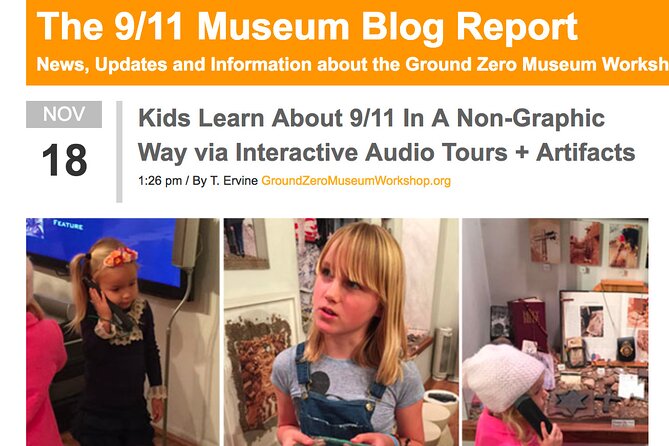
The museum’s non-graphic approach is a real benefit for families. Children can take part without being confronted by graphic scenes. The audio system also keeps younger visitors occupied, although parents should still decide if the subject is suitable for their child.
A practical 90-minute visit
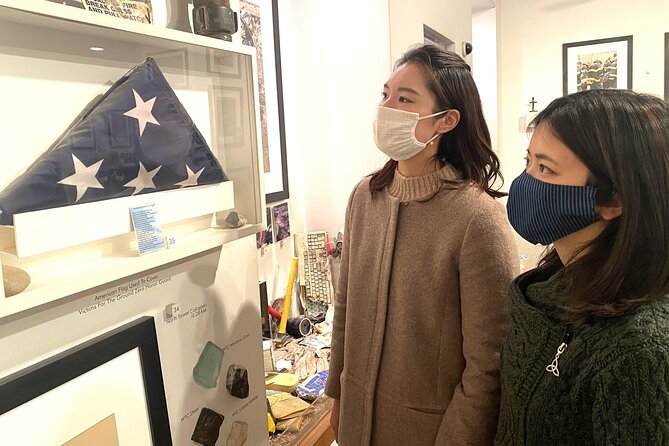
The visit generally begins with an introduction and the short video. You then receive the BOSE audio equipment and work through the photographs and objects. A museum guide remains part of the experience, explaining selected items and helping you understand how the collection fits together.
The exact balance between guided explanation and self-guided listening may vary. One account describes a guide explaining only a few objects before handing over the headset, while other visits included a more personal welcome and extra time. If you are hoping for a continuous lecture, this may feel lighter than expected.
I prefer the self-guided format for this type of collection because you can control the pace. You can spend more time with the frozen clock, the Bible page, or the FDNY photographs, then move on when you are ready. The drawback is that you need to use the audio equipment fully. A quick walk around the room will not provide the complete experience.
Seating is available, and free water is included. That helps because the room can require a steady amount of listening. Bags and backpacks must be stored at the front of the museum for security and space reasons. Cameras are allowed, but no video recording is permitted.
Service animals are allowed, and most people can participate. The tour is offered in English, with audio options in four languages. Confirmation is provided at booking, and the activity ends back at the same West 14th Street meeting point.
Is $34.50 good value?
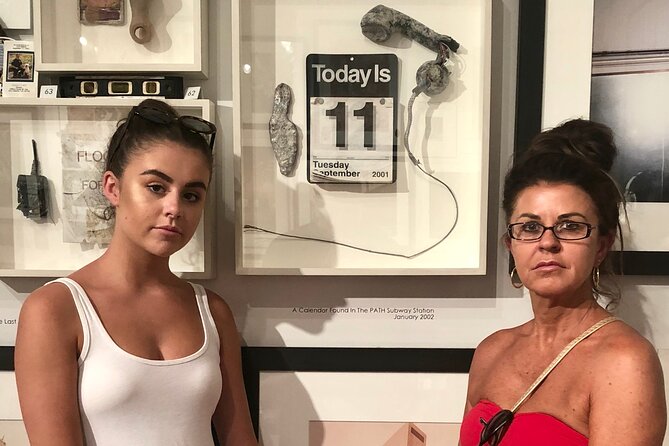
At $34.50 per person, the workshop is reasonably priced if you want a focused, guided look at recovery artifacts and photographs. The value comes from access to the stories, the small group setting, and the chance to handle selected steel and glass. Those are features you will not get in the same way at the official museum.
The price is less attractive if you only want to see a large collection or if you assume the ticket includes downtown Ground Zero. It does not include the 9/11 Memorial and Museum, transportation, hotel pickup, or souvenir photos.
I would compare the cost with your interests rather than with the size of the room. This is not a bargain because it offers a lot of square footage. It is worthwhile because it offers a personal format and artifacts you can physically examine.
A particularly strong visit may happen when Gary Marlon Suson is present, since he can provide first-hand context for the images. His availability is not stated as guaranteed, so do not book on the assumption that he will personally lead your session.
Who should book this experience?
I would recommend it to you if you:
- Want a personal account of the recovery effort
- Value photographs and spoken stories more than a large museum layout
- Are interested in FDNY history and first responder work
- Are visiting with children and prefer a non-graphic presentation
- Want to handle selected World Trade Center artifacts
- Already plan to visit Chelsea Market or the High Line
- Have time for both this workshop and the official downtown museum
I would skip it if your main goal is to visit the actual memorial site or the official 9/11 Memorial Museum. I would also skip it if a compact room with display cases sounds limiting, or if you do not plan to listen to the audio explanations.
The 9/11 subject is difficult, and this museum treats it with care. Still, it is emotional. Allow some quiet time afterward rather than scheduling it between two rushed activities.
The bottom line
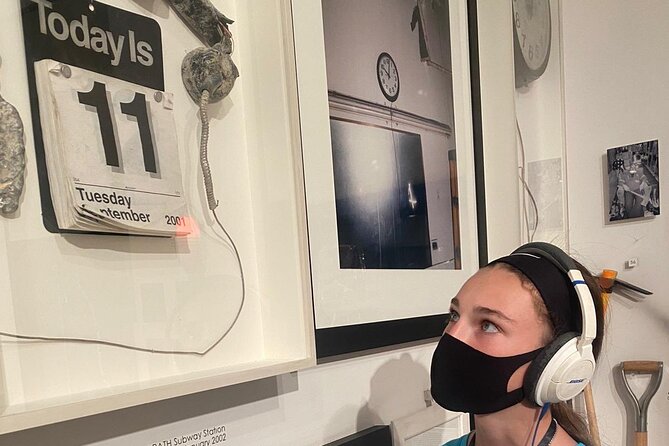
Book the Ground Zero Museum Workshop if you want a small, hands-on remembrance experience centered on recovery workers, FDNY images, and rare artifacts. The frozen clock, charred Bible page, steel, and window glass give the visit a physical connection to the past.
Do not book it as a substitute for the official museum at Ground Zero. The location and collection are different, and the name can lead to an expensive misunderstanding. Used alongside the downtown memorial, however, this workshop adds a more personal view of the nine months after the attacks.
FAQ
Is the Ground Zero Museum Workshop located at Ground Zero?
No. It is at 420 West 14th Street in Manhattan’s Meatpacking District, about four E-train stops from the World Trade Center area.
Does the ticket include the 9/11 Memorial and Museum?
No. Admission to the official 9/11 Memorial and Museum is not included.
How long does the tour last?
The tour lasts approximately 90 minutes. Some people may finish in about an hour, while listening to every audio story can take closer to two hours.
Can I touch artifacts at the museum?
Yes. Visitors may hold and photograph selected World Trade Center steel and window glass.
Is photography allowed?
Photography is allowed for the exhibits, with at least one item excluded. Videotaping is not allowed.
Is the museum suitable for children?
Yes. The presentation is non-graphic and is described as suitable for families and children. The BOSE audio guide is designed to help keep younger children engaged.
What languages are available for the audio tour?
The BOSE audio tour is offered in four languages. English, Spanish, French, and Italian are identified in the tour information.
What is included in the admission price?
The price includes the BOSE audio tour, a museum-guided walk-through of the artifacts, free water, seating, and the chance to hold and photograph selected rare artifacts. Souvenir photos and hotel transportation cost extra.
More Museums in New York City
- NYC: Empire State Building Tickets – Observatory & Museum
★ 4.7 · 25,757 reviews - New York City: American Museum of Natural History Ticket
★ 4.5 · 15,447 reviews - NYC: Museum of Modern Art (MoMA) Entry Ticket
★ 4.6 · 12,540 reviews - All-Access 9/11: Ground Zero Tour, Memorial and Museum, One World Observatory
★ 5.0 · 4,886 reviews
Recently added in New York City
- Squid Game: The Experience New York City★ 4.0 · 9 reviews
- New York: Private Professional Photoshoot at Central Park★ 5.0 · 9 reviews
- Professional Photoshoot at Brooklyn Bridge in New York★ 5.0 · 5 reviews
- New York Queens Indoor Skydiving Experience With 2 Flights★ 5.0 · 4 reviews
- New York 4-Day Tour to Niagara Falls & Washington★ 4.0 · 13 reviews
- New York: Times Square Professional Photoshoot★ 4.5 · 17 reviews
- New York Princess Cruises★ 3.0 · 4 reviews
- New York Midtown Scavenger Hunt Adventure★ 3.5 · 9 reviews
9/11 Memorial and Ground Zero Tours, compared.
9/11 Memorial, Ground Zero Tour with Optional 9/11 Museum Ticket
Read our review →
All-Access 9/11: Ground Zero Tour, Memorial and Museum, One World Observatory
Read our review →
New York City One World Observatory Admission Ticket
Read our review →
NYC City Tour: Statue of Liberty, 9/11 Memorial, Wall Street
Read our review →
Ground Zero 9/11 Memorial Tour & Optional 9/11 Museum Ticket
Read our review →
Browse the lists this tour appears in