
Reviewed · HARLEM TOURS
Harlem Bronx Brooklyn Queens Tour in 7 Hours
New York’s famous skyline is only part of the story. This seven-hour Bronx, Harlem, Queens, and Brooklyn tour takes you far beyond Midtown, linking music history, street art, immigrant neighborhoods, sports, film locations, and major city landmarks in one long day.
I like the small van format, which keeps the group to a maximum of 14 and makes 11 listed stops possible. I also like the guides’ personal touch. Mario Rosales, José, and Alejandro are repeatedly praised for mixing history with humor, helping with photos, and keeping the seven hours moving.
The trade-off is time. This is a broad introduction, not a slow neighborhood walk. Most stops last 10 to 20 minutes, and lunch is not included. You see a lot, but you will not explore any one district in depth.
Key points to know before booking
- A full cross-city route: Visit Harlem, the Bronx, Queens, Williamsburg, Bushwick, and DUMBO in one day.
- A Spanish-speaking guide: The tour is conducted entirely in Spanish, with guides including Mario Rosales, José, and Alejandro.
- Frequent photo breaks: The van stops at murals, bridges, stadiums, movie locations, and famous streets.
- A genuine small-group advantage: The vehicle holds up to 13 participants, with a stated maximum of 14.
- A useful first look outside Manhattan: You get a sense of how different New York’s boroughs feel and function.
- A modest price for a long route: At $65 per person, the tour offers strong value if you want breadth more than extended walking time.
Why this seven-hour route is useful
Many first visits to New York stay close to Times Square, Central Park, and lower Manhattan. This tour takes you in the opposite direction. It shows you neighborhoods that are geographically close to Manhattan but often feel like separate cities, each with its own identity.
You begin at 8:20 a.m. at 766 8th Avenue. From there, the van crosses through Harlem, the Bronx, Queens, and Brooklyn before finishing at Canal Street and Bowery Street near the Mahayana Temple. That ending is handy if you want to continue sightseeing in Chinatown or lower Manhattan.
The tour works best as an orientation day. You are not paying for museum admissions or long guided visits. You are paying for transport, route planning, Spanish commentary, and access to a string of places that would take considerable effort to connect by subway and on foot.
The vehicle is air-conditioned, and the group is kept relatively small. That matters on a route with frequent exits and re-entries. A large coach would make these short stops slower and less personal.
More Bronx Tours:
- NYC Bus Tour of Brooklyn, Bronx, Queens: Art, Food & Sports
★ 5.0 · 3,805 reviews - NYC Highlights Tour: Bronx, Brooklyn, Harlem, Queens & Coney
★ 4.5 · 2,846 reviews - NYC: Contrasts Tour of Harlem, The Bronx, Queens & Brooklyn
★ 4.5 · 2,167 reviews
Harlem: music, Black history, and Malcolm X Boulevard
The first section focuses on Harlem, beginning near the Cotton Club. The present-day club is associated with jazz shows, live music, swing dancing, and musical entertainment. The stop is brief, around 10 minutes, so you should think of it as a quick orientation and photo opportunity rather than a performance visit.
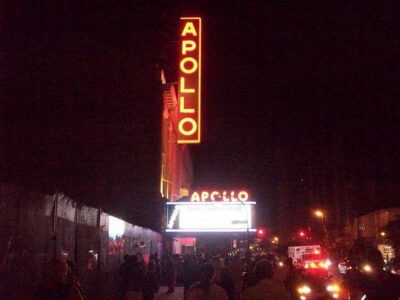
The story continues to the Apollo Theater on 125th Street. This is one of Harlem’s most recognizable cultural landmarks and is closely tied to the careers of major performers, including Michael Jackson, Louis Armstrong, and Celia Cruz. You get about 15 minutes here, enough to see the exterior and absorb the setting along one of Harlem’s best-known streets.
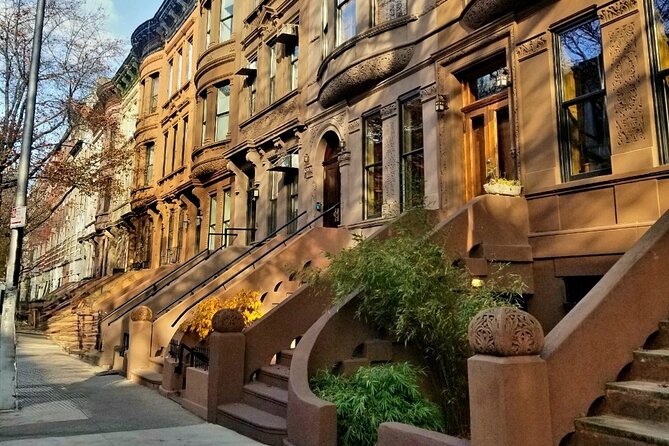
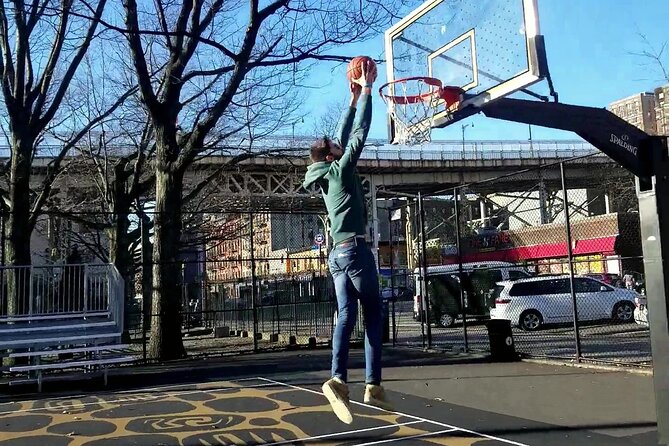
The next stop takes you along Malcolm X Boulevard toward brownstone homes and Holcombe Rucker Park. The park is famous for its basketball courts and the strong role street basketball has played in Harlem culture. You will have about 15 minutes to look around and take photos.
I like this part of the route because it combines famous names with ordinary neighborhood scenes. You see the theater and music history, but also residential streets and a public basketball court. The limitation is that the short stops cannot explain every layer of Harlem. If Harlem is your main interest, plan a separate visit for a longer walk.
The Joker stairs and a quick Bronx introduction
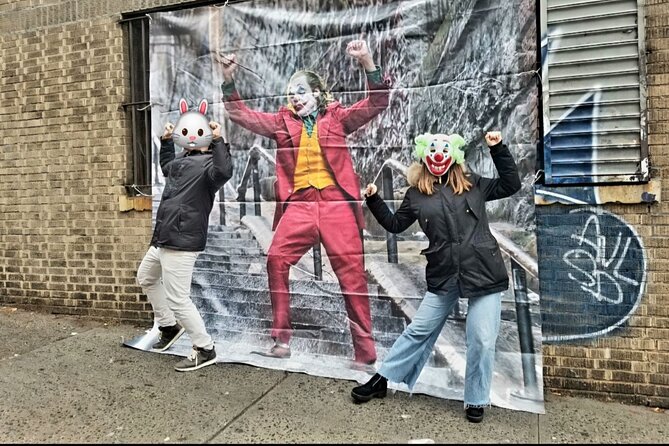
The stop called Joker Stairs is one of the tour’s most immediately recognizable photo moments. These are the stairs used for Joaquin Phoenix’s dance scene in the film Joker. The stop lasts about 10 minutes.
This is a good example of the tour’s mix of subjects. One moment you are considering African American music and basketball culture, and the next you are at a film location familiar from popular culture. If you do not care about the movie, the stop will have less weight, but the stairs still provide a distinctive view of the surrounding streets.
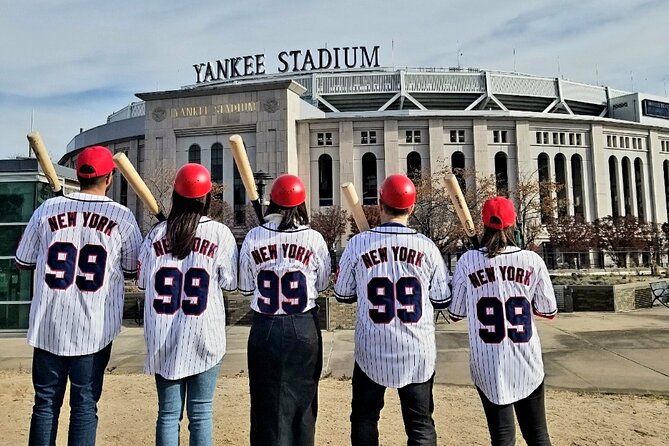
In the Bronx, the route reaches Yankee Stadium. You get around 15 minutes near the stadium, along with views of the Fort Apache Police Station and the family, civil, and criminal courthouses. The tour does not include a baseball game or stadium admission. It is a quick exterior visit.
For sports fans, Yankee Stadium may be one of the day’s highlights. For everyone else, it is a useful marker for understanding the Bronx. The stop also gives the guide a chance to connect sports, public buildings, and local geography without requiring a separate trip.
Bronx murals and the city’s changing public art
The next Bronx stop follows Grand Concourse Avenue and Westchester Avenue toward a mural and graffiti area. You will see the I Love The Bronx mural and work associated with Tats Cru, along with a mural connected to Big Pun.
The stop is only about 10 minutes, but it helps explain why New York’s public art is part of the city’s everyday visual life. This is not a gallery visit with labels and quiet rooms. You are looking at art in its neighborhood setting, from the van route and on foot.
The quality of this stop will depend partly on the guide’s explanation. A good guide can give the murals context and point out details you might otherwise miss. The supplied guide roster includes Mario Rosales, José, and Alejandro, and the strongest praise centers on their energy, historical detail, and willingness to take photos for the group.
More Harlem Tours:
- NYC: Harlem Hallelujah! Gospel Wednesday Concert
★ 4.7 · 1,638 reviews - New York City: Harlem Gospel Live Music Concert
★ 4.7 · 1,479 reviews - Harlem Sunday Morning Gospel Tour
★ 4.0 · 995 reviews - 4-hour Harlem Gospel Tour in New York City
★ 4.0 · 935 reviews
Queens by bridge, mansion, and globe
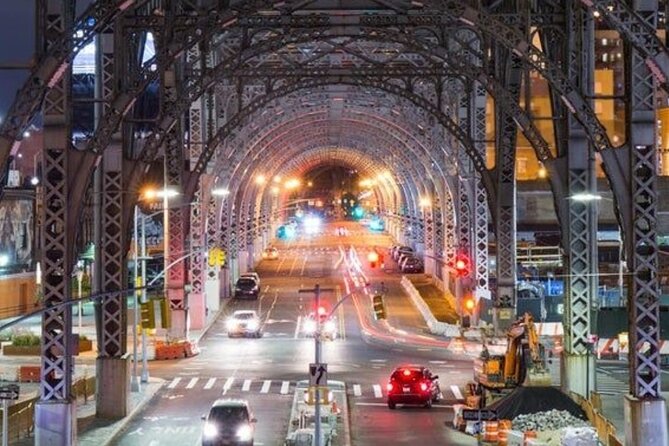
The tour then crosses into Queens and passes the Whitestone Suspension Bridge. You will see the Malba residential area, known for large homes, and stop for a 25-minute technical break where you can get a snack.
This is one of the quieter sections of the day. After the crowded energy of Harlem and the Bronx, the bridge and residential streets show another side of New York. The contrast is the point. Queens is not presented as one single type of neighborhood, but as a collection of very different communities.
Food is not included, so use the break sensibly. The tour description refers to a snack stop rather than a full lunch. Bring money or your own food if you need more than a quick bite, and do not expect a sit-down meal during the route.
At Flushing Meadows Corona Park, the tour pauses for about 15 minutes. You will see the US Open stadium, Citi Field, the Queens Museum, and the Unisphere, the large globe built for the 1964 New York World’s Fair.
The Unisphere is one of the day’s best visual stops. It is large, instantly recognizable, and easy to photograph. The surrounding park also brings together sports, architecture, and world’s fair history in a single setting. You will not have time to visit the Queens Museum or attend a tennis or baseball event, but the stop gives you a useful overview.
Bushwick murals and Williamsburg’s Hasidic community
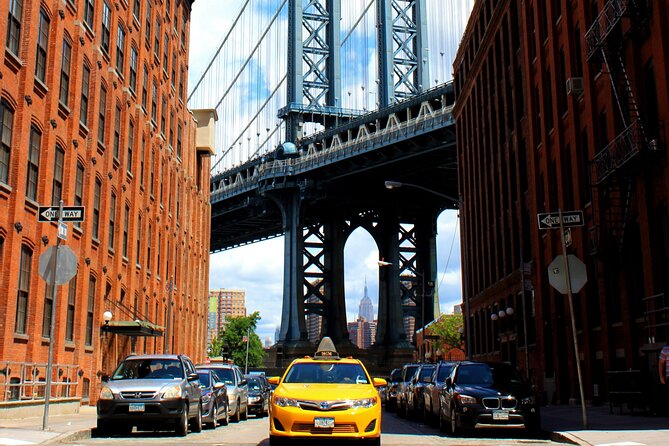
In Brooklyn, the route stops at the Bushwick Collective street art area for about 20 minutes. The description also calls this the Flipper neighborhood, a reference to its hipster and mural-filled character.
Bushwick is a strong match for the tour’s photo-heavy format. Large-scale painted walls make the area easy to appreciate in a short visit, and you can get out of the van to see the work at closer range. The drawback is that street art changes. The exact murals and visual details may not be the same on every visit.
The next Brooklyn stop is Williamsburg, where the tour focuses on the largest concentration of Hasidic Jewish residents in the United States. You will have about 20 minutes to walk the streets and observe the neighborhood.
This is one of the more culturally important parts of the route, but it calls for respect. You are passing through a living community, not a stage set. The best approach is to listen to the guide, follow local etiquette, and avoid treating residents as photo subjects. The short visit gives you an introduction, not a full understanding of Hasidic life.
The contrast between Bushwick and Williamsburg is striking. One stop centers on contemporary public art and changing city culture. The next introduces a close-knit religious community with its own customs and visual character. That contrast is exactly why this kind of route can be useful early in a New York stay.
DUMBO and the classic Brooklyn Bridge view
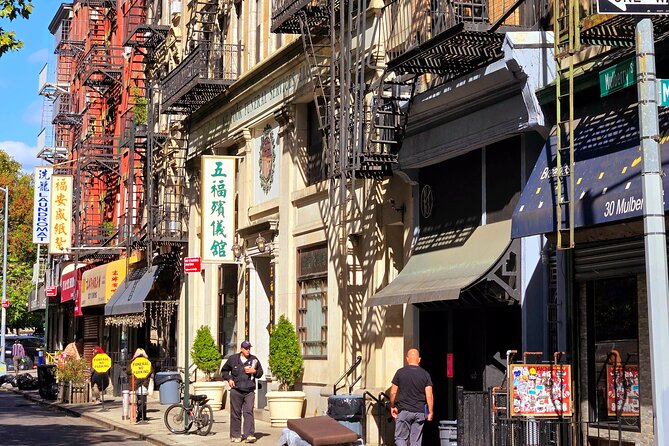
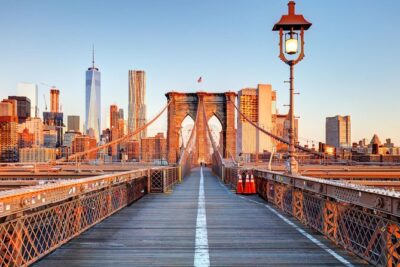
The final listed stop is DUMBO, where you get out for about 20 minutes to photograph the Brooklyn and Manhattan Bridges. The name refers to Down Under the Manhattan Bridge Overpass, and the neighborhood is one of Brooklyn’s most recognizable photo settings.
This is likely to be the most familiar view of the day. The bridge angle, brick streets, and river-facing setting make DUMBO an easy place to photograph even during a short stop. It is also a practical ending point for a tour that has covered so much ground.
The tour finishes at the corner of Canal Street and Bowery Street, close to the Mahayana Temple. From there, you can continue around Chinatown, walk toward the Lower East Side, or use public transportation. The ending is not back at the starting point, so make sure you are comfortable arranging your next activity from lower Manhattan.
What the guide adds to the experience
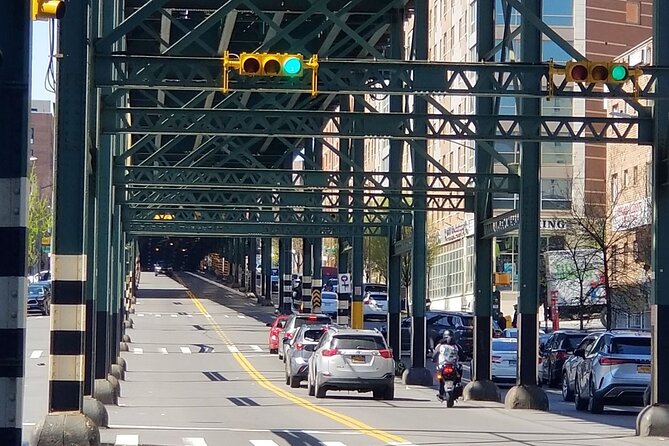
The guide is central here. The van gets you from place to place, but the commentary gives the stops meaning. The most praised guides are Mario Rosales, José, and Alejandro. The descriptions of their style are consistent: energetic, funny, generous with historical and social information, and willing to take photos and videos for the group.
Mario is especially associated with turning the long day into a lively experience. José is described as highly entertaining, with funny photos, anecdotes, and strong energy. Alejandro is credited with offering clear explanations and keeping families engaged, including children.
Because the tour is conducted entirely in Spanish, you should book it only if you are comfortable receiving the explanations in Spanish. That language focus can make the experience feel more natural and social for Spanish-speaking groups. It is not the right choice if you need English commentary.
The guides also appear to use humor and occasional photo staging. That can be a plus if you enjoy playful group pictures. If you prefer a quiet, academic tour, the presentation may feel more theatrical than you want.
Is $65 a fair price?
At $65 per person, the value is strong for anyone who wants to connect several outer-borough sights without planning the transportation alone. The van, air conditioning, guide, and small-group format are included. You also get a full day of routing across four major areas.
The price does not include lunch, drinks, or admissions. Most stops are exterior visits, and the attractions listed have no admission charge as part of the tour. You are paying for access, coordination, and interpretation rather than tickets.
I would compare this with the cost of taking separate subway trips to Harlem, the Bronx, Flushing Meadows, Bushwick, Williamsburg, and DUMBO. Public transportation can be cheaper, but reproducing this exact route in one day would take planning and would leave less time for photo stops.
The value drops if you want long visits, museums, meals, or a relaxed walking pace. It rises if you want a broad first look and prefer someone else to handle the route.
Who should book this tour?
I would recommend it to first-time New York visitors who have already seen the main Manhattan sights, families wanting a simple way to cover a lot of ground, and Spanish-speaking groups who enjoy lively guiding.
It is also a good fit for photographers, film fans, sports followers, and anyone curious about New York’s cultural contrasts. The repeated exits make it easier to collect memorable pictures than on a standard drive-by tour.
I would hesitate to recommend it to visitors who dislike sitting in a van, need a full lunch break, or want to spend an hour or two in each neighborhood. Seven hours is a long time, and the pace is active even though most walks are short.
Wear comfortable shoes, keep your camera ready, and bring water and money for food. The weather matters because the experience requires good conditions. If poor weather cancels the tour, you can choose another date or receive a full refund. Free cancellation is available up to 24 hours before the start time, but changes or cancellations inside that window are not accepted.
The final call
Book this tour if your priority is breadth, photos, and Spanish-language guiding. For $65, you get a well-packed look at Harlem, the Bronx, Queens, and Brooklyn, with far less transport planning than doing it alone.
Skip it if you want an unhurried neighborhood experience. The route is quick, the stops are short, and the van remains the backbone of the day. But for a first orientation beyond Manhattan, the combination of Apollo Theater, Yankee Stadium, the Unisphere, Bushwick murals, Williamsburg, and DUMBO is hard to match at this price.
FAQ
How long does the tour last?
The tour lasts approximately seven hours. It starts at 8:20 a.m.
Where does the tour start?
The meeting point is 766 8th Avenue, New York, NY 10036.
Where does the tour end?
The tour ends at the corner of Canal Street and Bowery Street near the Mahayana Temple.
Is the tour conducted in English?
No. The included guide service is entirely in Spanish.
How many people can join the tour?
The vehicle has a maximum capacity of 13 participants, and the activity lists a maximum of 14 travelers.
Is food included?
No. Lunch, food, and drinks are not included. A 25-minute technical stop is made in Queens for a snack.
What happens if the weather is poor?
The tour requires good weather. If it is canceled because of poor conditions, you can select a different date or receive a full refund. You can also cancel up to 24 hours before the start time for a full refund.
Recently added in New York City
- Harlem Gospel Sunday Tour★ 5.0 · 23 reviews
- New York: Harlem 2-Hour Culinary Experience (Soul Food & More)★ 5.0 · 5 reviews
- Harlem Cultural Food Brunch Tour★ 5.0 · 6 reviews
- Harlem Civil Rights Multimedia Walking Tour★ 4.5 · 121 reviews
- Harlem Easter Weekend Gospel Celebration★ 5.0 · 5 reviews
- Harlem Gospel Series★ 4.5 · 54 reviews
- Half-Day Civil Rights Walking Tour in Harlem with Lunch★ 5.0 · 4 reviews
- New York City Lights Cruise aboard Clipper City★ 4.0 · 43 reviews
Harlem Tours, compared.
NYC Highlights Tour: Bronx, Brooklyn, Harlem, Queens & Coney
Read our review →
Contrasts Tour of Harlem, The Bronx, Queens & Brooklyn
Read our review →
Browse the lists this tour appears in