
Reviewed · NYC WALKING TOURS
Holdouts: A NYC Architecture Walking Tour
Midtown’s most revealing buildings are sometimes the ones that refused to leave. This small-group walk follows those architectural holdouts, from a former buggy-whip factory to a 19th-century brownstone now enclosed inside a skyscraper. I like the way the tour explains not just what you see, but why Midtown looks so uneven and surprising.
I also like the small maximum of five people, which gives guide Rob room to answer questions and adjust the pace. The tour is packed with useful ideas about air rights, privately owned public spaces, and New York’s long contest between old property owners and new towers. The main drawback is that the walk can feel rushed if you want time for photographs, and the opening discussion uses printed building images before you get fully moving.
Why Midtown’s holdouts matter
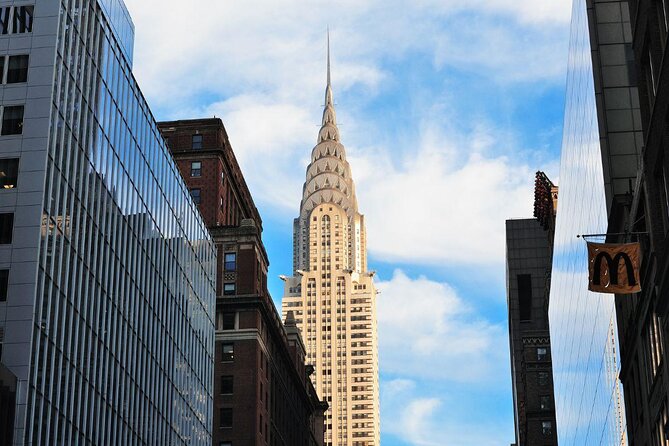
A holdout is a property that remains in place while larger buildings rise around it. Sometimes the owner refuses to sell. Sometimes a lease, business arrangement, or development deal keeps the old structure alive. In Midtown, these holdouts helped produce the odd angles, narrow gaps, sudden setbacks, and curious juxtapositions that make the district worth looking up at.
This tour uses those buildings as clues. You are not simply walking from one famous sight to another. You are learning how land ownership, zoning, engineering, commerce, and personal stubbornness shaped the streets.
The subject may sound specialized, but Rob connects it to familiar parts of New York life. You’ll hear about the skyscraper race, the growth of Midtown, air rights, privately owned public spaces, and buildings held for future development. The result is an urban-history walk that keeps returning to one practical question: why is that building still there?
Key details to know before you book
- The tour is limited to five people: This is a true small-group experience, not a large sidewalk procession.
- The route links Midtown landmarks with lesser-known survivors: You’ll pass Grand Central Terminal, Rockefeller Center, Brooks Brothers, and unusual holdouts.
- Rob leads a discussion-heavy walk: His approach includes city planning, engineering, architecture, and colorful New York stories.
- You need comfortable shoes: The tour lasts about two to three hours and keeps moving through Midtown.
- The Papillon ending is especially unusual: You can see how a 19th-century brownstone became enclosed within a modern skyscraper.
- Weather matters: The walk requires good weather, and poor conditions can lead to a new date or a refund.
More NYC Skyline and Architecture Tours:
- Statue of Liberty & NYC Skyline Cruise – Freedom Liberty Tour
★ 4.0 · 1,499 reviews - Manhattan Architecture Yacht Cruise
★ 5.0 · 1,395 reviews - NYC: Dyker Heights Christmas Lights & Skyline View Bus Tour
★ 4.7 · 1,192 reviews
Starting inside TPR Holdings
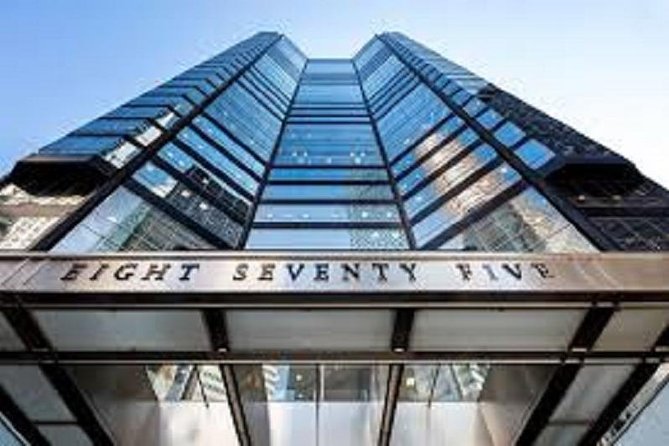
The tour begins in the lower lobby of TPR Holdings at 875 Third Avenue. That is a fitting first stop because the building itself is connected to the holdout story.
Rob uses the opening fifteen minutes to explain the route and set up the larger story of Midtown’s growth. He also uses printed images of buildings to give you a visual guide to what you’ll encounter. This background helps, especially if you are new to the way New York property deals shaped its streets.
Still, this is the part most likely to test your patience. If you prefer to start walking at once, the introduction may feel too long. I would arrive ready to listen, but I would also tell Rob early if you want more time for photos and questions along the way. The small group makes that kind of adjustment possible.
The opening also introduces an important theme: New York’s great buildings are not always the result of one clean plan. They often reflect years of negotiation, competing interests, and properties that survived by inches.
Buggy whips, old yards, and Midtown’s odd corners
Wollensky’s Grill occupies a former buggy-whip factory and is another holdout. The stop is brief, about five minutes, but it gives you a useful reminder that Midtown was not born as a district of office towers and luxury hotels.
Old commercial buildings can be easy to miss when surrounded by newer construction. Here, the point is not to spend half an hour admiring a facade. It is to recognize how an earlier working city remains embedded in the modern one.
Amster Yard provides a different mood. If the courtyard is open when you visit, the tour pauses there for a moment. This small oasis is described as a time capsule where city life meets an earlier suburban feel. Access is not guaranteed, so treat it as a possible bonus rather than a promise.
That uncertainty is typical of a walking tour through active Midtown. Doors, courtyards, businesses, and private spaces can change. The route is strongest when you stay open to the city as it is that day, rather than expecting every interior stop to happen exactly as imagined.
Sparks Steak House and the stories behind the facades
At Sparks Steak House, the tour touches on a notorious mob hit that took place at the site. The stop also points out an interesting holdout next door.
This is one of the tour’s strengths. New York architecture is not only about architects and construction dates. Restaurants, crime stories, businesses, leases, and private decisions all become part of the city’s physical story.
The walk continues with views toward a striking landmark and a discussion of the Secretary Building farther along. The point is to show how holdouts affect the view from the street, not just the legal history of a property.
You may find yourself noticing how one building frames another, or how a narrow older property survives beside a much larger tower. Rob’s explanations encourage you to read Midtown as a collection of decisions rather than a smooth wall of glass and stone.
More NYC Walking Tours:
- SoHo, Little Italy, and Chinatown Walking Tour in New York
★ 5.0 · 3,153 reviews - Secrets of Grand Central Station Walking Tour New York City
★ 5.0 · 1,796 reviews - Greenwich Village Walking and Food Tasting Tour
★ 5.0 · 1,572 reviews - Artistic, Alternative Greenwich Village Walking Tour
★ 5.0 · 971 reviews
42nd Street and the surviving property
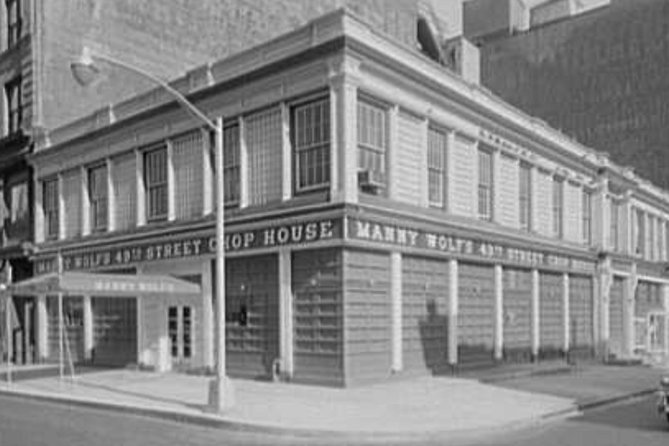
The lower portion of the walk ends at 42nd Street, where a single holdout survived the district’s long transformation. This is a useful pause in the route because it shows how one property can preserve a trace of an earlier street pattern.
The stop itself lasts only about five minutes, but the surrounding discussion adds value. You are not being asked to admire one isolated building and move on. You are learning how development pressure changes blocks over time, and how one owner or one parcel can interrupt the plan.
The route then turns toward the uptown portion of Midtown. That transition gives you a chance to connect the smaller holdouts with the larger planning story around Grand Central.
Passing through Grand Central Terminal
The walk passes through Grand Central Terminal, and Rob may provide a short tour of the landmark. Grand Central is not itself a holdout, but it belongs in this route because it helped shape Midtown’s growth.
The terminal connected to hotels and commercial development, helping create the district’s early identity. The tour also points out a sole survivor of Terminal City, the former group of buildings tied to Grand Central in the period before air travel became dominant.
That detail adds useful context. Midtown was once built around long-distance rail passengers. Hotels, offices, restaurants, and shops were arranged to receive people arriving by train. The district’s later identity as a center of business and tourism grew from that earlier transportation system.
The Grand Central portion is short, about five minutes as described, so you should not book this expecting a full terminal tour. Think of it as a brief architectural and historical connection within a much wider walk.
From secret towers to old retail institutions
As you continue west, the tour discusses a city-in-a-building that was still under construction at the time of the route description. Since construction can change the view, the exact appearance and status may differ when you visit.
You’ll also pass Brooks Brothers, a long-standing New York institution that had a holdout as a neighbor. This is another example of the tour’s method: familiar names become evidence in a larger story about land, leases, and development.
The route then offers a side view of a building described as a crystal-shard and iceberg combination. You also pass the sole survivor of Terminal City mentioned earlier, linking the railroad era to the present-day Midtown skyline.
One practical benefit of this middle section is that you keep seeing the city from street level. You are not confined to a formal museum or observation deck. The architecture changes as you walk, and the connections between buildings become easier to understand when you see them in sequence.
Diamonds, Fifth Avenue, and Rockefeller Center
Near Fifth Avenue, the walk points out the block where $440 million in diamonds are traded daily. The entrance is a block north, marked by twelve-foot diamond sculptures. This is a striking example of how Midtown’s commercial life can be hidden behind ordinary street movement.
The tour does not treat Fifth Avenue as a simple shopping corridor. It uses the area to show how finance, retail, private property, and public access overlap in a small section of Manhattan.
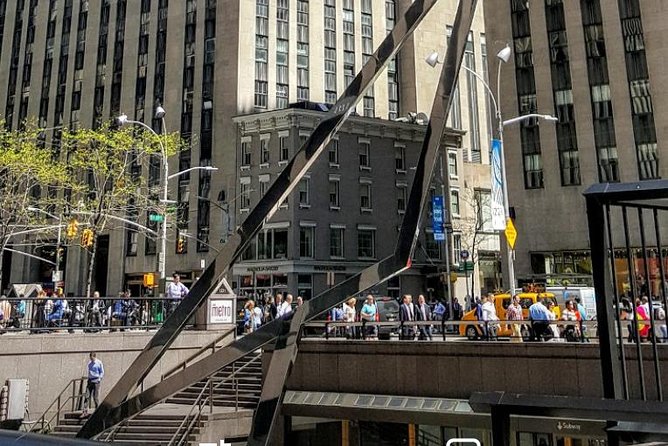
Rockefeller Center receives about ten minutes of attention. Its development history includes several holdouts, making it one of the most useful places to discuss the tension between grand planning and individual property rights.
Rockefeller Center can feel familiar if you have already visited New York, but this walk gives you a different way to read it. Instead of focusing only on its plazas, art, and famous buildings, you look for the properties and decisions that complicated the original plan.
The Papillon ending and the hold-in
The tour ends near Papillon Bistro and Bar at 22 East 54th Street. This is one of the most memorable stops because it is more accurately a hold-in than a holdout.
A restaurant proprietor negotiated extra square footage so the business could expand into the future skyscraper. As a result, you can enter the modern building and stand within the walls of a 19th-century brownstone.
That is a wonderfully physical way to finish the tour. Earlier stops may require you to study a facade or understand a property line. Here, the old and new structures occupy the same interior space. You can feel the idea rather than simply hear about it.
The restaurant itself is the endpoint, not a meal included with the tour. If you want to eat there afterward, plan that separately.
How Rob guides the experience
Rob is the central reason this tour works for people who enjoy context. His strongest subjects include New York architecture, urban planning, development history, air rights, and privately owned public spaces. He also brings in smaller stories about buildings and the people connected to them.
The format allows conversation. With no more than five participants, you can ask about a building that catches your eye or follow a related question for a few minutes. That makes the walk feel more like a discussion than a speech delivered at fixed stops.
The tradeoff is that a guide who has a lot to share can sometimes give you more information than the schedule comfortably allows. If you want a slow photographic walk, say so at the beginning. Some portions move briskly, and the tour covers a lot of Midtown in two to three hours.
The strongest approach is to arrive interested in ideas, not just postcard views. You will see plenty of good architecture, but the lasting benefit is learning how to spot the forces behind it.
Price, pace, and practical value
At $59 per person, this is not the cheapest way to walk around Midtown. You can see Grand Central, Fifth Avenue, and Rockefeller Center without paying for access. The value comes from the interpretation, the small group, and the unusual route between better-known landmarks.
For someone interested in urban history or architecture, the price is reasonable because the tour gives you a framework you can use for the rest of your trip. You may start noticing air rights, old property lines, private public spaces, and surviving low-rise buildings on your own.
The tour is offered in English and includes a professional guide. You receive a mobile ticket, and the experience is generally booked about ten days ahead, so last-minute availability may be limited.
Wear comfortable shoes and expect a moderate physical level. The route uses city sidewalks and keeps moving. It is near public transportation, and service animals are allowed.
Free cancellation is available up to 24 hours before the start time. Cancellations inside that window are not refunded. Poor weather or failure to reach the minimum number of participants can lead to a new date or a full refund.
Who should book this Midtown walk?
I would choose this tour if you like understanding why a city looks the way it does. It suits architecture fans, urban-history readers, repeat New York visitors, and anyone who has already seen the major sights and wants a new way to view them.
It also works well for couples or friends who prefer a conversation with a guide rather than a large group. The small size gives the experience a personal feel, and solo visitors can ask plenty of questions.
I would skip it if your priority is shopping, entering many interiors, or taking a relaxed number of photos at every stop. The route is intellectually full and sometimes brisk. You need to be comfortable with short stops, active sidewalks, and a strong dose of explanation.
Should you book Holdouts?
Book it if the strange details of Midtown interest you: a buggy-whip factory beside skyscrapers, a surviving Terminal City building, diamond sculptures, Rockefeller Center’s property puzzles, and a brownstone preserved inside a tower.
The best reason to go is the change in perspective. Afterward, you are likely to look up more often and notice the narrow buildings, odd gaps, and older facades that explain how New York grew. Just tell Rob what pace you prefer, bring good shoes, and leave room for the route to be a little faster than a photo tour.
FAQ
Where does the tour start?
The tour starts in the lower lobby of TPR Holdings at 875 Third Avenue, New York, NY 10022.
Where does the tour end?
The tour ends at 22 East 54th Street, New York, NY 10022, near Papillon Bistro and Bar.
How long does the tour last?
The walk lasts approximately two to three hours.
How much does the tour cost?
The price is $59 per person.
How many people can join?
The tour has a maximum of five participants.
Is the tour offered in English?
Yes. The tour is offered in English.
What should I wear?
Comfortable shoes are recommended because the experience is a walking tour and requires a moderate level of physical fitness.
Can I cancel for a refund?
Yes. You can cancel at least 24 hours before the start time for a full refund. Poor weather or failure to meet the minimum number of participants may also result in a different date or a full refund.
Recently added in New York City
- NYC: Midtown Hands-On Bagel Baking Class★ 5.0 · 12 reviews
- Personalize Sightseeing Tour★ 5.0 · 92 reviews
- Central Park Pedicab Tour with Guide★ 5.0 · 63 reviews
- Central Park Pedicab Guided Tour★ 5.0 · 17 reviews
- Photographer, Professional Photo shoot – New York★ 5.0 · 16 reviews
- Official Central Park Pedicab Ride ( UP TO 3 PERSONS )★ 5.0 · 4 reviews
- JFK or LGA package only (Round trip transfer plus VIP Contrasts)★ 5.0 · 3 reviews
- Official Central Park Pedicab Tours★ 5.0 · 35 reviews
NYC Walking Tours, compared.
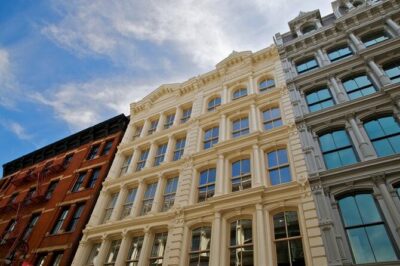
SoHo, Little Italy, and Chinatown Walking Tour in New York
Read our review →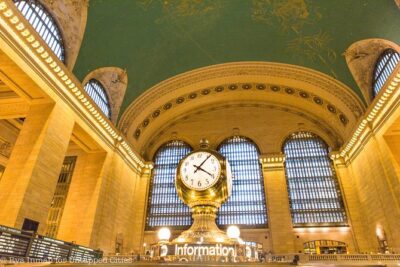
Secrets of Grand Central Station Walking Tour New York City
Read our review →
Greenwich Village Walking and Food Tasting Tour
Read our review →
Artistic, Alternative Greenwich Village Walking Tour
Read our review →
NYC Greenwich Village Italian Food Guided Walking Tour
Read our review →Browse the lists this tour appears in