
Reviewed · WALL STREET AND FINANCIAL DISTRICT TOURS
How Money Was Made: Wall Street Walking Tour
Wall Street is more than a row of banks and grand stone buildings. This two-hour walk connects the district’s Native American trading roots with European merchants, stock-market crashes, political power, and Lower Manhattan’s painful rebuilding after 9/11. You finish with a clearer sense of how money, government, and ordinary lives became tied together here.
I like the tour’s wide lens, especially its attention to women pioneers and enslaved laborers, people often pushed out of the usual Wall Street story. I also like the practical format: a live English-speaking guide, a central meeting point, and enough time to see the district without giving up an entire day.
The main caution is pace. One review calls it very fast and packed with history, so you should expect a brisk walk and a lot of information. At $49, the value depends on how much context you want from a guide rather than simply seeing the buildings on your own.
Key points at a glance
- Wall Street begins before Wall Street: The story reaches back to Native American trade and early commerce in the Americas.
- The financial district is also a political district: The tour explains how government and finance grew together.
- Stock-market crashes shape the walk: Economic crises are treated as turning points, not just dates in a textbook.
- Overlooked people receive attention: Women innovators and enslaved laborers are included alongside financiers and Robber Barons.
- Lower Manhattan’s recovery matters: The tour covers the effect of 9/11 and the district’s later rebirth.
- Plan for two brisk hours: Wear comfortable shoes, arrive at the Museum of the American Indian, and look for the red Inside Out Tours flag.
Beginning outside the Museum of the American Indian
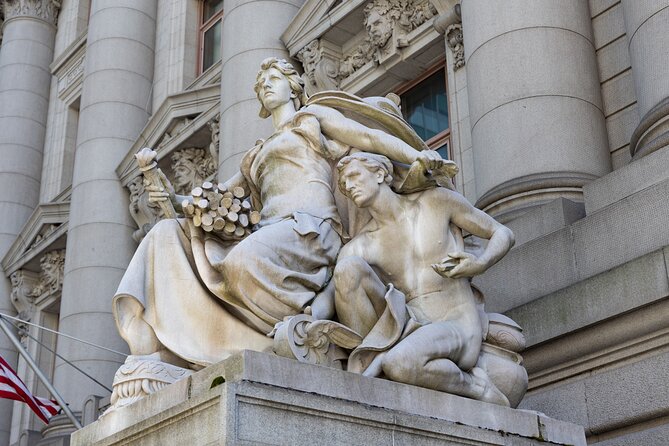
Your meeting point is in front of the Museum of the American Indian. Look for the guide holding a red Inside Out Tours flag, a useful marker in a busy part of Lower Manhattan.
The location fits the subject. You are not beginning with a generic city corner, but near a museum devoted to Native American cultures. From there, the tour sets up an important correction to the familiar Wall Street story: financial exchange did not begin with the modern stock market or with European bankers.
The opening section covers Native American origins of early trading in the Americas. The supplied details do not give a fixed list of individual sites or a precise walking route, so you should not expect a stop-by-stop museum-style tour. Instead, expect the guide to use the streets and landmarks of Lower Manhattan as a setting for a larger story.
That approach works best if you enjoy context. A building may be interesting on its own, but the guide helps explain how trade, land, political authority, and outside commercial influence shaped the area. The history is not presented as a straight march toward modern finance. It includes competing interests and the people affected by economic growth.
More Wall Street and Financial District Tours:
- NYC City Tour: Statue of Liberty, 9/11 Memorial, Wall Street
★ 4.5 · 2,059 reviews - Wall Street Insider Tour with a Finance Professional
★ 4.5 · 660 reviews - Wall Street Insider Tour with a Finance Professional
★ 4.5 · 571 reviews
From early commerce to European influence
The next part follows the arrival and influence of European merchants. The focus is on how trading systems changed as European commercial interests took root and how those changes helped form the American financial system.
This is where the tour becomes more than an architecture walk. You still get views of historic buildings and some of New York’s famous landmarks, but the buildings serve as evidence of larger forces. Their presence points to wealth, political decisions, commerce, and the changing role of Lower Manhattan.
I like this framing because it gives you a way to read the district after the tour ends. You can look at an impressive facade and ask who financed it, what kind of business supported it, and who gained or lost as the city grew. The tour also links financial development to diverse populations, rather than treating growth as an uncomplicated success story.
Do not expect a financial lesson aimed at professional investors. The emphasis is historical and civic. You will hear about the rise of the American financial system and the people who shaped it, but the walk is designed for general visitors who want to understand the city, not for anyone seeking stock-picking advice.
Walking through the financial heart of Lower Manhattan
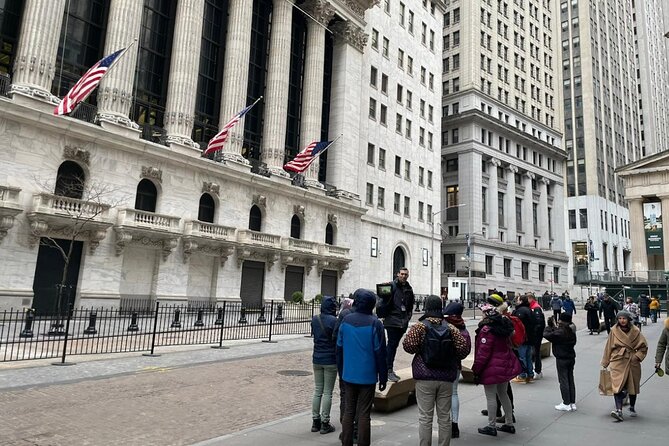
The central part of the experience brings you into the heart of Wall Street. You will view major sites and admire the district’s architecture while the guide explains how the area gained its financial and political importance.
The setting is compact, but the subject is large. In two hours, you can see a great deal, yet you cannot examine every building or fully unpack every event. That tradeoff explains the fast pace noted in one review. The route is designed to keep moving, linking one idea to the next rather than lingering for long stretches at each location.
For you, the best strategy is to listen first and take photographs when the group pauses. Comfortable shoes matter because this is a walking tour, and the experience takes place rain or shine. A wet day may make the pavement and photography less pleasant, but the tour does not depend on entering a museum or waiting indoors.
Wheelchair access is listed for the activity. Since the supplied information does not describe the exact route, surface conditions, or restroom arrangements, you may want to confirm any route-specific needs before booking. The walking format remains the key practical point for everyone.
Stock-market crashes and the price of growth

The tour gives substantial attention to financial crises caused by stock-market crashes. That subject adds needed balance to the polished image of Wall Street. Markets can create wealth and opportunity, but crashes expose how quickly financial decisions can affect workers, families, businesses, and entire communities.
You will hear about crises as part of a longer pattern of economic change. The point is not simply to memorize crash dates. It is to understand how aggressive growth can have different effects on different groups.
This may be the most useful section for visitors who know Wall Street mainly through headlines. The district can look powerful and permanent, but the history shows repeated cycles of confidence, expansion, collapse, and repair. A guide can connect those cycles to the buildings around you in a way that a self-guided stroll may not.
The subject matter is also why the tour may feel dense. A two-hour walk covering Native American trade, European merchants, American finance, market crashes, political power, social inequality, and 9/11 leaves little room for long pauses. One review rated the experience highly while describing it as very fast-paced and packed with history. Treat that as a useful warning, not a flaw for everyone.
More NYC Walking Tours:
- SoHo, Little Italy, and Chinatown Walking Tour in New York
★ 5.0 · 3,153 reviews - Secrets of Grand Central Station Walking Tour New York City
★ 5.0 · 1,796 reviews - Greenwich Village Walking and Food Tasting Tour
★ 5.0 · 1,572 reviews - Artistic, Alternative Greenwich Village Walking Tour
★ 5.0 · 971 reviews
Women pioneers, Robber Barons, and forgotten labor
A strong feature of the tour is its effort to widen the cast of characters. You will hear about financial innovators, women pioneers, Robber Barons, and enslaved laborers who helped shape Wall Street.
That mix matters. A standard account of the district can focus too heavily on famous men who controlled money and industry. Including women shows that financial and commercial history was not made only by the people whose names appear on grand buildings. Including enslaved laborers forces a harder look at the human cost and unequal foundations of economic growth.
The tour also presents visionaries and financial innovators, so it does not avoid the people who created new systems or took large risks. The value comes from placing their achievements beside the wider social effects of those systems.
You should expect broad historical treatment rather than a detailed biography of every person named. The available description does not promise a set number of stories or specific individual stops. Still, the range of subjects gives the walk a more honest shape than a simple parade of wealthy financiers.
9/11 and the rebuilding of Lower Manhattan
The final major theme is the rebirth of Lower Manhattan after the devastating events of 9/11. This part brings the tour into recent memory and explains how the district changed after an event that affected New York, the United States, and the world.
The subject can give the surrounding streets a different weight. Instead of seeing Lower Manhattan only as a historic business center, you consider its ability to recover, change, and continue serving as a civic and financial area.
Because the tour covers 9/11 as part of the district’s wider story, it is not described as a dedicated memorial tour. If your main purpose is to spend quiet time at the 9/11 Memorial or learn detailed personal accounts, you may need a separate visit. Here, the emphasis is on how the event affected Lower Manhattan and its later rebirth.
That broader approach makes sense within a two-hour history walk. The tour links older patterns of trade and power with a recent turning point, giving you a timeline that reaches from early exchange to the modern city.
How the $49 price works for you
The tour costs $49 per person. That is not the cheapest way to walk around Wall Street, since you can see many exterior landmarks without paying for a guide. The real question is how much you value interpretation.
At this price, you are paying for two hours with a live English-speaking guide who organizes a complicated subject into a route. The cost makes more sense if you want to understand connections between Native American trade, European commerce, finance, political influence, market crashes, inequality, and 9/11.
It makes less sense if you mainly want photographs or prefer to read information at your own pace. The fast schedule may also feel less satisfying if you need long stops, frequent breaks, or extended time for pictures.
The strongest evidence of value is the high overall rating of 4.6 from six reviews, including specific praise for guide Jess. One verified booking described Jess as very interesting and very nice. That is a small review sample, so I would not treat it as a guarantee of your guide’s style, but it does suggest that personal delivery can make a major difference.
A poor value experience is possible if the pace overwhelms you or if the subject is outside your interests. One verified review gave the tour one star and said it was not worth the price. That criticism is worth taking seriously because the tour asks you to absorb a lot in a short time.
Who should book this Wall Street walk
I would recommend this tour to you if you like city history with a social and political edge. It suits first-time visitors who want an organized introduction to Lower Manhattan, as well as repeat visitors who have seen the major sites but want a stronger explanation of how the district developed.
It is particularly well suited to:
- Adults and older children who can follow a fast historical discussion
- Visitors interested in finance, politics, trade, or New York architecture
- People who want women and enslaved laborers included in the story
- Anyone who prefers a guide to explain what they are seeing
- Visitors with only two hours for Lower Manhattan
You may want a different experience if you need a slow, photo-heavy walk, a food stop, or a tour focused only on 9/11. Food and drinks are not included, and hotel pickup and drop-off are not provided, so you handle those parts yourself.
The activity is offered in English only. It is wheelchair accessible, and cancellation is allowed up to 24 hours before the start for a full refund. You can also reserve now and pay later, which helps if your New York schedule is still changing.
Should you book How Money Was Made?
Book it if you want Wall Street explained as a place shaped by trade, government, social conflict, financial innovation, crisis, and recovery. The attention to women pioneers and enslaved laborers gives the tour more range than a standard architecture stroll, while the 9/11 section connects old history to a recent event.
Skip it if you want a relaxed pace or a narrowly focused memorial visit. At $49, the tour earns its price through the guide’s storytelling and the connections between sites, not through admission to an attraction or included refreshments.
Arrive ready to walk, wear comfortable shoes, and expect a dense two hours. If you can keep up with the pace, this is a useful way to see the financial district with your eyes open to both its achievements and its costs.
FAQ
How long is the How Money Was Made tour?
The walking tour lasts two hours.
How much does the tour cost?
The price is $49 per person.
Where do I meet the guide?
Meet in front of the Museum of the American Indian. The guide will be holding a red Inside Out Tours flag.
What language is the tour offered in?
The tour is offered in English with a live English-speaking guide.
Is the tour wheelchair accessible?
Yes, the activity is listed as wheelchair accessible.
What should I bring, and does the tour run in bad weather?
Bring comfortable shoes. The tour takes place rain or shine.
Recently added in New York City
- NYC: Midtown Hands-On Bagel Baking Class★ 5.0 · 12 reviews
- Personalize Sightseeing Tour★ 5.0 · 92 reviews
- Photographer, Professional Photo shoot – New York★ 5.0 · 16 reviews
- Central Park Pedicab Tour with Guide★ 5.0 · 63 reviews
- Central Park Pedicab Guided Tour★ 5.0 · 17 reviews
- Official Central Park Pedicab Ride ( UP TO 3 PERSONS )★ 5.0 · 4 reviews
- JFK or LGA package only (Round trip transfer plus VIP Contrasts)★ 5.0 · 3 reviews
- Official Central Park Pedicab Tours★ 5.0 · 35 reviews
Wall Street and Financial District Tours, compared.

NYC City Tour: Statue of Liberty, 9/11 Memorial, Wall Street
Read our review →
Wall Street Insider Tour with a Finance Professional
Read our review →Wall Street Insider Tour with a Finance Professional
Read our review →
Manhattan Group Tour Including Wall Street and 911 Memorial
Read our review →
Wall Street Tour with 9/11 Memorial and Statue Ferry
Read our review →
Wall Street and Financial District Walking Tour
Read our review →
Wall Street, Financial District Walking Tour Lower Manhattan, NYC
Read our review →Browse the lists this tour appears in