
Reviewed · LITTLE ITALY AND CHINATOWN TOURS
Mafia Gangster History Walking Tour in Little Italy, New York
Little Italy’s mob story is less about secret passages than ordinary streets with extraordinary pasts. On this walking tour, you connect today’s restaurants and shops with Lucky Luciano, John Gotti, Black Hand gangs, and the shooting of Crazy Joey Gallo. Movie fans also get real locations linked to The Godfather and Gangs of New York.
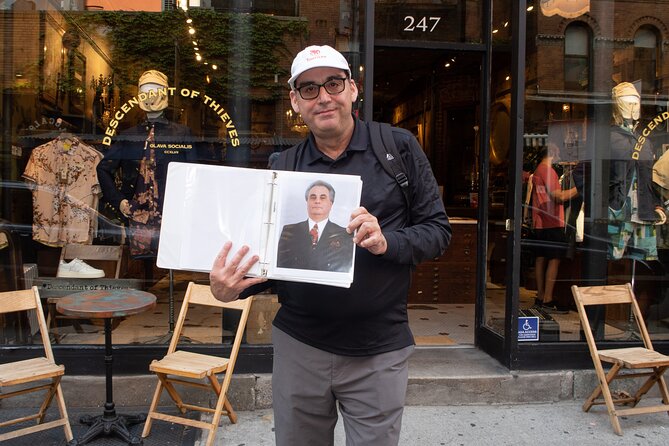
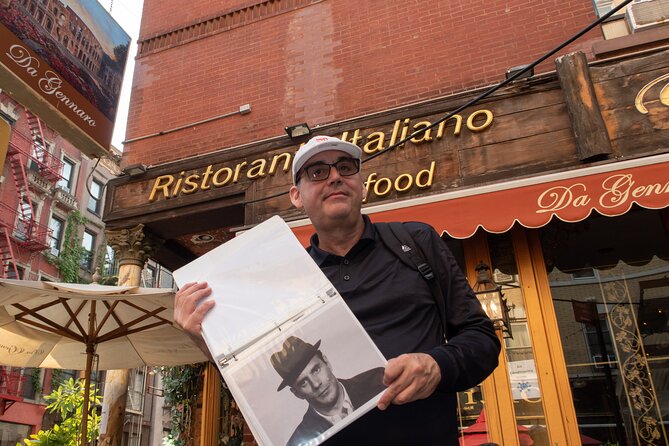
I like the small-group format, listed at a maximum of 10 people, and I like the way guides such as Tom use a binder of photographs and newspaper clippings. Those visual aids help turn a plain storefront into a place with a story. The tour also gives you a useful look at how Prohibition, police work, and organized crime shaped the neighborhood.
The main drawback is that this is a walking tour of a few city blocks, not an attraction with interiors or exhibits. Much of what you see is a current business or street corner, so your enjoyment depends on how much you like stories, context, and old photographs.
Key points about this Little Italy mob tour
- Lucky Luciano and the Five Families: Learn how early Black Hand gangs developed into organized Mafia groups, then hear how Luciano created the Commission of The Five Families.
- Real locations with movie connections: See places linked to The Godfather and Gangs of New York, along with sites tied to actual mob events.
- A guide with visual proof: Tom and other guides use photographs and newspaper clippings to give the stories a physical anchor.
- Five focused stops: The route covers Little Italy, Mulberry Street, Lt. Petrosino Square, the Police Building, and Umberto’s Clam House.
- Good value for history fans: At $40, you get about two hours of guided storytelling in a group capped at 10 people.
- Easy family option for older children: The walk is entertaining and accessible to most participants, though the subject includes violence and crime.
Little Italy begins with the Black Hand
The tour starts at 44 Spring Street, then spends about 40 minutes in Little Italy. This is the longest stop because it supplies the basic story: early Black Hand gangs, the rise of organized crime during Prohibition, and the people who turned scattered criminal groups into a more structured system.
The Black Hand was not yet the Mafia image familiar from films. The tour uses this early period to show how threats, extortion, immigration, and neighborhood power struggles fed into later criminal networks. That background matters because it keeps the walk from becoming a parade of famous names without a timeline.
Lucky Luciano is a central figure here. You learn about his role in creating The Commission of The Five Families, a system designed to manage disputes and divide power among New York crime families. The subject is dramatic, but the useful part is seeing how organized crime operated as a business and political force, not just as a collection of colorful gangsters.
This is also where the movie connection begins. You can see locations associated with The Godfather and Gangs of New York, but the tour is not only a film-location walk. The movies provide a familiar doorway into the subject, while the guide adds the real people, dates, conflicts, and places behind the screen stories.
I would pay close attention during this opening section. It sets up names that return later, and the binder of old images helps you compare the streets of today with the neighborhood of another era. Since the buildings and businesses may look ordinary now, the pictures are especially useful.
More NYC Mafia and True Crime Tours:
- New York City Mafia and Local Food Tour led by NYPD Guides
★ 5.0 · 1,197 reviews - True Crime NYC: Mafia Walk w/Ret. NYPD Detective and Local Food
★ 5.0 · 848 reviews - True Crime New York: NYPD-Guided Mafia Walking Tour w/ Food
★ 4.6 · 318 reviews
Mulberry Street and John Gotti’s old territory
The next stop is Mulberry Street, where you spend about 15 minutes learning about John Gotti. Known as the Dapper Don, Gotti became one of the most recognizable Mafia figures in modern New York, and Mulberry Street helps place his public image in a real neighborhood.
The value of this stop is not a grand building or preserved room. It is the contrast between a normal working street and the power associated with it in the past. You may be standing outside a current business while hearing how the area once served as a gathering place for crime figures.
This is a good point to keep your expectations realistic. You are not entering a former mob headquarters or seeing a private collection. The tour is about location, explanation, and memory. If you enjoy connecting a street corner to a larger story, the stop works well. If you want dramatic interiors, it may feel thin.
Lt. Petrosino Square and the police response
At Lt. Petrosino Square, the focus shifts from crime figures to the people who fought them. You spend roughly 15 minutes learning about Lieutenant Petrosino, an early crime fighter who took on Black Hand gangs.
That change of viewpoint improves the tour. Without it, the walk could make criminals seem like the only important characters. Petrosino’s story shows the pressure placed on police officers trying to understand and stop organized extortion in an era when criminal networks crossed borders and used fear to control victims.
The square is also a useful reminder that the city’s crime history includes public service, investigation, and sacrifice. The tour does not simply ask you to admire gangsters for their notoriety. It places them beside the officers and institutions that challenged them.
Because this stop lasts about 15 minutes, expect a focused story rather than a long lecture. The guide’s photographs and newspaper clippings can help make an older police story easier to follow, especially if you do not already know Petrosino’s name.
The Police Building and Frank Serpico
The route then reaches The Police Building, where the subject moves forward to Frank Serpico and police corruption. Serpico is a different kind of crime fighter from Petrosino. Instead of focusing only on criminals in the street, his story brings you inside the problem of corruption within the police force.
This is one of the tour’s strongest shifts in subject. You move from Black Hand gangs and Prohibition-era crime to the question of how public institutions respond when some officers break the law themselves. That gives the walk more range than a simple gangster biography tour.
The stop lasts about 15 minutes. The building itself is important as a police site, but the main experience is the guide’s explanation of what happened there and why Serpico became known for fighting corruption. Again, the current view may not look theatrical. The story supplies the drama.
I like this section because it gives you a more balanced picture of New York crime. The tour includes gangsters, police investigators, and corrupt systems. You leave with a better sense of how law enforcement shaped the city’s story, not just how criminals operated within it.
More Little Italy and Chinatown Tours:
- SoHo, Little Italy, and Chinatown Walking Tour in New York
★ 5.0 · 3,153 reviews - NYC: Chinatown & Little Italy Food Tour with 7 Flavorful Tastings
★ 5.0 · 2,733 reviews - Original NYC Guided Food Tour of Chinatown and Little Italy
★ 5.0 · 2,194 reviews - NYC: Chinatown and Little Italy Food Tour
★ 4.7 · 703 reviews
Umberto’s Clam House and the killing of Crazy Joey Gallo
The final listed stop is Umberto’s Clam House, where Crazy Joey Gallo met his bloody end. You spend about 15 minutes at the restaurant, learning about the event and its place in New York’s organized crime story.
This is likely to be the most direct connection between a present-day restaurant and a famous mob killing. The power of the stop comes from the ordinary setting. You are looking at a place where people eat, while the guide explains how violence once took place there.
The stop also shows why a guide is useful. Without context, Umberto’s Clam House is simply a restaurant. With the dates, names, photographs, and newspaper reports, it becomes part of a larger story about rivalries and changing power in the city.
The subject is violent, so I would think about the age and interests of anyone you bring. Older children who enjoy crime history may find it fascinating, but the material is not softened into a harmless movie plot. The tour deals with real killings and real consequences.
Why the photos and newspaper clippings matter
The strongest praise for this experience centers on the guide’s preparation and visual material. Tom is specifically noted as a guide who knows the dates and stories well and carries a binder filled with photographs and newspaper articles.
That binder solves a common problem with urban history walks. A guide can point at a modern restaurant and tell you that something important happened there, but the claim can feel distant. An old photograph or newspaper clipping gives you a second point of reference and helps bridge the gap between then and now.
The pictures also support the movie angle. You can separate what Hollywood borrowed from real events from what was created for drama. That is more useful than simply collecting filming locations, because you learn how the real city influenced popular stories.
You should still expect the guide’s storytelling to carry much of the experience. The images are supporting material, not a museum display. Group members may need to gather close enough to see them, which is one reason the small group matters.
A two-hour walk at a fair price
The cost is $40 per person for an experience lasting about two hours. That is a reasonable price if you want a guided introduction to Little Italy’s crime history and prefer a live explanation over reading plaques or walking past sites on your own.
One account describes the walk as closer to an hour and a half, so I would allow the full two-hour window rather than planning a tight appointment immediately afterward. The route covers several nearby locations and includes time for explanations, questions, and the visual material.
The value comes from the research and structure. You are not paying admission to a building. The places themselves are free to view, but the guide connects them into a clear story involving Prohibition, the Five Families, police work, corruption, and mob violence.
The maximum group size is 10 people, which should make it easier to hear the guide and see the binder. One past account referred to a larger group, so group size can vary in practice, but the stated limit is 10. Either way, this is intended to be a personal walking experience rather than a large bus tour.
The tour is offered in English and uses a mobile ticket. Confirmation arrives at booking. It begins and ends at 44 Spring Street, and the meeting point is near public transportation. Service animals are allowed, and most people can participate.
Who will enjoy it most
This tour suits you if you like New York stories tied to actual places. It is especially good for people who enjoy organized crime history, police investigations, Prohibition, and the difference between movie mythology and documented events.
Movie fans have an extra reason to book. You will see locations connected with The Godfather and Gangs of New York, but the tour does not stop at film trivia. The real-life stories of Luciano, Gotti, Petrosino, Serpico, and Gallo give the locations more weight.
Families with older children can also consider it. The format is simple, the subject is easy to follow, and the walk offers a lively way to explore downtown New York. Still, you should be comfortable with stories about extortion, corruption, shootings, and murder before bringing younger family members.
I would not choose this tour if you want a restaurant tasting, an indoor museum, or a broad tour of all New York neighborhoods linked to organized crime. The focus is tight: Little Italy and nearby streets, told through a sequence of specific people and events.
Practical details before you book
Wear comfortable shoes and plan for a full walking tour of city streets. The route is not described as difficult, and most people can participate, but you will be moving between several locations and standing while the guide speaks.
The experience requires good weather. If poor weather forces cancellation, you are offered another date or a full refund. It also requires a minimum number of participants, so a cancellation for that reason brings the same choice of another date or a refund.
You can cancel for a full refund up to 24 hours before the start time. Changes or cancellations made within 24 hours are not accepted for a refund, so keep the local start time in mind when making plans.
Should you book the Little Italy Mafia tour?
Book it if you want a compact, story-led look at the people and places behind New York’s mob legend. The best reasons are the focused route, the use of photographs and newspaper clippings, and the way the guide balances gangsters with police figures such as Lieutenant Petrosino and Frank Serpico.
At $40, it offers solid value for a small group and about two hours of guided history. Just remember that you are seeing streets and working businesses, not preserved crime scenes or private rooms. If that sounds appealing, this is a smart way to give Little Italy’s familiar blocks a more surprising past.
FAQ
Where does the Mafia Gangster History Walking Tour begin?
The tour begins at 44 Spring Street, New York, NY 10012.
Where does the tour end?
The experience ends back at the meeting point.
How long does the tour last?
The tour lasts approximately two hours, though one account describes the walk as about an hour and a half. Plan for the full stated duration.
How much does the tour cost?
The price is $40 per person.
What language is the tour offered in?
The tour is offered in English.
How many people can join the tour?
The stated maximum is 10 participants.
Can I cancel for a refund?
Yes. You can cancel at least 24 hours before the start time for a full refund. Cancellations or changes made less than 24 hours before the start time are not accepted for a refund. If poor weather or an insufficient minimum causes the tour to be canceled, you can choose another date or receive a full refund.
More Historical Tours in New York City
- New York City: American Museum of Natural History Ticket
★ 4.5 · 15,447 reviews - NYC: Starship Landmark 90 Minute Sightseeing Cruise
★ 4.6 · 3,666 reviews - Starship Landmark 90 Minute Sightseeing Cruise
★ 4.5 · 2,073 reviews - American Museum of Natural History Admission Ticket
★ 4.0 · 1,931 reviews
More NYC Walking Tours
- Secrets of Grand Central Station Walking Tour New York City
★ 5.0 · 1,796 reviews - Greenwich Village Walking and Food Tasting Tour
★ 5.0 · 1,572 reviews - Artistic, Alternative Greenwich Village Walking Tour
★ 5.0 · 971 reviews - Central Park Guided Walking Tour
★ 5.0 · 774 reviews
Recently added in New York City
- Manhattan to LGA: One Way Shared Departure Transfer★ 4.5 · 25 reviews
- Market 57 Chelsea Food Tour with Ahoy New York Food Tours★ 5.0 · 17 reviews
- Manhattan to EWR: One Way Shared Departure Transfer★ 3.5 · 26 reviews
- Manhattan to Brooklyn NYC Walking Tour: Brooklyn Bridge and Dumbo in Spanish★ 4.5 · 10 reviews
- Manhattan and Brooklyn Bridge Bike Rental★ 4.0 · 34 reviews
- One-Day Best of New York Private Tour★ 5.0 · 88 reviews
- Manhattan’s Famous Artists: Exploration Game and Tour★ 5.0 · 6 reviews
- Manhattan Evening Jazz Cruise★ 5.0 · 123 reviews
Little Italy and Chinatown Tours, compared.

SoHo, Little Italy, and Chinatown Walking Tour in New York
Read our review →
Chinatown & Little Italy Food Tour with 7 Flavorful Tastings
Read our review →
Original NYC Guided Food Tour of Chinatown and Little Italy
Read our review →

SoHo, Little Italy, and Chinatown 2-Hour Guided Walk
Read our review →
SoHo, Little Italy, and Chinatown NYC Guided Walking Tour
Read our review →
3 Neighborhoods Tour: Soho, Chinatown & Little Italy
Read our review →Browse the lists this tour appears in