
Reviewed · NYC WALKING TOURS
New York City: Central Park Highlights Walking Tour
Central Park is not just a green break from Manhattan. It is a grand experiment in city planning, shaped by Frederick Law Olmsted and Calvert Vaux to give New Yorkers a place for beauty, fresh air, and escape. This tour takes you from Grand Army Plaza through the park’s best-known sights, then finishes near the Upper West Side.
I especially like the small group of no more than 10 people, which should make it easier to hear the guide and ask questions. I also like the careful pace. Jeremy, one of the named guides, received praise for making the walk comfortable for someone who could not move quickly. The main drawback is that this is a long outdoor walk with no accommodation for people with mobility impairments, and it goes ahead in rain or shine.
Key points to know before you book
- See Central Park’s greatest hits in 150 minutes: The route can include Grand Army Plaza, Bethesda Terrace, Bow Bridge, the Mall, the Ramble, Strawberry Fields, and more.
- Learn why the park changed American cities: Your guide explains the work of Olmsted and Vaux, not just the names of monuments.
- Start at the General Sherman monument: Meet in front of the statue at Grand Army Plaza, then enter the park from its southeastern corner.
- Expect a gentle but continuous walk: The pace is described as thoughtful, but comfortable shoes are still essential.
- Enjoy a year-round park experience: Spring blossoms, summer shade, autumn color, and winter quiet each give the route a different feel.
- Finish near the Upper West Side: The walk ends at 1 West 72nd Street, near Strawberry Fields and the park’s western edge.
Why a guided walk makes Central Park easier to understand
Central Park is easy to enter and hard to fully understand. You can stroll its paths alone, but without context, the park may feel like a string of attractive bridges, lawns, rocks, trees, and ponds. A guide helps connect those pieces into one carefully planned work of urban design.
That context is the main reason to take this tour. Olmsted and Vaux did not simply leave a patch of countryside inside Manhattan. They created a planned setting with open views, winding paths, water, woodland, formal promenades, and changing scenery. The design was meant to give city residents a shared place for rest and recreation.
You also get the practical benefit of a route chosen by someone who knows the park. Central Park is large, and its most interesting spots are spread across a wide area. In 150 minutes, a guide can help you see the major landmarks without spending your visit studying a map at every fork.
The experience is in English and limited to 10 people. That small size matters in a park where traffic noise, cyclists, horse carriages, street performers, and general city sound can compete with a guide’s voice. The included park map is useful after the tour, too, especially if you want to return to a favorite place on your own.
More Central Park Tours:
- Central Park Pedicab Guided Tours
★ 5.0 · 7,108 reviews - Private Central Park Pedicab Tour
★ 5.0 · 6,981 reviews - NYC: Central Park Bike Rentals
★ 4.2 · 2,528 reviews
Starting at Grand Army Plaza and the Sherman monument
Your meeting point is in front of the General William Tecumseh Sherman Monument at Grand Army Plaza. Arrive early enough to identify the statue and settle in, since late arrivals cannot be accommodated.
Grand Army Plaza gives the tour a fitting start. You begin at one of Manhattan’s busiest edges, then move toward a park designed to offer relief from the city around it. The shift happens quickly. Traffic and tall buildings remain close, but the park’s trees, paths, and open spaces begin to change the mood.
The plaza itself is also part of the visual introduction to Central Park. It helps you see the contrast between formal city architecture and the park’s more natural-looking scenery. That contrast is not accidental. Central Park was designed to feel varied and spacious, even though it sits in the middle of Manhattan.
The tour includes about 15 minutes at Grand Army Plaza before the longer Central Park portion. That gives your guide time to establish the setting and explain how the park fits into the city.
Gapstow Bridge, The Pond, and the southeastern corner
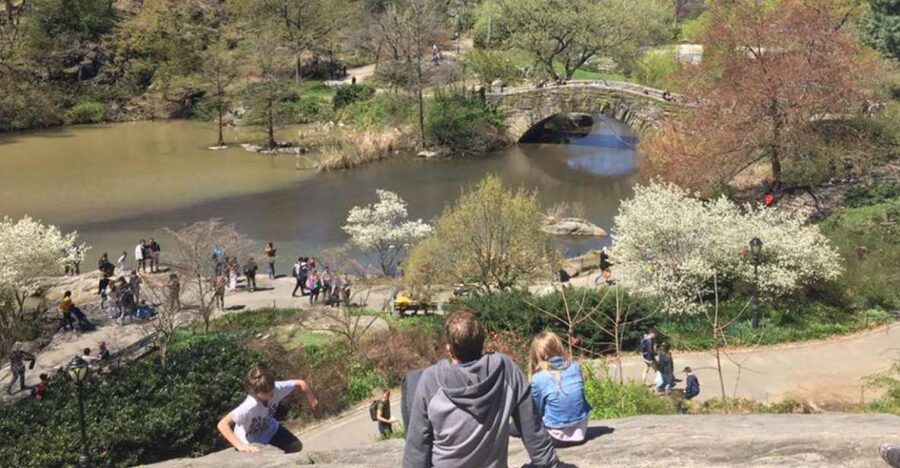
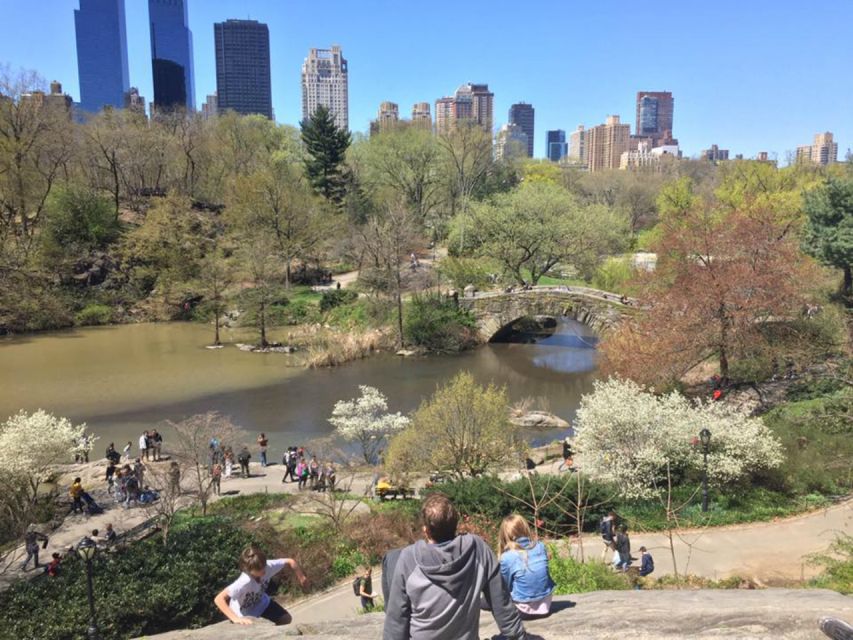
One likely early stop is The Pond and Gapstow Bridge. This is one of Central Park’s classic views, with water, stonework, trees, and the city rising behind it.
Gapstow Bridge is a good example of the park’s talent for stage-setting. The view changes as you approach it, cross it, and look back toward the water. A guide can point out the way the bridge frames the scene, making it a strong place for photos rather than just a shortcut across a pond.
The Pond also shows how Central Park uses water to make the city feel farther away. You are still only minutes from busy streets, but the water creates a pause in the route. This is one of the places where the tour’s promise of quiet becomes clear.
The Central Park Zoo may also appear along this part of the route. It is one of the park’s well-known attractions, but this walking tour is not presented as a zoo visit. Expect to see or discuss landmarks along the route rather than spend time inside every attraction.
The Dairy, Literary Walk, and The Mall
The route may continue toward The Dairy, Literary Walk, and The Mall. These places show a different side of the park, shifting from water and rock to formal paths and civic spaces.
The Dairy has an appealing story within the park’s larger design. Its name hints at the park’s original effort to offer a rural-style setting inside the city. Even if you do not spend long there, it helps explain how Central Park was meant to serve people looking for a change from crowded streets.
Literary Walk and The Mall are among the most recognizable formal spaces in the park. The Mall is a broad, straight promenade lined with trees, built for strolling and gathering. It feels more ceremonial than the winding paths elsewhere.
This portion is useful for visitors who want more than photo stops. You get a sense of how Central Park moves between formal and informal design. One moment you are on an orderly avenue of trees, and soon you may be heading toward a rougher patch of woodland or a curving lakeside path.
The Bandshell may also be included. It connects the park to public performance and music, adding another layer to the idea of Central Park as a shared civic space. Your guide may also point out filming locations along the way. The park has appeared in countless movies and television shows, so familiar views can suddenly look different when you see them in person.
More NYC Walking Tours:
- SoHo, Little Italy, and Chinatown Walking Tour in New York
★ 5.0 · 3,153 reviews - Secrets of Grand Central Station Walking Tour New York City
★ 5.0 · 1,796 reviews - Greenwich Village Walking and Food Tasting Tour
★ 5.0 · 1,572 reviews - Artistic, Alternative Greenwich Village Walking Tour
★ 5.0 · 971 reviews
Bethesda Terrace, the lake, and the Boathouse
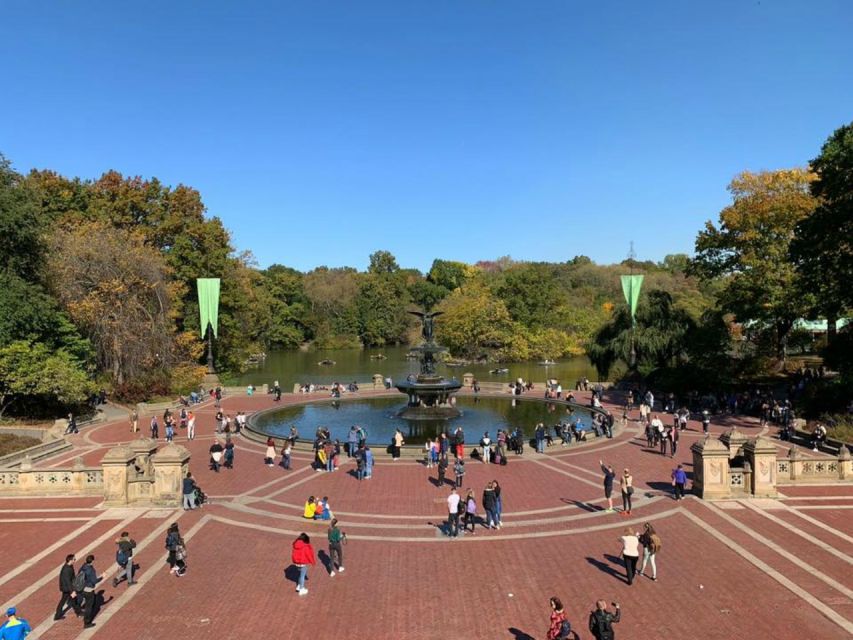
Bethesda Terrace is likely to be one of the tour’s central moments. It is among the park’s most ornate landmarks, with steps, stone details, and a grand approach toward the water.
The terrace is valuable because it brings together architecture, public space, and scenery. You can pause here for photos, but the setting rewards a closer look at the relationship between the terrace and the lake. The design gives the area a sense of arrival, even though it is part of a public park.
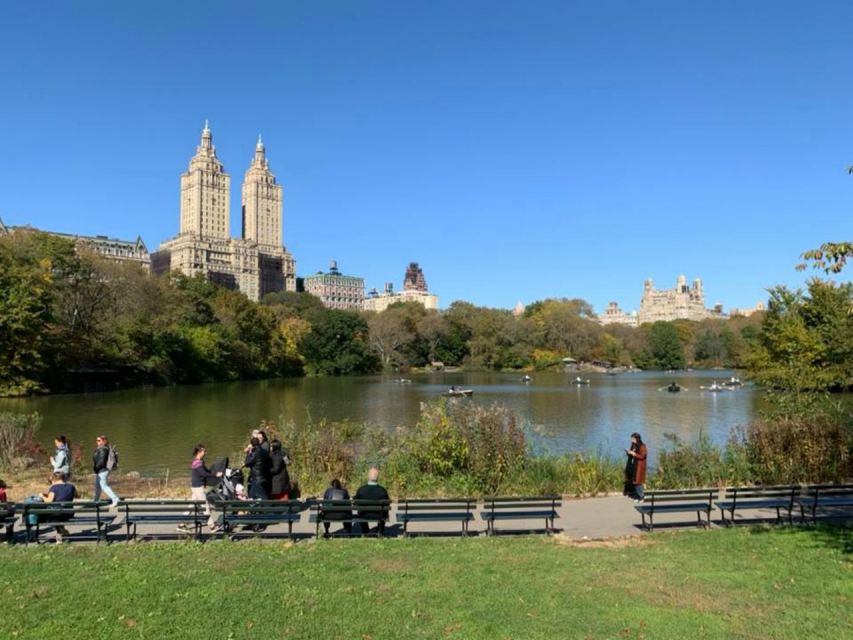
The lake and the Boathouse add another classic Central Park view. Water opens the scene, while the surrounding trees and paths make the city feel less immediate. This is the kind of place where your guide’s timing matters. A quick visit can produce a photo, but a short explanation helps you understand why the view feels so carefully composed.
The tour is described as leisurely, not rushed. That does not mean you will linger at every location for a long time. It means the walk is intended to let you look around, listen, and take photos without racing from one stop to the next.
The Ramble, Bow Bridge, and Cherry Hill
The Ramble brings a more wooded and winding section of Central Park. Its paths feel less formal than The Mall or Bethesda Terrace, and the change gives the tour a useful sense of variety.
This is also where good footwear becomes important. The activity information calls for comfortable shoes, and that advice is practical rather than decorative. You will be walking for two and a half hours, and Central Park’s paths are not all the same in surface or shape.
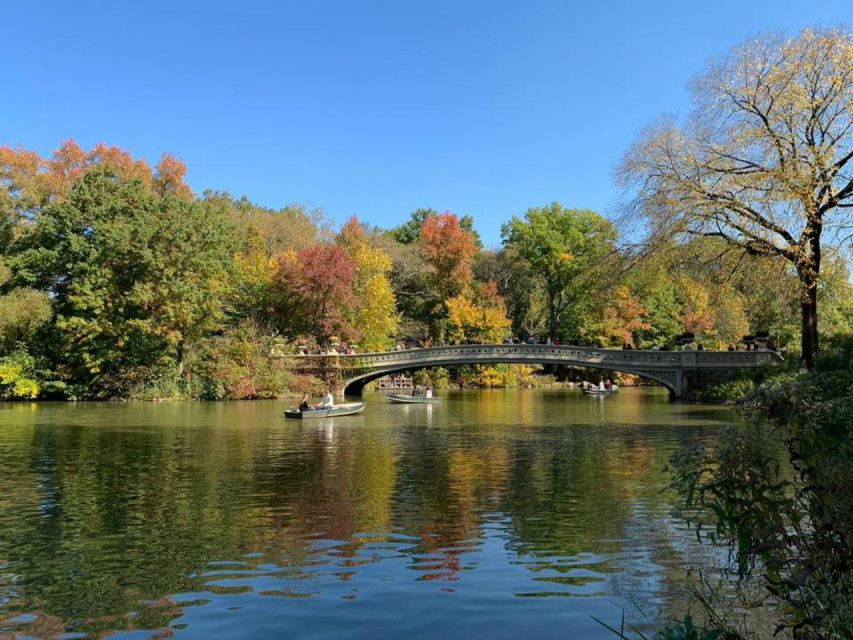
Bow Bridge is another major photo stop. Its curved design and position over the lake make it one of the park’s most familiar views. It is especially useful as a place to understand how the park’s bridges are part of the scenery, not just functional crossings.
Cherry Hill offers another change in mood and scenery. The route may not give you equal time at every place, but the combination of The Ramble, Bow Bridge, and Cherry Hill shows why Central Park feels larger and more varied than a simple rectangular city park.
Strawberry Fields and the Upper West Side finish
The walk finishes near 1 West 72nd Street, in the Upper West Side, after passing through the western side of Central Park. Strawberry Fields is one of the possible final highlights.
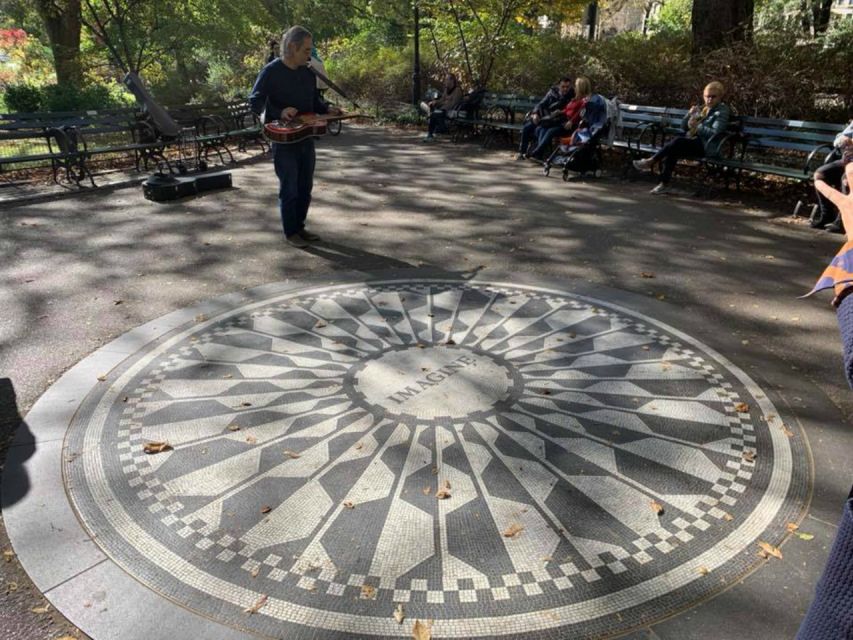
Strawberry Fields has a quieter, more reflective character than some of the park’s grander spaces. It is associated with John Lennon and is known for its memorial setting. The location gives the final section a more personal tone after the tour’s broader discussion of design, history, and city life.
Ending here is convenient if you want to continue exploring the Upper West Side. It also gives you a clear sense of where you are, unlike a finish deep inside the park. You can leave the park, find food, or continue walking through the neighborhood without retracing the full route.
The finish also makes the tour useful as a one-way introduction. You start at the southeastern corner and end on the west side, seeing a broad portion of Central Park rather than circling back to your meeting point.
What the four seasons change
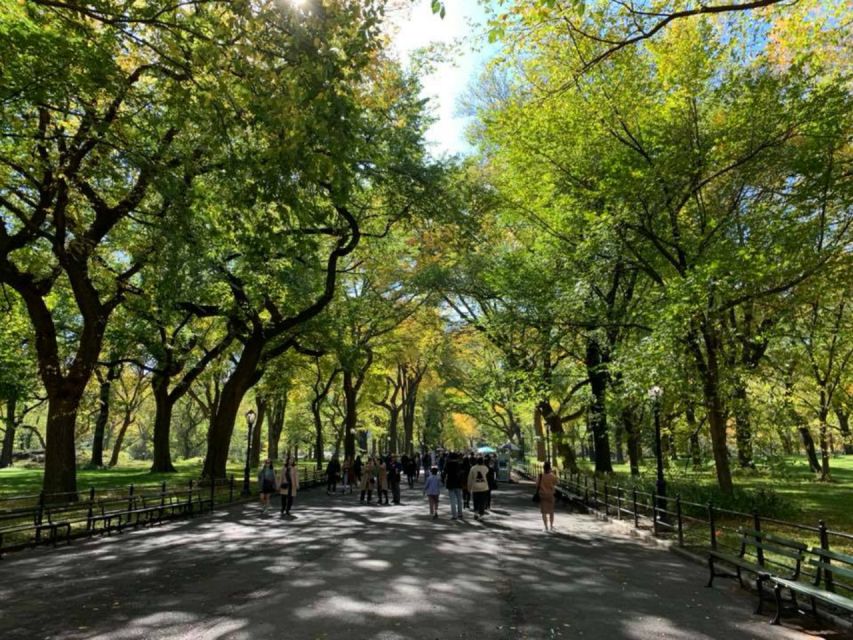
This tour operates all year, and Central Park changes sharply with the season. That is a real advantage if your schedule is fixed, since the route is not tied to one particular time of year.
Spring can bring a softer, more colorful look to the park, especially around the tree-lined promenades and flowering areas. Summer generally makes the park feel fuller and greener, with shade becoming a welcome part of the walk.
Autumn changes the color and mood of the route. The bridges, lake, and formal paths can look quite different when the trees turn. Winter may offer a quieter experience, though you should be prepared for cold conditions and possible rain or snow.
The tour takes place rain or shine. Check the forecast, wear shoes you can walk in, and bring clothing suited to the day. The park may be peaceful in bad weather, but the experience will be less comfortable if you arrive dressed only for indoor Manhattan.
Is $35 a fair price?
At $35 per person, this is a reasonable price for a 150-minute guided walk, especially with a group capped at 10 people. You are paying for local direction, historical explanation, a planned route, and the chance to cover major sights without arranging the walk yourself.
The value is strongest if this is your first visit to Central Park or if you want to understand how the park was designed. It is less essential if you already know the park well and prefer to wander alone at no cost.
The small group improves the value. A 10-person maximum is intimate enough for questions and clearer communication, while still keeping the cost below many private tours. The included map adds a modest but practical benefit, since it helps you revisit places after the guide leaves.
A 4.9 rating from 35 published ratings suggests consistently strong satisfaction, and the specific praise points to two useful qualities: guides who make the subject interesting and a pace that can work for people who do not walk quickly. Jeremy is named in one especially positive assessment, so you may want to ask at booking if a particular guide is scheduled, though guide assignment is not guaranteed in the details provided.
Who should book this Central Park walk?
I would choose this tour for a first-time New York visitor who wants Central Park to make sense, not just look pretty. It is also a good fit for anyone interested in architecture, city planning, movie locations, photography, or the work of Olmsted and Vaux.
You should also consider it if you prefer a calm introduction before exploring independently. The guide can give you a mental map, then you can return later to the lake, Bethesda Terrace, Strawberry Fields, or any other stop that catches your attention.
The tour is less suitable if you have limited walking ability, since the activity is specifically not suitable for people with mobility impairments. It may also disappoint anyone expecting a private tour or a deep visit inside every attraction. This is a broad highlights walk, not a museum-style examination of one small area.
Bring comfortable shoes and arrive on time at the Sherman monument. Since the tour runs in all weather, a light rain layer or sun protection may be sensible depending on the forecast, though those items are not supplied.
My call: book it if you want context, not just scenery
Book this tour if you want Central Park’s famous places tied together by a clear story. The route covers major sights such as Gapstow Bridge, The Mall, Bethesda Terrace, Bow Bridge, the Ramble, and Strawberry Fields, while also leaving room for film-location surprises and quieter corners.
I would skip it only if you already know Central Park well, dislike guided walks, or cannot comfortably walk outdoors for 150 minutes. For most first visits, $35 is a fair way to turn a huge park into a manageable, memorable part of your New York trip.
FAQ
How long does the Central Park Highlights Walking Tour last?
The tour lasts 150 minutes, or two and a half hours.
Where does the tour begin?
Meet your guide in front of the General William Tecumseh Sherman Monument at Grand Army Plaza.
Where does the tour finish?
The walk finishes at 1 West 72nd Street, New York, near the Upper West Side.
What language is the tour offered in?
The tour is conducted in English with a live guide.
How large is the tour group?
The group is limited to 10 participants.
What sights might be included?
Possible sights include Grand Army Plaza, The Pond, Gapstow Bridge, the Central Park Zoo, the Delacorte Clock, The Dairy, Literary Walk, The Mall, the Bandshell, Bethesda Terrace, the lake, the Boathouse, The Ramble, Bow Bridge, Cherry Hill, and Strawberry Fields.
What should I bring?
Wear comfortable shoes. The tour takes place outdoors and runs in rain or shine.
Is the tour suitable for people with mobility impairments?
No. The activity is not suitable for people with mobility impairments. Late arrivals also cannot be accommodated.
Recently added in New York City
- NYC: Midtown Hands-On Bagel Baking Class★ 5.0 · 12 reviews
- Personalize Sightseeing Tour★ 5.0 · 92 reviews
- Central Park Pedicab Tour with Guide★ 5.0 · 63 reviews
- Central Park Pedicab Guided Tour★ 5.0 · 17 reviews
- Photographer, Professional Photo shoot – New York★ 5.0 · 16 reviews
- Official Central Park Pedicab Ride ( UP TO 3 PERSONS )★ 5.0 · 4 reviews
- JFK or LGA package only (Round trip transfer plus VIP Contrasts)★ 5.0 · 3 reviews
- Official Central Park Pedicab Tours★ 5.0 · 35 reviews
NYC Walking Tours, compared.
SoHo, Little Italy, and Chinatown Walking Tour in New York
Read our review →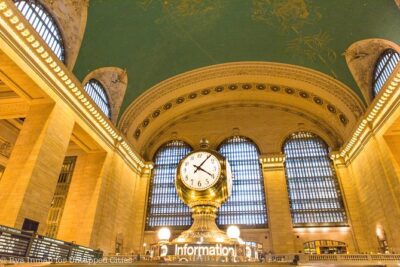
Secrets of Grand Central Station Walking Tour New York City
Read our review →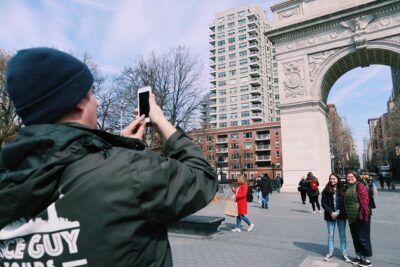
Greenwich Village Walking and Food Tasting Tour
Read our review →
Artistic, Alternative Greenwich Village Walking Tour
Read our review →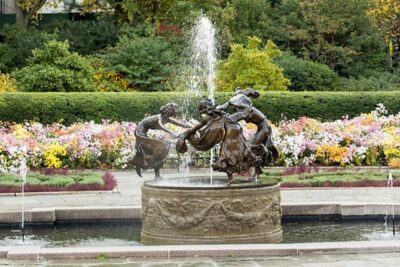
NYC Greenwich Village Italian Food Guided Walking Tour
Read our review →Browse the lists this tour appears in