
Reviewed · LITTLE ITALY AND CHINATOWN TOURS
New York City: Mafia History in Little Italy Walking Tour w/NYPD
New York’s Mafia past comes alive on this food-and-history walk from the East Village to Little Italy. You visit old haunts linked to Lucky Luciano, the Genovese and Gambino families, John Gotti, and the early roots of Cosa Nostra, while an active or retired NYPD detective supplies the local angle.
I like the insider access at John’s of 12th Street, where the tour begins with a substantial Italian-American meal in a restaurant tied to Luciano and several crime films. I also like the way the walk connects Mafia lore with ordinary neighborhood life, from a butcher shop and community garden to St. Patrick’s Old Cathedral.
The main drawback is pace. Three and a half hours can feel long when the guide pauses for detailed stories, and the group may reach 35 people. Drinks cost extra, so the $129 price works best if you value the food and the guide’s first-hand perspective, not just a quick stroll.
Key points before you book
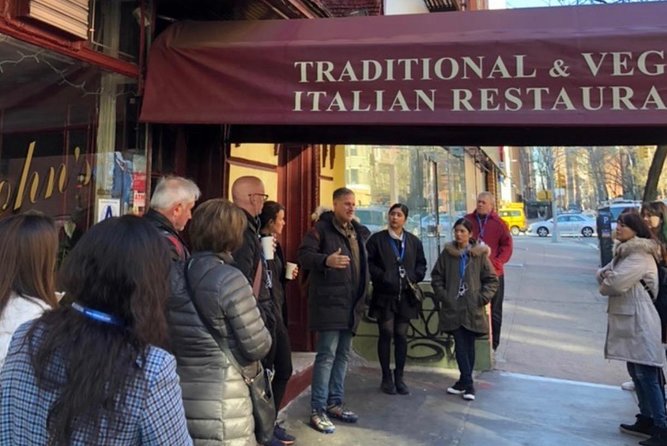
- Start with dinner at John’s of 12th Street: Expect spaghetti and meatballs, fresh bread, and a restaurant with a long film and Mafia connection.
- Walk from the East Village to Little Italy: The route covers several locations tied to New York crime families, nightlife, politics, religion, and immigrant life.
- Hear the story from an NYPD detective: Guides have included Dennis, Frank, John, Dan, Paul, and Sean, with the exact guide subject to change.
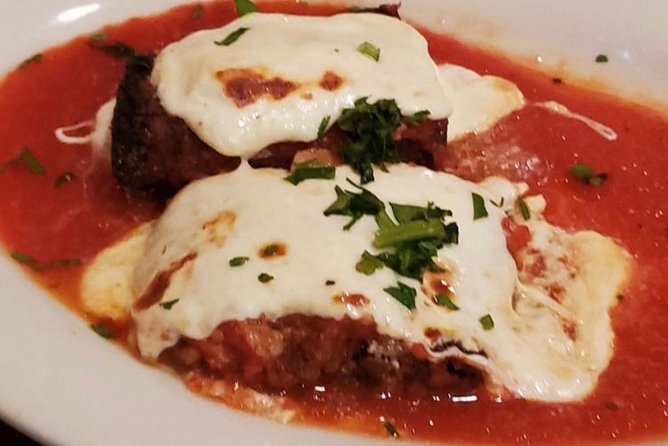
- Plan for a full meal: Fresh mozzarella, eggplant rollatini, a large cannoli, and the main course make this more than a snack stop.
- Bring patience for long explanations: The strongest part is the storytelling, but some sections may feel too detailed if you want a brisk walk.
- Wear comfortable shoes: You walk for about three and a half hours, ending on Mulberry Street in Little Italy.
Starting at John’s of 12th Street
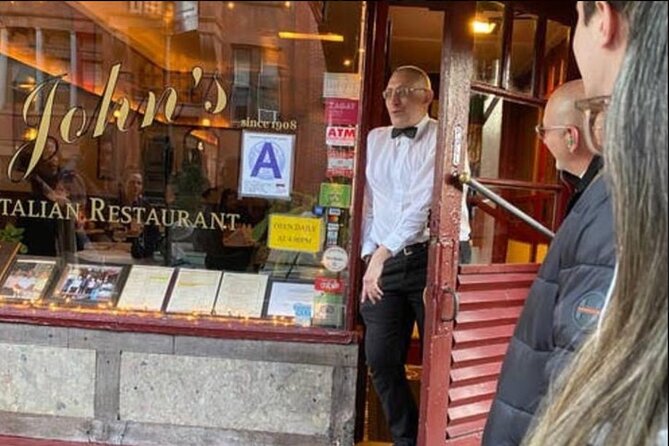
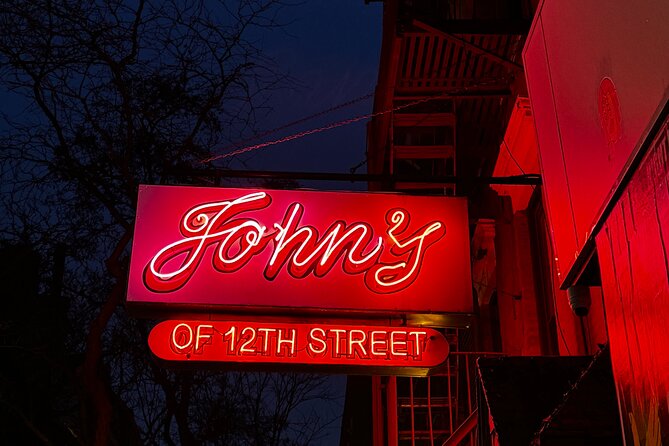
The tour begins at 302 East 12th Street in the East Village, an area that once held a large Italian-American population before modern Little Italy became the better-known name. Your first stop is John’s of 12th Street, a red-sauce restaurant founded in 1908.
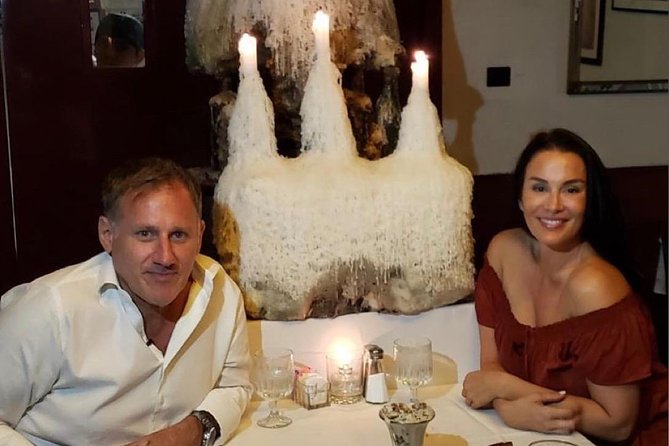
This is not just a convenient place to eat. The restaurant is tied to Lucky Luciano and the formation of the Mafia Commission in 1931. It has also appeared in productions connected with Boardwalk Empire, The Sopranos, Get Gotti, and other crime films and documentaries.
The setting gives the opening talk some weight. You are not hearing a generic account of organized crime in a hotel room. You are sitting in a working restaurant with its own place in New York’s Italian-American story.
The food begins here. The listed meal includes spaghetti with meatballs and fresh bread, served as a full portion. Several people found the meatball especially large, and the meal was filling enough that one person described it as nearly all they needed for the day.
That is useful to know if you plan to eat before meeting the group. I would arrive hungry. You may also order drinks, but they are not included in the tour price.
More NYC Mafia and True Crime Tours:
- New York City Mafia and Local Food Tour led by NYPD Guides
★ 5.0 · 1,197 reviews - True Crime NYC: Mafia Walk w/Ret. NYPD Detective and Local Food
★ 5.0 · 848 reviews - True Crime New York: NYPD-Guided Mafia Walking Tour w/ Food
★ 4.6 · 318 reviews
The East Village and the rise of Cosa Nostra
After dinner, the route moves through the East Village, which the tour presents as a Mafia stronghold dating back to around 1900. The guide points out places connected with all five New York crime families and explains how Italian-American neighborhoods worked as social networks, business centers, and territory for criminal groups.
This part depends heavily on the guide. Dennis, who grew up in the area and worked with the NYPD, has been especially praised for connecting neighborhood streets with family stories and police experience. Frank is another guide whose storytelling has been singled out for making past events easy to picture.
The tone is more crime-history talk than formal academic lecture. You hear about people, power, police work, and local life. Strong language and graphic descriptions of murders are part of the experience, so this is not a good choice for young children or anyone who prefers a softened version of the subject.
The route is also more interesting if you enjoy films and television about organized crime. The guide often links real places to scenes and productions, but the focus remains on New York itself rather than on movie trivia alone.
Marble vaults and the city’s older elite
One stop concerns the burial place of New York’s political elite and John C. Colt, brother of gun manufacturer Samuel Colt. The route then includes New York Marble Cemetery, an early public cemetery with below-ground vaults.
The cemetery was created at a time when city authorities wanted burial arrangements that could help protect public health. Its unusual underground design offers a change of mood from the Mafia material, reminding you that the East Village contains layers of New York history that have little to do with organized crime.
The cemetery is generally open to the public on the first Sunday of each month, but this tour does not appear to depend on a formal cemetery visit. The stop is brief, and you should not expect a long interior visit or a separate cemetery tour.
That brevity is both good and bad. It keeps the walk moving, but anyone hoping to spend time studying the cemetery should return independently.
The Orpheum and Second Avenue’s old entertainment world
The route passes the Orpheum Theatre on Second Avenue near St. Marks Place. The theater was formerly known as Player’s Theatre and has roots reaching back to the old Yiddish theater district.
Its story adds useful context to the tour. Second Avenue was once a major center of Yiddish theater, often called the Jewish Rialto. The building later showed films and returned to dramatic use in the late 1950s, hosting productions such as Little Mary Sunshine, Anything Goes, The Me Nobody Knows, and Little Shop of Horrors.
This is not a Mafia stop in the narrow sense. It helps explain why the neighborhood mattered. The East Village was shaped by immigrant communities, theaters, restaurants, political groups, and nightlife. Organized crime grew within that busy urban mix rather than in some separate underworld hidden from ordinary life.
You may appreciate this broader view if you want more than a list of gangsters. If you want only crime facts, this short theater section may feel like a detour.
More Little Italy and Chinatown Tours:
- SoHo, Little Italy, and Chinatown Walking Tour in New York
★ 5.0 · 3,153 reviews - NYC: Chinatown & Little Italy Food Tour with 7 Flavorful Tastings
★ 5.0 · 2,733 reviews - Original NYC Guided Food Tour of Chinatown and Little Italy
★ 5.0 · 2,194 reviews - NYC: Chinatown and Little Italy Food Tour
★ 4.7 · 703 reviews
Club 188 and Luciano’s nightlife network
At 188 First Avenue, the guide discusses the former Club 188, associated with Charlie Lucky Luciano. The stop focuses on the Genovese crime family and its influence over New York nightlife from the 1920s onward.
The exact location is now part of a normal city street, which is part of the appeal. New York often erases its old criminal landmarks through redevelopment and changing businesses. A guide who knows the neighborhood can point out what a casual walk would miss.
This is where the tour’s local angle matters most. The experience is sold around an NYPD connection, and the guide’s police background gives the stories a different flavor from a standard movie-themed walk. Still, you should treat personal anecdotes as part of the storytelling, not as a substitute for a formal historical course.
From the Bowery garden to Albanese Meats
The walk continues toward the Liz Christy Bowery Houston Community Garden, regarded as New York’s oldest community garden. Activists began clearing the lot in 1973 and 1974, and the city later rented the land to the Bowery Houston Community Farm and Garden for one dollar a month.
This stop has no direct Mafia hook, but it shows how the same blocks have changed. The neighborhood once associated with immigrant communities, nightlife, and organized crime later became home to grassroots urban gardening.
The next stop, Albanese Meats & Poultry, returns to Italian-American food culture. The butcher shop welcomed Sicilian immigrants from the 1800s and became a local destination for figures such as Martin Scorsese and Robert De Niro. The shop is also tied to Scorsese’s early film work.
You may not spend long inside either location. These are brief story stops, not shopping sessions. Still, they make the food part of the tour feel connected to the neighborhood rather than added as an unrelated reward.
St. Patrick’s Old Cathedral and The Godfather
The Basilica of Saint Patrick’s Old Cathedral sits in the Nolita area at Mott and Prince Streets. It began as the cathedral for New York’s Irish Catholic community and later served Italian, African American, Chinese, and Vietnamese Catholics.
The church is also linked with The Godfather, which filmed inside. That connection will interest anyone who enjoys New York movie locations, but the building matters even without the film reference. It shows how immigrant communities used churches as centers of faith, aid, and identity.
The tour does not promise an extended interior visit, so treat this as a narrated exterior stop unless your guide says otherwise. If the church is open and you want to look inside, be mindful that it remains a place of worship.
Mulberry Street and the Gambino family
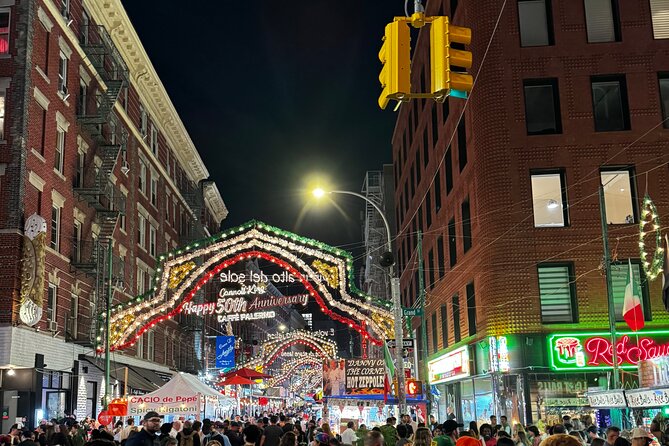
The route ends in Little Italy, with a stop on Mulberry Street associated with the Gambino crime family and John Gotti. The guide explains how one of New York’s most powerful families operated in and around the neighborhood.
This is also where the guide’s personal background can add something different. Dennis grew up in Little Italy and has described the area from the perspective of someone who knew its streets, families, and local habits before the neighborhood became mainly a dining district.
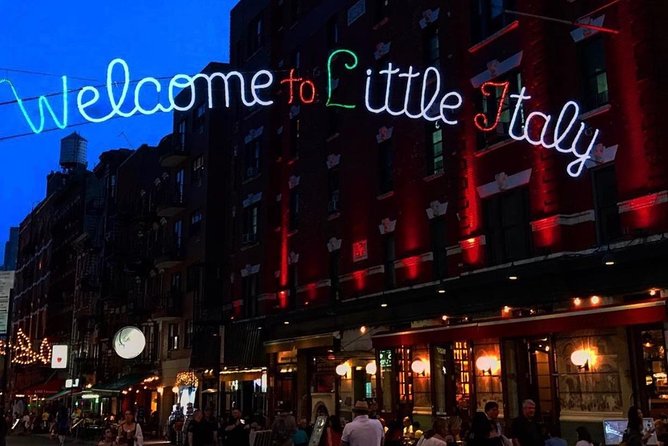
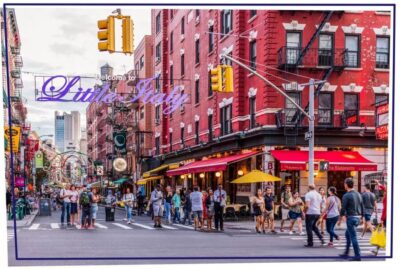
Little Italy began developing in the 1840s as Italian immigrants settled in lower Manhattan. Its original boundaries were much larger than the current district. Today, the recognizable core is roughly three blocks along Mulberry Street, with restaurants and pastry shops taking the place of much of the old residential community.
That contrast is worth noticing. You see a famous tourist neighborhood, but the talk points toward the people and institutions that shaped it before the restaurant menus and souvenir shops.
What you eat along the way
Food is one of the strongest reasons to consider this tour. The meal is not limited to a bite of pizza or a single pastry. The listed menu includes:
- Spaghetti with meatballs and fresh bread at John’s of 12th Street
- Handmade mozzarella from New York’s oldest cheese shop
- Eggplant parmigiana served in rollatini style
- A full-size Sicilian cannoli at the end
The eggplant dish and cannoli receive particularly strong praise, while the mozzarella provides a welcome break during the walk. Vegetarian options are available if you request them in advance.
Because the portions are generous, avoid booking this immediately after a large lunch. You also need to budget for drinks, since they are not included. Water is available, but sodas and other beverages are purchased separately.
The food makes the price easier to understand. At $129 per person, you are paying for a guided walk, a substantial multi-course meal, and access to a guide with police experience. If you would rather eat cheaply and explore on your own, the price may feel high. If you would otherwise pay for dinner and a food tour separately, the package is more reasonable.
Group size, sound, and walking comfort
The tour lasts about three hours and 30 minutes and can include up to 35 people. That is a fairly large group for a neighborhood walk, though headphones have been used to help everyone hear the guide.
Headphones matter here. Streets can be noisy, and a guide speaking to 20 or 30 people without amplification can lose the back of the group. The audio setup also lets the tour continue without stopping every few minutes for everyone to catch up.
You should still expect some crowd management. The route includes several short stops, restaurant time, and periods of walking between locations. A person with walking problems may find the duration difficult, and a moderate level of physical fitness is recommended.
Wear comfortable shoes and keep your schedule open after the finish. The tour ends at 108 Mulberry Street, near a pastry shop, so you can continue exploring Little Italy afterward.
Who will enjoy this New York walk
I would recommend this experience to you if you like true crime, New York neighborhood history, Italian-American food, and film locations. It works especially well for adults who want a guided evening with plenty to eat rather than a fast sightseeing circuit.
It also suits people who have already seen the main downtown landmarks. The tour reaches places you might pass without noticing, and the stories give familiar streets a new context.
You may want to skip it if you dislike graphic crime stories, strong language, large groups, or long explanations. It is also not the best fit if your main goal is a quiet food tour or a formal history lecture.
Guide quality is important. Dennis and Frank have received especially warm attention for storytelling, personal local connections, and an easy manner. Other guides have included John, Dan, Paul, and Sean, so the exact style may vary by date.
Should you book the Mafia and Little Italy tour?
Book this tour if you want a full evening of food and organized-crime stories, not merely a walk past famous addresses. The strongest combination is the NYPD perspective, John’s of 12th Street, the neighborhood connections, and the generous meal.
At $129, it is not a bargain walking tour. Drinks and gratuity are extra, and the pace can feel slow if your interest in Mafia history is limited. But for an adult visitor who values a personal guide, substantial Italian-American food, and places that are easy to miss alone, the cost is defensible.
Cancel at least 24 hours before the start time for a full refund. Service animals are allowed, and the tour is offered in English with mobile tickets.
FAQ
How long does the tour last?
The tour lasts approximately three hours and 30 minutes.
Where does the tour begin?
It begins at 302 East 12th Street in New York’s East Village.
Where does the tour end?
The tour ends at 108 Mulberry Street in Little Italy, near a pastry shop.
What food is included?
The listed meal includes spaghetti with meatballs and fresh bread, handmade mozzarella, eggplant parmigiana served rollatini style, and a full-size Sicilian cannoli.
Are drinks included?
No. Drinks are not included, but you can purchase them during the experience.
Can I request vegetarian food?
Yes. Vegetarian options are available with advance notice.
Who leads the tour?
An active or retired NYPD detective leads the experience. Guides have included Dennis, Frank, John, Dan, Paul, and Sean.
Is the tour suitable for someone with walking problems?
The tour requires a moderate level of physical fitness and is not recommended for people with walking problems. It also includes strong language and sometimes graphic descriptions of murders.
More Historical Tours in New York City
- New York City: American Museum of Natural History Ticket
★ 4.5 · 15,447 reviews - NYC: Starship Landmark 90 Minute Sightseeing Cruise
★ 4.6 · 3,666 reviews - Starship Landmark 90 Minute Sightseeing Cruise
★ 4.5 · 2,073 reviews - American Museum of Natural History Admission Ticket
★ 4.0 · 1,931 reviews
More NYC Walking Tours
- Secrets of Grand Central Station Walking Tour New York City
★ 5.0 · 1,796 reviews - Greenwich Village Walking and Food Tasting Tour
★ 5.0 · 1,572 reviews - Artistic, Alternative Greenwich Village Walking Tour
★ 5.0 · 971 reviews - Central Park Guided Walking Tour
★ 5.0 · 774 reviews
Recently added in New York City
- Brooklyn: 3-Hour Williamsburg Bites Food Tour★ 4.5 · 58 reviews
- World Trade Center, 911 and Ground Zero Walking Tour★ 5.0 · 4 reviews
- Welcome to New York: A Tour of Taylor Swift Hotspots★ 5.0 · 11 reviews
- Your NYC Story in Photos: Custom 2-Hour Tour & Photo Shoot★ 4.9 · 60 reviews
- Washington from New York in Spanish★ 5.0 · 4 reviews
- Wall Street: The birth place of NYC in French/English tour★ 5.0 · 6 reviews
- NYC: Empire State Building Sunrise Experience Ticket★ 4.6 · 55 reviews
- New York City: Walk This Way Harlem Hip Hop Walking Tour★ 4.8 · 42 reviews
Little Italy and Chinatown Tours, compared.
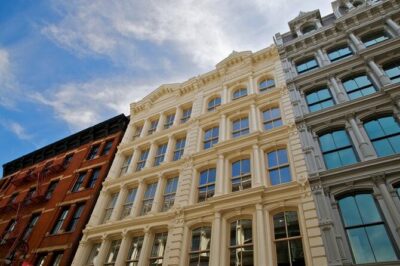
SoHo, Little Italy, and Chinatown Walking Tour in New York
Read our review →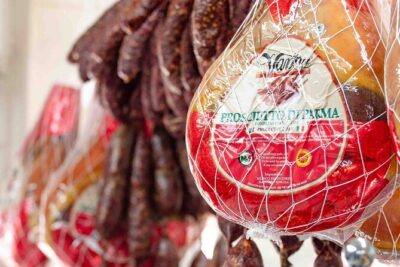
Chinatown & Little Italy Food Tour with 7 Flavorful Tastings
Read our review →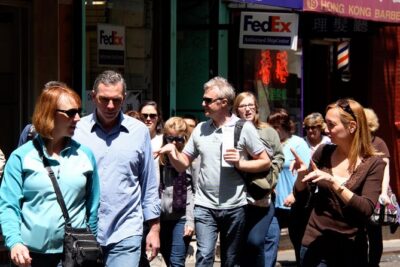
Original NYC Guided Food Tour of Chinatown and Little Italy
Read our review →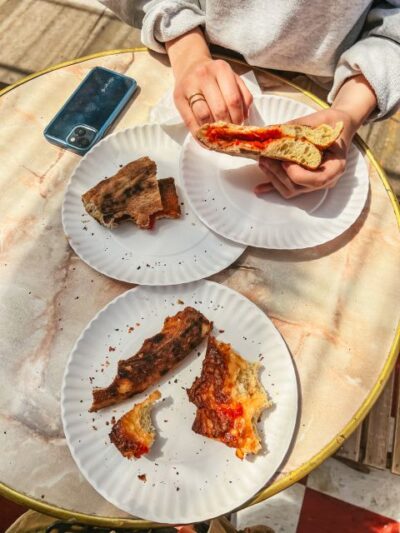
SoHo, Little Italy, and Chinatown 2-Hour Guided Walk
Read our review →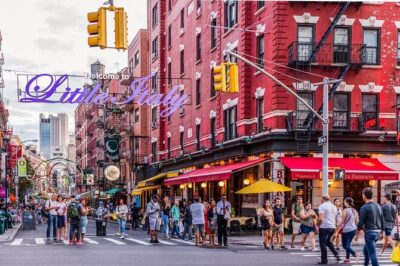
SoHo, Little Italy, and Chinatown NYC Guided Walking Tour
Read our review →
3 Neighborhoods Tour: Soho, Chinatown & Little Italy
Read our review →Browse the lists this tour appears in