
Reviewed · MUSEUMS
New York City: Museum at Eldridge Street Docent-Led Tour
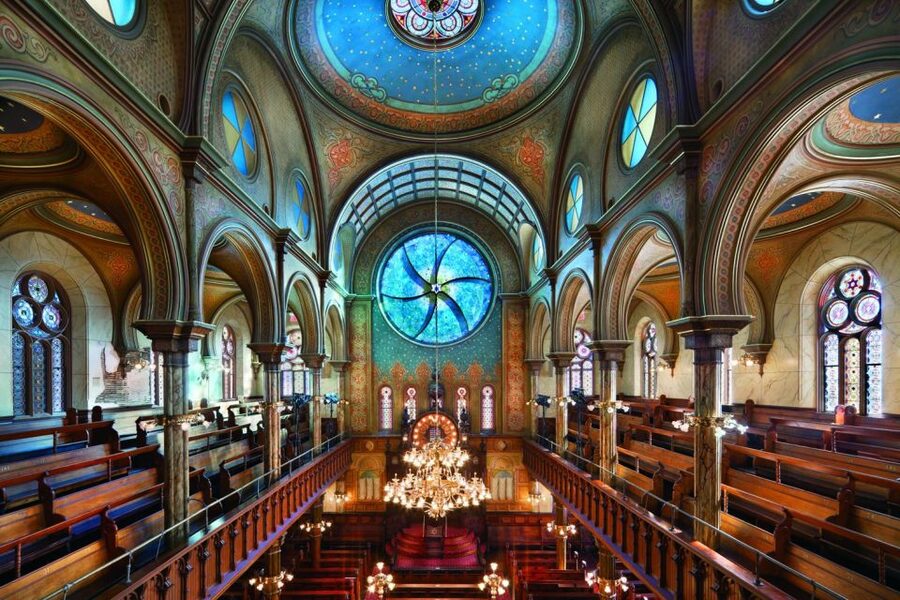
New York’s Museum at Eldridge Street gives you a rare look inside the first grand synagogue built in the United States by Eastern European Jewish immigrants. The 1887 building is the star here, with Moorish architecture, 60 historic stained glass windows, and original floors and furnishings.
I like the clear connection between the building and the Lower East Side’s immigrant story. I also like that the tour includes both the synagogue’s survival story and its modern art, including a window by Kiki Smith and Deborah Gans. The main consideration is the guide: a recent visit with Bonnie was warm and vivid, while another visitor found the presentation disrespectful and dull.
Key points to know
- An 1887 synagogue built by immigrants: This was created as a permanent house of worship and a public sign that Jewish newcomers were putting down roots in New York.
- One hour inside a National Historic Landmark: The docent-led visit gives the building context that a self-guided look may not provide.
- Sixty historic stained glass windows: Look up often, and allow time for the floors, woodwork, and original furnishings too.
- A story of decline and repair: The synagogue nearly disappeared after years of neglect before a 20-year, $20 million restoration.
- Modern art has a place here: The collection includes a contemporary window by Kiki Smith and Deborah Gans, plus a temporary exhibit and permanent collection.
- A low-cost Manhattan cultural stop: At $7 per person, this is an easy addition to a Lower East Side day, especially if you value architecture and social history.
Why the Eldridge Street Synagogue Matters
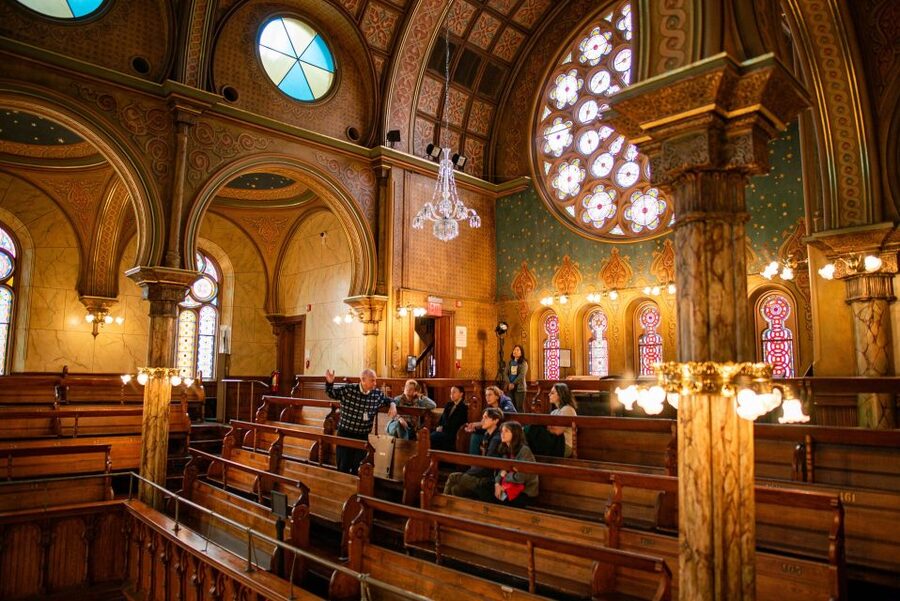
The Museum at Eldridge Street occupies a building with an unusually direct connection to New York’s immigration story. Constructed in 1887, the Eldridge Street Synagogue was the first grand synagogue purpose-built in the United States by Eastern European Jewish immigrants.
That detail changes how you see the interior. This was not simply an attractive religious building. It was a public statement. Jewish immigrants arriving from Eastern Europe had entered a crowded city with limited money and uncertain prospects, yet they created a large, formal place for worship and community life.
At the turn of the 20th century, roughly one third of Europe’s Jewish population would cross the Atlantic. The Lower East Side became one of the main places where these newcomers built homes, businesses, religious communities, and new American lives.
The synagogue served several purposes at once. It was a house of worship, a meeting place, and a sign of permanence. Its scale mattered. Among packed streets and overcrowded tenements, the building told the surrounding neighborhood that its congregation intended to stay.
That human meaning is the best reason to take the docent tour. You are not only looking at decorative details. You are seeing what immigrant ambition looked like in brick, wood, glass, and stone.
More Museums in New York City:
- NYC: Empire State Building Tickets – Observatory & Museum
★ 4.7 · 25,757 reviews - New York City: American Museum of Natural History Ticket
★ 4.5 · 15,447 reviews - NYC: Museum of Modern Art (MoMA) Entry Ticket
★ 4.6 · 12,540 reviews
Entering the 1887 Interior
The tour begins inside the museum after you walk down the stairs. From there, a docent guides you through the building for about an hour.
The exact order of the presentation can vary with the guide, but you can expect the central themes to be the synagogue’s construction, the Jewish community that used it, its later decline, and the long restoration that returned it to public use.
Give yourself a moment to look before listening to the explanation. The scale and decoration are easy to miss if you rush straight into the talk. The historic floors and original furnishings help make the interior feel like a surviving place of community life rather than a bare architectural shell.
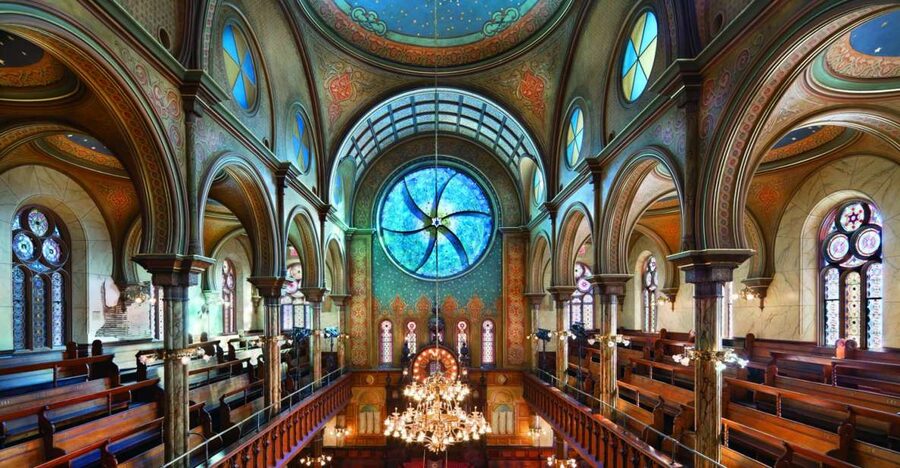
The building’s Moorish design is one of its most memorable features. The style gives the synagogue an appearance distinct from the surrounding Lower East Side streets, and it reflects the desire to create a grand, dignified place of worship.
You will also see 60 historic stained glass windows. They are a major reason to visit, but do not spend the entire hour looking upward. The tour’s value comes from connecting the windows and other design elements to the people who paid for, used, neglected, and later saved the building.
The Lower East Side Through an Immigrant Story
A good docent can turn geography into something you can picture. Bonnie, one guide identified in recent visitor feedback, explained the Jewish immigrant experience by tracing places of origin in Eastern Europe and giving useful context about the Pale of Settlement.
That kind of explanation helps if terms such as the Pale of Settlement are unfamiliar. Instead of receiving a list of dates and names, you get a clearer sense of where many congregants came from and why New York became such an important destination.
The tour also addresses traditions and customs within the Lower East Side’s Jewish community. The synagogue was a place where religious practice met daily life. It offered a shared setting for people adjusting to a new country while maintaining links to older customs.
You should not expect a full neighborhood walking tour. The focus is the building, and the one-hour format keeps the visit compact. Still, the stories give you a better frame for exploring the streets outside afterward.
This is especially useful if you are already planning time in the Lower East Side. The synagogue gives the neighborhood an added layer. The nearby streets are not just a collection of restaurants, shops, and old facades. They were once home to immigrant families building institutions and social networks under difficult conditions.
Looking Closely at the Windows and Furnishings
The 60 stained glass windows deserve careful attention. They add color and pattern to the interior, but their importance also comes from their survival. The building itself went through a period when it was nearly lost to neglect.
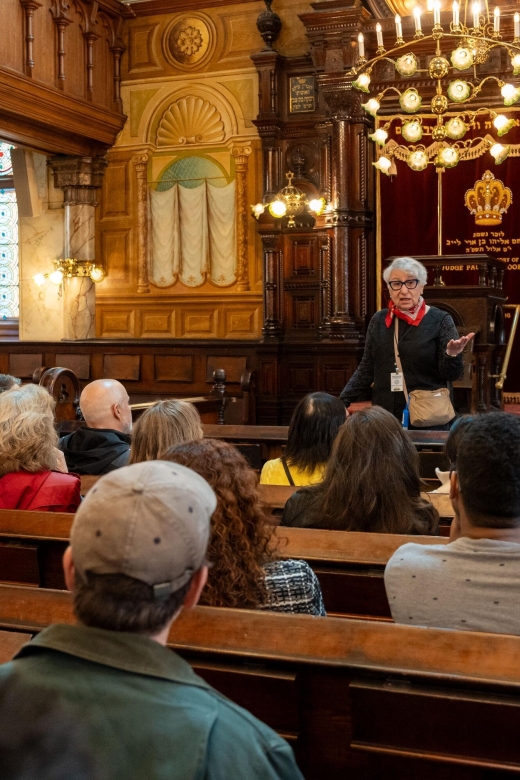
Look for changes in color, shape, and placement as the docent speaks. The guide may direct your attention to details you would otherwise pass by. A visit without interpretation can still be attractive, but the meaning of the windows becomes clearer when you understand the synagogue’s original role.
The original furnishings and floors are also worth your time. Their presence helps you picture the building as an active congregation’s home, rather than as a restored object placed behind glass.
Photography is allowed for personal, noncommercial use, so you can take a few pictures without flash. Professional cameras and flash photography are not allowed. Food and drinks other than water are not permitted, and backpacks, strollers, and other items may be checked on arrival.
Those rules are practical rather than burdensome, but plan for them. Keep your camera simple, avoid bringing a large bag if you can, and do not count on eating inside the museum.
More New York City Tours:
- NYC: SUMMIT One Vanderbilt Tickets
★ 4.7 · 51,195 reviews - New York City: Statue of Liberty & Ellis Island with Ferry
★ 4.6 · 18,683 reviews - Statue of Liberty and Ellis Island Tour: All Options
★ 5.0 · 13,571 reviews - New York in One Day Guided Sightseeing Tour
★ 5.0 · 13,166 reviews
The Restoration Story Adds Real Weight
The synagogue’s survival is one of the strongest parts of the visit. After immigration quotas tightened in the 1920s, the building’s role changed, and years of neglect put it at risk.
The restoration took 20 years and cost $20 million. That time and expense tell you something about the building’s condition and about the effort required to preserve a place tied to New York’s immigrant past.
A restored historic building can sometimes feel too polished. Here, the restoration story gives you a useful way to think about what you are seeing. The museum is not presenting an untouched interior. It is presenting a landmark that was carefully returned to use after coming close to disappearing.
The docent explains how the synagogue moved from construction, to decline, to restoration. That arc gives the one-hour tour a strong shape. You begin with immigrant ambition, move through changing immigration patterns and reduced use, and finish with the decision to preserve the site for future generations.
I find that more satisfying than a visit focused only on ornament. You learn why preservation mattered, not just what was repaired.
Modern Art Inside an Old Synagogue
The museum does not treat the synagogue as a frozen 19th-century room. A modern window by artists Kiki Smith and Deborah Gans brings a later artistic voice into the building.
This contrast is worth noticing. The historic windows connect you to the original congregation and its era. The contemporary work shows that the museum is still thinking about how art, memory, religion, and public space can share one building.
The museum admission also includes a temporary exhibit and the permanent collection. One exhibit on menorahs received particular praise in recent visitor feedback, so allow a little time beyond the guided talk if that display is available during your visit.
The tour itself lasts one hour, but the admission gives you reason not to leave the moment the docent finishes. Check the temporary exhibit while you are already inside. At $7 per person, even a short extra look makes the price feel particularly fair.
You should keep your expectations in line with the cost. This is not a large museum complex with a full day of galleries. Its strength is concentration: one remarkable building, a focused collection, and a guided explanation of the community connected to it.
What the Guide Can Add
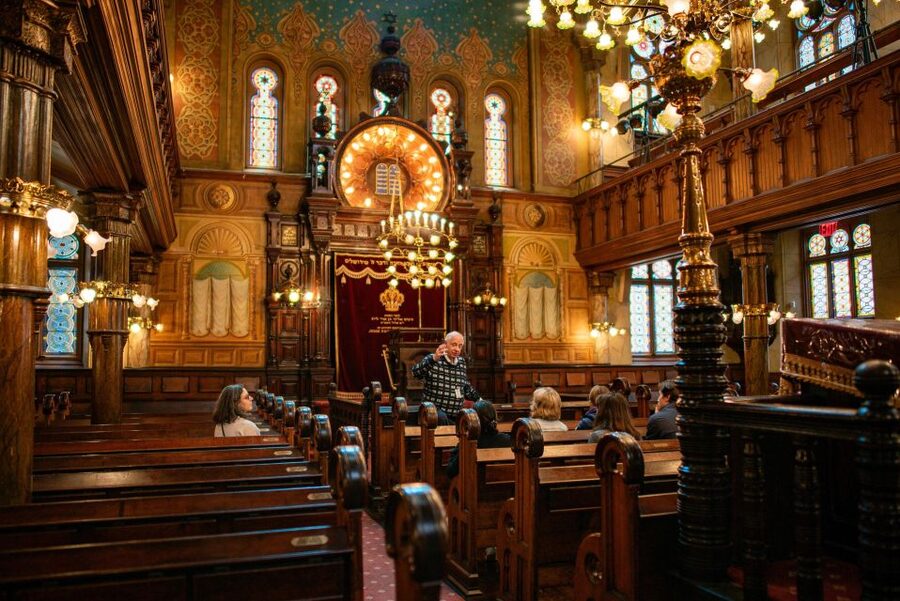
The docent matters here because the building does not explain every part of its story by itself. Architectural details are easy to admire, but the tour links them to immigration, worship, neighborhood life, and preservation.
Bonnie’s presentation received especially warm praise for making the geography of Eastern Europe understandable and for adding personal stories. If she leads your tour, you may get that same story-centered approach, though guides naturally differ.
One recent visitor had the opposite experience and found the guide disrespectful toward religious Jews and uninteresting. I would take that as a reminder to keep expectations balanced. The museum’s subject matter deserves a thoughtful, respectful presentation, but no short guided tour can guarantee the same style every time.
The good news is that the building and collection still give you plenty to see. If the guide moves too quickly through a feature that interests you, use the time after the tour to look again. Ask questions when appropriate, especially about the restoration, congregational life, or the modern window.
Who Will Get the Most from This Tour
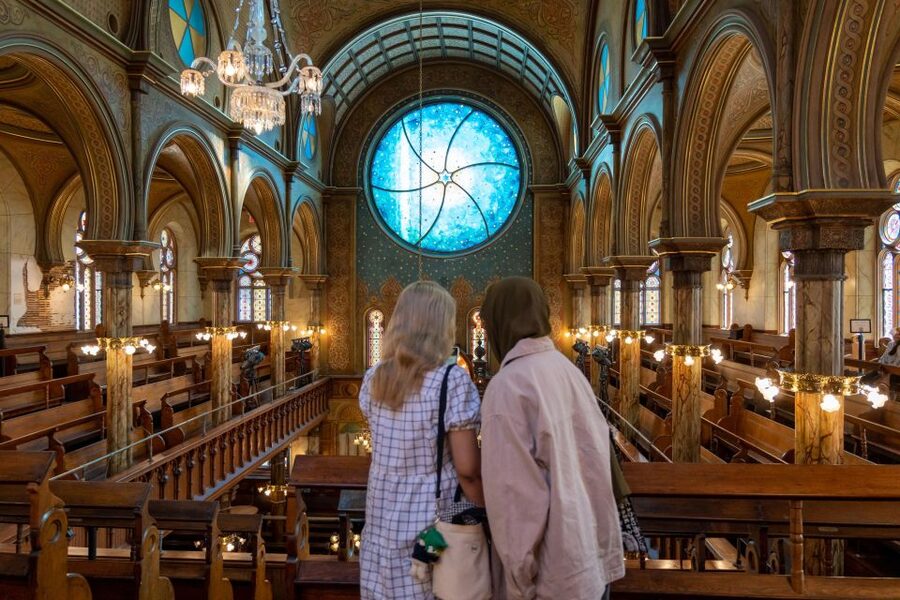
I would recommend this visit to anyone interested in New York architecture, Jewish history, immigration, religious buildings, or historic preservation. It also works well for a visitor who wants a quieter cultural stop away from the city’s larger museums.
Families with older children may find the immigrant story easier to grasp here because it is tied to a real building and visible objects. Younger children may appreciate the windows and unusual interior, but the one-hour talk is more useful if they can follow a sustained explanation.
The tour is also a good fit for repeat visitors to New York. You do not need another huge museum to fill your day. This is a focused stop that can add meaning to time spent around the Lower East Side.
It may not suit you if you want a long neighborhood walk, a large art collection, or a tour that focuses mainly on contemporary art. It is also not the right choice if you strongly dislike guided interpretation. The building can be admired independently, but the docent is central to understanding its people and changes over time.
The museum is fully accessible, with an elevator reaching all four floors. The meeting point is inside the museum, down the stairs from street level, and the site is wheelchair accessible. If you have a large bag or stroller, expect it to be searched and checked in on arrival.
Is $7 a Good Value?
At $7 per person, this is one of the easier cultural purchases in New York to justify. The fee includes museum admission, the temporary exhibit, the permanent collection, and the English-language docent-led tour.
The value is strongest if you care about context. You are paying not only to enter a historic synagogue, but to hear how it relates to Eastern European Jewish immigration, Lower East Side community life, and a long preservation effort.
The one-hour length is another advantage. You can fit the visit into a wider day without giving up half your schedule. It works before lunch, between neighborhood stops, or as a compact indoor break.
I would not judge the price by the number of rooms alone. This is a specialized museum in a single landmark. Its appeal comes from the quality and meaning of that setting, not from having endless galleries.
You can also reserve now and pay later, which helps if your New York plans are still shifting. Cancellation is free up to 24 hours before the scheduled visit. Availability and starting times vary, so check the schedule before building the rest of your day around it.
Should You Book the Eldridge Street Tour?
Book it if you want to see a beautiful, unusual synagogue while learning how Jewish immigrants shaped the Lower East Side. The combination of Moorish design, stained glass, original furnishings, modern art, and preservation history gives the hour more substance than a quick architectural stop.
I would give it priority if you have already planned time in the Lower East Side or if you like places where architecture and social history meet. The $7 price is modest, the tour is short, and the building offers details you will not find in a standard New York sightseeing route.
Go in expecting a focused museum visit, not a full neighborhood exploration. Keep your camera flash off, leave extra food and large bags at home when possible, and allow a few minutes after the tour for the exhibits.
My call: book this tour, especially for architecture, immigration history, and Jewish New York. Just remember that the guide’s style can shape the experience, so give yourself time to study the building independently as well.
FAQ
How long does the docent-led tour last?
The tour lasts one hour.
What language is the tour offered in?
The live docent-led tour is offered in English.
What is included in the admission?
Admission includes the Museum at Eldridge Street and Eldridge Street Synagogue, the temporary exhibit, the permanent collection, and the English-language docent-led tour.
How much does the experience cost?
The listed price is $7 per person.
Where does the tour begin?
Walk down the stairs and enter the museum. The tour begins inside.
Is the museum wheelchair accessible?
Yes. The museum is fully accessible, and an elevator reaches all four floors.
Can I take photographs inside?
Personal, noncommercial photography is welcome. Flash photography and professional cameras are not allowed.
Can I bring food, drinks, backpacks, or a stroller?
Food and drinks other than water are not allowed. Backpacks and strollers may be searched and checked in on arrival. Bikes and scooters are not allowed.
Can I cancel the booking?
Yes. You can cancel up to 24 hours in advance for a full refund. You can also reserve now and pay later.
Recently added in New York City
- NYC: Midtown Hands-On Bagel Baking Class★ 5.0 · 12 reviews
- Personalize Sightseeing Tour★ 5.0 · 92 reviews
- Central Park Pedicab Tour with Guide★ 5.0 · 63 reviews
- Central Park Pedicab Guided Tour★ 5.0 · 17 reviews
- Photographer, Professional Photo shoot – New York★ 5.0 · 16 reviews
- Official Central Park Pedicab Ride ( UP TO 3 PERSONS )★ 5.0 · 4 reviews
- JFK or LGA package only (Round trip transfer plus VIP Contrasts)★ 5.0 · 3 reviews
- Official Central Park Pedicab Tours★ 5.0 · 35 reviews
Museums, compared.
Empire State Building Tickets – Observatory & Museum
Read our review →
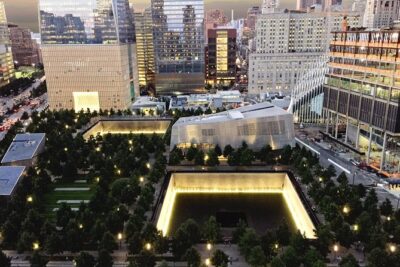
9/11 Memorial, Ground Zero Tour with Optional 9/11 Museum Ticket
Read our review →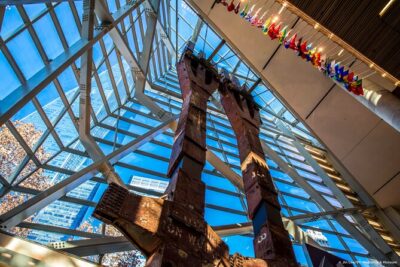

All-Access 9/11: Ground Zero Tour, Memorial and Museum, One World Observatory
Read our review →

Browse the lists this tour appears in