

Reviewed · NYC WALKING TOURS
New York: Louis Armstrong Private Walking Tour with Concert
Louis Armstrong’s New York story comes alive through the places that shaped jazz onstage: Jazz at Lincoln Center, Carnegie Hall, Broadway theaters, and Birdland. This is less a museum visit than a guided walk through Midtown, with Armstrong’s career used as the thread connecting the streets and venues.
I like the private format, since you can ask about Armstrong’s music, daily life in Queens, and his friendships with other jazz figures without being folded into a large public group. I also like the option to add a live evening concert, which gives the history a useful musical finish.
The main caution is that the concert venue and program are not fixed in advance, and the guide does not accompany you to the show. One available assessment praises the guide’s city knowledge but says he had to read the jazz material, so the quality of the jazz commentary may depend on who leads your walk.
Key points to know before booking
- Start at Jazz at Lincoln Center: Meet outside the venue at 10 Columbus Circle. You do not enter the building at the start.
- Walk through major Midtown landmarks: The route includes Carnegie Hall, Times Square, Broadway theaters, the Hudson Theatre exterior, and Birdland.
- Armstrong is the main thread: Expect stories about his career, songs, friends, New York life, and his 1929 appearance in Hot Chocolates.
- The three-hour choice adds a concert: The show is separate from the walking tour, with a ticket and exact location sent by email.
- Private means flexible questions: The tour is available in English, German, French, Italian, and Spanish.
- The value depends on your interests: At $193 per person, it makes the most sense for jazz fans who want a private guide and a concert, not just a quick Midtown stroll.
Starting outside Jazz at Lincoln Center
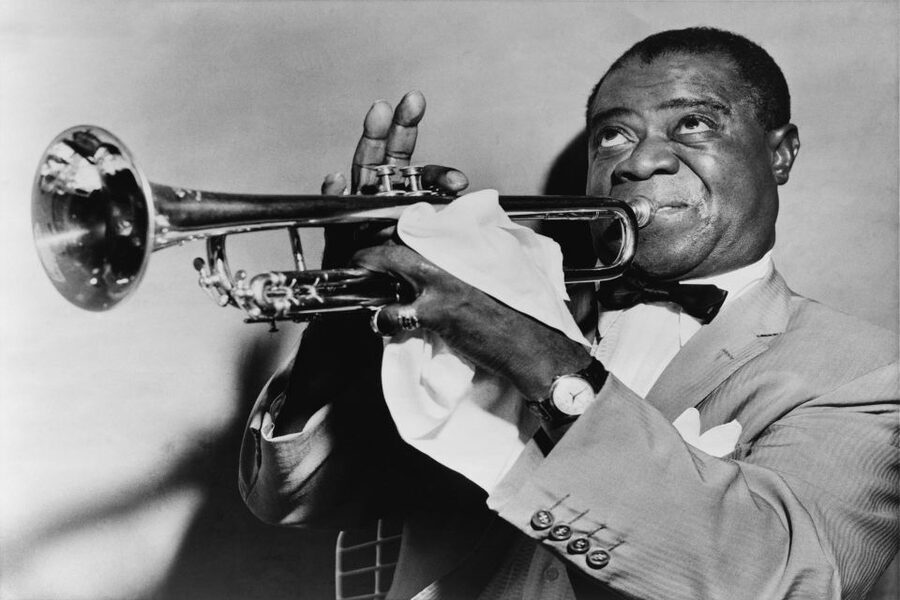
Your meeting point is in front of Jazz at Lincoln Center at 10 Columbus Circle. Do not go inside looking for the guide. The venue is used only as the starting location.
That is a fitting place to begin. Jazz at Lincoln Center is one of New York’s best-known homes for the music, and its performance spaces are respected for their acoustics. The tour uses the building as a doorway into the wider story of jazz in New York, rather than as a venue visit.
You should arrive ready to walk through central Manhattan. The meeting point is easy to identify, but this is still a city walk, so comfortable shoes matter. The activity ends back at the starting point according to the stated meeting information, though the three-hour concert itself is a separate attraction and may take place elsewhere.
The tour is private, with one licensed guide for up to 25 people. Groups of 26 to 50 receive two guides, so larger parties should still be able to hear and ask questions. If you have a mobility concern or a special request, contact the operator before the tour. Assistance is offered when possible, but the exact walking conditions are not described.
More NYC Jazz and Live Music Tours:
- NYC: Harlem Hallelujah! Gospel Wednesday Concert
★ 4.7 · 1,638 reviews - New York City: Harlem Gospel Live Music Concert
★ 4.7 · 1,479 reviews - New York City: Gourmet Dinner Cruise with Live Music
★ 4.2 · 1,074 reviews
Seventh Avenue and Carnegie Hall
From Lincoln Center, the route moves along Seventh Avenue toward Carnegie Hall. The walk gives the guide room to explain how jazz found a place in New York’s major performance culture.
Carnegie Hall is more than a grand concert building in this context. It connects Armstrong to the wider group of musicians who helped make New York a central stop for American music. The guide is expected to explain Armstrong’s appearances and influence while also placing him beside other jazz names.
One particularly useful story concerns James Reese Europe and the Clef Club Orchestra. In 1912, Europe presented the Concert of Negro Music at Carnegie Hall. This event offers a direct way to discuss how Black musicians and composers claimed space in one of the country’s most respected concert halls.
That detail gives the walk more substance than a list of famous addresses. You are not simply looking at a building and hearing that Armstrong once played nearby. You are hearing how jazz moved between formal concert halls, theaters, clubs, and popular entertainment.
Still, keep your expectations in check. The route provides exterior views and street-level storytelling. It does not include a Carnegie Hall performance or an interior tour as part of the stated program.
Times Square and Broadway’s jazz connection

The walk then passes through Times Square and by Broadway theaters such as the Winter Garden Theatre. This portion shifts the focus from concert halls to the commercial theater district.
For Armstrong, that matters. His career was not limited to jazz clubs. He also appeared in stage productions and helped bring jazz before wider audiences. Your guide will connect Broadway’s theaters with the growth of jazz culture and with Armstrong’s own working life.
Times Square can be noisy and crowded, which may make extended conversation harder. The setting also changes quickly, so the tour is likely to feel more like a moving history lesson than a quiet discussion. If you enjoy seeing how music fits into a city’s daily streets, this is a strong part of the route. If you want a calm, music-focused setting, it may feel busy.
The stated route includes the exterior of the Hudson Theatre. That stop has a direct Armstrong connection: he performed in Hot Chocolates there in 1929. The guide can use that appearance to explain how Armstrong’s stage work reached beyond the standard club circuit.
Armstrong beyond the landmarks
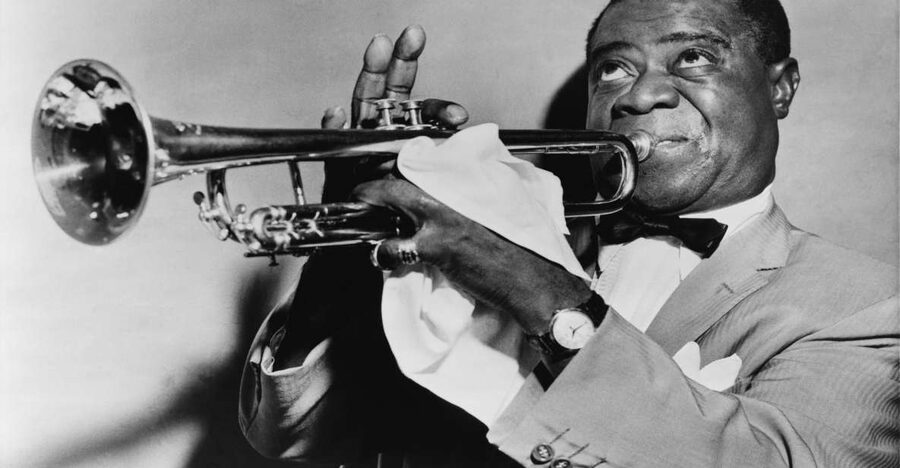
The best material may be the details that do not appear on a building plaque. The tour includes stories about Armstrong’s daily life in Queens, the creation of his most famous songs, and his relationships with other jazz musicians.
Those subjects help make the tour personal. Armstrong is often remembered as a huge musical personality, but learning where he lived, how he worked, and who he knew gives you a more grounded picture. You also get a sense of how a musician’s career develops through performances, friendships, and changing audiences.
The guide is expected to provide facts and anecdotes, not a live performance. The quality of this section depends heavily on the guide’s command of jazz history. One available evaluation describes the guide as very pleasant and well informed about New York, but says he had to read the jazz material. That is an important distinction. A strong city guide may know Midtown well without having the same depth in Armstrong’s music.
I would book this with an open mind about the guiding style. You may receive a lively, personal talk, or you may get a more prepared presentation. If detailed musical analysis is essential to you, ask the operator in advance about the guide’s jazz background or make a special request.
More NYC Walking Tours:
- SoHo, Little Italy, and Chinatown Walking Tour in New York
★ 5.0 · 3,153 reviews - Secrets of Grand Central Station Walking Tour New York City
★ 5.0 · 1,796 reviews - Greenwich Village Walking and Food Tasting Tour
★ 5.0 · 1,572 reviews - Artistic, Alternative Greenwich Village Walking Tour
★ 5.0 · 971 reviews
Ending at Birdland
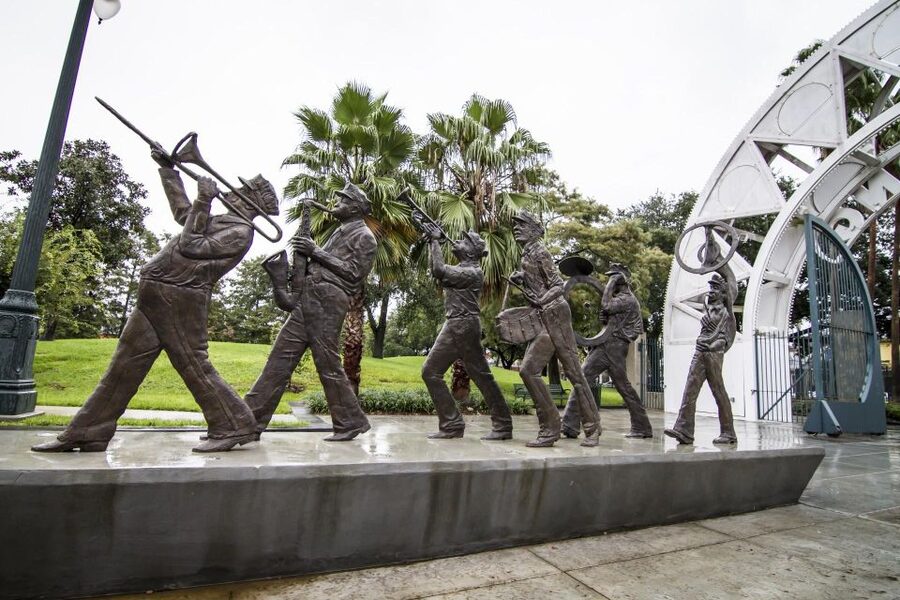
The walking route ends at the celebrated Birdland Jazz Club. This is a fitting final stop because the club represents the continuing role of live jazz in New York.
The provided details do not say that admission to Birdland is included in the two-hour option, so treat this as an exterior or concluding location unless your booking information says otherwise. The tour is not a club performance during the walk.
Birdland gives the guide a natural place to explain why New York is often called the Jazz Capital of America. The title is not based on one venue. It comes from the city’s long connection with musicians, theaters, clubs, recording, and audiences. The walk shows several parts of that network in a compact Midtown area.
At the end of the two-hour option, you return to the meeting point. That makes the shorter tour easy to fit into a day of sightseeing. You can continue to another Manhattan activity without arranging a long transfer.
What the three-hour concert option adds
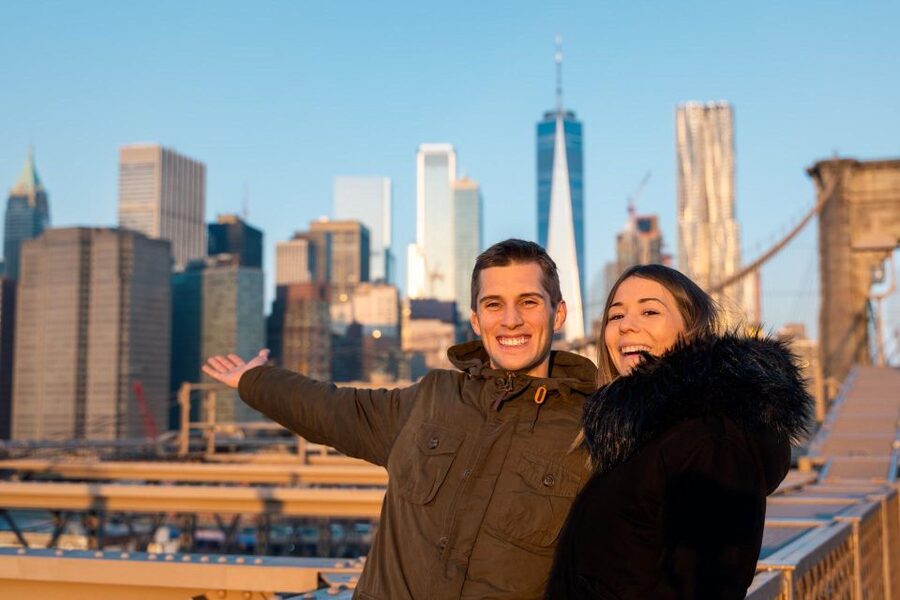
The longer choice includes tickets to an evening jazz concert. Concert times usually fall between 5:30 and 8 p.m., but the exact time, venue, and program depend on availability. The ticket details are sent by email.
This is the more satisfying choice if you want music rather than only stories about music. After the walk, you can hear both established musicians and rising performers in a live setting. That turns the tour into a two-part experience: first the city’s jazz story, then a performance.
There are two practical limits. The concert is a separate attraction, and your walking guide does not accompany you. You will need to follow the ticket information for the venue and timing. Also, you cannot plan your evening around a specific club or performer because the program varies.
Check your email the day before for the final concert information and any instructions from Rosotravel US. Do not assume the performance will be at Birdland or at Jazz at Lincoln Center. The supplied details specifically say the venue can change.
The three-hour label also needs a little care. The walk itself and the concert are separate parts of the booking, so the total schedule may require more planning than a simple three-hour city stroll. Look closely at the concert time before arranging dinner, a show, or transportation afterward.
Price and overall value at $193
At $193 per person, this is not a budget walking tour. The price needs to cover more than seeing Midtown landmarks. Its value comes from the private guide, the language choice, the Armstrong-focused storytelling, and, with the three-hour option, a concert ticket.
The price is easier to justify for a small group with a strong interest in jazz. A private tour lets you shape the conversation around Armstrong, Harlem and Midtown jazz history, stage appearances, or the story behind particular songs. You are also paying for a guide who can connect separate places into one narrative.
The calculation is less favorable if you mainly want to see Times Square, Carnegie Hall, and Broadway theaters. You can view those areas without a dedicated tour, and the walk does not include a guaranteed interior visit to the major venues. The concert option adds real value, but its changing venue and program mean you are buying access to a live show, not a particular artist.
The available rating is 3.3 from three assessments, so the quality signal is limited and mixed. One assessment is very positive but brief. Another praises the guide’s city knowledge while raising a concern about the jazz material. A separate complaint describes a cancellation by the operator and only a partial refund. The stated policy says cancellation up to 24 hours before the tour receives a full refund, so keep all booking messages and check the terms attached to your reservation.
Who should choose this New York walk
I would recommend it most strongly to:
- Armstrong fans who want his New York career placed in a city setting
- Visitors who prefer a private guide to a large scheduled group
- People who want a short Midtown walk rather than a full-day jazz program
- Families or friends who can make good use of private questions
- Music lovers who want to add an evening performance
- Visitors who value a guide’s stories more than interior access to famous venues
You may want a different plan if you need a specialist music historian, a guaranteed club, or a particular concert artist. The operator does not name the guide in the information provided, and the concert venue is assigned later. Ask about those points before paying if they matter to you.
The route also suits visitors already spending time around Columbus Circle, Times Square, or Broadway. It uses central locations and does not require a separate trip to a distant neighborhood. The mention of Armstrong’s life in Queens is useful, but this is not a Queens walking tour.
Language, group size, and planning details
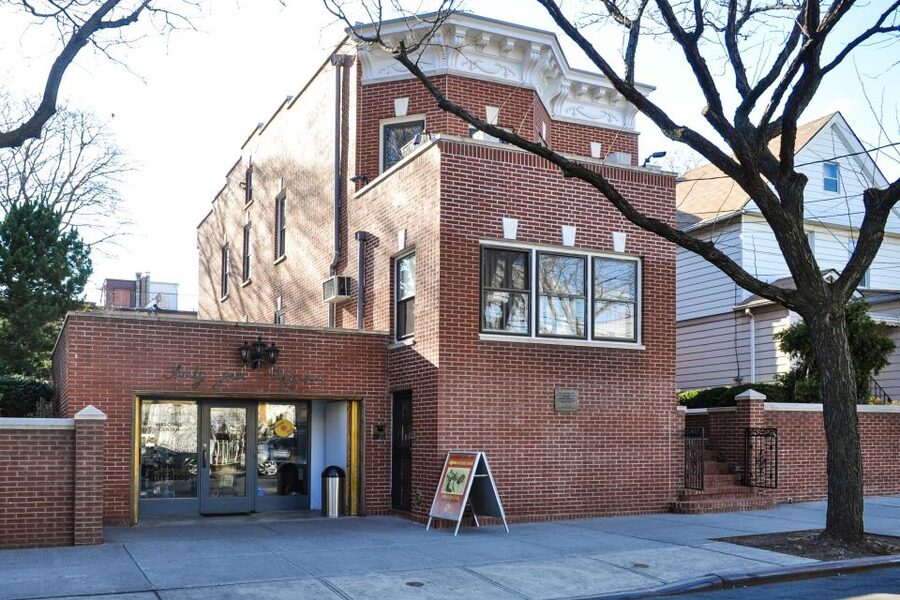
The live guide can conduct the tour in English, German, French, Italian, or Spanish. State your preferred language when booking and check the confirmation carefully.
The experience is sold as a private group activity. One guide is provided for up to 25 people, and two guides are used for groups of 26 to 50. That arrangement should help with hearing the commentary, but a private booking does not mean an individual guide for every person.
The tour lasts two hours without the concert or three hours with it, with starting times shown when you check availability. The concert normally begins in the early evening, from 5:30 to 8 p.m. The exact show details arrive by email, so check your inbox the day before.
Free cancellation is available up to 24 hours before the activity for a full refund, and reserve-now-pay-later booking is offered. These terms help if your New York schedule is still shifting, but the cancellation experience described above shows why you should save the confirmation and follow up quickly if the operator changes the booking.
Should you book it?
Book this tour if Louis Armstrong is the reason you want a jazz walk, and you like the idea of linking Carnegie Hall, Broadway, the Hudson Theatre, and Birdland through one guide’s story. The three-hour version is the better buy if you want live music afterward and can accept a changing venue and program.
Choose the two-hour version if you mainly want a compact, private introduction to Armstrong and Midtown jazz. Before booking, ask about the guide’s jazz background if musical detail matters to you. At $193 per person, this is a specialist experience, not a general sightseeing bargain. Its value rises sharply for a small group that will use the private format and attend the concert.
FAQ
Where does the Louis Armstrong tour begin?
The tour begins in front of Jazz at Lincoln Center at 10 Columbus Circle, New York, NY 10023. The venue is only the meeting point, so do not enter the building to find the guide.
How long does the experience last?
You can choose a two-hour walking tour or a three-hour option that includes an evening jazz concert. Starting times depend on availability.
Is the concert included in both options?
No. The two-hour option does not include a concert ticket. The three-hour option includes tickets to an evening jazz concert.
Where does the concert take place?
The concert venue and program vary based on availability. The exact time and location are attached to the concert ticket sent by email.
Will the walking guide attend the concert?
No. The concert is a separate attraction, and the walking guide does not accompany you to the performance.
What languages are available for the guide?
The live tour guide is available in English, German, French, Italian, and Spanish.
Recently added in New York City
- NYC: Midtown Hands-On Bagel Baking Class★ 5.0 · 12 reviews
- Personalize Sightseeing Tour★ 5.0 · 92 reviews
- Central Park Pedicab Tour with Guide★ 5.0 · 63 reviews
- Central Park Pedicab Guided Tour★ 5.0 · 17 reviews
- Photographer, Professional Photo shoot – New York★ 5.0 · 16 reviews
- Official Central Park Pedicab Ride ( UP TO 3 PERSONS )★ 5.0 · 4 reviews
- JFK or LGA package only (Round trip transfer plus VIP Contrasts)★ 5.0 · 3 reviews
- Official Central Park Pedicab Tours★ 5.0 · 35 reviews
NYC Walking Tours, compared.
SoHo, Little Italy, and Chinatown Walking Tour in New York
Read our review →
Secrets of Grand Central Station Walking Tour New York City
Read our review →
Greenwich Village Walking and Food Tasting Tour
Read our review →
Artistic, Alternative Greenwich Village Walking Tour
Read our review →
NYC Greenwich Village Italian Food Guided Walking Tour
Read our review →Browse the lists this tour appears in