
Reviewed · NYC WALKING TOURS
New York News and Media Walking Tour
New York’s media story is written into its buildings. On this two-hour walk from Columbus Circle to Times Square, you’ll connect publishing, radio, television, film, and corporate power through landmarks such as the Hearst headquarters, the Ed Sullivan Theater, BlackRock, and 30 Rock. I like the strong storytelling focus and the chance to see several major sites on foot without spending a day inside museums. I also like the noon start, which gives you a calmer break from the morning rush.
The main thing to understand is that this is an outdoor architecture and history walk, not a behind-the-scenes visit. You’ll see the facades and hear the stories, but you should not expect to enter the buildings or watch a television taping. The tour is in English, and the two-hour walk may not hold the attention of teenagers who are less interested in media history.
Key points to know before booking
- Follow New York’s media story on foot: The route links publishing, television, radio, entertainment, and major office buildings.
- See famous sites from the outside: Expect exterior views and detailed commentary rather than interior access.
- Hear from guides such as Liz and Christine: Their stories cover the early publishing business and the rise of radio and television in New York.
- Start at noon in Columbus Circle: The early-afternoon timing helps you avoid the worst morning and evening rush.
- Finish in Times Square: The ending puts you in one of Manhattan’s most useful sightseeing hubs.
- Pay $39 for a focused two-hour walk: That is fair value if you care about media and city history, but less so if you want attractions with admission included.
Why New York works so well as a media-history classroom
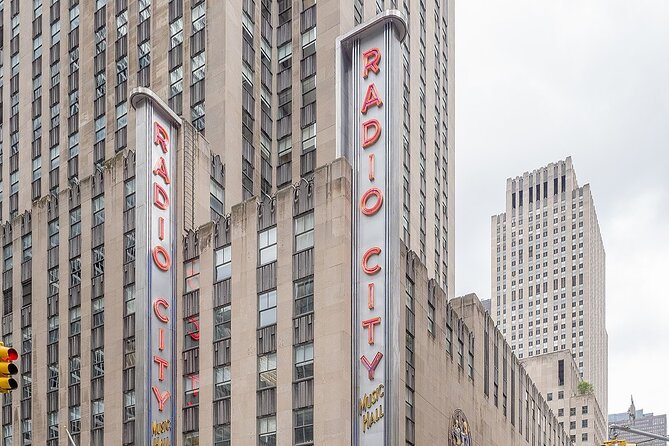
You do not need a studio tour to understand New York’s role in entertainment and news. Much of that story is visible from the sidewalk, where newspaper publishers, broadcasters, television hosts, advertisers, and office towers all operated within a fairly compact part of Manhattan.
This walk gives you a way to connect those pieces. Instead of treating each building as a separate photo stop, the guide explains how publishing helped shape public opinion, how radio expanded the reach of New York voices, and how television turned certain theaters and studios into national stages.
I like that approach because the subject is bigger than celebrity sightings. You will hear about the business behind the screen, the buildings that housed major companies, and the way media helped make New York an international center of culture. The tour also gives you useful street-level context for places you might otherwise pass without much thought.
The route begins at Columbus Circle and ends in Times Square, so you are moving through a central part of Manhattan rather than traveling back and forth by vehicle. That keeps the pace active and lets you see the city between the formal stops. You should wear comfortable shoes and be ready to remain outdoors for most of the two hours.
More NYC Walking Tours:
- SoHo, Little Italy, and Chinatown Walking Tour in New York
★ 5.0 · 3,153 reviews - Secrets of Grand Central Station Walking Tour New York City
★ 5.0 · 1,796 reviews - Greenwich Village Walking and Food Tasting Tour
★ 5.0 · 1,572 reviews
Starting at Columbus Circle at noon
The meeting point is Columbus Circle, at the southwestern corner of Central Park. The tour starts at 12:00 pm, an easy time to fit into a sightseeing day. You can visit Central Park in the morning, take the walk after lunch, or use the tour as a bridge between Midtown attractions.
The timing is one of the more practical features. You avoid the morning commute, and you finish before the heavier evening rush. That does not mean the streets will be quiet, but it does make the schedule easier than an early weekday start in central Manhattan.
From Columbus Circle, the route heads into the part of New York where media companies, theaters, broadcasters, and corporate offices have long shared the same streets. The guide’s job is to give those places a connection. At its best, the walk turns an ordinary block into a lesson about how information and entertainment reached the public.
Because the group can include up to 25 people, you get a small-group setting without the price of a private tour. A group of that size may feel more crowded at busy corners, but it is still manageable for a walking tour. Stay close to the guide when crossing streets or moving between stops.
The Hearst headquarters and the changing newspaper business
One of the first important stops is the headquarters of Hearst Communications. This is the clearest link to the publishing side of the tour, and it gives the guide a natural place to explain the early newspaper industry and the growth of a major media company.
The value here is not simply seeing another office building. The stop helps you understand that New York’s media power began long before television studios and streaming services. Newspapers shaped public debate, built large audiences, and created the business networks that later reached into magazines, radio, television, and other forms of communication.
The exterior also makes an interesting contrast with the idea many people have of old newspaper offices. You are not visiting a dusty museum filled with printing presses. You are looking at a working corporate headquarters in modern Manhattan, while hearing about an industry that began with print.
Do not expect to go inside. The tour is built around the building’s exterior and the guide’s explanation. If you want a newspaper archive, newsroom visit, or interior architecture tour, this experience will feel limited. If you like seeing how a company fits into the city around it, the stop works well.
The Ed Sullivan Theater and the television connection
The route includes the filming location of The Late Show, identified by the guide as the Ed Sullivan Theater. This is one of the most recognizable television-related stops, especially if you follow American late-night programming.
The theater connects the physical building to the changing nature of television. A show may be broadcast to millions of homes, but its public identity remains tied to a specific New York address. The guide can use this stop to explain how television turned studios and theaters into national cultural stages.
This is also where expectations matter. You will see the outside of the building and learn about its television role. You will not enter for a taping or take part in a studio audience. The building is meaningful because of what has been produced there, not because the tour provides backstage access.
For adults who enjoy television history, this can be one of the most rewarding stops. Younger children may recognize the name without caring much about the story behind it. Teenagers who mainly want celebrity encounters or interactive attractions may find the exterior visit too passive.
I would treat this stop as part of the larger story rather than the sole reason to book. It gains value when the guide links it to the earlier publishing and radio discussion, showing how New York’s media industries changed over time.
A completely different way to spend a day in New York City:
- NYC: SUMMIT One Vanderbilt Tickets
★ 4.7 · 51,195 reviews - NYC: Empire State Building Tickets – Observatory & Museum
★ 4.7 · 25,757 reviews - New York City: Statue of Liberty & Ellis Island with Ferry
★ 4.6 · 18,683 reviews - New York City: American Museum of Natural History Ticket
★ 4.5 · 15,447 reviews
A world-famous performance venue on the route
The walk also brings you to a famous performance venue. The exact appeal depends on your interests, but the purpose is clear: to show how New York’s entertainment identity was built through stages as well as offices and studios.
A performance venue gives the media story a public face. Newspapers could tell people what mattered, radio could carry voices across the country, and television could bring performances into homes. The theater or venue on this route represents the point where entertainment becomes a shared event.
You should expect exterior commentary here rather than a performance or an inside visit. That format works best if you want context about why the venue matters. It will feel less satisfying if you are hoping to see the auditorium, backstage spaces, or a current show.
The stop is also useful for first-time visitors because it places entertainment landmarks within the broader Midtown route. You are not making a special trip only to photograph one building. You are seeing it as part of a walk that continues toward Times Square.
BlackRock, 30 Rock, and corporate media power
The route includes BlackRock and 30 Rock among its key landmarks. These sites add another layer to the story: media is not only about reporters, actors, hosts, and performers. It also depends on large companies, offices, studios, executives, and money.
A stop at BlackRock helps show the corporate side of modern New York. The building is associated with a major office presence, and its place on the route gives the guide a chance to discuss how media companies and financial power operate in the same city. The point is not that every office tower is a media attraction. It is that New York’s influence often comes from the closeness of different industries.
Thirty Rock adds the entertainment and broadcasting angle. The name is tied to one of the city’s best-known media addresses, and the building complex gives the tour a strong visual link to television production and corporate broadcasting.
Again, the tour does not promise interior access. You will be looking at the buildings from public areas while the guide explains their role. That may sound modest, but it can be a good way to see more in less time. You are not waiting in security lines or spending an hour in a single attraction.
I especially like this part for visitors who want the business story behind entertainment. It helps explain why the media industry cannot be reduced to famous faces and studio sets. Behind every broadcast is a large physical and corporate system.
Times Square, the logical finish
The tour ends in Times Square, often called the crossroads of the world. As a final stop, it makes sense. Times Square brings together advertising, television, theater, tourism, news, and mass audiences in one place.
The giant screens and constant commercial messages give you a useful visual ending to a walk about media. Here, communication is not hidden inside a newspaper office or studio. It is displayed on building facades for anyone walking through the square.
Ending at Times Square is practical, too. You can continue to Broadway theaters, nearby restaurants, Rockefeller Center, or other Midtown sights. If you have evening plans, you are already close to one of Manhattan’s main entertainment districts.
The drawback is that Times Square can be crowded and noisy. It is not an ideal place for a long final discussion if the group is trying to stay together among heavy foot traffic. Still, as a destination, it gives the tour a clear finish and makes the route easy to combine with other plans.
What the guides add to the walk
The guide is the main reason to choose this experience over simply walking past the buildings with a phone map. Liz is praised for explaining the media changes that shaped the wider world, while Christine is noted for strong stories about the main landmarks and for keeping the group comfortable during hot weather.
Those details matter. A media walk can become a list of company names unless the guide turns it into a connected story. The best version of this tour will explain why publishing came first, how radio changed the reach of a voice, and how television turned New York venues into national symbols.
The guide also sets the pace. Since the tour lasts about two hours, you need someone who can balance walking, street crossings, explanations, and photo pauses. Christine’s attention to heat is a small but useful sign of practical tour leadership. You should still bring water, especially in warm weather, because the experience is outdoors.
The tour is offered in English only. If you are comfortable following spoken English, that allows the guide to tell stories in a natural way. If you need another language or rely on translation, this is not the right choice.
Is $39 a fair price?
At $39 per person, the tour sits in a reasonable range for a guided two-hour walk in central New York. The price pays for the guide and the interpretation, not admission to buildings, a performance, transportation, or food.
That distinction is important. You are paying for access to a connected explanation of the city, not for entry into the Ed Sullivan Theater, Hearst headquarters, 30 Rock, BlackRock, or other sites. If you already enjoy reading about New York media and are happy to walk alone, you might prefer a self-guided route.
I think the price is fair for the right audience. A good guide can help you notice relationships between places that are easy to miss, and you cover several major landmarks in two hours. The value is strongest for adults interested in journalism, television, radio, publishing, architecture, or New York culture.
The value is weaker for anyone expecting a celebrity-focused outing or an interactive studio visit. Families should also think about the age and attention span of their children. The subject is mostly buildings, stories, and historical context, so it may not work well for teenagers who want activity or access behind the scenes.
Practical details for a smoother experience
You receive confirmation when booking, and the tour uses a mobile ticket. Service animals are allowed, and the meeting and ending points are near public transportation. Most people can participate, although you should be prepared for a two-hour walk in city conditions.
The tour has a maximum of 25 people. That is not a private experience, but it keeps the group smaller than a large coach outing. Arrive at Columbus Circle with enough time to locate the meeting point and settle in before the noon start.
Free cancellation is available if you cancel at least 24 hours before the start time. Cancellations or changes made inside that window are not refunded or accepted. The experience also requires a minimum number of participants, so a cancellation by the operator can result in another date or a full refund.
Who should book this media walk?
I would choose this tour if you want to understand how New York helped shape newspapers, radio, television, and entertainment. It is a good fit for adults, media students, television fans, architecture-minded visitors, and anyone who enjoys learning the story behind familiar city addresses.
It also works well early in a New York visit. The route ends in Times Square, and the guide gives you context for several Midtown areas you may revisit later. You can then return to a theater, office complex, or nearby attraction with a better sense of what you are seeing.
I would skip it if your main goal is to enter studios, visit working offices, attend a television taping, or see backstage areas. The tour stays outside, and the reward comes from explanation rather than access.
FAQ
How long does the New York News and Media Walking Tour last?
The tour lasts approximately two hours.
Where does the tour begin?
It begins at Columbus Circle in New York City.
Where does the tour finish?
The tour ends in Times Square in Manhattan.
What time does the tour start?
The listed start time is 12:00 pm.
Is the tour offered in languages other than English?
No. The tour is offered in English only.
What is included in the $39 price?
A guide is included. Admission to the buildings and other attractions is not listed as included, and the route focuses on viewing sites from the outside.
Recently added in New York City
- Squid Game: The Experience New York City★ 4.0 · 9 reviews
- New York: Private Professional Photoshoot at Central Park★ 5.0 · 9 reviews
- Professional Photoshoot at Brooklyn Bridge in New York★ 5.0 · 5 reviews
- New York Queens Indoor Skydiving Experience With 2 Flights★ 5.0 · 4 reviews
- New York 4-Day Tour to Niagara Falls & Washington★ 4.0 · 13 reviews
- New York: Times Square Professional Photoshoot★ 4.5 · 17 reviews
- New York Princess Cruises★ 3.0 · 4 reviews
- New York Midtown Scavenger Hunt Adventure★ 3.5 · 9 reviews
NYC Walking Tours, compared.
SoHo, Little Italy, and Chinatown Walking Tour in New York
Read our review →
Secrets of Grand Central Station Walking Tour New York City
Read our review →
Greenwich Village Walking and Food Tasting Tour
Read our review →
Artistic, Alternative Greenwich Village Walking Tour
Read our review →

NYC Greenwich Village Italian Food Guided Walking Tour
Read our review →Browse the lists this tour appears in