
Reviewed · NYC WALKING TOURS
New York: Rock and Roll History and Culture Walking Tour
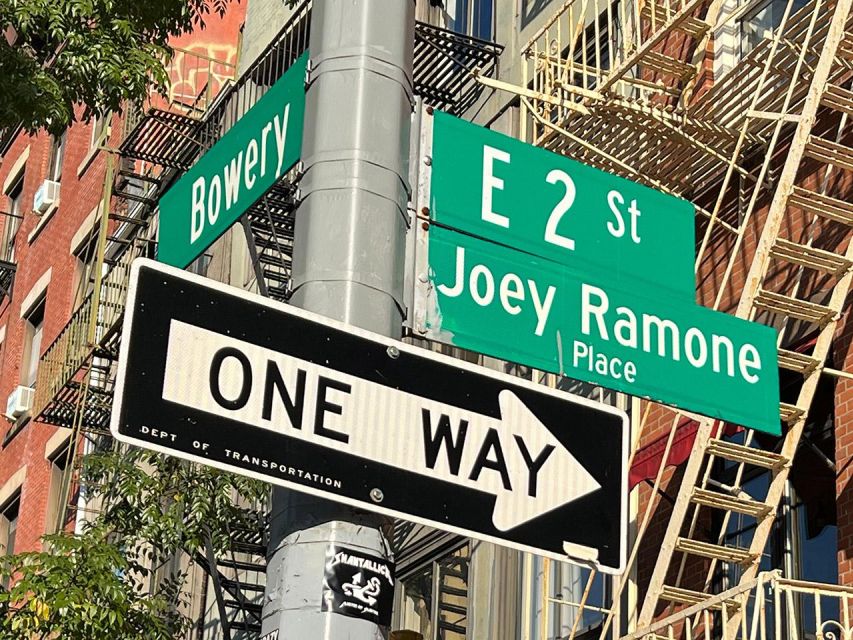
New York’s rock story is written into ordinary streets, apartment buildings, bars, and former clubs. This three-hour walk connects the places tied to Bob Dylan, Jimi Hendrix, the Ramones, Talking Heads, Blondie, the Velvet Underground, John Lennon, and others.
I like the small six-person limit, which should make it easier to ask questions, and I like the route’s sweep from 1960s folk and rock to 1970s punk and 1980s art culture. The main drawback is that you walk about 3 miles, and the tour is conducted in English, so it may be hard work if you have limited mobility or are not comfortable following spoken English.
Key points
- Rock history across two Villages: Follow a route through the East Village, Greenwich Village, and West Village.
- CBGB’s former site: Learn about the club linked with the Ramones, Talking Heads, and Blondie.
- The Fillmore East and Pyramid Club: See places tied to late 1960s rock and 1980s music-and-art culture.
- Album-cover locations: Connect famous photographs and cover art with actual New York streets.
- A personal scale: With no more than six participants, you can ask about particular musicians and songs.
- A memorable ending: Finish at the White Horse Tavern, associated with poet Dylan Thomas.
Why this walk matters to rock fans
I like music tours that show you more than a museum display. This one puts rock history under your feet. You move past the sites of clubs and homes, many of them no longer operating as the places that made them famous, and learn how New York’s music scenes grew from small rooms and neighborhood hangouts.
The route covers several periods rather than focusing on one band. You begin with the East Village, trace folk and rock connections through Greenwich Village, then head west toward punk, Warhol’s circle, John and Yoko, and the White Horse Tavern. That range gives you a useful picture of how one part of Manhattan kept changing its musical identity.
At $45, the value depends on your interest in music. You are paying for three hours of guiding over roughly 3 miles, not for admission to a club or concert. For a serious rock fan, the access to stories, locations, and connections can make the price fair. If you only recognize a few names on the list, the walk may feel more like a neighborhood history tour with a rock theme.
More NYC Walking Tours:
- SoHo, Little Italy, and Chinatown Walking Tour in New York
★ 5.0 · 3,153 reviews - Secrets of Grand Central Station Walking Tour New York City
★ 5.0 · 1,796 reviews - Greenwich Village Walking and Food Tasting Tour
★ 5.0 · 1,572 reviews
Starting at 101 Astor Place
Meet at 101 Astor Place, on the corner of 3rd Avenue, beside the green Keith Haring statue of a man. Look for a guide wearing a white cap, and arrive about 10 minutes early.
This matters because the walk begins promptly. Once it has started, you cannot join, so do not treat the meeting time as a loose suggestion. The starting point places you near the East Village, a fitting launch pad for a route about musicians, artists, clubs, and the changing character of downtown Manhattan.
The group is limited to six people. I see that as one of the tour’s strongest features. A small group makes it easier to hear on city streets and gives you a better chance to ask about a particular artist, album, or venue instead of simply listening from the back of a crowd.
The East Village and the birth of downtown scenes
The first guided section lasts about 40 minutes in the East Village. This is where the tour begins to show how rock culture grew from local places rather than from grand concert halls.
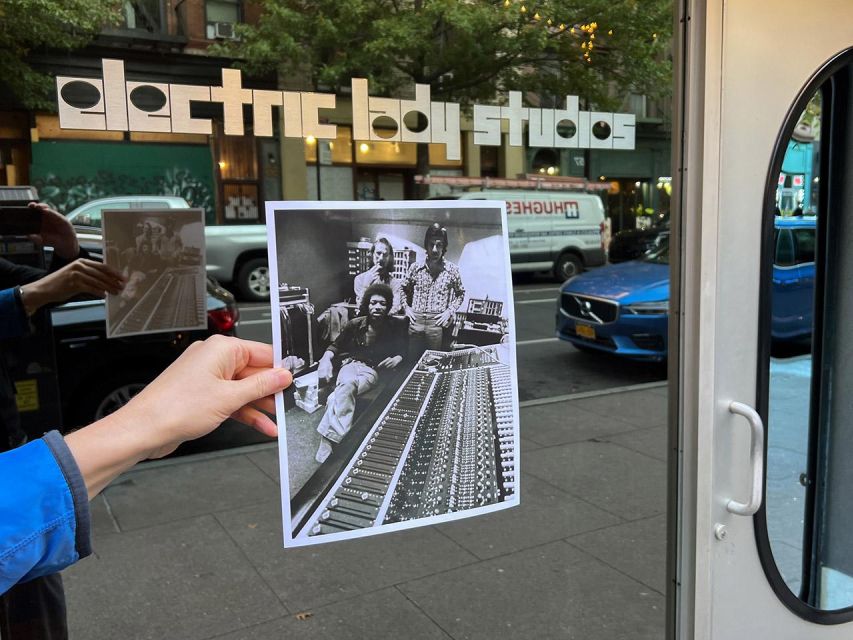
You will hear about venues connected with Bob Dylan and Jimi Hendrix, two musicians whose early New York careers helped shape the city’s music story. The useful part here is not just seeing a doorway or street corner. It is understanding that major careers often began in modest clubs where artists could test songs, develop a following, and meet other musicians.
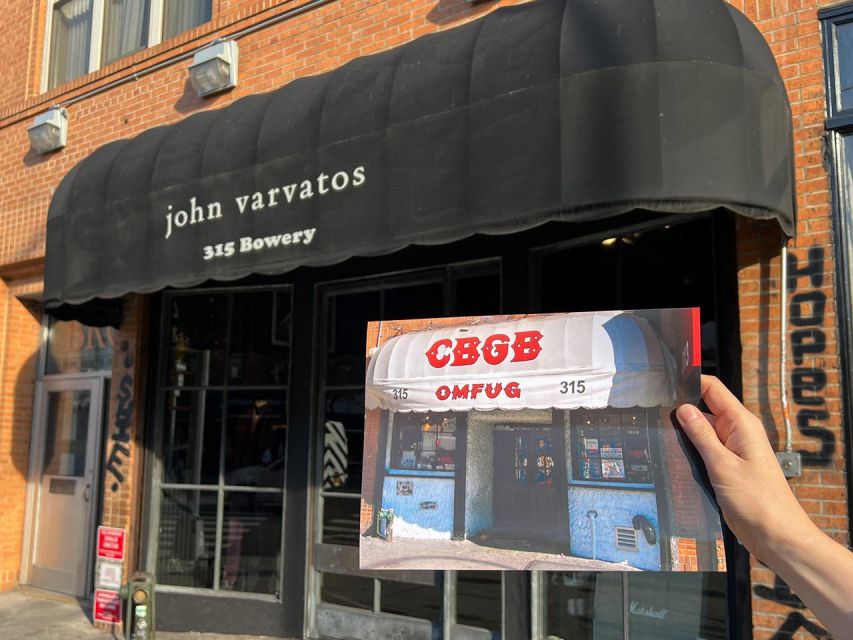
The East Village portion also leads toward the old CBGB site. The club became closely linked with the Ramones, Talking Heads, and Blondie, and it is remembered as one of the key places where punk rock took shape. The building no longer functions as the legendary club, so keep your expectations realistic. You are seeing a site and hearing its story, not walking into the old performance room.
That distinction applies to much of this tour. New York changes quickly, and music venues close, move, or become something else. The guide helps you read the present-day street through what happened there before.
CBGB and the rough edge of punk
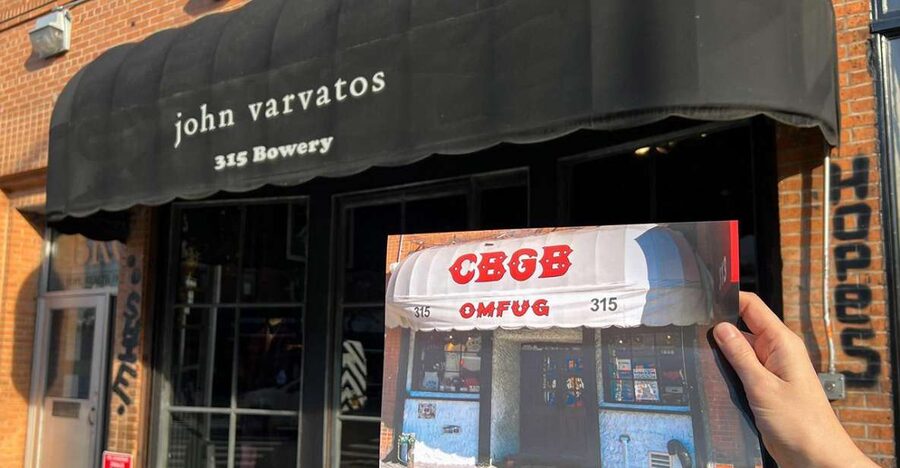
The stop at CBGB lasts about 10 minutes. That may sound brief, but it works as part of a larger route rather than as a stand-alone visit.
Here you connect the club with the Ramones, Talking Heads, and Blondie. Those names represent different sides of the downtown punk and new-wave period, and the stop gives you a chance to place their early work in the same physical neighborhood.
I would not book this walk expecting long visits inside working music venues. The appeal is the accumulation of locations. One stop gives you punk, another gives you folk rock, another points to Warhol and the Velvet Underground, and together they create a clearer picture of downtown music culture.
If you have time after the tour, you can use the route as a prompt to explore the neighborhoods again on your own. The walk gives you a useful list of places to notice, even when the original club or home is not open to the public.
More Historical Tours in New York City:
- New York City: American Museum of Natural History Ticket
★ 4.5 · 15,447 reviews - NYC: Starship Landmark 90 Minute Sightseeing Cruise
★ 4.6 · 3,666 reviews - Starship Landmark 90 Minute Sightseeing Cruise
★ 4.5 · 2,073 reviews - American Museum of Natural History Admission Ticket
★ 4.0 · 1,931 reviews
Greenwich Village, Cafe Wha?, and Washington Square Park
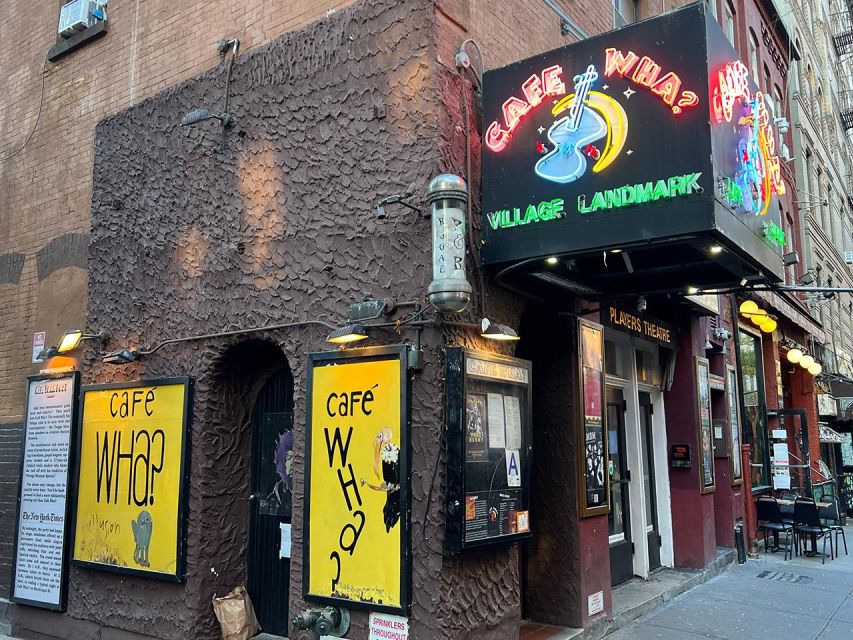
The tour then spends about 30 minutes in Greenwich Village, followed by 10 minutes at Cafe Wha? and 10 minutes at Washington Square Park. These stops shift the mood from punk’s rough energy to the folk and club culture that helped make the Village famous.
Cafe Wha? is tied to the early careers of Bob Dylan and Jimi Hendrix. The point is not simply that famous musicians once played there. It is that the Village offered small stages where emerging performers could develop in front of live audiences.
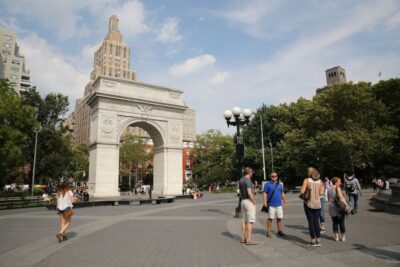
Washington Square Park adds a public space to the story. The tour uses it as another place to connect music and city life, showing that New York’s creative culture was not confined to formal venues. You get a break from indoor club history and a chance to look at the neighborhood as a setting for musicians, artists, and passersby.
This middle part of the walk should suit you if you enjoy context. You are not rushing from one celebrity address to the next. You are moving through the streets that link the venues and learning how different music periods overlap.
The Fillmore East and the Church of Rock and Roll
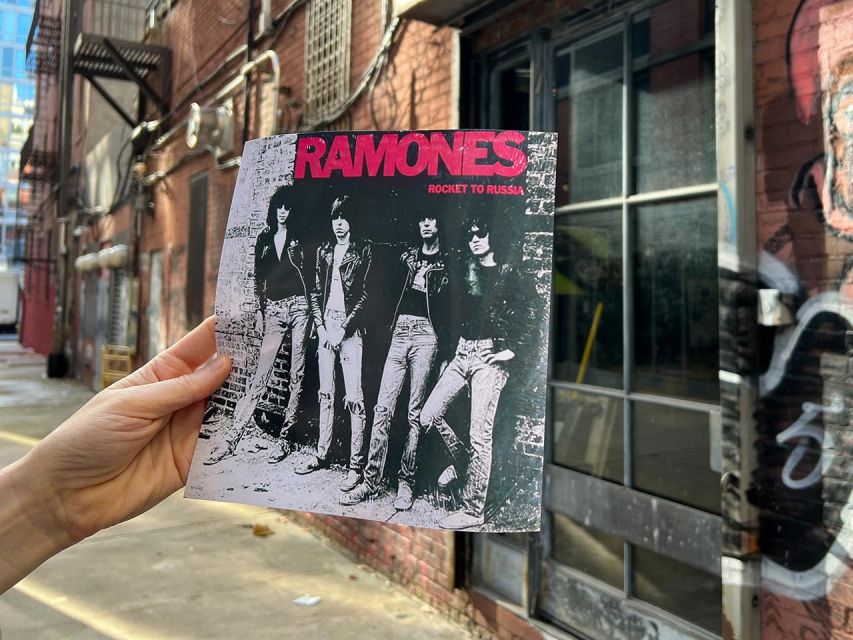
One of the most important stops is the site of the Fillmore East, remembered as the Church of Rock and Roll in the late 1960s. The tour treats it as part of the East Village story, connecting the small-club world with a major concert venue.
The value here is scale. Earlier stops focus on artists getting started, while the Fillmore East represents the point when rock had become a powerful live performance culture. Standing at the site helps you place that change within the same downtown area.
Again, this is a location visit, not an admission to a concert hall. The guide’s explanation supplies the link between the street you see now and the music world that once gathered there. If you like the social side of rock, this is likely to be one of the more useful stops.
The Pyramid Club and Andy Warhol’s music world
The Pyramid Club brings the tour into the 1980s, when music and visual art met in downtown New York. That connection is explored further through Andy Warhol’s Exploding Plastic Inevitable and the Velvet Underground.
These stops broaden the tour beyond standard rock mythology. Warhol’s world involved music, performance, film, fashion, and visual art, and the Velvet Underground became central to that mix. You get a sense of how musicians and artists shared spaces and audiences rather than working in separate categories.
The Pyramid Club section also reminds you that downtown culture did not end with the 1960s or punk. The tour continues into another period with its own clubs, styles, and creative circles. I appreciate that the route does not pretend rock history stopped when the best-known classic albums were released.
West Village homes, album covers, and difficult stories
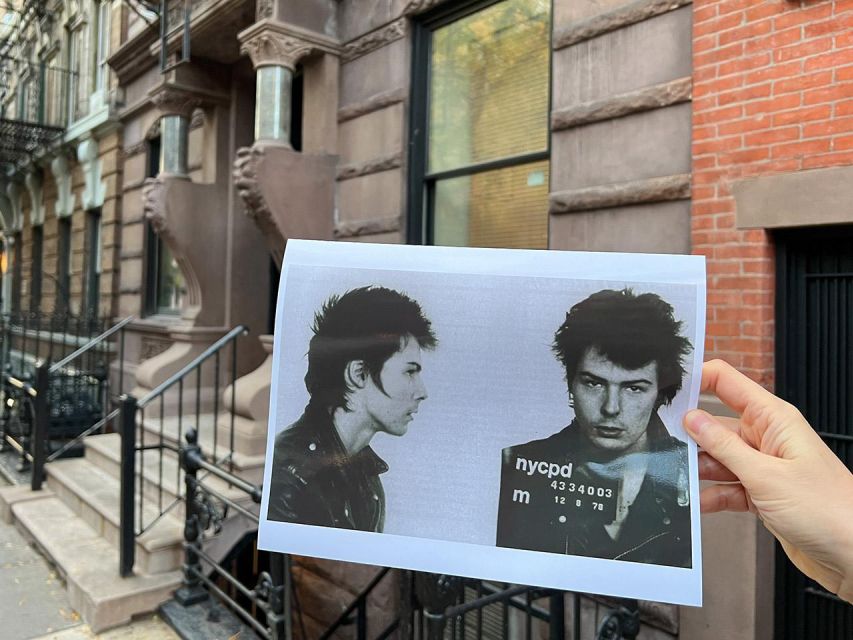
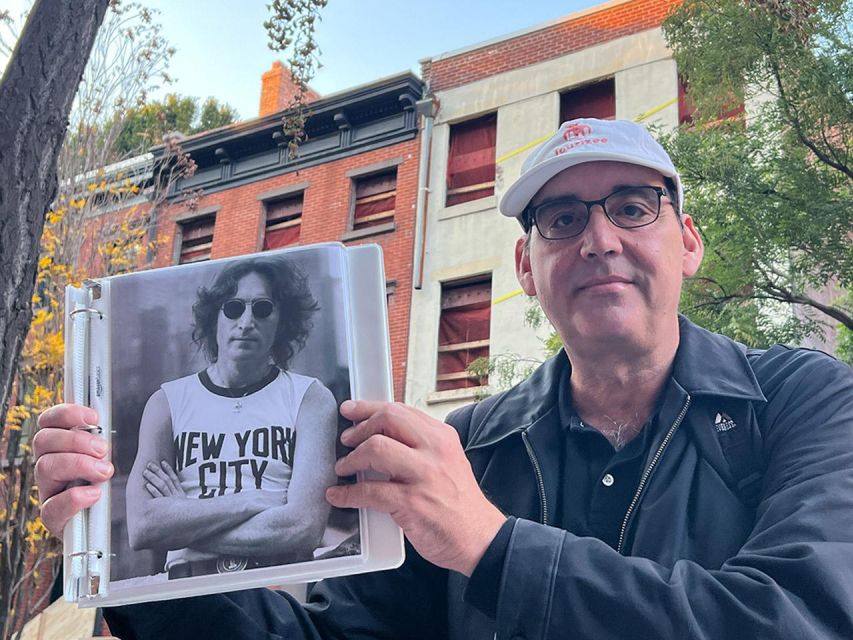
The 40-minute West Village section is the longest part of the itinerary. It includes the home where Buddy Holly recorded his last songs before his death, the New York apartment where John and Yoko first lived together, and the location associated with Sid Vicious’s death.
These are emotionally different stops. Some celebrate creativity and new beginnings. Others point to loss, addiction, and the darker side of music fame. The route does not present rock history as a simple parade of success. It includes the personal stories that sit behind the songs and photographs.
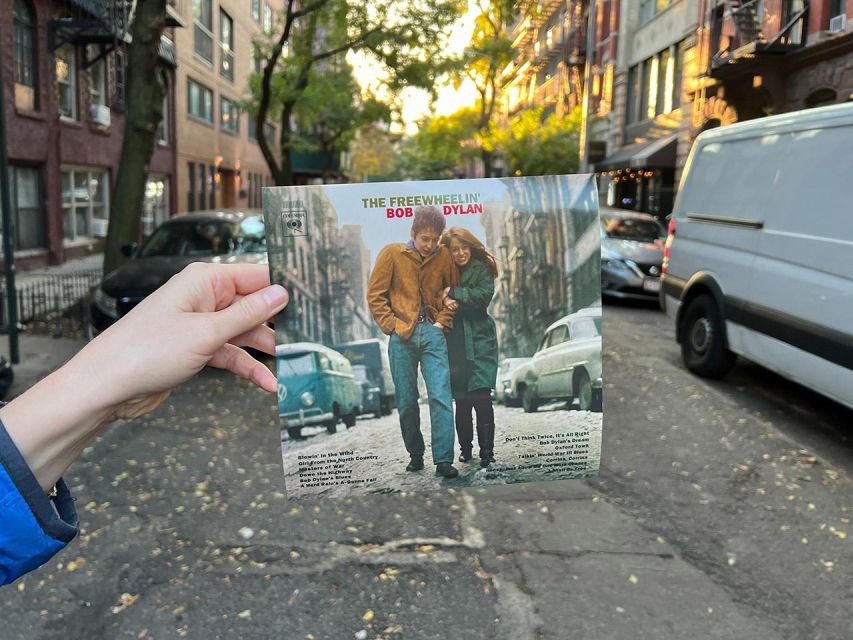
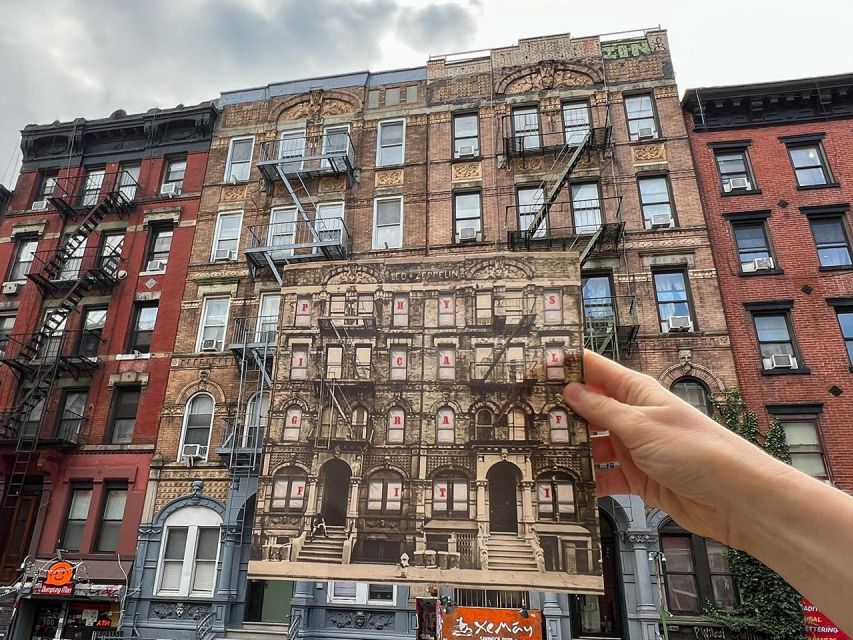
You will also see places connected with classic album covers by Bob Dylan, the Ramones, and Led Zeppelin. This is a fun part of the walk because it links familiar images with the real streets used for them. If you have listened to these albums for years, the connection can make the music feel more specific and rooted in place.
The album-cover stops are also useful for anyone who enjoys photography or pop culture. You can compare the remembered image with the present-day setting, while keeping in mind that city streets change and a cover image rarely captures an entire neighborhood.
Ending at the White Horse Tavern
The walk finishes with about 10 minutes at the White Horse Tavern in the West Village. The tavern is linked with Welsh poet Dylan Thomas, who is said to have drunk himself to death there.
It is a striking final stop because it takes the story beyond rock musicians. The tavern connects the music world with New York’s older literary culture, and it gives the tour a slightly grim but memorable ending.
You finish at the tavern rather than returning to the starting point. That makes it sensible to plan your next activity in the West Village. The itinerary does not include food, drinks, or an interior visit, so consider the tavern a final historical location unless your own plans include stopping there afterward.
Walking conditions, timing, and language
The tour lasts three hours and covers about 3 miles, or 4.5 kilometers. Wear comfortable shoes, since the route moves through several neighborhoods and includes extended time on foot.
The experience is not suitable for people with mobility impairments. The supplied information does not describe rest stops, seating, or an adapted route, so you should consider the distance and walking pace carefully before booking.
The guide speaks English. One French-speaking participant rated the experience four out of five and found it difficult, so I would take that as a useful warning if you are not comfortable following a live English explanation. The small group can help with questions, but it does not change the tour language.
Weather can also affect the day. The experience may be canceled because of bad weather or insufficient bookings, with a full refund in that situation. You can cancel up to 24 hours ahead for a full refund, and the reserve-now, pay-later option lets you hold a place without paying immediately.
Who will get the most from the $45 price
I would recommend this most strongly to you if you already enjoy classic rock, punk, folk rock, or the New York art scene. You will recognize more of the names and understand why a former club site or album-cover street matters.
It can also work for a general New York visitor who likes neighborhood walks. The music theme gives the East Village, Greenwich Village, and West Village a clear thread, while the guide fills in connections you may miss while walking alone.
The tour is less suitable if you want live music, museum interiors, or long periods inside historic venues. Many of the stops are viewed from the street, and the experience depends heavily on the guide’s storytelling and your interest in the people connected with each place.
The recorded ratings are very strong, with a 5 out of 5 overall score from 22 reviews. The most consistent praise focuses on the guide’s preparation, the interesting anecdotes, the range of music periods, and the amount of ground covered. One person called it a holiday highlight, while another specifically liked that the route covered substantial distance.
That praise points to the tour’s real strength: a well-informed guide can turn ordinary blocks into a connected story. Since no guide name is provided, I would not book expecting a particular individual. Book for the route, the six-person format, and the subject matter.
Should you book this New York rock walk?
Book it if you want to stand where important music scenes began and are happy to experience history from sidewalks rather than behind museum glass. At $45, three hours of guiding and a small group make reasonable value for a committed music fan.
Skip it if 3 miles is too much, spoken English is a barrier, or you want actual club access and live performances. Arrive early at 101 Astor Place, wear good shoes, and bring a short list of musicians or albums you want to ask about. That preparation will help you get the most from a compact walk through some of Manhattan’s most important music streets.
FAQ
How long is the New York rock and roll walking tour?
The tour lasts three hours and covers about 3 miles, or 4.5 kilometers.
Where does the tour begin?
It begins at 101 Astor Place, on the corner of 3rd Avenue, beside the green Keith Haring statue. Look for the guide wearing a white cap.
Where does the tour finish?
The tour finishes at the White Horse Tavern in the West Village.
What language is the tour conducted in?
The live tour is conducted in English.
How many people can join the group?
The group is limited to a maximum of six participants.
What happens if the weather is bad?
The tour may be canceled because of inclement weather or insufficient bookings. If that happens, you receive a full refund.
Recently added in New York City
- NYC: Midtown Hands-On Bagel Baking Class★ 5.0 · 12 reviews
- Personalize Sightseeing Tour★ 5.0 · 92 reviews
- Photographer, Professional Photo shoot – New York★ 5.0 · 16 reviews
- Central Park Pedicab Tour with Guide★ 5.0 · 63 reviews
- Central Park Pedicab Guided Tour★ 5.0 · 17 reviews
- Official Central Park Pedicab Ride ( UP TO 3 PERSONS )★ 5.0 · 4 reviews
- JFK or LGA package only (Round trip transfer plus VIP Contrasts)★ 5.0 · 3 reviews
- Official Central Park Pedicab Tours★ 5.0 · 35 reviews
NYC Walking Tours, compared.

SoHo, Little Italy, and Chinatown Walking Tour in New York
Read our review →
Secrets of Grand Central Station Walking Tour New York City
Read our review →
Greenwich Village Walking and Food Tasting Tour
Read our review →
Artistic, Alternative Greenwich Village Walking Tour
Read our review →

NYC Greenwich Village Italian Food Guided Walking Tour
Read our review →Browse the lists this tour appears in