
Reviewed · NYC WALKING TOURS
NYC, Brooklyn: Notorious Biggie Smalls Themed Walking Tour
The best part of this Biggie Smalls walking tour is that it treats Christopher Wallace as a Brooklyn local before treating him as a rap icon. You move through Downtown Brooklyn, Fort Greene, Clinton Hill, and Bedford-Stuyvesant, seeing the streets, school, shop, park, and home connected to his early life.
I like two things right away. Marcus Hillman brings real personal energy to the storytelling, and the route connects songs to actual places instead of keeping the story inside a museum or on a tour bus. I also like the small food stop, where you can discuss Biggie’s famous Welch’s grape soda and steak, cheese, and eggs.
The main consideration is the walking. The advertised duration is 150 minutes, while the route details suggest a little over three hours in practice. You need to enjoy walking and talking, and the tour may feel brisk if you want plenty of time for photographs at every stop.
Key points about the Biggie Smalls tour
- Biggie’s Brooklyn beginnings: Visit his high school, childhood neighborhood, former home, and the area tied to his first concert.
- Marcus Hillman as guide: Expect a personable guide who focuses on Biggie, 1990s hip-hop, Brooklyn history, and stories that are not always covered in documentaries.
- Lyrics become landmarks: Several stops connect directly to lines and images from Biggie’s music, including the famous food reference.
- A living neighborhood tour: You see murals, memorial art, businesses, streets, and a basketball court that keep Biggie’s name present.
- Good for mixed groups: The tour can work for serious hip-hop fans and for family members who know only a few songs.
- Practical timing: The meeting point is Jay St-MetroTech Subway Station, with the walk finishing near 169 Quincy Street in Brooklyn.
Starting near Jay St-MetroTech
The tour begins at the Jay St-MetroTech Subway Station, with the first listed meeting point at 7th Street Burger Downtown Brooklyn. That makes the start easy to place on a day spent around Downtown Brooklyn, though you should check the exact meeting instructions before setting out.
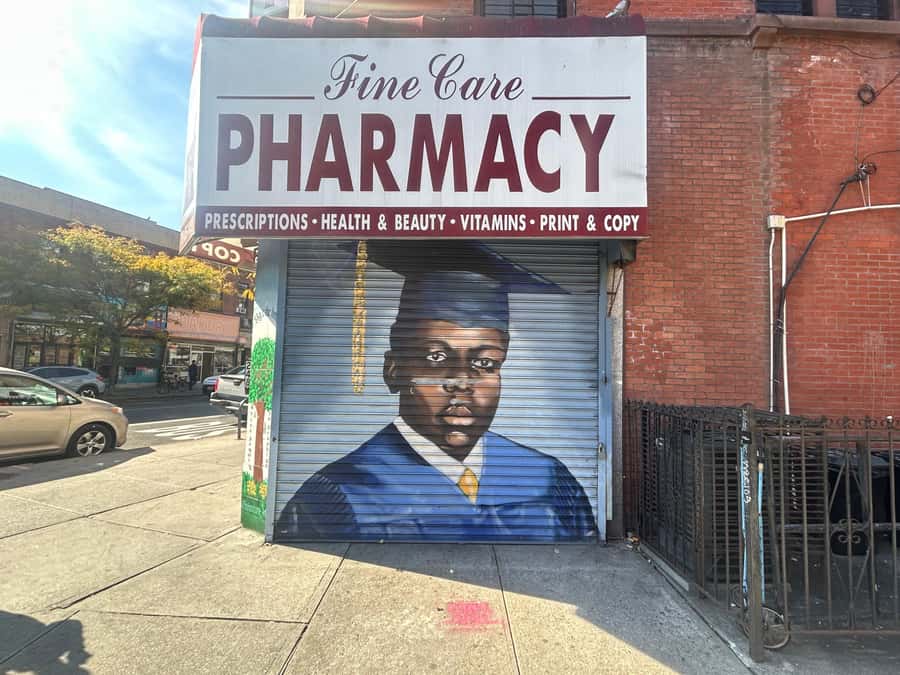
The opening stop is Biggie’s high school. It gives the tour a useful beginning because you start with the young Christopher Wallace, not only the larger-than-life figure created by records, videos, and later tributes. The school connects him with the public school years referenced in his lyrics and with other people linked to New York’s music and entertainment world.
I like this opening because it puts ambition and trouble side by side. Biggie’s story was not a neat rise from point A to point B. A good guide can show how his surroundings, personality, talent, and hard choices all belong in the same story. Marcus is particularly strong at this kind of storytelling, according to the feedback attached to the experience, with repeated praise for his humor, patience, and ability to answer questions.
More NYC Walking Tours:
- SoHo, Little Italy, and Chinatown Walking Tour in New York
★ 5.0 · 3,153 reviews - Secrets of Grand Central Station Walking Tour New York City
★ 5.0 · 1,796 reviews - Greenwich Village Walking and Food Tasting Tour
★ 5.0 · 1,572 reviews
Walking through Downtown Brooklyn and Fort Greene
From the starting area, the route moves through parts of Brooklyn associated with Biggie’s youth and early career. Downtown Brooklyn provides the transition from a major city center into the more personal streets of Fort Greene, Clinton Hill, and Bedford-Stuyvesant.
You should expect an urban walk rather than a sequence of formal attractions. Some stops are places to look at from the street. Others are neighborhood locations where the importance comes from the story Marcus tells. This is one reason the tour feels different from a standard celebrity sightseeing trip: the locations remain part of everyday Brooklyn.
The route also brings in the wider golden era of hip-hop. Biggie’s story is tied to the early and mid-1990s, so the conversation is not limited to one performer. You hear about the music scene, the East Coast and West Coast rivalry, and other artists connected with the period.
That wider context matters. If you already know Biggie’s albums, it helps place his career in time. If you are less familiar with 1990s rap, it gives you a working map of why his arrival mattered. One parent who joined with two daughters found the tour accessible even for a family group, while another participant enjoyed it despite not beginning as a Biggie fan.
Biggie’s neighborhood art and grocery-store connection
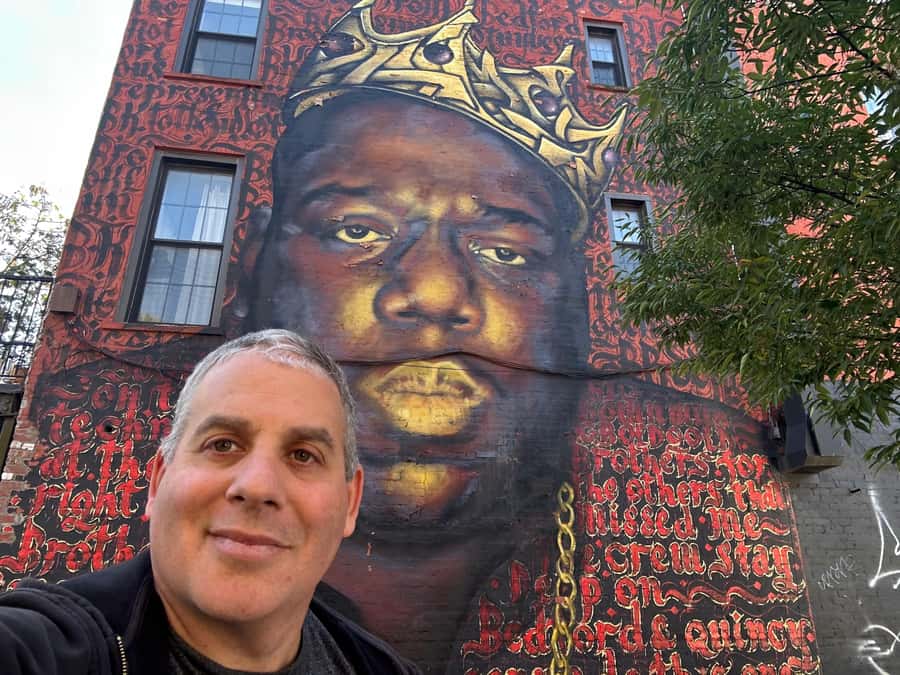
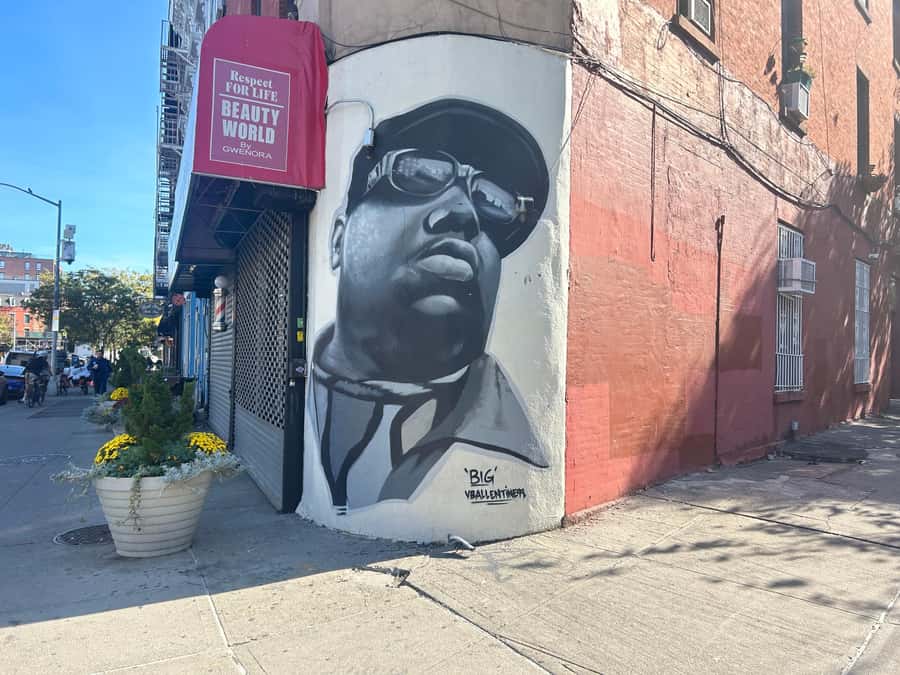
A memorable part of the walk is the art honoring Biggie around the neighborhood. These pieces show how his image has remained part of Brooklyn after his death. You are not simply looking at a plaque with dates. You are seeing how local art, memory, and music keep his presence visible.
The route includes the store where Biggie once bagged groceries. That detail is especially useful because it cuts through the polished celebrity story. Before the records, the fame, and the mythology, he worked a regular neighborhood job. A stop like this gives you a sense of the ordinary world surrounding his early life.
Bring a phone or camera, but do not assume every stop allows unlimited time for pictures. One person specifically wanted more photo time, and that is a fair point. Marcus’s storytelling energy may keep the group moving, especially when there is a lot of ground to cover.
I would take quick photos as you go and save longer picture sessions for stops where the group has clearly paused. If your main goal is photography rather than storytelling, you may find the pace a little fast.
The childhood home and the first-concert location
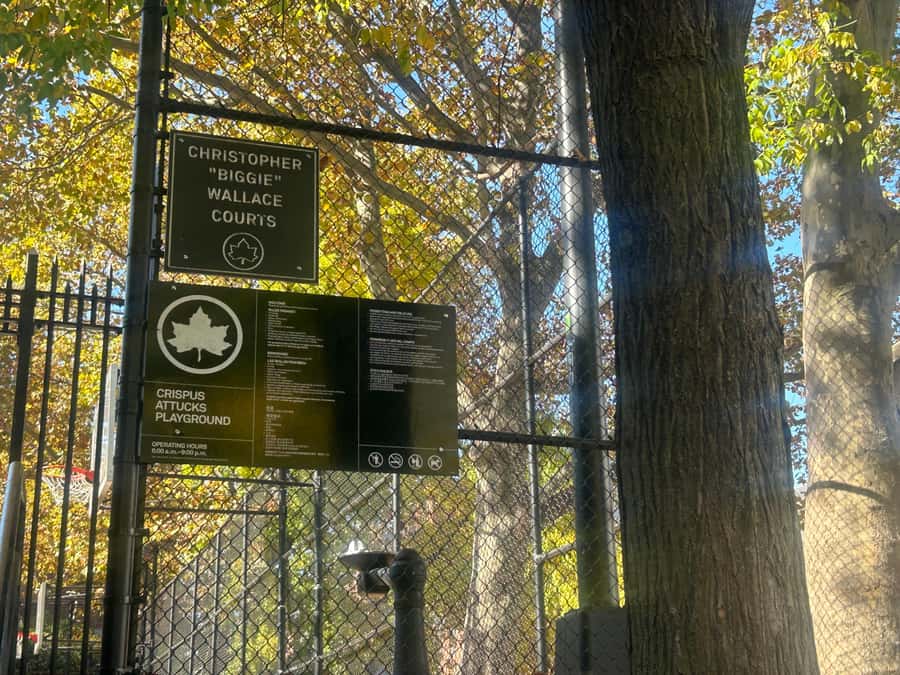
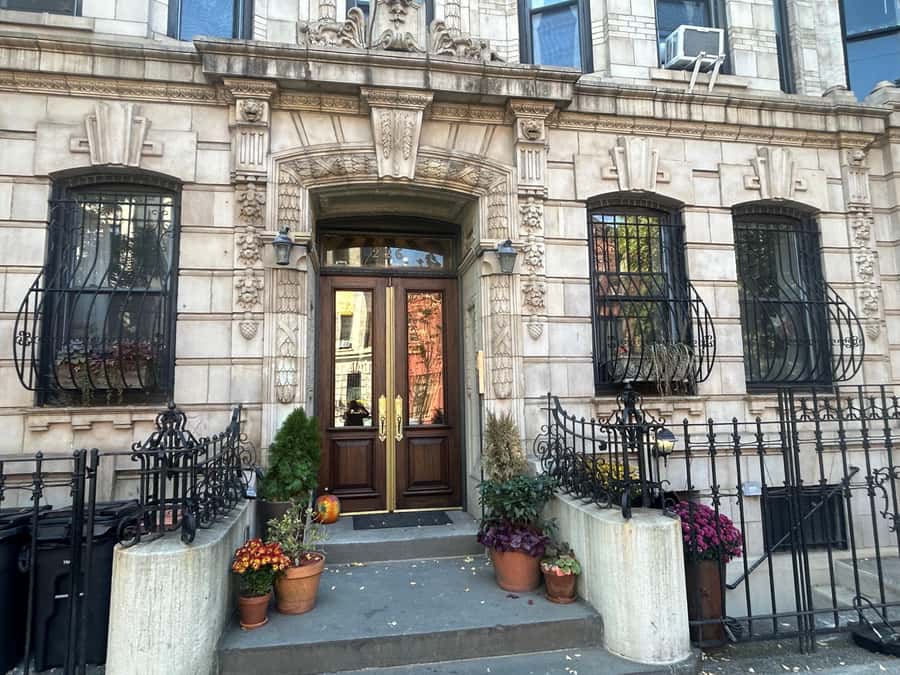
The tour continues to the home where Biggie grew up, referred to in his lyrics through the line about the same number and same hood. This is one of the most meaningful stops for fans because it connects an autobiographical detail from the music with a real Brooklyn address.
The value here is not architectural. You are not visiting a grand monument. You are looking at a regular home and a regular block that became part of one of the best-known stories in hip-hop. That contrast is the point.
Nearby, you see the location connected with Biggie’s first concert. The stop helps show the early stage of his career, before the major records and worldwide recognition. I find this kind of sequence more useful than jumping straight to memorial art because you can follow the path from local performer to major artist.
The guide also trades Biggie lyrics throughout the walk. That will appeal strongly to fans who know the words and enjoy spotting references in place. If you only know the biggest songs, you can still follow the stories, though some of the lyric connections will naturally mean more if you have listened to his work.
A completely different way to spend a day in New York City:
- NYC: SUMMIT One Vanderbilt Tickets
★ 4.7 · 51,195 reviews - NYC: Empire State Building Tickets – Observatory & Museum
★ 4.7 · 25,757 reviews - New York City: Statue of Liberty & Ellis Island with Ferry
★ 4.6 · 18,683 reviews - New York City: American Museum of Natural History Ticket
★ 4.5 · 15,447 reviews
The Welch’s grape soda and steak, cheese, and eggs stop
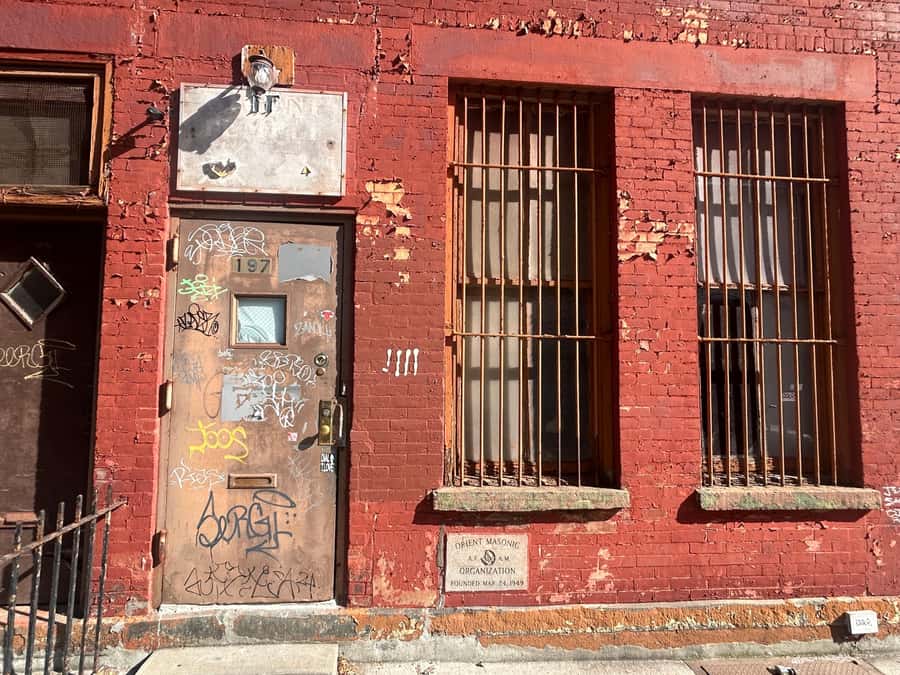
One of the tour’s most playful moments comes at the late-night food spot connected with Biggie’s famous meal reference. The group discusses what kind of Welch’s grape drink he meant alongside his T-bone steak, cheese, and eggs.
This is not just a snack break. It is a chance to turn a lyric into a sensory detail. A can of Welch’s grape soda has become part of the experience for some groups, and one person singled out having one at the diner as a highlight. The food stop helps the tour feel less like a list of addresses and more like a story about habits, appetite, and daily life.
You should confirm what is included at the time of booking. The tour price covers the guided walk, but food and drinks are not listed as an inclusion. Even if you choose not to buy anything, the location and conversation are part of the route.
This stop may also make the tour easier for family groups. A young listener may not care about every detail of the recording industry, but a real food reference and a visit to a familiar type of neighborhood restaurant can make the story more approachable.
A basketball court and Brooklyn’s wider Black history
Another stop is a basketball court named for Biggie in a park honoring an important historical Black American. The location broadens the tour beyond one rapper. It links Biggie’s legacy with public memory, neighborhood pride, and the larger story of Black life in Brooklyn and New York.
The supplied details do not identify the historical figure honored by the park, so you should let Marcus provide that context during the walk. What is clear is that the park stop adds a useful layer. Biggie is remembered not only through albums and murals but also through a place where local people spend time.
This is where the tour’s history and music themes meet. You are looking at a working neighborhood, not a recreated set. The court, park, businesses, and streets continue to serve local purposes, and Biggie’s name is part of that living setting.
Marcus Hillman’s guiding style
Marcus Hillman is the key to this experience. The strongest feedback focuses on his storytelling, warmth, humor, and ability to adjust the tour to the people in front of him.
You can expect a guide who knows the 1990s hip-hop world well and enjoys questions. He has been described as personable and relatable, with enough patience to keep younger family members involved. That matters because the subject can easily become a lecture packed with dates and names.
Instead, Marcus appears to use stories, lyrics, neighborhood details, and conversation. That style works best if you want a human guide rather than a recorded audio route. It also means the exact emphasis may change depending on what your group wants to know.
The experience can include information about other music figures too. One person described learning facts not found in documentaries, and another mentioned an unexpected meeting with Spike Lee as a highlight. That meeting should not be treated as a promised part of the tour, but it shows that the route can sometimes brush against Brooklyn’s wider creative world.
How much does the $80 price offer?
At $80 per person, this is not a cheap neighborhood walk. The value depends on how much you want the guide’s interpretation, not simply the locations.
You are paying for a 150-minute guided experience covering several Brooklyn neighborhoods, with a specialist focus on Biggie, 1990s hip-hop, and local history. A self-guided route could take you to some of the same public places, but it would not give you Marcus’s connected storytelling or the lyric-by-lyric context.
I think the price makes the most sense for dedicated Biggie fans, visitors who want a personal Brooklyn experience, and families who prefer a guide to organize the day. It is less compelling if you only want a quick photo outside one address or if you dislike walking tours.
Gratuity is appreciated if you are satisfied with the experience. Food and drinks are separate, so budget for those if you want to take part in the Welch’s grape soda discussion with a purchase in hand.
Walking, accessibility, and timing
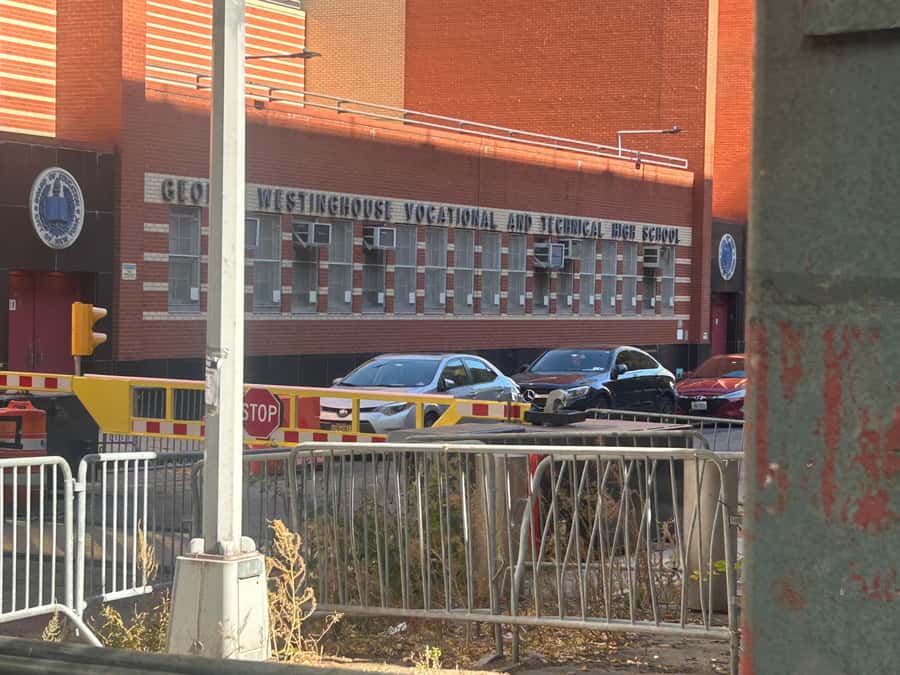
The route covers Downtown Brooklyn, Fort Greene, Clinton Hill, and Bedford-Stuyvesant. You should wear comfortable shoes and expect to remain on your feet for much of the experience.
The activity is described as wheelchair accessible, but it is also marked as unsuitable for people with mobility impairments. Those details do not fully agree, so anyone with mobility concerns should contact the provider before booking and ask about the exact route, surfaces, seating, and pace.
The published duration is 150 minutes, while the detailed schedule lists Brooklyn for about 3.17 hours. Treat this as a roughly three-hour outing, and leave extra room if you plan to eat afterward or connect it with another timed attraction.
English is the tour language. Free cancellation is available up to 24 hours before the start, and you can reserve now and pay later, which is useful if your New York schedule is still shifting.
Who should book this Brooklyn experience?
I would choose this tour if you enjoy three things: music history, neighborhood walking, and a guide who tells stories with personality.
It is a particularly good fit for:
- Biggie fans who want to connect lyrics with real places
- People interested in the golden era of 1990s hip-hop
- Families with older children or teenagers who enjoy music and city stories
- Visitors who want to see Brooklyn through a local subject rather than a general sightseeing route
- Couples or friends looking for a focused experience outside the usual Manhattan stops
You do not need to be an expert on Biggie to enjoy it. Still, listening to some of his music before arriving will make the lyric references and locations more rewarding. If your group includes people who do not like hip-hop, the Brooklyn setting and personal stories may still carry the tour, but the experience is built around music.
Should you book the Biggie Smalls walking tour?
Book it if you want a personal, story-led look at Biggie’s Brooklyn and are happy to walk for around three hours. Marcus Hillman’s energy, the real neighborhood locations, the grocery-store connection, the childhood home, and the Welch’s grape soda stop give the experience more substance than a simple celebrity photo hunt.
Skip it if you want a short, quiet sightseeing stop, need a slow pace, or care more about taking posed photos than hearing stories. For everyone else, especially 1990s hip-hop fans, this is a focused way to connect The Notorious B.I.G.’s music with the Brooklyn streets that shaped him.
FAQ
Where does the Biggie Smalls walking tour meet?
The meeting point is Jay St-MetroTech Subway Station, with the starting location listed as 7th Street Burger Downtown Brooklyn.
Where does the tour finish?
The tour finishes at 169 Quincy Street, Brooklyn, New York 11216.
How long does the tour last?
The advertised duration is 150 minutes. The detailed route information lists the Brooklyn portion at about 3.17 hours, so you should allow roughly three hours.
Who leads the tour?
The guide is Marcus Hillman. The tour is conducted in English.
What places connected with Biggie does the tour visit?
The route includes his high school, childhood home, the location of his first concert, the store where he bagged groceries, neighborhood art honoring him, lyric-related locations, a food spot connected with his Welch’s grape soda and steak, cheese, and eggs reference, and a basketball court named for him.
Is food included in the price?
Food and drinks are not listed as included. The tour discusses the Welch’s grape soda and meal reference at a late-night food spot, and you may choose to buy a drink there.
Can I cancel or pay later?
You can cancel up to 24 hours in advance for a full refund. The reserve-now, pay-later option lets you book without paying immediately.
Recently added in New York City
- NYC: Midtown Hands-On Bagel Baking Class★ 5.0 · 12 reviews
- Personalize Sightseeing Tour★ 5.0 · 92 reviews
- Central Park Pedicab Tour with Guide★ 5.0 · 63 reviews
- Central Park Pedicab Guided Tour★ 5.0 · 17 reviews
- Photographer, Professional Photo shoot – New York★ 5.0 · 16 reviews
- Official Central Park Pedicab Ride ( UP TO 3 PERSONS )★ 5.0 · 4 reviews
- JFK or LGA package only (Round trip transfer plus VIP Contrasts)★ 5.0 · 3 reviews
- Official Central Park Pedicab Tours★ 5.0 · 35 reviews
NYC Walking Tours, compared.

SoHo, Little Italy, and Chinatown Walking Tour in New York
Read our review →
Secrets of Grand Central Station Walking Tour New York City
Read our review →
Greenwich Village Walking and Food Tasting Tour
Read our review →
Artistic, Alternative Greenwich Village Walking Tour
Read our review →
NYC Greenwich Village Italian Food Guided Walking Tour
Read our review →Browse the lists this tour appears in