Reviewed · GUIDED
NYC | French guided tour Southern Manhattan
Lower Manhattan is where New York’s oldest streets meet its biggest financial names. This French-language walking tour takes you from Stone Street and the original city center to Wall Street, the World Trade Center, and the riverfronts reshaped after Hurricane Sandy and 9/11.
I like the small group of up to 10, which makes side streets and questions easier, and I like the route’s mix of famous places and less obvious corners. The main consideration is stamina: 210 minutes on foot is a long city walk, and food, drinks, and the suggested $5 to $10 gratuity cost extra.
Key points at a glance
- Stone Street and New York’s first foundations: Begin on one of the city’s oldest streets and trace the early built-up center of Manhattan.
- Wall Street from street level: See the financial district as a working neighborhood rather than just a photo stop.
- Two riverfronts, one changing city: Connect the renewed South Street Seaport on the East River with Brookfield Place beside the Hudson.
- A thoughtful World Trade Center visit: Pair the 9/11 Memorial area with One World Trade Center, the Oculus, and Saint Paul’s Chapel.
- French guidance in a group of 10: Samuel is one of the named guides, and the tour is designed for close contact with a local professional.
- Useful extras after the walk: You receive group photos by email and a list of recommended addresses in each neighborhood.
Why Southern Manhattan makes a strong walking route
Southern Manhattan gives you New York in a compact, dramatic package. In a few city blocks, the streets shift from old colonial foundations to grand civic buildings, giant financial institutions, rebuilt public spaces, and places tied to the city’s hardest days.
This is not a tour built around a single attraction. It is a story about change. The district welcomed some of New York’s first European immigrants, became the center of American finance, endured the Wall Street crash, suffered the attacks of September 11, 2001, and later faced the damage caused by Hurricane Sandy.
That long sequence matters because the buildings around you are not frozen pieces of the past. They show how New York keeps adjusting to pressure. A guide can connect the stone street under your feet with the glass tower above you in a way that is difficult to do alone.
The route is also a good choice if you want to understand Lower Manhattan before exploring it independently. You receive a list of recommended addresses in each neighborhood, so the walk can serve as a useful first orientation rather than a stand-alone morning or afternoon activity.
More New York City Tours:
- NYC: SUMMIT One Vanderbilt Tickets
★ 4.7 · 51,195 reviews - NYC: Empire State Building Tickets – Observatory & Museum
★ 4.7 · 25,757 reviews - New York City: Statue of Liberty & Ellis Island with Ferry
★ 4.6 · 18,683 reviews
Stone Street and the first city center
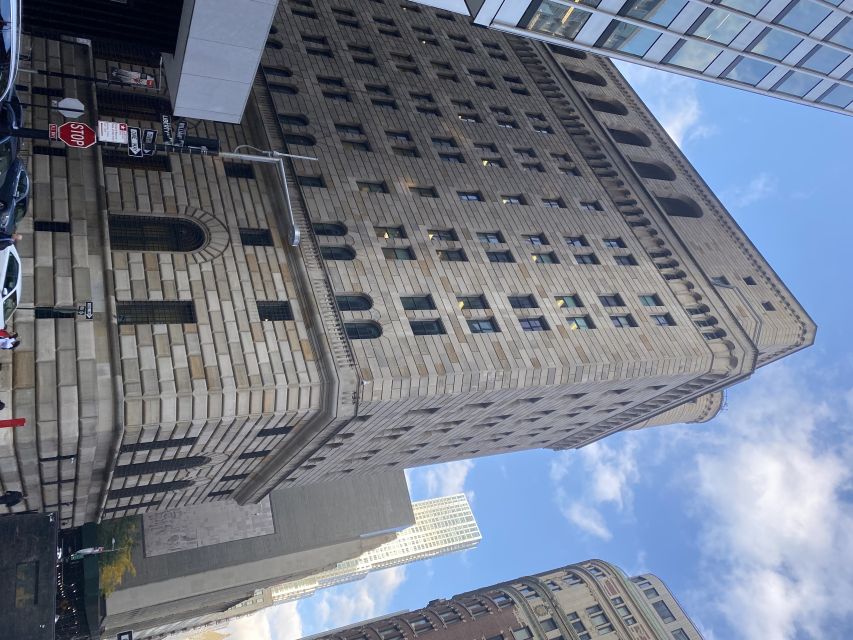
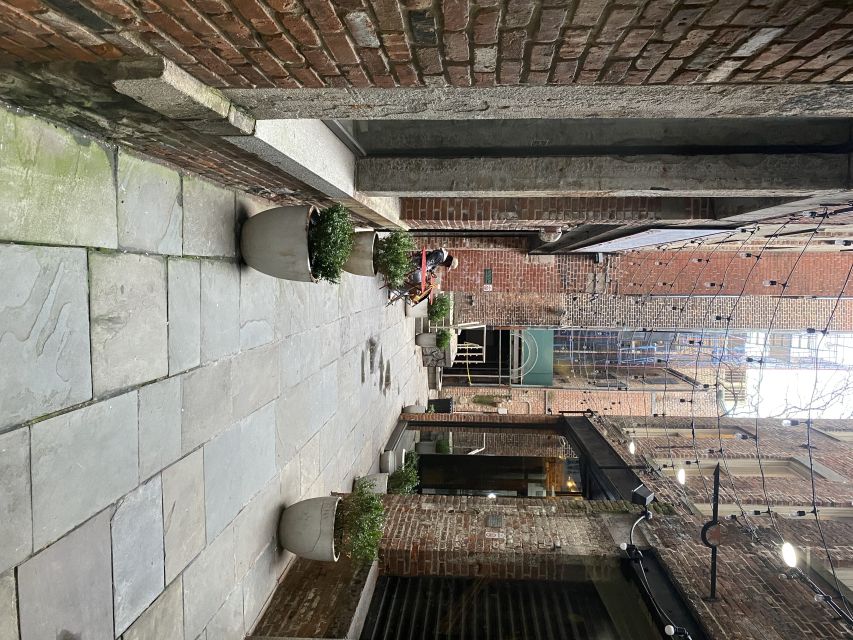
The tour begins in front of 787 Coffee, then moves into the oldest part of Lower Manhattan. Stone Street is one of the most memorable early stops because its surface and narrow shape feel removed from the broad avenues most people associate with New York.
You will cross this old street while the guide explains how the southern tip of Manhattan began to grow. The area’s original buildings help place modern New York in context. Before the towers and banks, this was the city’s first European-built center, shaped by trade, immigration, and the practical demands of a young port.
I like this opening because it gives you a scale check. New York can feel too large to grasp, but Lower Manhattan offers a short, walkable sequence of clues. The old street, early buildings, and civic structures tell you where the city began before the walk moves into its modern financial identity.
The first section also includes the Woolworth Building and the Civic Center, including Court and City Hall. These buildings introduce the city’s early skyscraper age and its public institutions. The contrast is useful: one set of buildings represents commerce and ambition, while the other represents government and law.
Do not expect a museum-style stop with a long indoor visit. This is a street-based tour, so the value comes from seeing the buildings in relation to one another and hearing how the area changed around them. Wear shoes that can handle several hours of pavement.
Wall Street and the machinery of money
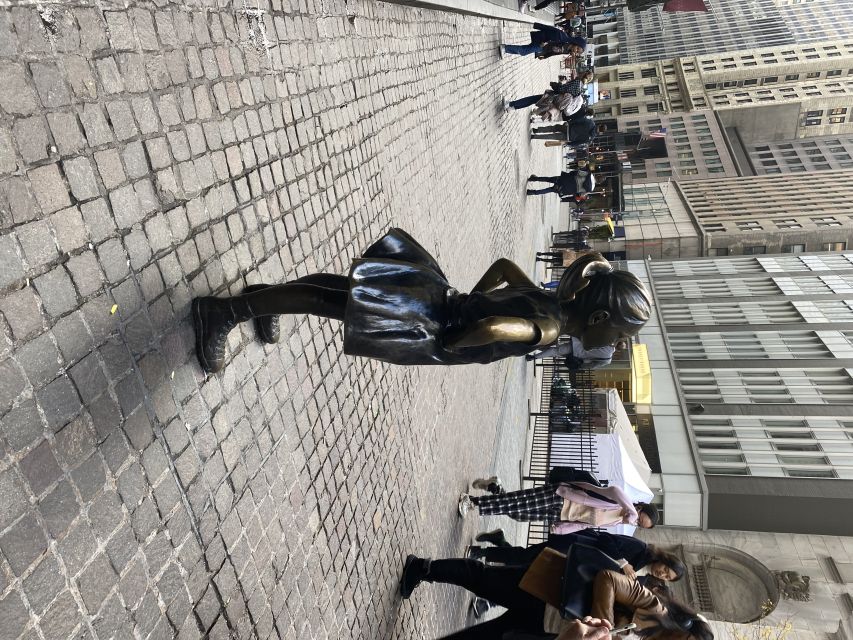
Next comes Wall Street, the district most closely tied to New York’s role in global finance. You will walk through the heart of the financial area, home to investment banks and the New York Stock Exchange.
The tour invites you to picture yourself as a trader for a few hours. That framing keeps the stop lively, but the real value is seeing how finance occupies ordinary city blocks. The financial district is not just a backdrop for photographs. It is a working part of New York, with banks, offices, public buildings, and constant movement packed into a relatively small area.
A French-speaking guide can also help make the financial vocabulary and historical shifts easier to follow. If you are curious about how New York became an economic center, this is one of the most useful sections of the walk. You can ask questions as you go, rather than trying to decode the district from a few plaques.
The tradeoff is that Wall Street’s fame can create high expectations. You are not getting a tour inside the New York Stock Exchange or a financial seminar. The experience is about the streets, the institutions, and the role this neighborhood plays in the wider city.
That is still worthwhile. From the outside, the district shows how New York uses space. Historic streets and narrow blocks sit beside towering offices, and major financial power is concentrated in an area that is surprisingly easy to explore on foot.
South Street Seaport after Hurricane Sandy
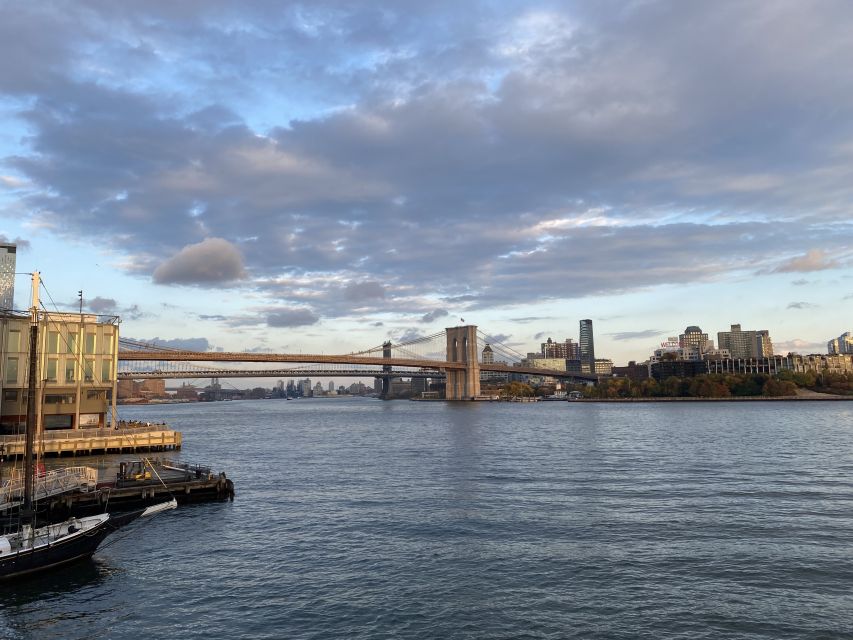
The itinerary then turns toward the East River and the former South Street Seaport. This is where the tour shifts from early New York and finance to the city’s ability to recover from major shocks.
Hurricane Sandy hit New York in October 2012 and caused severe damage along the waterfront. The seaport’s refurbishment is part of the city’s effort to restore public access and renew its river edge. Walking here gives you a different view of Lower Manhattan, one shaped by water, weather, and changing public use.
The seaport is important because it links New York’s old commercial life with its newer public spaces. The area once supported the city’s port economy. Today, its renewed setting gives you a place to consider how the waterfront can serve residents and visitors after its original working purpose has changed.
This is also a welcome change of pace after the dense financial district. You get a chance to look outward toward the river instead of constantly looking up at office towers. The route does not present the waterfront as a finished story. Instead, it shows how New York continues to repair and rethink its edges.
Food and drinks are not included, though they are available for purchase. That gives you flexibility, but plan ahead if you need a proper meal during the 210-minute outing. The listed tour price covers the guide and walking experience, not refreshments.
More Guided in New York City:
- New York in One Day Guided Sightseeing Tour
★ 5.0 · 13,166 reviews - Central Park Pedicab Guided Tours
★ 5.0 · 7,108 reviews - From NYC: Guided Day Trip to Washington DC by Van or Bus
★ 4.7 · 3,418 reviews - NYC: Statue of Liberty and Ellis Island Guided Tour
★ 4.6 · 2,765 reviews
Brookfield Place and the Hudson River side
From the East River, the route continues west toward Brookfield Place along the Hudson River. This east-to-west movement helps you see Lower Manhattan as a peninsula shaped by two waterfronts, not simply as a group of inland streets.
Brookfield Place represents another kind of public-space renewal. Like the South Street Seaport, it shows how former or heavily altered parts of the waterfront can be adapted for modern city life. The guide can help you compare the two sides of Lower Manhattan and explain how the city has recovered and rebuilt after disruption.
This part is especially useful if you want more than the standard Wall Street checklist. Many short visits to Lower Manhattan concentrate on the stock exchange and the 9/11 Memorial, then leave. This route adds the waterfronts, which makes the district feel more connected and gives you a better sense of its physical position.
The walk between major sections is also part of the experience. You are not being transported from one isolated sight to another. You are watching the city change as you move through it, though the distance and time on your feet may be tiring for anyone who prefers short sightseeing stops.
The World Trade Center and a city rebuilt
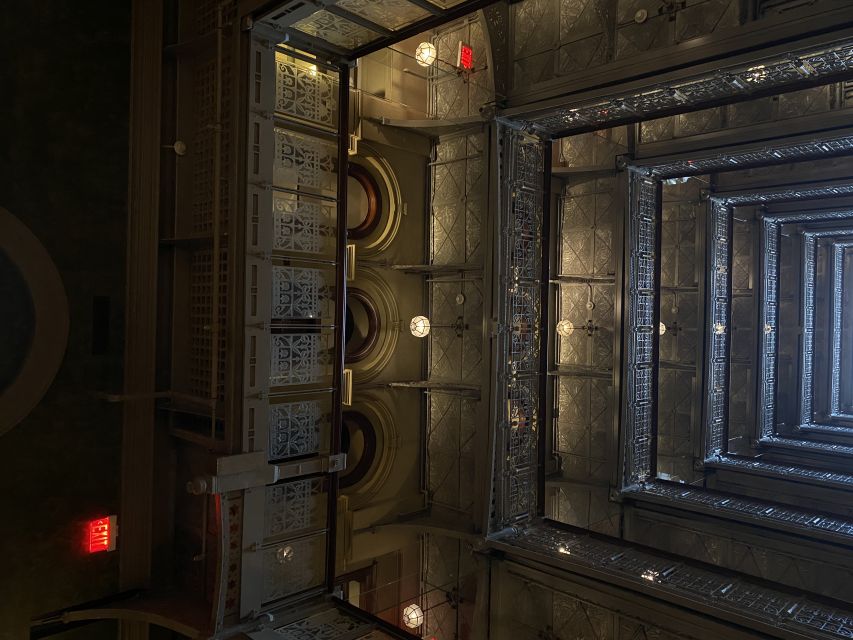
The final major section is the World Trade Center area, where remembrance and renewal share the same ground. The tour includes the 9/11 Memorial area, One World Trade Center, the Oculus, and Saint Paul’s Chapel.
This is the most emotionally serious part of the route. The guide’s job here is not only to point out new architecture, but also to explain how the district was transformed after the September 11 attacks. The memorial and surrounding buildings make the story visible without separating the past from the city’s present life.
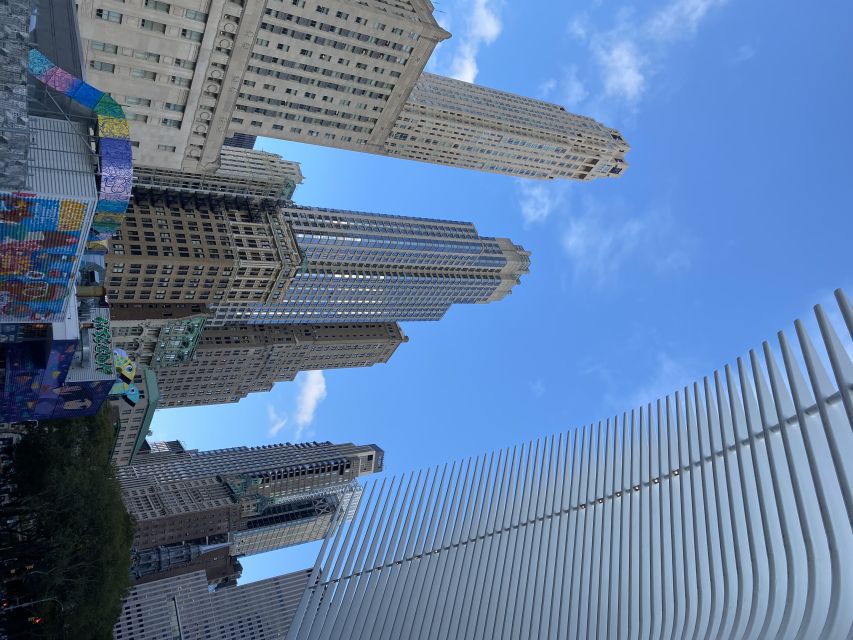
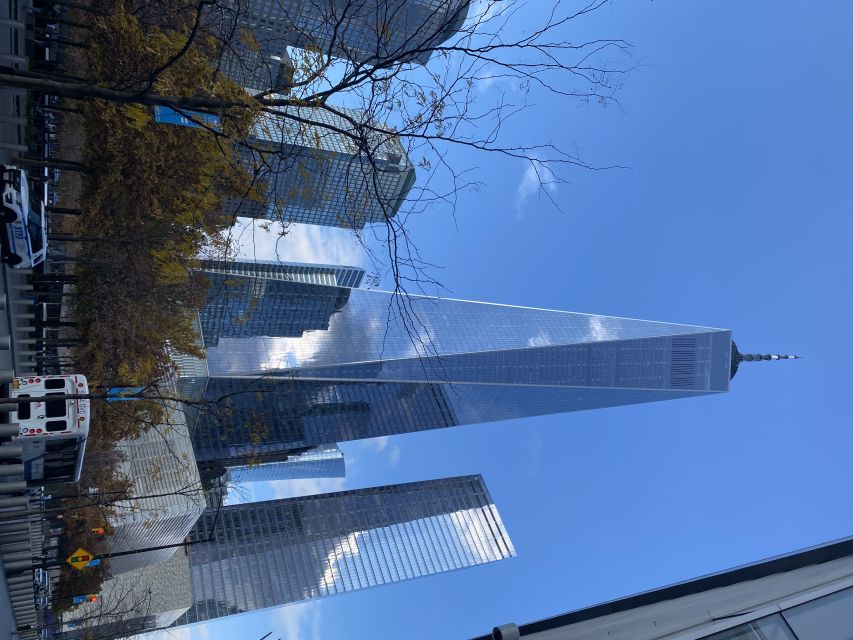
One World Trade Center is New York’s highest tower, and its height gives the rebuilt district a powerful visual marker. The Oculus offers a very different architectural response, with its bright, sweeping form. Saint Paul’s Chapel adds an older place of worship to the same sequence, creating a direct contrast between survival, mourning, and reconstruction.
I appreciate this combination because it avoids treating the World Trade Center as a single photo opportunity. You see several responses to the attacks: memorial space, transportation and public architecture, a restored historic chapel, and a new tower that returns the skyline to prominence.
Give this section the attention it deserves. It is not a quick finale to rush through while thinking about your next stop. The tone is likely to be more reflective than in the Wall Street section, and the significance of the place can make the final part of the walk feel heavier.
What the small French group changes
The tour is limited to 10 people and led in French. That size is a real advantage in Lower Manhattan, where narrow historic streets and crowded public areas can make a large group awkward.
A small group gives you a better chance to hear the guide, ask questions, and stay connected while crossing busy streets. It also makes the off-main-route portions more practical. The tour’s emphasis on less obvious places is one of its strongest features, and a compact group supports that style.
Samuel is identified as one of the guides, and the guide team includes a local professional with a license. If you book, check the guide details attached to your selected departure, since the named guide may vary.
The French language is central to the experience. If you are comfortable following a French-speaking guide for three and a half hours, this can be a more natural way to explore New York than joining an English-language group. If you are only partly comfortable in French, think carefully about the length. Historical explanations, street names, and financial terms can become tiring to follow over a long walk.
The two available ratings are strong, including a full score that specifically praises Samuel for taking the group off the usual route. Another score of four out of five highlights unusual places that would have been difficult to find alone and describes the guide as professional and licensed. Those details point to the experience’s main strength: not simply covering famous sights, but helping you notice places you might otherwise pass.
Is $79 a fair price?
At $79 per person, this is not the cheapest way to walk around Lower Manhattan. You can visit many of these areas independently for the cost of getting there. The price makes more sense if you value a French-speaking local guide, a planned route, neighborhood context, and a very small group.
The 210-minute duration also matters. You are paying for a substantial walking experience rather than a quick orientation. The route covers four connected themes: New York’s foundations, Wall Street, the renewed riverfronts, and the World Trade Center.
Included extras add some practical value. Group photos are sent by email, and the list of recommended addresses can help you continue exploring after the tour. These are modest additions, but they make the experience more useful for someone spending several days in New York.
The price does not include food or drinks, and gratuity is separate. A suggested tip of $5 to $10 per person should be part of your budget if the guide gives you the kind of personal service expected from a small-group walk.
I would consider $79 reasonable for visitors who want history explained in French and prefer a focused route with a licensed local guide. If you mainly want entrance tickets, a formal building tour, or a shorter walk, the value is less clear.
Who should book this walk?
This experience suits you best if you want to understand how Lower Manhattan developed, rather than simply collect pictures of Wall Street and the World Trade Center.
It is a strong fit for:
- French-speaking visitors who want a full explanation in their own language
- First-time New York visitors looking for a clear introduction to Southern Manhattan
- Repeat visitors who have already seen the main sights and want less obvious streets
- People who enjoy urban history, architecture, finance, and changing public spaces
- Small groups who prefer access to a guide over a large scheduled tour
You should think twice if three and a half hours of walking sounds difficult. The tour takes place rain or shine, so weather-appropriate clothing and comfortable shoes are essential. The route is wheelchair accessible, with an adapted circuit for wheelchair users, which is an important practical strength.
Practical advice before you go
Meet in front of 787 Coffee. Since the walk lasts 210 minutes, arrive ready to begin rather than planning a long coffee stop at the meeting point.
Wear comfortable shoes and clothing suited to the forecast. This is an outdoor walking tour in all weather, and the route includes old streets, busy districts, riverfront areas, and large public spaces.
Keep room in your schedule afterward. The World Trade Center section may deserve additional time, especially if you want to pause around the memorial area or examine the Oculus and Saint Paul’s Chapel more closely.
The activity allows free cancellation up to 24 hours before the start for a full refund. You can also reserve now and pay later, which helps if your New York plans are still shifting.
Should you book the Southern Manhattan tour?
Book it if you want a French-language walk with real historical range, from Stone Street to the rebuilt World Trade Center. The route connects old streets, global finance, two renewed riverfronts, and one of the most important memorial districts in modern New York.
The best reason to choose it is the combination of a small group and less familiar stops. Samuel and the local guide team are expected to lead you beyond the obvious route, while still covering Wall Street, One World Trade Center, the Oculus, and Saint Paul’s Chapel.
Skip it if you dislike long walks, need meals included, or want an indoor attraction with a fixed seat. For the right visitor, though, $79 buys a useful introduction to the southern tip of Manhattan, with enough context to make the city’s famous buildings and streets mean more.
FAQ
How long does the Southern Manhattan walking tour last?
The tour lasts 210 minutes, or three and a half hours.
What language is the tour conducted in?
The live tour guide speaks French.
How large is the tour group?
The group is limited to 10 participants.
Where does the tour meet?
Meet in front of 787 Coffee.
What does the $79 price include?
The price includes the guided walking tour, a local guide, group photos sent by email, and a list of recommended addresses in each neighborhood.
Are food and drinks included?
No. Food and drinks are not included, but they are available for purchase.
Is the tour wheelchair accessible and weather dependent?
Yes. The tour is wheelchair accessible with an adapted circuit for wheelchair users. It takes place rain or shine.
Recently added in New York City
- NYC: Midtown Hands-On Bagel Baking Class★ 5.0 · 12 reviews
- Personalize Sightseeing Tour★ 5.0 · 92 reviews
- Photographer, Professional Photo shoot – New York★ 5.0 · 16 reviews
- Central Park Pedicab Tour with Guide★ 5.0 · 63 reviews
- Central Park Pedicab Guided Tour★ 5.0 · 17 reviews
- Official Central Park Pedicab Ride ( UP TO 3 PERSONS )★ 5.0 · 4 reviews
- JFK or LGA package only (Round trip transfer plus VIP Contrasts)★ 5.0 · 3 reviews
- Official Central Park Pedicab Tours★ 5.0 · 35 reviews
Guided, compared.



Guided Day Trip to Washington DC by Van or Bus
Read our review →
Statue of Liberty and Ellis Island Guided Tour
Read our review →
Original NYC Guided Food Tour of Chinatown and Little Italy
Read our review →
Statue of Liberty and Ellis Island Guided Tour with Ferry
Read our review →
Washington DC & Philadelphia 1-Day Guided Tour from NYC
Read our review →