
Reviewed · NYC WALKING TOURS
NYC: Remnants of Dutch New Amsterdam Guided Walking Tour
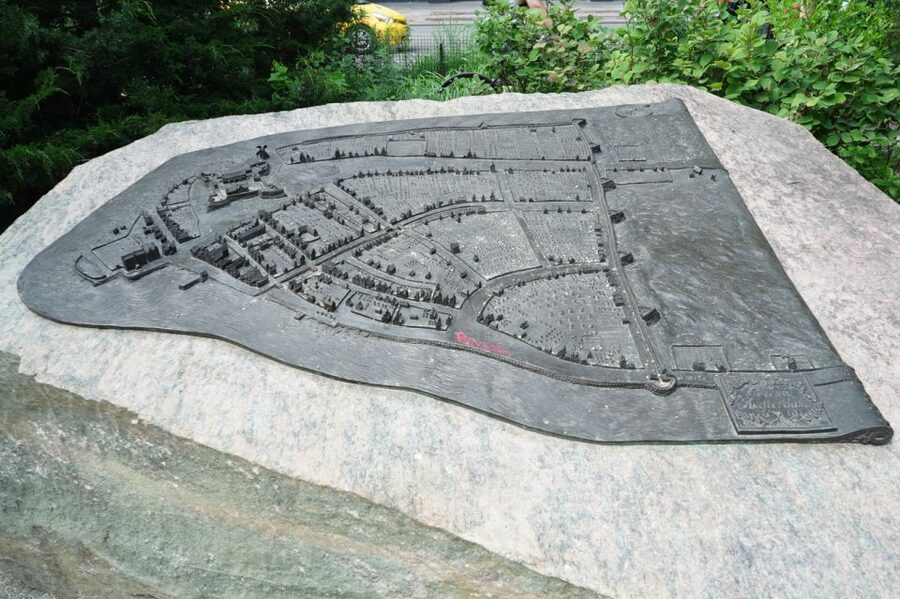
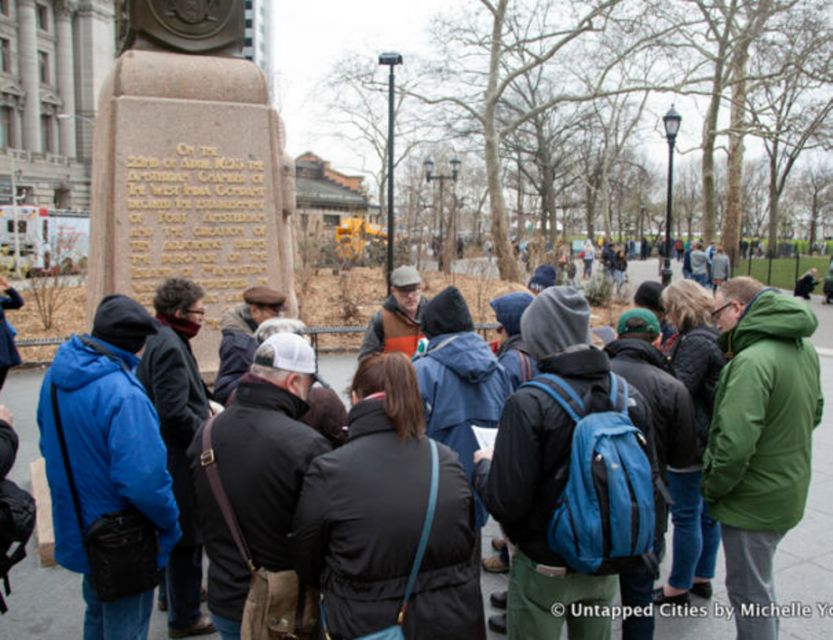
New York’s oldest story is easiest to grasp when you are standing on the actual ground where it unfolded. This two-hour walk takes you through lower Manhattan’s Dutch past, using the 1667 map of New Amsterdam to connect modern streets with the small colonial town beneath them.
I like the old map in hand, which gives the walk a clear purpose instead of turning it into a string of unrelated facts. I also like the chance to see and touch surviving physical traces, including the foundations of the first City Hall and the original battery wall. The main drawback is that this is an outdoor walk in all weather, so comfortable shoes and a good forecast will make a real difference.
Key points
- Trace Manhattan in 1667: Use the city’s first map to compare today’s streets with the Dutch settlement.
- Start at Bowling Green: Learn how this important public space got its name and why it mattered.
- Find the first City Hall: See the foundations of a building that also served as a tavern.
- Spot unusual relics: Look for the old oyster pasty cannon, windmill remains, and original battery wall.
- Hear the guide clearly: Headsets help you follow the tour even when you are not standing beside the guide.
- Plan for two hours outdoors: The walk runs rain or shine and begins at the National Museum of the American Indian.
Begin at Bowling Green, where New York’s Dutch story gets practical
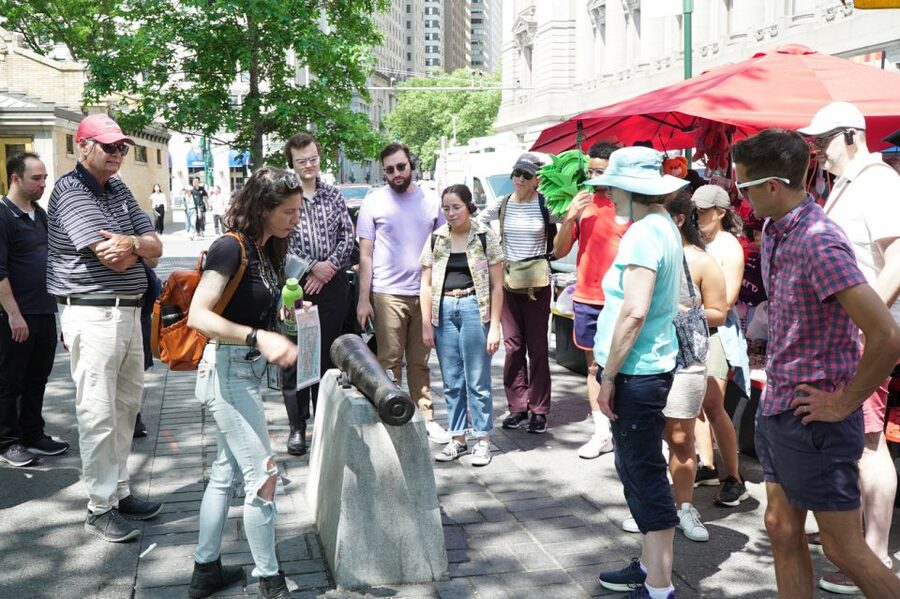
Meet your guide on the steps of the National Museum of the American Indian at 1 Bowling Green. This is a useful starting point because Bowling Green is not just a convenient downtown meeting spot. It is tied directly to New Amsterdam’s early civic life.
The tour uses the square to explain how Bowling Green got its name and why it has mattered in New York history. That sort of detail is one of the walk’s strengths. Instead of treating history as a list of dates, the guide connects a familiar public space with the choices and customs of the settlement that came before modern New York.
You’ll want to arrive ready to walk rather than expecting a long stop inside a museum. The experience is outdoors and takes place on city streets and public spaces. Wear comfortable shoes, dress for the weather, and remember that the tour continues in rain or shine.
More NYC Walking Tours:
- SoHo, Little Italy, and Chinatown Walking Tour in New York
★ 5.0 · 3,153 reviews - Secrets of Grand Central Station Walking Tour New York City
★ 5.0 · 1,796 reviews - Greenwich Village Walking and Food Tasting Tour
★ 5.0 · 1,572 reviews
Follow the 1667 map through lower Manhattan
The most useful tool on this tour is Manhattan’s first map. You’ll use it to trace the streets of New Amsterdam as they existed in 1667, when the settlement occupied only part of the island.
That map gives you a way to read modern lower Manhattan with two time periods in view. Today’s blocks, traffic, and tall buildings can make the colonial town hard to picture. A map from 1667 helps restore the older layout and shows how the early settlement related to the shoreline, fortifications, civic buildings, and public gathering places.
I especially like this approach for first-time visitors to lower Manhattan. You do not need a background in New York history to follow it. The guide points out what has changed, what survived, and where the modern city covers the older one.
The walk is led in English by a local New Yorker from the Untapped New York team. Headsets are included, which matters in a city setting. You can hear the guide clearly even if you are a few steps away, rather than having to crowd around one person at every stop.
Walk the shoreline that shaped Dutch New Amsterdam
One of the tour’s main themes is Manhattan’s original coastline. Lower Manhattan has been heavily altered over time, so the shoreline you see today does not tell the full story of the Dutch settlement.
Walking the old coast gives the rest of the tour a useful frame. The early town developed around water, trade, defense, and access. As you move through the southern tip of Manhattan, the guide shows how the shape of the land and the position of the settlement affected its growth.
This is also where the physical setting helps. You are not simply hearing that the coast used to be somewhere else. You are tracing it on foot and comparing the old shoreline with the modern city around you.
The tour focuses on relics south of Wall Street, so it makes a good introduction to the oldest part of Manhattan. If you have already seen the major financial district sights, this walk gives you another way to understand the same streets. If you are new to the area, it adds historical meaning to places you might otherwise pass without a second look.
Find the first City Hall, once a tavern too
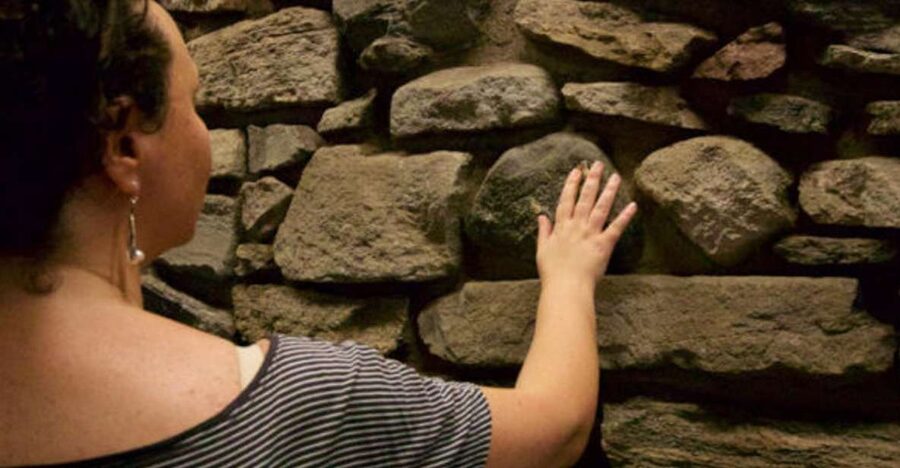
A key stop is the foundation of New York City’s first City Hall. The building also served as a tavern, an unusual combination that says something about the practical scale of early New Amsterdam.
Modern cities separate government offices, public halls, and drinking places more clearly. In the early settlement, civic life was less formal and buildings had to serve several purposes. Seeing the foundation makes that idea easier to grasp than hearing it in a classroom.
This stop also gives the tour a firm connection to the beginnings of local government. You are not only learning about the Dutch settlement as a military or trading outpost. You are seeing the remains of a place where public business took place.
The foundations are especially valuable for visitors who enjoy archaeology but do not want a long museum visit. The evidence is modest, so keep your expectations realistic. You will not walk through a fully restored colonial building. The point is to understand what survives and how the guide uses that small trace to explain a larger story.
A completely different way to spend a day in New York City:
- NYC: SUMMIT One Vanderbilt Tickets
★ 4.7 · 51,195 reviews - NYC: Empire State Building Tickets – Observatory & Museum
★ 4.7 · 25,757 reviews - New York City: Statue of Liberty & Ellis Island with Ferry
★ 4.6 · 18,683 reviews - New York City: American Museum of Natural History Ticket
★ 4.5 · 15,447 reviews
Explore the fort, windmill, and original battery wall
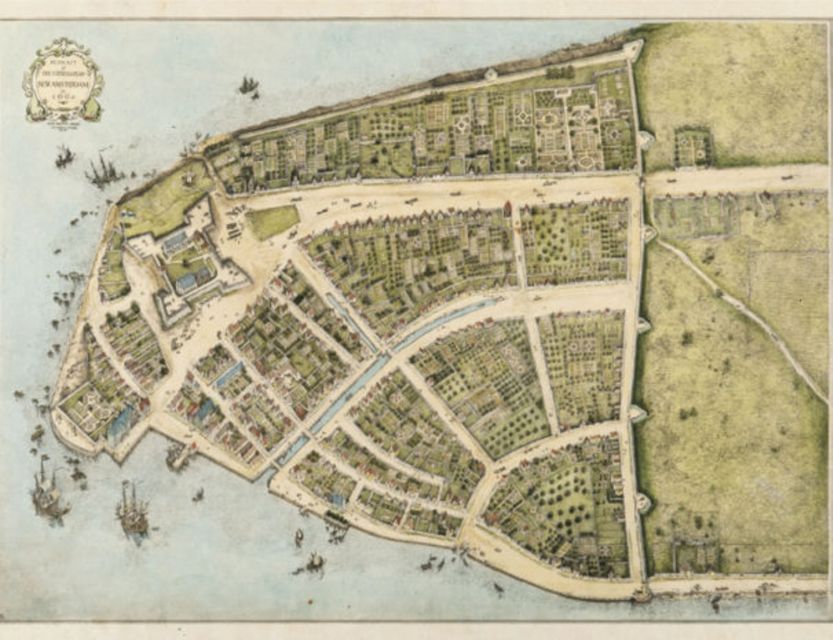
The tour also covers the original Dutch fort, the windmill, and the battery wall. These features show how New Amsterdam protected itself and made use of its position at the southern end of Manhattan.
The fort belongs to the settlement’s defensive story. The windmill points to the practical work needed to support a growing town. The battery wall connects defense with the waterfront, where control of the edge of the island mattered.
You may not see each feature as a complete standing structure. The experience centers on remaining traces, sites, and evidence within the modern city. That is part of the appeal, but it also means you need to pay attention to the guide’s explanations. The physical remains can be easy to overlook without context.
The original battery wall is a particularly useful stop because it helps you picture the boundary of the early settlement. Today, lower Manhattan feels dense and continuous. The old wall reminds you that New Amsterdam had a defined edge and that the city grew by pushing beyond earlier limits.
Touch the past at Bowling Green and hunt for the oyster pasty cannon
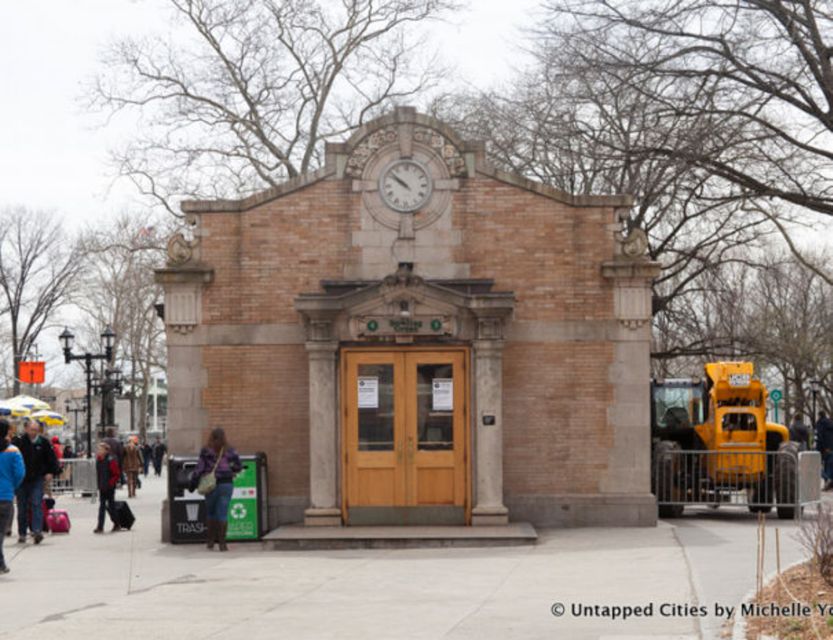
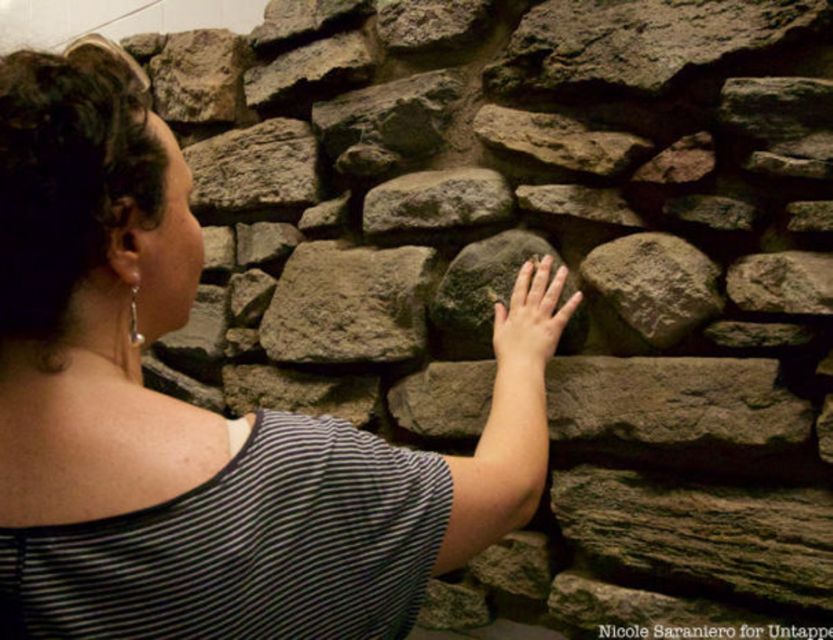
The tour promises a hands-on look at history, including time spent finding out how Bowling Green got its name. The chance to physically touch surviving history gives the walk a more direct feel than a standard sightseeing route.
Another unusual feature is the long-forgotten oyster pasty cannon. The name alone is a reminder that old New York history is not limited to grand buildings and famous leaders. Small, strange remnants can reveal how people lived, worked, ate, and defended themselves.
This is where the tour’s tone seems most appealing. You get the major subjects, such as the fort, the coastline, and City Hall, but you also get odd details that help the settlement feel human. The oyster pasty cannon is not the kind of fact you are likely to remember from a general overview of New York.
You should expect the guide to point out and explain these traces rather than present a large collection of objects. The value comes from seeing how the pieces fit together across the neighborhood.
Why the guide and headsets matter
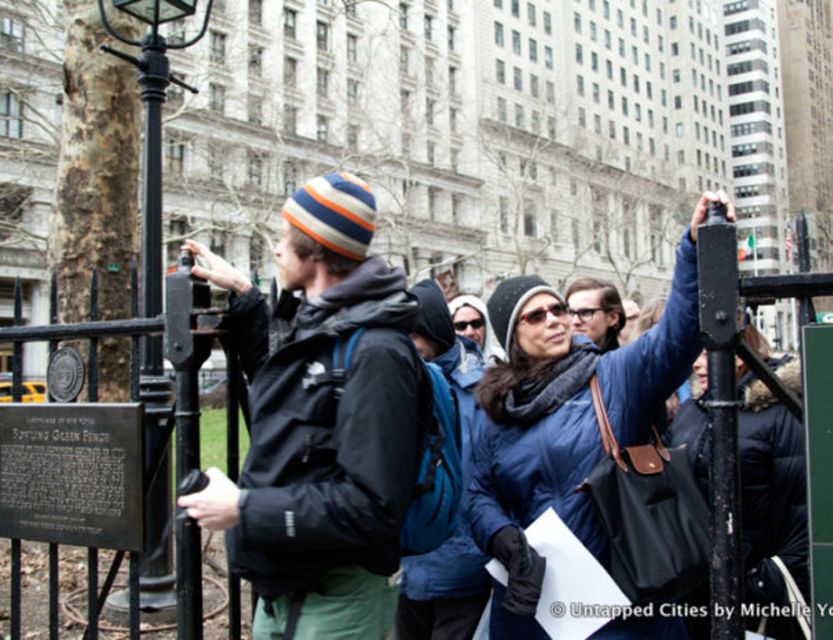
A walking tour rises or falls on the guide’s pacing and explanations. The available experience includes guides from Untapped New York, with Richard and Mandy specifically associated with the tour.
Richard is noted for giving clear explanations and keeping a good pace. That matters on a two-hour walk, especially when the route includes several stops and you need time to look around. A rushed guide can turn historical sites into quick photo stops, while a slow one can make the walk drag. The reported pacing here suggests a sensible middle ground.
Mandy is also named as a guide and received strong praise for her work. Since guide assignments can vary, you should not assume one particular person will lead your departure. Still, the team’s focus is clear: an English-speaking local guide who can make lower Manhattan’s early history understandable while you walk.
The included headsets are a practical advantage. They let you hear the explanation from a little distance, which is useful when the group gathers around a small foundation or a busy public space. You can look at the site instead of spending the entire stop trying to stand directly beside the guide.
Is two hours enough for the route?
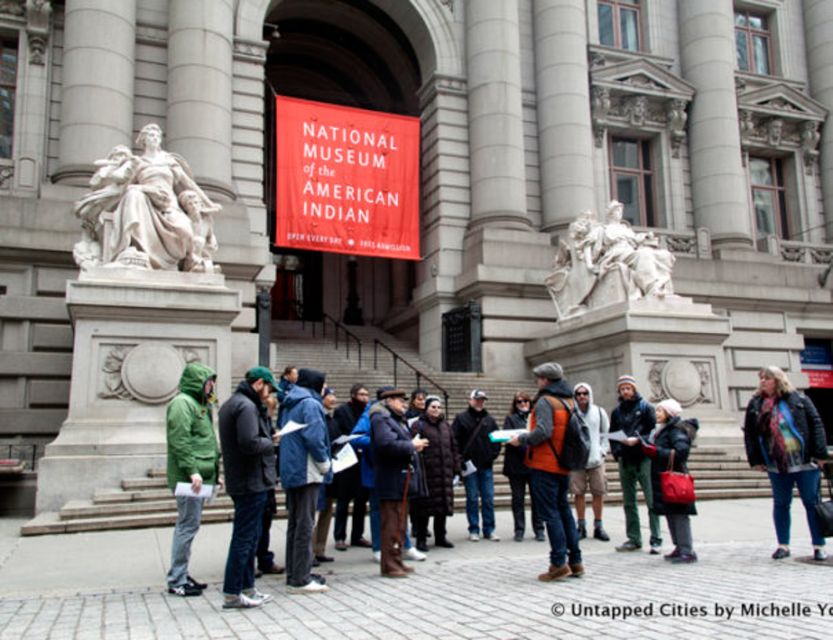
Two hours is a good length for this subject. It gives the guide time to explain the old map, coastline, fort, wall, Bowling Green, City Hall foundations, and smaller relics without turning the experience into an all-day commitment.
The duration also makes the tour easy to fit into a lower Manhattan sightseeing plan. You can schedule it as a focused historical walk rather than giving up an entire day. At the same time, two hours on foot is long enough that footwear matters. Choose support and comfort over fashion.
The pace should suit you if you like regular stops and explanations. It may feel less satisfying if you want to spend a long time photographing each location or exploring interiors. This is a guided neighborhood walk, not a museum visit with unlimited time at each exhibit.
The tour is listed as wheelchair accessible, which is important information for planning. Since the experience takes place outdoors in an old and heavily developed part of the city, you may still want to confirm any personal route concerns when booking.
What you get for $39
At $39 per person, the price is reasonable if you value interpretation and a focused route. You are paying for a two-hour guided walk, an English-speaking local guide, access to a carefully selected set of Dutch-era sites, and headsets that make the commentary easier to follow.
The value is strongest for visitors who would otherwise walk past the remains without knowing what they are. Lower Manhattan has plenty of famous sights, but the Dutch traces are often subtle. A guide gives you the map, the sequence, and the historical connections.
The price is less compelling if you prefer to explore at your own speed or already know New Amsterdam’s story well. You can walk around lower Manhattan without joining a tour, but you would miss the organized route and the explanations tying the relics together.
A small group also helps the experience feel more personal than a large bus tour. No exact group size is given, so I would not book this expecting a private walk. Think of it as a guided group experience with headsets and a focused subject.
Who should book this New Amsterdam walk?

I would recommend it to first-time New York visitors who want more than the usual skyline and shopping stops. It is also a good fit for repeat visitors who have walked lower Manhattan before but never looked closely at its Dutch foundations.
History fans will appreciate the map-based route and the physical remains. Families with older children may enjoy the odd details, especially the oyster pasty cannon and the idea of a City Hall that was also a tavern. The tour is also useful for anyone who learns better by walking through a place than by reading display panels.
You should think twice if heavy rain, cold, or hot weather would spoil two hours outside. The tour runs rain or shine, and tripods are not allowed. It also may not satisfy you if your main goal is to enter historic buildings, since the supplied details focus on streets, foundations, walls, and outdoor relics.
Should you book it?
Book this tour if you want a compact, well-organized way to understand why lower Manhattan looks and feels the way it does. The 1667 map, old coastline, and surviving Dutch traces give the walk a clear focus, while the City Hall foundations and oyster pasty cannon add memorable detail.
At $39, the best value comes from the guide’s ability to connect small remains with the larger story. Richard is noted for a well-managed pace, and Mandy has also led the walk successfully, though your guide may be someone else from the Untapped New York team.
Skip it if you dislike outdoor walking in uncertain weather or prefer to explore without a set route. For everyone else, this is a smart two-hour choice for seeing the southern tip of Manhattan through its earliest streets, defenses, and public spaces.
FAQ
How long is the New Amsterdam walking tour?
The tour lasts two hours.
Where does the tour begin?
It begins on the steps of the National Museum of the American Indian at 1 Bowling Green, New York, NY 10004.
What language is the tour offered in?
The live guided tour is offered in English.
Is the tour wheelchair accessible?
Yes, the tour is listed as wheelchair accessible.
Does the tour operate in bad weather?
Yes. The tour takes place rain or shine, so bring weather-appropriate clothing and wear comfortable shoes.
Are headsets provided?
Yes. Headsets are included so you can hear the guide clearly, even when you are some distance away.
Can I cancel for a full refund?
Yes. You can cancel up to 24 hours in advance for a full refund.
Recently added in New York City
- NYC: Midtown Hands-On Bagel Baking Class★ 5.0 · 12 reviews
- Personalize Sightseeing Tour★ 5.0 · 92 reviews
- Central Park Pedicab Tour with Guide★ 5.0 · 63 reviews
- Central Park Pedicab Guided Tour★ 5.0 · 17 reviews
- Photographer, Professional Photo shoot – New York★ 5.0 · 16 reviews
- Official Central Park Pedicab Ride ( UP TO 3 PERSONS )★ 5.0 · 4 reviews
- JFK or LGA package only (Round trip transfer plus VIP Contrasts)★ 5.0 · 3 reviews
- Official Central Park Pedicab Tours★ 5.0 · 35 reviews
NYC Walking Tours, compared.

SoHo, Little Italy, and Chinatown Walking Tour in New York
Read our review →
Secrets of Grand Central Station Walking Tour New York City
Read our review →
Greenwich Village Walking and Food Tasting Tour
Read our review →
Artistic, Alternative Greenwich Village Walking Tour
Read our review →


NYC Greenwich Village Italian Food Guided Walking Tour
Read our review →Browse the lists this tour appears in