
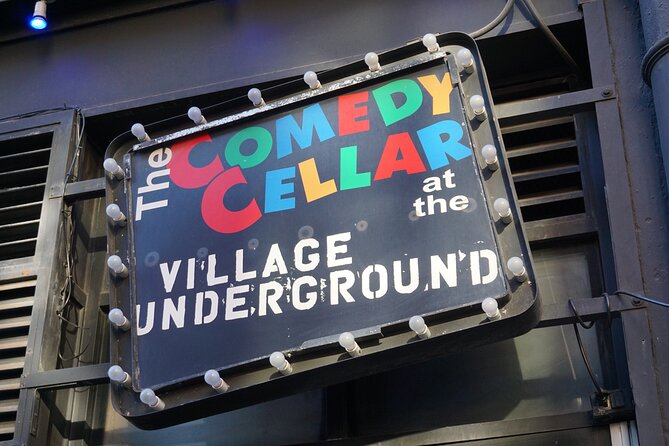
Reviewed · NYC COMEDY SHOWS
NYC’s History of Comedy Tour
New York comedy history is packed into a short walk through Greenwich Village, where old clubs, music rooms, and stand-up stages helped shape American entertainment. I like the way the tour connects vaudeville, radio, television, and modern stand-up, rather than treating comedy as a collection of famous names. I also like that guide Joe uses photos and offers practical club advice, including access to a local comedy show later that evening.
The main caution is timing. The listed duration is about 1 hour 15 minutes, while one detailed account describes spending closer to two hours on the walk. The stops are close together, but you should keep some flexibility in your schedule.
Key things to know before you book
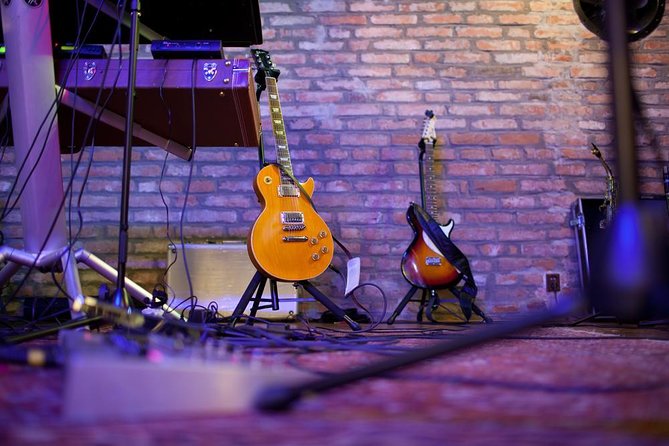
- Greenwich Village is the classroom: The walk begins at Gay Street and Christopher Street and ends near the Comedy Cellar.
- Joe is the guide named in the feedback: He is described as friendly, funny, patient, and well informed about New York comedy.
- The story reaches beyond stand-up: You’ll hear about vaudeville, dinner clubs, radio, television, African American comedy pioneers, and Saturday Night Live.
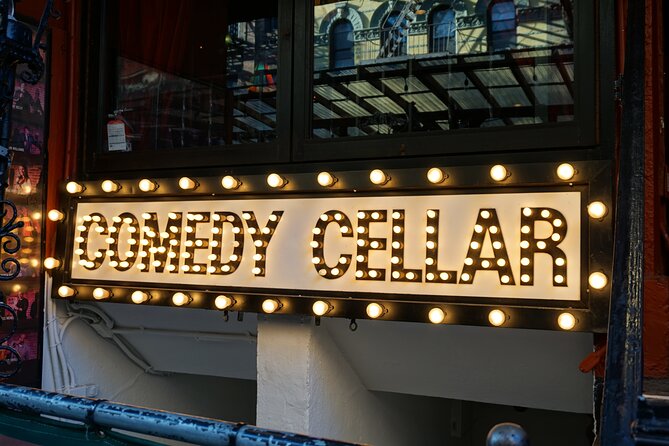
- The Comedy Cellar is a major finale: You’ll see its famous marquee and learn about its second location at the Village Underground.
- A show may be included later: The tour provides free access to a local stand-up show that evening.
- The $30 price includes history and a possible show: That makes the experience more useful for comedy fans than a simple neighborhood walk.
Why this short walk works for comedy fans
This is not a sightseeing tour that happens to pass a comedy club. Its focus is the way New York gave performers places to test material, build an audience, and move from one form of entertainment to another.
You begin with early twentieth-century vaudeville, then move through dinner clubs and radio in the 1930s and 1940s. From there, the story turns toward television in the 1960s, the rise of modern comedy clubs, and the creation of Saturday Night Live. That broad time span gives the tour a useful shape.
I especially like this approach because comedy can be hard to explain on a map. A performer’s career may begin in a small club, move to television, and later return to a New York stage. By walking through the Village and hearing about the venues in place, you get a clearer sense of how those steps fit together.
The group is limited to 20 people. That is small enough to make questions practical, though the experience is still a walking tour in public city streets, not a private conversation. Morning and afternoon departures make it easier to fit into a day of sightseeing.
More NYC Comedy Shows:
- New York: Broadway Comedy Club All Star Stand-Up Comedy Live
★ 4.2 · 479 reviews - Stand Up Comedy Show + Mini Golf Ticket!
★ 5.0 · 64 reviews - Stand Up Comedy LIVE in Times Square At Broadway Comedy Club
★ 3.5 · 56 reviews
Starting at Gay Street and Christopher Street
The meeting point is 13 Christopher Street, at the well-known intersection with Gay Street. This opening stop lasts about 10 minutes and sets up the whole story with photographs and narration.
Here you’ll hear about the earliest period covered by the tour: vaudeville in the early 1900s, followed by the dinner-club and radio years of the 1930s and 1940s. The point is not simply to list old entertainment formats. It is to show how performers adapted as audiences moved from live variety bills to radio programs and later to television.
The stop is also a useful introduction to Greenwich Village itself. You are already in a neighborhood with a strong connection to music, theater, comedy, and nightlife, so the street setting supports the subject. You will not enter a museum or receive a formal theater presentation here. The guide uses photos to add context that the buildings alone cannot provide.
Give yourself enough time to arrive at the exact meeting point. Since the tour begins with a story rather than a long orientation, arriving late could mean missing the foundation of the walk.
The Duplex and the small-room comedy tradition
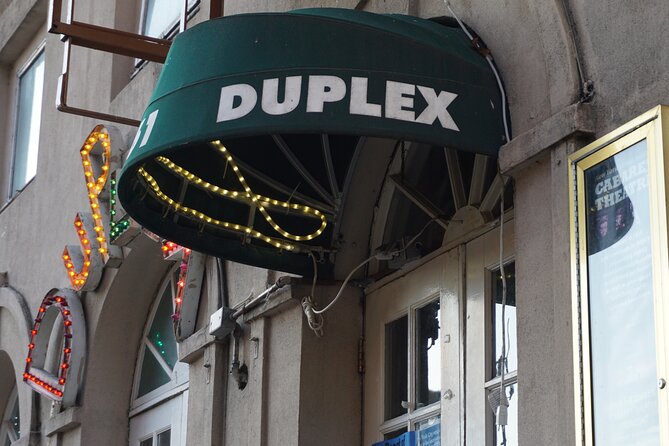
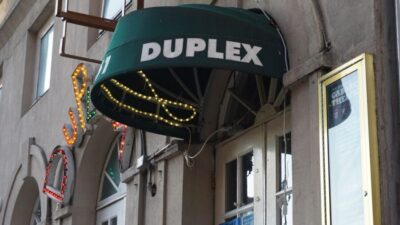
The next stop is The Duplex, where the guide spends about five minutes explaining the venue’s place in comedy history. Photographs help show the room and the performers associated with it.
This is one of the shorter stops, but it matters because small clubs are where comedy careers often become visible. A venue does not need to be large to matter. A compact room can give a performer a first audience, a place to revise material, and a connection to other people in the business.
Guide Joe is praised for taking time with explanations and answering questions about clubs, neighborhoods, and the comedy business. That matters here because the building itself may not tell you why it is important. The value comes from connecting a familiar Village venue to the people who passed through it.
If you are mainly interested in celebrity names, this stop may feel brief. If you want to understand how a comedy scene grows, it is a useful part of the sequence.
Cafe Wha? and the overlap of music and comedy
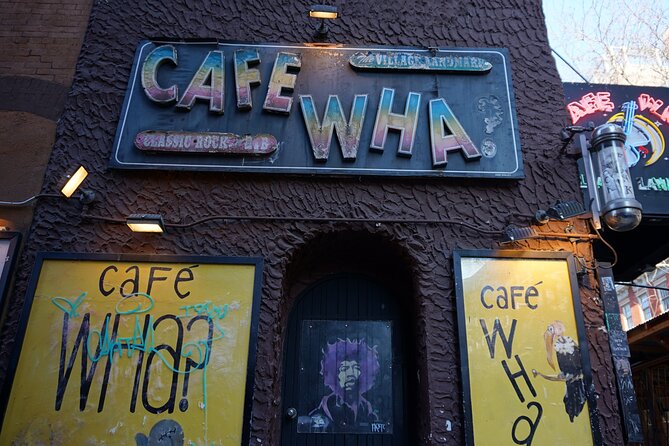
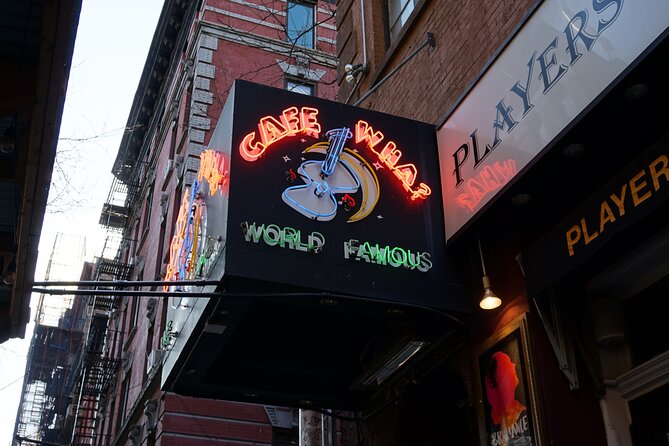
Cafe Wha? receives another five-minute stop. The guide explains its comedy background with photographs and points out performers who developed their careers there.
This venue is an interesting reminder that Greenwich Village entertainment did not fit neatly into separate boxes. Music rooms, comedy rooms, and mixed-performance spaces could share the same neighborhood and sometimes the same audiences. The tour uses Cafe Wha? to show that New York’s show-business story includes crossover, not just stand-up in dedicated comedy clubs.
That wider view is one of the tour’s strengths. You are not only learning where comedians performed. You are learning how the Village supported a wider performance culture, with venues that helped shape careers across several forms.
The stop is short, so do not expect a full performance history of Cafe Wha? You get the comedy connection and the key names, then continue walking.
More Historical Tours in New York City:
- New York City: American Museum of Natural History Ticket
★ 4.5 · 15,447 reviews - NYC: Starship Landmark 90 Minute Sightseeing Cruise
★ 4.6 · 3,666 reviews - Starship Landmark 90 Minute Sightseeing Cruise
★ 4.5 · 2,073 reviews - American Museum of Natural History Admission Ticket
★ 4.0 · 1,931 reviews
The Bitter End, Cafe Au Go Go, and changing stages
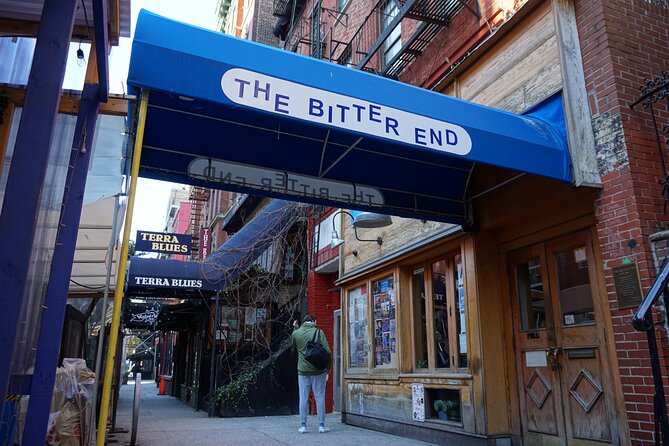
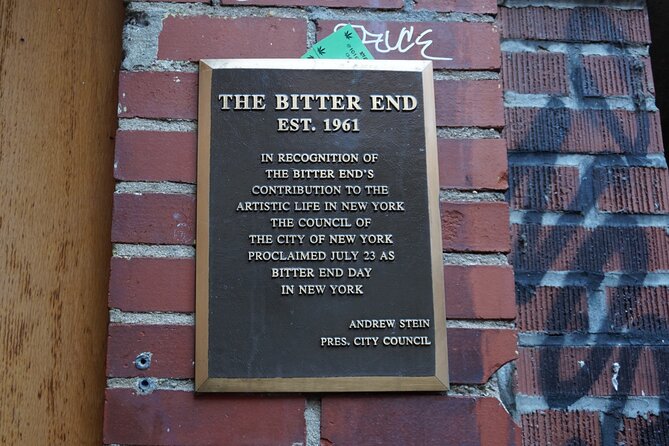
At The Bitter End, the guide also discusses Cafe Au Go Go. This section lasts about 10 minutes and adds another layer to the club story.
The focus remains on comedy and the performers associated with these rooms, but the paired venues help show how entertainment spaces change over time. A club can be remembered for more than one kind of act, and its place in New York culture may shift as audiences and performers change.
I like this stop because it expands the tour beyond one famous comedy brand. The Comedy Cellar gets much of the attention in modern New York, but the city’s comedy story was built by many smaller rooms. Hearing about The Bitter End and Cafe Au Go Go makes the final stops feel less isolated.
The route is still compact, but the exact walking pace may vary with the group. Wear comfortable shoes and expect to remain outdoors between stops. The tour information does not promise interior visits, so think of this as a street-level history walk rather than a backstage tour.
The Grisly Pear and the arrival of television
The Grisly Pear is the longest history-focused stop, at about 10 minutes. Here the guide moves into television in the 1960s, the creation of Saturday Night Live, African American contributions to comedy, and important modern New York comedy clubs.
This is where the tour’s timeline becomes especially useful. Television changed the reach of comedy. A performer no longer needed to build an audience only through theaters, radio, or clubs. Television could turn a local act into a national name, while comedy clubs continued to serve as testing grounds for new material.
The section on African American contributions is also important. A good comedy history should not reduce the story to a short list of famous white male performers. This stop promises a broader account of the people and traditions that shaped American comedy.
The tour also connects these older developments to current New York venues. That helps you place the Comedy Cellar in context. It is not presented as the beginning of the story, but as part of a much longer chain of clubs, performers, and changing media.
You can expect plenty of visual support here. Joe is described as using photographs and lesser-known facts to hold attention, which is helpful when a spoken timeline covers several decades in one short walk.
The Comedy Cellar, where the story reaches the marquee
The Comedy Cellar receives about seven minutes. The guide explains its history and offers to take your photo in front of the famous marquee.
For many people, this will be the most anticipated stop. The club has a strong place in New York’s stand-up identity, and seeing the entrance gives the earlier parts of the tour a clear destination. You can connect the small-room tradition, the television era, and the current club scene in one location.
Still, keep expectations in check. This tour does not list admission to a Comedy Cellar performance itself as part of the walk. The stop is about the venue’s story and the chance to take a photo outside.
That distinction is important when you compare the $30 price with the cost of a full comedy show in New York. You are paying for the guide, the historical explanation, the walking route, and the added show benefit described for later that evening. You are not simply buying a ticket to the Comedy Cellar.
Village Underground and the evening comedy option
The final stop is the Village Underground at 130 West 3rd Street. The walk ends at this Comedy Cellar location after about seven minutes of discussion.
The guide points out the second Comedy Cellar venue and explains how it fits into the local comedy scene. This gives you a practical finish: you know where one of the city’s comedy rooms is located, and you end near a place connected to the evening benefit.
The tour provides free access to a local stand-up comedy show later that evening. The information does not specify the show title, start time, or performer lineup, so check the details you receive when booking or attending. Treat this as a useful extra, not a guaranteed Comedy Cellar headliner ticket.
This arrangement can make the tour especially appealing if comedy is one of your main reasons for visiting New York. You can spend the afternoon learning the story, then continue with live comedy later. If you have no interest in attending a show that night, part of the price’s value may be less important to you.
What the $30 price gets you
At $30 per person, this sits in a reasonable range for a short, specialist walking tour. The price is easiest to justify if you care about comedy history, plan to see a show, or want a guide who can explain New York’s club culture rather than simply point out addresses.
The possible free evening show improves the value, although the available information does not give enough detail to judge the exact quality or format of that performance. You should also remember that the tour includes outdoor walking and commentary, not a meal, a full show at the Comedy Cellar, or entry into every venue along the route.
For a general sightseeing visitor, the price may feel high for a walk lasting around 75 minutes. For a comedy fan, it can be a good deal because it combines local history, venue context, photo opportunities, and a possible later performance.
One account describes the experience as lasting about two hours, while the listed duration is approximately 1 hour 15 minutes. I would plan for the longer end, especially if you want time for questions or photographs.
Who will get the most from this experience
I would choose this tour for:
- People who follow stand-up, sketch comedy, or American television comedy
- Visitors curious about the history of Greenwich Village performance rooms
- Anyone planning to attend comedy during the same New York trip
- First-time visitors who want a guided introduction to comedy venues
- People who enjoy social history told through specific streets and buildings
It may be less suitable if you want to tour the inside of several venues, attend a guaranteed major comedy performance, or cover a large part of Manhattan. The route stays concentrated in Greenwich Village and nearby streets.
The tour is conducted in English. A mobile ticket is provided, service animals are allowed, and the meeting area is near public transportation. Most people can take part, but you should still be comfortable walking between several stops.
Booking advice and cancellation terms
The experience is often booked about 21 days ahead, so reserve early if your New York dates are fixed. Confirmation is provided when you book, and the group limit is 20 people.
You can cancel for a full refund up to 24 hours before the start time. Cancellations or changes made less than 24 hours before the tour are not refunded or accepted. The cut-off follows local New York time.
Morning and afternoon options give you room to pair the walk with a museum, meal, or comedy show. If you want to use the evening show benefit, choose a departure that leaves enough time between the end of the walk and the performance.
Should you book the NYC’s History of Comedy Tour?
Book it if you want the story behind New York comedy, not just a night in a club. The strongest parts are the clear timeline, the Greenwich Village setting, the photographs, Joe’s engaging approach, and the practical connection to a later comedy show.
Skip it if you want a long performance, several interior venue visits, or a guaranteed ticket to a major Comedy Cellar show. For the right audience, the $30 cost is fair, and the final stop at Village Underground gives you a useful next step for the rest of your evening.
FAQ
Where does the tour begin?
It begins at 13 Christopher Street in New York City, at the intersection of Gay Street and Christopher Street.
Where does the tour end?
The walk ends at Village Underground, located at 130 West 3rd Street. This is one of the Comedy Cellar locations.
How long does the tour last?
The listed duration is approximately 1 hour 15 minutes. One detailed account describes spending about two hours on the experience, so allow extra time for questions, photos, and the pace of the group.
How much does the tour cost?
The price is $30 per person.
Is the tour offered in English?
Yes. The tour is offered in English.
What comedy venues are included?
The route includes The Duplex, Cafe Wha?, The Bitter End, Cafe Au Go Go, The Grisly Pear, the Comedy Cellar, and Village Underground.
Does the tour include a comedy show?
You receive free access to a local stand-up comedy show later that evening as a benefit of attending the tour. The available information does not specify the show title or lineup.
Is the tour suitable for most people?
Most people can participate. The tour is near public transportation, and service animals are allowed. It includes walking between several Greenwich Village stops.
Can I cancel for a refund?
Yes. You can cancel at least 24 hours before the start time for a full refund. Cancellations or changes made less than 24 hours before the start time are not refunded or accepted.
Recently added in New York City
- Color Factory NYC Ticket★ 3.5 · 93 reviews
- Contrasts of New York – Bronx, Queens and Brooklyn Arcol Travel★ 5.0 · 4 reviews
- Contrasts VIP Private (We visited Harlem, Bronx, Queens, Brooklyn and Manhattan)★ 4.5 · 7 reviews
- Classic NYC Deli Dinner in the Heart of Times Square★ 3.5 · 3 reviews
- Best City Tour NYC 4 Hours up to 5 people★ 5.0 · 36 reviews
- Private NYC Central Park Horse Carriage Ride (Guided) Since 1965™★ 5.0 · 51 reviews
- Deluxe Central Park Pedicab Tour★ 4.5 · 33 reviews
- Churches, Chapels and Cathedrals★ 5.0 · 3 reviews
NYC Comedy Shows, compared.

Broadway Comedy Club All Star Stand-Up Comedy Live
Read our review →
Stand Up Comedy LIVE in Times Square At Broadway Comedy Club
Read our review →
Greenwich Village Comedy Club Stand Up Comedy Show
Read our review →
Greenwich Village Comedy Club All Stat Stand Up Comedy
Read our review →Browse the lists this tour appears in