

Reviewed · NYC OBSERVATION DECK TICKETS
Secrets of Hudson Yards and the Edge: A walking tour
Hudson Yards looks like a polished city of glass, steel, and money. This walking tour scratches that surface, explaining the deception, disappointment, and deaths tied to New York’s newest neighborhood, along with the huge engineering effort that made it possible. You’ll see The Vessel, The Edge, odd public art, and places most visitors pass without understanding.
I like the tour’s non-corporate point of view, and I like that it connects the buildings to politics, public money, architecture, and New York’s future. Guide Matthew is praised for his passion for the city and for answering questions fully. The main drawback is time: one booking review found the walk interesting but too short at about an hour.
Key points to know before you go
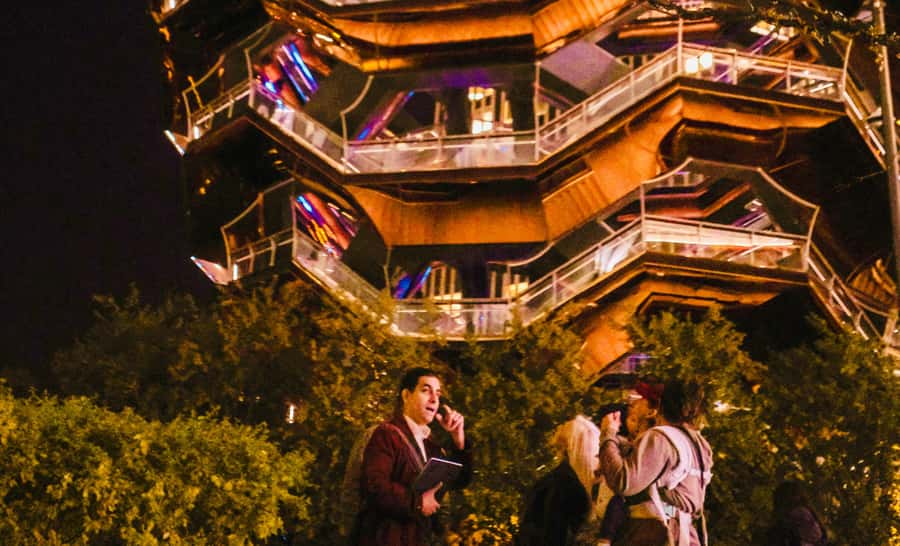
- Hudson Yards has a complicated backstory: Learn where the money came from and why the project drew criticism.
- The Edge gets more than a photo stop: The tour explains what floor the observation deck is really on and how the tower fits into the district.
- The Vessel is treated as art, not just a landmark: Hear the story behind its design and its place in Hudson Yards.
- Secret stops add a sense of discovery: The route includes passageways, viewpoints, public art, and unusual spaces that are easy to miss.
- The walk ends at Mercado Little Spain: You finish among restaurants founded by José Andrés, Ferran Adrià, and Albert Adrià.
- At $40, the value rests on the guide: This is best for people who want context and stories, not only landmark photos.
Why Hudson Yards needs more than a photo stop
Many people arrive at Hudson Yards, photograph The Vessel, look up at The Edge, and leave. That gives you the outline, but not the argument behind the neighborhood.
This district was built as one of the largest private real estate developments in American history. Its towers, public spaces, shops, restaurants, and cultural venues were not simply added to an empty block. They were placed over major rail infrastructure and tied to ambitious plans for the western side of Manhattan.
The tour explains how Hudson Yards came to life and why its polished appearance hides a more complicated story. You hear about the money behind the project, the promises made around it, and the disappointment and death connected to the neighborhood. The tone is designed to question the official version rather than repeat a developer’s brochure.
That approach is the main reason to book. If you only want clean views and quick facts, you can explore Hudson Yards on your own. If you want to understand why this particular collection of towers exists, an informed guide adds real value.
More NYC Observation Deck Tickets:
- NYC: Empire State Building Tickets – Observatory & Museum
★ 4.7 · 25,757 reviews - NYC: One World Observatory Skip-the-Line Ticket
★ 4.7 · 12,329 reviews - NYC Empire State Building Observation Deck Ticket
★ 4.5 · 6,916 reviews
Starting at 30 Hudson Yards and The Edge
The meeting point is in front of the office entrance to 30 Hudson Yards, at the corner of West 33rd Street and Hudson Boulevard East. This puts you beside one of the district’s most recognizable towers from the start.
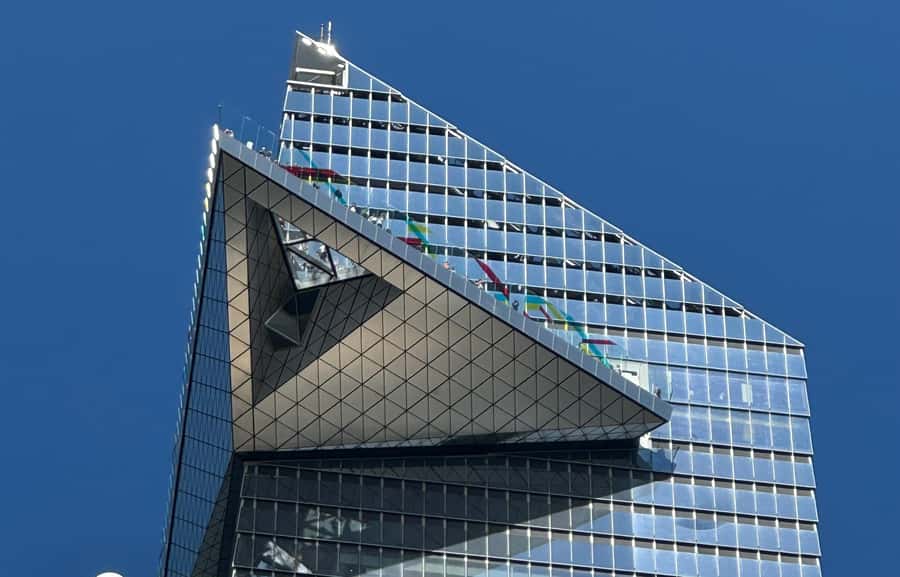
The Edge occupies 30 Hudson Yards and is one of the neighborhood’s headline attractions. The walk does not simply point toward its glass platform and send you upstairs. Instead, you hear the story behind the observation deck and learn what floor it is really on.
That detail matters because modern towers often play with height, naming, and perception. The tour uses The Edge to explain how Hudson Yards presents itself to the public, how architecture and branding work together, and how technical achievement becomes part of a sales pitch.
You should not assume this walking tour includes admission to The Edge. The supplied details describe seeing the landmark and learning about it, not entering the observation deck. If you want to go onto the platform, treat that as a separate plan.
Secret passageways, viewpoints, and moving architecture

The route is broken into a series of short stops. Some are guided views, some are visits to secret stops, and others focus on Hudson Yards itself. The quick changes keep the walk moving, although they also help explain why the full experience can feel brief.
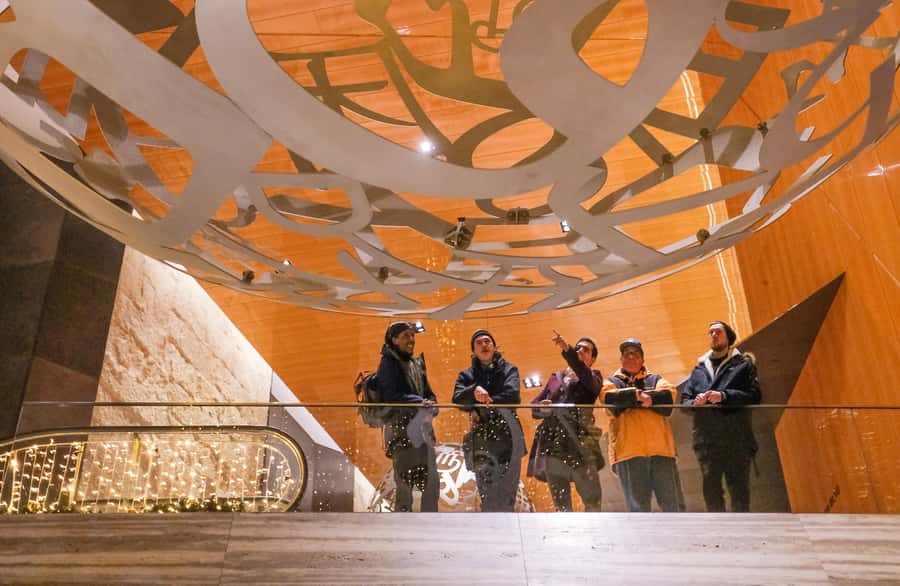
You may hear about secret passageways and small details that are easy to miss when you are focused on the tall buildings. These stops are useful because Hudson Yards is designed at a scale that can make a person feel lost. A guide helps you notice how the public areas connect and why certain routes, openings, and structures were built.
One unusual feature is the giant performance space on massive wheels. This is the kind of detail that gives the neighborhood a strange, almost theatrical quality. The project is not only a group of offices and apartments. It also includes large-scale cultural ideas that can shift, move, or change how the public uses the space.
You also hear about dancing skyscrapers, a playful phrase for buildings whose forms and positions create movement when seen from different angles. The tour connects these visual tricks to the work of architects and engineers operating at the edge of current technology.
The exact order of the viewpoints and secret stops may vary with the guide and conditions. The important point is that the walk is not a straight march from The Edge to The Vessel. It uses the district’s smaller details to show how much planning went into the public areas.
The plant-covered skyscraper and its giant vine
Another unusual part of the walk is a plant-covered skyscraper described as having a 1,000-foot-tall vine. That image captures Hudson Yards’ blend of architecture, branding, and greenery.
The building is not presented as a traditional park or old New York streetscape. Instead, plants are used as part of a very tall, very new building. The tour asks you to consider how nature is represented in a private development and how a tower can borrow the visual language of a garden.
This is one of the more useful themes in the walk. Hudson Yards has open public areas, art, and planted spaces, but it is also a major real estate project. The tour encourages you to look at both sides at once. You can admire the design while still asking who controls the space and who benefits from it.
More NYC Walking Tours:
- SoHo, Little Italy, and Chinatown Walking Tour in New York
★ 5.0 · 3,153 reviews - Secrets of Grand Central Station Walking Tour New York City
★ 5.0 · 1,796 reviews - Greenwich Village Walking and Food Tasting Tour
★ 5.0 · 1,572 reviews - Artistic, Alternative Greenwich Village Walking Tour
★ 5.0 · 971 reviews
The Vessel, from art object to public symbol

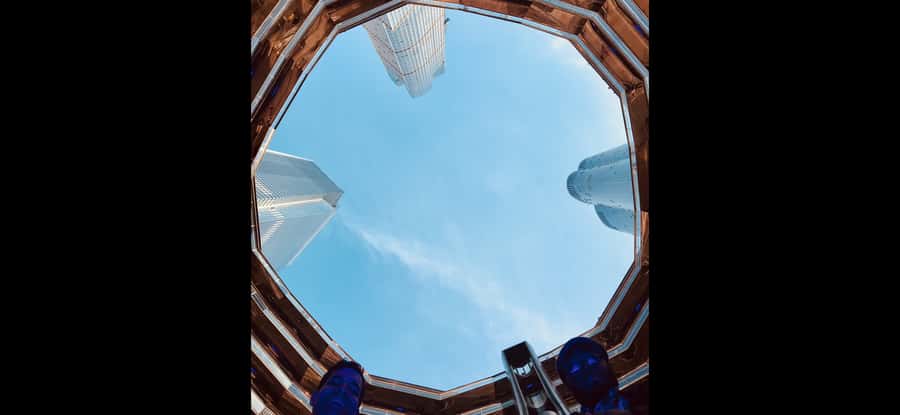
The Vessel is one of the easiest landmarks in New York to recognize. Its stacked copper-colored stairways create a beehive-like form beside the shops and open space of Hudson Yards.
The tour spends time on the story behind this giant work of art. That makes the stop more useful than a standard photo break. You learn why the structure was designed as a climbable sculpture and how it became part of Hudson Yards’ public identity.
The Vessel also raises a practical question about public art. Is it a place for people to gather, a sculpture to admire, an attraction built to draw shoppers, or all three? The tour gives you a way to think about that question as you look at the structure.
Do not book this walk expecting a full visit inside The Vessel unless your guide specifically confirms it. The supplied program lists sightseeing at The Vessel, not an included climb or admission. You can still get a close look and hear its story, which is the main purpose of the stop.
The future of Hudson Yards and the Las Vegas question

Hudson Yards is not treated as a finished neighborhood. The tour looks at future plans and asks if the district could become the Las Vegas of Manhattan.
That comparison points to the role of spectacle. Hudson Yards combines tall towers, observation decks, public art, restaurants, shopping, performance spaces, and carefully arranged views. The question is not simply if the area is attractive. It is whether New York is moving toward districts built mainly around entertainment, luxury spending, and visual impact.
You also hear how the neighborhood’s financing and development model shaped what was built. The walk puts the towers into a wider discussion about private investment, public space, and the changing west side of Manhattan.
This is where the tour offers something a standard sightseeing route usually does not. You are encouraged to look beyond the shiny surfaces and think about who the district is for. The guide’s job is not only to identify buildings, but to explain the decisions that brought them here.
A feminist reformer and the park named for her
The tour also introduces a fierce feminist who fought for poor Americans and has a Hudson Yards park named after her. This detail gives the walk a human and political counterweight to the billion-dollar towers.
The contrast is intentional. One part of the route deals with private development, engineering, and luxury buildings. Another connects the neighborhood to a woman who fought for people with far fewer resources.
This stop helps you see that Hudson Yards is not cut off from the larger story of New York. Names, parks, and public spaces carry older struggles into a district that can otherwise feel brand new and disconnected from the city’s past.
The supplied information does not identify the woman by name, so the guide’s explanation is likely the place to get the full story. That is a good example of why this tour depends on live guiding rather than a printed map.
Public art and the value of an active guide

Public art is woven through the route. The tour covers work by some of the most famous and revolutionary artists in the world, showing that Hudson Yards was planned as more than a collection of office towers.
You may already recognize a few pieces, but recognition is not the same as understanding. A guide can explain why an artwork was selected, how it fits the surrounding buildings, and how art helps shape the feeling of a new neighborhood.
Matthew is the guide name connected with the strongest personal praise in the supplied information. He has led other New York tours and is described as deeply interested in the city’s past. That matters here because the subject is broad: architecture, politics, public art, finance, engineering, and social history all appear in a fairly short walk.
I would book this with questions ready. Ask about the project’s funding, its public promises, the engineering under the towers, and the future plans. The experience is likely to be most rewarding when you treat it as a conversation rather than a simple procession between landmarks.
Ending at Mercado Little Spain
The tour finishes at Mercado Little Spain, a food hall and restaurant project founded by José Andrés, Ferran Adrià, and Albert Adrià. This gives the walk a practical ending. Instead of stopping at a tower, you finish with a place where you can eat and continue exploring on your own.
The food hall is also part of the larger Hudson Yards story. It brings Spanish food and culture into a district built around major commercial and architectural ambitions.
You hear about José Andrés’ humanitarian work providing fresh meals during crises around the world. That detail broadens the tour again, connecting the neighborhood’s restaurants to a figure known for both food and emergency aid.
Mercado Little Spain is a useful place to end because you can pause, eat, and think over what you have seen. It also makes the tour easy to combine with an independent visit to The Vessel, The Edge, or other Hudson Yards attractions.
Is $40 a fair price?
At $40 per person, this is not a bargain if you measure value by time alone. One review describes the walk as lasting about an hour and found it a little short. The listed route contains many stops, but most are brief, often five or ten minutes.
The price makes more sense if you want interpretation. You are paying for access to a live English-speaking guide who can explain the money, engineering, public art, history, and future plans behind the buildings.
I would compare it to the cost of wandering Hudson Yards without context. You can see The Vessel and The Edge for free from outside, but you will not automatically understand the development story or notice every secret stop. If those stories interest you, $40 is a reasonable fee.
The short duration is still worth considering. This is best treated as a focused introduction, not a full-day Hudson Yards program, despite the booking information describing the duration as one day. Plan additional time before or after the walk if you want to visit attractions, eat at Mercado Little Spain, or explore the district at a slower pace.
Who should book this Hudson Yards walk?
I would recommend it to visitors who:
- Want more than landmark photographs
- Enjoy architecture, engineering, and urban planning
- Like hearing criticism alongside official success stories
- Are curious about how private money shapes public spaces
- Have already seen older New York neighborhoods and want to understand this newer district
- Prefer a live guide who can answer questions
I would be less likely to recommend it to someone who wants a long walking tour, a full visit to The Edge, or extensive time inside The Vessel. The program focuses on stories and viewpoints, not included admission to those attractions.
The tour is wheelchair accessible, which makes the route suitable for visitors who need an accessible activity. Smoking is not allowed. English is the stated language, and the experience is led by a live guide.
Should you book it?
Book this tour if you want Hudson Yards explained rather than simply photographed. The strongest reasons are the unusual backstory, the questions about money and power, the close look at The Vessel and The Edge, and the chance to notice public art and secret spaces you might otherwise skip.
The main caution is its short length. At $40, the tour earns its price through the guide’s stories, not through hours on foot. If you can accept that tradeoff, it is a sharp, focused way to understand one of New York’s most debated new districts. If you want a longer outing, pair it with your own time at Mercado Little Spain and the surrounding landmarks.
FAQ
How much does the tour cost?
The tour costs $40 per person.
Where does the tour begin?
It begins in front of the office entrance to 30 Hudson Yards, at the corner of West 33rd Street and Hudson Boulevard East.
Where does the tour finish?
The tour finishes at Mercado Little Spain.
How long does the tour last?
The booking information describes the activity as lasting one day, but the detailed stop timings and a verified booking review indicate that the guided walk may take about an hour. Check the available starting time and current duration when booking.
What language is the tour offered in?
The live guided tour is offered in English.
Is the tour wheelchair accessible?
Yes, the activity is listed as wheelchair accessible.
Does the tour include entry to The Edge?
The information describes seeing The Edge and learning about the observation deck. It does not state that entry to The Edge is included.
Does the tour include entry inside The Vessel?
The program lists sightseeing at The Vessel but does not state that admission or a climb inside it is included.
Can I cancel for a full refund?
Yes. You can cancel up to 24 hours in advance for a full refund.
Recently added in New York City
- NYC: Midtown Hands-On Bagel Baking Class★ 5.0 · 12 reviews
- Personalize Sightseeing Tour★ 5.0 · 92 reviews
- Central Park Pedicab Tour with Guide★ 5.0 · 63 reviews
- Central Park Pedicab Guided Tour★ 5.0 · 17 reviews
- Photographer, Professional Photo shoot – New York★ 5.0 · 16 reviews
- Official Central Park Pedicab Ride ( UP TO 3 PERSONS )★ 5.0 · 4 reviews
- JFK or LGA package only (Round trip transfer plus VIP Contrasts)★ 5.0 · 3 reviews
- Official Central Park Pedicab Tours★ 5.0 · 35 reviews
NYC Observation Deck Tickets, compared.
Empire State Building Tickets – Observatory & Museum
Read our review →
NYC Empire State Building Observation Deck Ticket
Read our review →
All-Access 9/11: Ground Zero Tour, Memorial and Museum, One World Observatory
Read our review →
Top of the Rock Observation Deck New York City Ticket
Read our review →
New York City One World Observatory Admission Ticket
Read our review →
NYC Edge Observation Deck at Hudson Yards Admission Ticket
Read our review →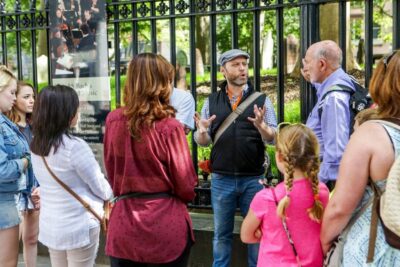
9/11 Memorial Tour and Optional Observatory Ticket
Read our review →Browse the lists this tour appears in